Ushiwaka Maru night fight at the inn
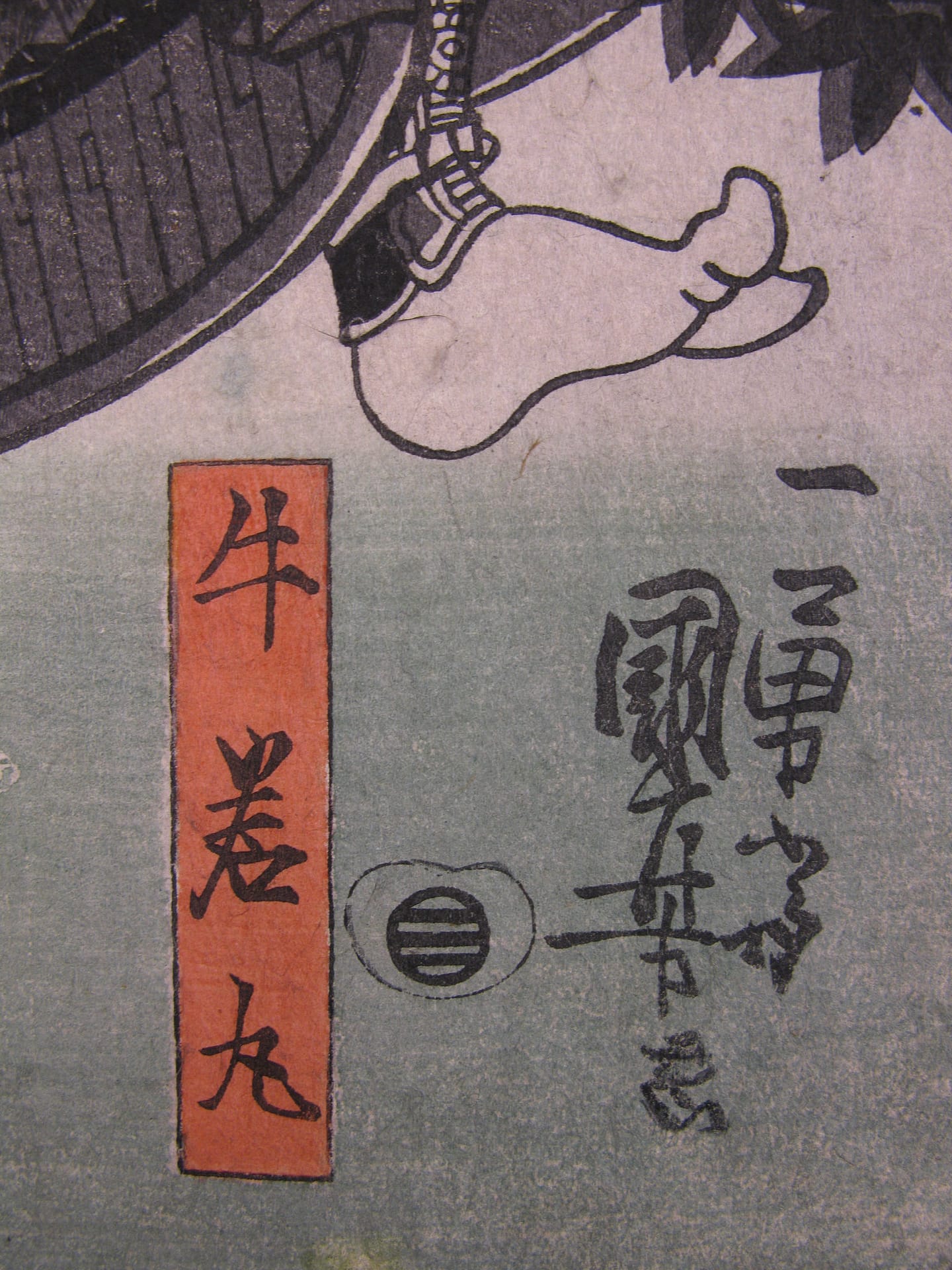
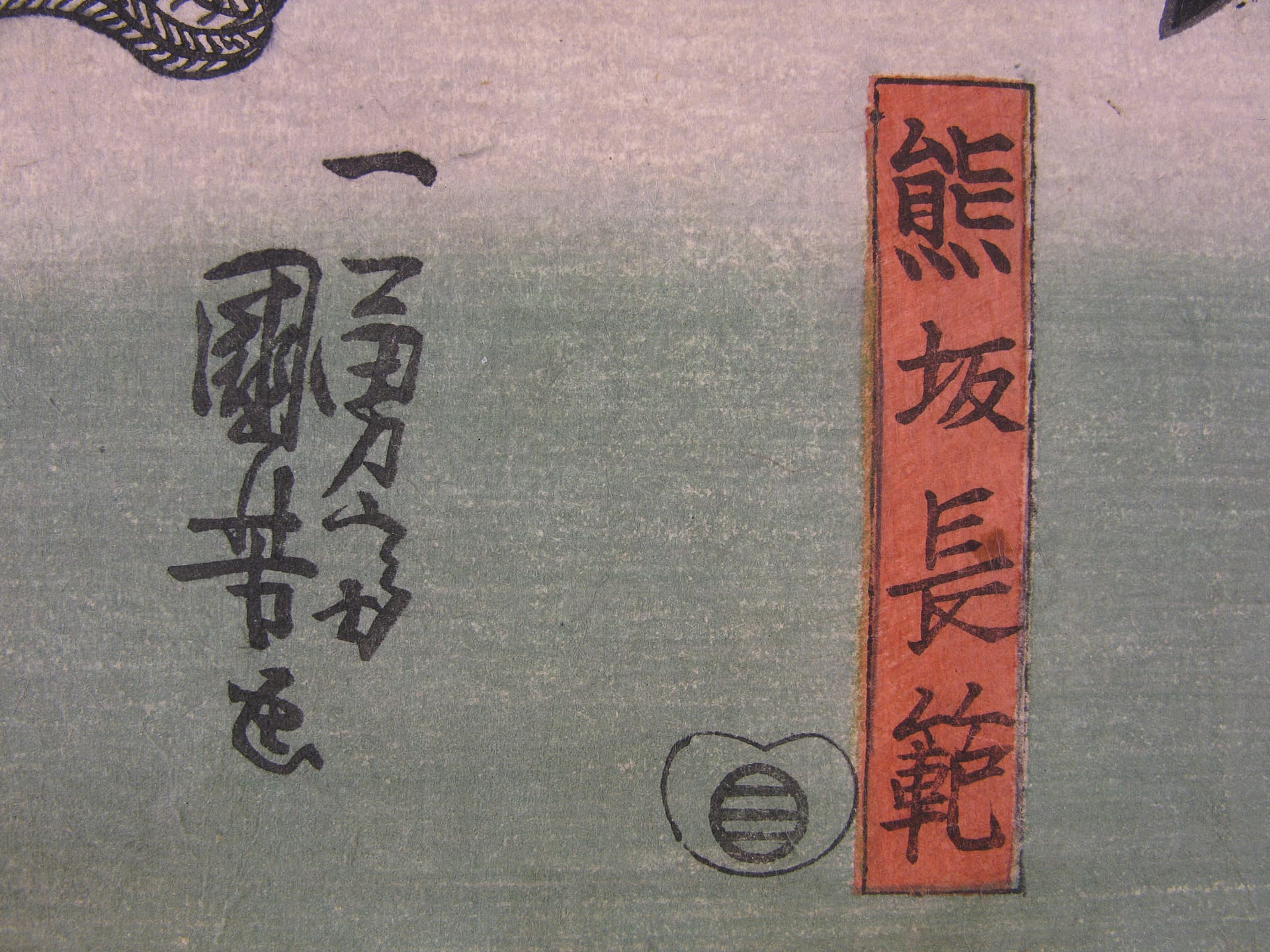
Title/text: In the 4th year of the Jôhan era, he (Chohan) broke into Aotoba’s inn to steal Tachibanaji’s luggage, but Ushiwakamaru ended up killing him: Uketamawa yasu shi-nen Tachibana tsugi no nimotsu datsu n tame Aohaka no yado e nyū komi shi ga tsui ni ushi waka maru ga tame satsugai seraru (承安四年橘次の荷物奪ん為青墓の宿へ入込しが終に牛若丸が為殺害せらる)
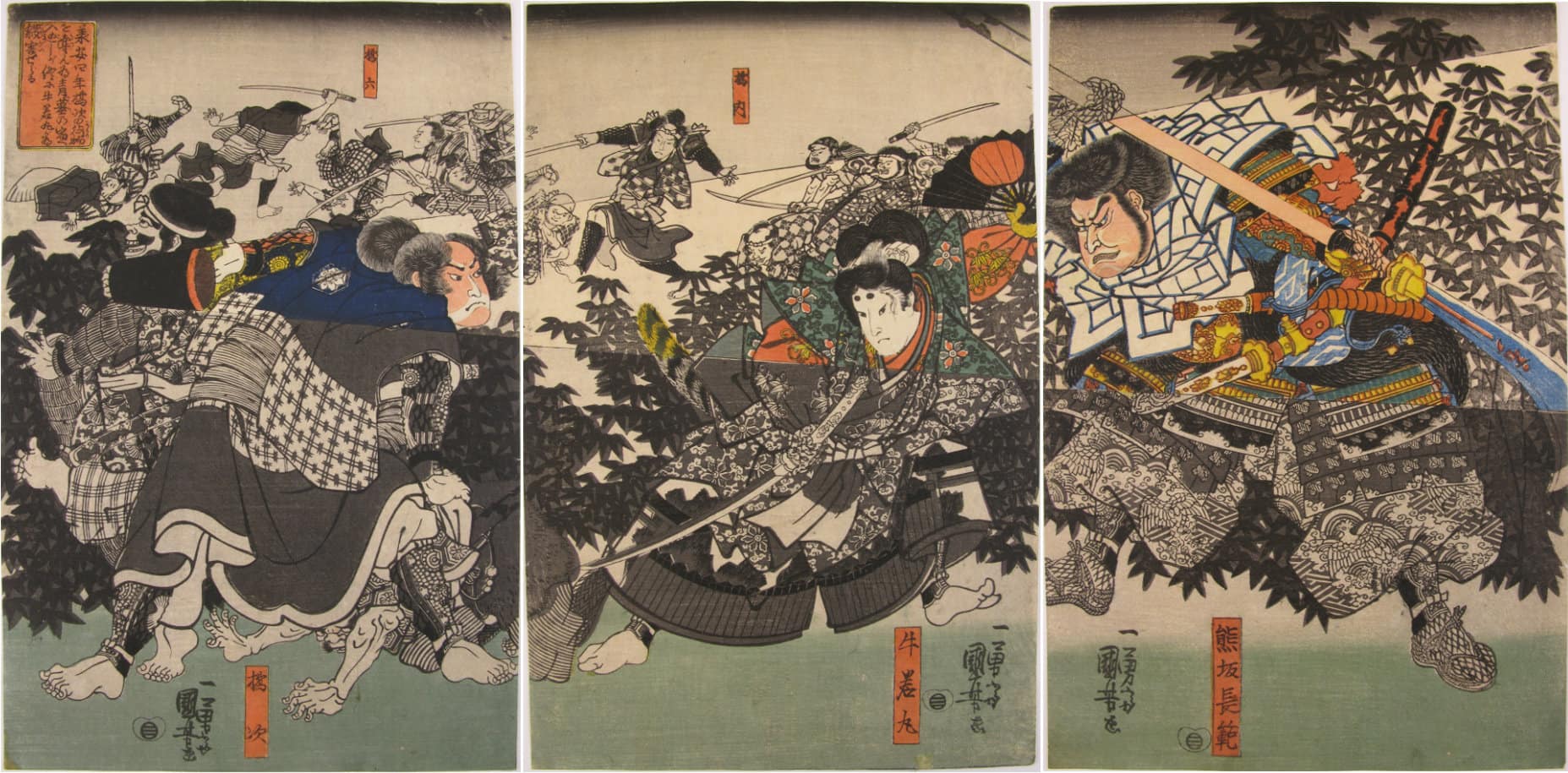
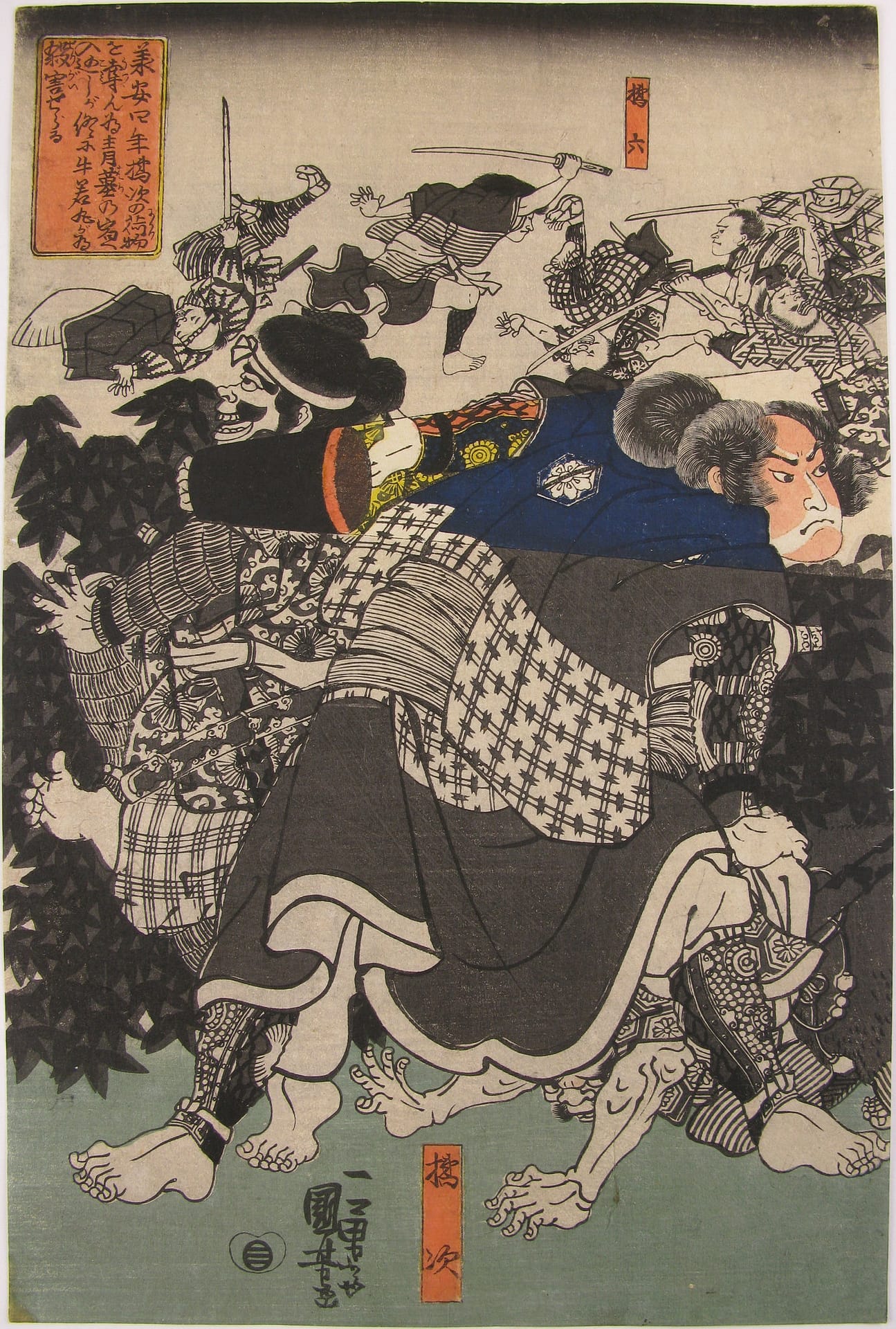
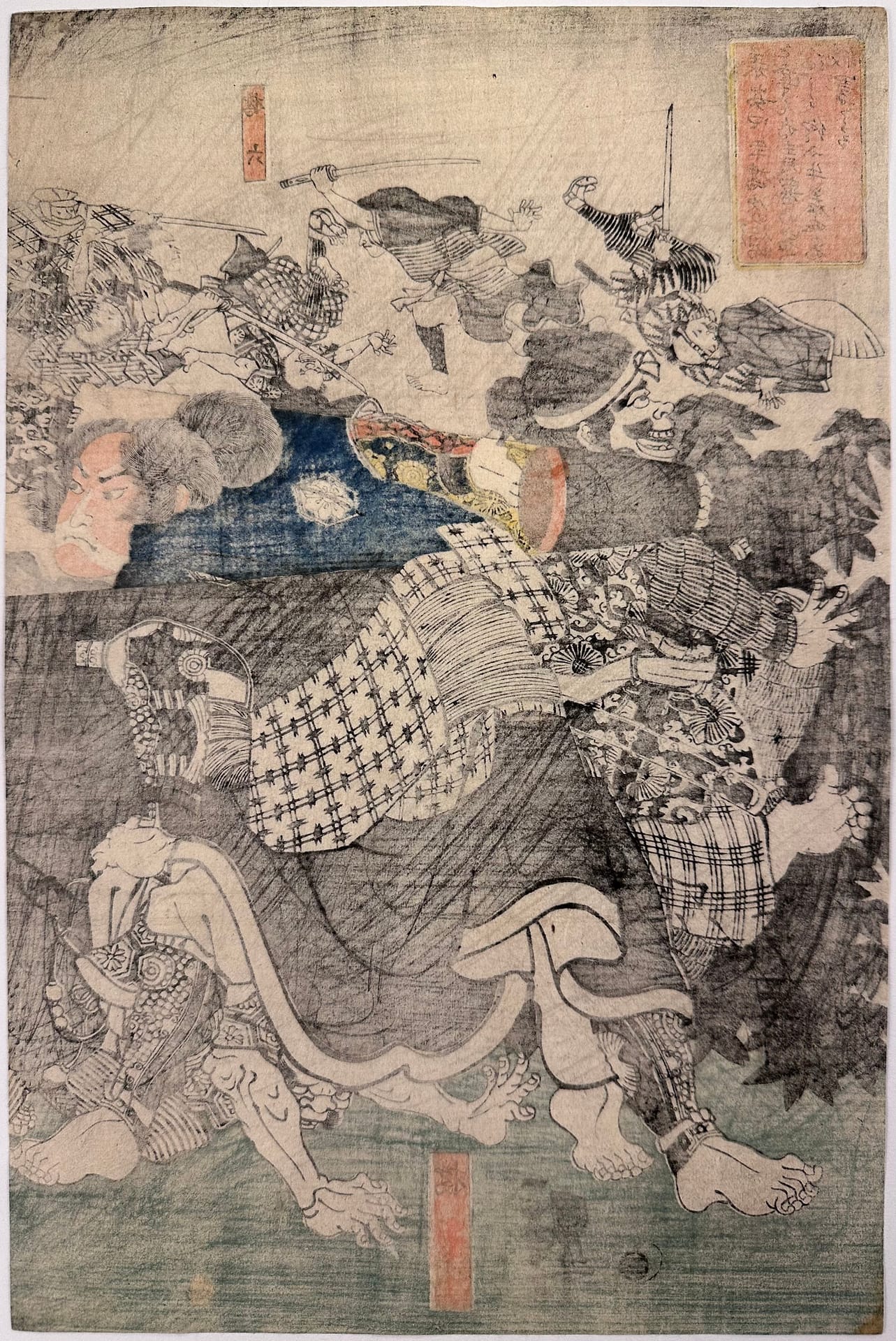
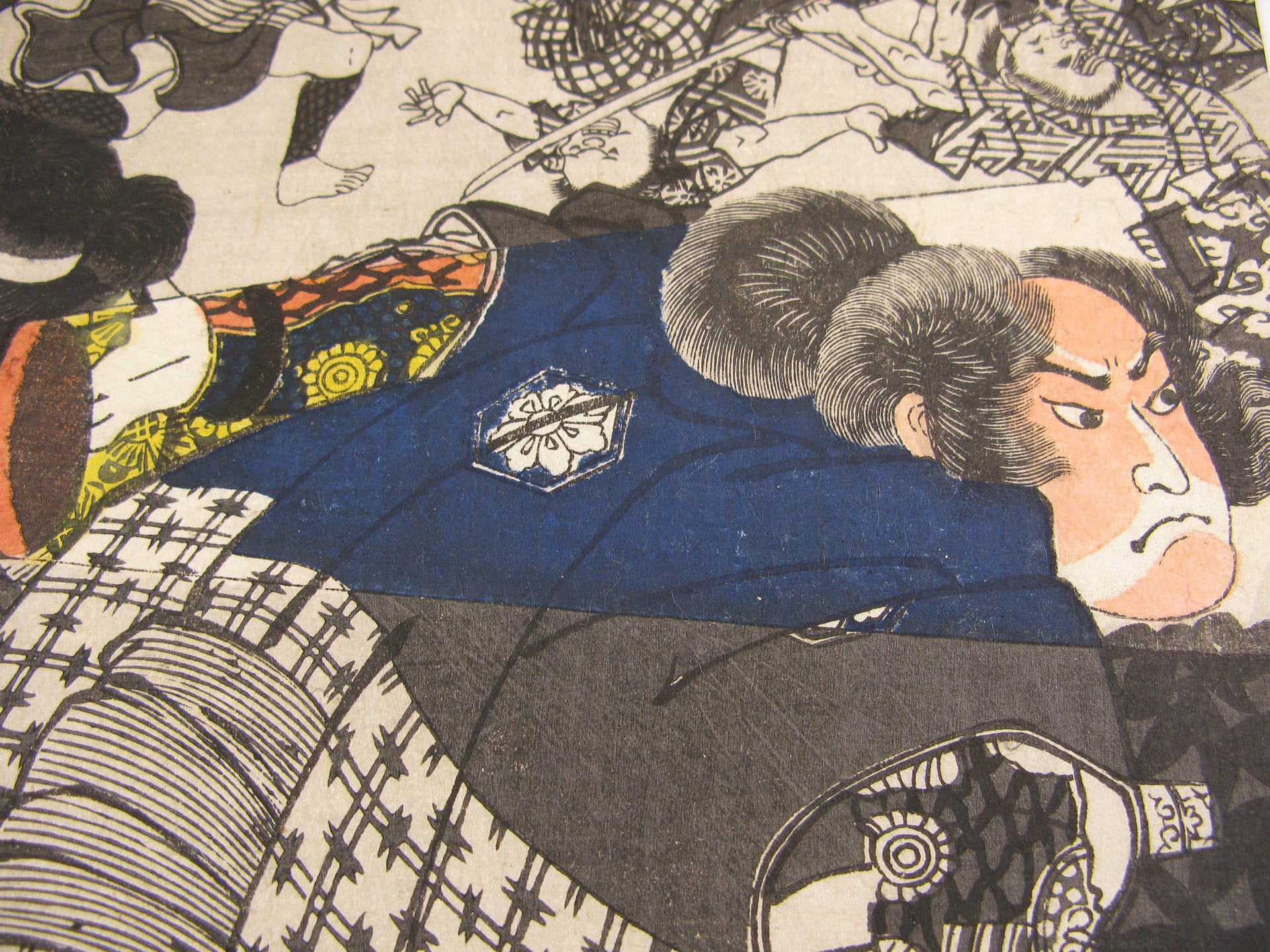
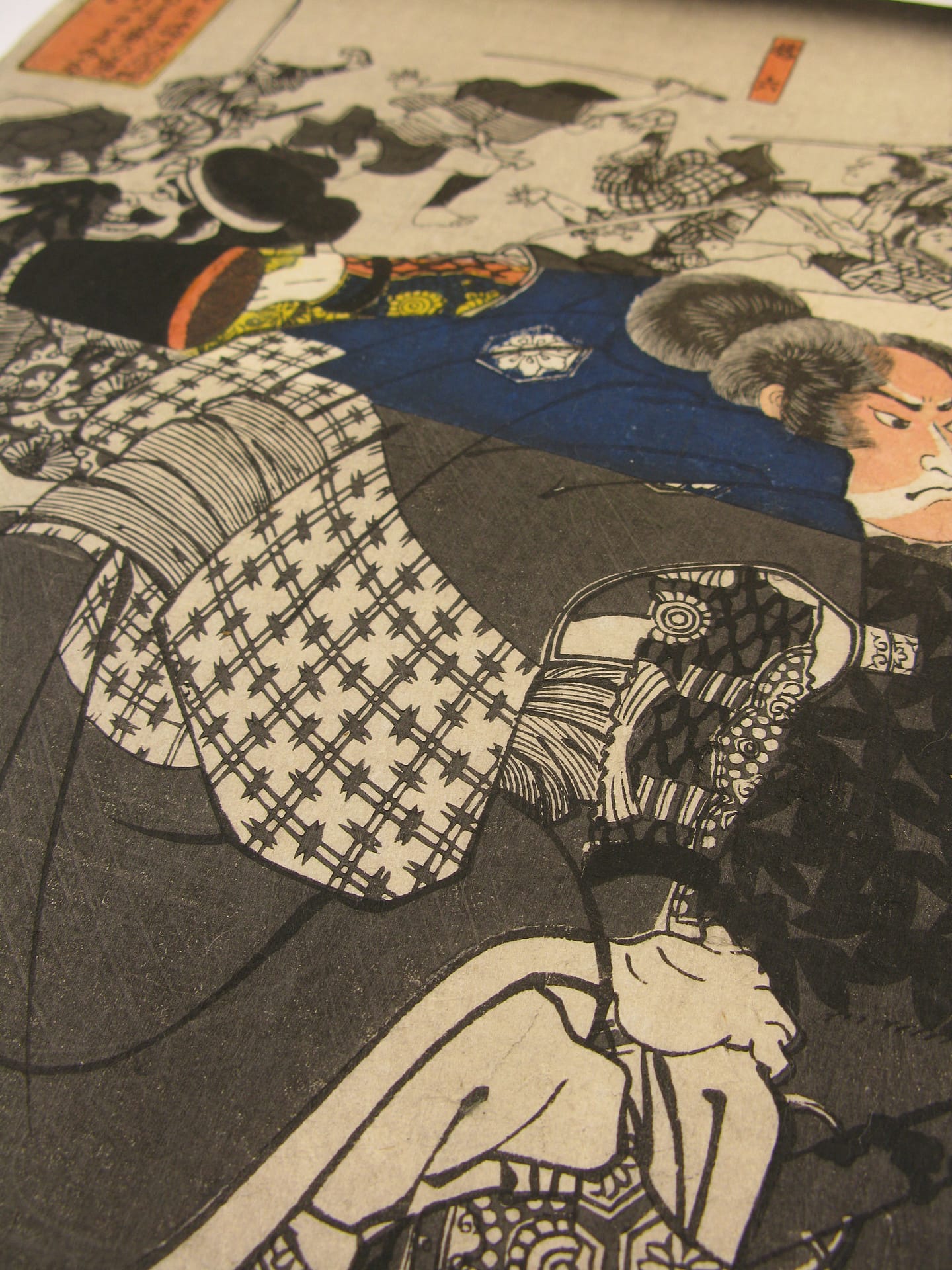
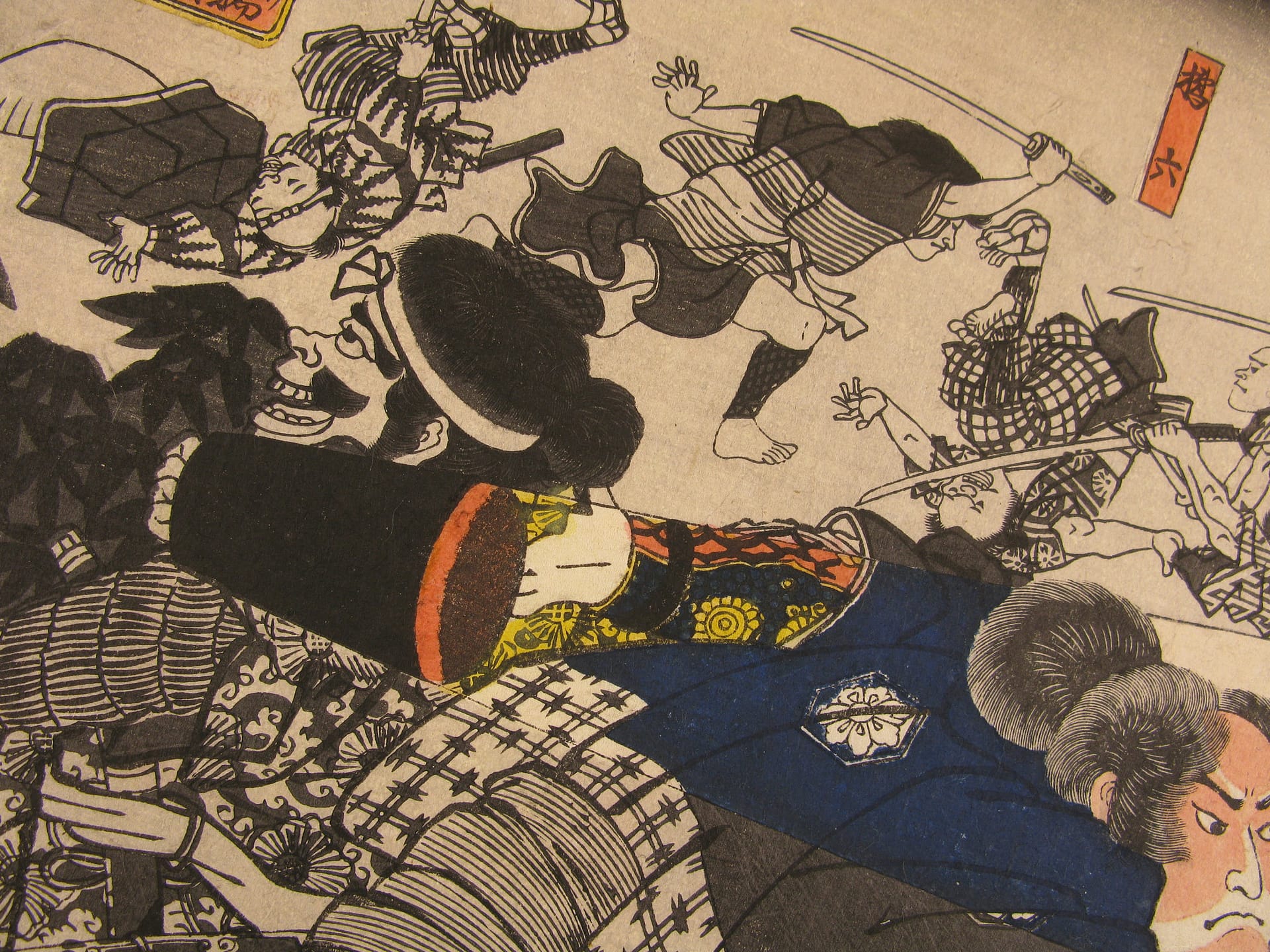
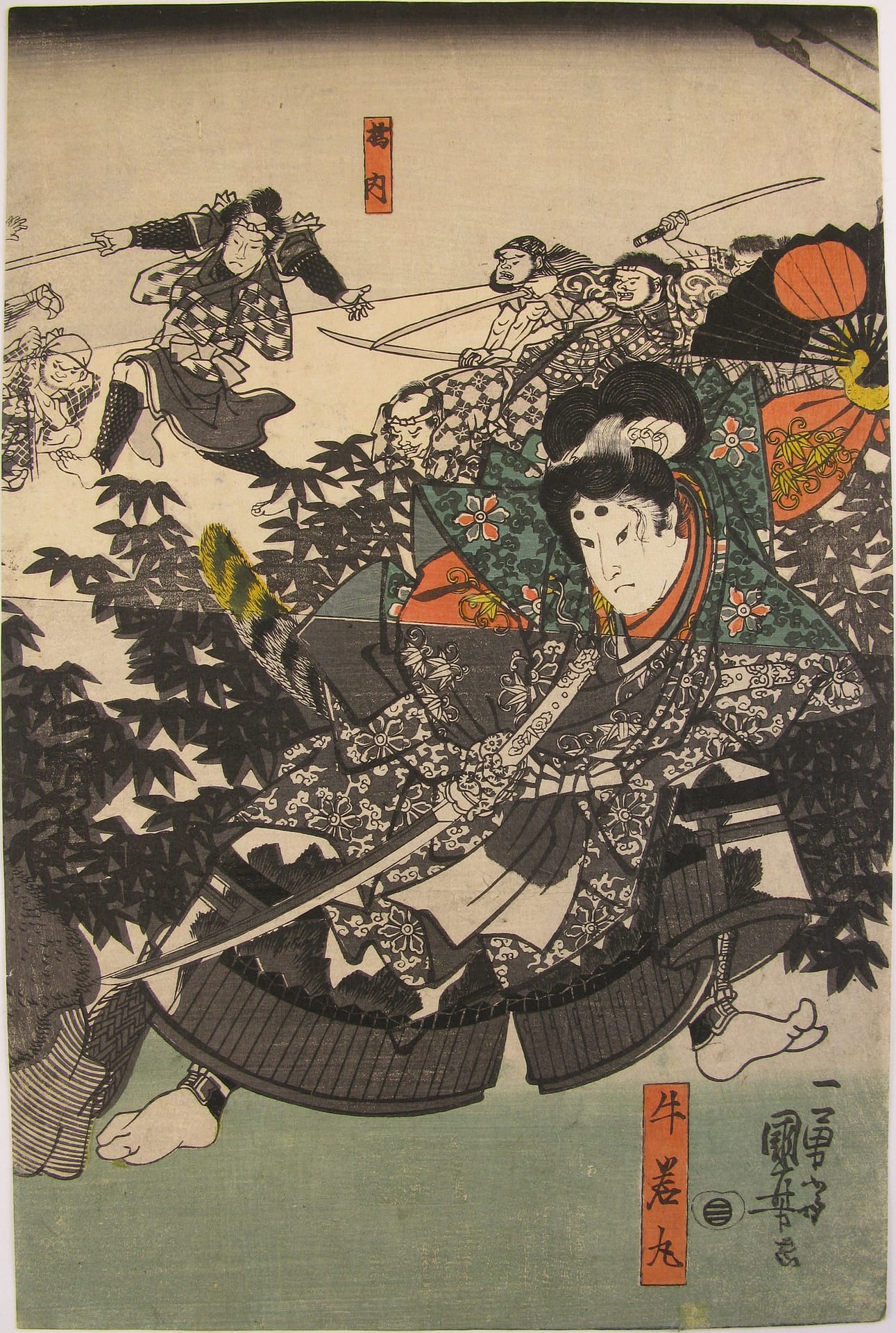
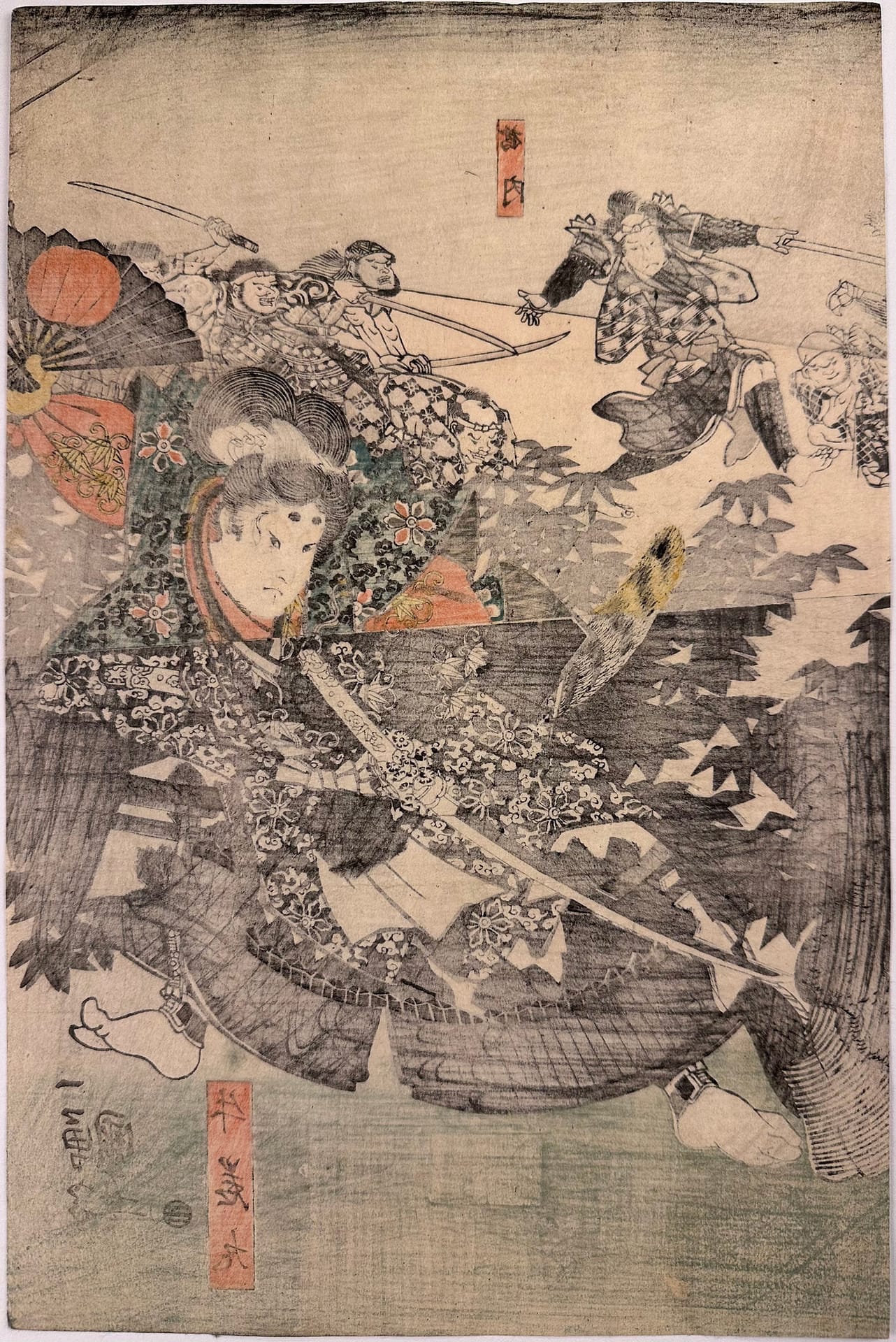
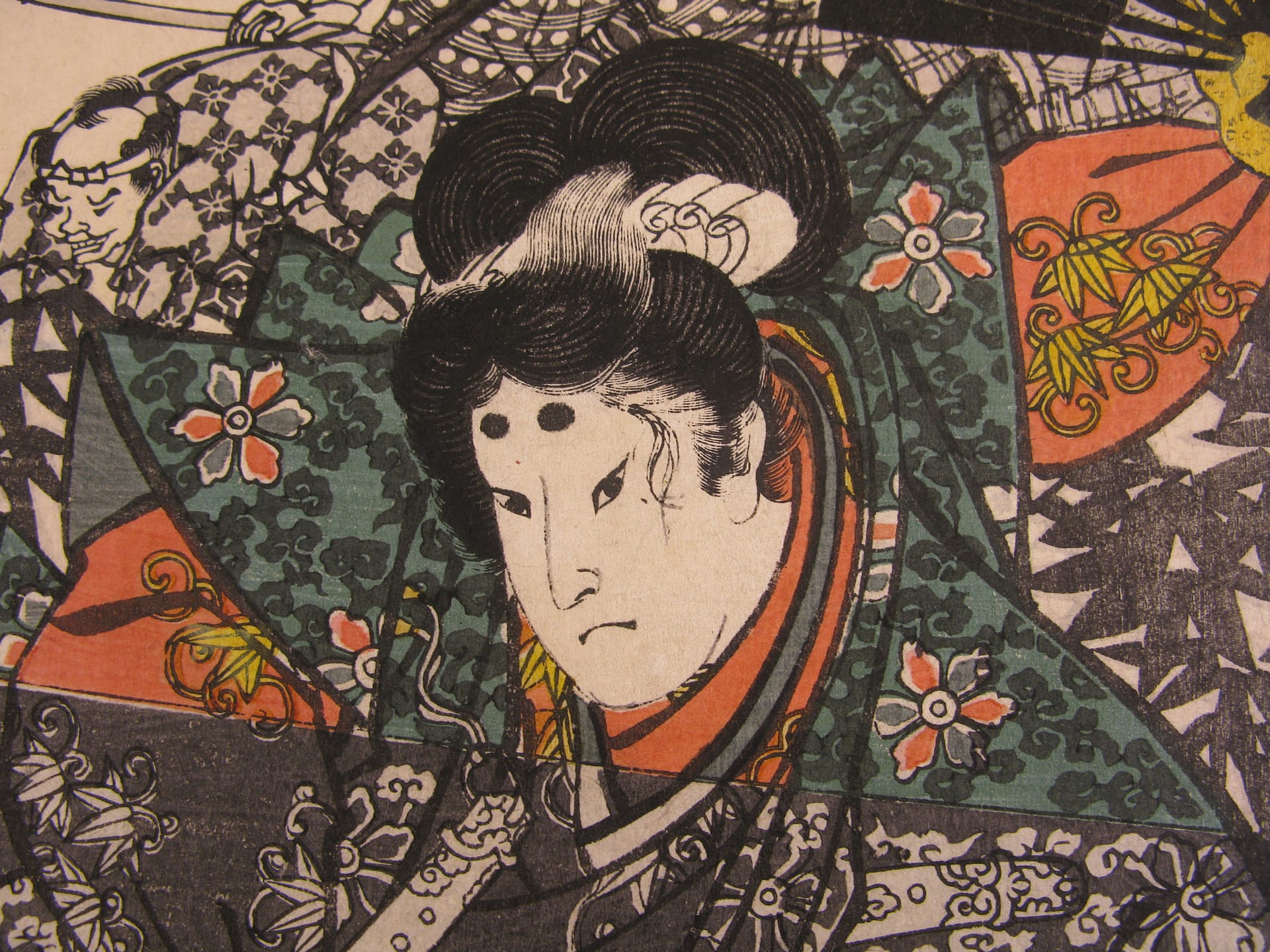
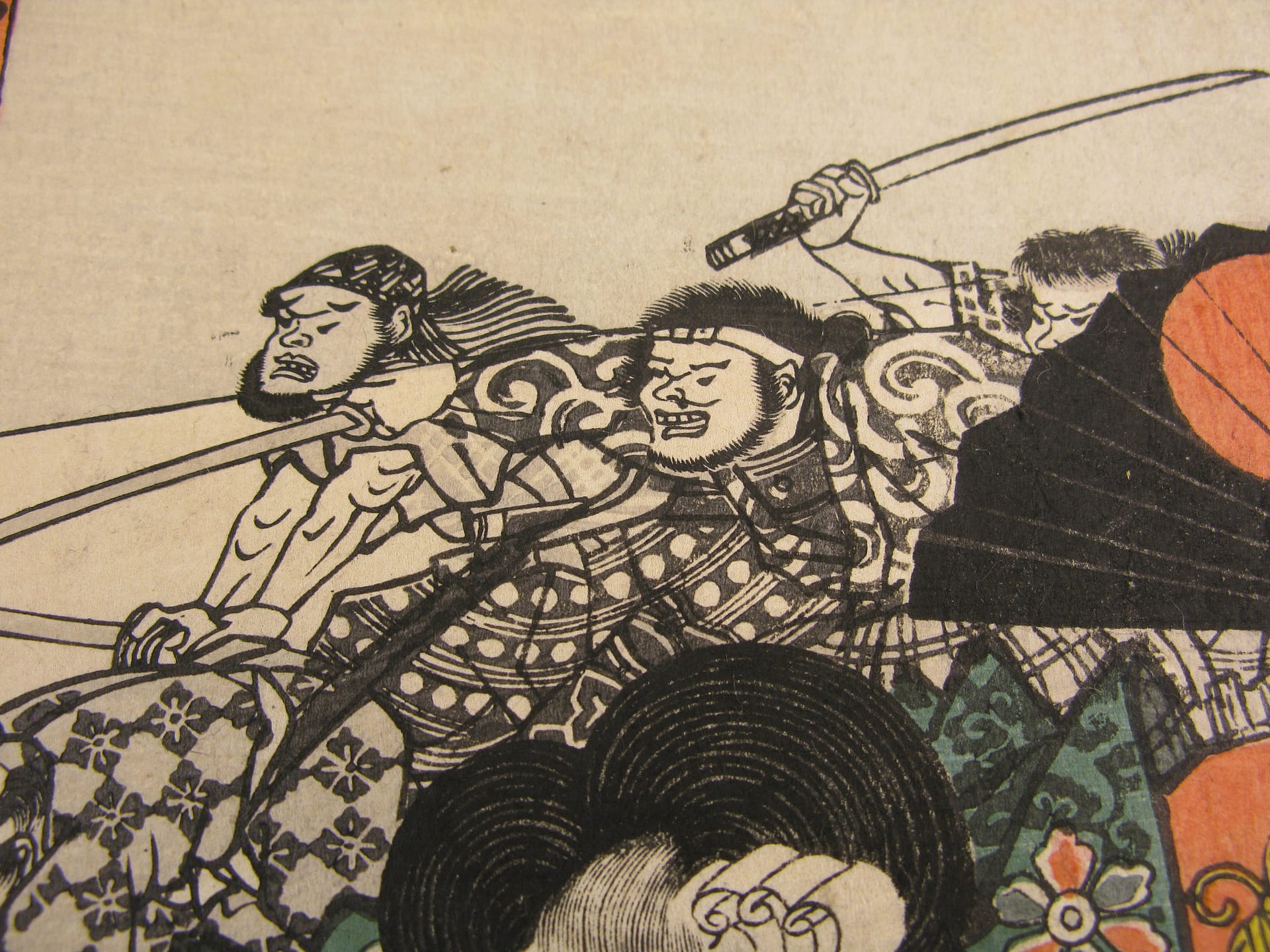
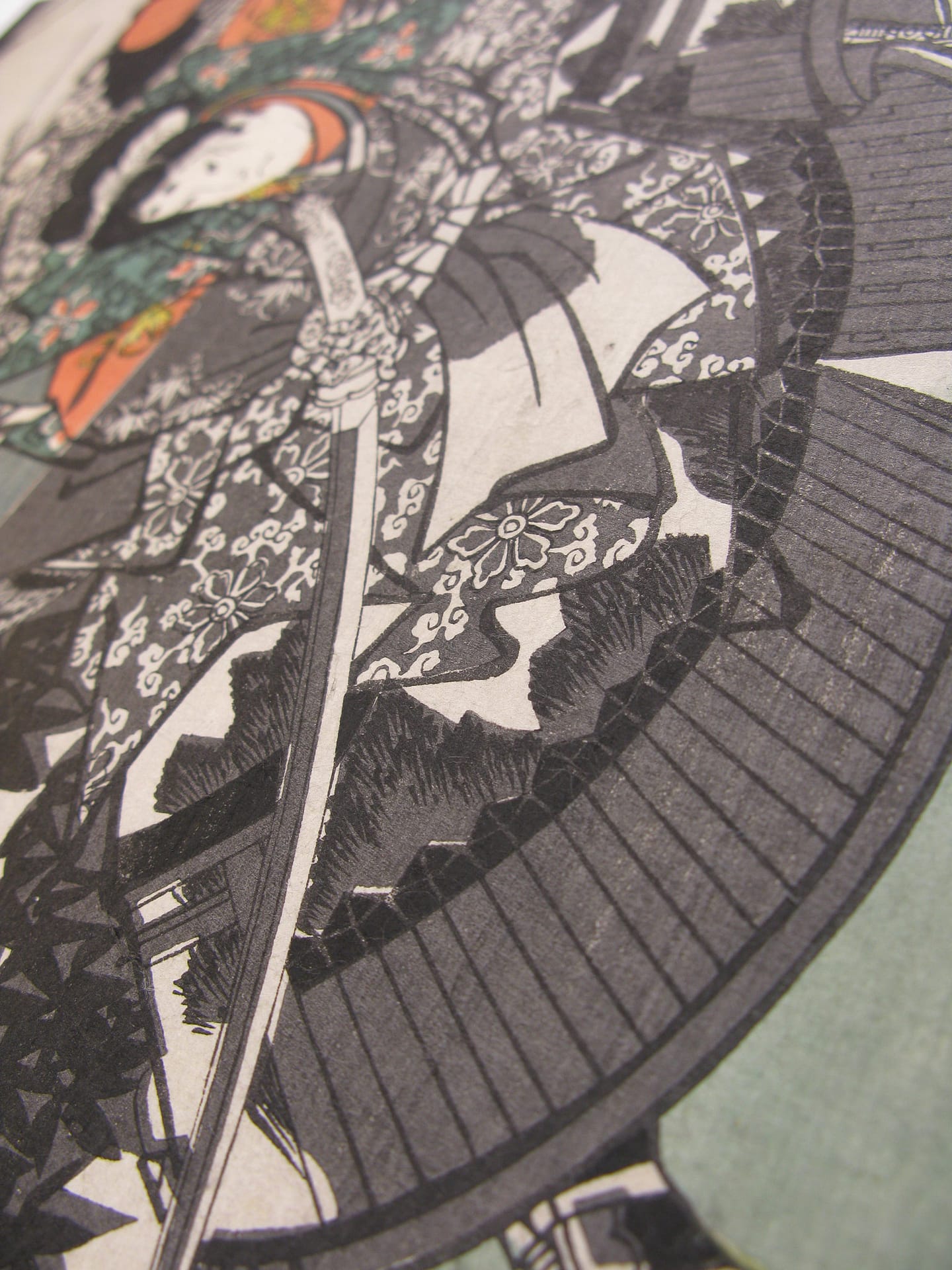
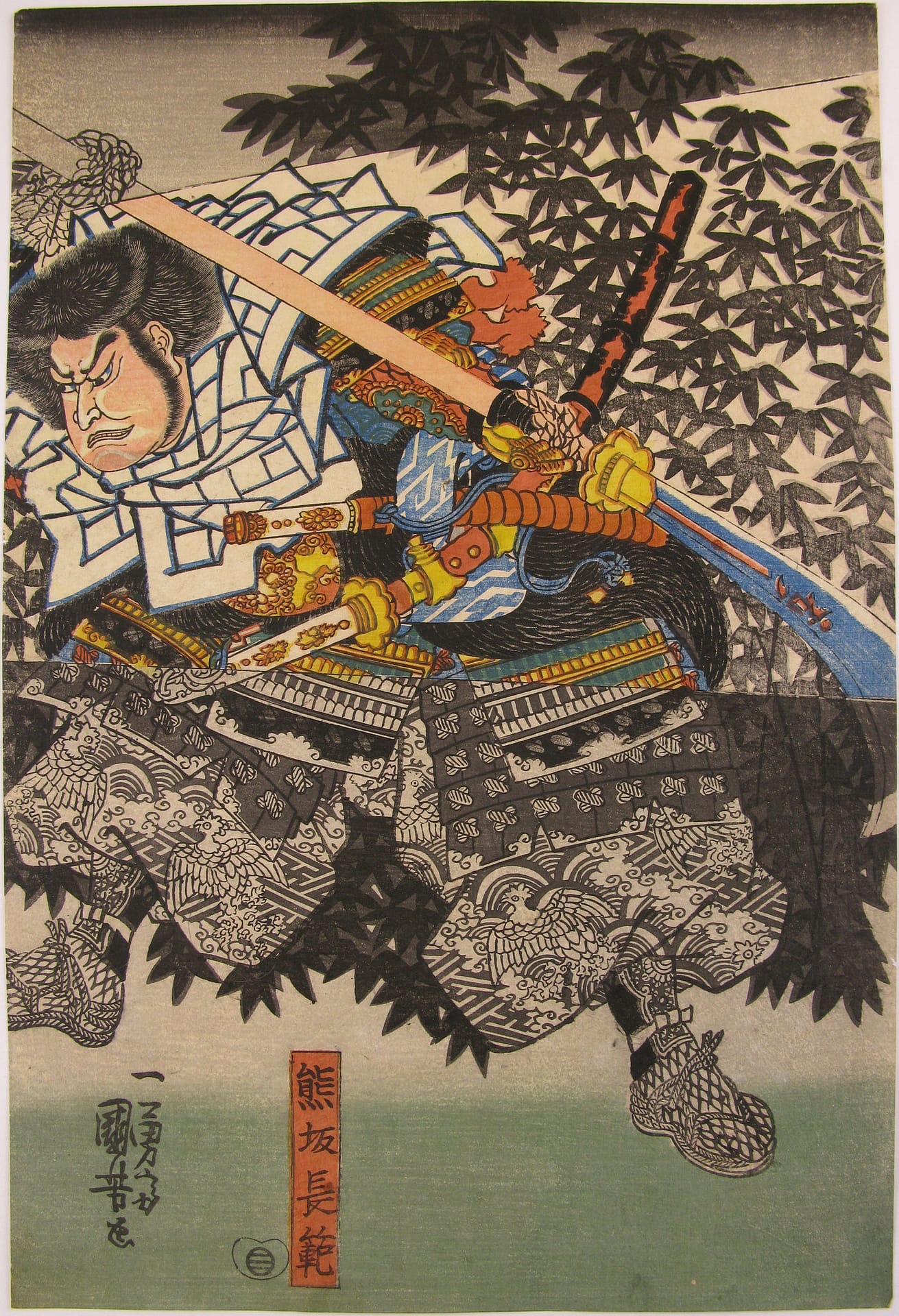
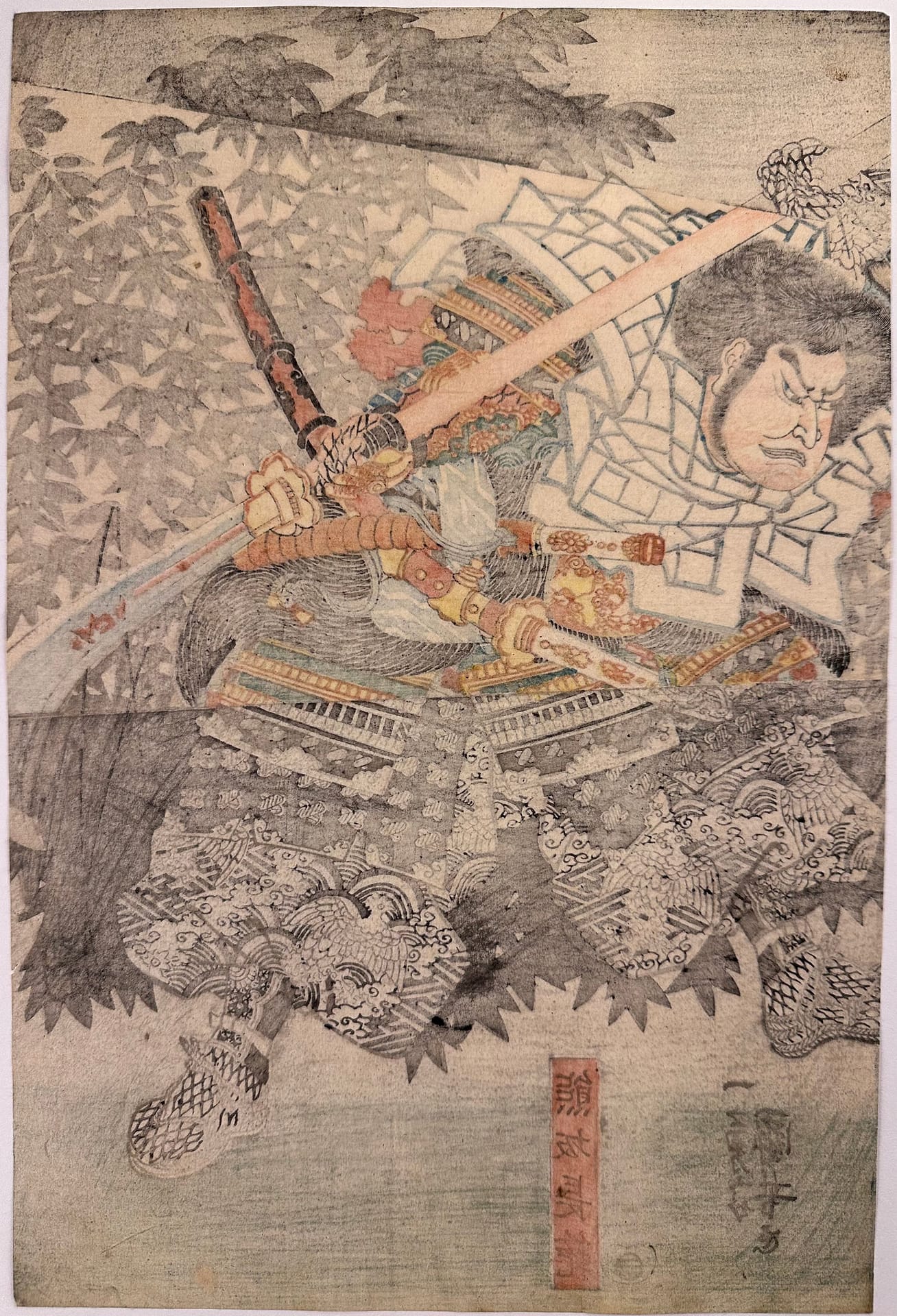
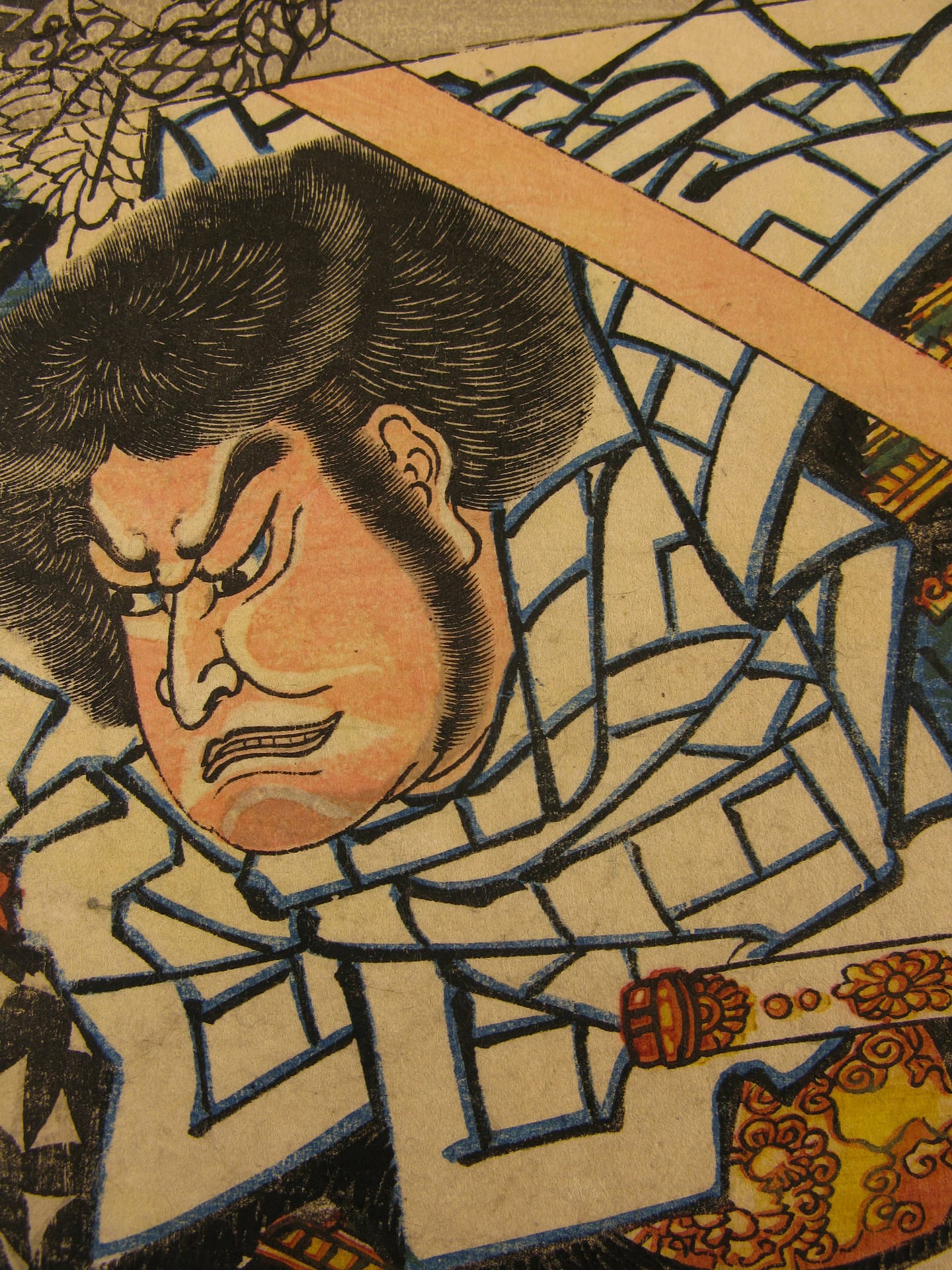
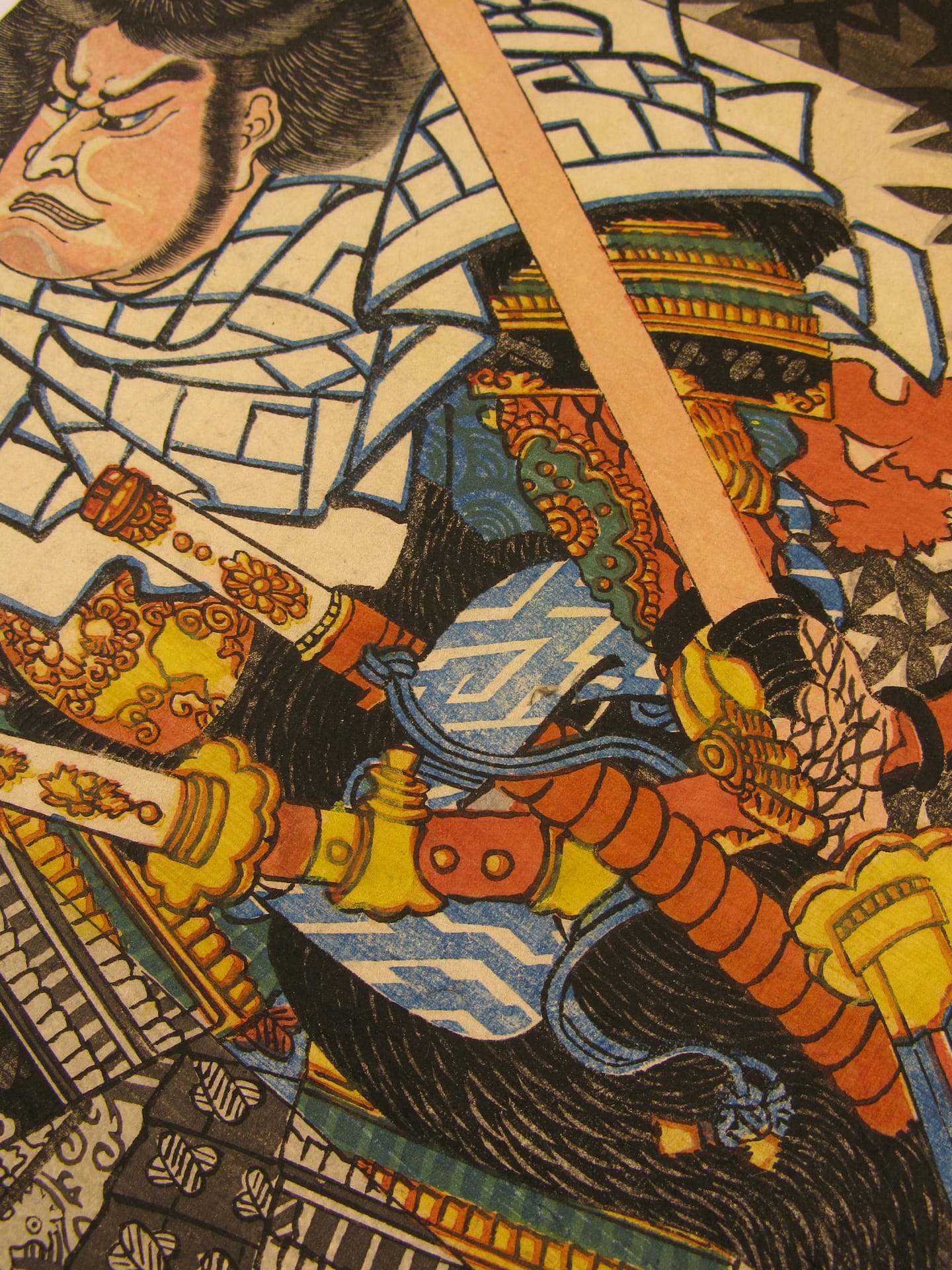
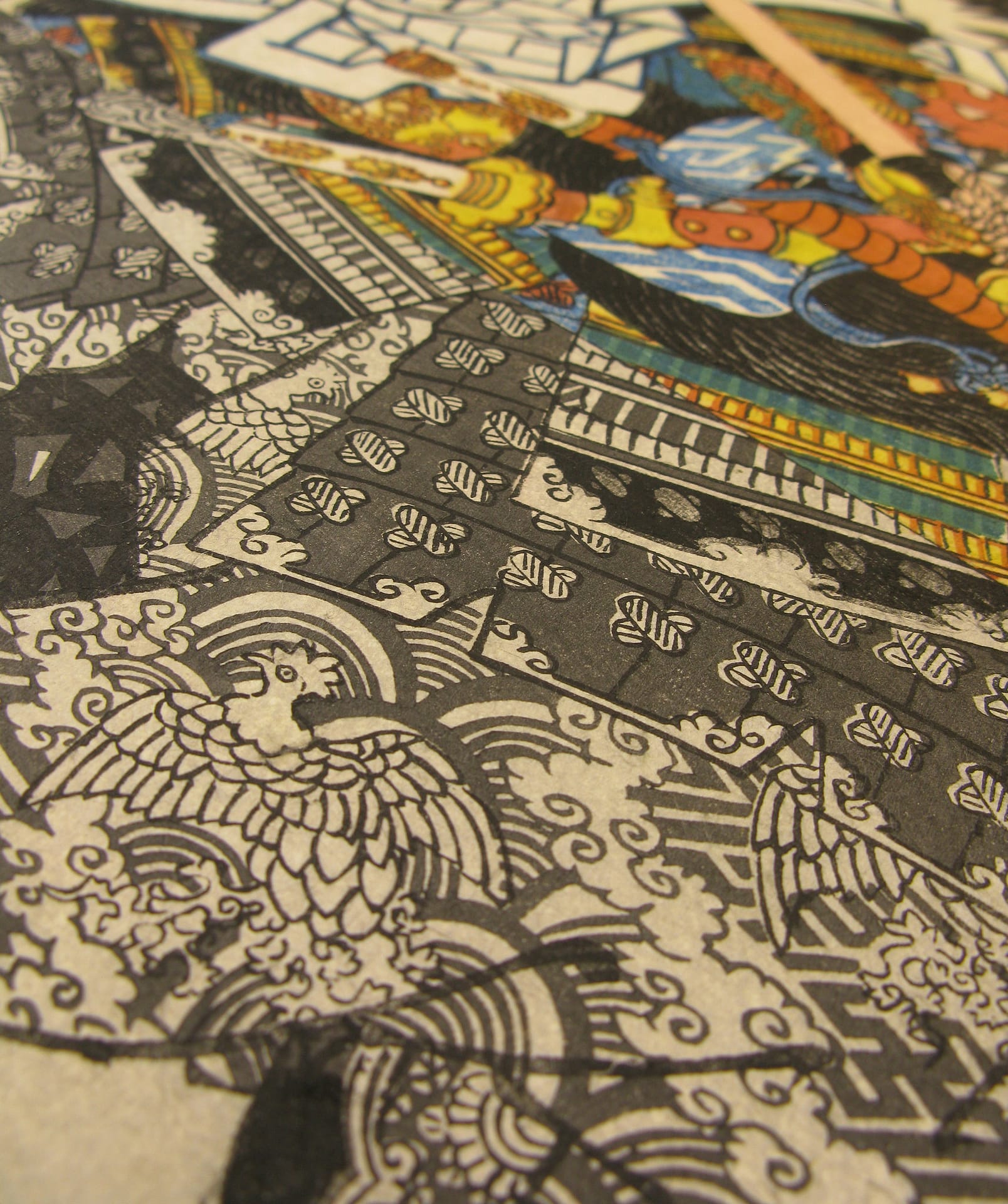
Description: Night scene of Ushiwaka Maru (牛若丸) fighting Kumasaka Chôhan (熊坂長範) and his gang, one of whom is shining a lantern, at an inn; likely the historic post-town Aohaka-juku (青墓宿) in Mino province in 1174.
Artist: Utagawa Kuniyoshi (1797 – 1861)
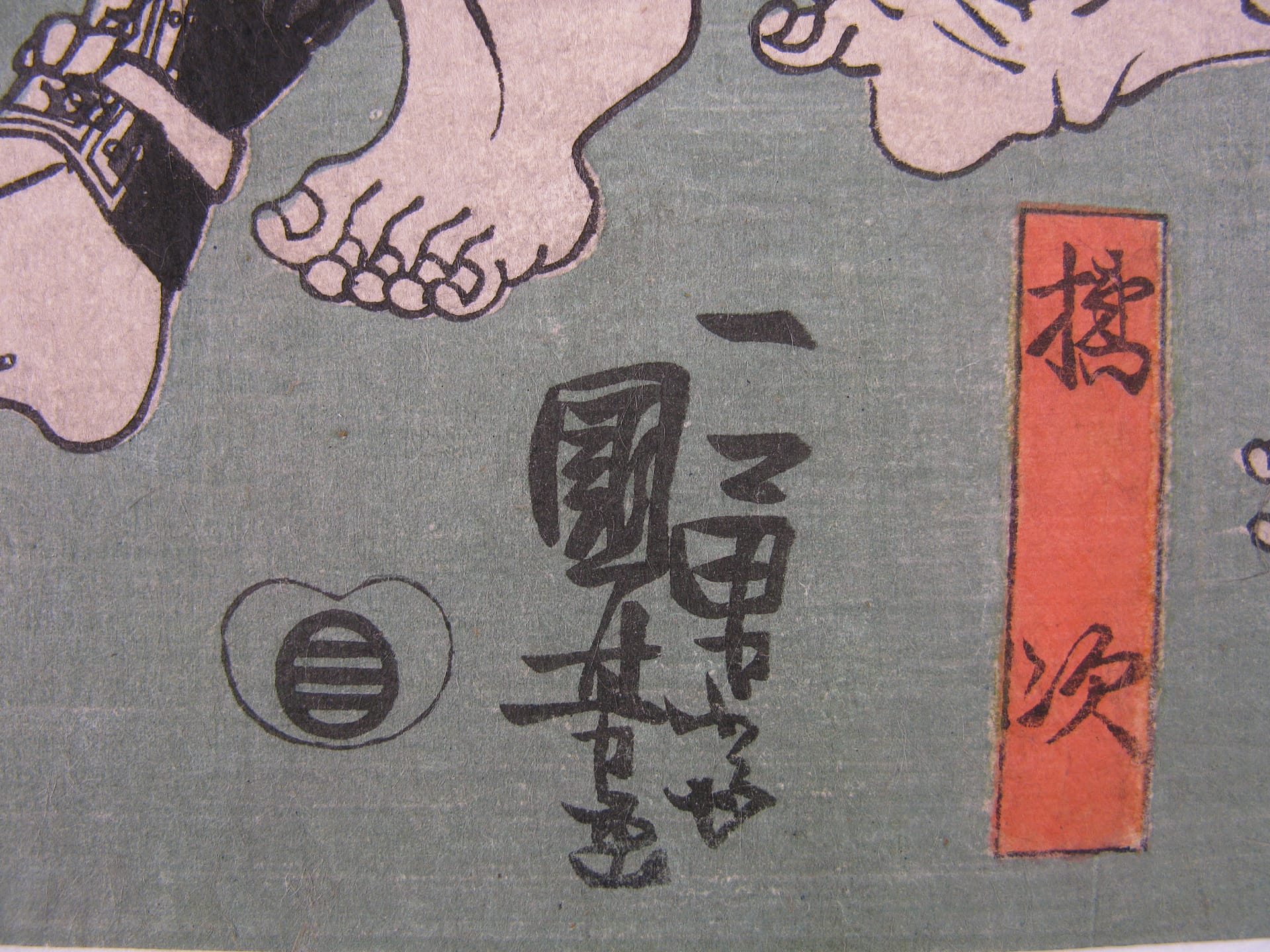
Signature: Signed on all three sheets Ichiyusai Kuniyoshi ga (一勇斎 國芳 画)
Date: 1839-1841
Publisher: Iba-ya Sensaburo
Robinson: T53
Condition: Good impression, retaining strong colours, some trimming to the right hand sheet
Price: TBC
The tale of the print – with a little twist
The story begins with Kichiji Nobutaka, a wealthy gold merchant traveling through Mino Province with a caravan so full of valuables it practically screamed, “please rob me.” (S65.4) Along for the trip was a teenager named Ushiwaka Maru — later known as Minamoto no Yoshitsune — who was about fifteen, unnervingly talented, and trained in martial arts by tengu, which is basically like saying he had a black belt issued by supernatural goblins.
Enter Kumasaka Chōhan, a bandit chief built like a tree trunk and accompanied by seventy robbers who all agreed this caravan looked delicious. They staked out the group and decided to ambush their lodging at the Inn of Aotoba (likely the post station along the Kisokaido later called ‘Akasaka’ – S74.58). They waited until the merchants and guards were drunk, snoring, and utterly useless.
Everyone was asleep except Ushiwaka. He was awake because, he was responsible, he was trained by goblins, and well teenagers don’t sleep anyway. Peeking through a hole in the paper sliding door, he saw the bandits surrounding the inn. Instead of panicking, he thought, “perfect, something to do rather than count sheep.”
He leapt into action, slicing through bandits like he was speed‑running a video game. Then he faced Kumasaka himself — a man so large he probably had his own gravitational pull. But Ushiwaka was too fast, too clever, and too goblin‑trained. He stabbed Kumasaka, who collapsed dramatically and asked the classic villain question: “Who ARE you?” Ushiwaka revealed his lineage – “I am your father” oh no, sorry wrong story.
Kumasaka died thinking, “Ah …. that explains it, and good things do come in small packages.” The remaining bandits fled, presumably reconsidering their career choices.
Some-time later …
A wandering monk left Kyoto on a pilgrimage. He arrived at Aonogahara, where a friendly monk approached him and said, “Hey, could you perform a memorial service? It’s… an important anniversary.” The traveling monk, being polite, agreed — even though the request was suspiciously vague.
That night, he entered the Jibutsudō, expecting serene Buddhist statues. Instead, he found: a giant long‑handled sword, iron clubs, and enough weaponry to arm a small militia. The “monk” explained that bandits had been attacking the area, so he kept weapons handy. This was not reassuring. Then, the monk and his hut vanished. Just poof. Gone. The traveling monk stood there like, “Well damn, that’s not in the sutras.”
He asked a villager if in the past, someone had committed evil deeds in this vicinity. The villager said, “Oh yeah, this place was the stomping ground of Kumasaka Chōhan. He was killed, you should probably pray for his soul.”
The monk’s face said: “I think I already met him”.
At dawn, the ghost of Kumasaka Chōhan re-appeared — this time not pretending to be a monk, but fully embracing the “giant bandit with a massive weapon” aesthetic. He told the monk the whole story: how he tried to rob Kichiji’s caravan, how Ushiwaka fought like a supernatural blender, how he, Kumasaka, died in a duel with a teenager who moved faster than physics.
Having finished his tale, the ghost politely asked for a proper memorial service and then vanished again, presumably to haunt someone else’s dreams.