Kuniyoshi – The sixty-nine stations of the Kisokaido
Kisokaidô rokujûku tsugi (木曾街道六十九次之内)
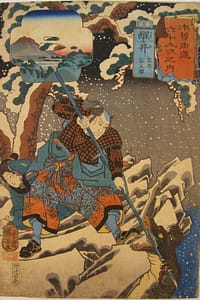
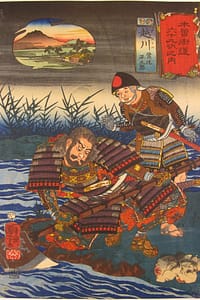
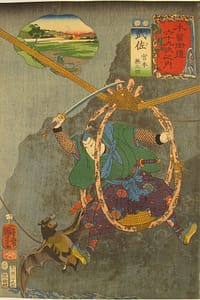
The Kisokaido series (1852 – 53) by Kuniyoshi consists of a total of 72 prints; a title page, a print for each of the end points and a print for each of the stations in between. As it was such a large series it was shared amongst 12 different publishers, the trade mark of which appears on every print. Many of the prints also display the name of the block cutter, the printer or both. The names of 31 different people appear on the 72 prints in the series. Refer here for more information.
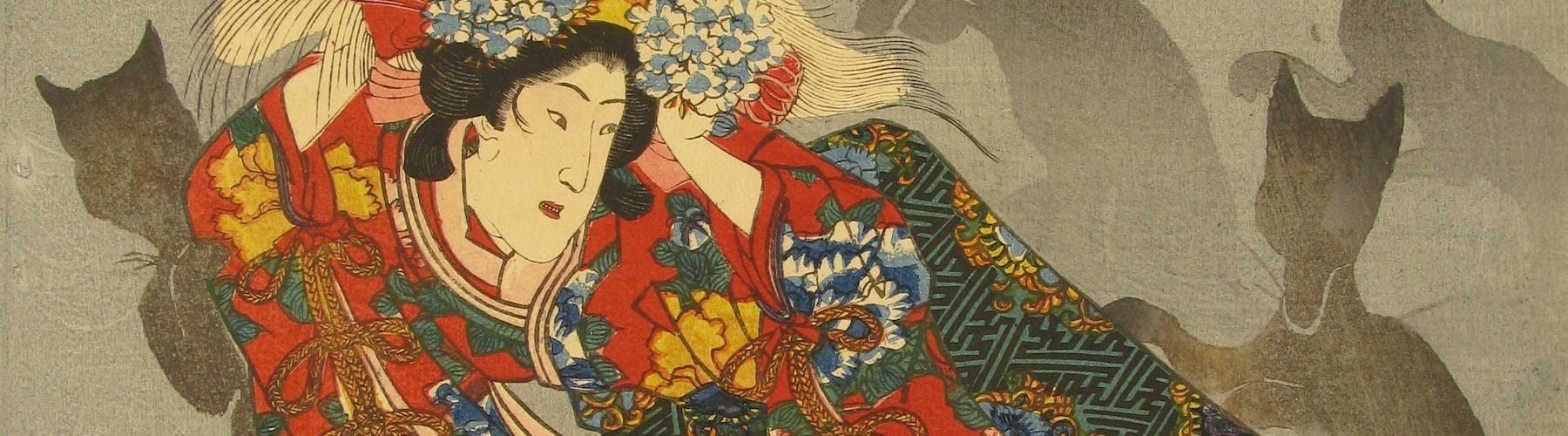
Travellers once followed the Kiso Kaidō from station to station across mountains and valleys. In Kuniyoshi’s hands the Kiso Kaidō becomes more than a road: each station serves as a stage upon which heroes, warriors, and legendary figures appear, transforming a traveller’s route into a visual journey through Japan’s storytelling traditions.
The humour (mitate) in this series lies within the selection itself, the matching of the place names with specific stories. In some of the prints the story actually took place at the location. In most though, the story is matched to a location because of a pun on a persons name, a place name, or some other element within the story.
In this series, Kuniyoshi invites us to make the same journey—only this time in the company of warriors, ghosts, poets, and the occasional legendary scoundrel.
Historical significance of the Kisokaido
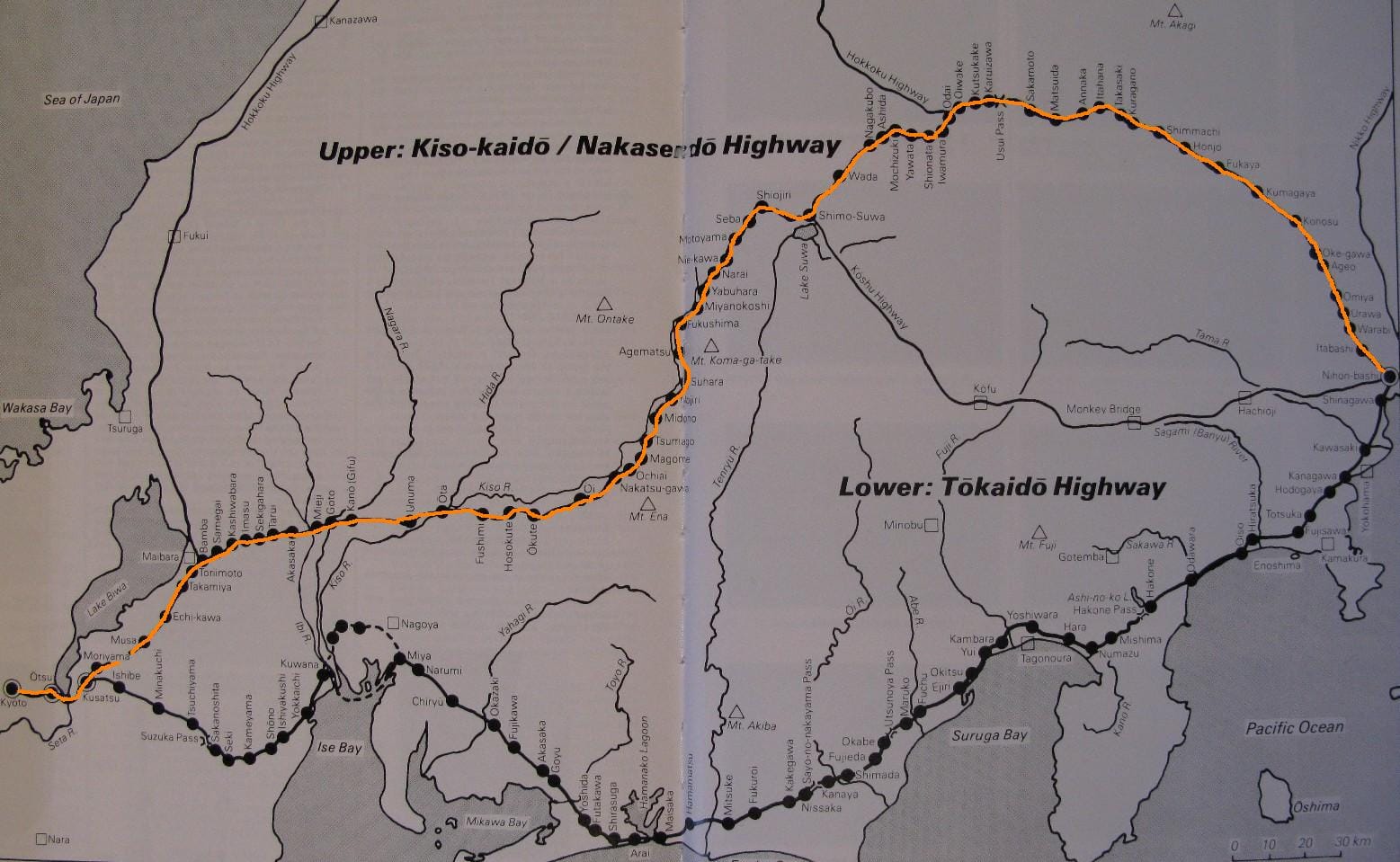
Stretching across the mountainous heart of central Japan, the Kiso Kaidō—often written ‘Kisokaidō, meaning ‘Road through the Kiso Valley’ —was one of the Gokaidō, the five great highways established by the Tokugawa shogunate during the Edo period to regulate travel and strengthen political control across Japan.
The road linked Edo, the shogun’s seat of power, with the imperial capital of Kyoto, winding inland through forests, mountain passes, and deep river valleys often following the Kiso river.
Along the way were sixty-nine post stations where travellers could find lodging, change horses, obtain provisions, and recover from the experience of walking across half of Honshu!
These stations were busy places. Merchants, pilgrims, officials, and the great processions of regional lords travelled the road under the system of Sankin-kōtai, which required daimyō to make regular journeys to Edo. By the nineteenth century the Kisokaidō had become more than a road: it was a familiar thread running through the cultural imagination of the time, inspiring travel literature and the vibrant world of Ukiyo-e.
Recommended books … n stuff
- Utagawa Kuniyoshi The sixty-nine stations of the Kisokaido by Sarah E Thompson
- Kuniyoshi The Warrior-Prints by B. W. Robinson
- Japanese Yokai and other supernatural beings by Andreas Marks
- Kuniyoshi project by William Pearl
Whilst I link to Amazon – please shop around – they are not necessarily the cheapest.
The bushidoboutique collection of Kisokaidô rokujûku tsugi prints