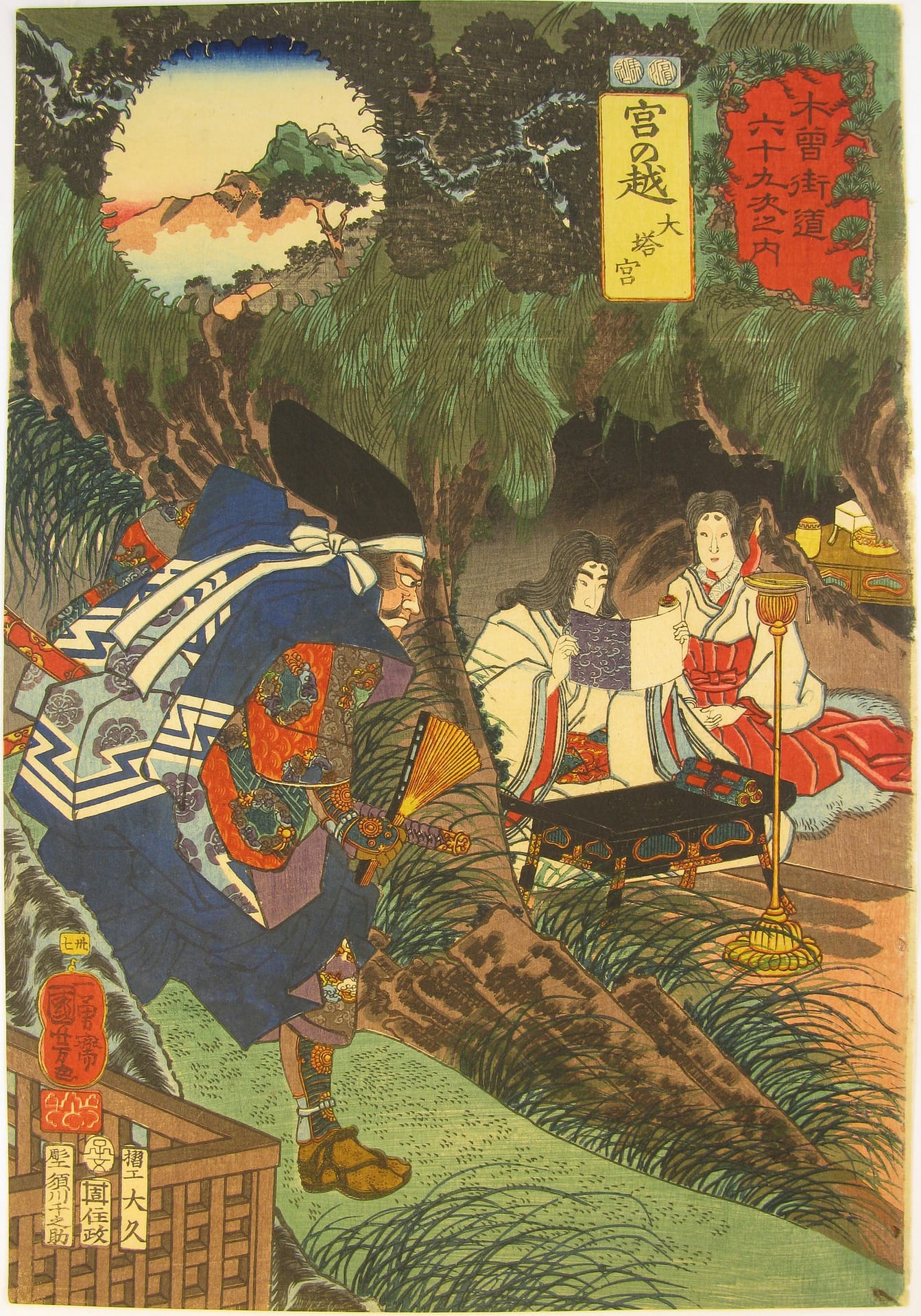
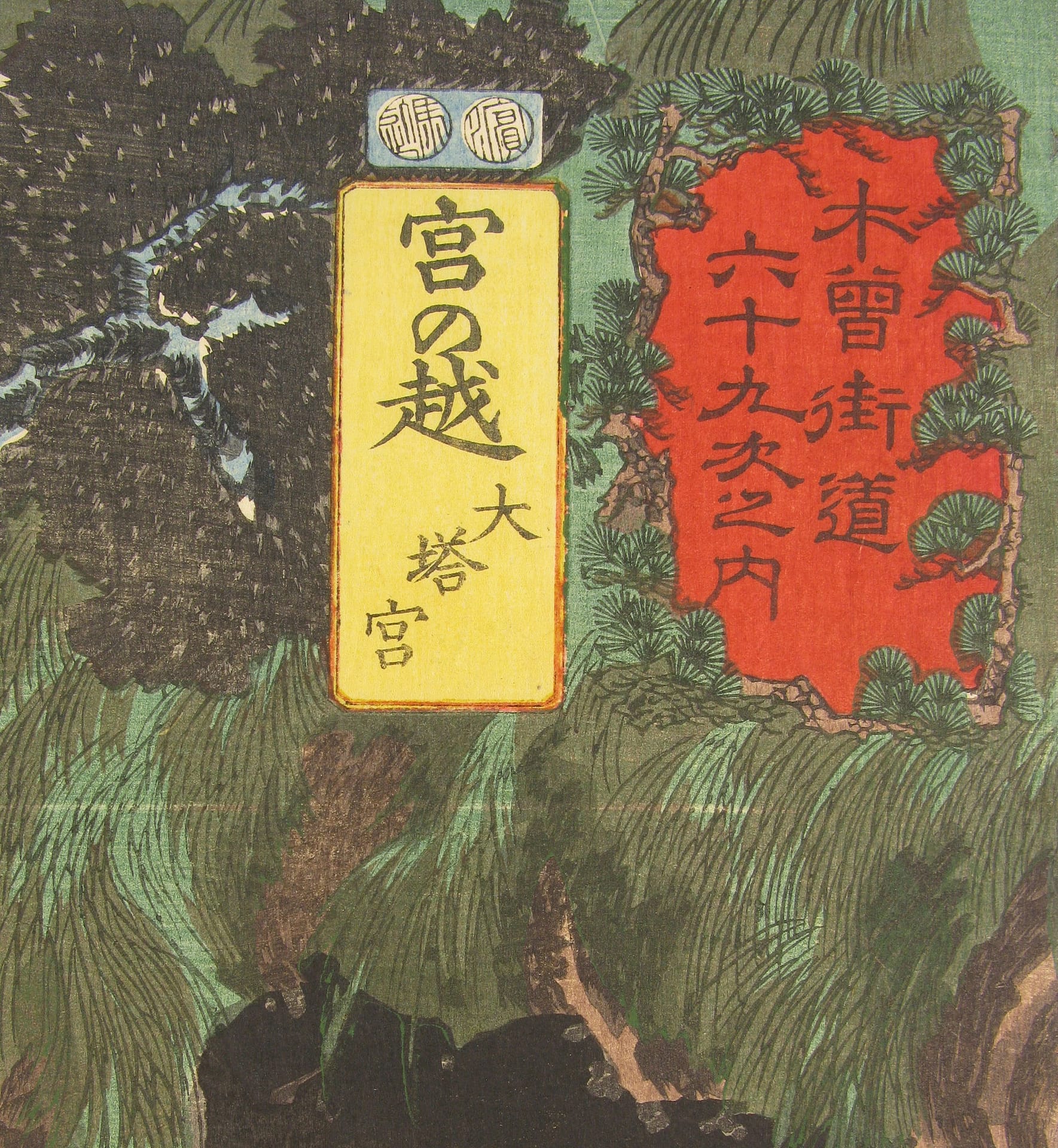
Station: Miyanokoshi (宮の越)
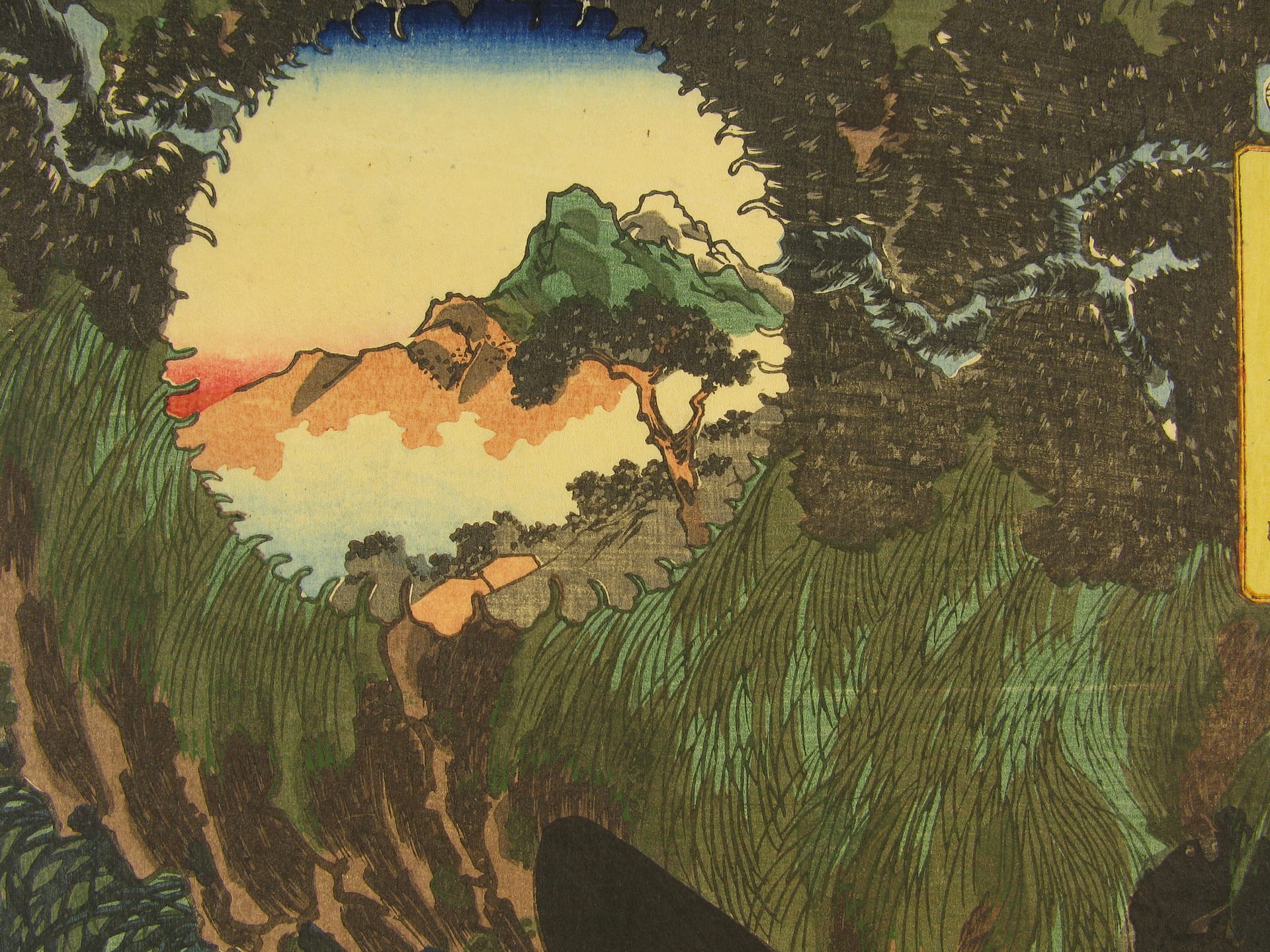
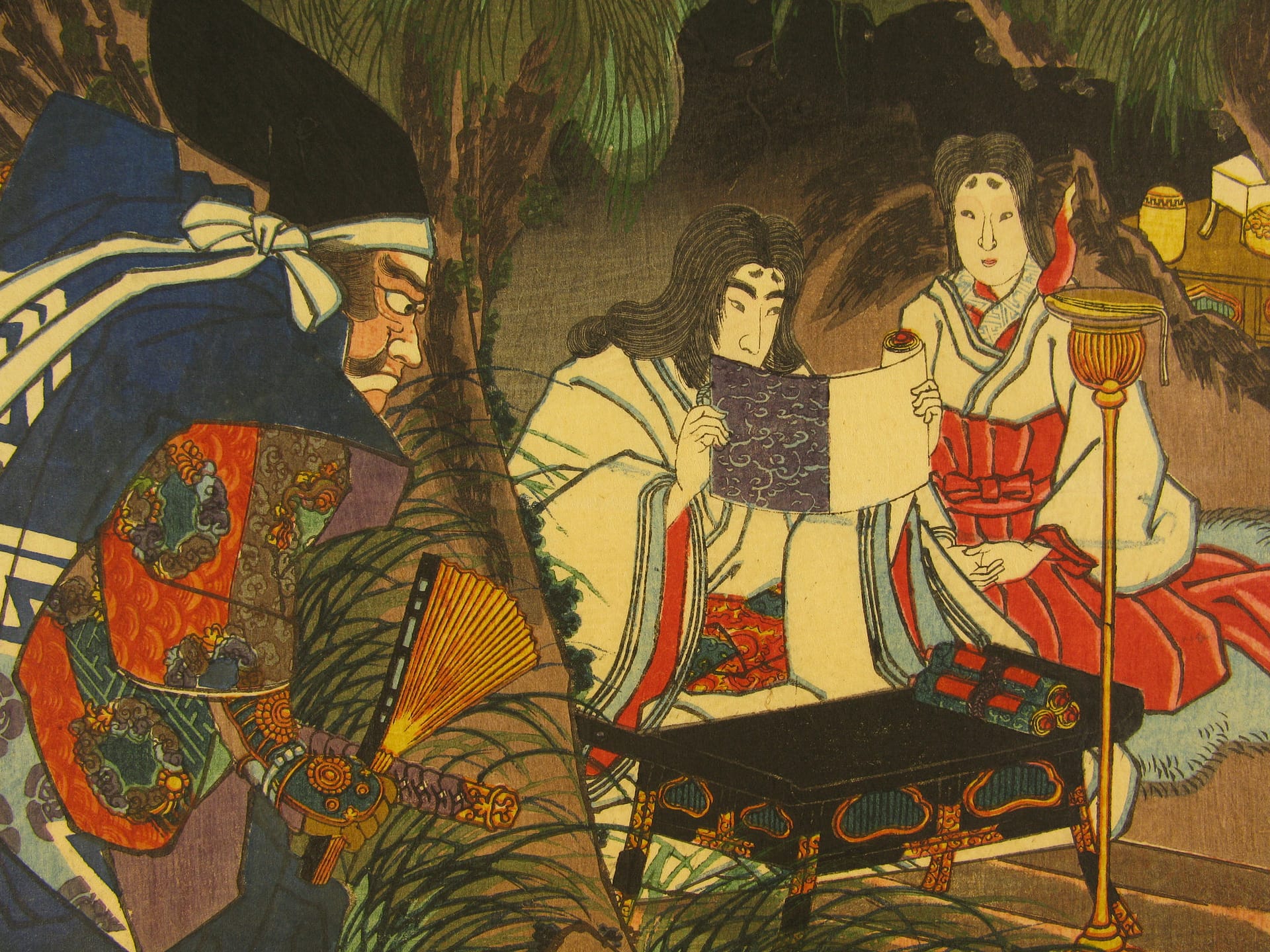
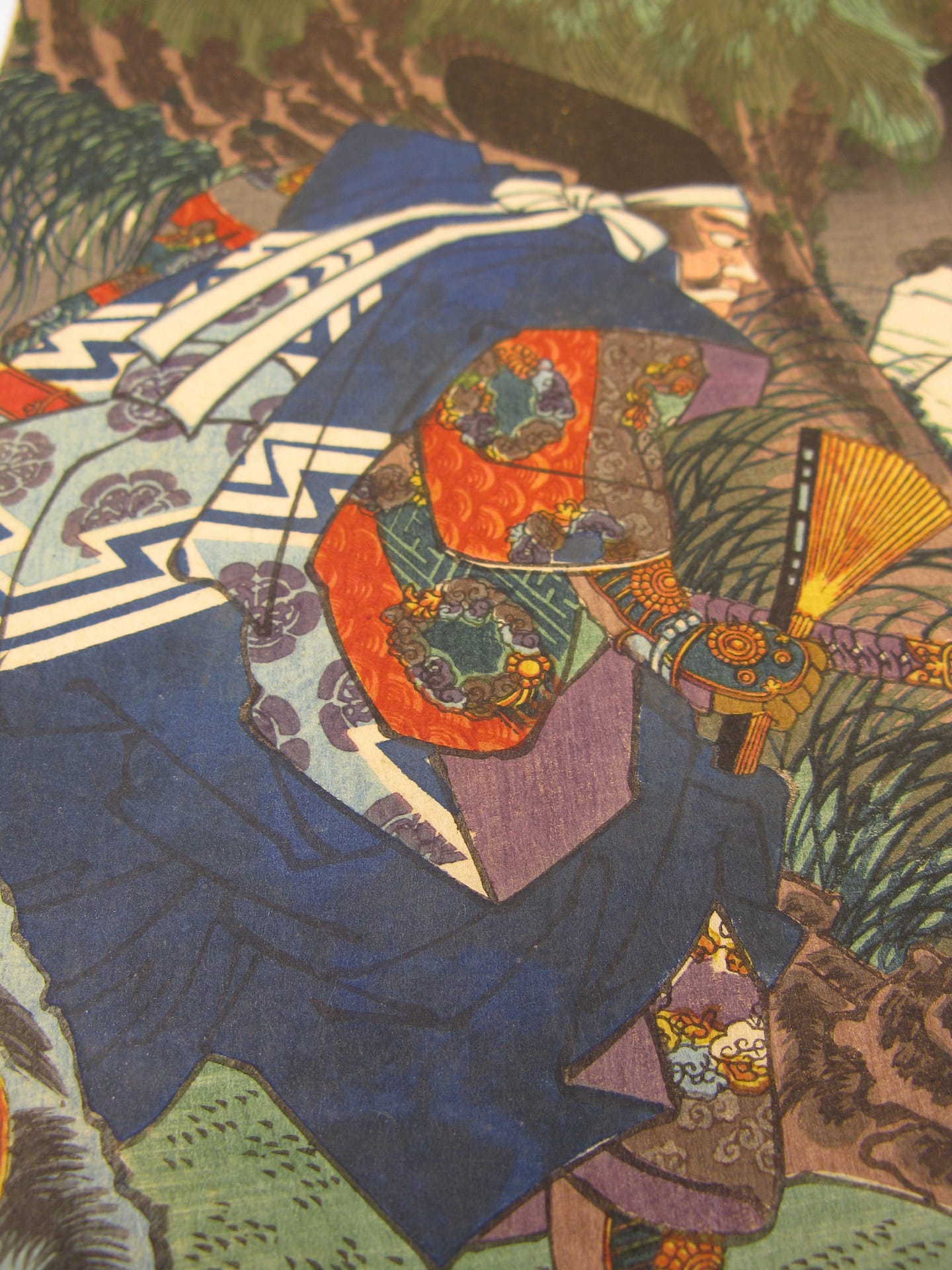
Description: Prince Ôto-no-miya, with an acolyte, reading scriptures while his assasin, Fuchibe Yoshihiro, approaches. The landscape panel insert shows a pine tree in misty mountains
Series: Kisokaidô rokujûku tsugi. The sixty-nine post stations of the Kisokaido
Print No: 37
Artist: Utagawa Kuniyoshi (1797-1861)
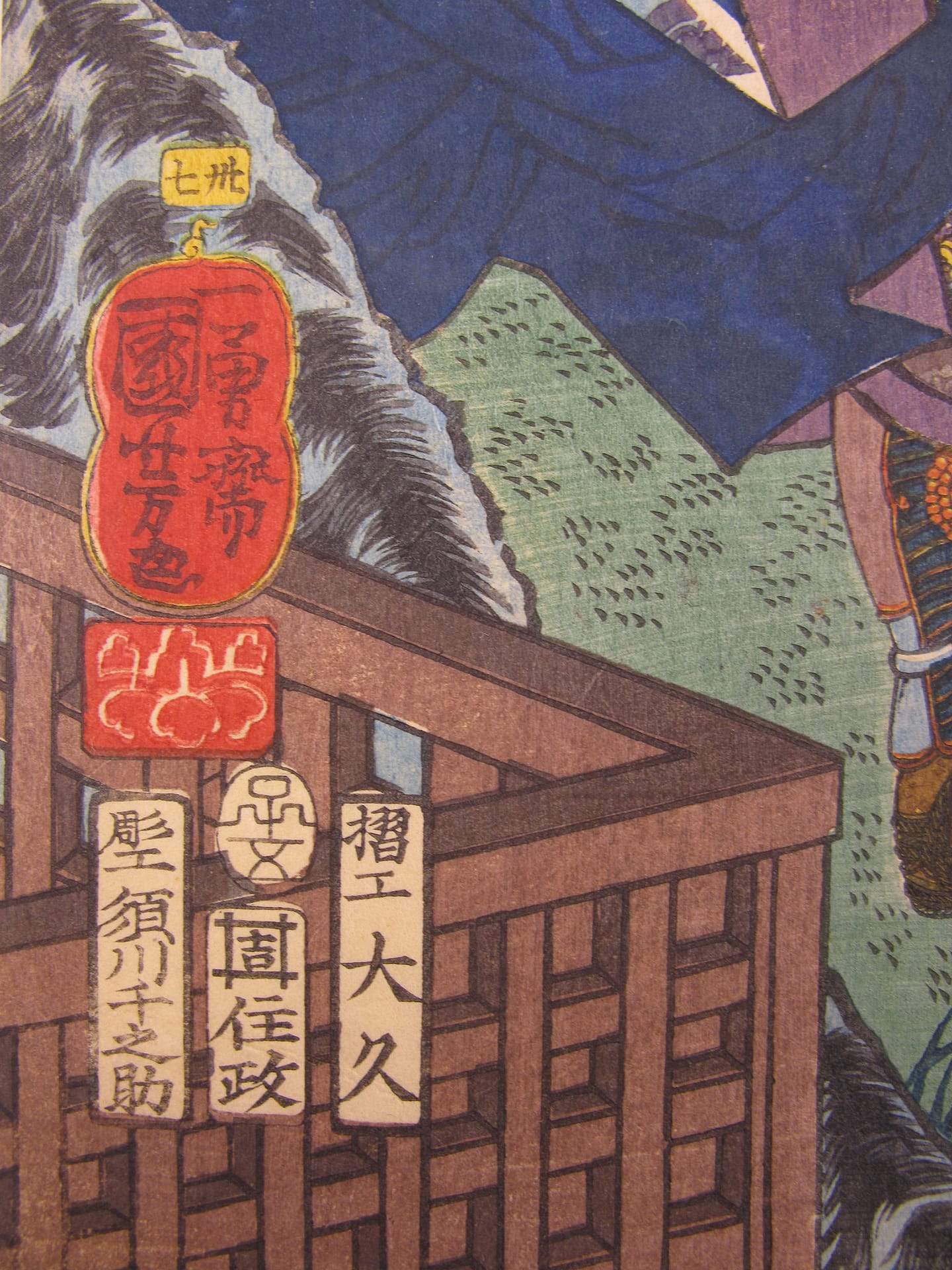
Signature: Ichiyusai Kuniyoshi ga and kiri seal
Date: 1852 (Kaei 5), 5th month
Cens: Hama, Magome, Rat 5
Publisher: Sumiyoshi-ya Masagorô
Block cutter: Sugawa Sennosuke
Size: Oban tate-e,
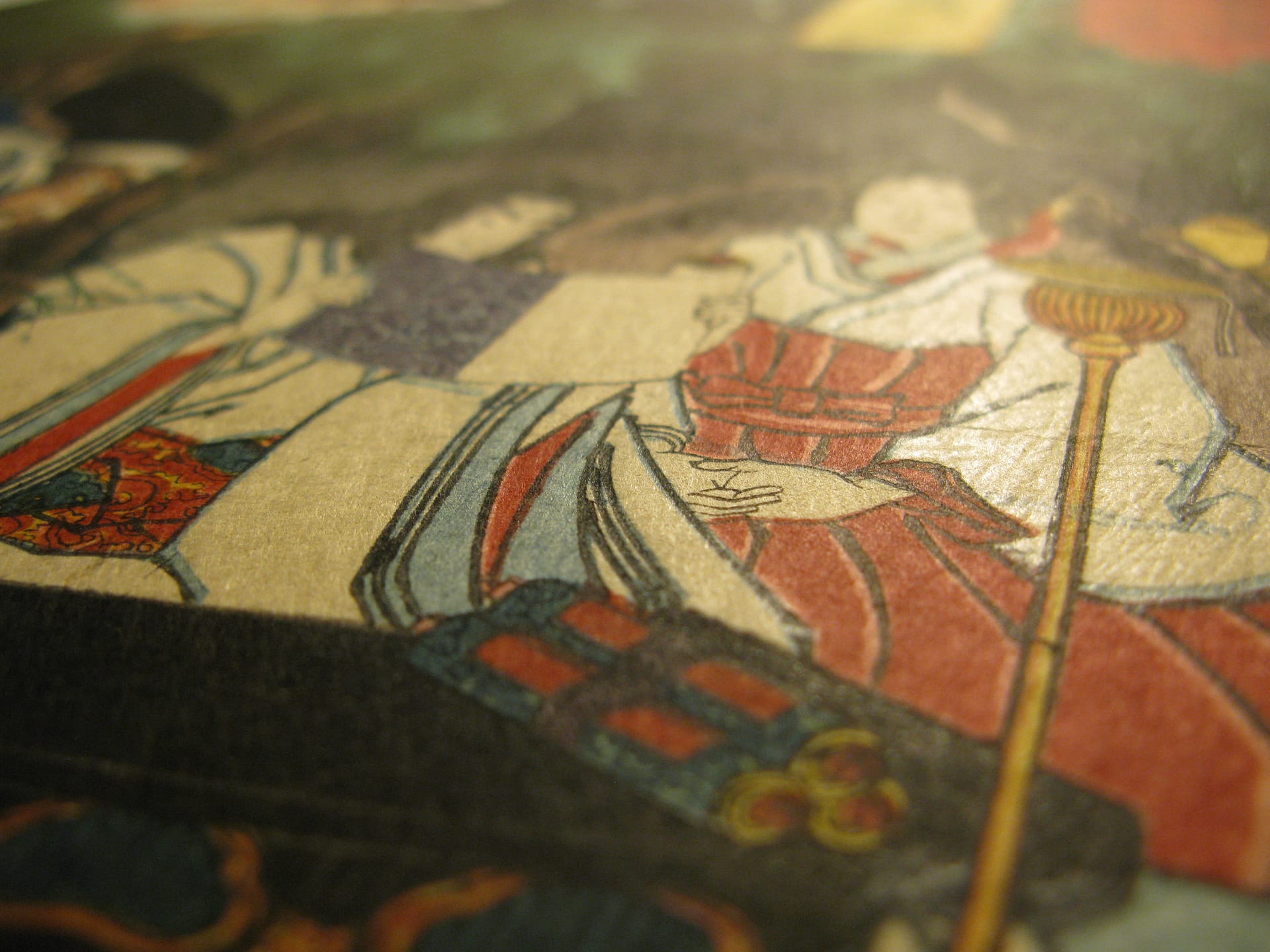
Condition: Very good impression, colour and condition, with blind printing, burnishing, extensive mica application and embossing, a truly delightful print to enjoy
Price: TBC
References: Robinson S74.38; BMFA – William Sturgis Bigelow Collection, 11.38972.38;
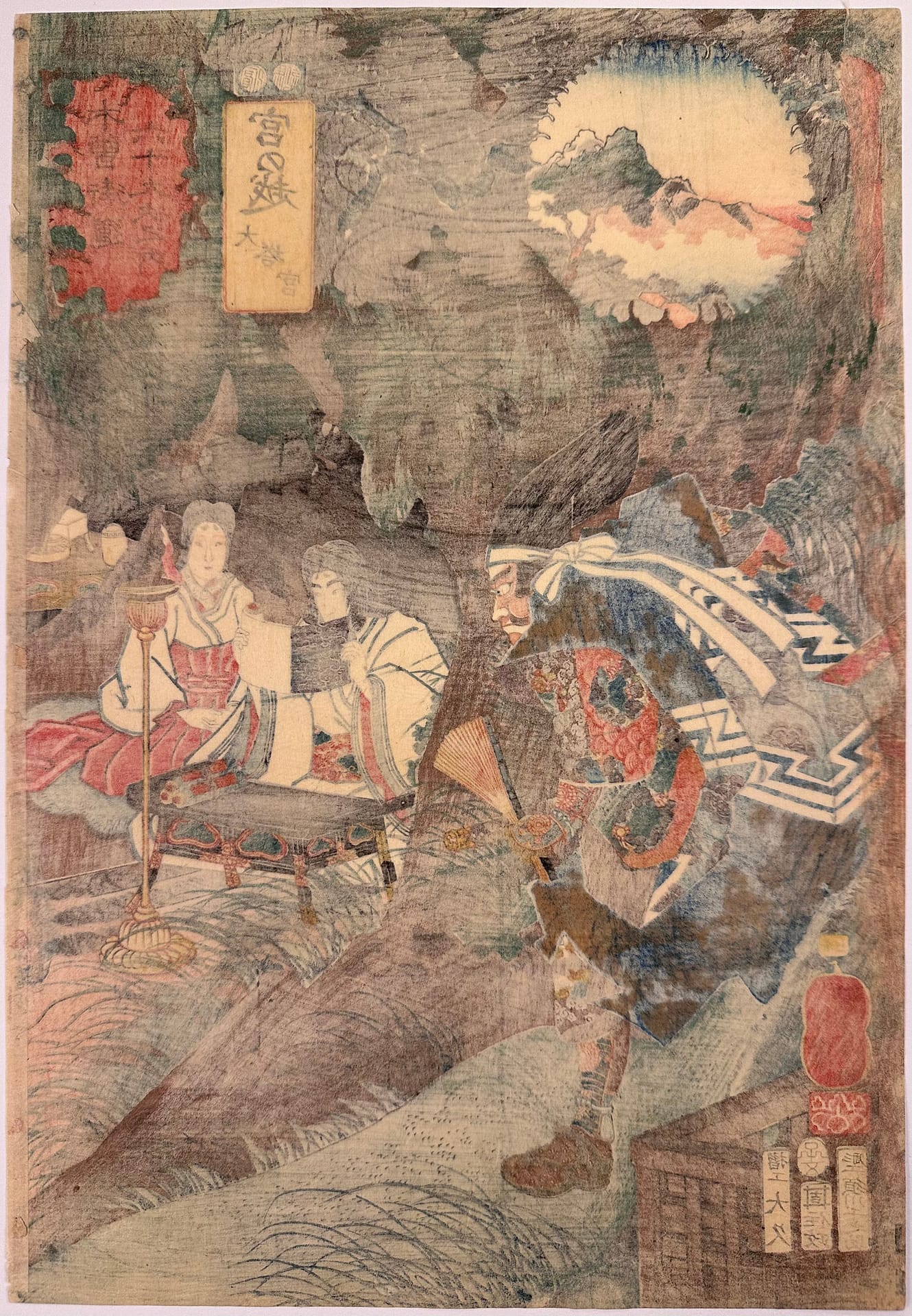
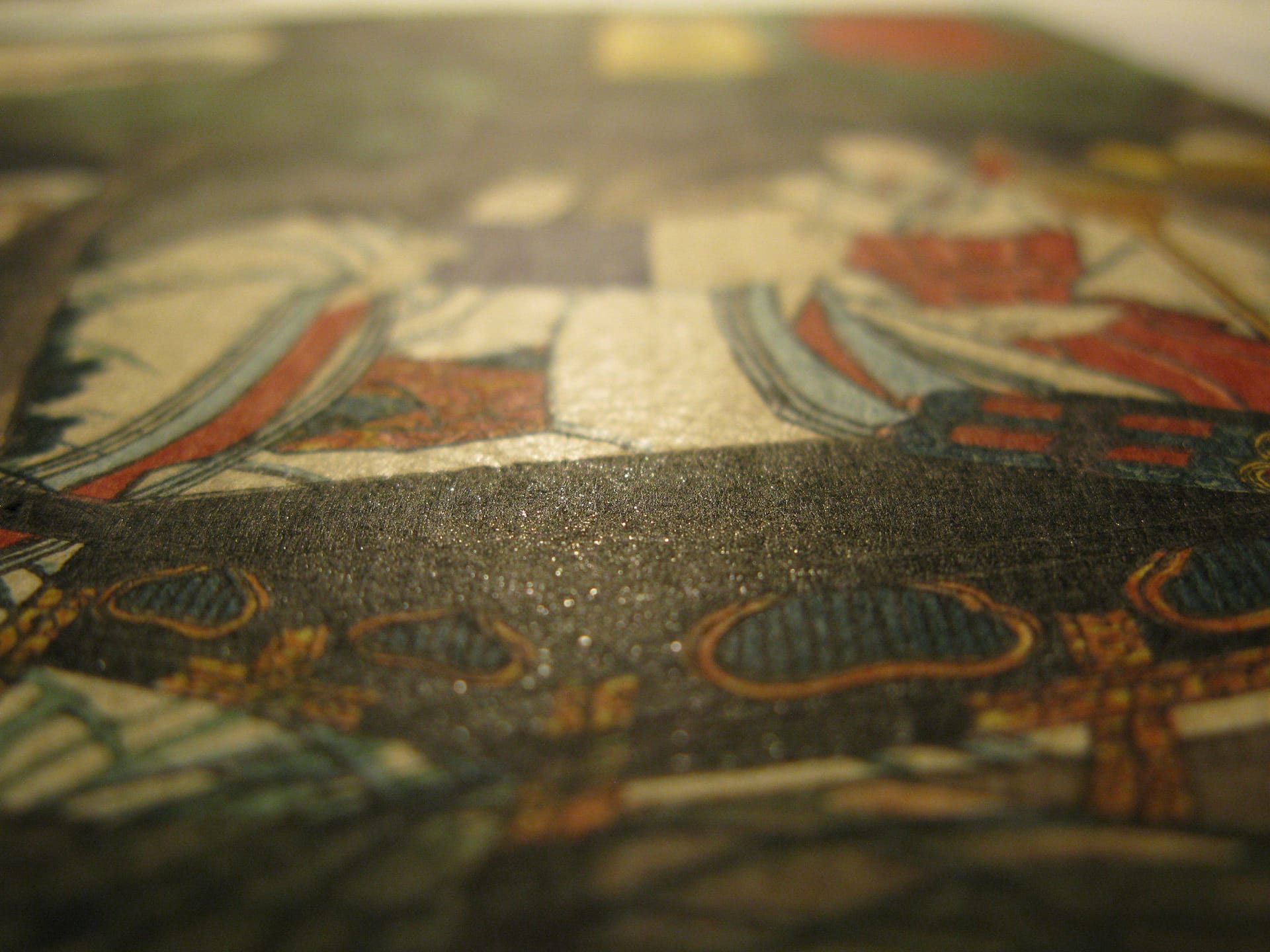
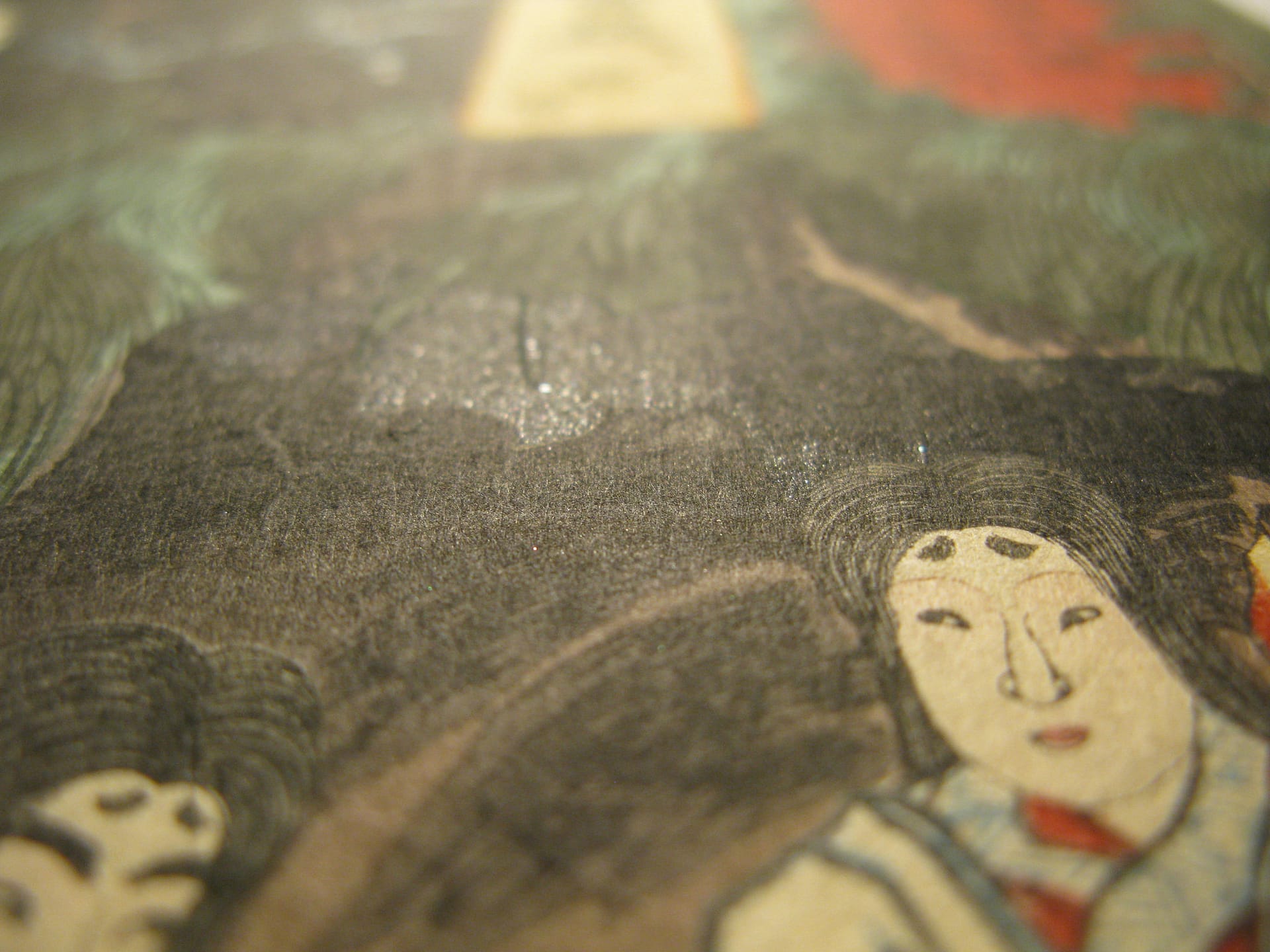
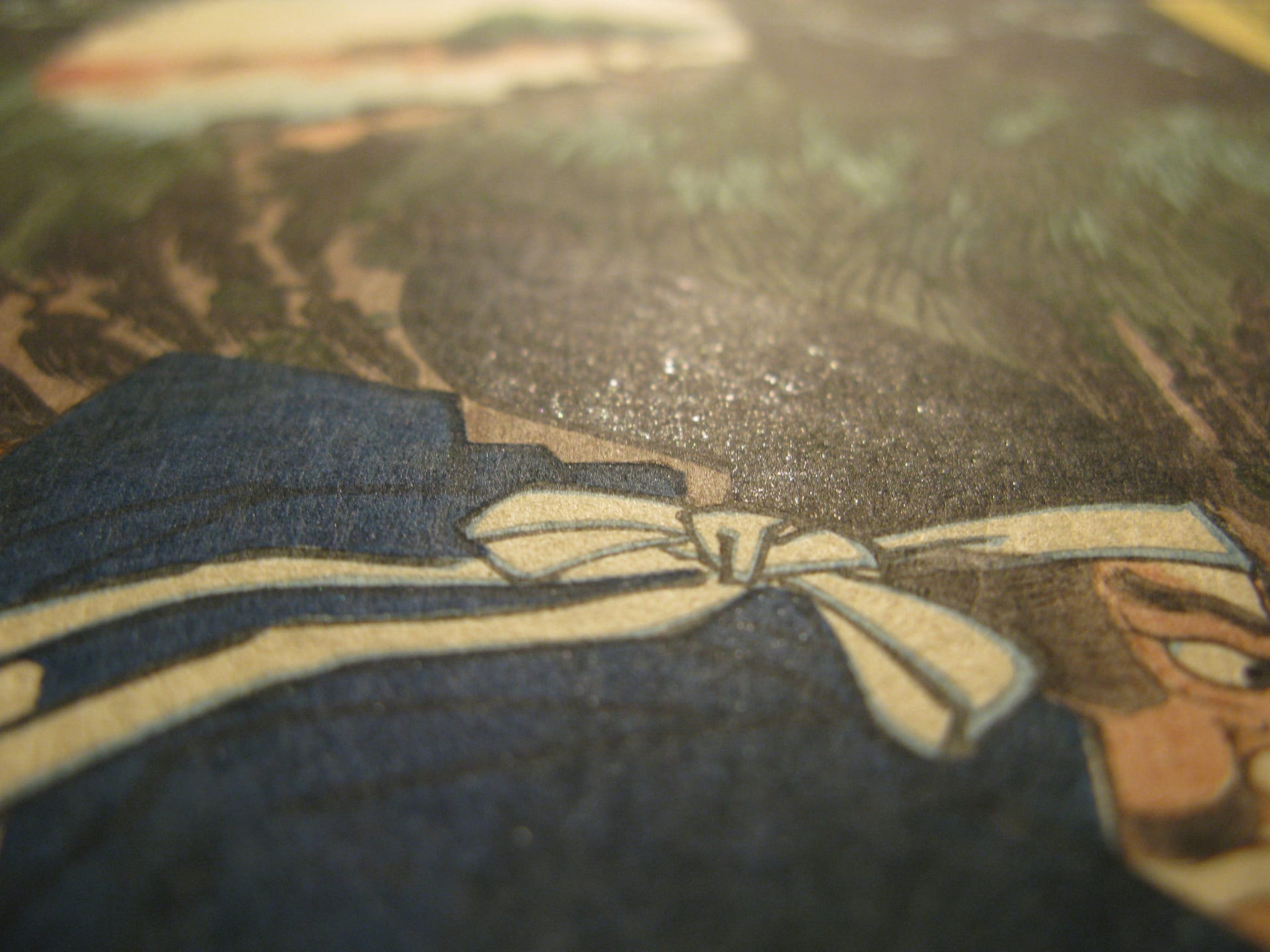
The tale of the print – Prince Ôto-no-miya (大塔宮), the ex‑monk, would‑be Shogun, and unluckiest political pawn in medieval Japan.
Miyanokoshi’s print draws on the life of Prince Moriyoshi (Morinaga), known by the grand nickname “Prince of the Great Pagoda” — Ōtō no Miya or Daitō no Miya. The station name Miyanokoshi echoes this title, making him the perfect tragic figure for this stop on the Kisokaidō.
Moriyoshi was the son of Emperor Go‑Daigo, who tried to break the power of the warrior clans and restore direct imperial rule. Moriyoshi had originally been a Buddhist priest, but when his father launched his political comeback, he swapped robes for armour and threw himself into the cause. The inset landscape is shaped like a chrysanthemum, symbol of the imperial family — a reminder that this is a story steeped in dynastic drama.
At first, things went well. With help from the Ashikaga clan, Go‑Daigo toppled the Hōjō rulers. To keep power in the family, he appointed Moriyoshi as shogun. This did not sit well with Ashikaga Takauji, who decided that if anyone was going to be shogun, it should be him. So he accused Moriyoshi of treason — a bold move, considering Moriyoshi was the emperor’s own son.
Go‑Daigo, caught between politics and parenthood, chose politics. Moriyoshi was arrested and sent to Kamakura, where Takauji’s brother Tadayoshi imprisoned him in a cave. Kuniyoshi’s print shows the prince inside, reading Buddhist scriptures with the calm of someone who has accepted that his life has gone very sideways. A lone court lady keeps him company.
When the Hōjō attacked Kamakura in 1335, Tadayoshi fled and ordered Moriyoshi’s execution; and outside the cave stands Fuchibe Yoshihiro, the Ashikaga retainer ordered to kill him.
Moriyoshi’s death set off a chain reaction: Takauji broke with Go‑Daigo, seized power, and established the Ashikaga shogunate, while Go‑Daigo fled to the mountains and founded a rival court – you know “anything you can do, I can do better” type thing. The resulting conflict lasted nearly sixty years (Nanbokucho period).
So in Miyanokoshi, the pun is regal: Miyanokoshi → Ōtō no Miya, and the print becomes a quiet, haunting moment in which a prince, once destined for greatness, sits in a cave reading scriptures, ignorant of his imminent fate, while history re-arranges itself outside.
For an excellent analysis of the prints and series, I would encourage you to get the book:The Sixty-nine Stations of the Kisokaido by Sarah E. Thompson.