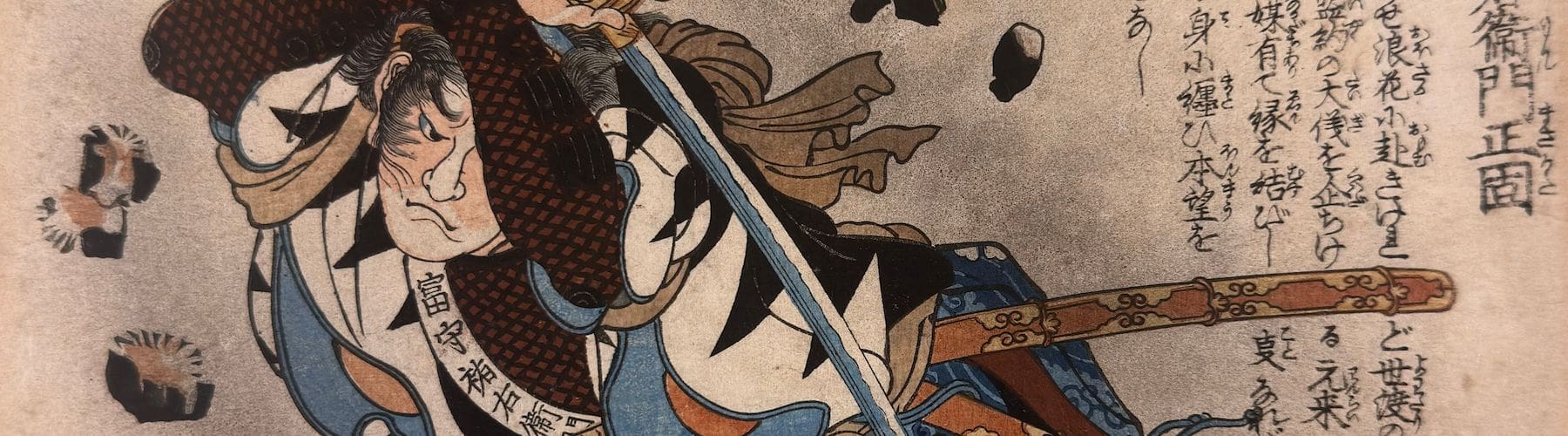
The tale of the forty-seven ronin
The story of the 47 Ronin
An interesting online version:The Project Gutenberg eBook, Tales of Old Japan, by Algernon Bertram Freeman-Mitford (1910) – 47 Ronin
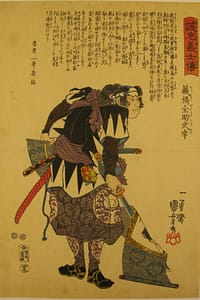
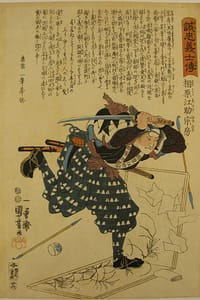
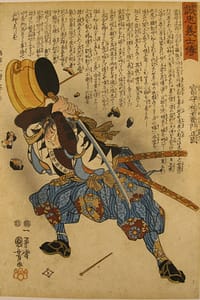
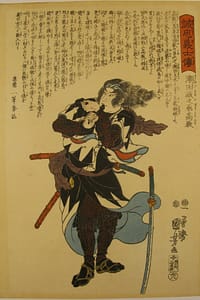
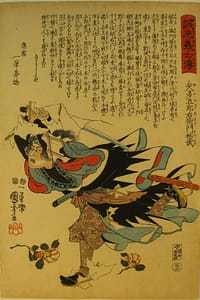
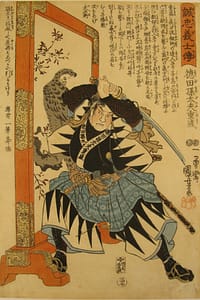
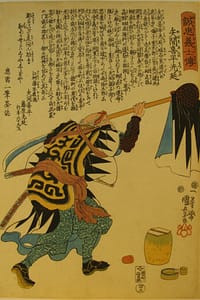
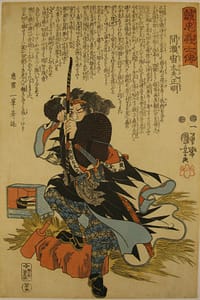
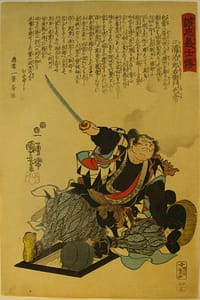
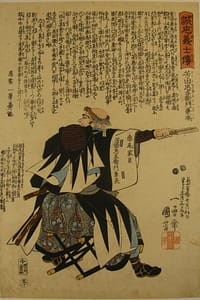
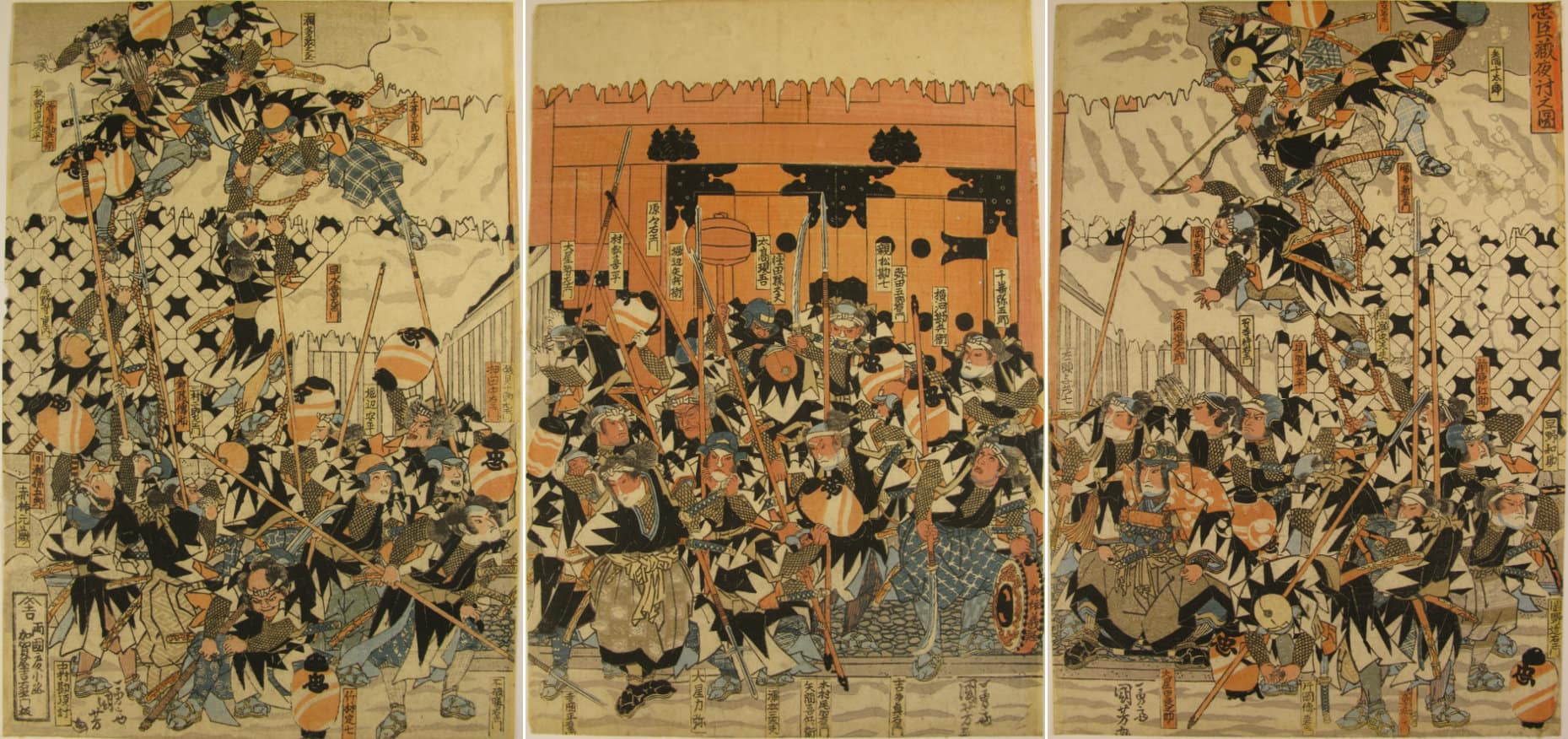
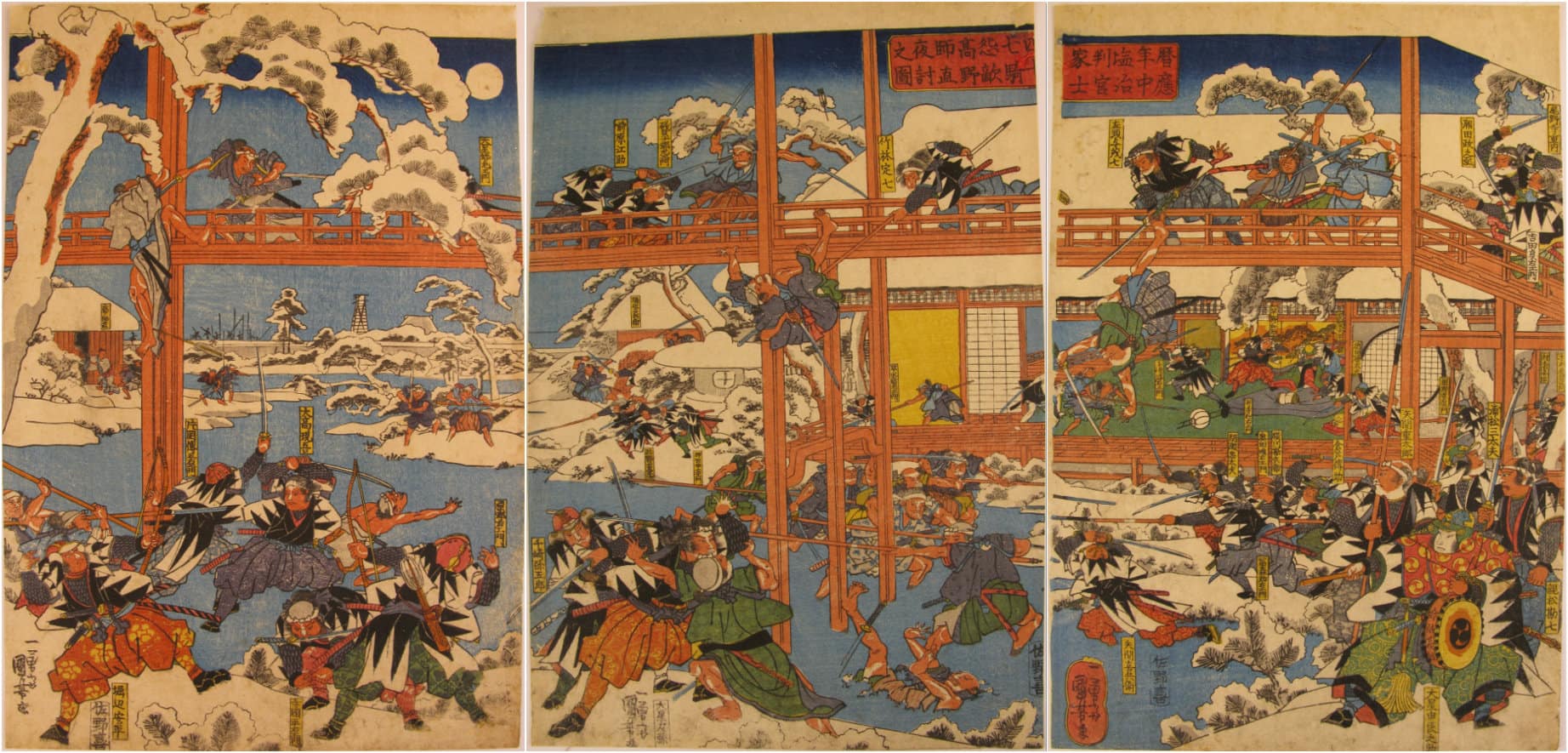
One of the most famous stories of revenge in Japanese history comprises the exploits of the 47 Ronin (masterless samurai) who avenged the death of their lord in the early 18th century. Their story, the Chushingura, illustrates and defines the Japanese concept of loyalty, providing a supreme example of the samurai ideals of cool courage and fidelity. The Faithful Samurai: Kuniyoshi Woodblock Prints tells this tale through the stunning triptychs, warrior prints, and bust portraits of artist Utagawa Kuniyoshi (1797-1861).
In 1701, a feudal Lord of Ako in Harima province, Asano Takumi-no-Kami Naganori, was dishonoured by Lord Kira Kozuke-no-Suke, the Shogun’s Master of Ceremonies. Lord Asano could no longer bear the insults and humiliating behaviour directed toward him by his superior. Despite all efforts at self-control, he drew his sword in a fit of rage and struck Kira, but not fatally.
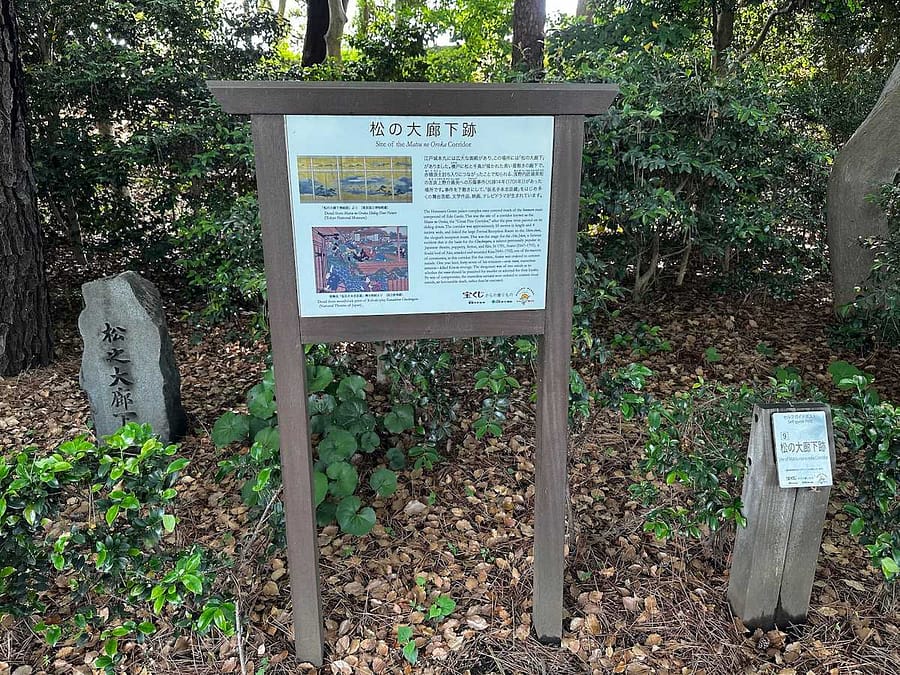
Any violence inside the Shogun’s palace was forbidden, and Lord Asano was ordered to commit seppuku, (ritual suicide). His estates and castle were confiscated, and all his men were disbanded to become ronin.
The dishonoured group of Asano’s faithful samurai swore an oath to avenge his death. The conspirators had full knowledge that such a plan, if successful, would lead to seppuku for them all, because secret revenge was against the law. Their resolve however was reinforced by adherence to the samurai code, which emphasised teachings such as “Thou shalt not live under the same heaven nor tread the same earth with the enemy of thy father or lord.” After a year of planning, on the night of December 14, 1702* the group came together and attacked Kira’s mansion.
Following a fierce fight, they found Kira hiding in a charcoal shed on the grounds and offered him the chance to commit seppuku, he refused so they beheaded Kira and, after marching about 10 kilometres through the city causing a great stir (everyone on their path praised them and offered refreshments), formally presented the head before the grave of their slain lord in Sengaku-ji temple.
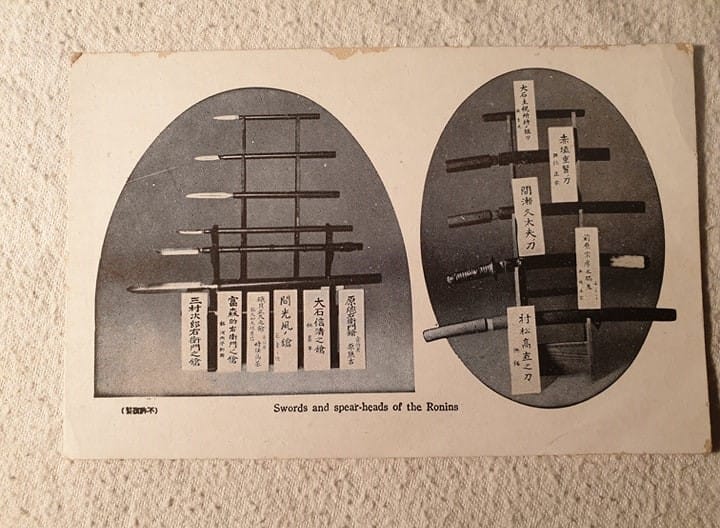
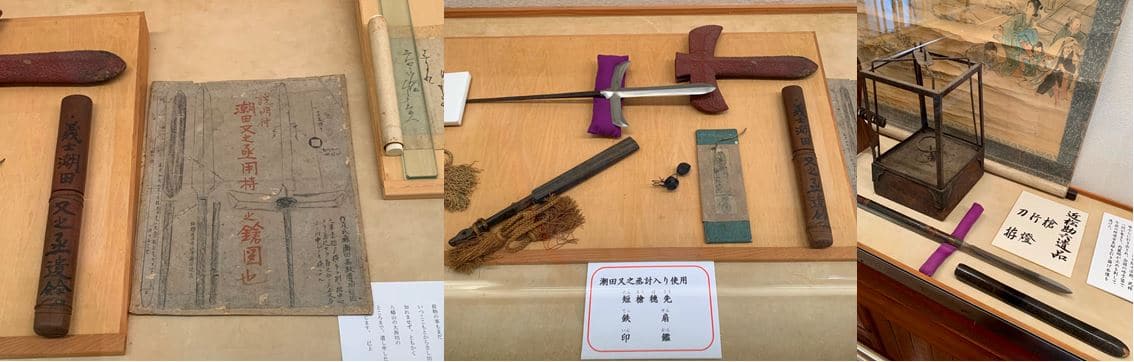
Upon arriving at the temple, the ronin washed and cleaned Kira’s head and placed it, along with the fateful dagger (tanto with which Asano Takumi no Kumi disembowelled himself and with which Oishi Kuranosuké cut off Kôtsuké no Suké’s head) and a manuscript of a speech (see Appendix) before Asano’s tomb.
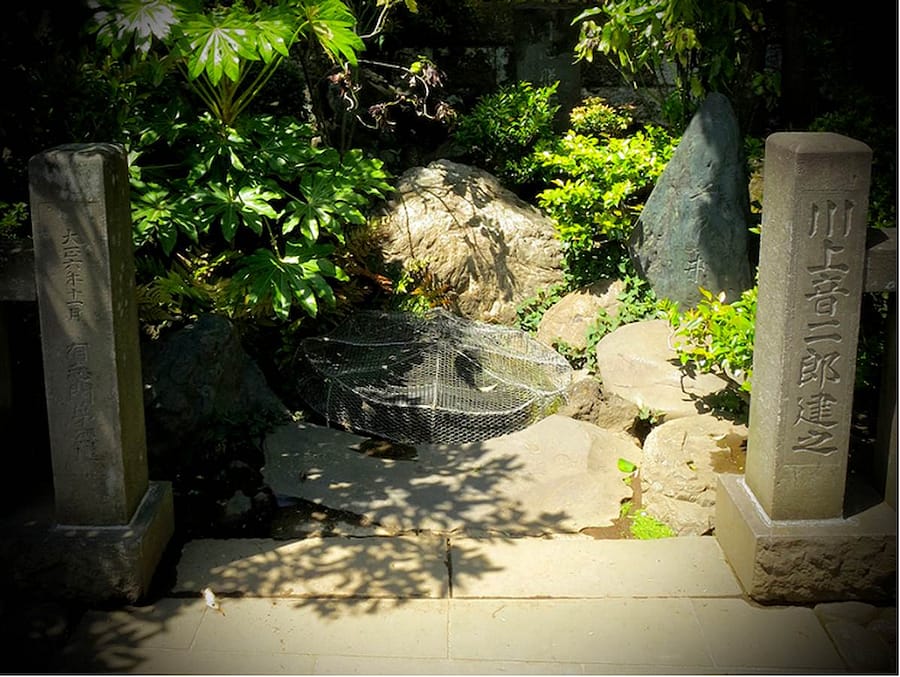
A few months later, all but one of the 47 ronin^ committed judicially imposed seppuku. This event struck a deep emotional chord in the very heart of Japanese society, and the result was a steady stream of theatrical performances, books, and woodblock prints.
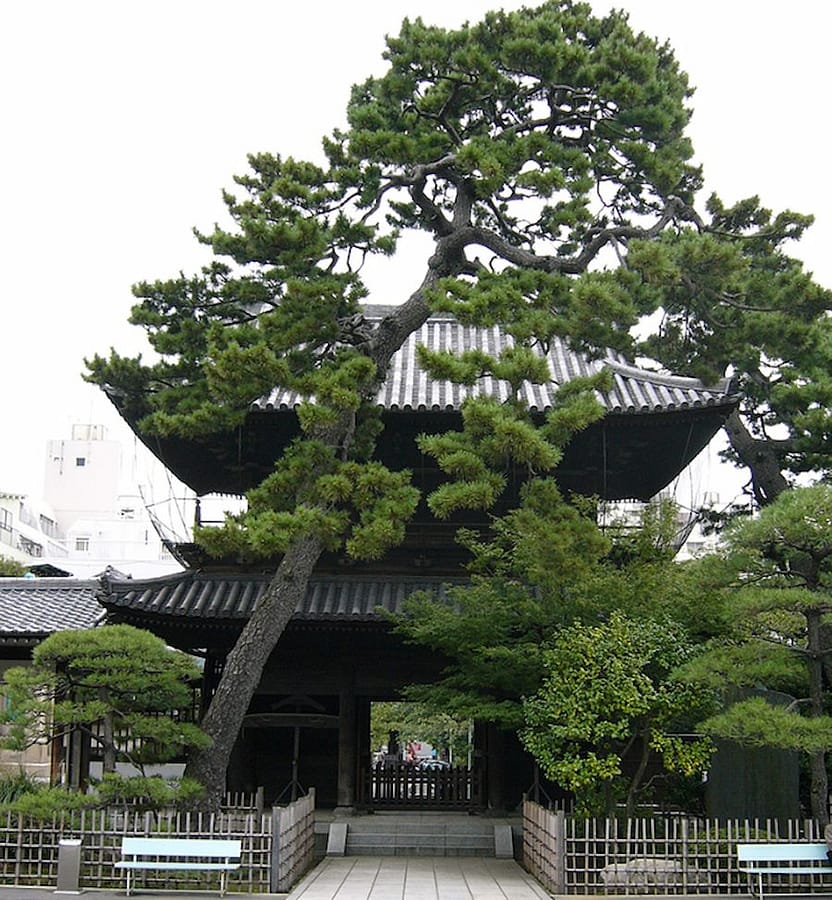
^Each of the 46 rōnin killed himself (exception also is 1.47 who killed himself prior) in Genroku 16, on the 4th day of the 2nd month (元禄十六年二月四日; 20 March 1703). This has caused a considerable amount of confusion ever since, with some people referring to the “forty-six rōnin”; this refers to the group put to death by the shōgun, while the actual attack party numbered forty-seven. The forty-seventh rōnin, identified as Terasaka Kichiemon, eventually returned from his mission and was pardoned by the shōgun (some say on account of his youth). He lived until the age of 87, dying around 1747, and was then buried with his comrades. The assailants who died by seppuku were subsequently interred on the grounds of Sengaku-ji,[6] in front of the tomb of their master.
*Wikipedia states – The Ako Incident occurred on 31 January 1703 when the rōnin of Asano Naganori stormed the residence of Kira Yoshinaka in Edo. (While the attack was carried out on 31 January, the event is commemorated annually on 14 December in Japan.
- Translations I have found (Weinberg and Freeman-Mitford) of the manuscript the Ronin left with the head, starts with a date being the 15th December (the morning after the attack).
- Asia educators states 30 January 1703
- The incident was first made known in English via the translation of Isaac Titsingh’s works in 1822. Excerpt copy
Date differences apart from inaccuracies, are based on the difference between the old Japanese calendar (14 December 1702) and the Western calendar (30 January 1703).
Recommended books … n stuff
- Kuniyoshi -The faithful samurai by David R Weinberg
- Kuniyoshi The Warrior-Prints by B. W. Robinson
- Kuniyoshi from the Arthur R Miller collection by Timothy Clark
- Kuniyoshi project by William Pearl
Whilst I link to Amazon books – for god sake don’t buy from there unless you shop around first!
The bushidoboutique collection of 47 Ronin/Chushingura related prints
Single sheets


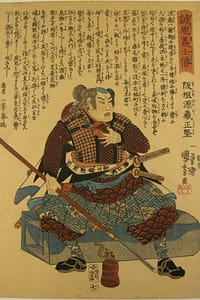
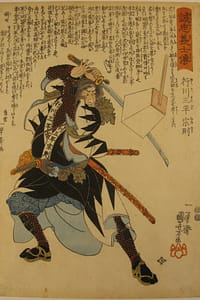
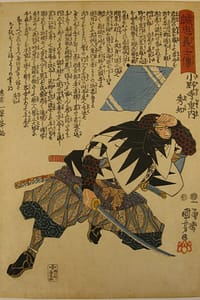

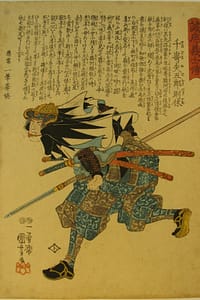
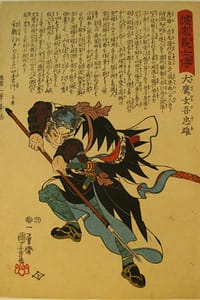
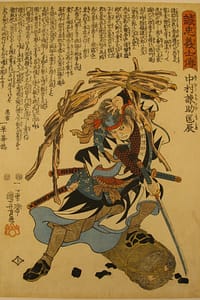

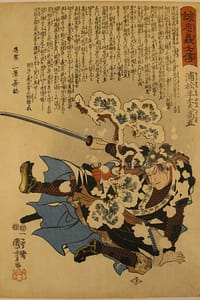
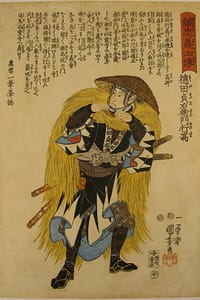


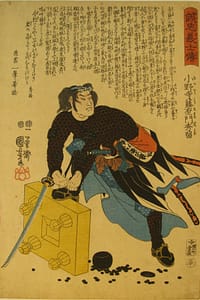

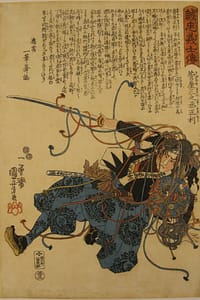
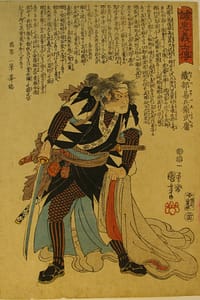
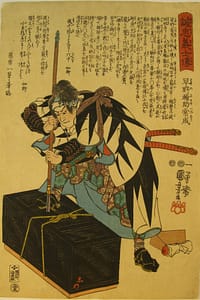



Triptychs
USD TBC
USD TBC
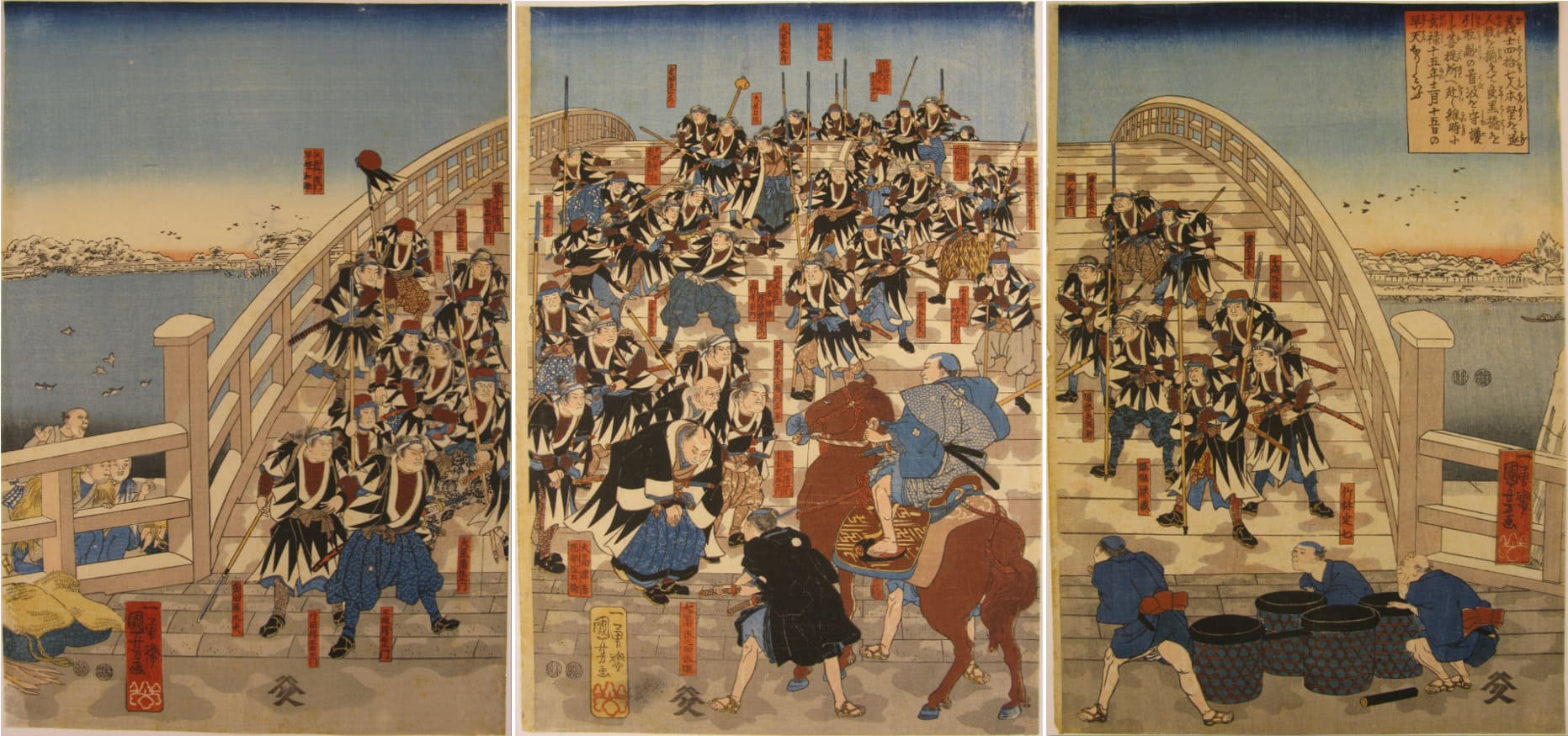
USD TBC
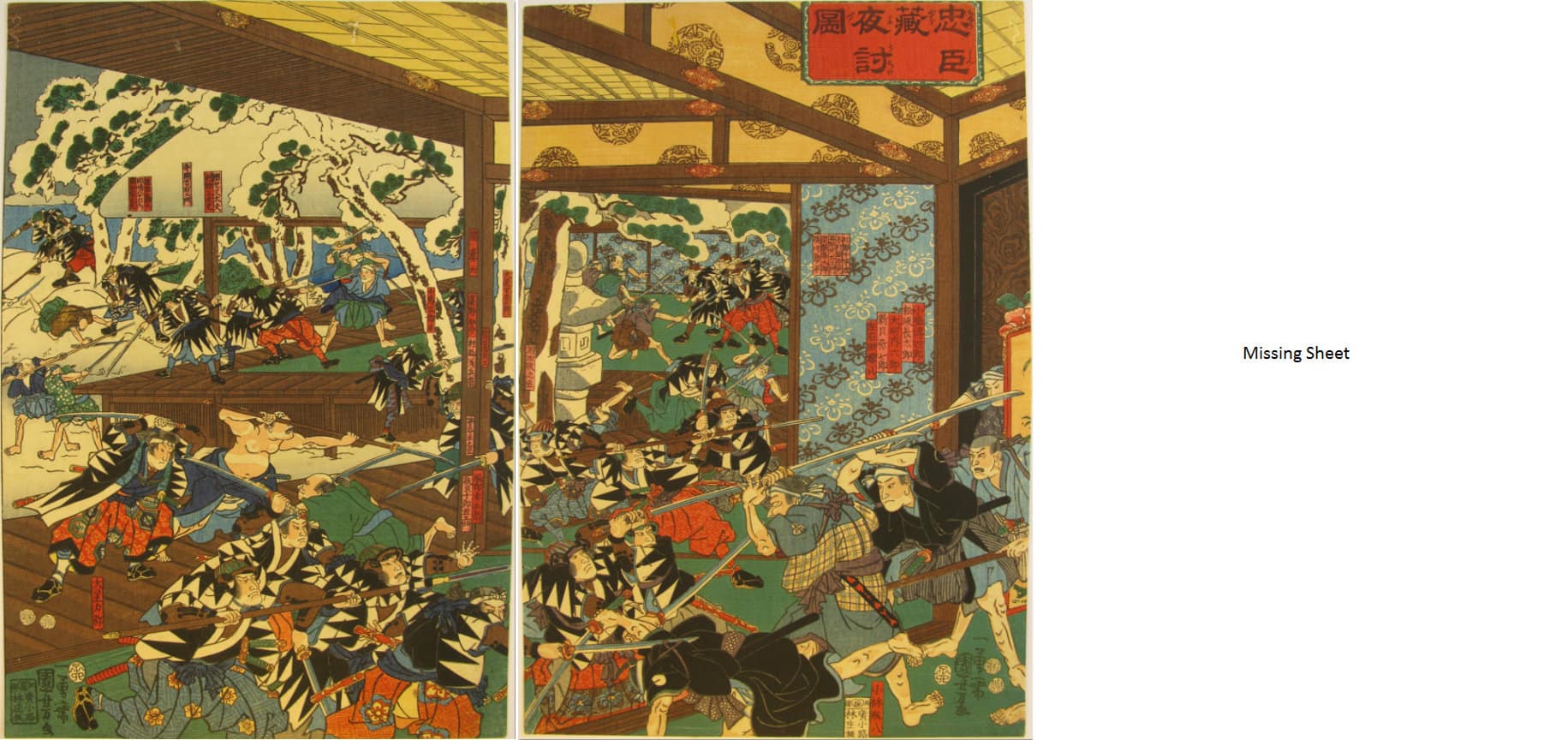
USD TBC
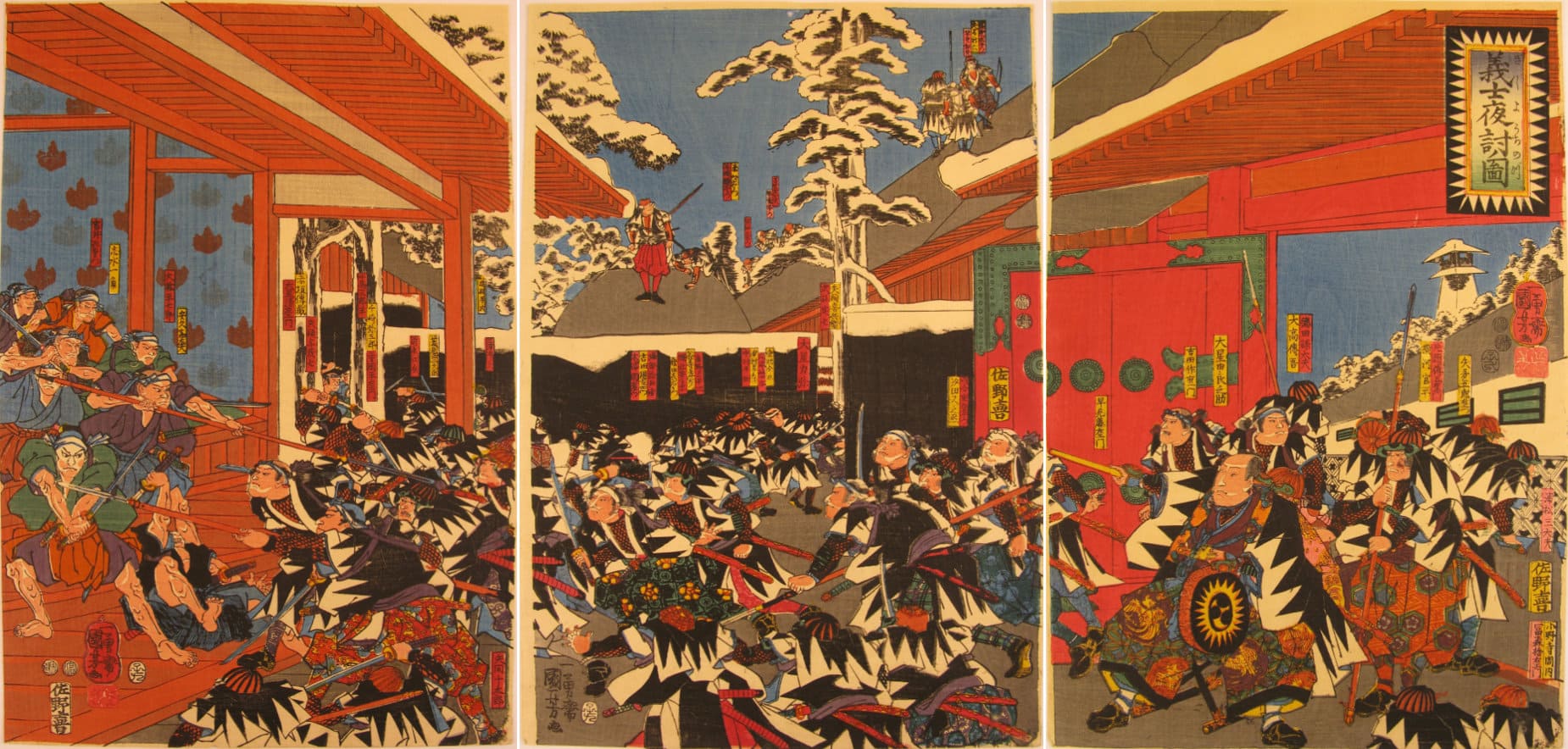
USD TBC