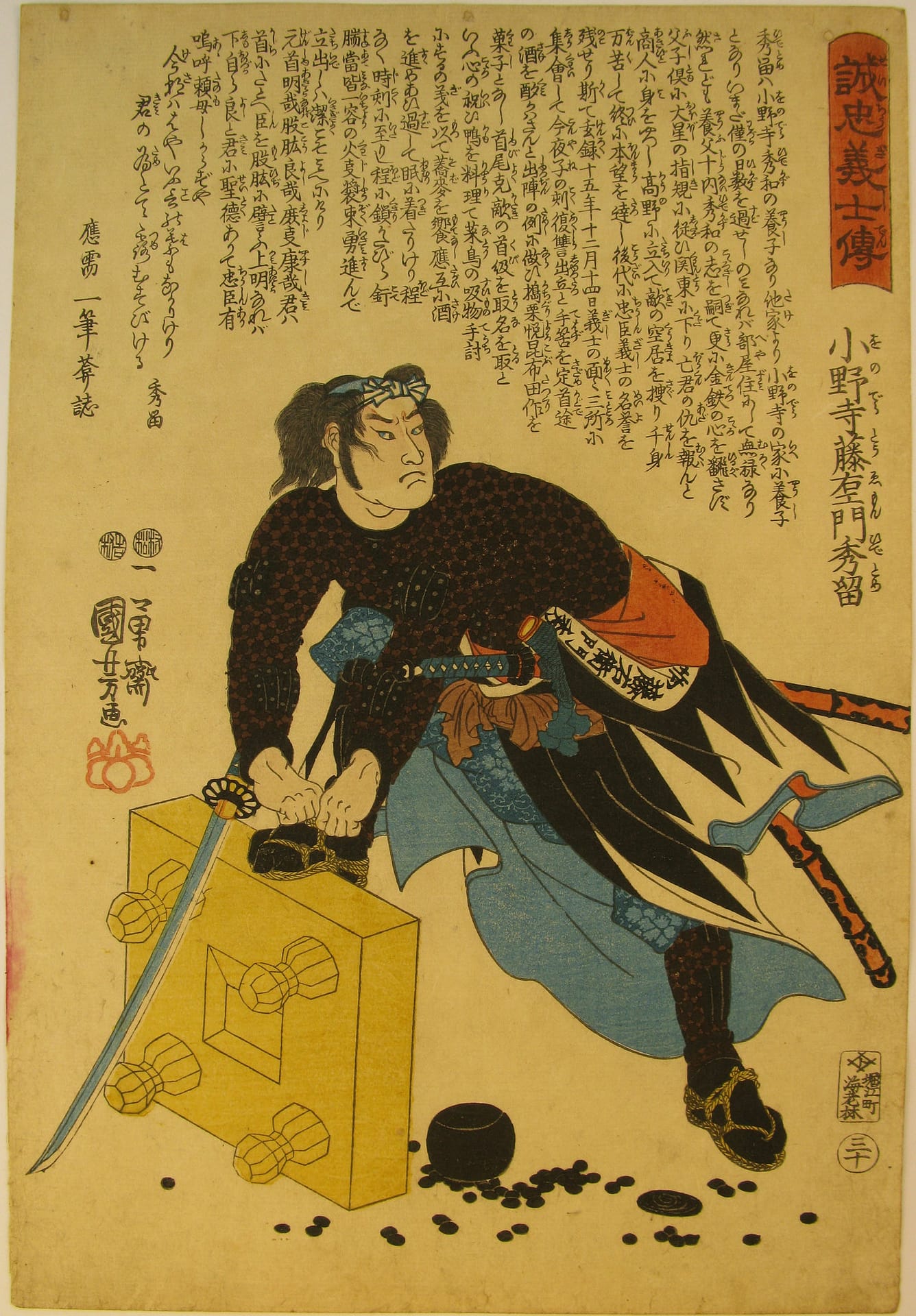
Subject: The ronin Onodera Toemon Hidetome (kabuki name) – tying his sandal on a tipped over go-board
Series: Seichu gishi den (Stories of the true loyalty of the faithful samurai)
Print No: 1.30
Artist: Utagawa Kuniyoshi (1797-1861)
Signature: Ichiyusai Kuniyoshi ga and kiri seal
Date: 1847-48
Cens: Yoshimura – Muramatsu
Publisher: Ebi-ya Rinnosuke
Size: Oban tate-e, 37.6 x 25.4 cm
Condition: Very good impression, colour and condition, some marks and staining, binding holes repaired. Numbered
Price: Not for sale at this stage
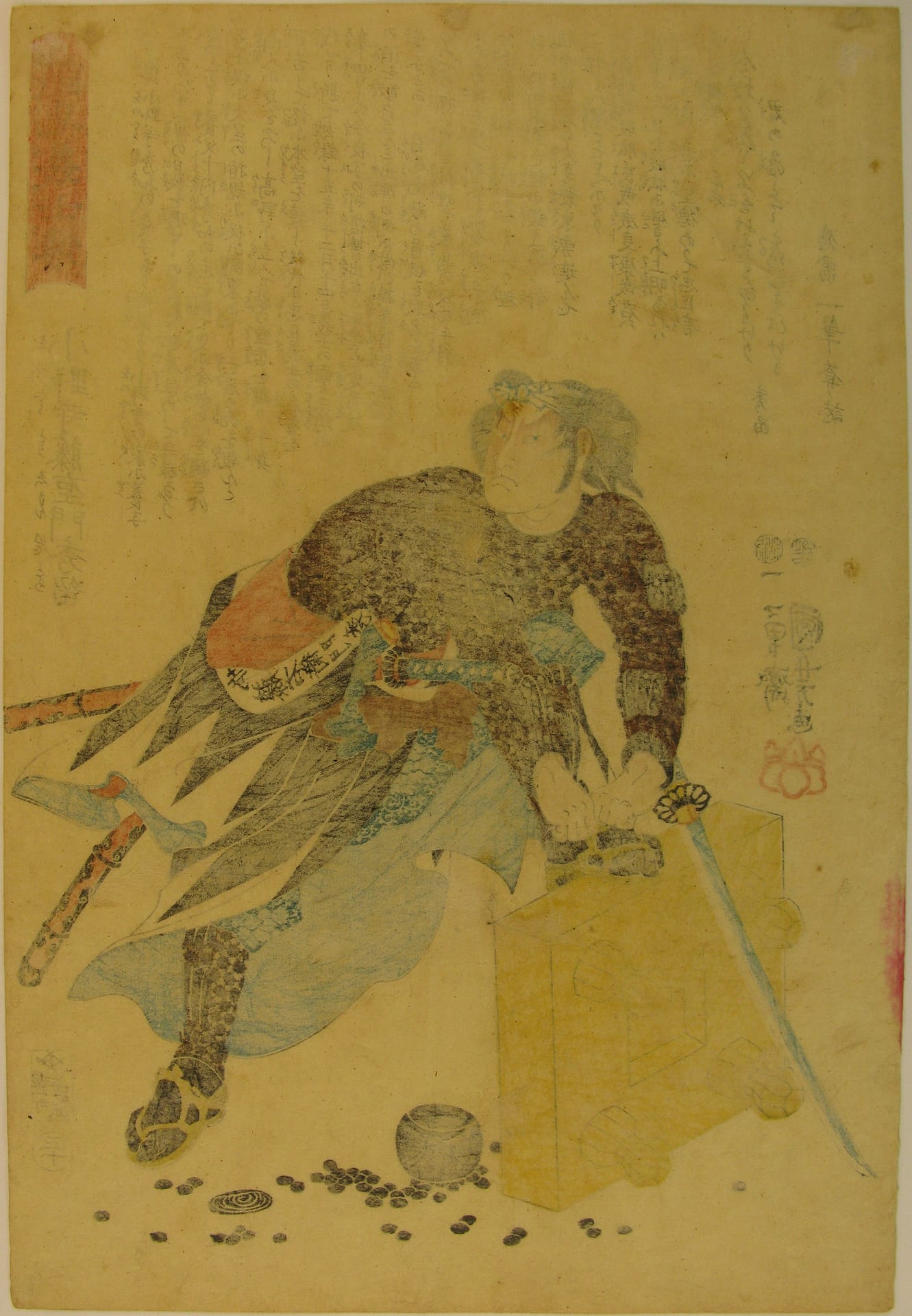
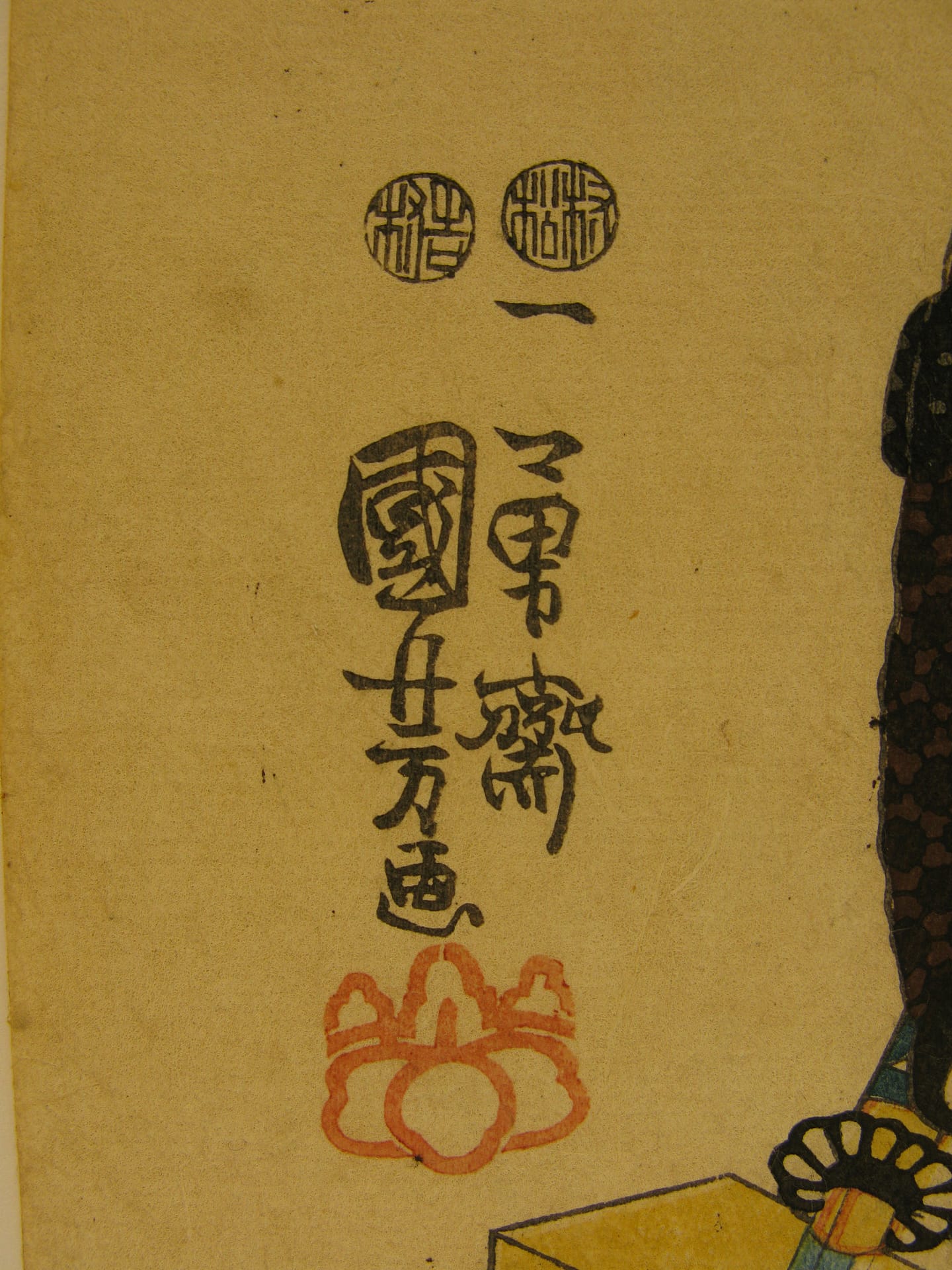
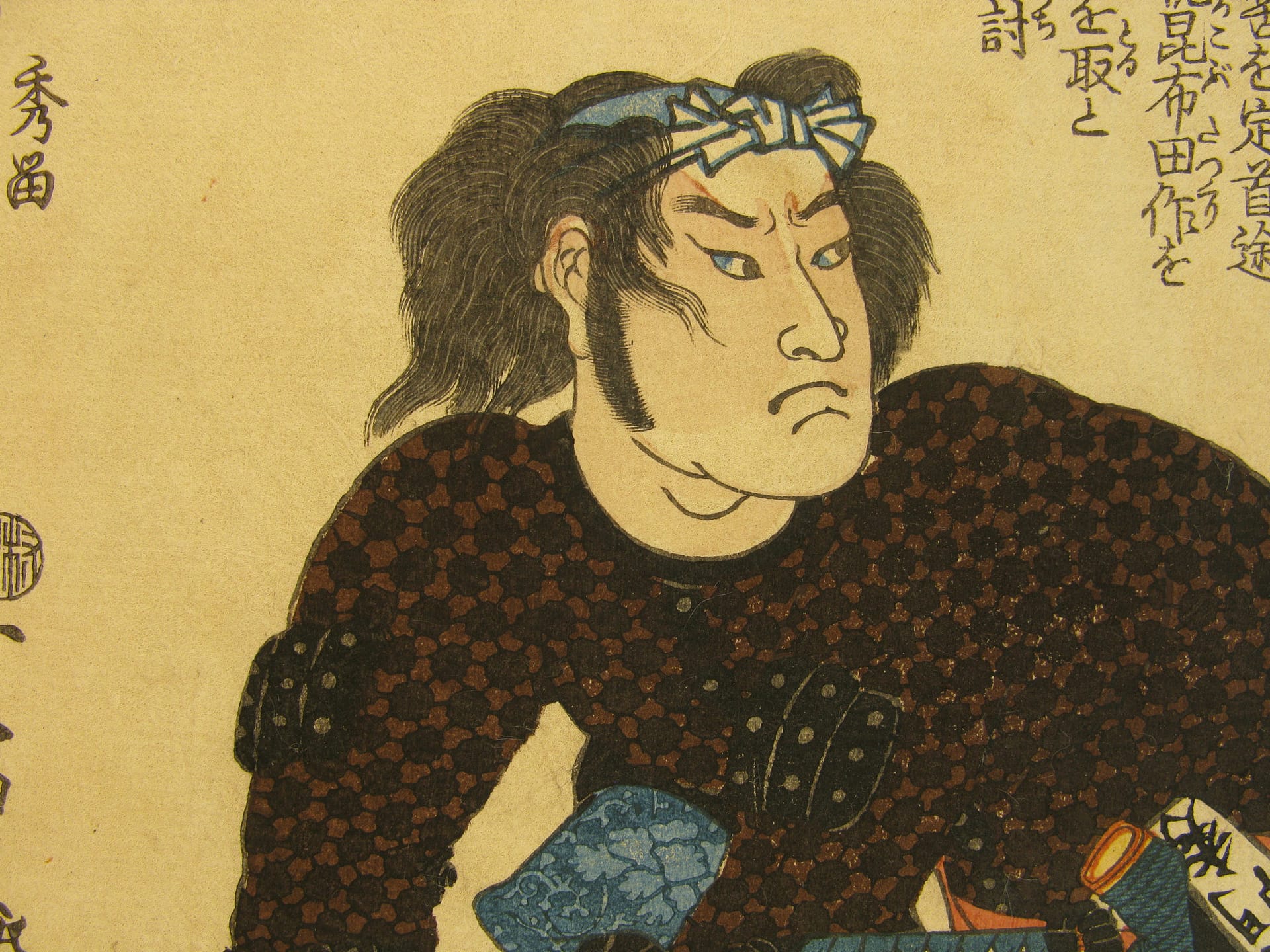
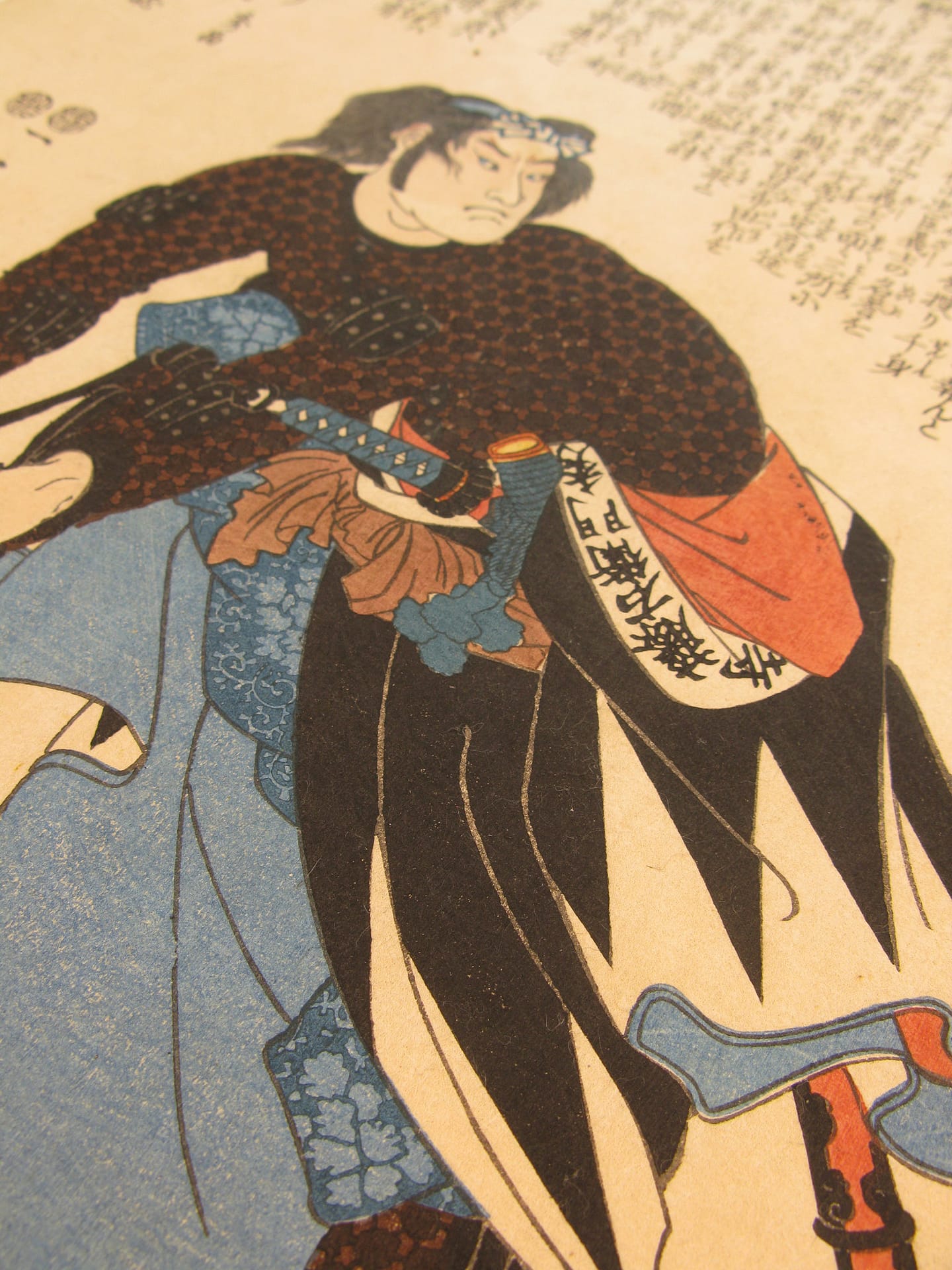
True name: Onodera Kōemon Hidetomi (小野寺 幸右衛門 秀富)
Age: Unknown
Katana mei: not documented
Wakizashi mei: not documented
The tale of the text – with a little twist
Onodera Tōemon Hidetome had barely settled into his new role as the Onodera family’s foster son when the Akao clan collapsed. Most people in his situation would focus on getting their finances in order or maybe finding a stable job. Hidetome instead inherited his foster father’s burning desire for revenge — the kind of family legacy you can’t exactly return for store credit.
Since he wasn’t officially on the payroll, he and his foster father set off for the Kantō region like two men on a very intense father‑son bonding trip. Their mission: avenge their lord. Their method: pretend to be tradesmen. Their qualifications: absolutely none.
Still, the disguise worked. They wandered into the Kōno mansion while everyone was out, inspecting the place like two undercover building inspectors. “Hmm, weak gate structure.” “Security questionable.” “Excellent location for a dramatic midnight raid.” They took notes. They looked serious. They probably sold exactly zero imaginary goods.
When the big night finally came, the rōnin gathered for what can only be described as the world’s most symbolic snack break. They drank sake, ate dried chestnuts, konbu, tiny sardines, and sweets — all chosen to represent crushing the enemy, though honestly they sound like the contents of a very confused lunchbox. Then came duck, soup, and soba, because nothing fuels righteous vengeance like carbs.
They toasted each other carefully — enough to feel heroic, not enough to fall asleep in their armor. No one wants to be the guy who snores through a historic revenge mission.
When the hour struck, they suited up in mail shirts and spiked leggings and marched out “as if to fight a fire,” except with more swords and fewer safety protocols. Hidetome, quiet and focused, was ready.
Before the attack, he wrote two poems — calm, philosophical reflections on loyalty, leadership, and the solemnity of the moment. It’s impressive, really. Most people about to storm a mansion would be thinking about strategy or whether they remembered to tighten their armor straps. Hidetome was composing verse like he had a publishing deadline.
He signed them simply “Hidetome,” the Edo‑period equivalent of a dramatic signature flourish.
Though not the most famous of the 47, Hidetome helped scout the mansion, prepared with unwavering resolve, and marched into history alongside his foster father — proving that even a newly adopted samurai with no stipend can leave behind a legacy of loyalty, poetry, and extremely committed undercover work.
For an accurate translation of the print text, I would encourage you to get the book: Kuniyoshi -The faithful samurai by David R Weinberg.