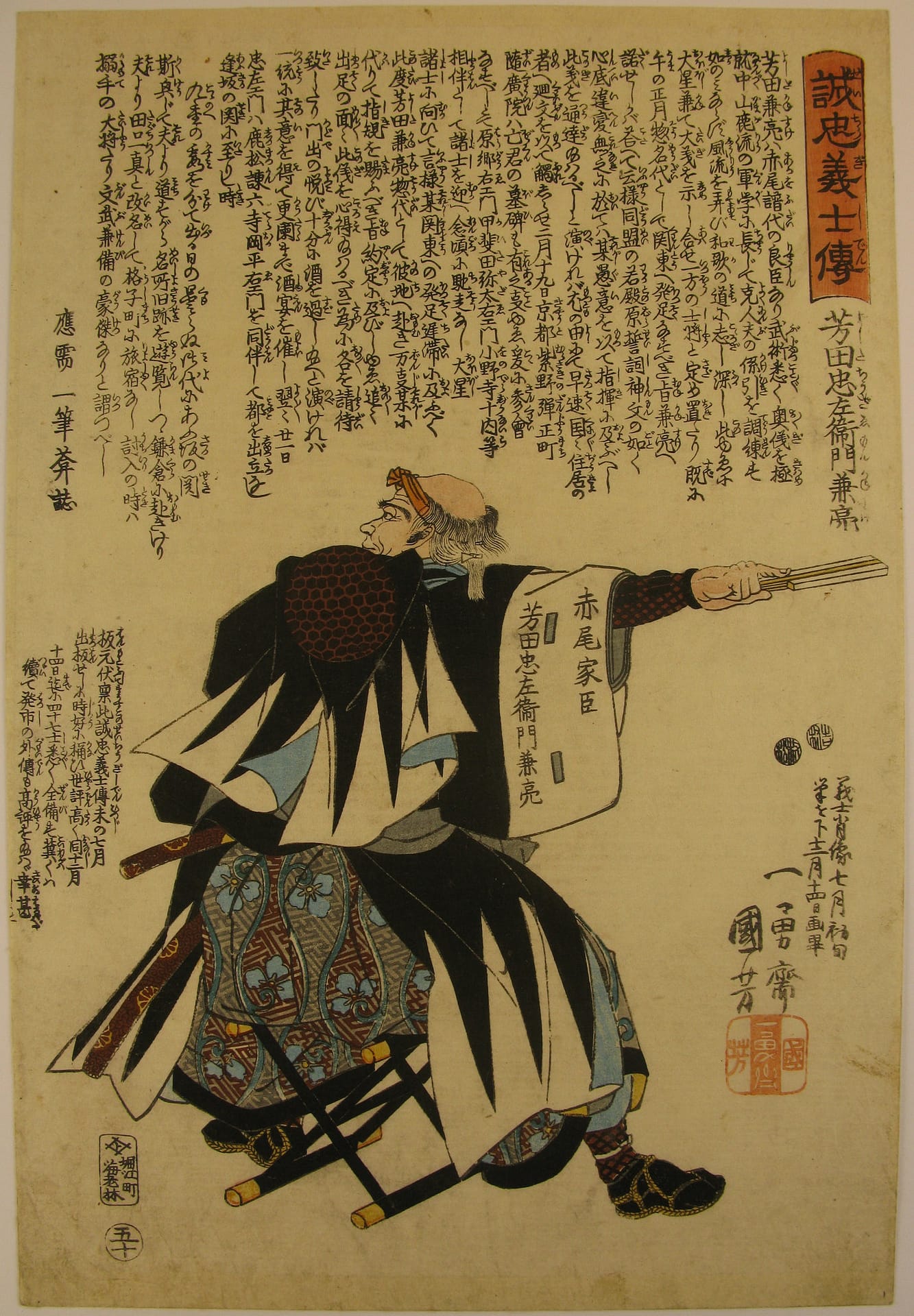
Subject: The ronin Yoshida Chuzaemon Kanesuke (kabuki name) – sitting on a stool, directing the battle with a fan
Series: Seichu gishi den (Stories of the true loyalty of the faithful samurai)
Print No: 1.50
Artist: Utagawa Kuniyoshi (1797-1861)
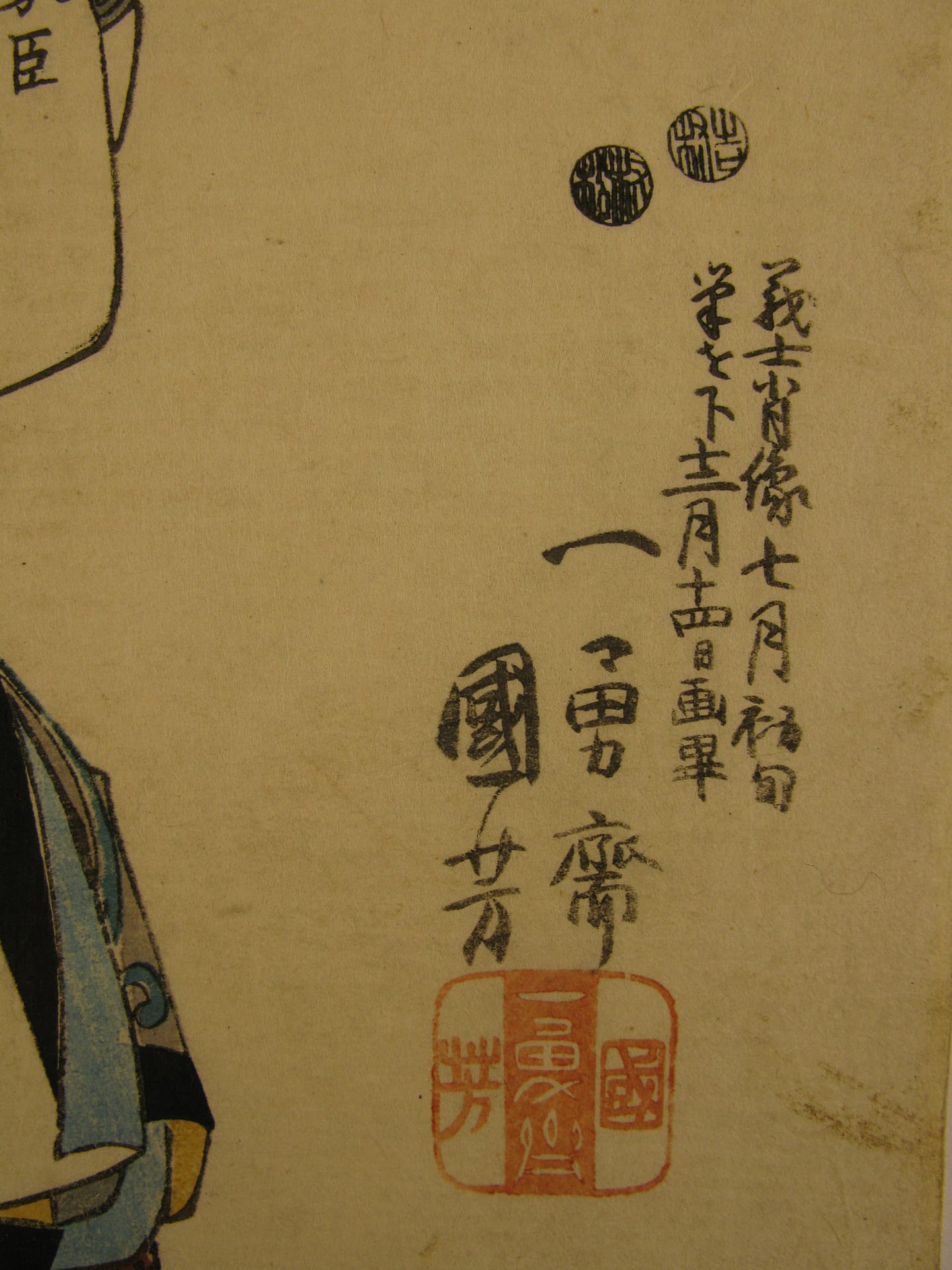
Signature: Ichiyusai Kuniyoshi ga and kiri seal
Date: 1847-48
Cens: Yoshimura – Muramatsu
Publisher: Ebi-ya Rinnosuke
Size: Oban tate-e, 36 x 24.8 cm
Condition: Very good impression, good colour and condition some marks and soiling. Numbered
Price: Not for sale at this stage
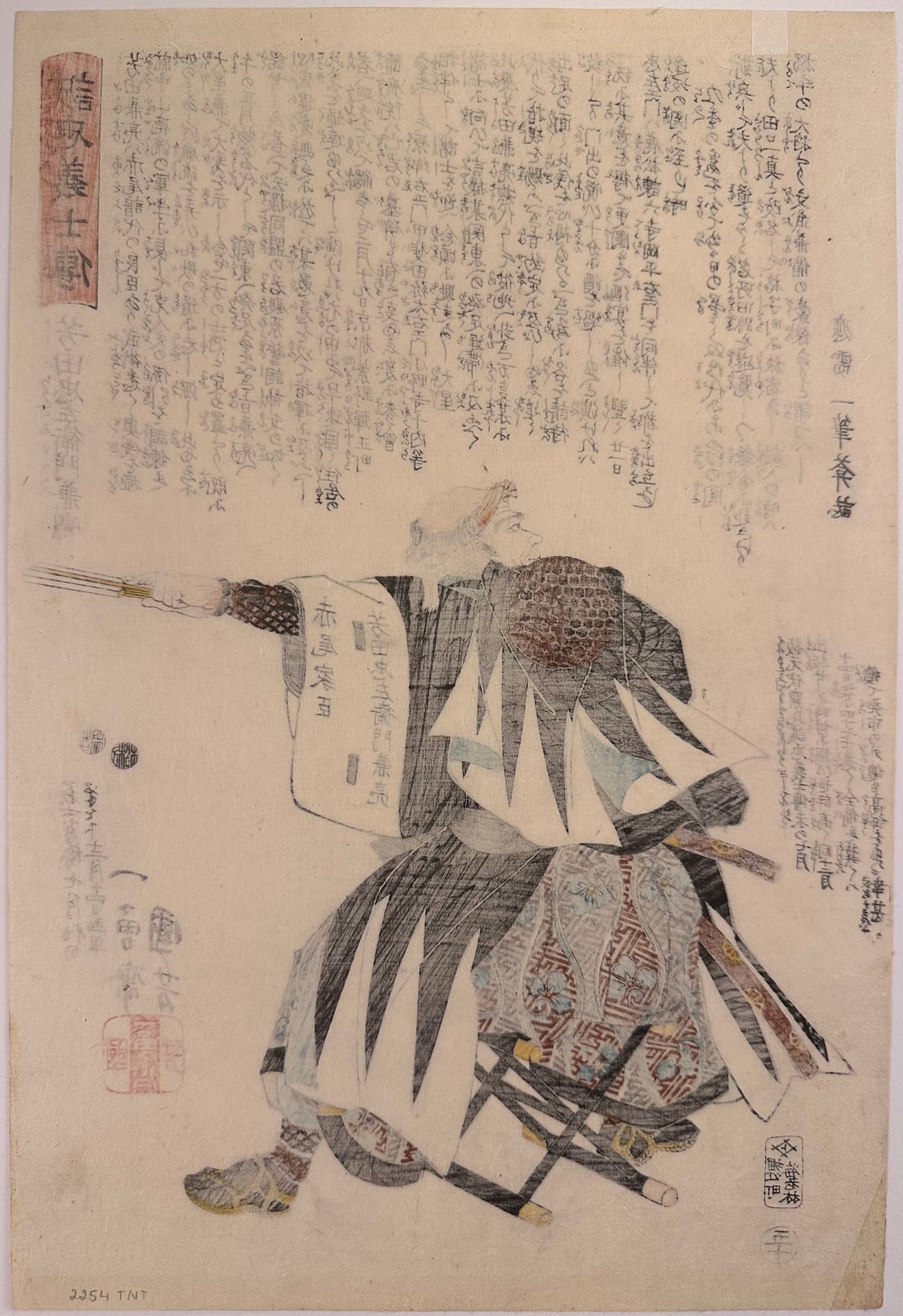
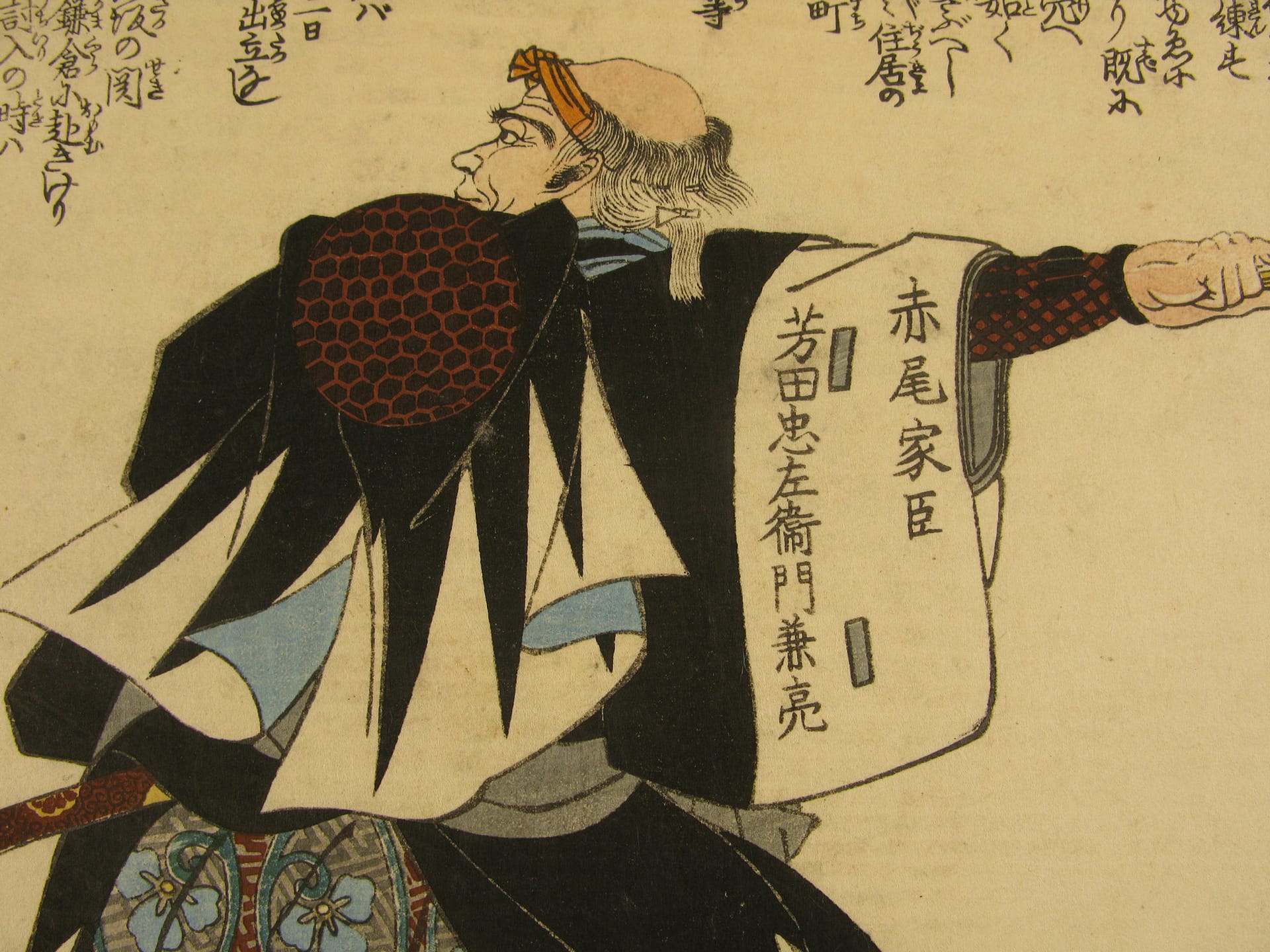
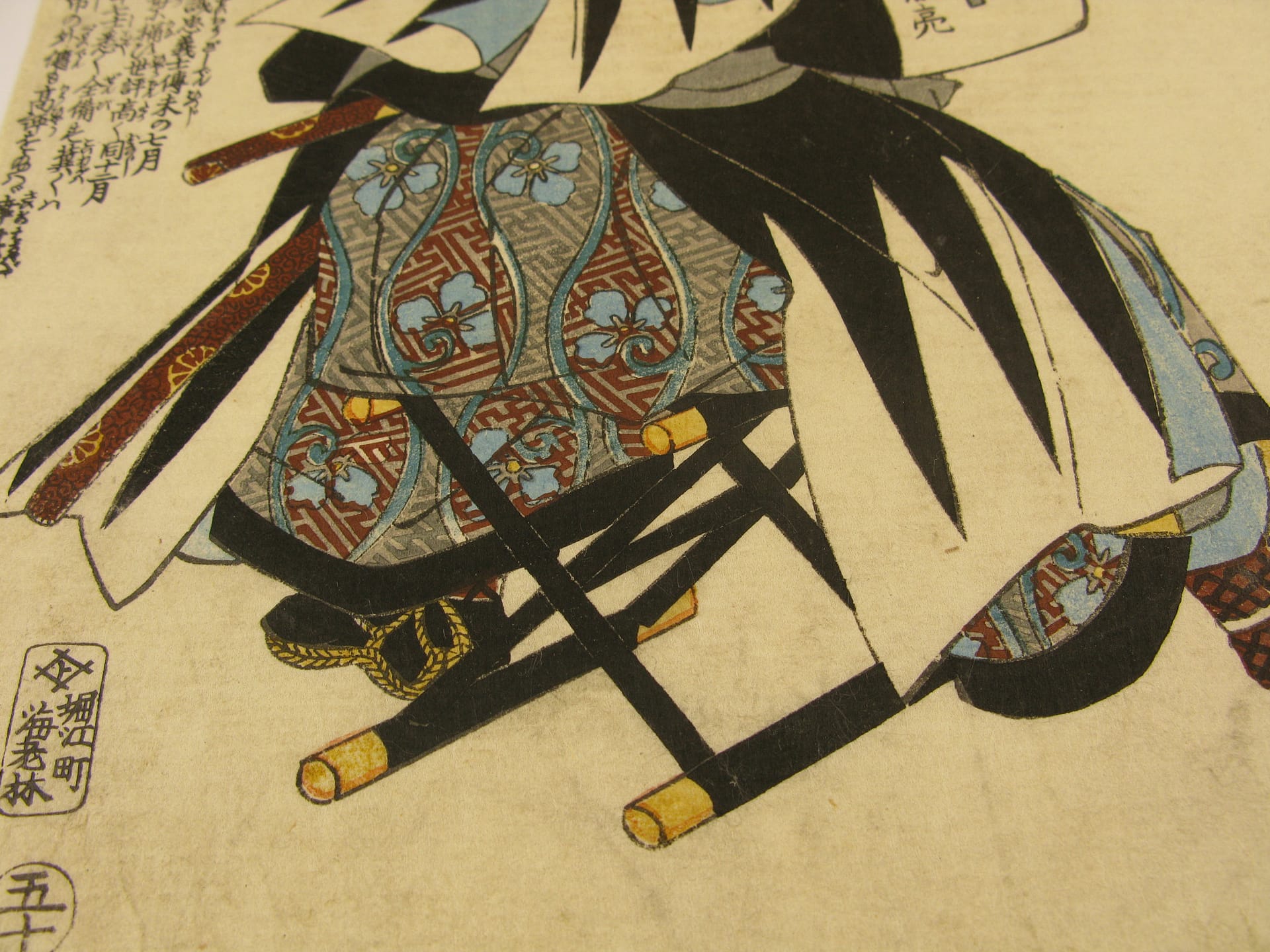
True name: Yoshida Chūzaemon Kanesuke (吉田 忠左衛門 兼亮)
Age: Unknown
Katana mei: not documented
Wakizashi mei: not documented
The tale of the text – with a little twist
Yoshida Kanesuke was the kind of samurai who could teach you how to storm a fortress and critique your poetry while doing it. A master of the Yamaga school and a waka enthusiast, he was basically the Edo‑period version of a military general who also runs a book club.
When Oboshi launched the grand revenge conspiracy, he immediately put Kanesuke in charge of the troops. Then, on New Year’s Day, he pulled him aside and said something like: “Congratulations, you’re now my Kanto branch manager.”
Kanesuke agreed, probably with the calm dignity of a man who had been waiting his whole life to be promoted. Oboshi then handed him a to‑do list:
• Visit all the sworn conspirators
• Tell them they’re under your command
• Invite them to a memorial service
• Try not to look suspicious while doing any of this
Hara Goemon, Kaida Yadaemon, and Onodera Junai were present for the announcement, and after a hearty meal, everyone felt pumped up and ready for righteous vengeance.
On January 21st, Kanesuke set off with Shikamatsu Kanroku and Teraoka Hei‑emon. When they reached the Ausaka checkpoint, Kanesuke paused, gazed dramatically into the distance, and composed a waka about mist clearing and sunlight shining on a cloudless reign. His companions probably nodded politely, pretending they understood the metaphor.
They then took a scenic detour—because even conspirators deserve a little sightseeing—before Kanesuke settled in Kojimachi under the alias Taguchi Isshin, which sounds exactly like the name a samurai picks when he wants to blend in but still sound cool.
During the attack, Kanesuke commanded the rear gate with the confidence of a man who had memorized every tactical manual ever written. And because he was both a battlefield commander and a poet, he earned the rare distinction of being a hero in war and literature—a combination that would make even the most stoic samurai raise an impressed eyebrow.
Note – for reals: The text to the left of the figure and to the right of Kuniyoshi’s signature indicates that the series was begun in early July, (7 month under lunar calendar, so really August) 1847 and completed on December 14, (under the lunar calendar on January 20, 1848). The publisher humbly announces that the Record of the loyal samurai, received with such acclaim when it came out in July, will be ready again on December 14th (Jan 20 – 1848) with all the 47. We pray the sequel to that Record will receive the same favourable reception.
For an accurate translation of the print text, I would encourage you to get the book: Kuniyoshi -The faithful samurai by David R Weinberg.