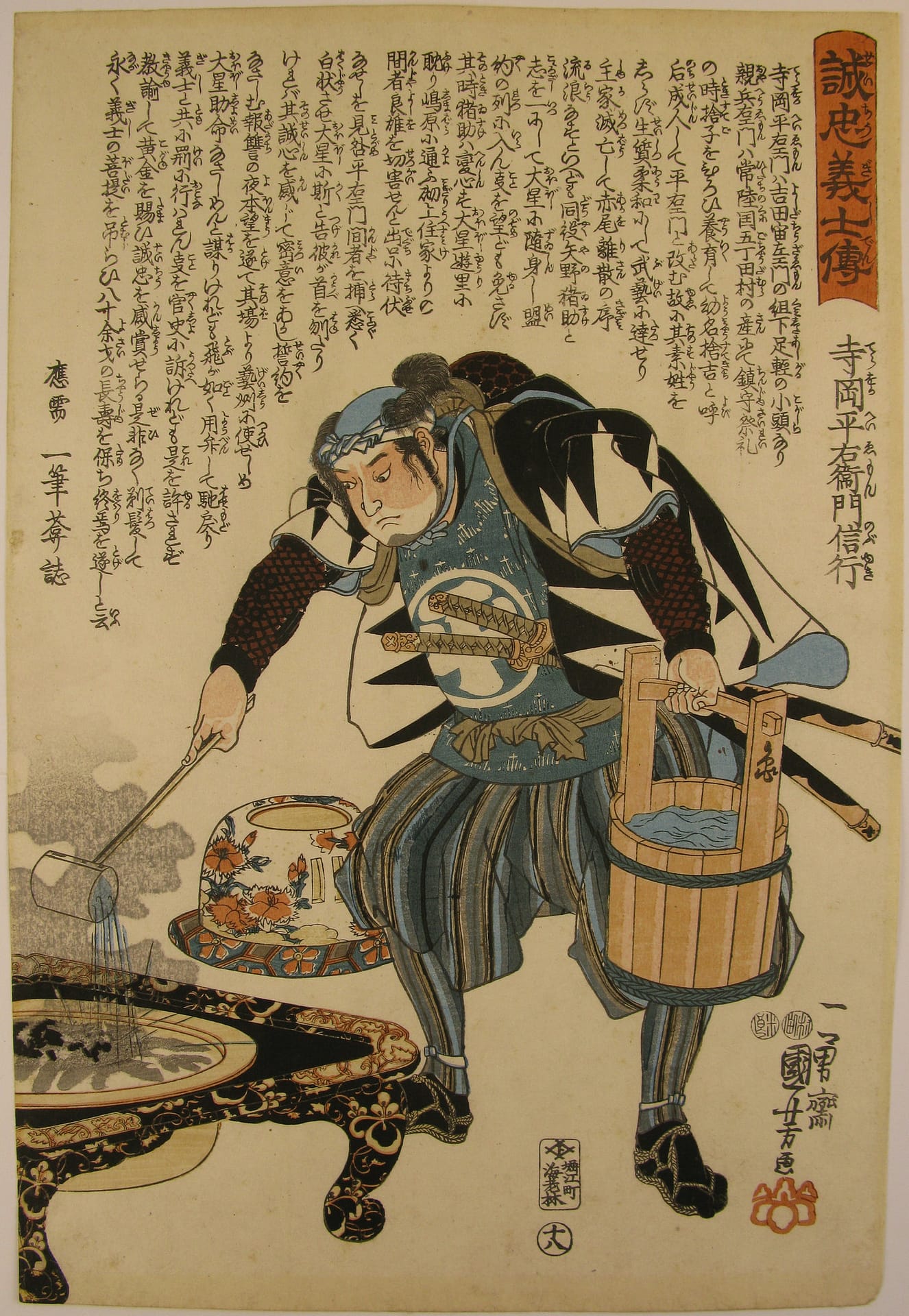
Subject: The ronin Teraoka Hei-emon Nobuyuki (kabuki name) – pouring water from a bucket onto a burning brazier
Series: Seichu gishi den (Stories of the true loyalty of the faithful samurai)
Print No: 1.18
Artist: Utagawa Kuniyoshi (1797-1861)
Signature: Ichiyusai Kuniyoshi ga and kiri seal
Date: 1847-48
Cens: Mera – Murata
Publisher: Ebi-ya Rinnosuke
Size: Oban tate-e, 36.7 x 24.8 cm
Condition: Very good impression, colour and condition. Numbered
Price: Not for sale at this stage
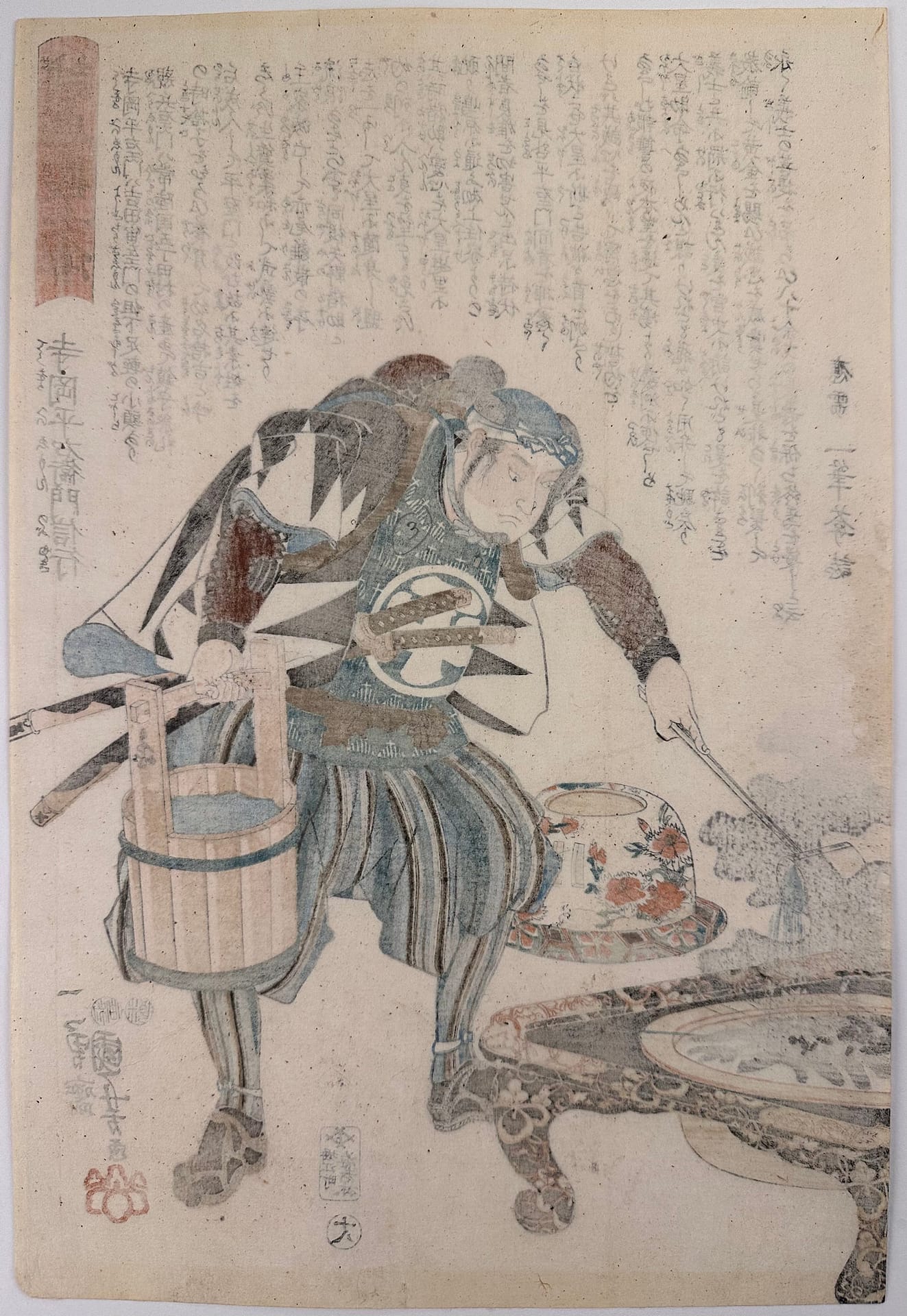
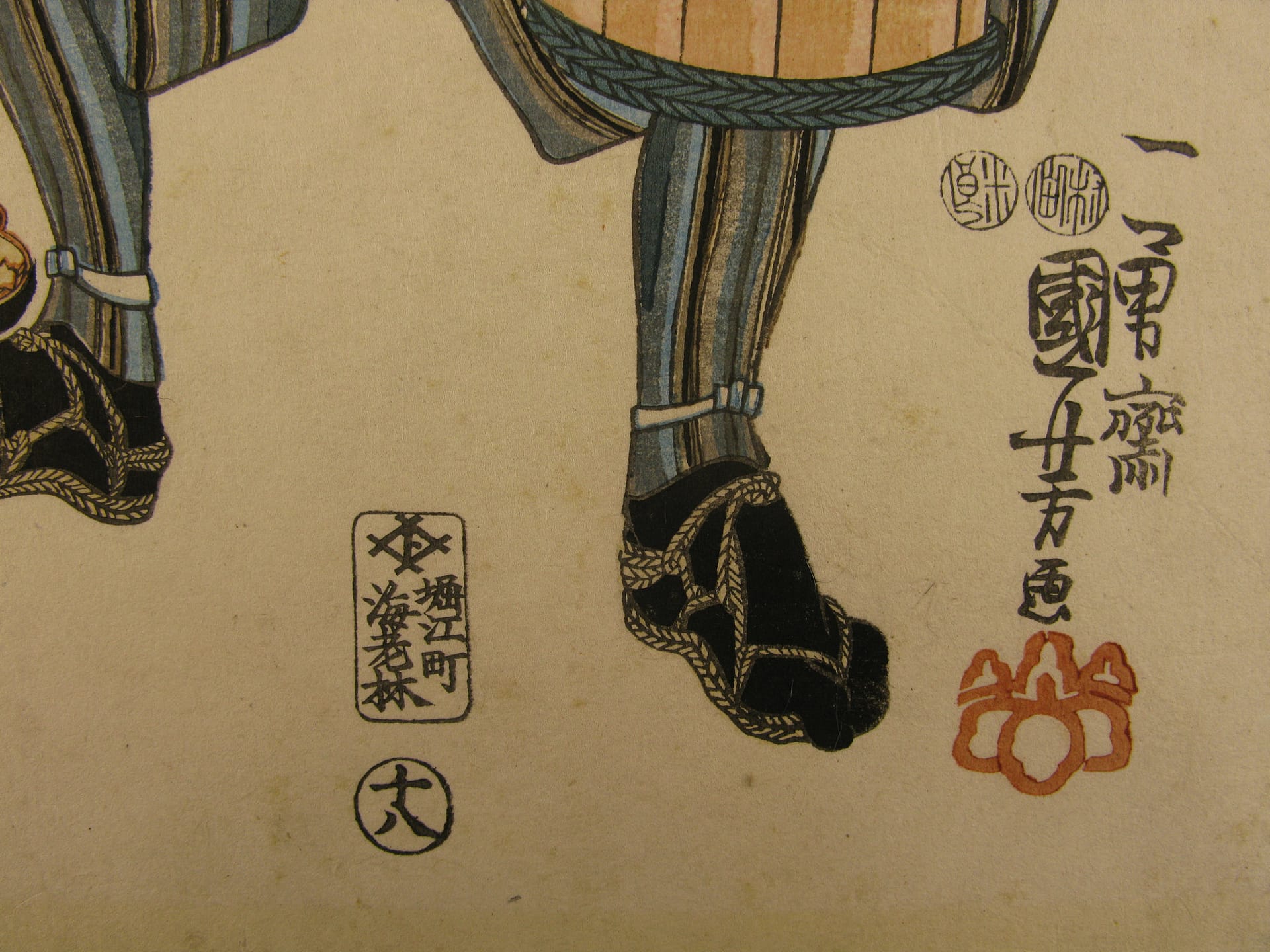
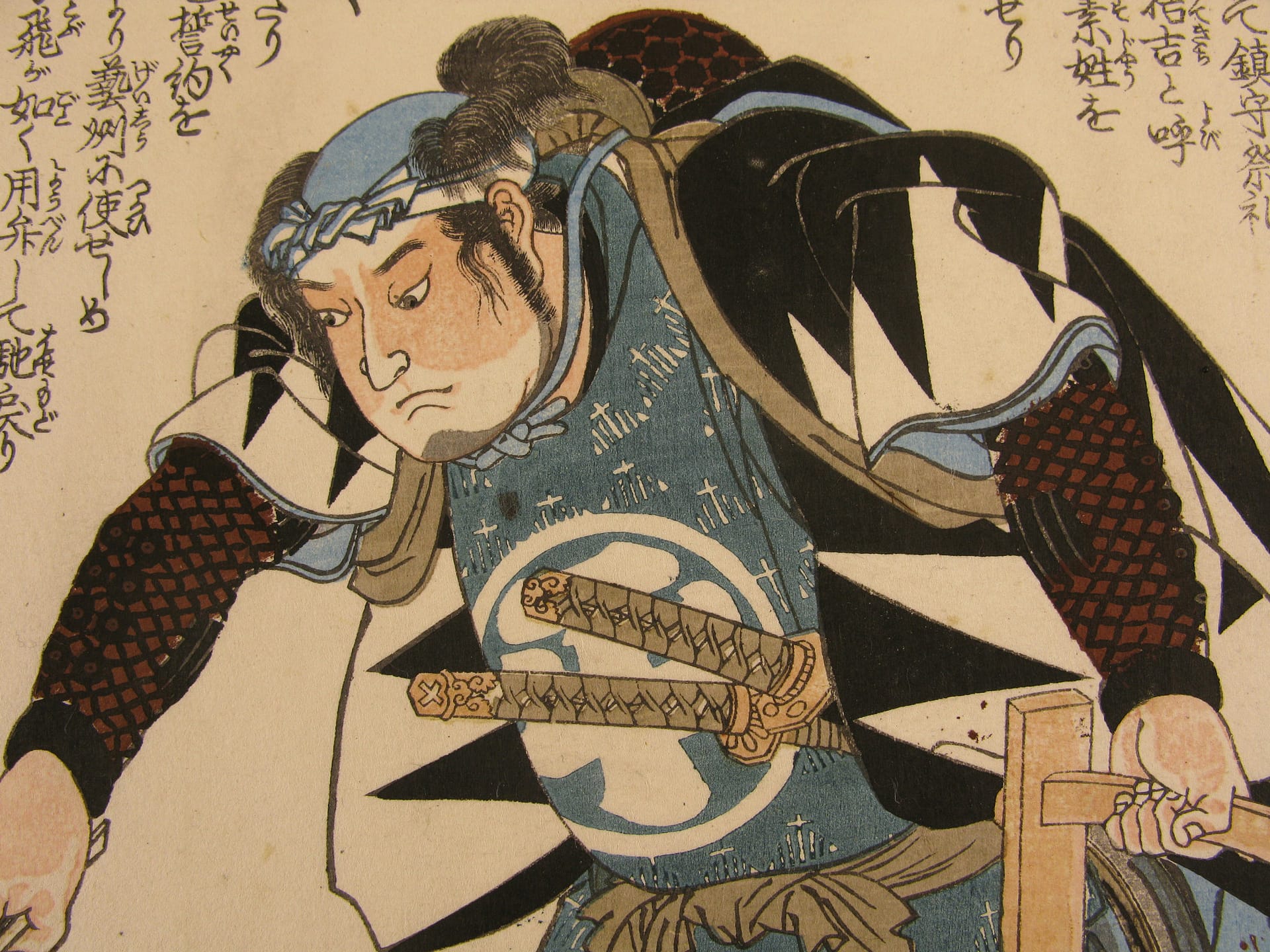
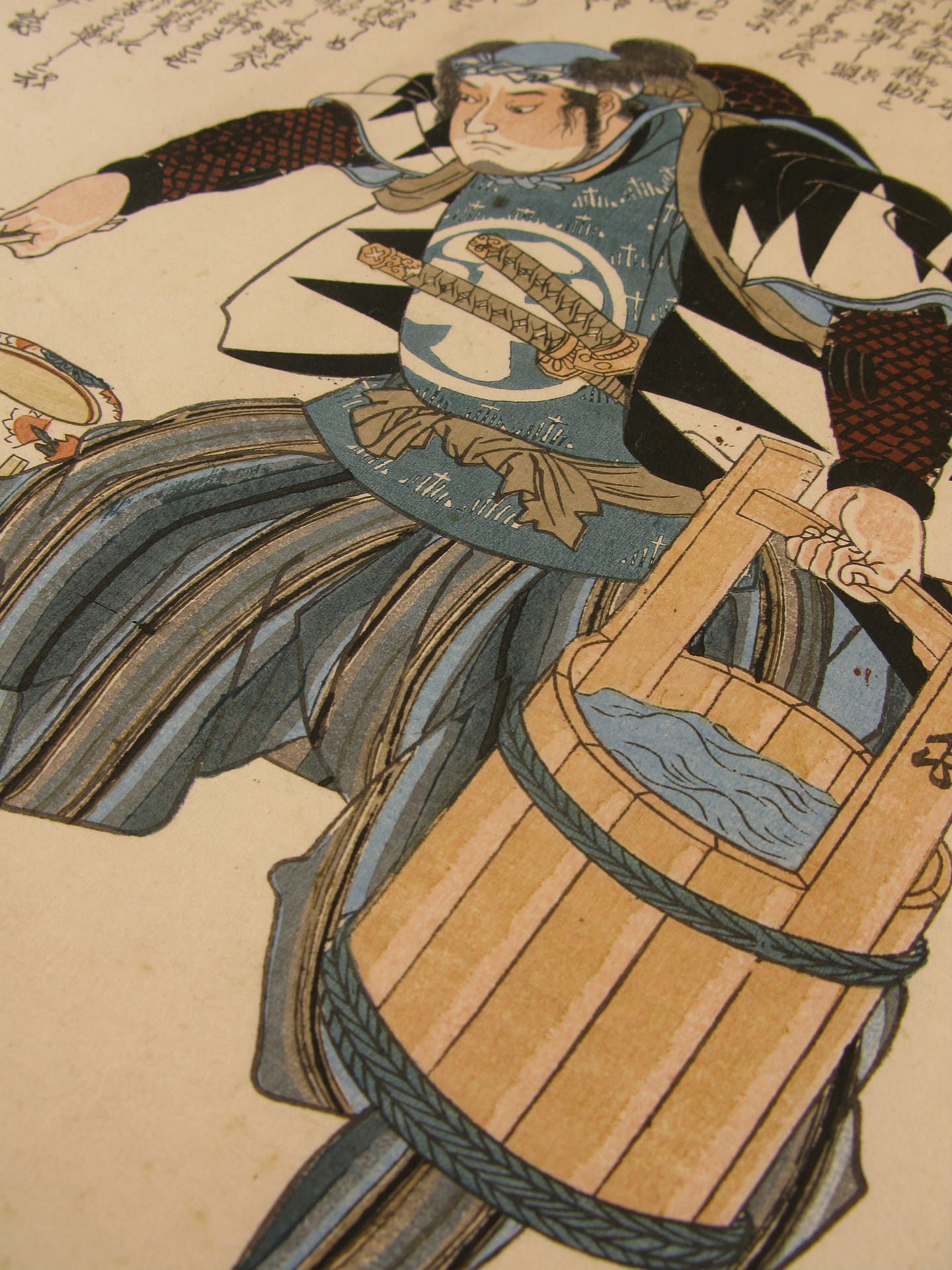
True name: Terasaka Kichiemon Nobuyuki (寺坂 吉右衛門 信行). Kichiemon was the only survivor after all other ronin committed sepuku
Age: Unknown
Katana mei: not documented
Wakizashi mei: not doucumented
The tale of the text – with a little twist
Teraoka Hei‑emon didn’t start life with a noble pedigree. In fact, he began as a baby someone left behind at a festival — the Edo‑period equivalent of being found in a supermarket trolley. His foster father picked him up, named him Sutekichi (“Foundling”), and raised him into a surprisingly gentle young man who also happened to be very good at military arts. A wholesome combination.
He eventually became chief foot soldier to Yoshida Chūzaemon, which is impressive for someone whose origin story is basically “I was free at the festival.”
After the Akao clan fell, Hei‑emon wandered around with his buddy Yano Isuke. They tried to join Oboshi Yoshio’s secret revenge squad, but Oboshi turned them away — probably thinking, “I’m not hiring two guys who just walked in off the street.”
Isuke took the rejection personally and never applied again. Hei‑emon, however, stuck around long enough to save Oboshi’s life. One day, he spotted a Uesumi spy lurking in a doorway, clearly waiting to assassinate Oboshi. Hei‑emon captured the spy, squeezed out a confession, and delivered him like a gift-wrapped problem. Oboshi beheaded the spy on the spot and immediately reconsidered his hiring standards. Hei‑emon was in.
During the night attack, Hei‑emon finally got to live his dream of being part of the legendary vendetta. But just when he was ready to die gloriously with everyone else, Oboshi sent him off to Geishū to keep him alive — the samurai equivalent of being told, “Go run this errand while we do the cool stuff.”
Hei‑emon finished the errand, sprinted back, and begged the authorities to let him die with his comrades. They said no. Bureaucracy strikes again.
Instead, he was rewarded, honored, and forced to live. So he shaved his head, became a monk, and spent the rest of his very long life praying for the souls of the rōnin — living to over eighty, which is practically ancient by samurai standards.
Not bad for a kid who started life as lost property.
For an accurate translation of the print text, I would encourage you to get the book: Kuniyoshi -The faithful samurai by David R Weinberg.