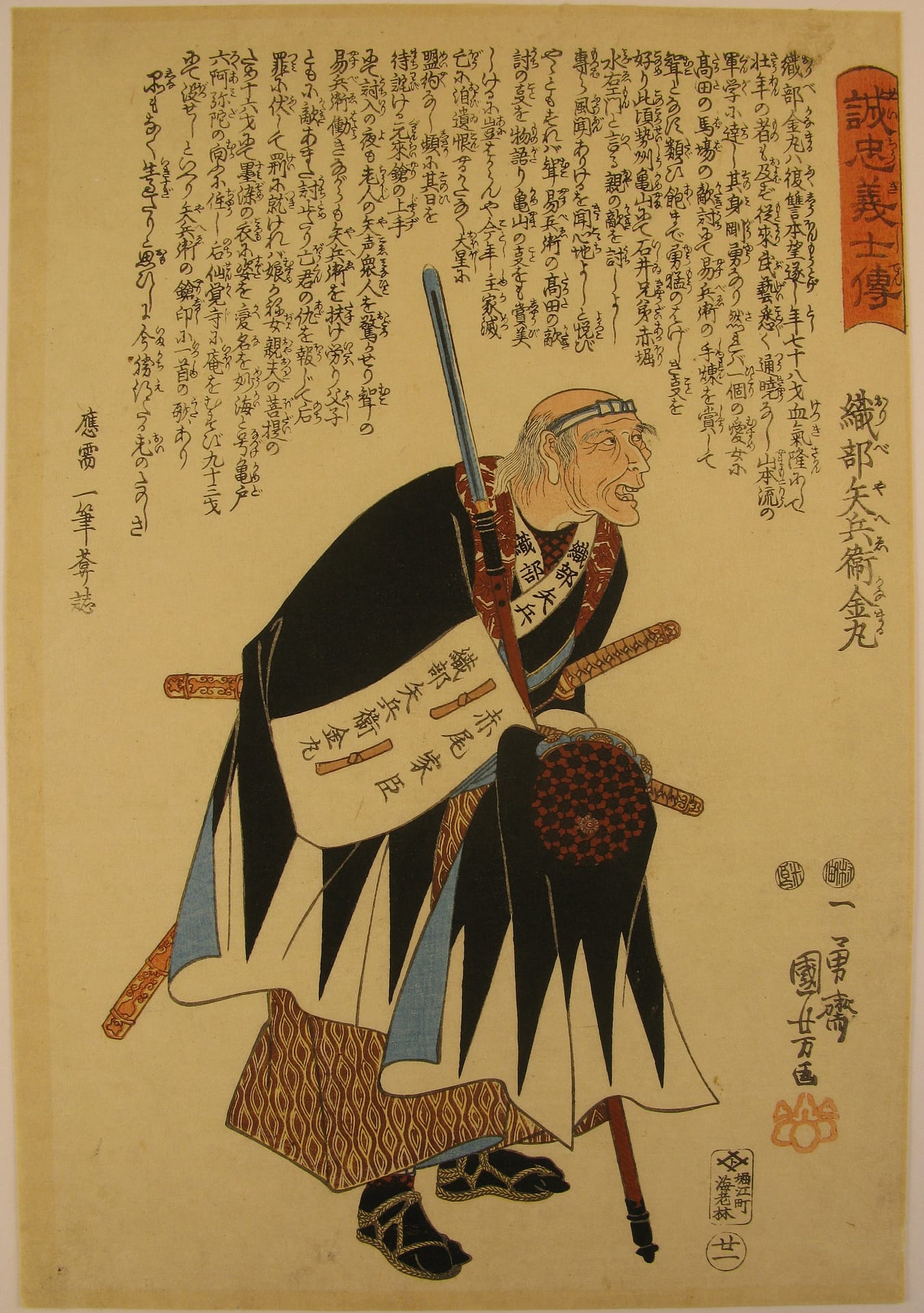
Subject: The ronin Oribe Yahei Kanamaru (kabuki name) – the old man bent over holding his helmet and his preferred weapon, the yari
Series: Seichu gishi den (Stories of the true loyalty of the faithful samurai)
Print No: 1.21
Artist: Utagawa Kuniyoshi (1797-1861)
Signature: Ichiyusai Kuniyoshi ga and kiri seal
Date: 1847-48
Cens: Mera – Murata
Publisher: Ebi-ya Rinnosuke
Size: Oban tate-e, 36.8 x 25.4 cm
Condition: Fine impression, very good colour and condition. Numbered
Price: Not for sale at this stage
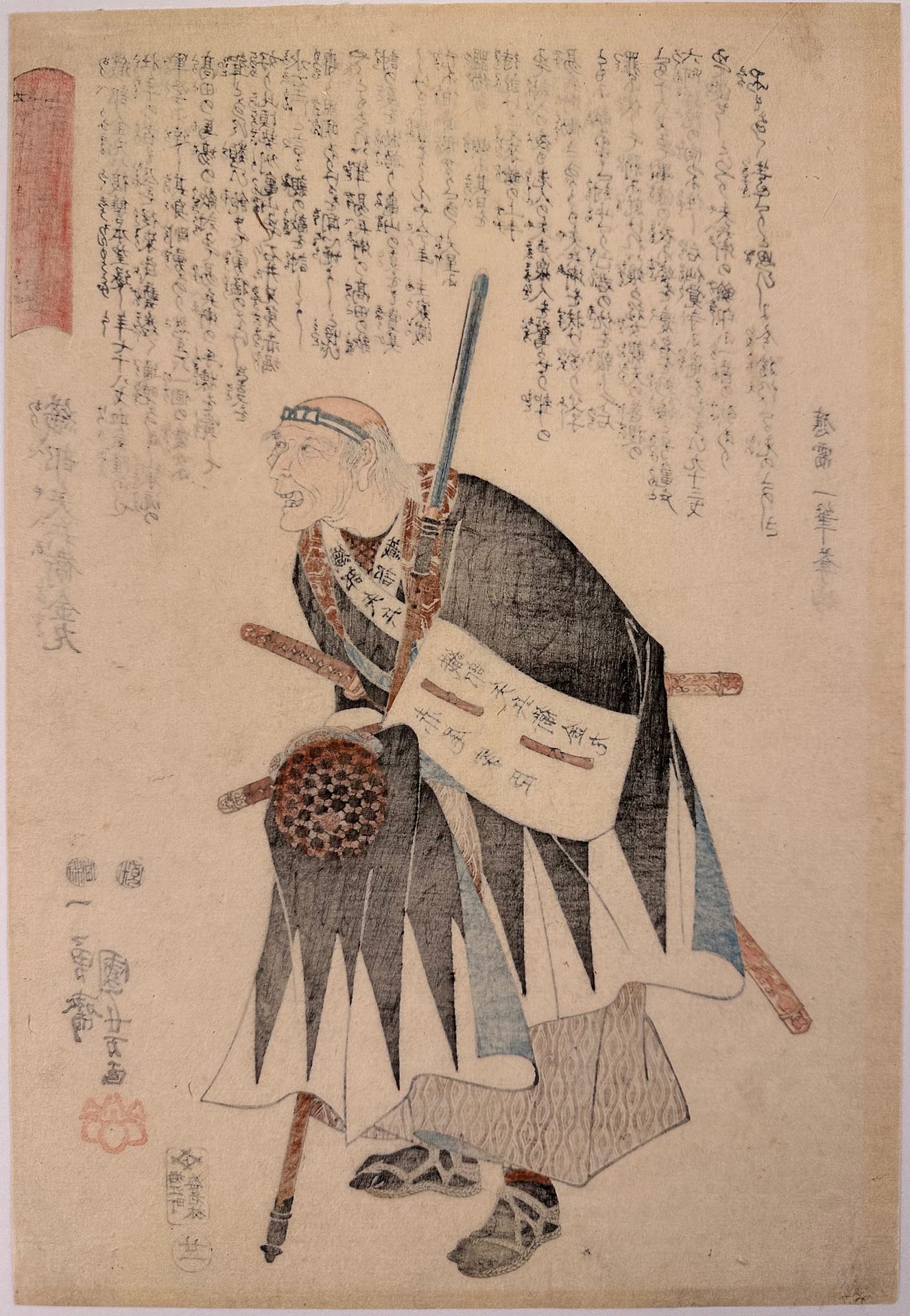
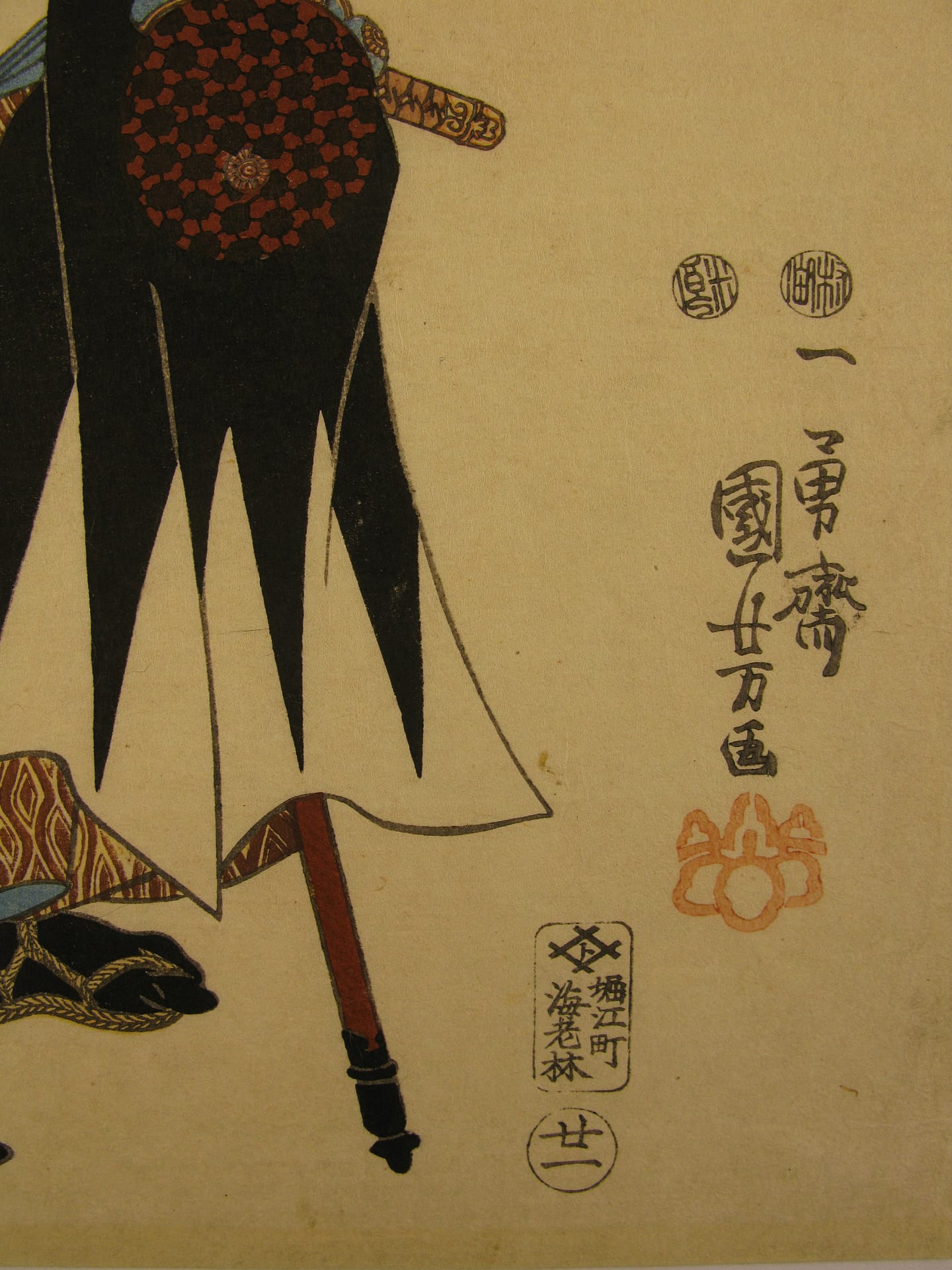
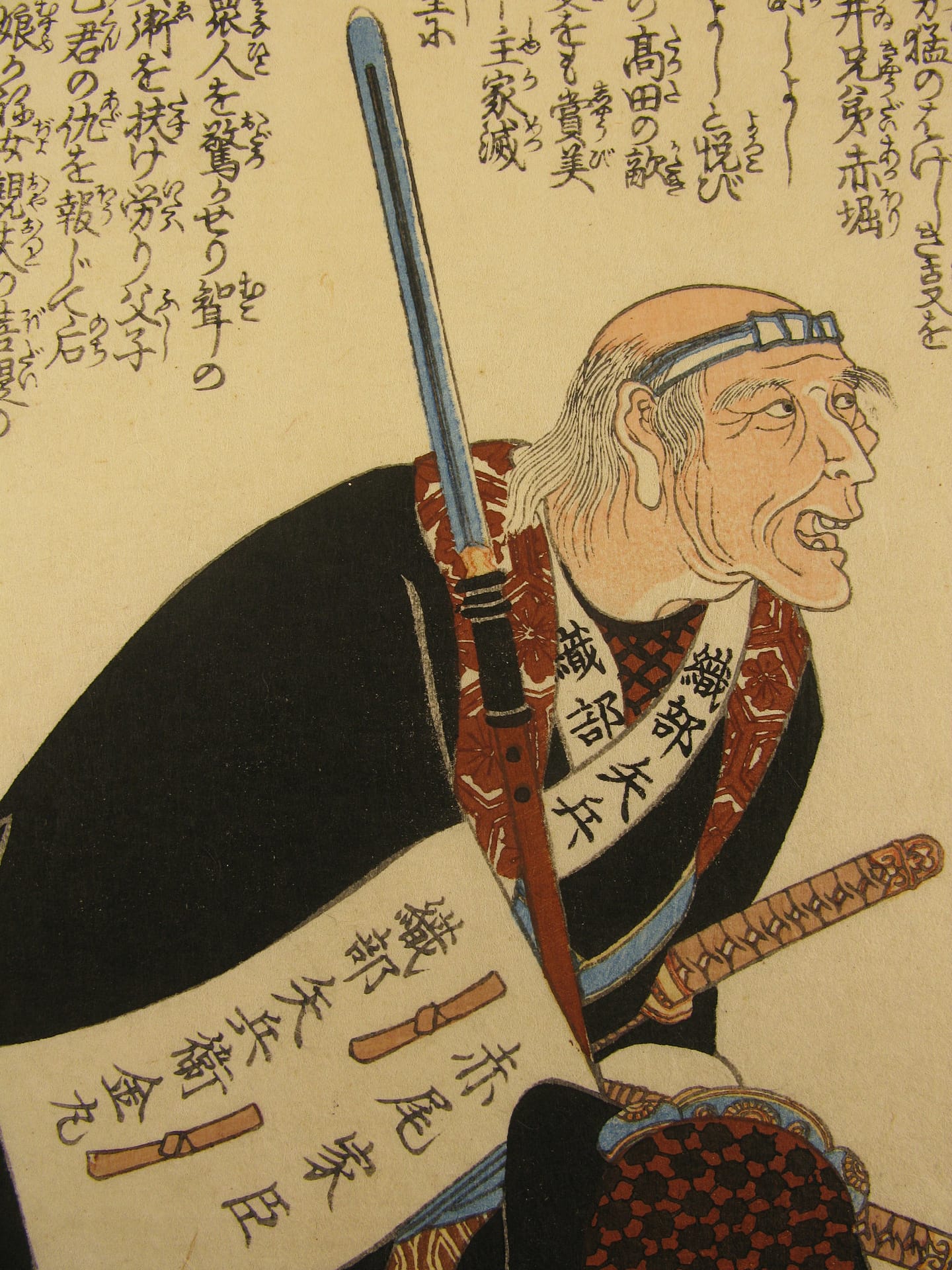
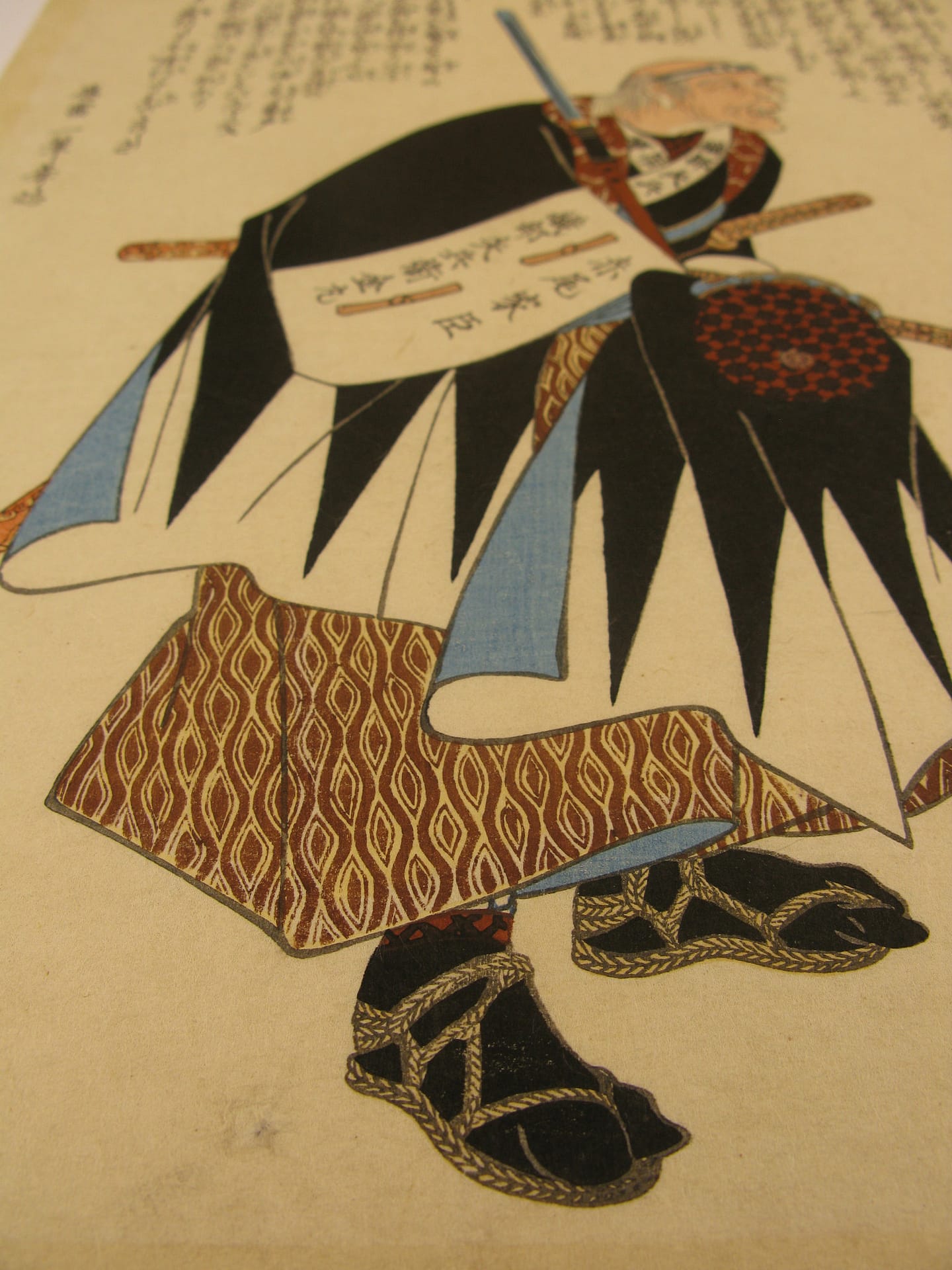
True name: Horibe Yahyoe Akizane (堀部 弥兵衛 金丸)
Age: 77 (maybe 78 according to print text )
Katana mei: mumei, length 3 shaku
Wakizashi mei: none + Naginata (thought the print suggests a yari)
The tale of the text – with a little twist
Oribe Kanamaru was seventy‑eight years old — an age when most people are thinking about warm tea and comfortable cushions — but he was built like a retired thunder god. Younger samurai looked at him and thought, “I hope I’m that terrifying when I’m old.”
He had one daughter, and he married her off to Yasubei, a man famous for a previous vendetta in which he basically bulldozed his enemies with raw enthusiasm. Kanamaru adored him. He would tell the story of Yasubei’s heroic moment at Takata‑no‑Baba so often that his neighbors probably knew it by heart.
He also loved listening to tales of other revenge missions, like the Ishii brothers’ dramatic showdown. Every time he heard a new detail, he’d shout things like “Amazing!” or “Incredible!” with the energy of someone watching a championship match. But when he learned of his own lord’s death, the old warrior’s excitement turned into fierce determination. He joined Oboshi’s plot and waited for the big day like a man counting down to a festival.
During the night attack, Kanamaru unleashed decades of pent‑up martial enthusiasm. His battle cries alone were enough to make enemies reconsider their life choices. Yasubei fought beside him, and together they cut down several opponents — a father‑and‑son bonding activity that most families thankfully don’t attempt.
After the vendetta, they had to face the consequences, but Kanamaru’s granddaughter Kane‑jo stepped into the story with her own dramatic flair. At sixteen, she put on charcoal‑colored robes, became the nun Myōkai, and dedicated her life to praying for her father and grandfather. She lived to ninety‑three in a hut she built herself — clearly toughness ran in the family.
And Kanamaru’s spear carried a poem that basically said, “I’ve lived a long time and enjoyed many things, but nothing beats today’s victory.”
A warrior to the very end.
For an accurate translation of the print text, I would encourage you to get the book: Kuniyoshi -The faithful samurai by David R Weinberg.