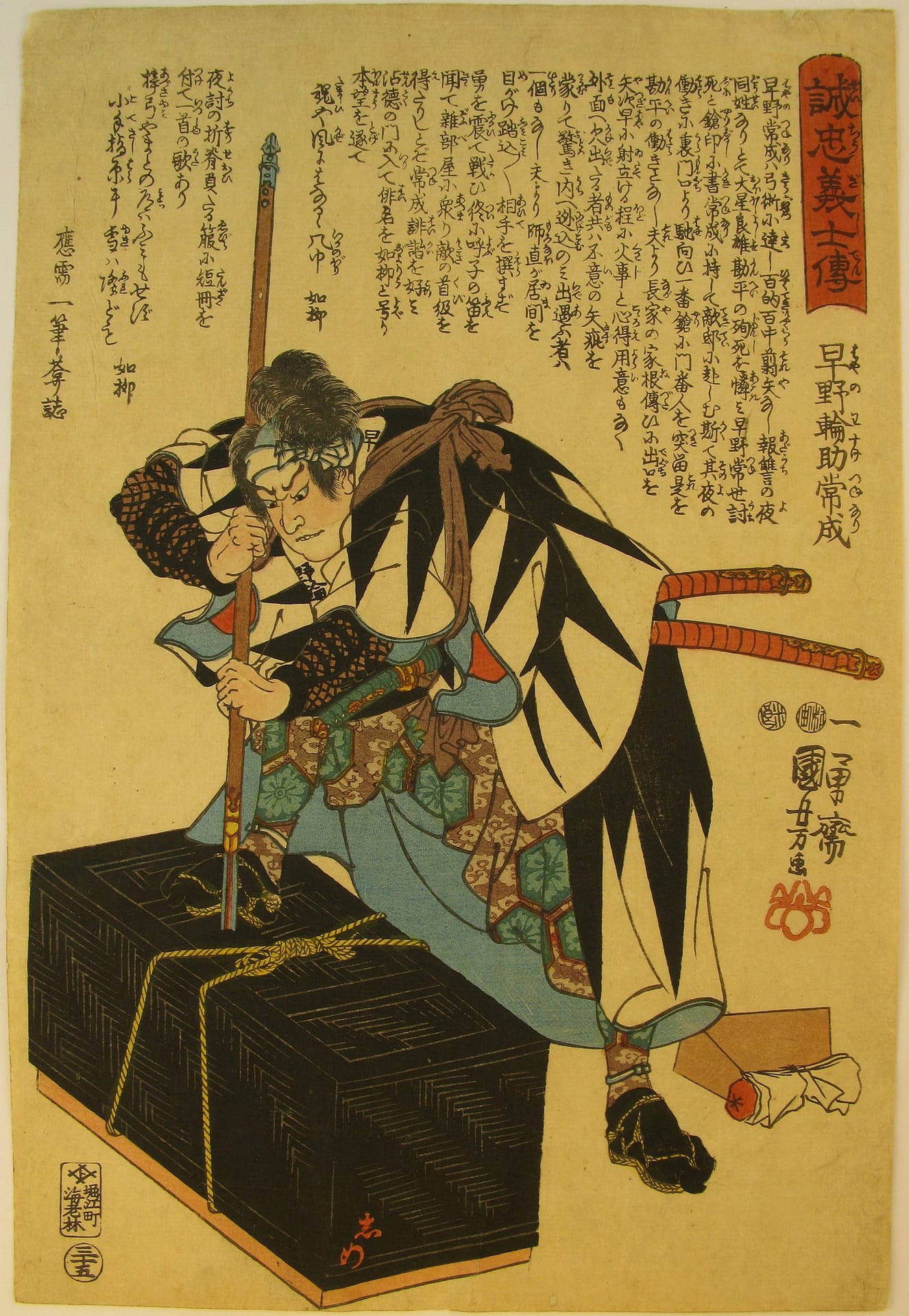
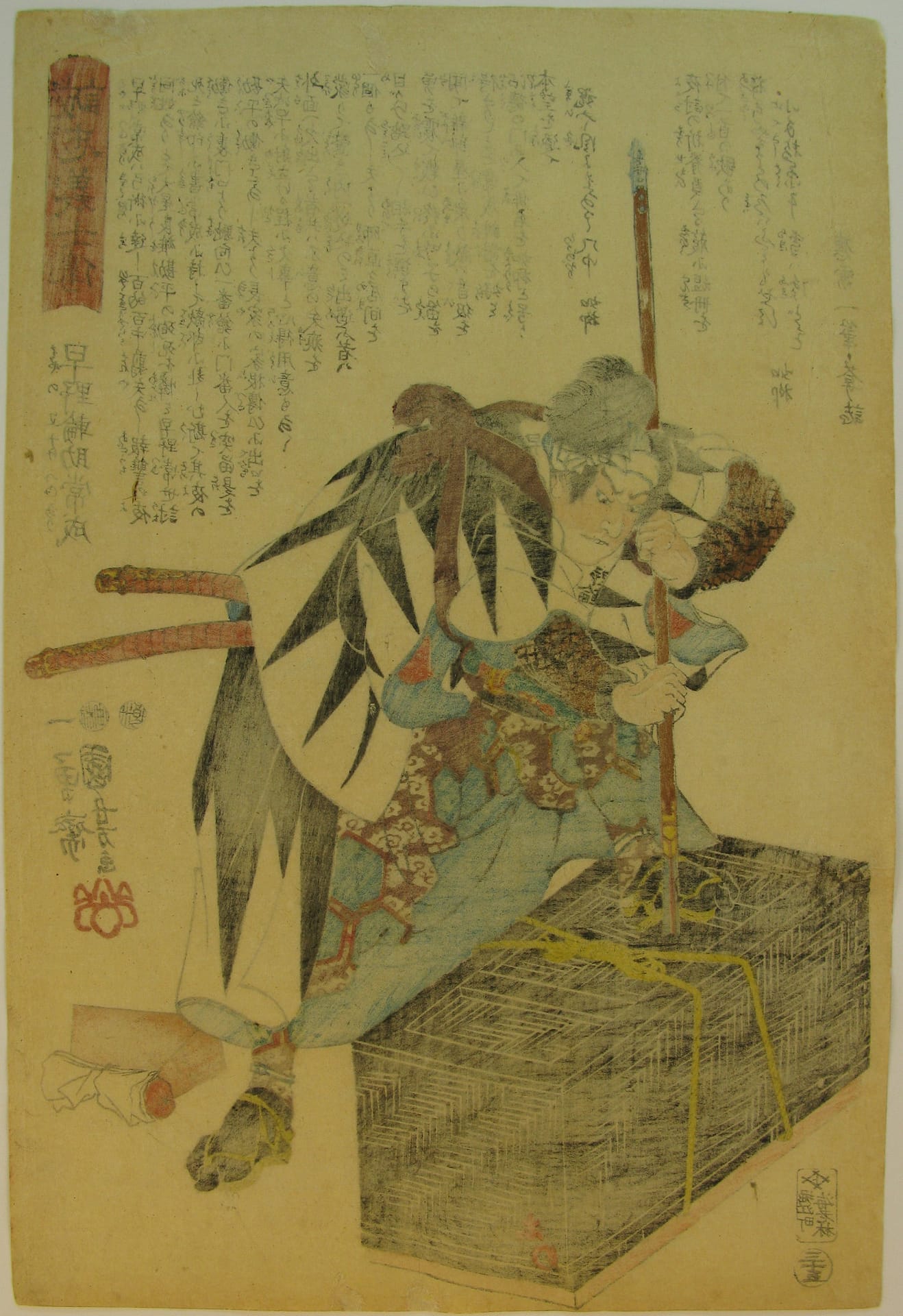
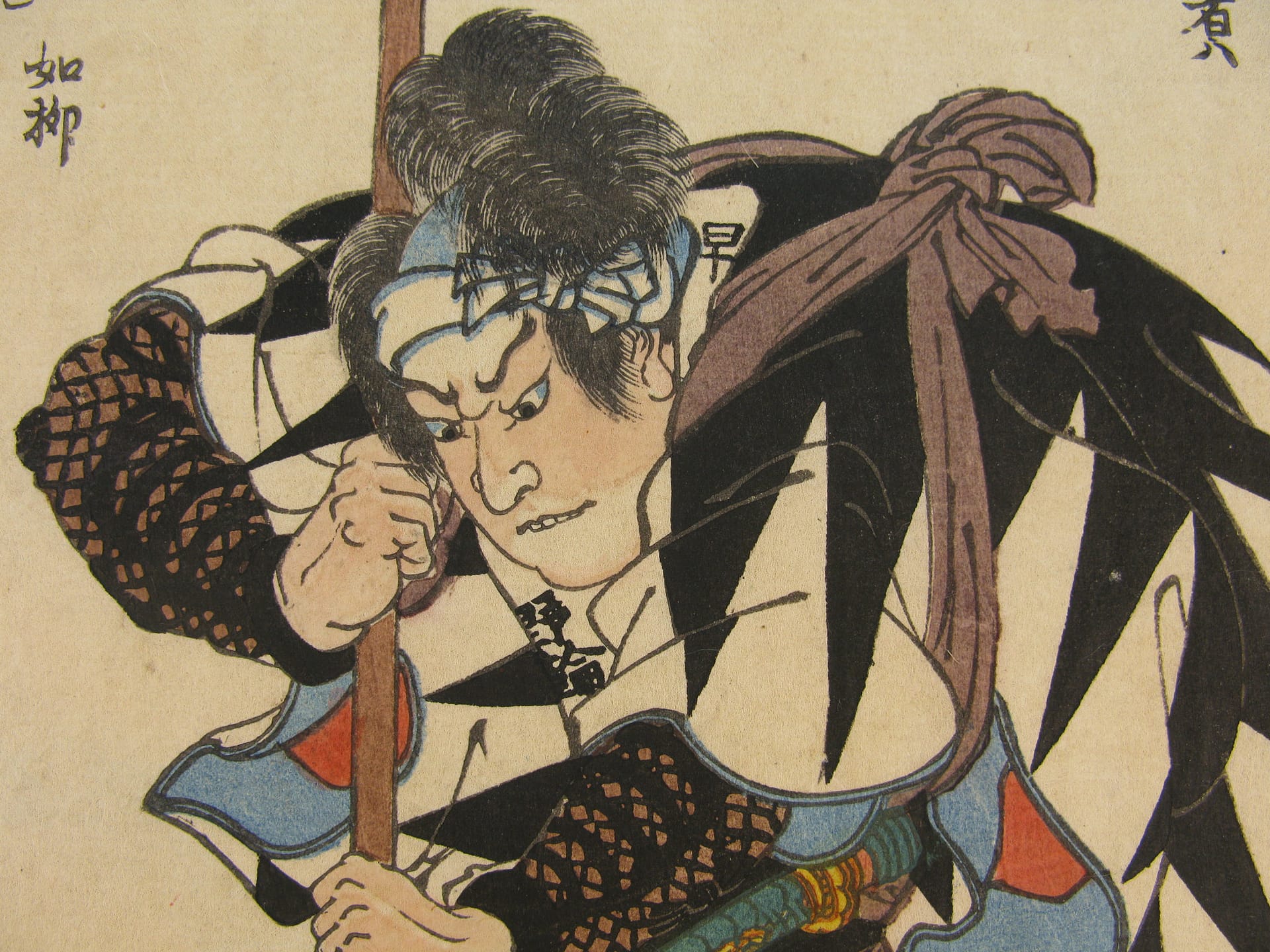
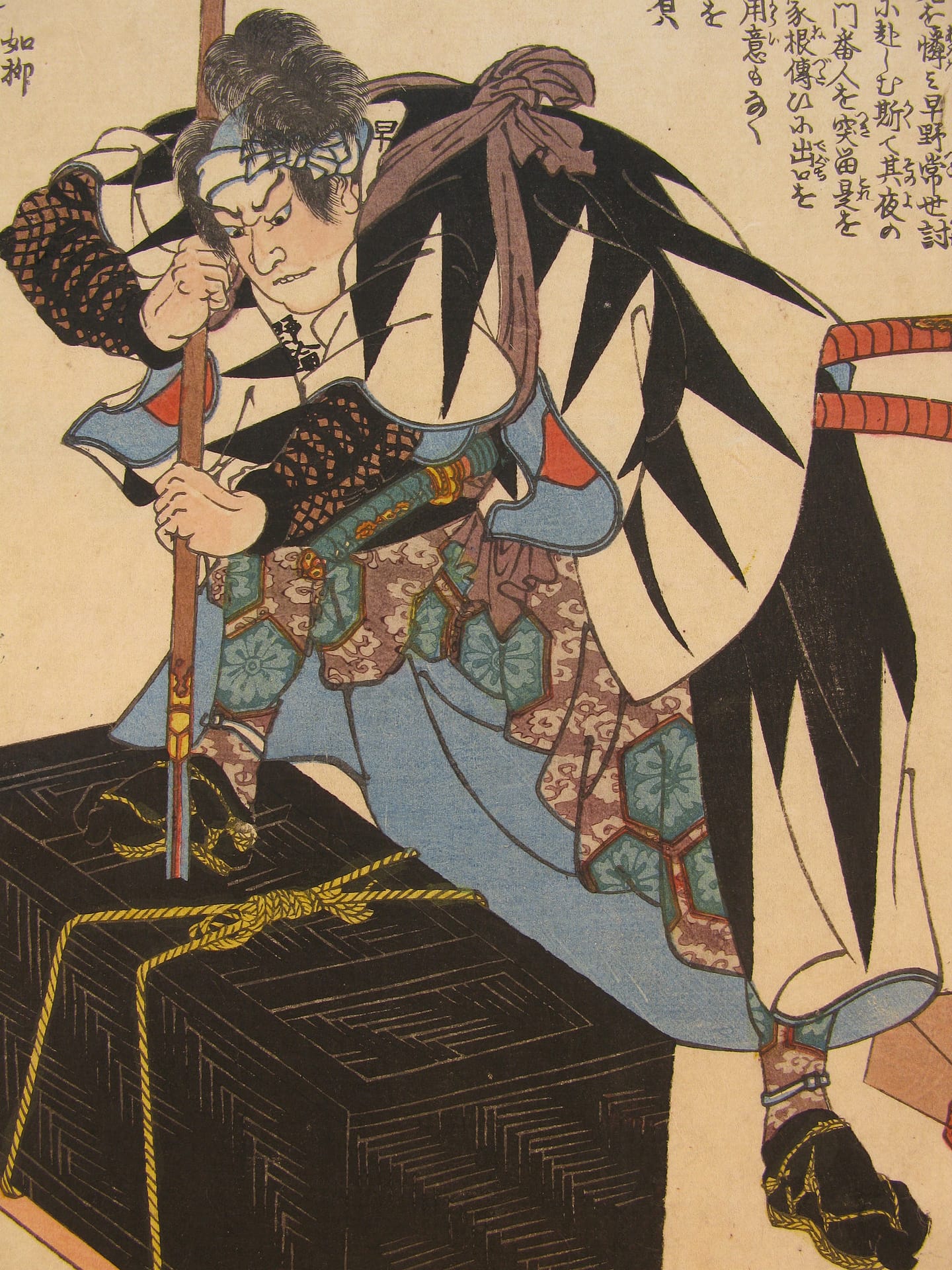
Subject: The ronin Hayano Wasuke Tsunenari (kabuki name) – piercing a cord bound wicker chest in his serach for Moronao
Series: Seichu gishi den (Stories of the true loyalty of the faithful samurai)
Print No: 1.35
Artist: Utagawa Kuniyoshi (1797-1861)
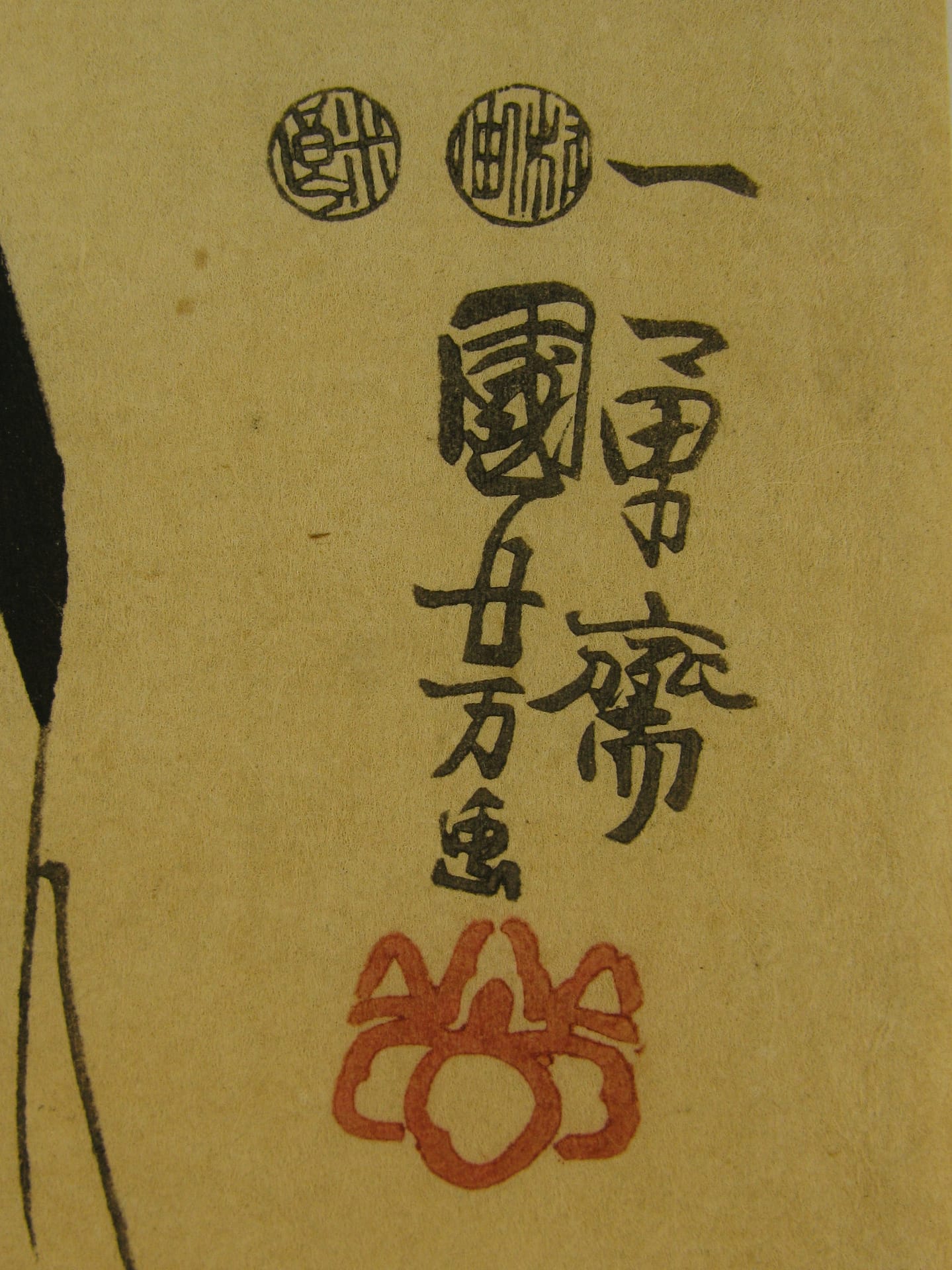
Signature: Ichiyusai Kuniyoshi ga and kiri seal
Date: 1847-48
Cens: Mera – Murata
Publisher: Ebi-ya Rinnosuke
Size: Oban tate-e, 37.5 x 26 cm
Condition: Fine impression, colour and condition. Numbered state
Price: Not for sale at this stage
True name: Kayano Wasuke Tsunenari (茅野 和助 常成)
Age: Unknown
Katana mei: not documented
Wakizashi mei: not documented
The tale of the text – with a little twist
Hayano Wasuke Tsunenari was the kind of archer who made everyone else reconsider their life choices. He could hit 100 bull’s‑eyes with 100 arrows — the sort of accuracy that makes people quietly put their bows away and pretend they were never trying in the first place. If you needed someone to shoot the wings off a mosquito at fifty paces, Tsunenari would ask whether you wanted the left wing or the right.
On the night of the vendetta, Ōboshi handed him a spear with a pennant reading “Hayano Kampei, killed in battle,” in honor of his brother. Most people would commemorate a sibling with a poem or a keepsake. Tsunenari commemorated his by impaling a guard through the back gate. Everyone grieves differently.
Once inside, Tsunenari climbed onto the roof of the barracks and unleashed such a storm of arrows that the defenders thought the place was on fire. They rushed outside, got shot, rushed back inside, and stayed there — which is exactly the kind of tactical confusion Tsunenari specialized in.
Then he plunged deeper into the mansion, fighting anyone who appeared in front of him. “Frightful to face” is the polite historical phrasing. A more accurate description might be “a one‑man natural disaster with excellent aim.”
When the whistle blew — the Edo‑period equivalent of “everyone meet by the shed” — Tsunenari sprinted to the utility building where the rōnin gathered to take Moronao’s head. Mission accomplished, arrows expended, vengeance delivered.
Off the battlefield, Tsunenari had a softer side. He enjoyed haikai poetry and studied under Sentoku, writing under the name Jōryū. His victory poem compared their triumph to a kite soaring in the wind — which is a surprisingly gentle metaphor for a man who had just turned a rooftop into an archery range.
He even carried a poem card on his quiver, a little literary flourish to accompany all the stabbing and shooting. Nothing says “cultured warrior” like composing verse while preparing to rain arrows on your enemies.
For an accurate translation of the print text, I would encourage you to get the book: Kuniyoshi -The faithful samurai by David R Weinberg.