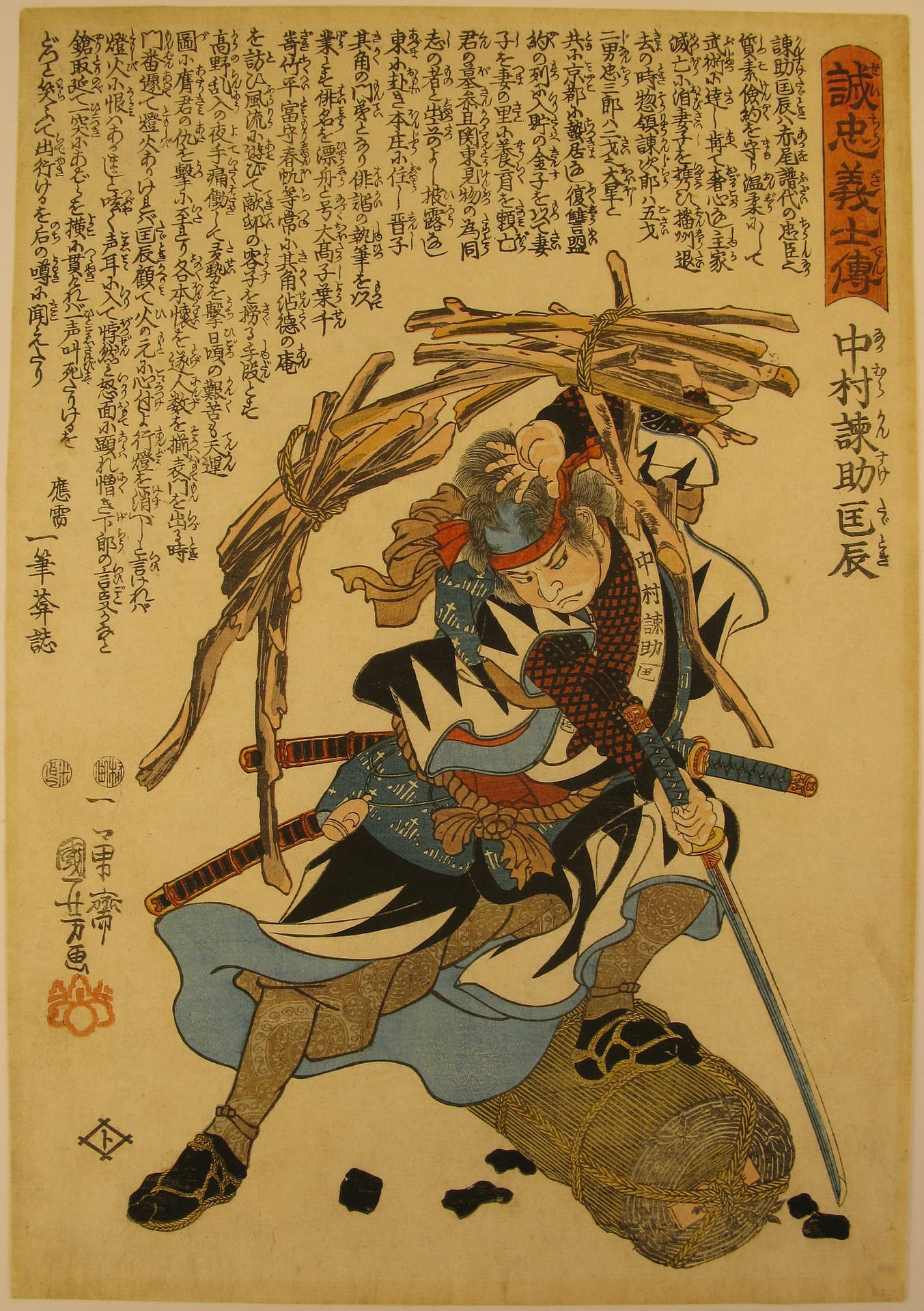
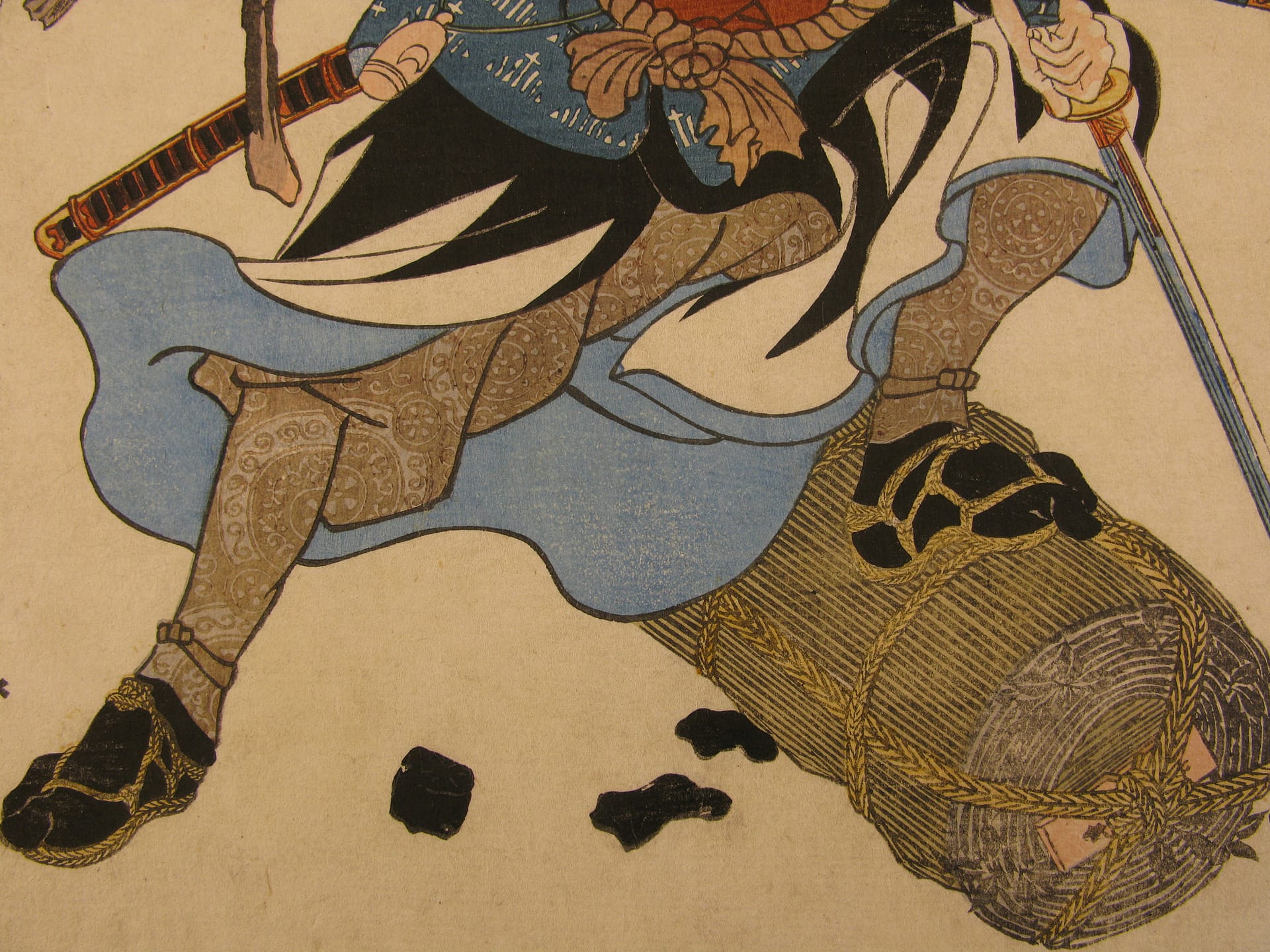
Subject: The ronin Nakamura Kansuke Tadatoki (kabuki name) – an expert swordsman, we see him cutting through a bundle of fire wood with his foot on a bale of charcoal
Series: Seichu gishi den (Stories of the true loyalty of the faithful samurai)
Print No: 1.16
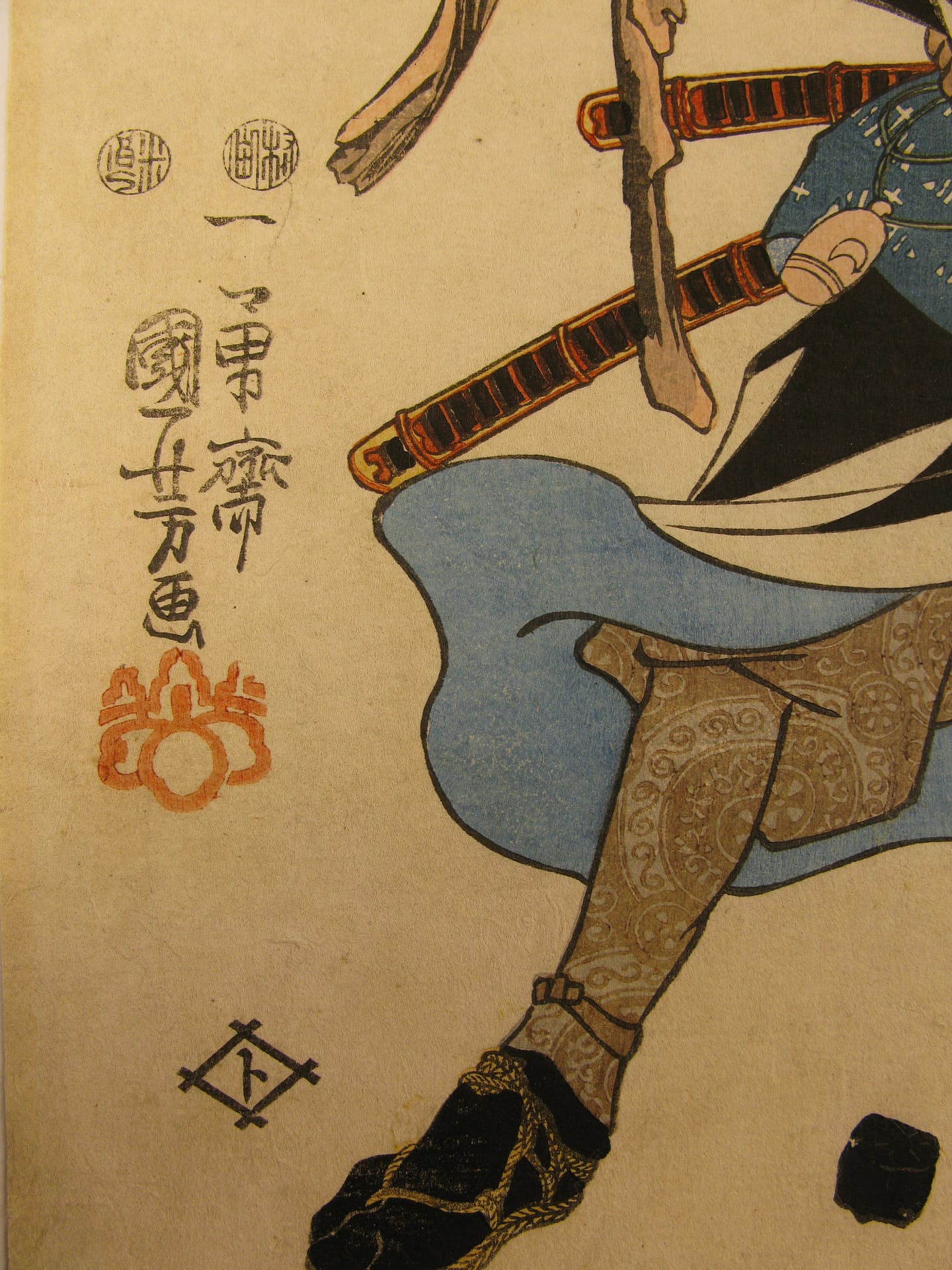
Artist: Utagawa Kuniyoshi (1797-1861)
Signature: Ichiyusai Kuniyoshi ga and kiri seal
Date: 1847-48
Cens: Mera – Murata
Publisher: Ebi-ya Rinnosuke
Size: Oban tate-e, approx 37 x 25 cm
Condition: Fine impression, colour and condition. Un-numbered state
Price: Not for sale at this stage
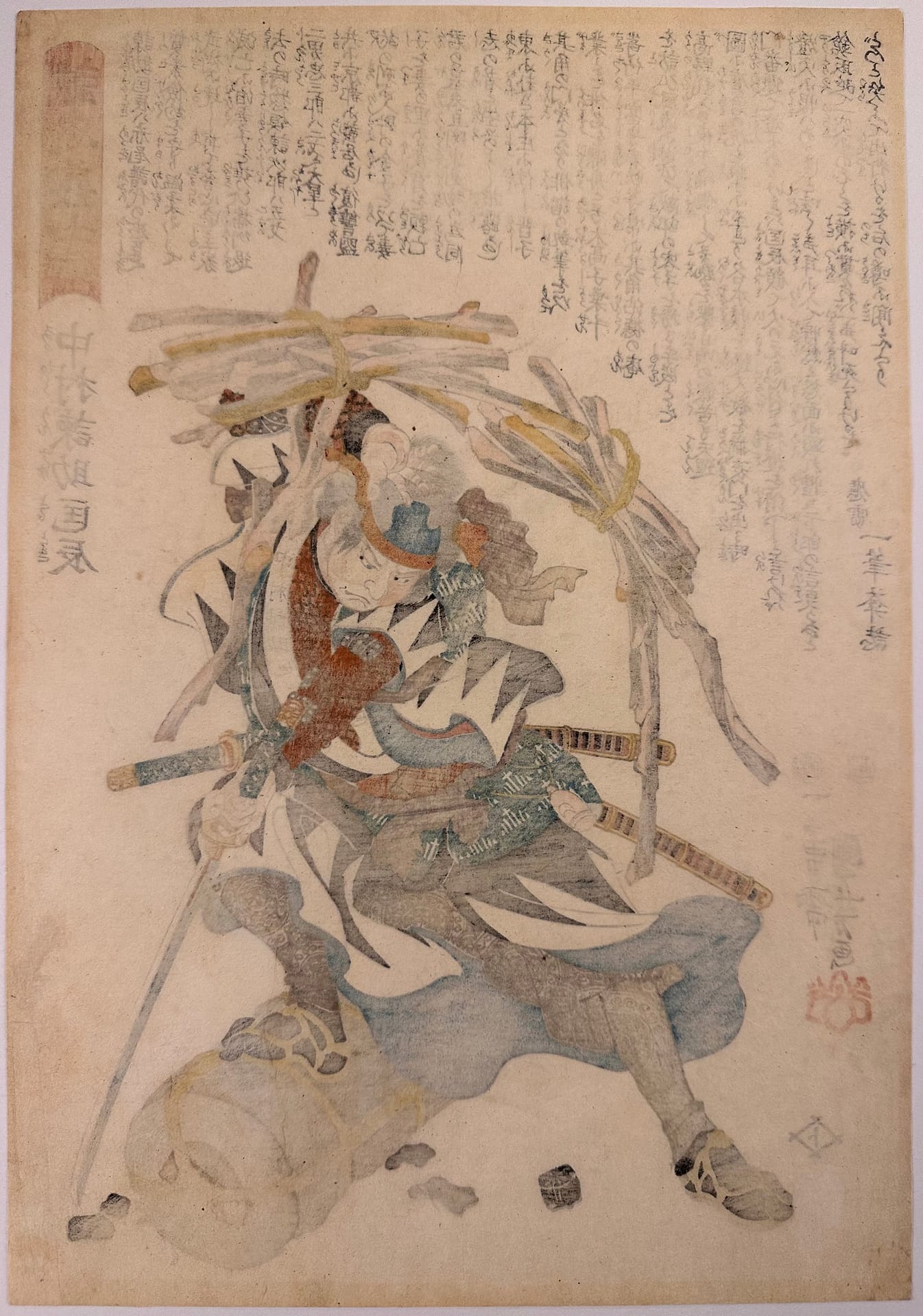
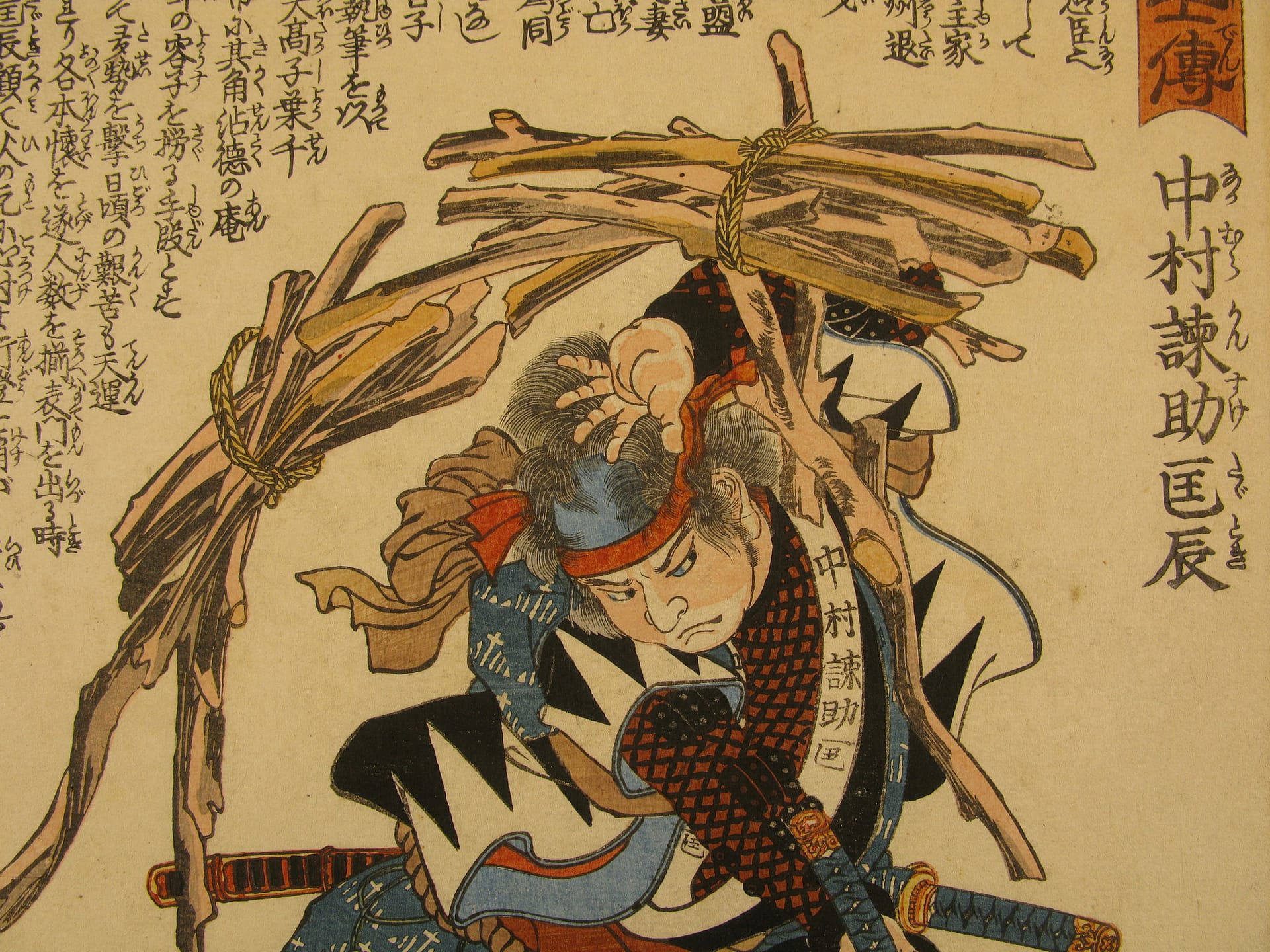
True name: Nakamura Kansuke Masatoki (中村 勘助 正辰)
Age: Unknown
Katana mei: Nagakuni, length 2 shaku 4 sun
Wakizashi mei: mumei, length unknown + Long Yari
The tale of the text – with a little twist
Kansuke Tadatoki was the kind of samurai who managed to be thrifty, warm‑hearted, and terrifyingly competent all at once. He was great at martial arts but didn’t brag about it — which is impressive, because if most people could fight like him, they’d never stop mentioning it.
When the Akao house fell, he packed up his wife and two tiny sons (ages 5 and 2) and sent them to her parents using money he’d saved with the discipline of a man who brings coupons to sword shops. Meanwhile, he and Oboshi Yoshio stayed in Kyoto plotting revenge like two dads planning a very elaborate surprise party.
Later, Tadatoki headed to Edo under the innocent pretext of “visiting the master’s grave” and “seeing the sights,” which was samurai code for “secret mission.” He settled in Honjo, joined the literary circles of Shinshi and Kikaku, and even wrote poetry under the pen name Hyōshū — because nothing balances out a life of vengeance like a good haiku.
He spent a lot of time at Kikaku’s villa with fellow conspirators, where they alternated between appreciating art and spying on the enemy. Truly a well‑rounded social calendar.
During the night attack, Tadatoki fought brilliantly, using all the intel he’d gathered during his undercover “fanboy poet” phase. Everything was going smoothly until the group left the mansion with a captured guard carrying a lantern. Tadatoki told him to put it out. The guard muttered something like, “What’s wrong with the lantern,” which was apparently the wrong thing to say.
Tadatoki snapped, called him a “rotten lowlife,” and ran him through with his spear — then walked away laughing like a man who had just crossed one too many items off his to‑do list.
People later told this story with the tone of “Well… that was certainly a choice.”
For an accurate translation of the print text, I would encourage you to get the book: Kuniyoshi -The faithful samurai by David R Weinberg.