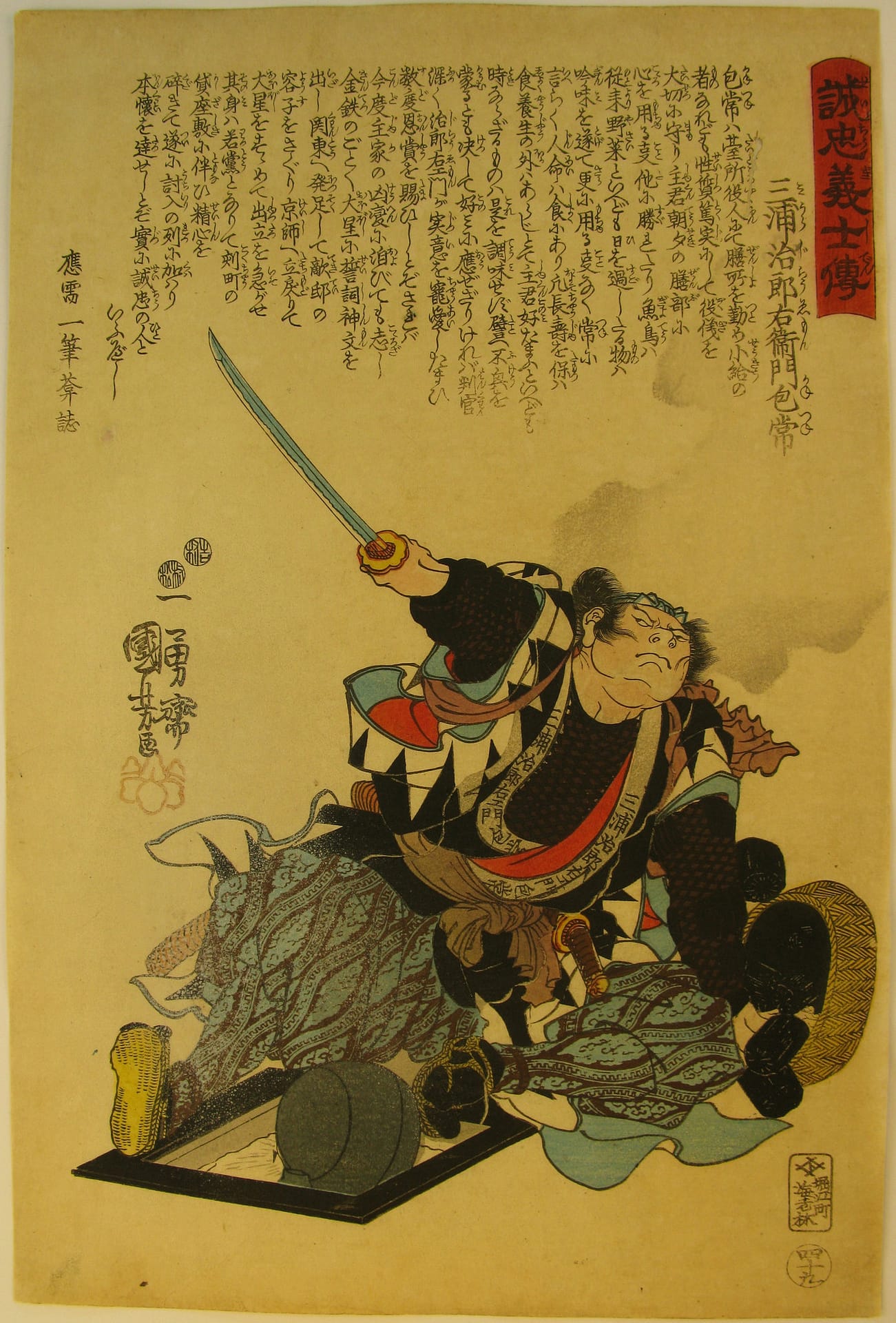
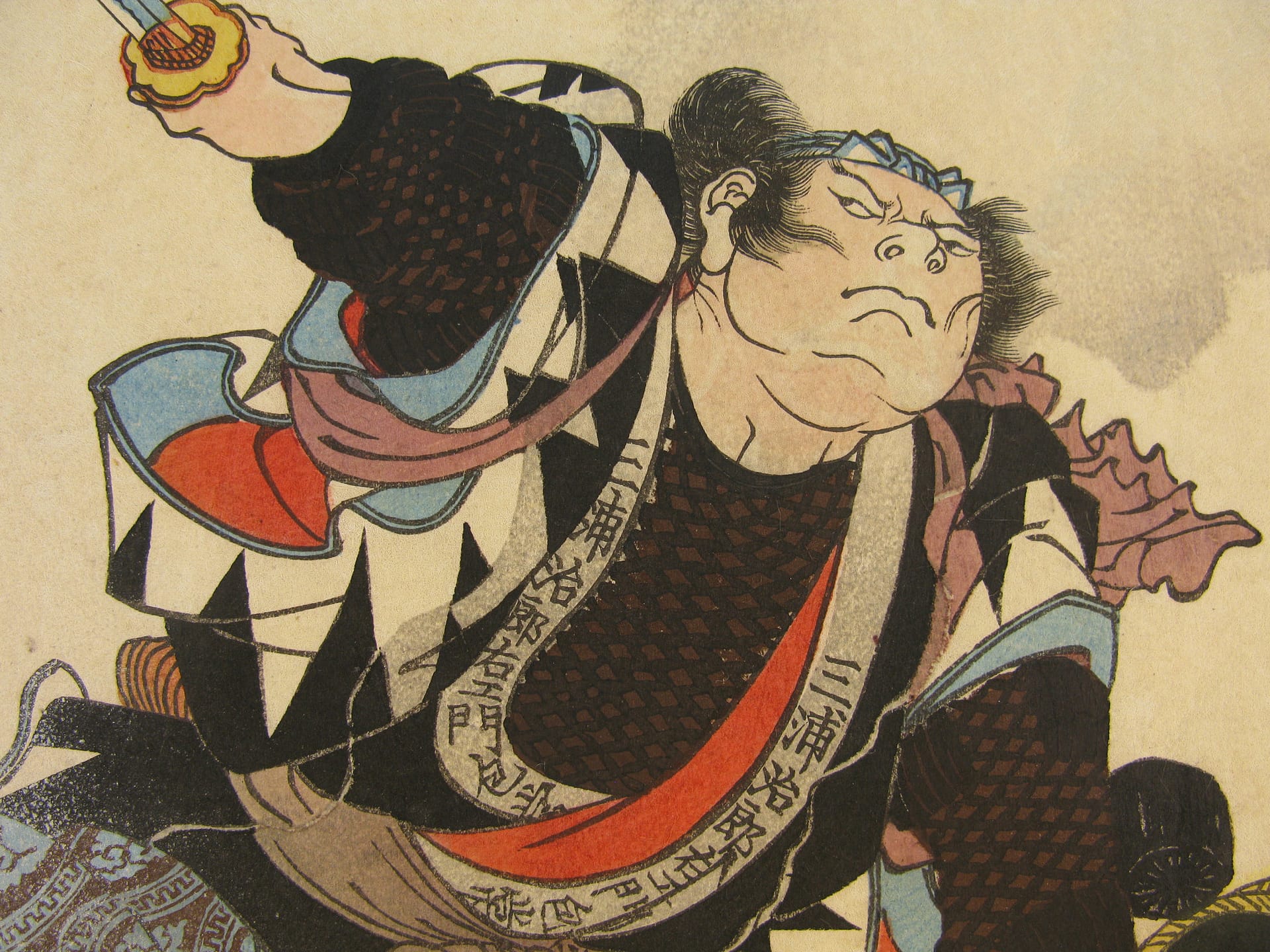
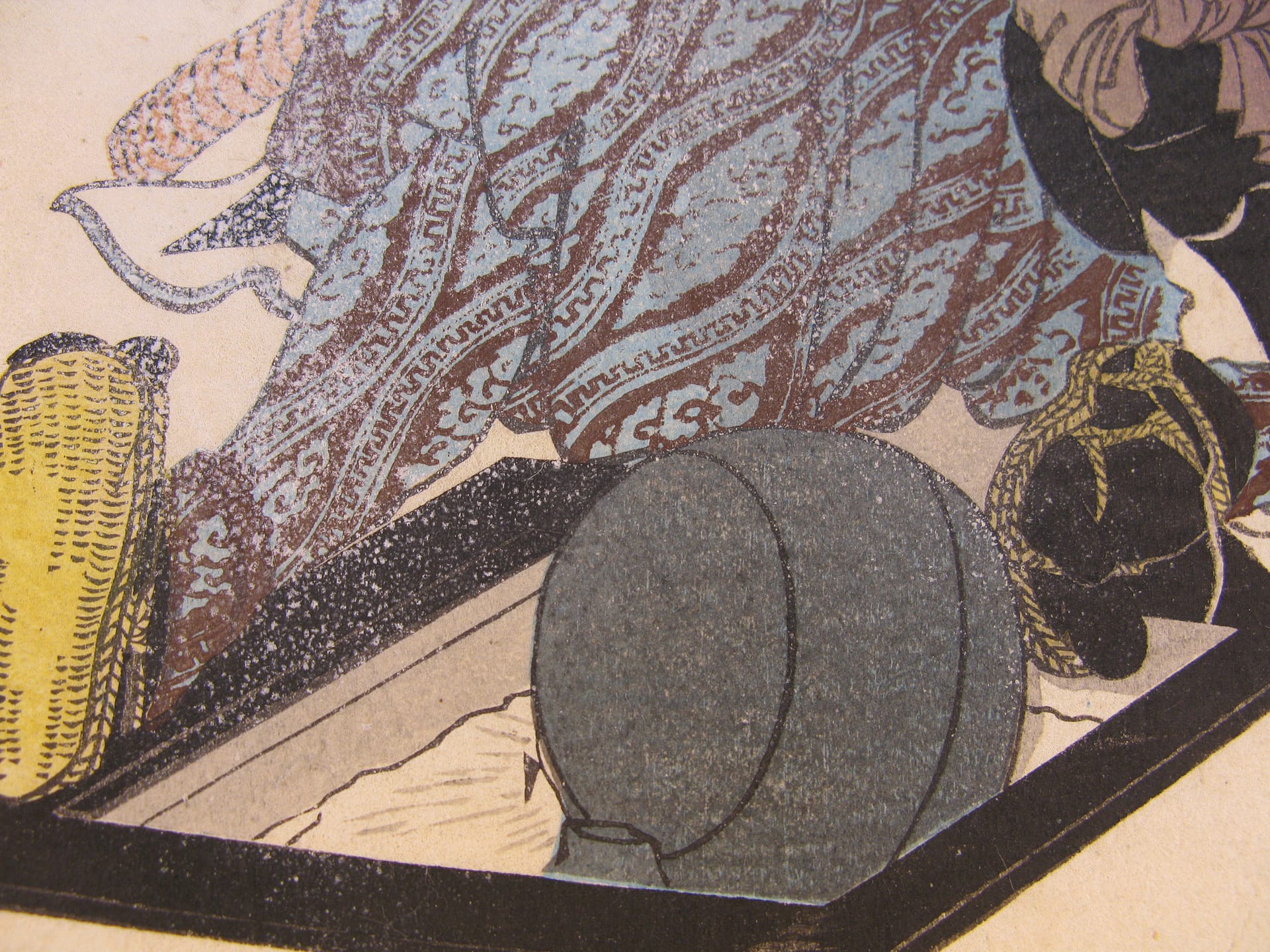
Subject: The ronin Miura Jiroemon Kanetsune (kabuki name) – falling backwards into the hearth and a basket of charcoal, whilst making a sword cut
Series: Seichu gishi den (Stories of the true loyalty of the faithful samurai)
Print No: 1.49
Artist: Utagawa Kuniyoshi (1797-1861)
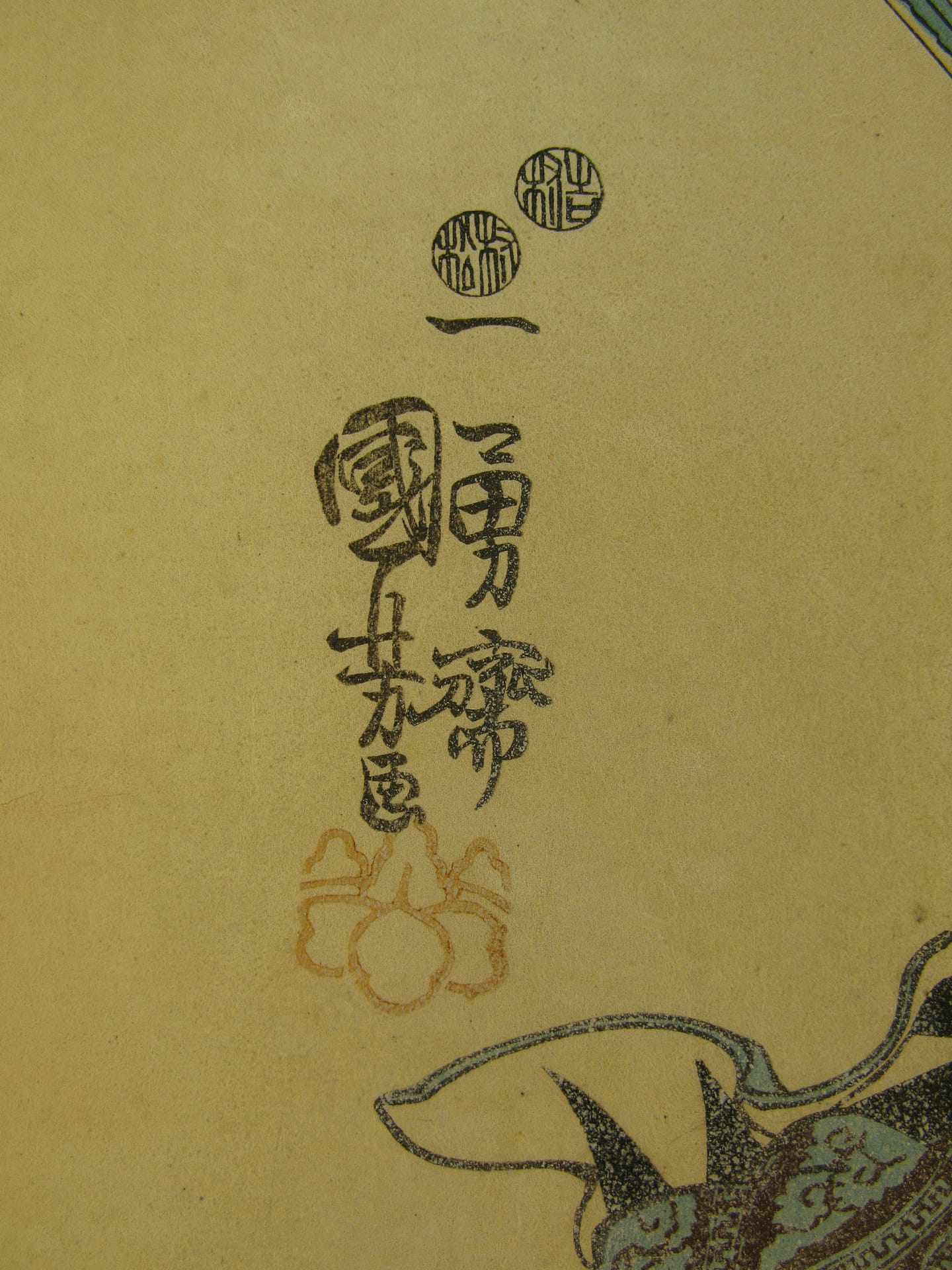
Signature: Ichiyusai Kuniyoshi ga and kiri seal
Date: 1847-48
Cens: Yoshimura – Muramatsu
Publisher: Ebi-ya Rinnosuke
Size: Oban tate-e, 36.7 x 24.6 cm
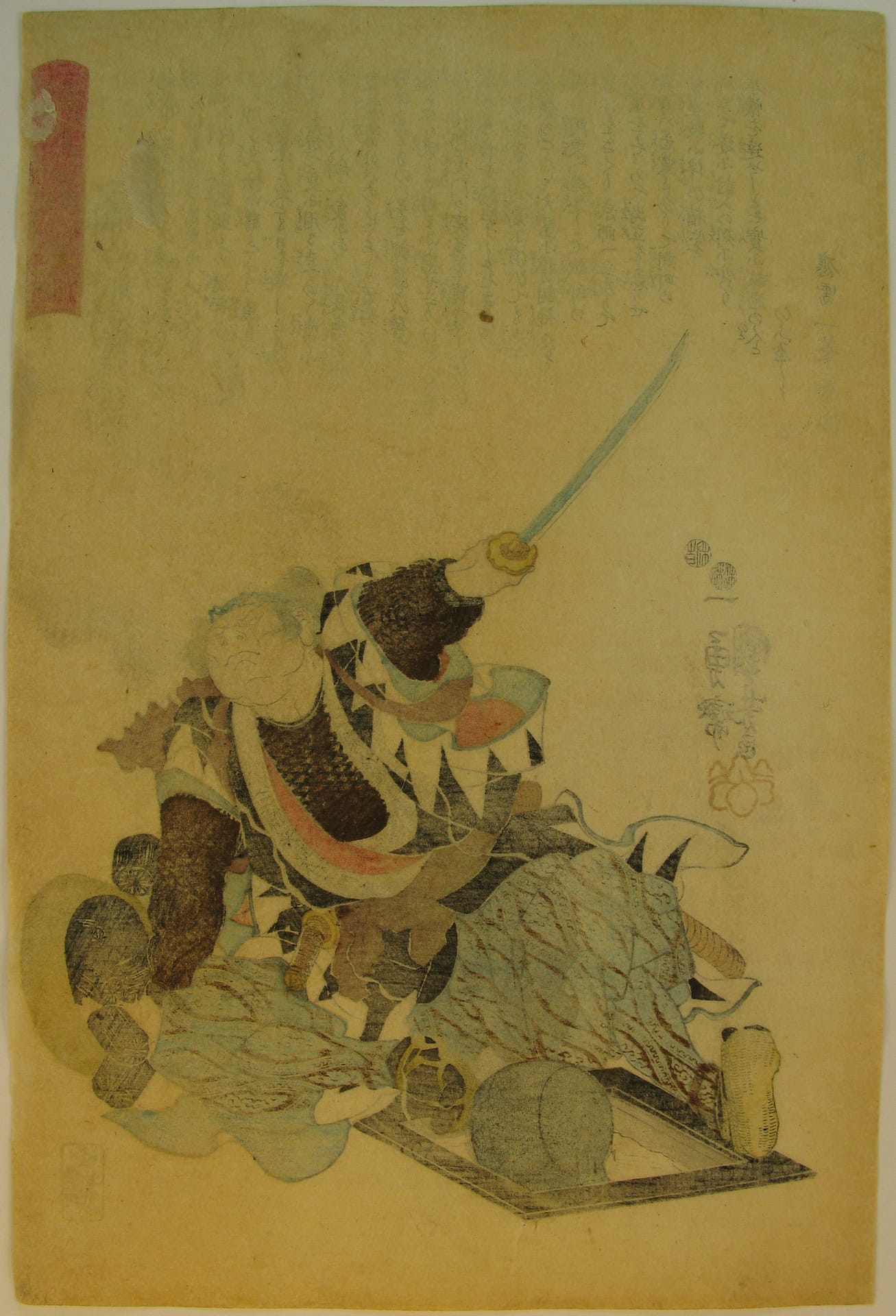
Condition: Fine impression and colour, with hand applied gofun replicating flying ash. Very good condition, some marks and wormage repaired. Numbered
Price: Not for sale at this stage
True name: Mimura Jirōzaemon Kanetsune (三村 次郎左衛門 包常)
Age: Unknown
Katana mei: not documented
Wakizashi mei: not documented
The tale of the text – with a little twist
Miura Jirōemon Kanetsune wasn’t a high‑ranking samurai, a master swordsman, or a legendary archer. He was the chef — the man responsible for keeping Lord Hangan alive, healthy, and well‑fed. And he took that job more seriously than most people take their entire careers.
Kanetsune refused to serve anything that wasn’t fresh. Fish, fowl, vegetables — if it had been sitting around too long, he wouldn’t touch it. If the lord asked for something that wasn’t in season, Kanetsune would politely decline and risk getting scolded rather than compromise his culinary ethics.
“Human life depends on food,” he’d say, which is the Edo‑period equivalent of “I’m not serving that, it’s expired.”
Hangan adored him for it. When your chef cares more about your digestive health than you do, that’s love.
When the Akao clan fell, Kanetsune didn’t hesitate. He signed Ōboshi’s oath with the same wholehearted sincerity he used when rejecting day‑old radishes. Then he headed to the Kantō region to scout the enemy mansion, because apparently the man who once worried about wilted greens was now also a covert operative.
He reported everything back to the Kyoto group and urged Ōboshi to move quickly — which is impressive, considering most chefs’ biggest logistical concern is whether the rice will burn.
Later, in the house the rōnin rented in Kokuchō, Kanetsune served as Ōboshi’s aide. This probably involved a mix of strategic support and making sure no one starved while plotting revenge. A good chef is always multitasking.
On the night of the attack, Kanetsune fought alongside the others, proving that a man who can manage a kitchen can also manage a crisis. He wasn’t the flashiest warrior, but he was loyal, steady, and absolutely dependable — the kind of person you want both in a battle and at a banquet.
Miura Jirōemon Kanetsune: chef, scout, aide‑de‑camp, and the only man in the vendetta who could probably prepare a full meal while discussing tactical formations.
For an accurate translation of the print text, I would encourage you to get the book: Kuniyoshi -The faithful samurai by David R Weinberg.