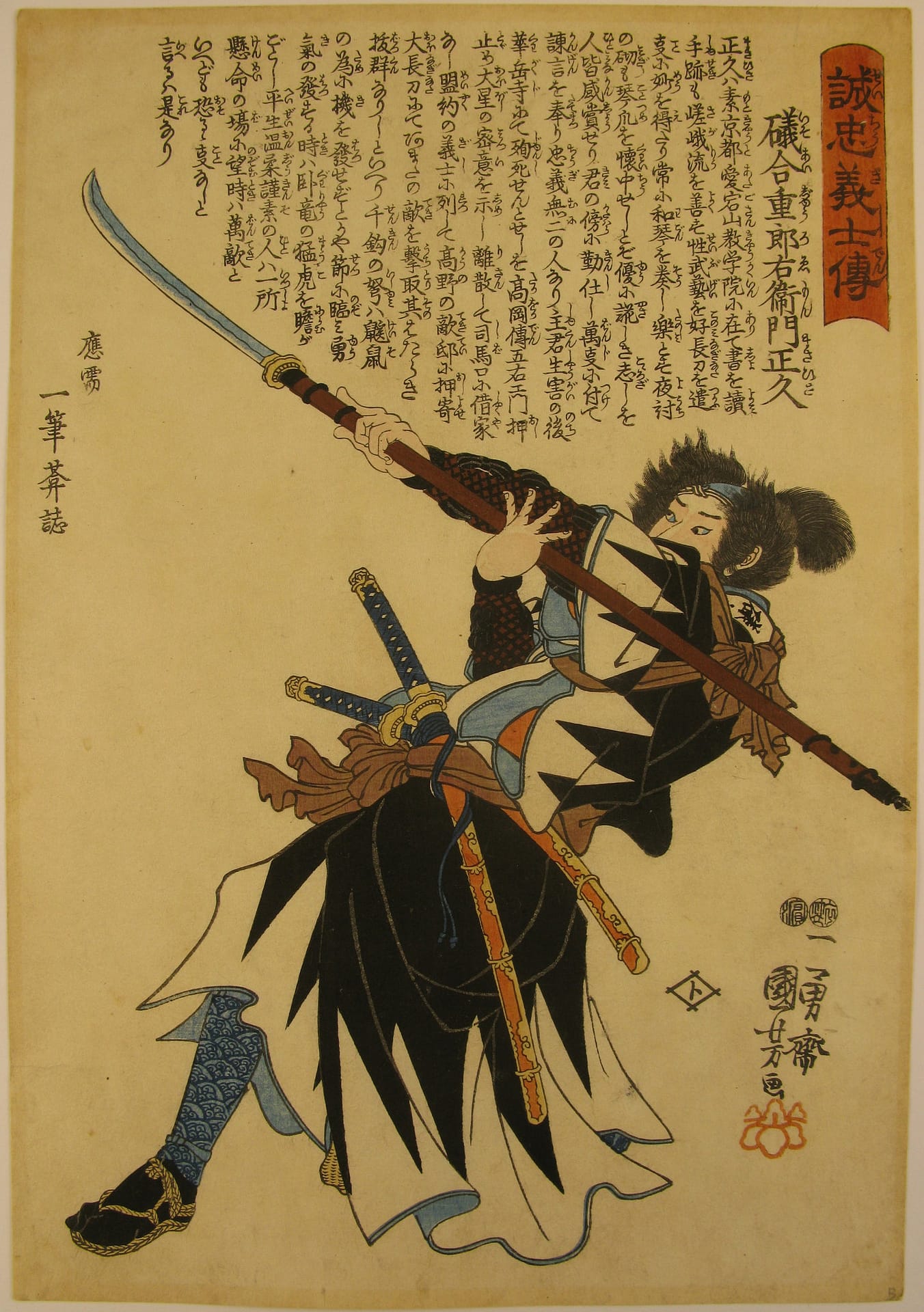
Subject: The ronin Isoai Juroemon Masahisa (kabuki name) – expertly wielding his naginata
Series: Seichu gishi den (Stories of the true loyalty of the faithful samurai)
Print No: 1.10
Artist: Utagawa Kuniyoshi (1797-1861)
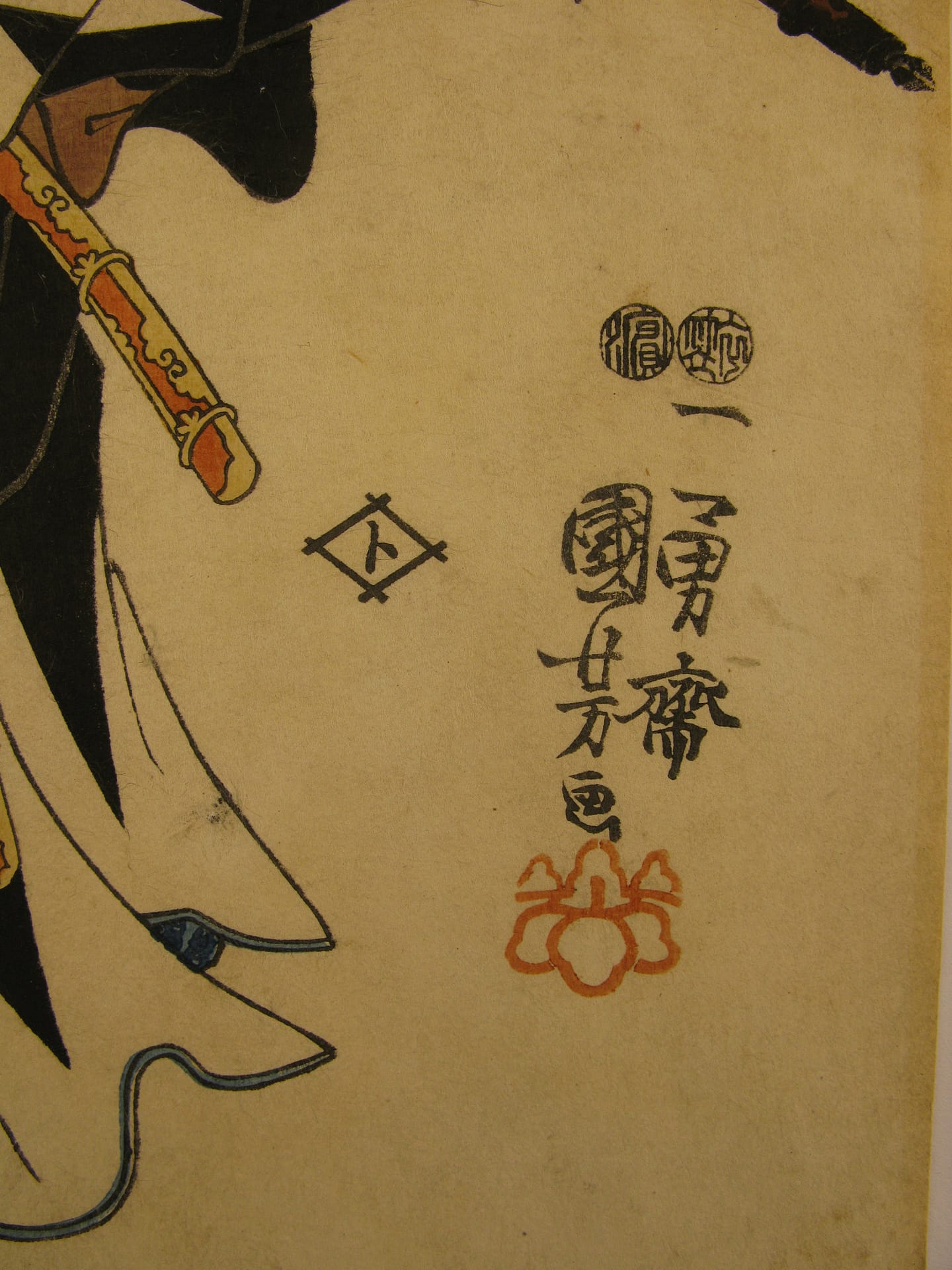
Signature: Ichiyusai Kuniyoshi ga and kiri seal
Date: 1847-48
Cens: Hama – Kinugasa
Publisher: Ebi-ya Rinnosuke
Size: Oban tate-e, approx 36 x 24,3 cm
Condition: Fine impression, colour and condition. Un-numbered state
Price: Not for sale at this stage
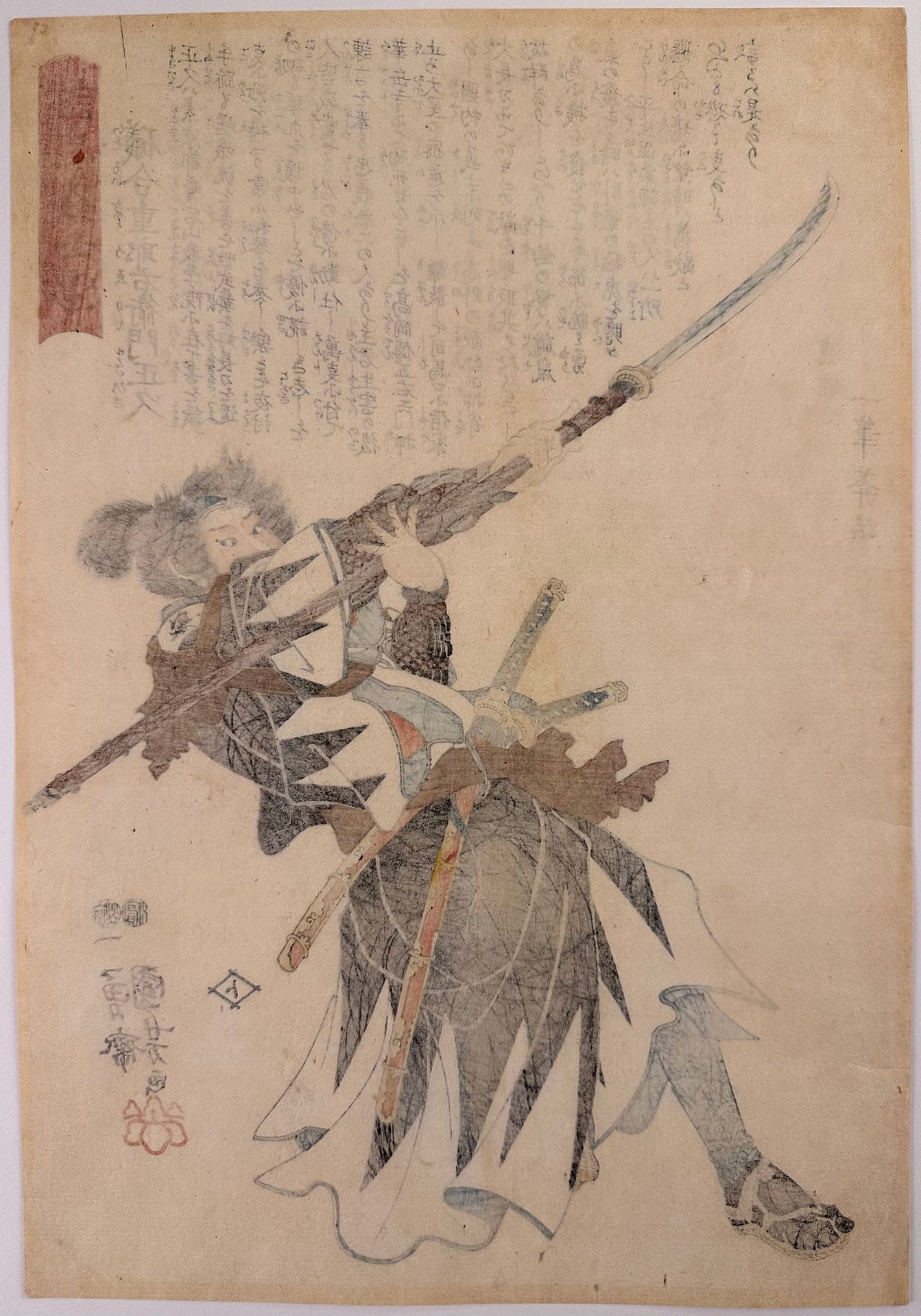
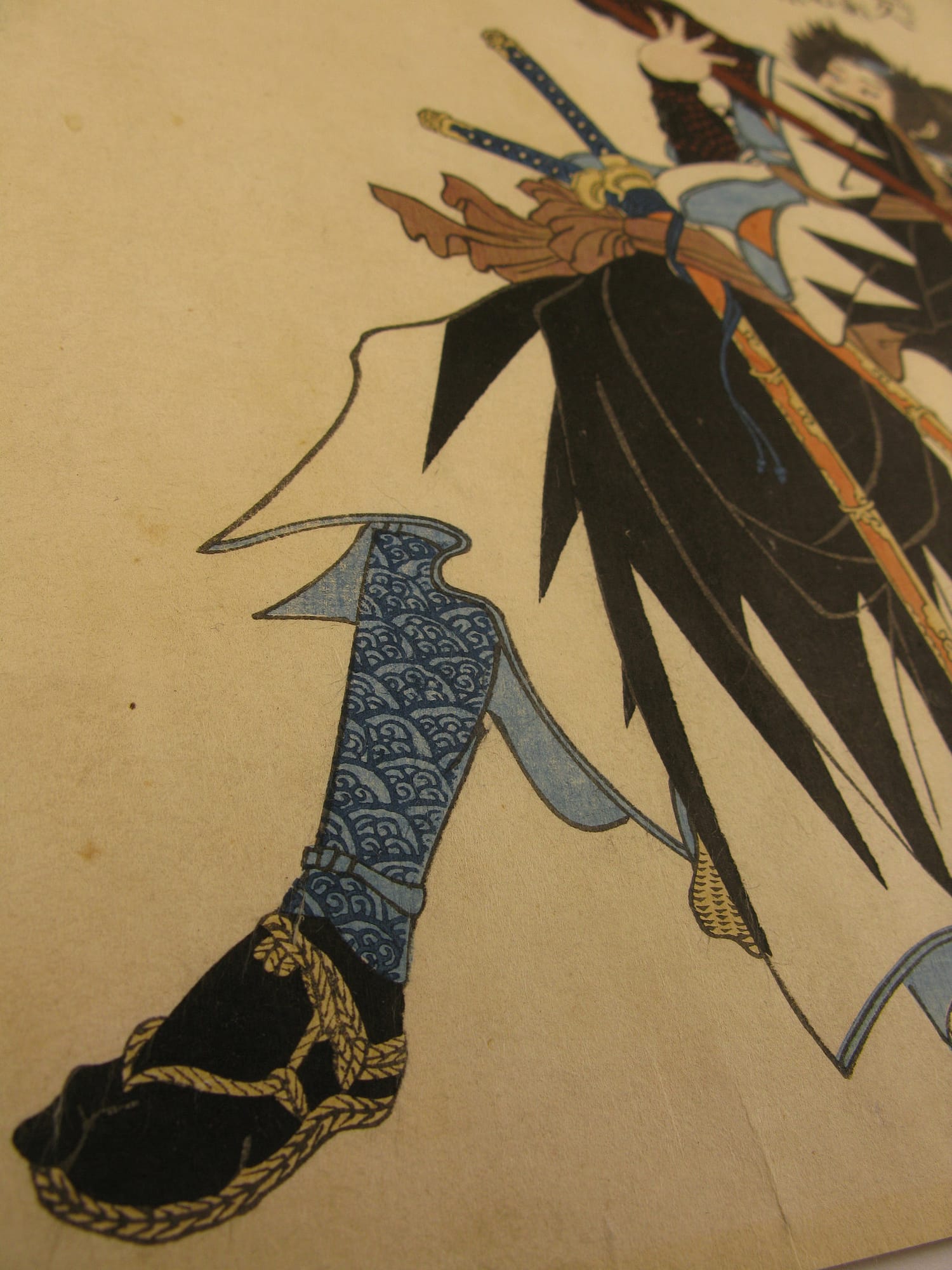
True name: Isogai Jūrōzaemon Masahisa (礒貝 十郎左衛門 正久)
Age: 25
Katana mei: Mitsumori, length 2 shaku 9 sun
Wakizashi mei: Kunimune, length 2 shaku + Yari
The tale of the text – with a little twist
Masahisa was the kind of samurai who made everyone else look like they needed to try harder. He graduated from the prestigious Atago Mountain Kyōgakuin, read constantly, mastered the Saga school of calligraphy, and played the koto so often he basically had a soundtrack following him around. He even carried a koto plectrum in his pocket during the night attack — because you never know when you’ll need to shred a quick tune between sword swings.
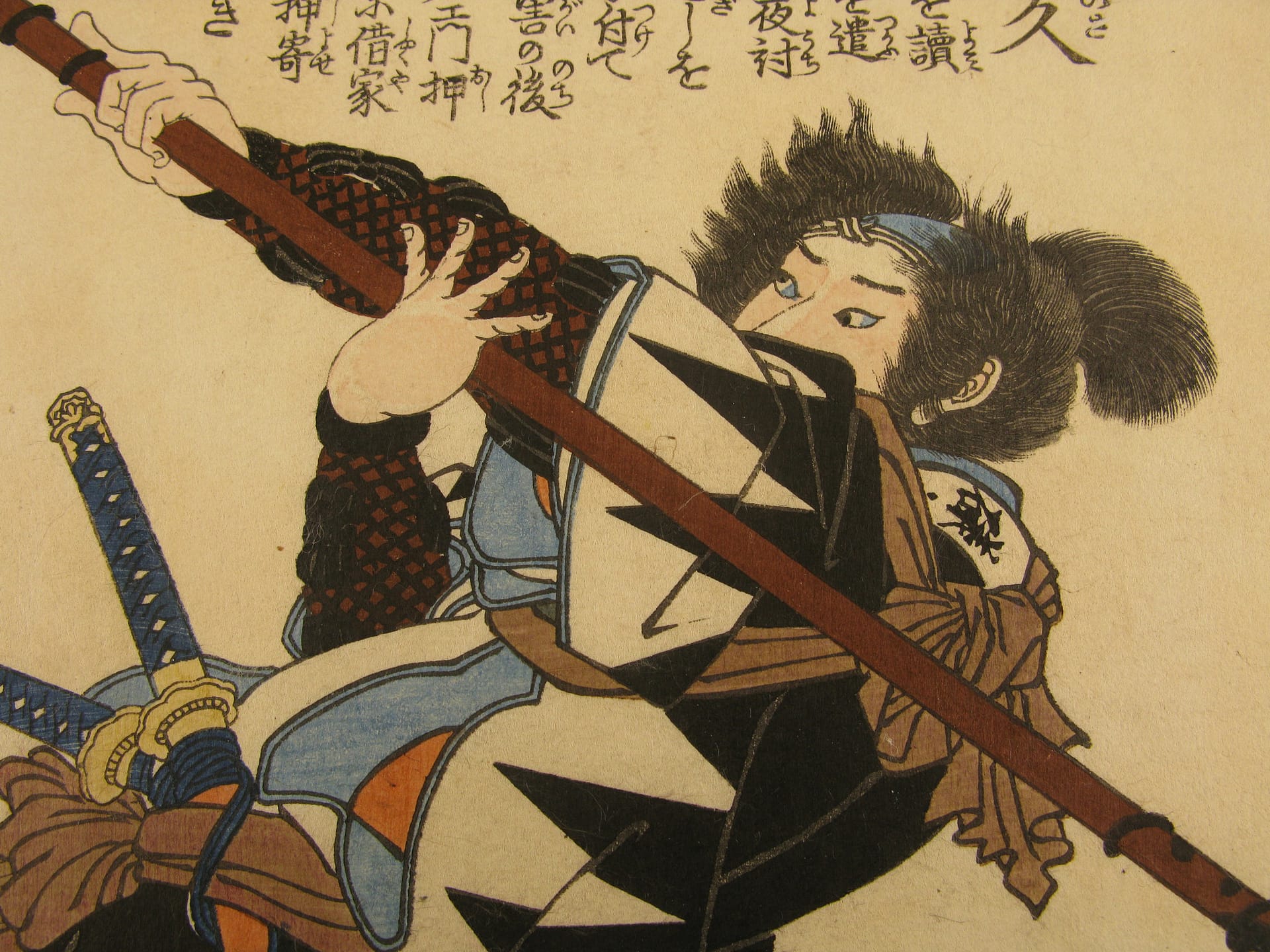
He was also a master of the naginata, which meant he could write you a beautiful poem, play you a soothing melody, and then slice you in half with perfect form. A true Renaissance samurai.
Masahisa worked closely with his lord and was the kind of advisor who always had the right answer. When his lord died, he was ready to martyr himself on the spot — dramatic, poetic, very on‑brand — until Kataoka Dengoemon rushed in like, “Wait, wait, don’t do that, we actually have a revenge plot brewing.”
When the fief dissolved, Masahisa moved to Shiba, rented a house, and quietly waited for the moment to unleash his inner warrior‑poet. When the attack on the Kira mansion came, he grabbed his trusty glaive and went to work, cutting down enemies with the same elegance he used to write calligraphy. People said he served with great distinction, which is samurai‑speak for “he absolutely crushed it.”
The story ends with a moral: you don’t need a crossbow to kill a mouse, and you don’t need to look fierce to terrify your enemies. Sometimes the gentle, polite guy who plays the koto all day is the one who digs deep and unleashes the kind of fury that makes dragons and tigers reconsider their life choices.
Masahisa was exactly that guy.
For an accurate translation of the print text, I would encourage you to get the book: Kuniyoshi -The faithful samurai by David R Weinberg.