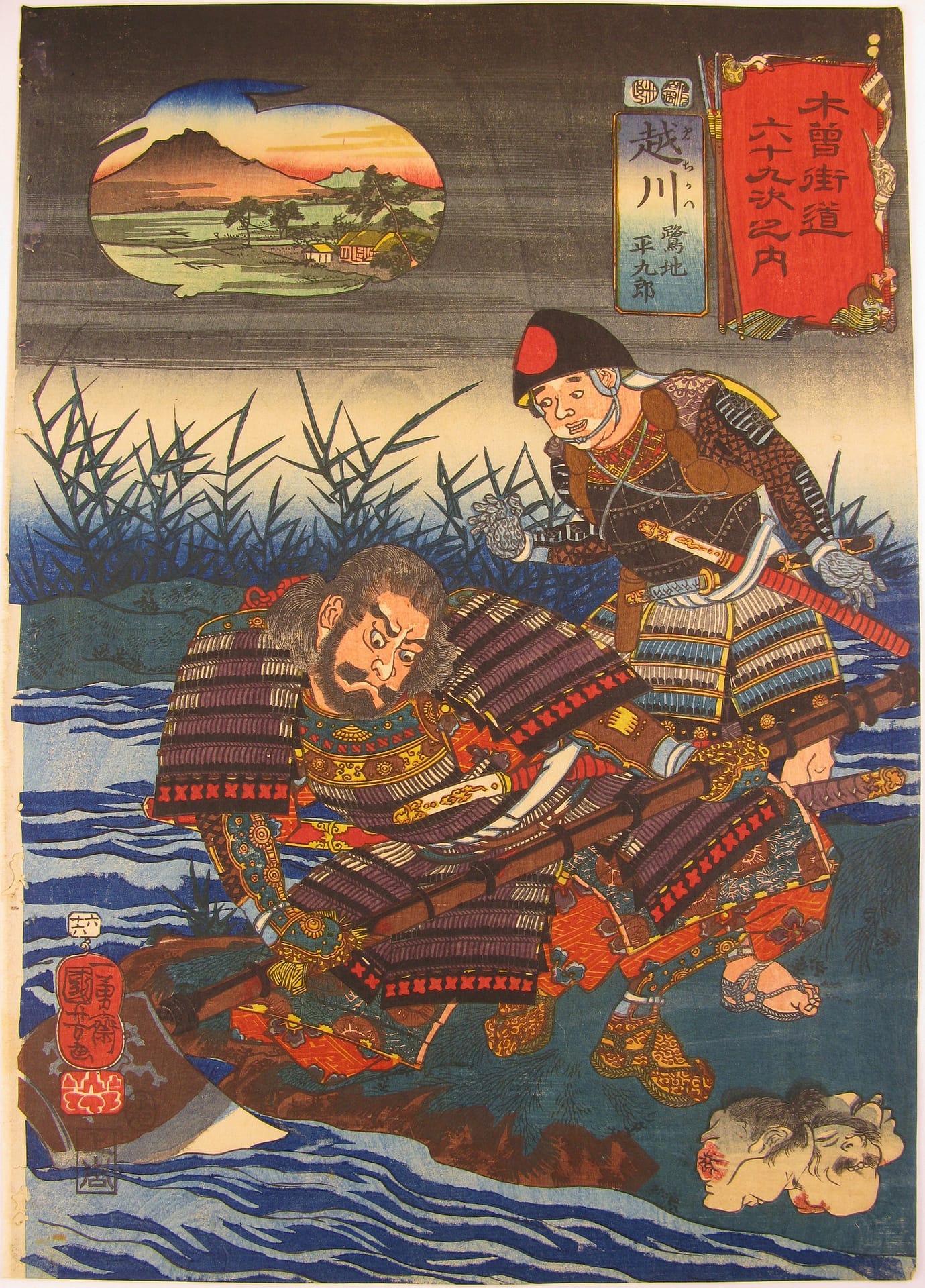
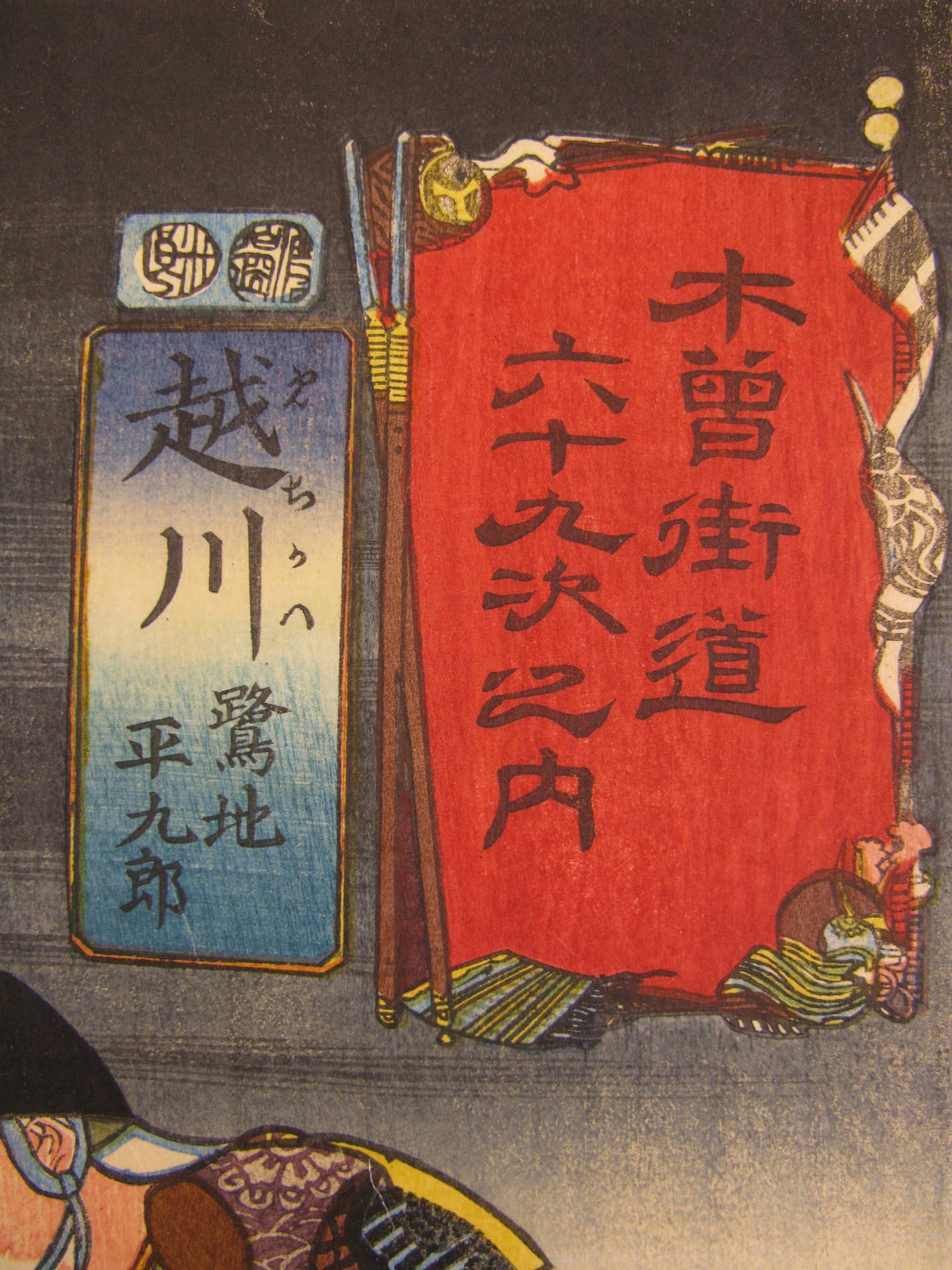
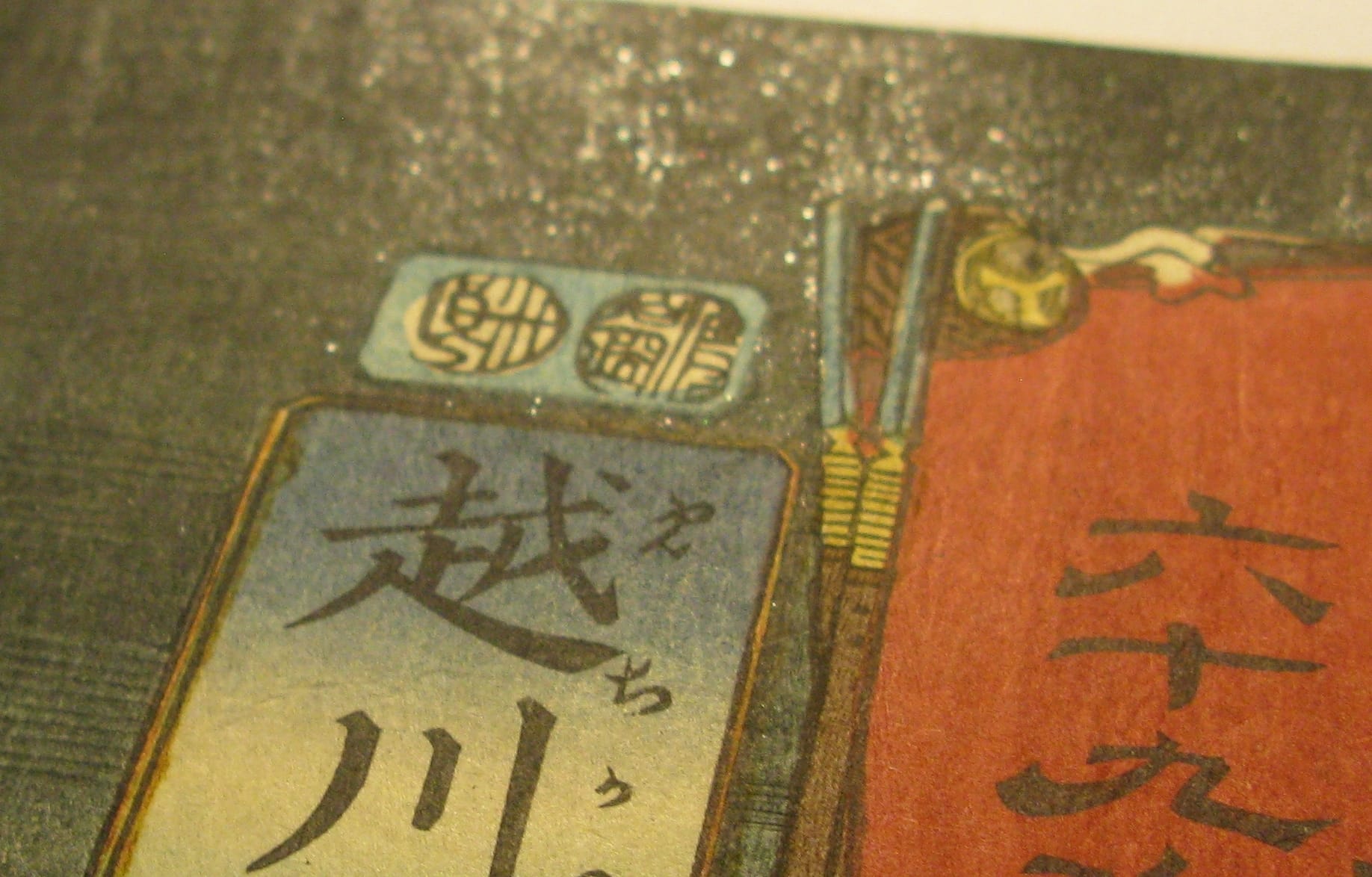
Station: Echikawa (越川)
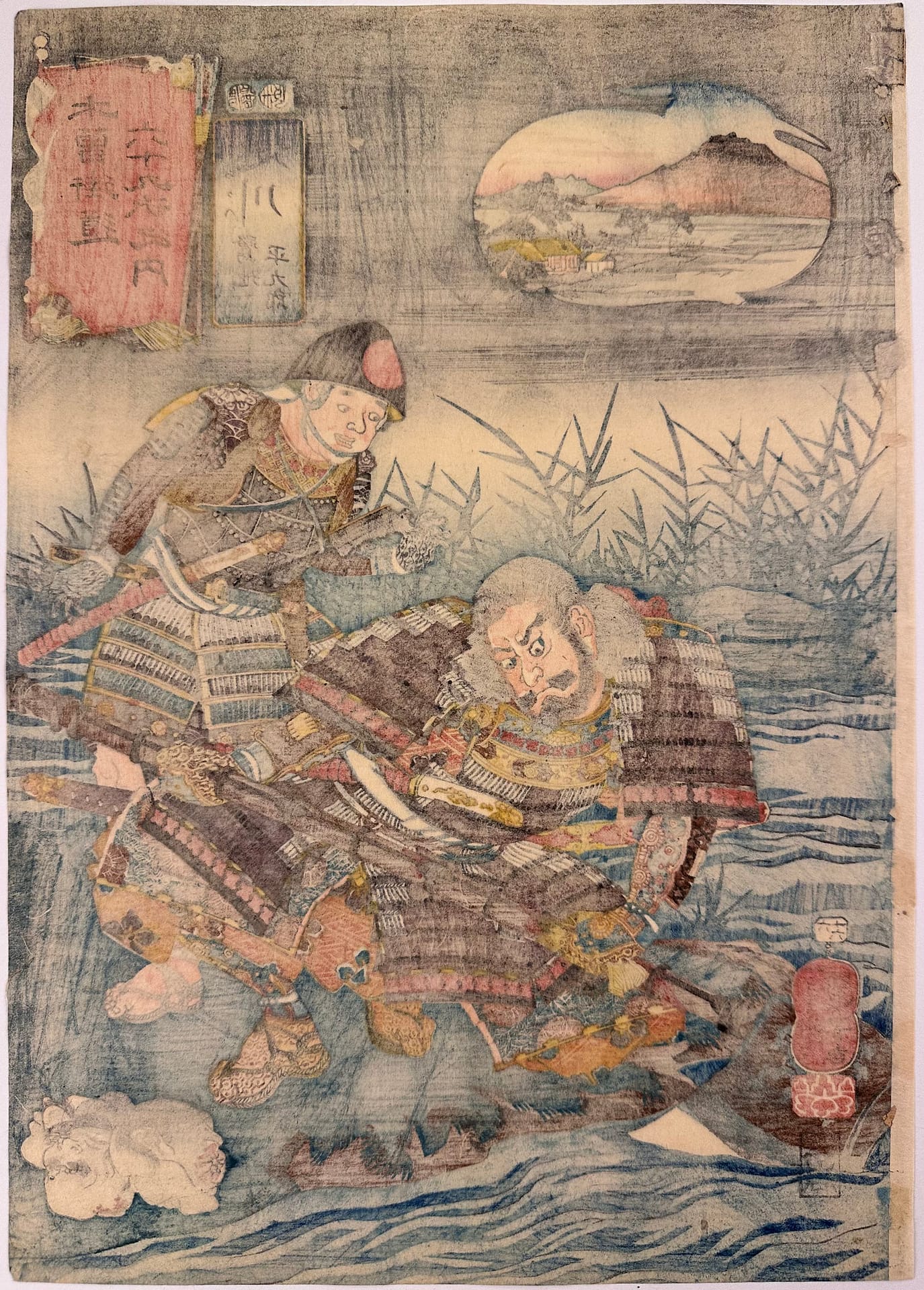
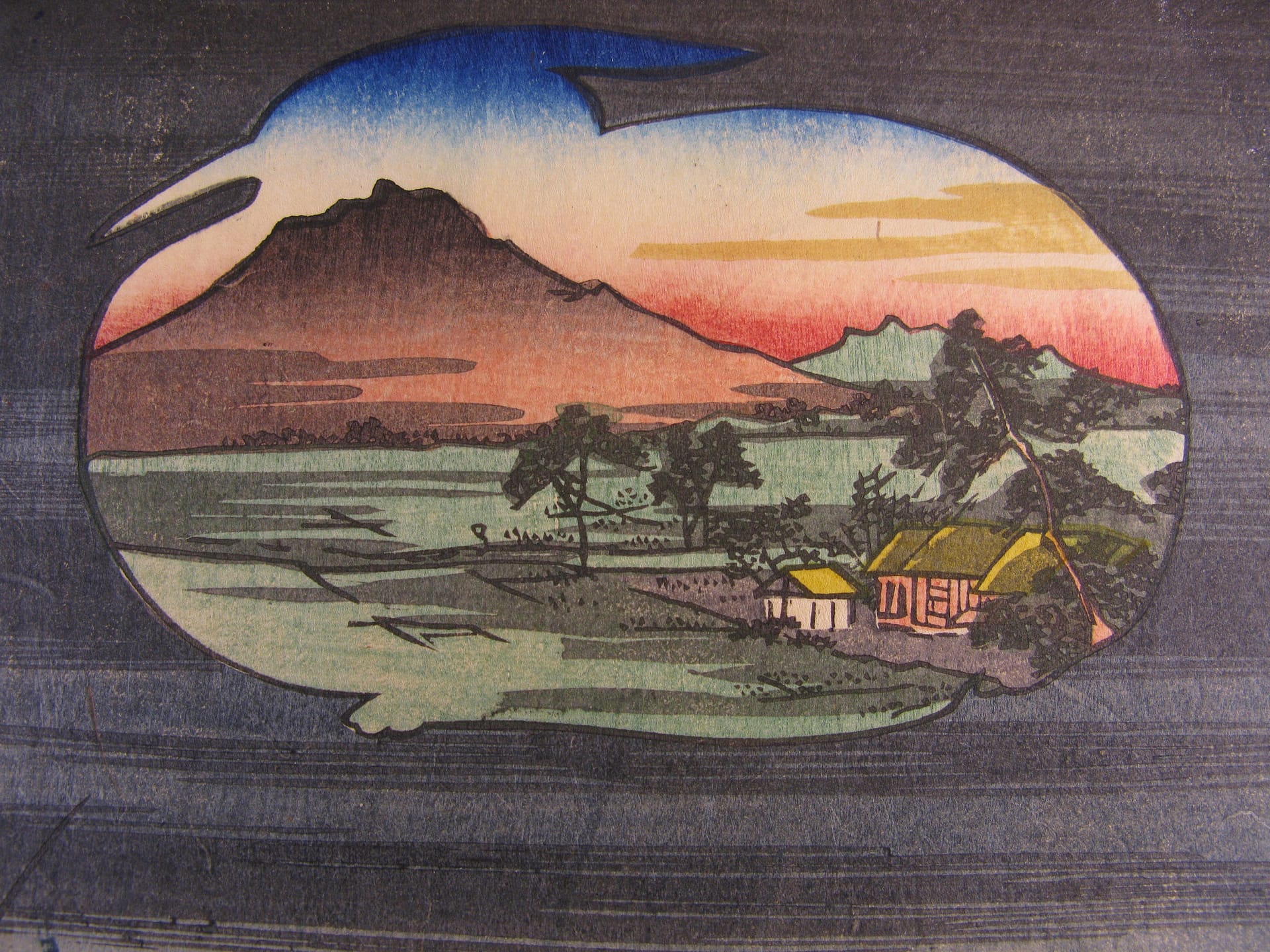
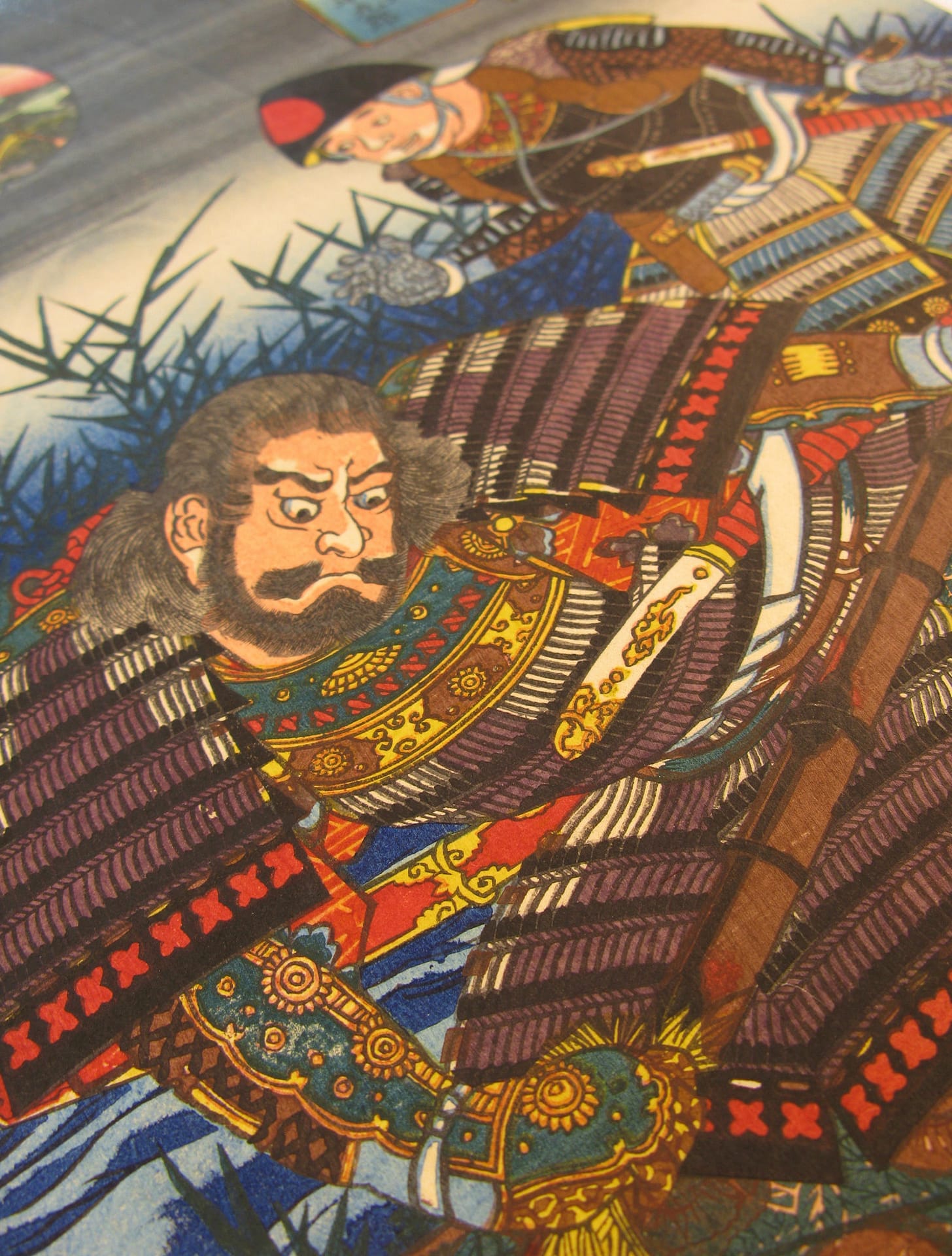
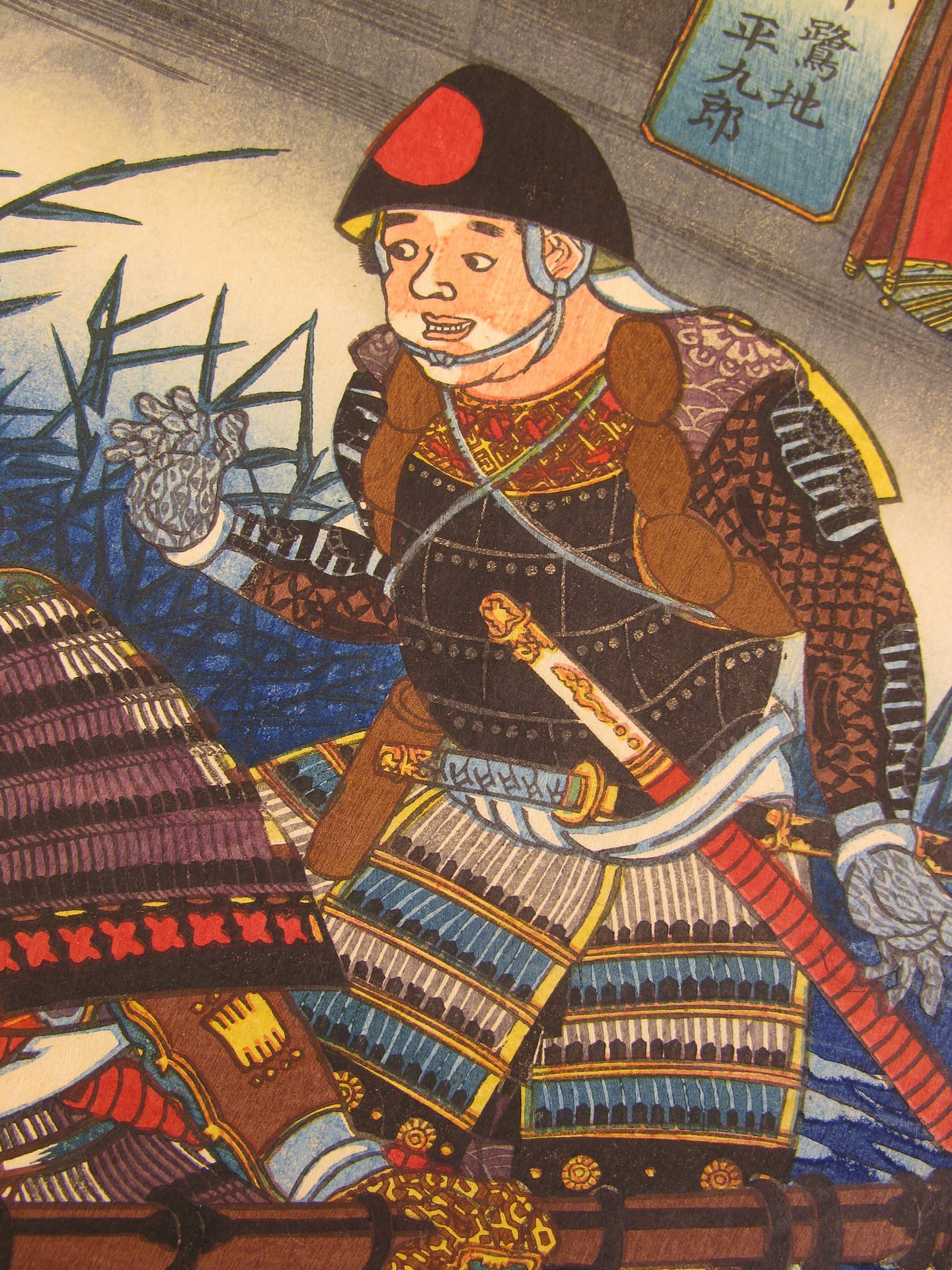
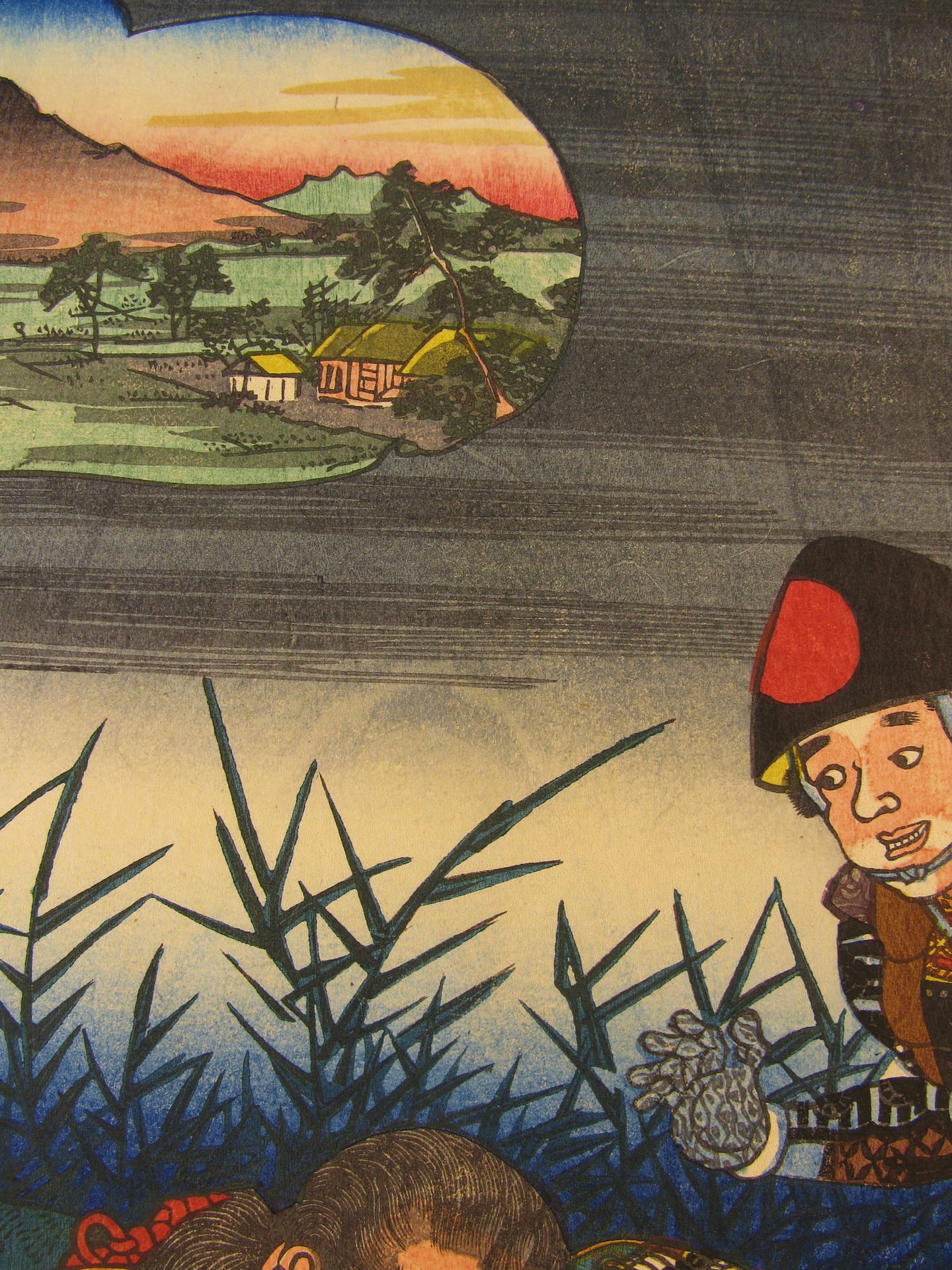
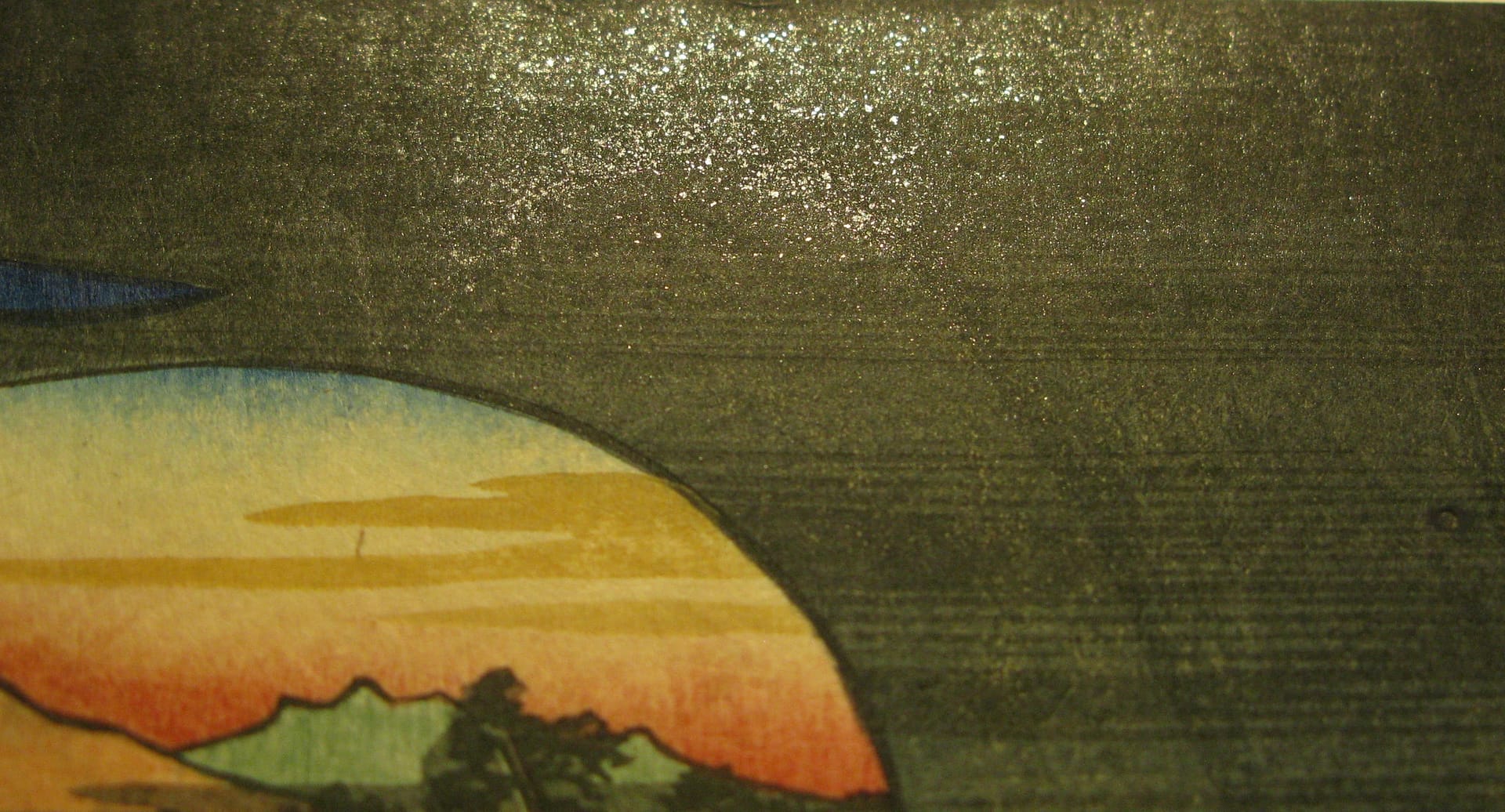
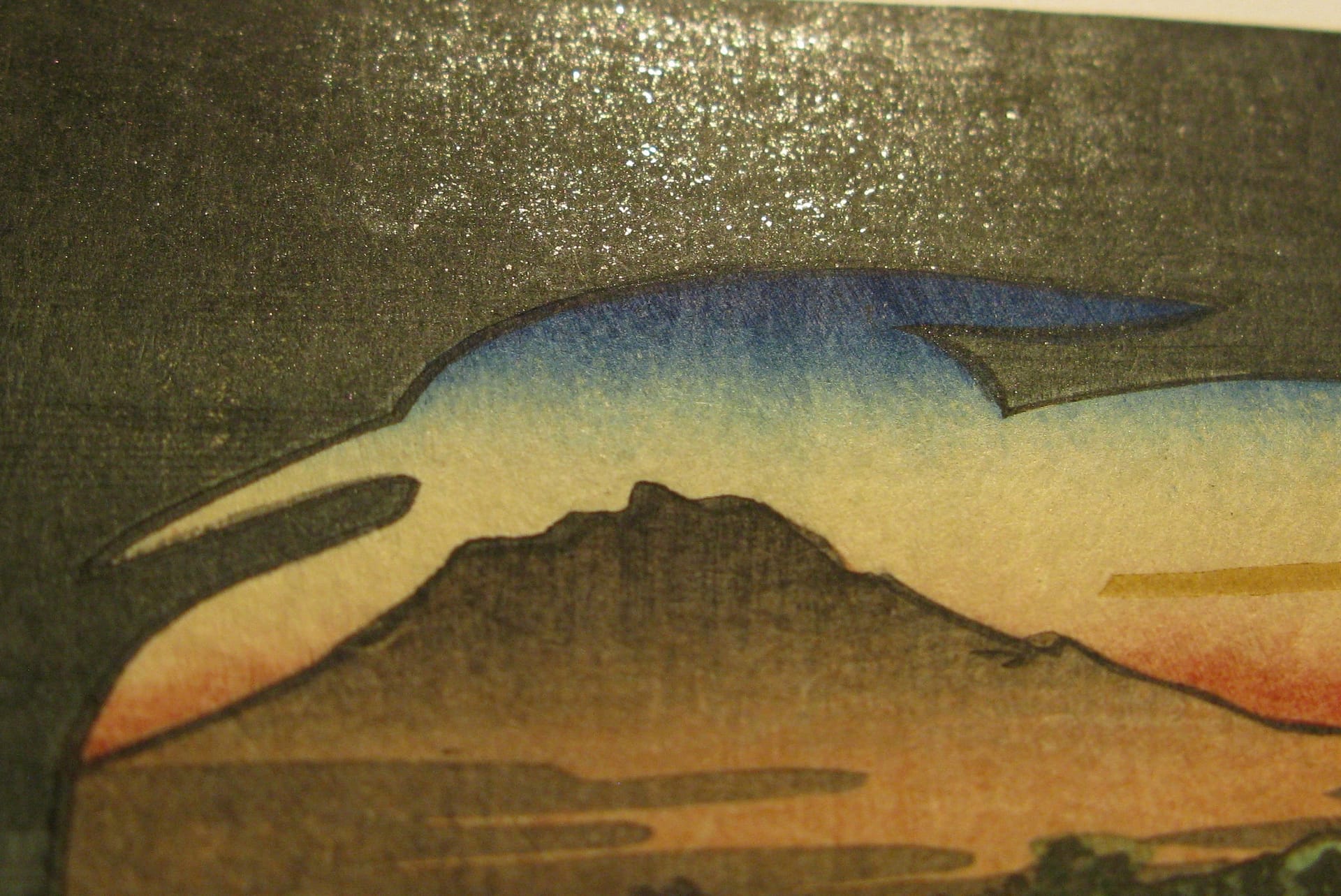
Description: Sagi-no-ike Heikurô attended by his squire, washing his axe in a river with three severed heads beside him. The landscape panel insert shows a farmhouse, rice paddies and mountain within a heron shaped border
Series: Kisokaidô rokujûku tsugi. The sixty-nine post stations of the Kisokaido
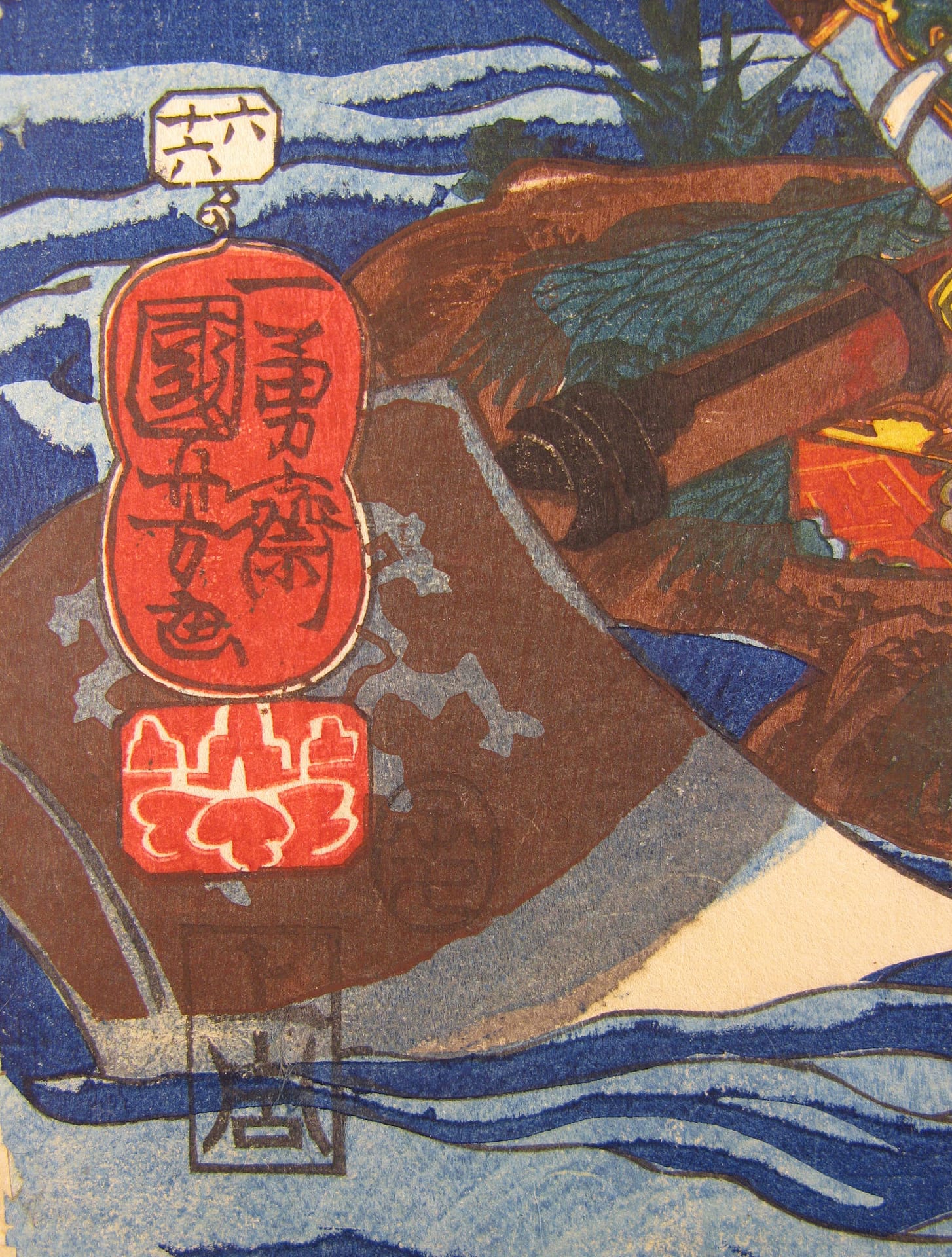
Print No: 66
Artist: Utagawa Kuniyoshi (1797-1861)
Signature: Ichiyusai Kuniyoshi ga and kiri seal
Date: 1852 (Kaei 5), 7th month
Cens: Mera, Watanabe, Rat 7
Publisher: Kazusaya Iwazō
Size: Oban tate-e,
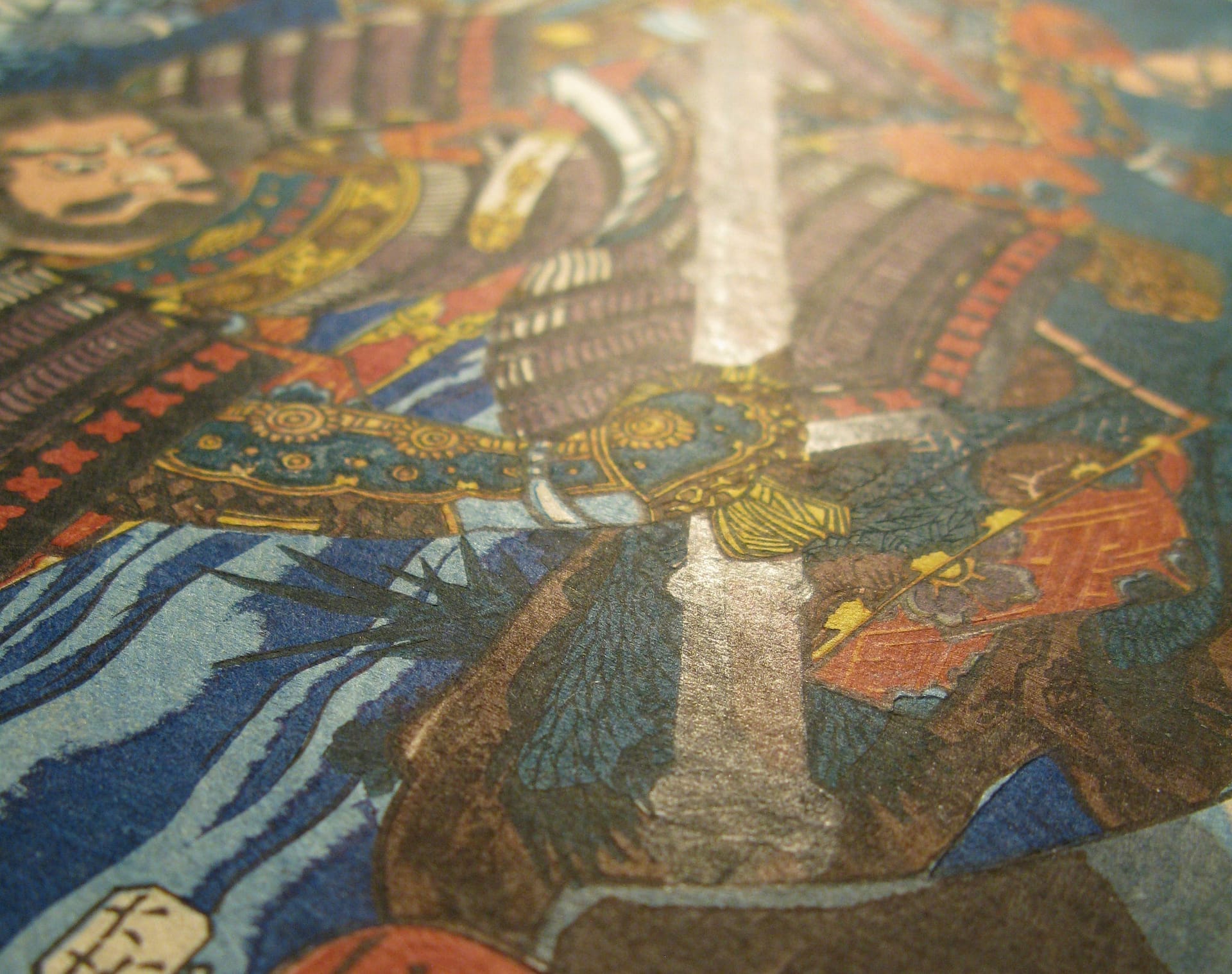
Condition: Fine impression, colour and condition, with strong wood grain, burnishing and mica application
Price: TBC
References: Robinson S74.67; BMFA – William Sturgis Bigelow Collection, 11.38972.67;
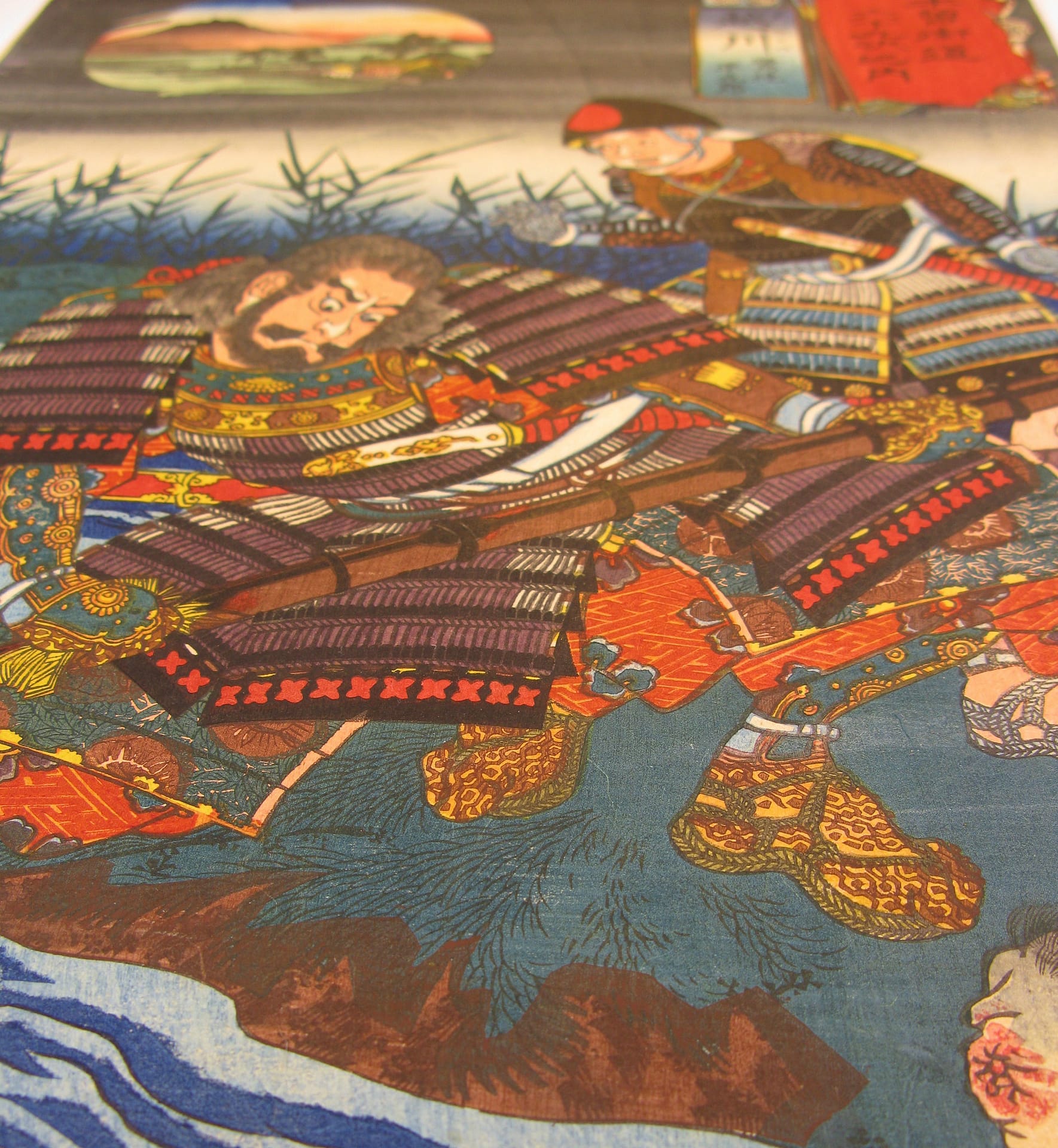
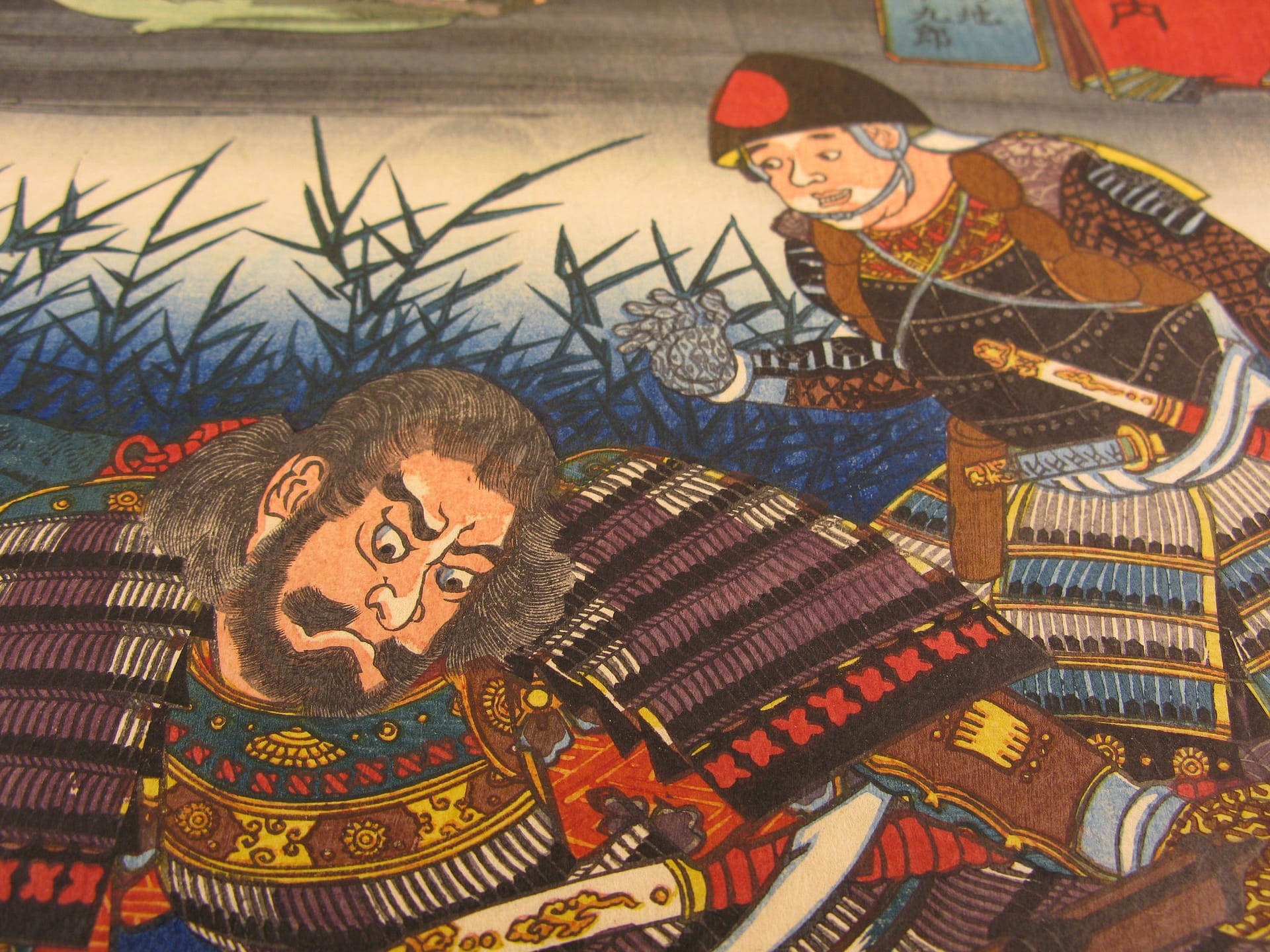
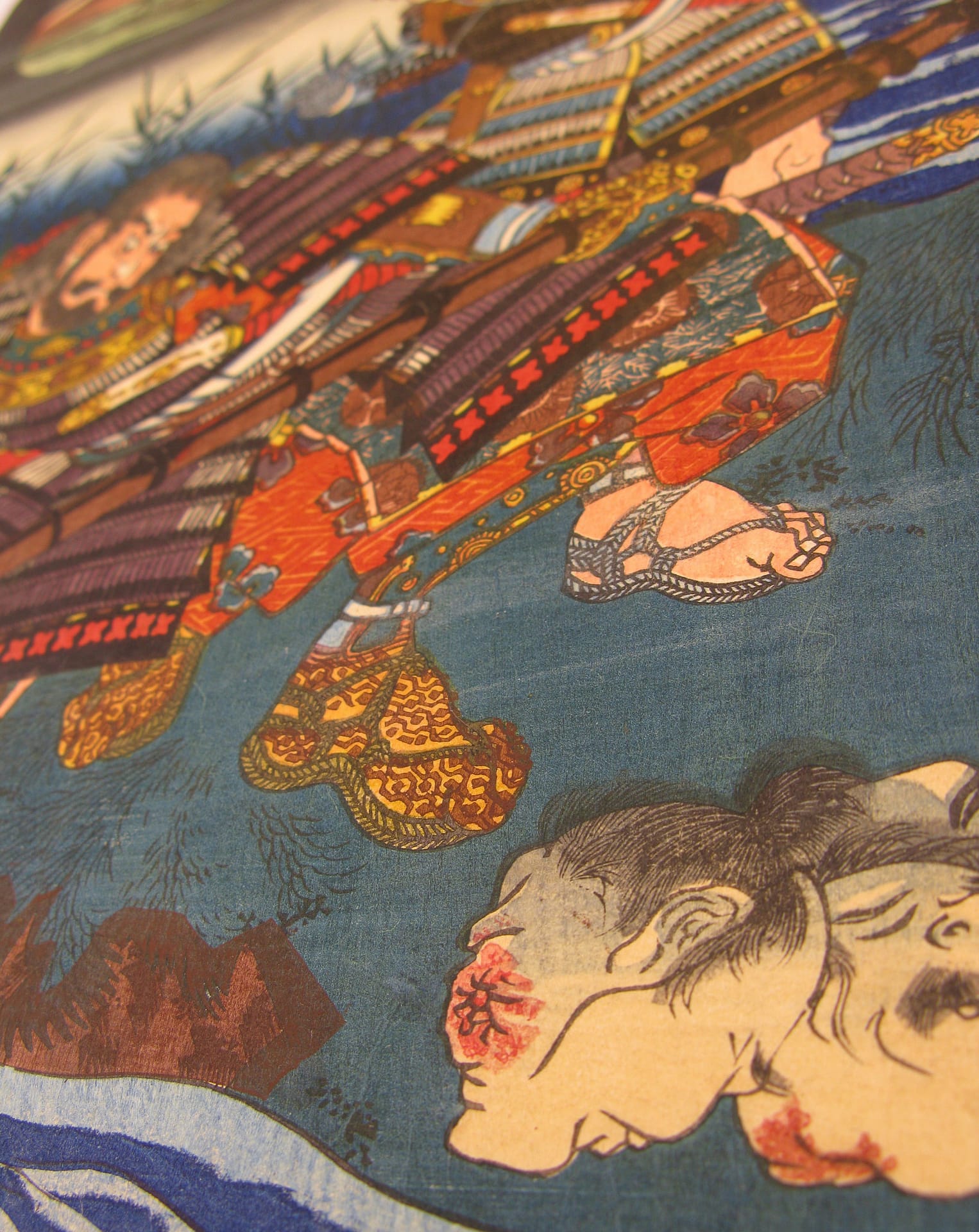
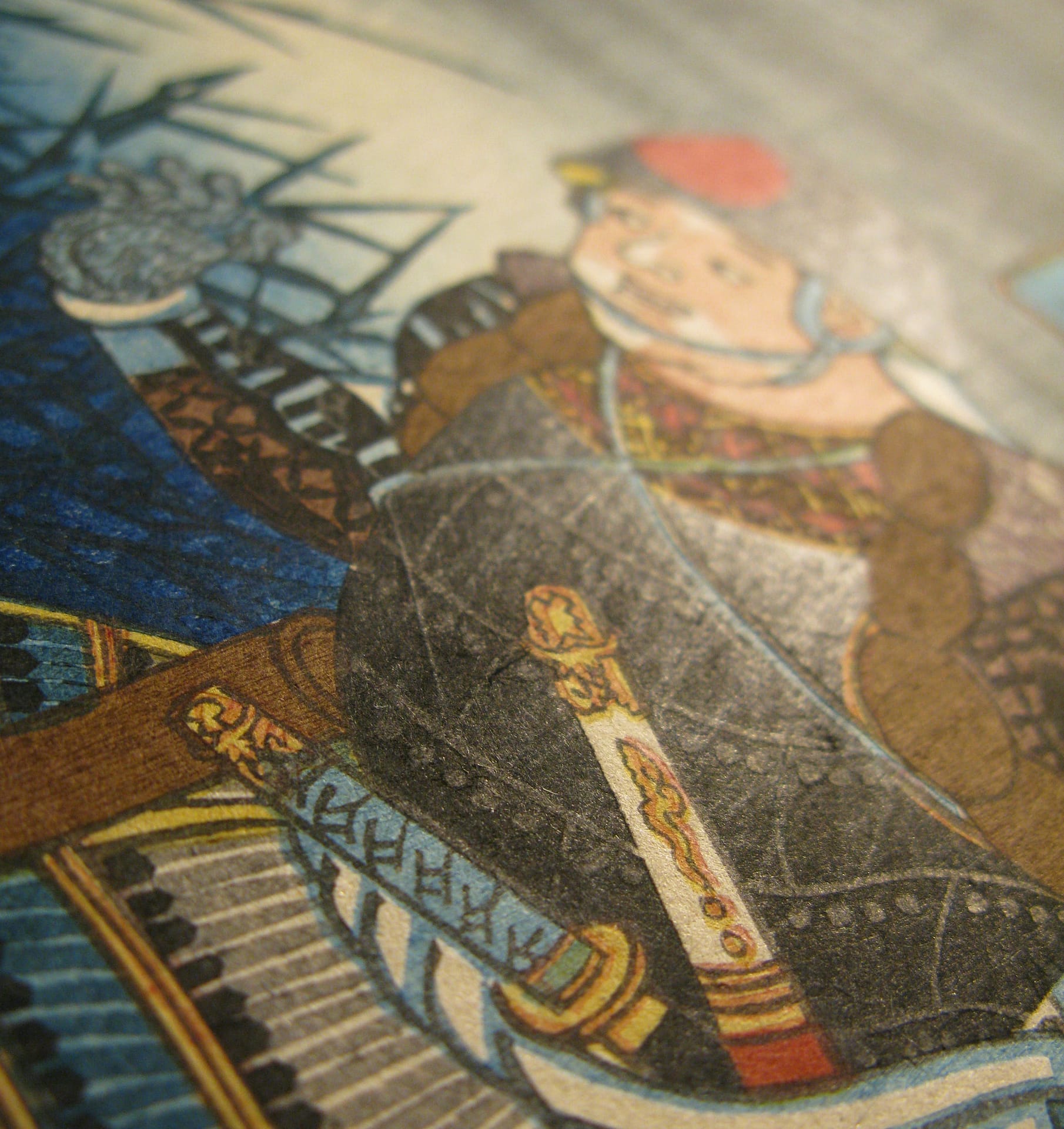
The tale of the print – Saginoike Heikurō (鷺池平九郎), the peasant‑born powerhouse who cleaned his axe like it was just another Tuesday.
Echikawa’s print features Saginoike (Sagiike) Heikurō, a warrior whose origins are as humble as his battlefield feats are outrageous.
Born into a peasant family, he was adopted into the Saginoike clan because he was simply too strong not to be a samurai. The family name means “heron pond,” so Kuniyoshi shapes the inset landscape like a heron — a visual pun with wings.
Heikurō appears in the 1821–24 novel The Illustrated Battles of Kusunoki Masatsura, where he fights for the loyalist Kusunoki clan, supporters of Emperor Go‑Daigo’s doomed attempt to restore imperial rule.
At the Battle of Minato River in 1336, Heikurō wielded a massive battle‑axe and took seventeen enemy heads. Kuniyoshi shows him afterward, casually washing his axe in the river while three severed heads sit beside him like trophies waiting to be catalogued. A nearby foot soldier gestures in awe, as if thinking, “Sir, that’s… a lot.”
The border is decorated with samurai gear — armour, weapons, a war drum — the full starter kit for medieval mayhem.
Despite Heikurō’s terrifying efficiency, the loyalists lost the battle. Ashikaga Takauji became shogun, the Kusunoki leader Masashige committed suicide, and his son Masatsura continued the fight.
Japan then endured nearly sixty years of two rival imperial courts, one in Kyoto and one hidden in the mountains.
Kuniyoshi likely chose this scene for Echikawa because the final syllable kawa means “river,” neatly tying the station name to the Minato River battlefield where Heikurō made his grisly mark.
Other prints by Kuniyoshi and Yoshitoshi show Heikurō fighting a giant snake, because apparently taking seventeen heads wasn’t impressive enough. But here, in Echikawa, he’s simply doing post‑battle cleanup — a man, a river, his axe, and three heads – you know, they do say “three heads are better than one”.
For an excellent analysis of the prints and series, I would encourage you to get the book:The Sixty-nine Stations of the Kisokaido by Sarah E. Thompson.