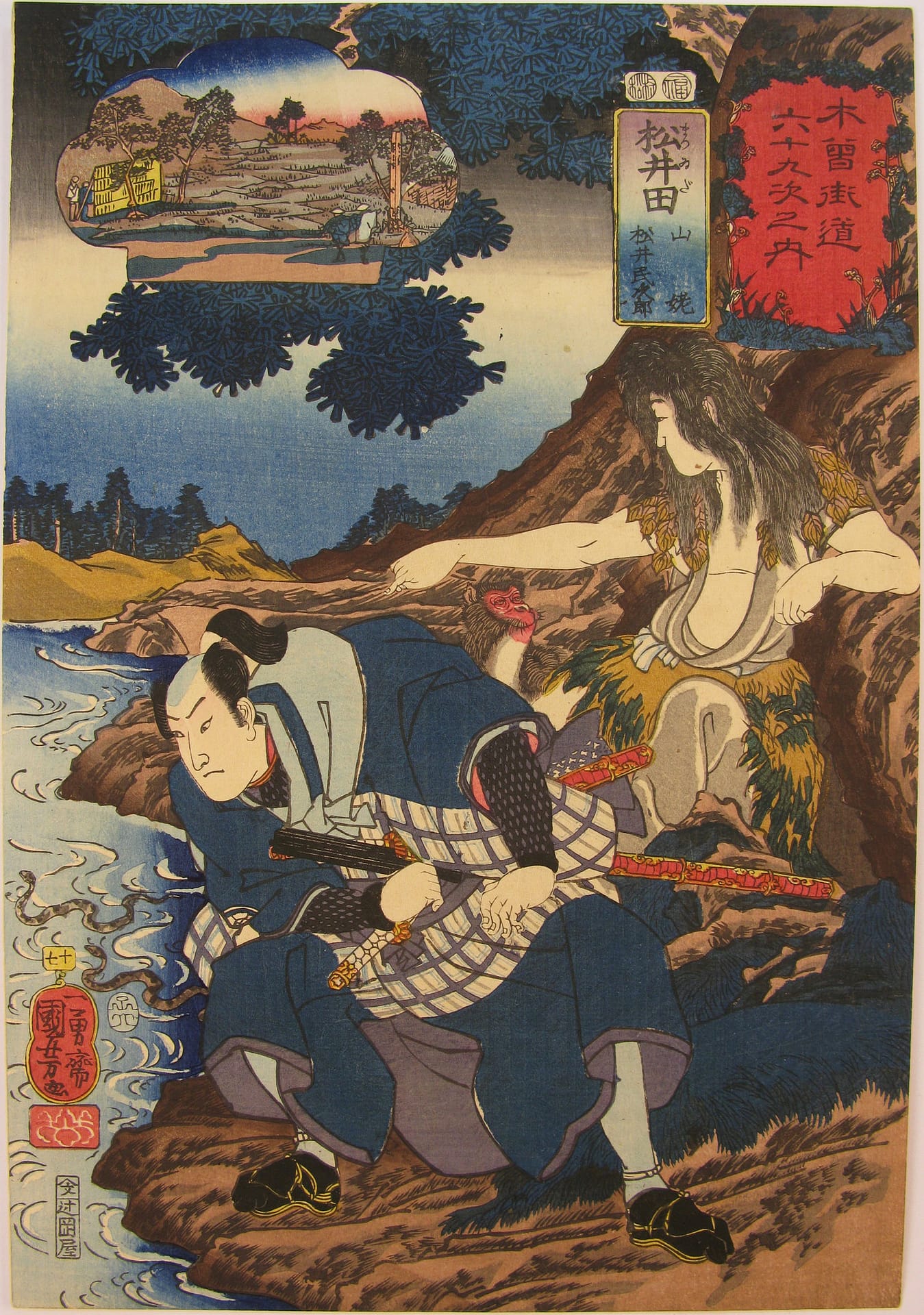
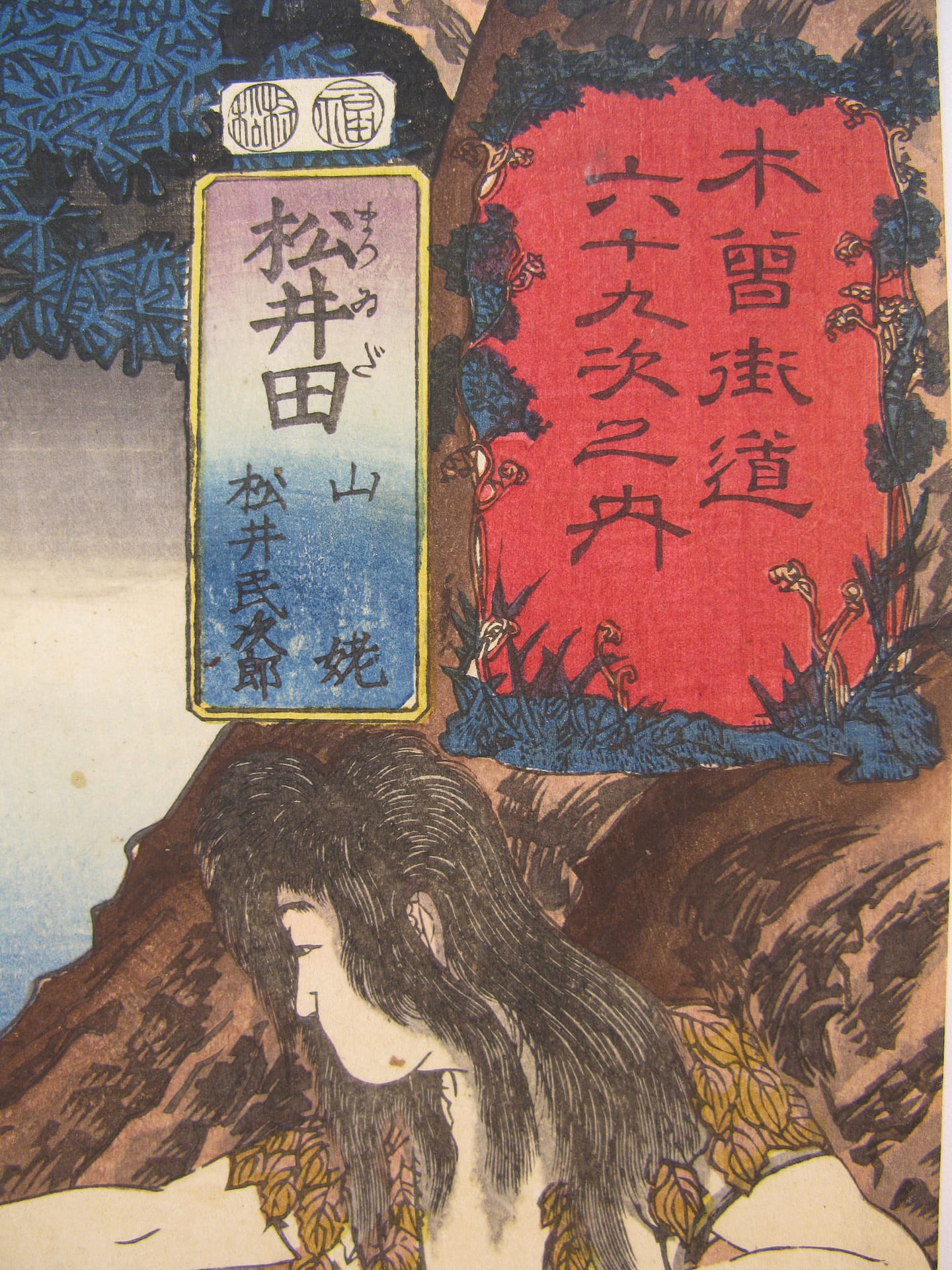
Station: Matsuida (松井田)
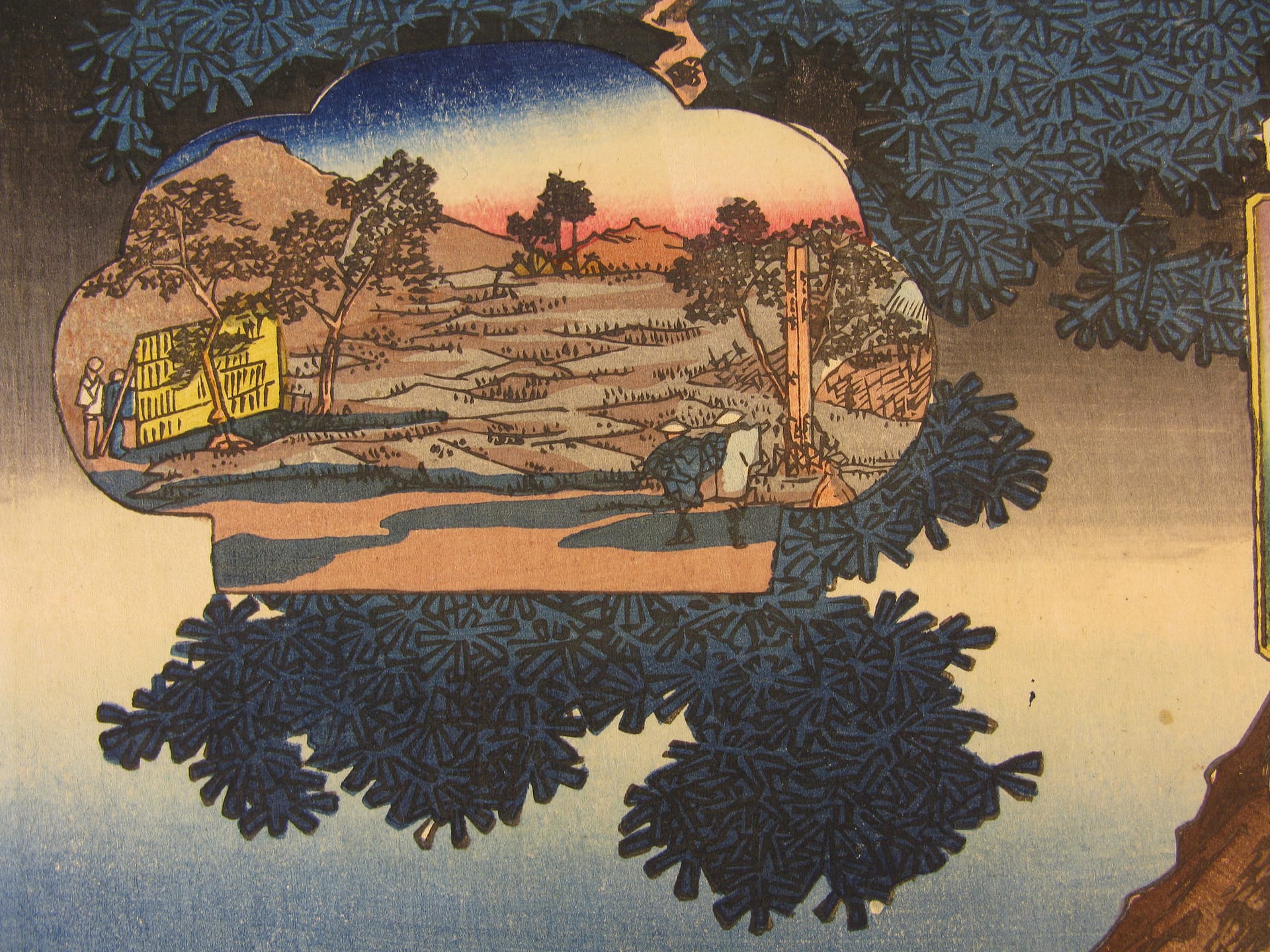
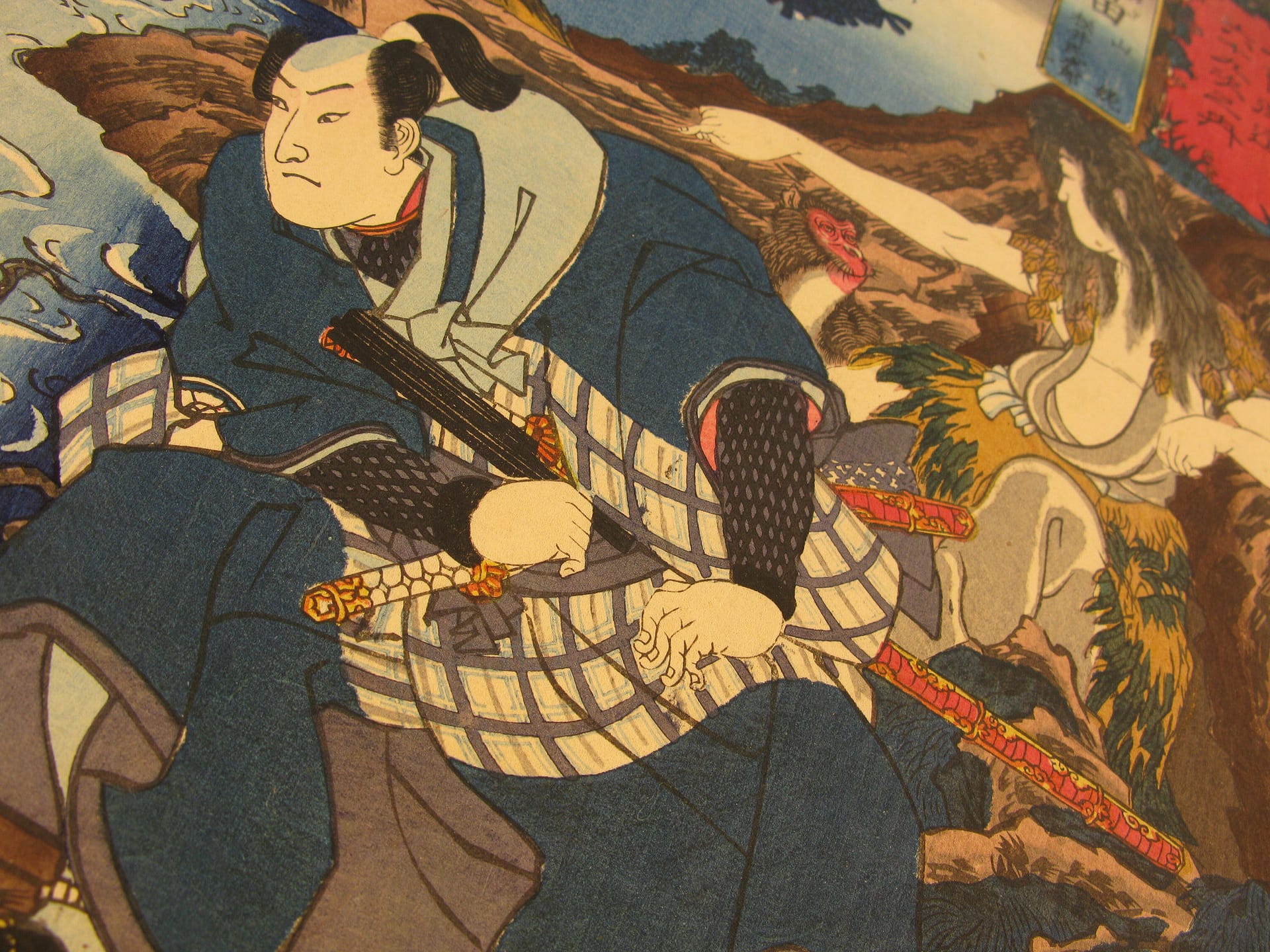
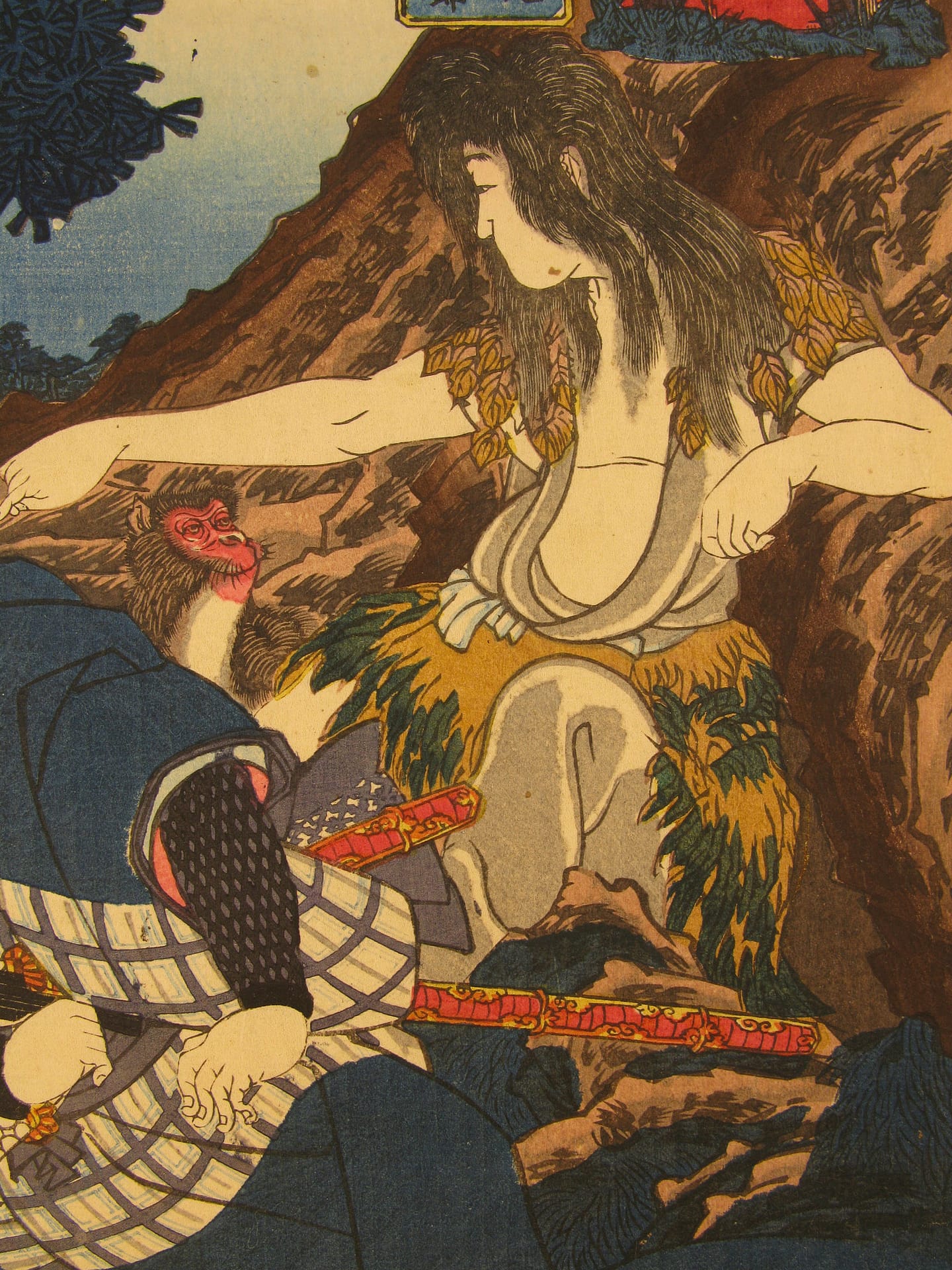
Description: Matsui Tamijirô watching two snakes in a river with Yama-uba (the mountain witch) seated on a rock with a monkey. The landscape panel insert shows rice paddies and distant mountains
Series: Kisokaidô rokujûku tsugi. The sixty-nine post stations of the Kisokaido
Print No: 17
Artist: Utagawa Kuniyoshi (1797-1861)
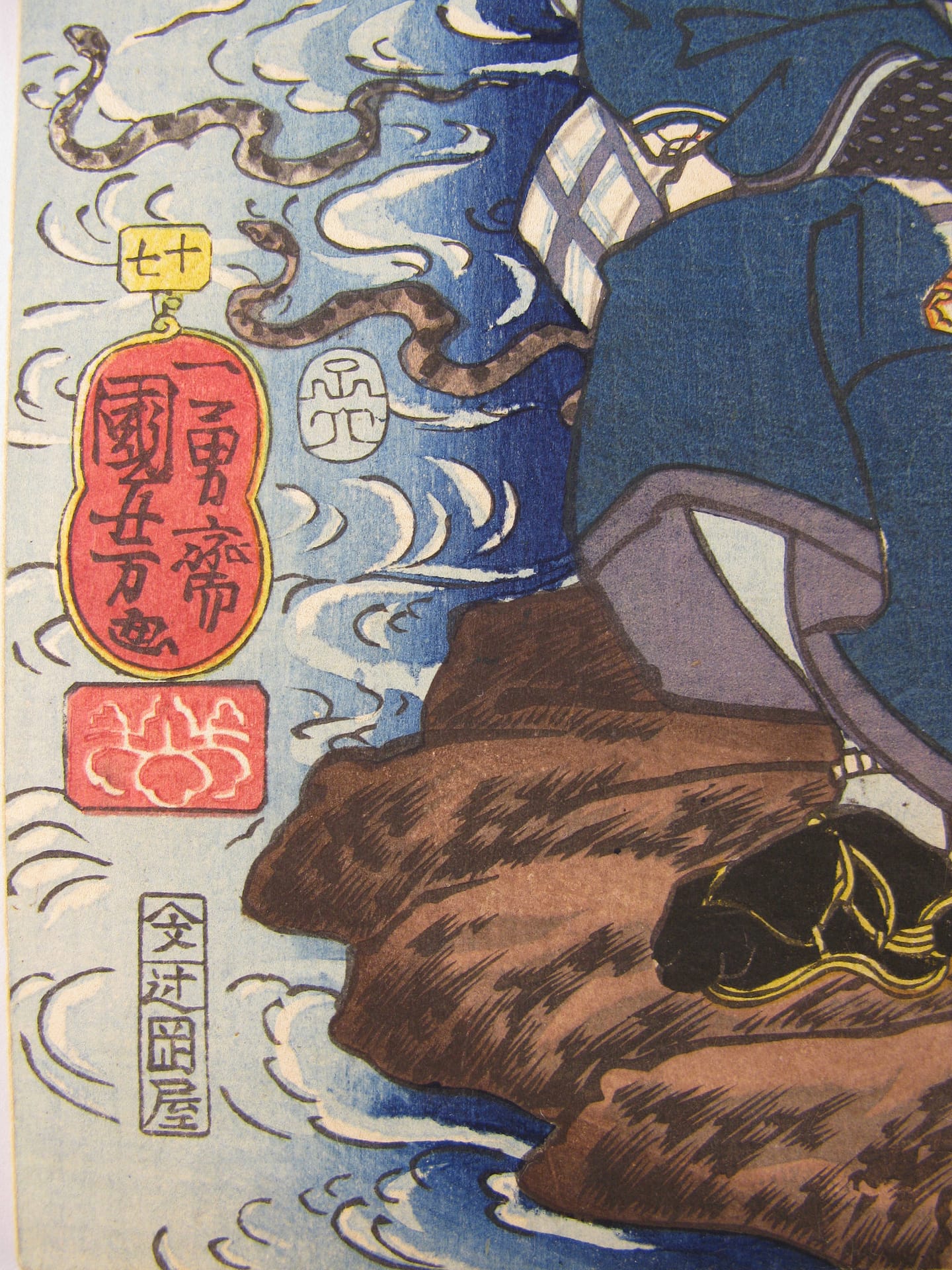
Signature: Ichiyusai Kuniyoshi ga and kiri seal
Date: 1852 (Kaei 5), 6th month
Cens: Fukushima, Muramatsu, Rat 6
Publisher: Tsujokaya Bunsuke
Size: Oban tate-e, 36.2 x 26.7 cm
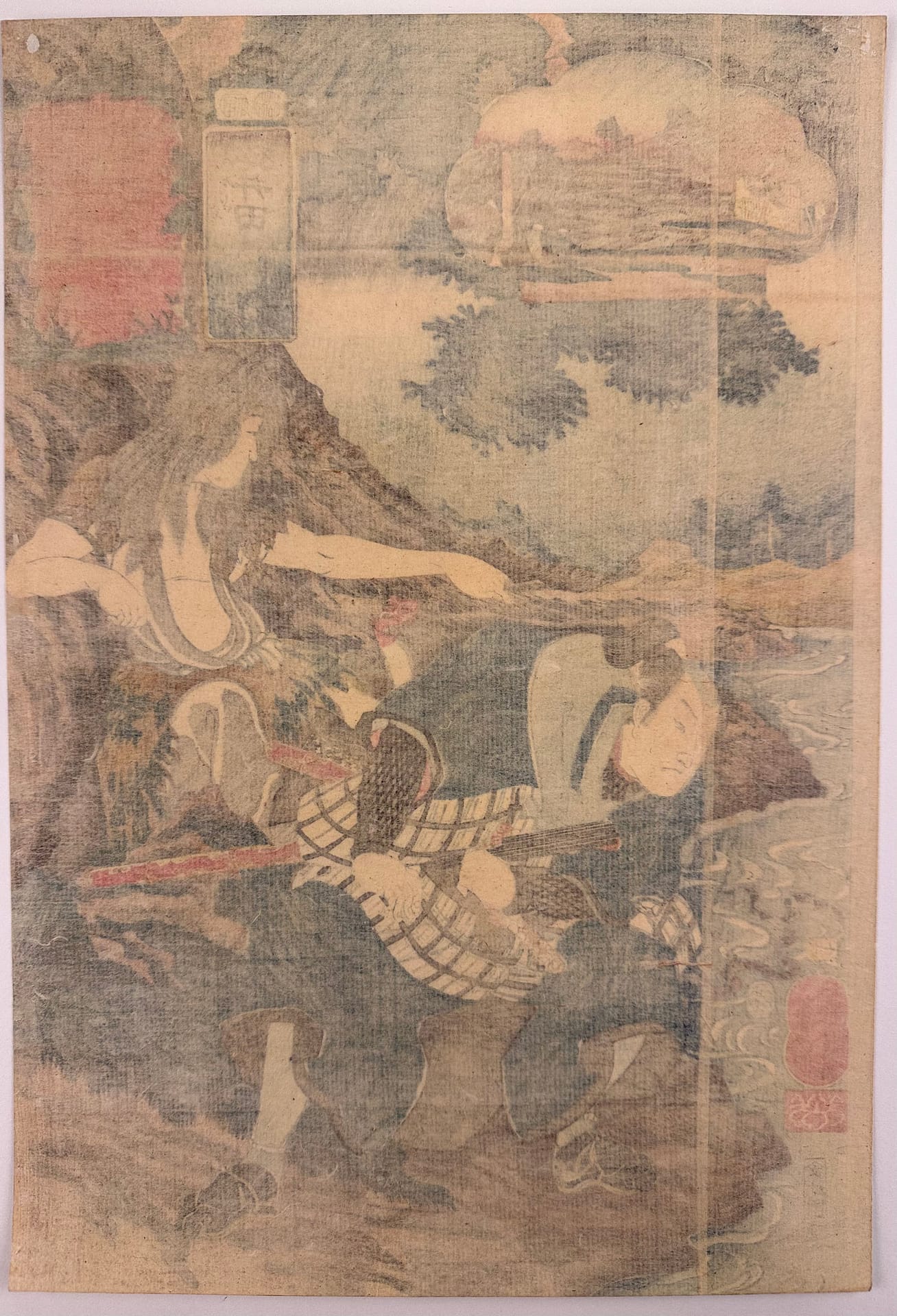
Condition: Very good impression, colour and condition. Retains light Japanese album backing, very slightly trimmed
Price: TBC
References: Robinson S74.18; BMFA – William Sturgis Bigelow Collection, 11.38972.18;
The tale of the print – Matsui Tamijirô (松井民次郎), meets a mountain witch, some helpful snakes, and a very large future problem.
Matsuida’s print features Matsui Tamijirō — or at least Kuniyoshi’s pun‑friendly version of him. His name conveniently echoes the post‑station Matsuida, so the artist tweaks the spelling and lets the wordplay do the heavy lifting.
The story likely features the same Tamijirō (or Tomijirō in the older version – Matsui Tomijirō Shigenaka) as referenced in Kuniyoshi’s earlier Honchō kendō ryakuden series.
In this story he is wandering alone in the mountains at dusk when he reaches a river. Suddenly a whole squadron of snakes slithers out of the grass and swims across together like they’re on a co-ordinated field trip.
While Tamijirō is still trying to decide whether this is ominous or just weird, a mysterious woman appears and explains that the snakes are avoiding the dangerously high water after yesterday’s rain.
This woman is no ordinary passer‑by — she’s a supernatural mountain immortal, and in Kuniyoshi’s retelling she becomes Yama-uba (山姥), the leaf‑cloaked Mountain Witch and mother of the child hero Kintarō. She looks delightfully wild, as if she got dressed by rolling through a forest, and she’s accompanied by a friendly monkey who may or may not be part of her extended magical family.
Yama-uba gives Tamijirō a bundle of medicinal herbs, which later turn out to be extremely useful when he ends up fighting a giant snake — because apparently the universe decided that one snake encounter wasn’t enough.
Kuniyoshi’s print captures this mountain meeting: a lone swordsman, a witch with impeccable forest‑witch fashion sense, a helpful monkey, and a river full of snakes who clearly know something about flood safety.
So in Matsuida, the pun works on two levels: Matsui → Matsuida, and mountain witch → mountain station, all wrapped in a scene that feels like a folktale crossed with a wilderness survival guide.
For an excellent analysis of the prints and series, I would encourage you to get the book:The Sixty-nine Stations of the Kisokaido by Sarah E. Thompson.