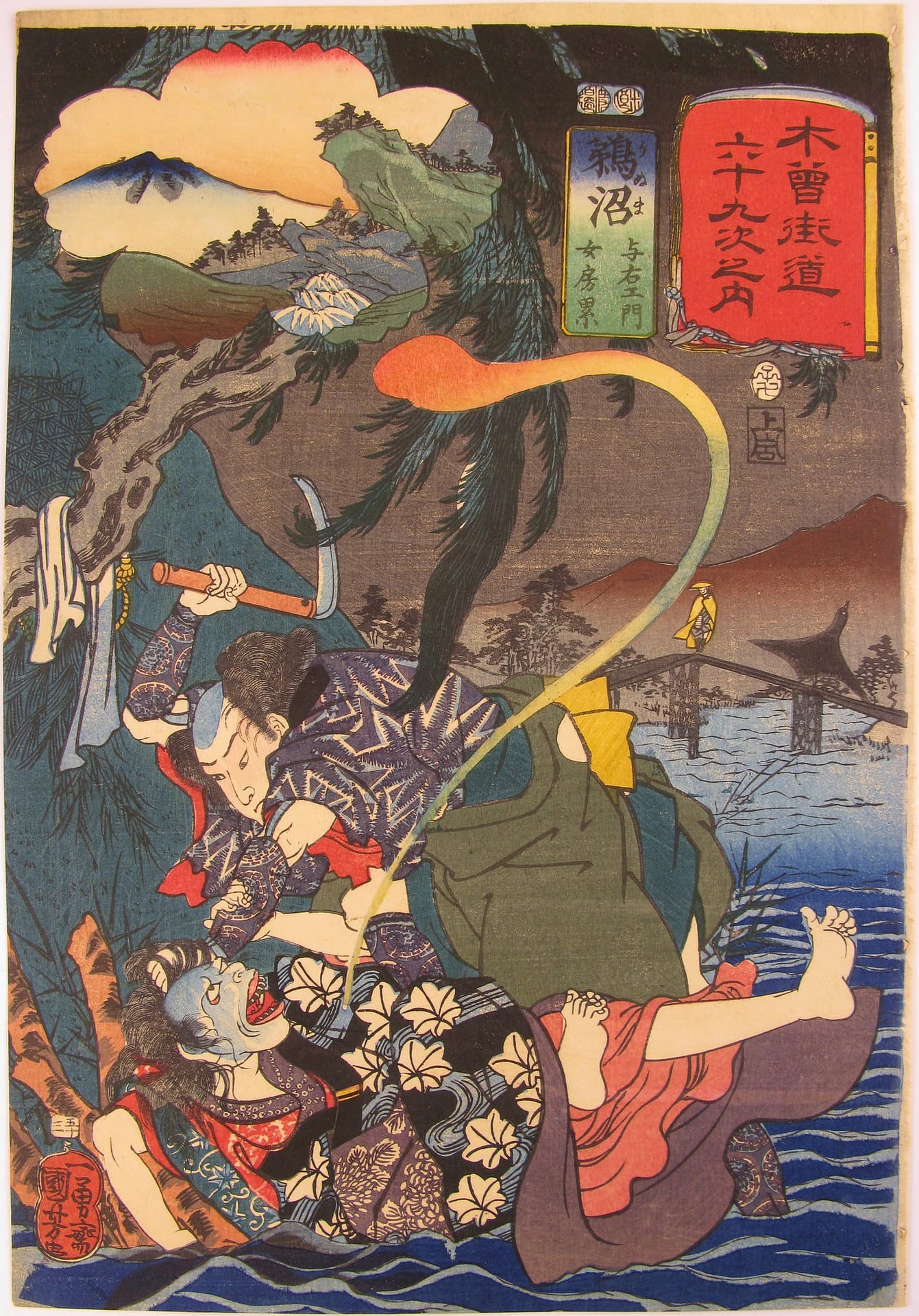
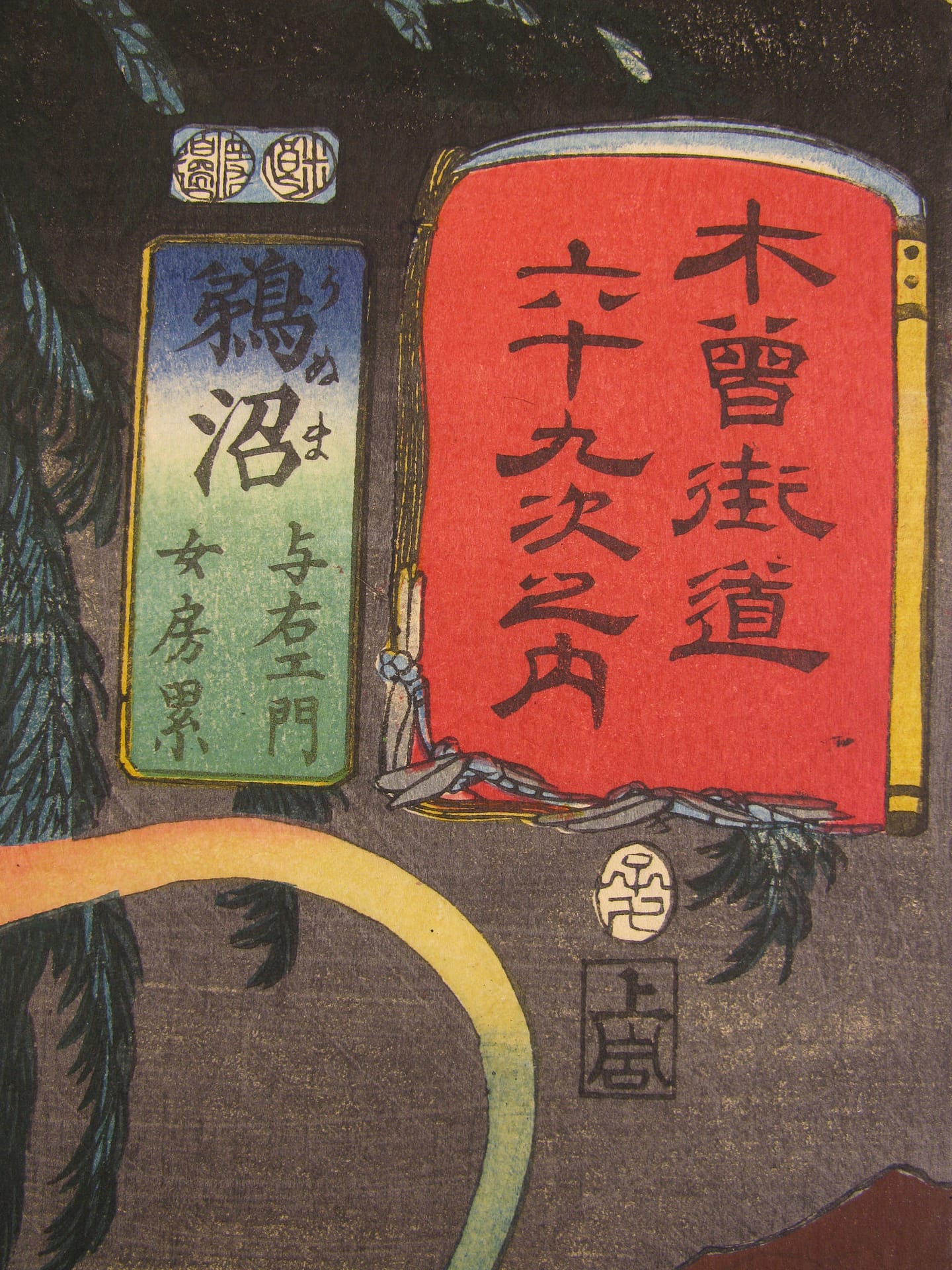
Station: Unuma (鵜沼)
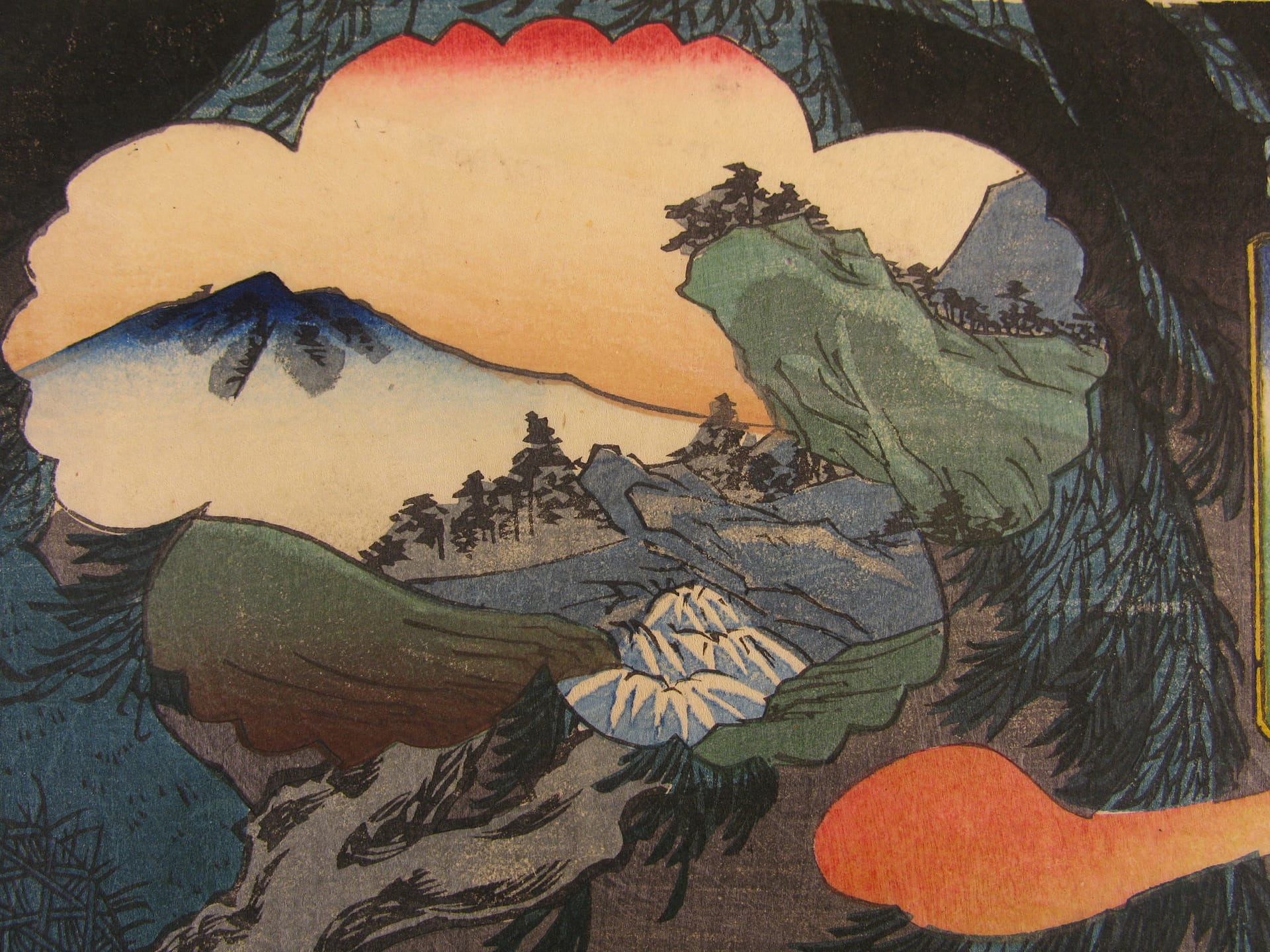
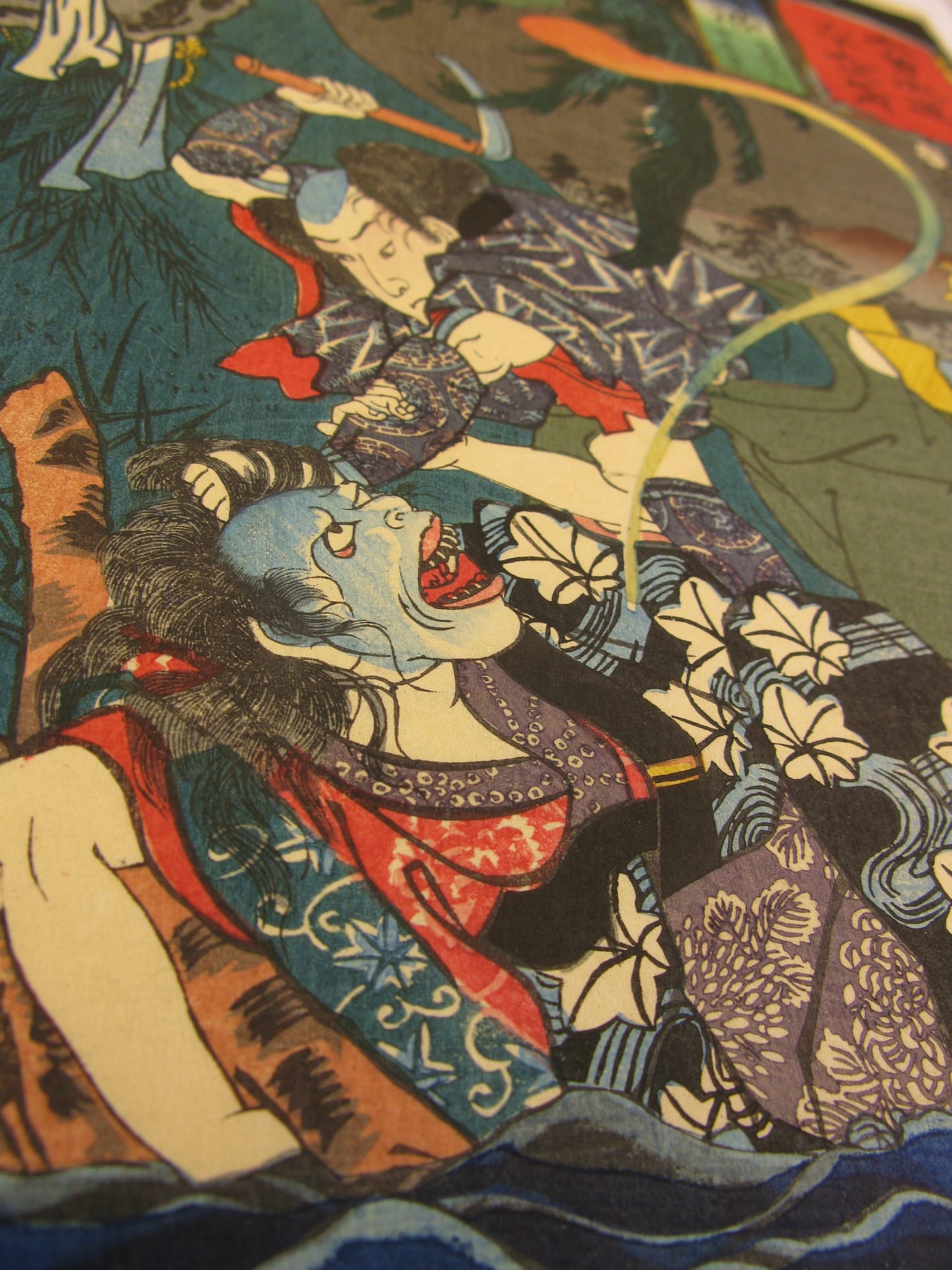
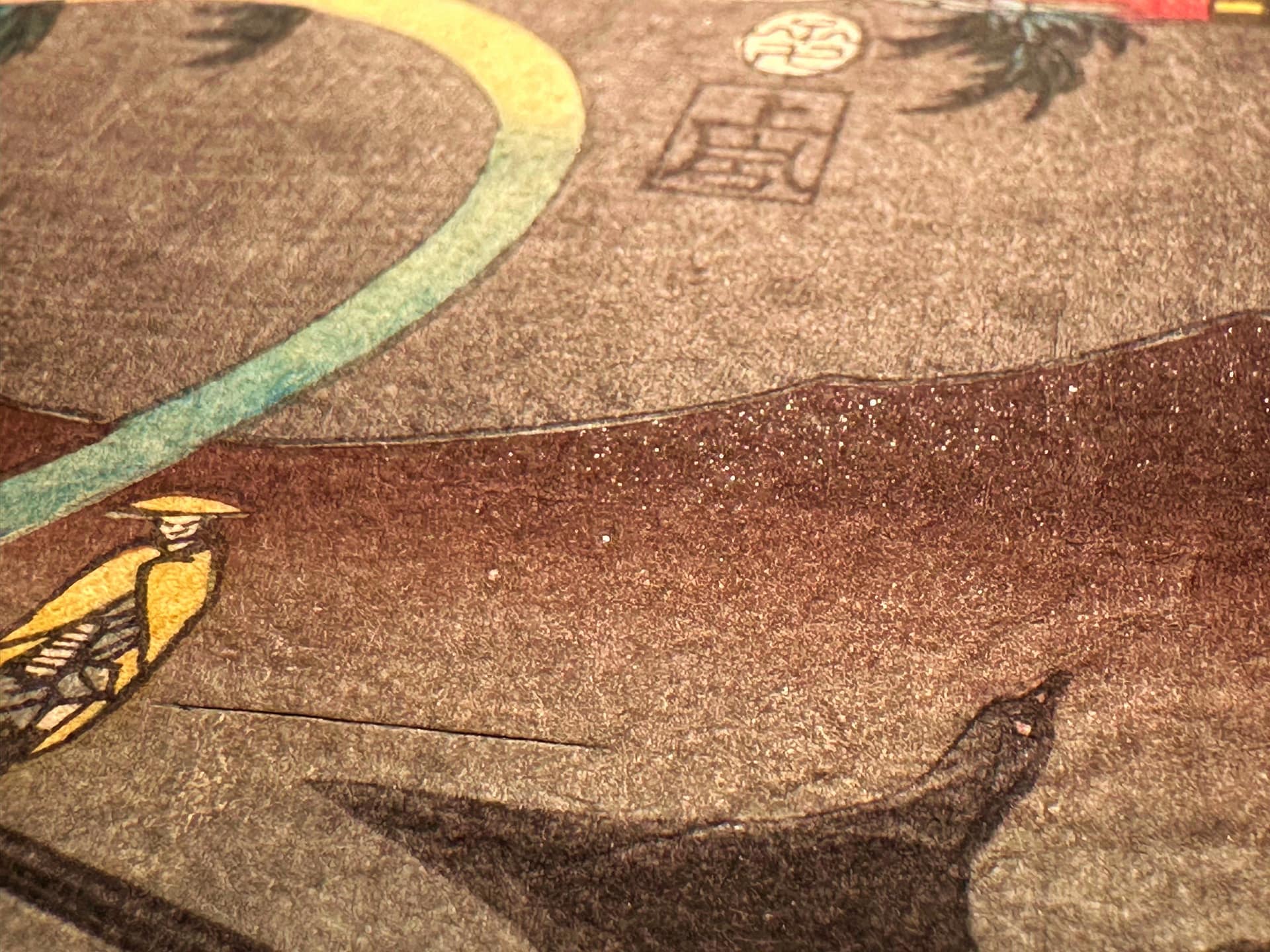
Description: Yoemon killing his cursed wife Kasane with a sickle as her spirit departs the body to return as an avenging ghost. The landscape panel insert shows a mountainous rocky landscape and waterfall.
Series: Kisokaidô rokujûku tsugi. The sixty-nine post stations of the Kisokaido
Print No: 53
Artist: Utagawa Kuniyoshi (1797-1861)
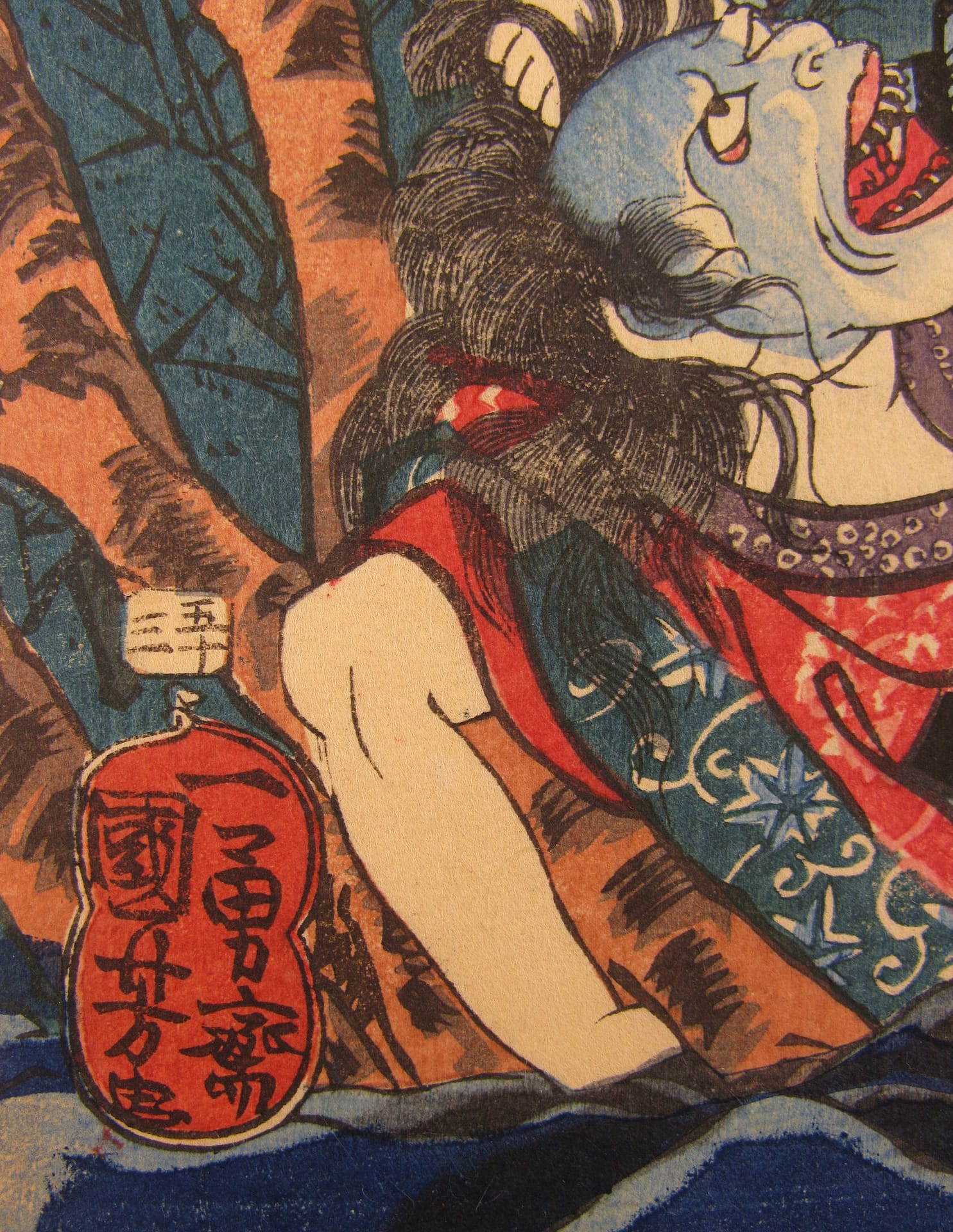
Signature: Ichiyusai Kuniyoshi ga and kiri seal
Date: 1852 (Kaei 5), 7th month
Cens: Mera, Watanabe, Rat 7
Publisher: Kazusaya Iwazō
Size: Oban tate-e,
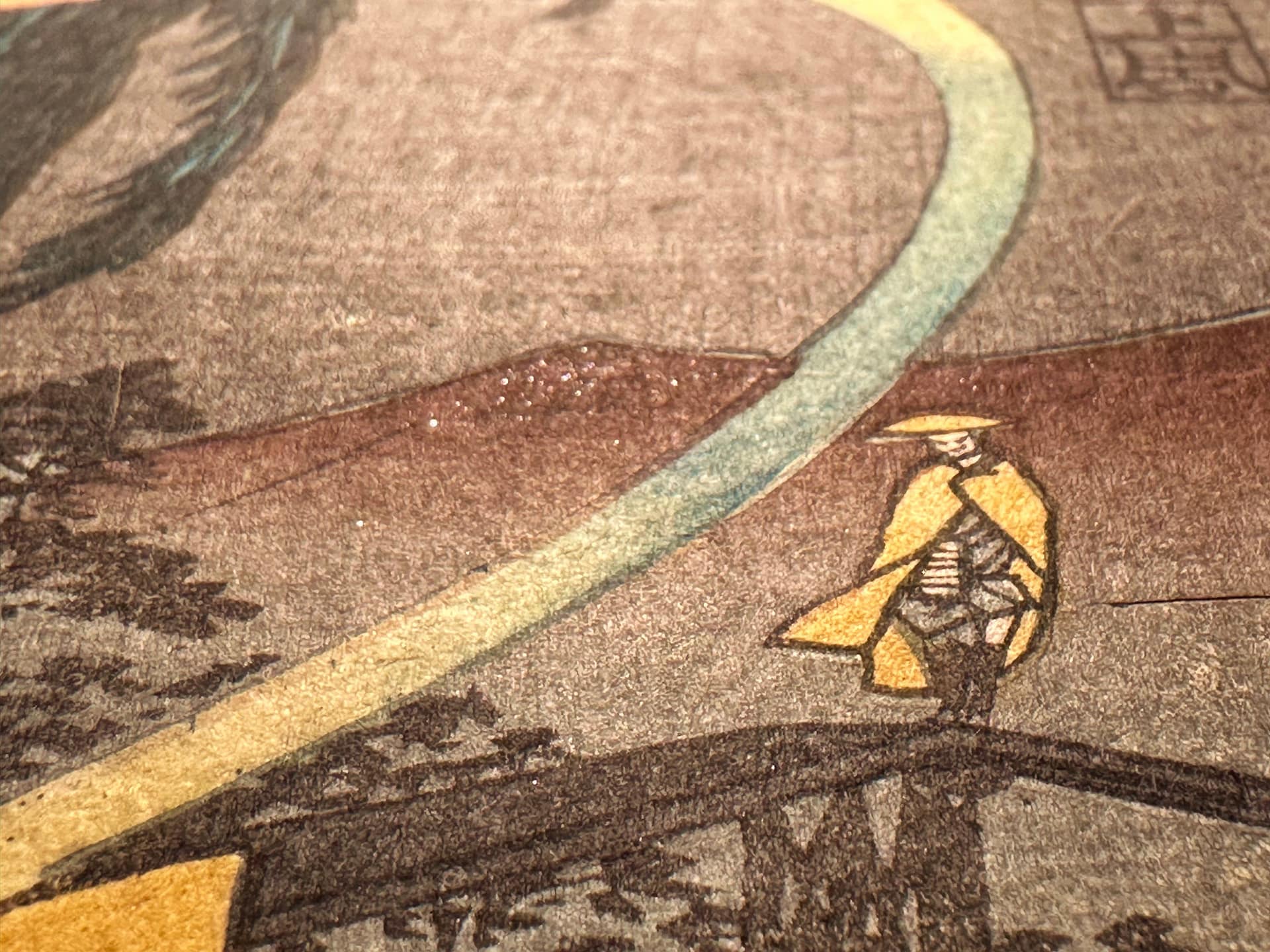
Condition: Very good impression, colour and condition, with mica applied
Price: TBC
References: Robinson S74.54; BMFA – William Sturgis Bigelow Collection, 11.38972.54;
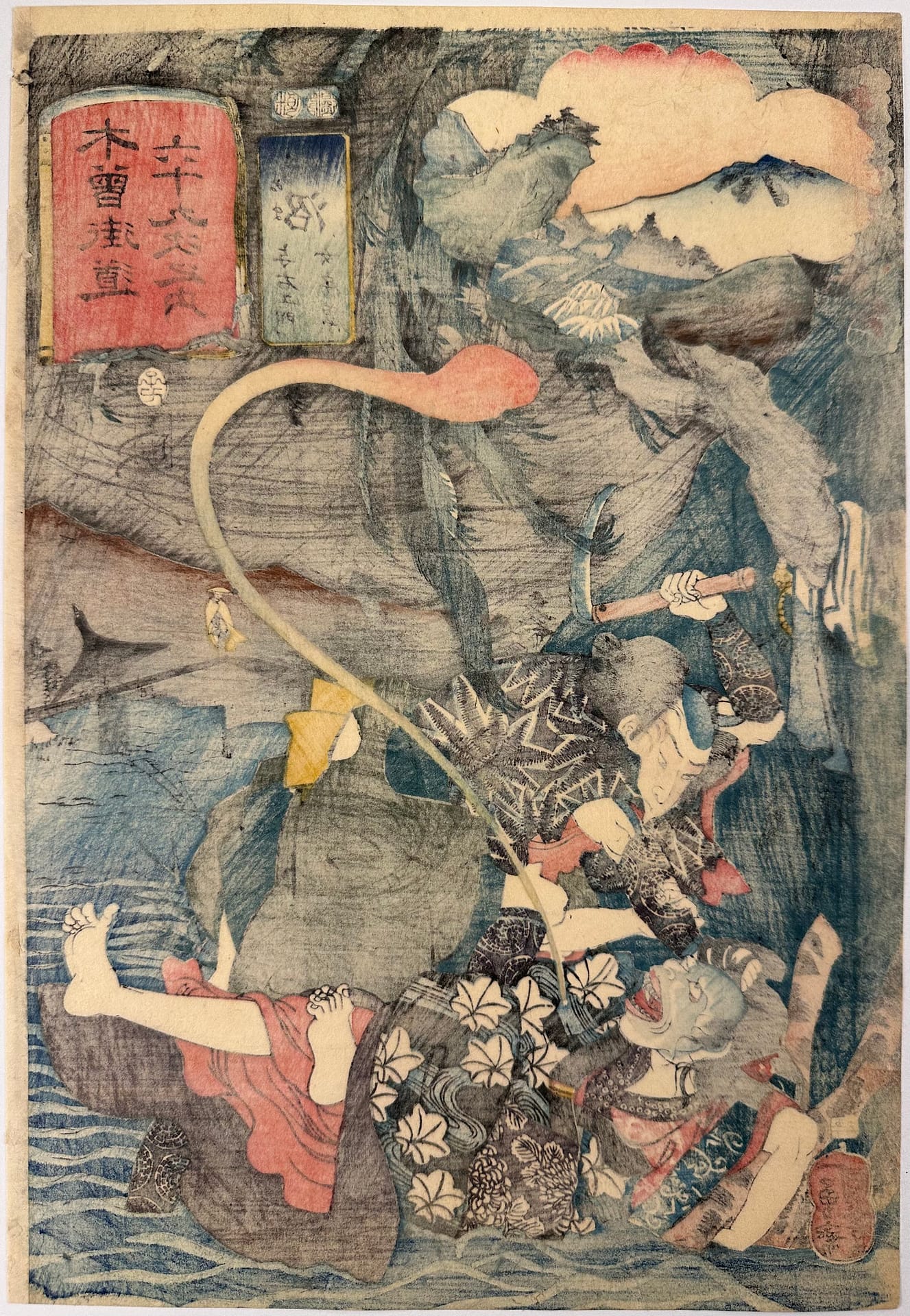
The tale of the print – Kasane (女房累) the cursed woman, the sickle‑wielding murder, and a ghost who refuses to stay quiet.
Unuma’s print dives into one of Edo’s most chilling ghost legends: the tragic tale of Kasane, a seventeenth‑century woman from Shimōsa Province whose life — and afterlife — were shaped by a family curse. According to local lore, the curse made her hideously deformed, and she was eventually killed by a man named Yoemon (与右工門). Her angry spirit then haunted the family until a holy man finally calmed her.
The story spread through oral tradition, manuscript books, kabuki plays, puppet-theatre, and even an 1807 novel by Kyokutei Bakin, illustrated by Hokusai. Every version includes the same unforgettable moment: Yoemon killing Kasane with a sickle. Kuniyoshi captures that exact instant — and adds a supernatural twist.
Different dramatizations explain the murder in different ways: In ‘The Date Struggle and Okuni’ Kabuki, Kasane is the sister of the murdered courtesan Takao, and Takao’s vengeful spirit possesses both Kasane and Yoemon, driving them into a fatal quarrel.
In The Pine Tree of the Priest’s Robe and the Sharp Sword of Narita, Yoemon had previously killed Kasane’s father and seduced her mother; the sudden reappearance of the father’s skull triggers the curse and pushes Yoemon to kill Kasane as well.
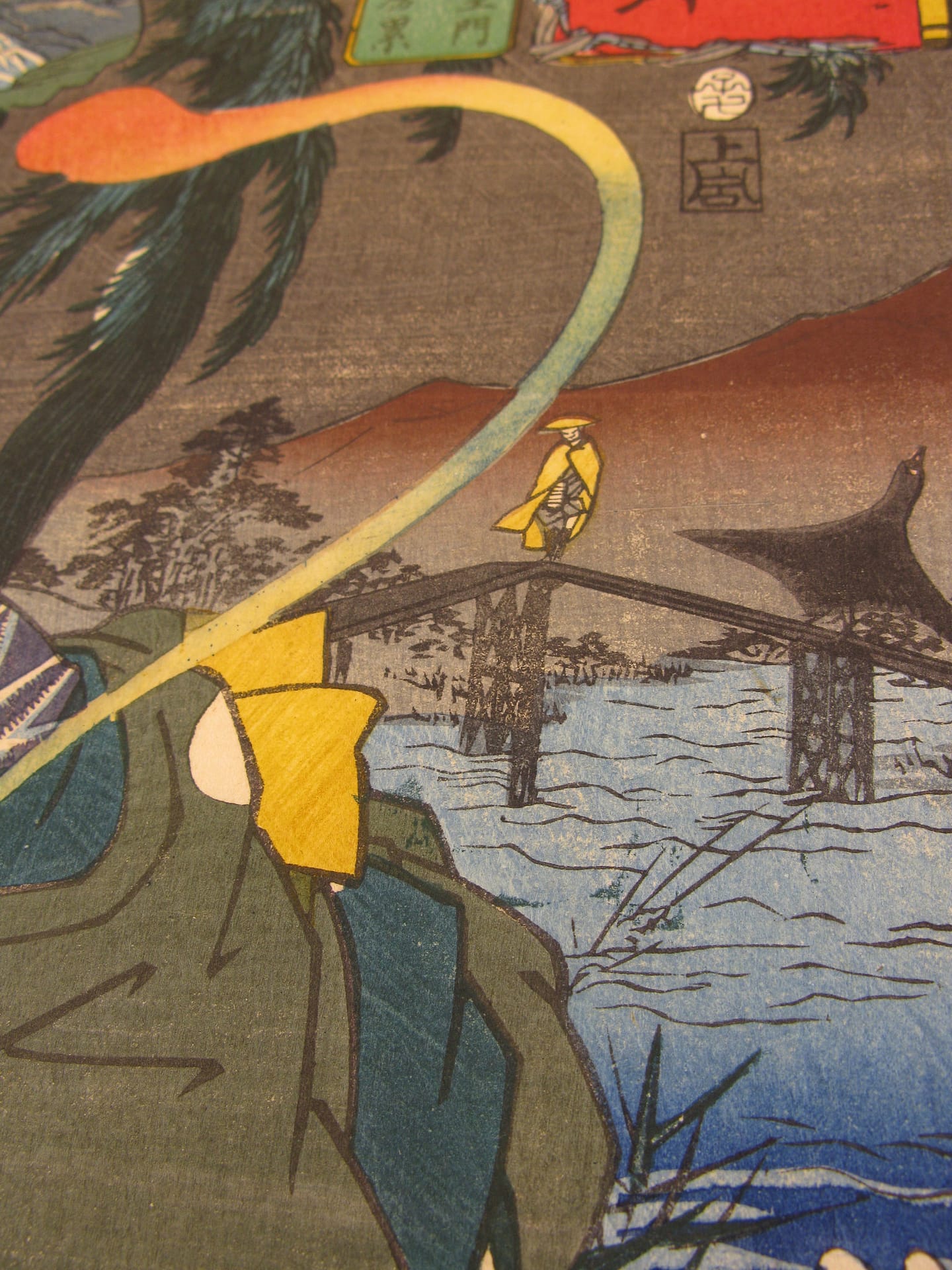
The setting is the bridge over the Kinu River, a place that becomes a stage for curses, guilt, and ghostly retribution. The sickle forms two sides of the series title border, while dead and dying dragonflies flutter across it — a poetic symbol of life’s fragility.
Kuniyoshi adds a haunting flourish: Kasane’s spirit rises from her body at the moment of death, drifting upward in a pale, translucent form. This visual device echoes Hokusai’s earlier illustration and gives the scene a shiver of supernatural immediacy.
So in Unuma, the print becomes a dark folktale tableau: a cursed woman, a panicked murderer, a sickle flashing in the moonlight, and a ghost who refuses to leave quietly — all framed by the delicate wings of dragonflies.
Related print: Kisokaido series print 6 Ageo
For an excellent analysis of the prints and series, I would encourage you to get the book:The Sixty-nine Stations of the Kisokaido by Sarah E. Thompson.