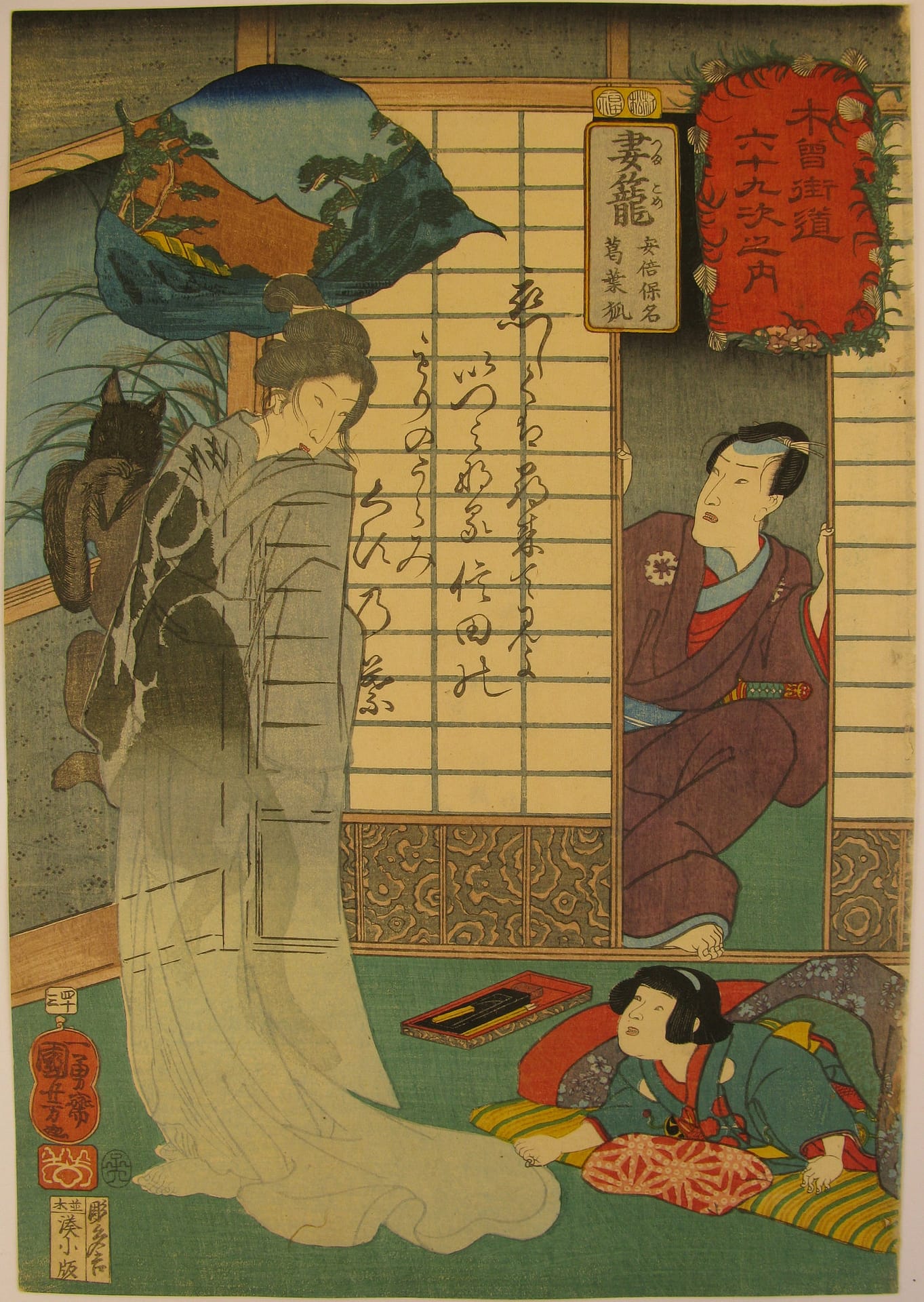
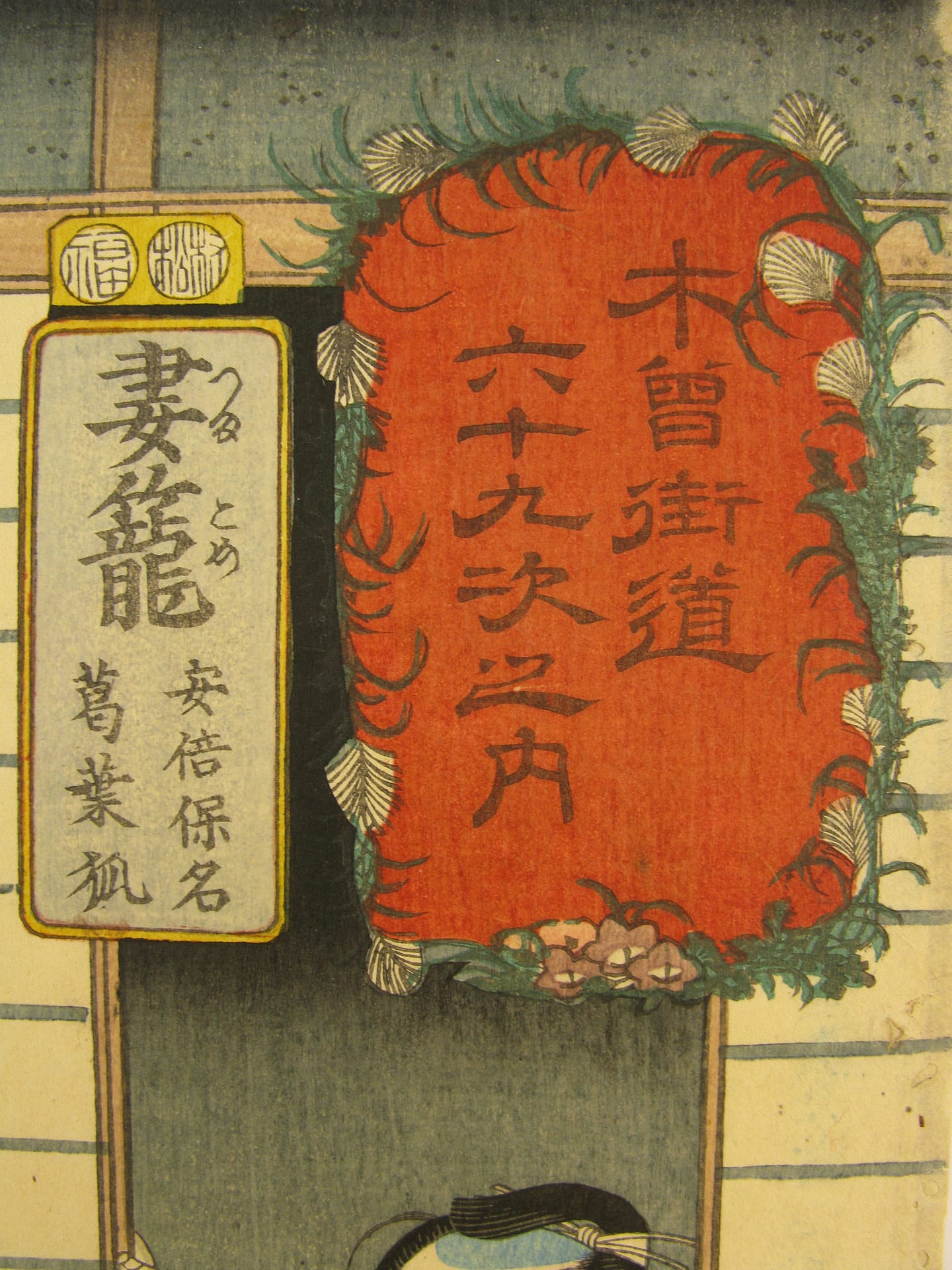
Station: Tsumagome [妻籠]
Description: Yasuna stares in shock as his wife changes shape before his eyes. In human form she bites her collar to keep from crying as the baby pulls at her robe, while in fox form she raises a paw to wipe her tears as she vanishes into the night. The landscape panel insert shows rooftops in a wooded hillside in an arrowroot leaf border.
Series: Kisokaidô rokujûku tsugi. The sixty-nine post stations of the Kisokaido
Print No: 43
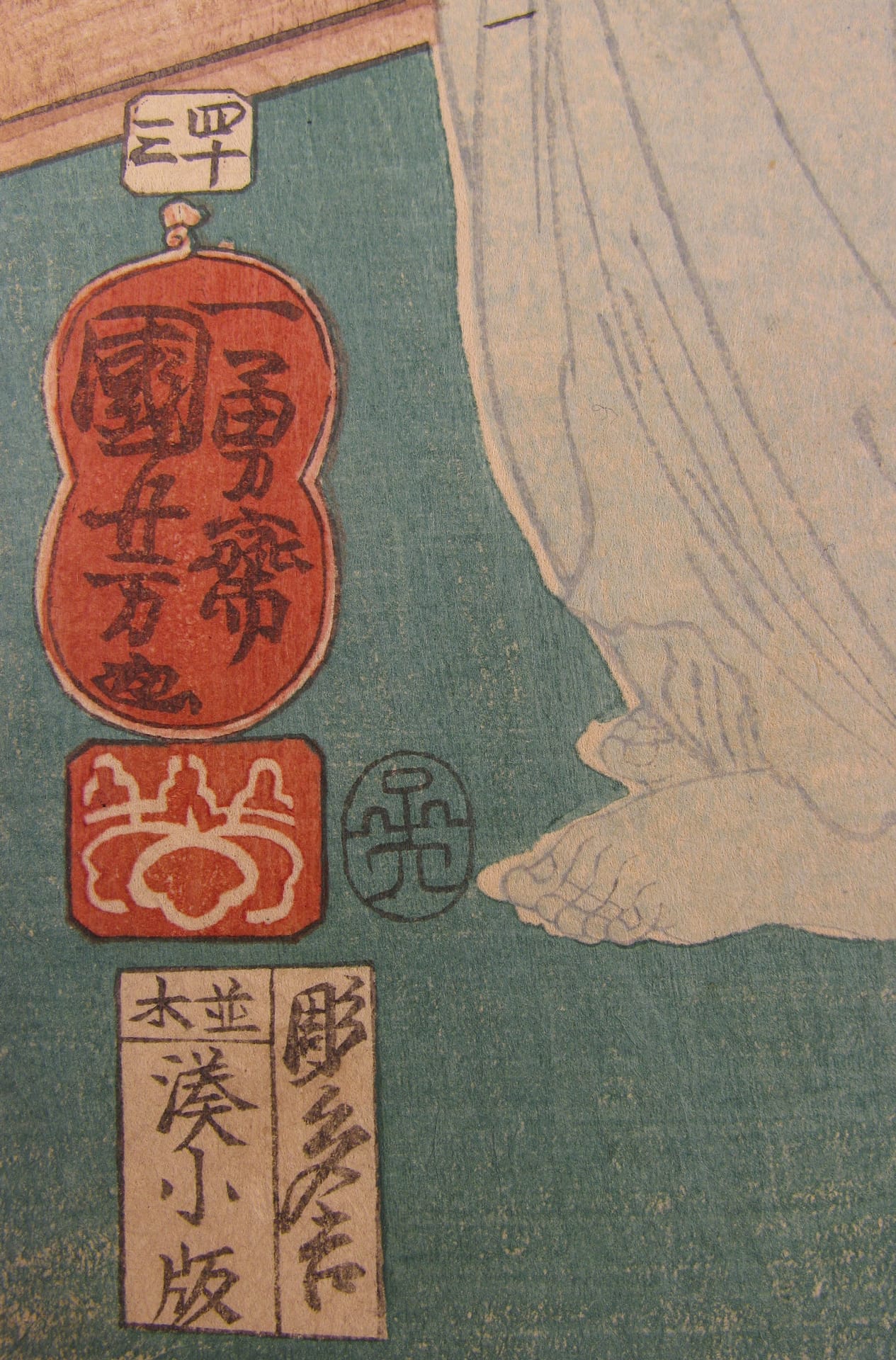
Artist: Utagawa Kuniyoshi (1797-1861)
Signature: Ichiyusai Kuniyoshi ga and kiri seal
Date: 1852 (Kaei 5), 6th month
Cens: Fukushima, Muramatsu, Rat 6
Publisher: Minatoya Kohei
Block cutter: Ōtaya Takichi (Hori Takichi)
Size: Oban tate-e, 36.2 x 26.7 cm
Condition: Fine impression, colour and condition, with beautifully applied bokashi. A hauntingly beautiful print
Price: TBC
References: Robinson S74.44; BMFA – William Sturgis Bigelow Collection, 11.38972.44;
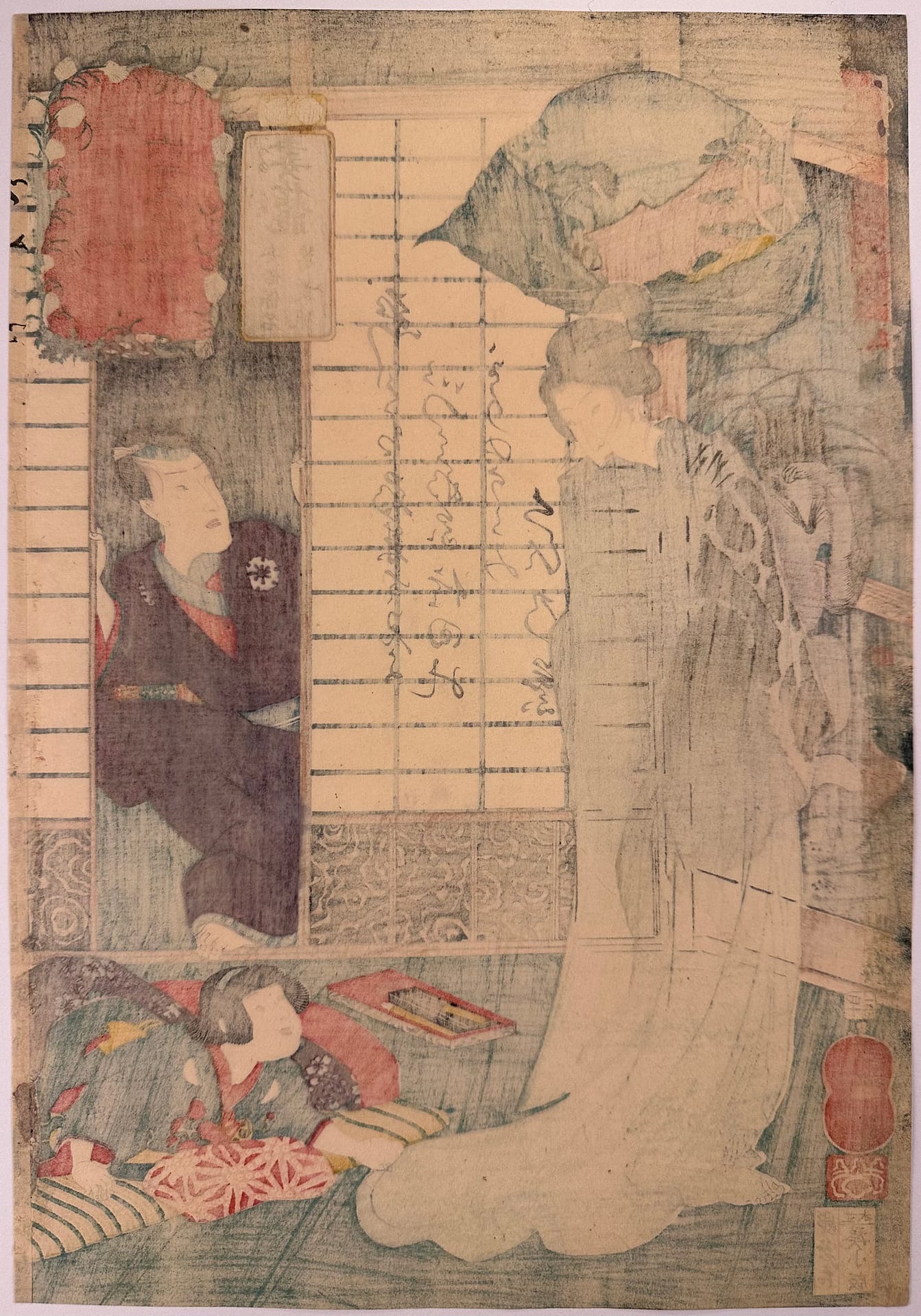
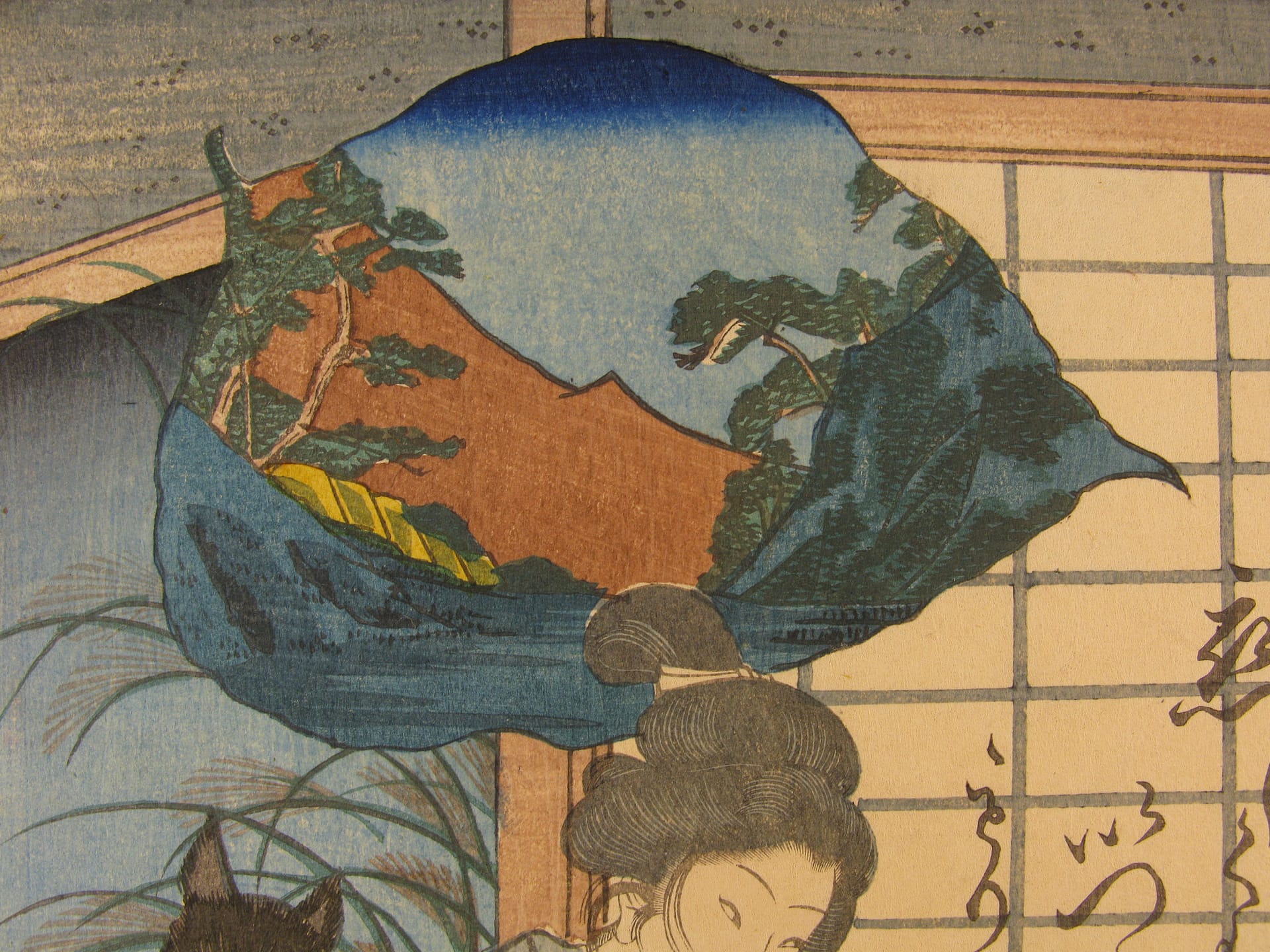
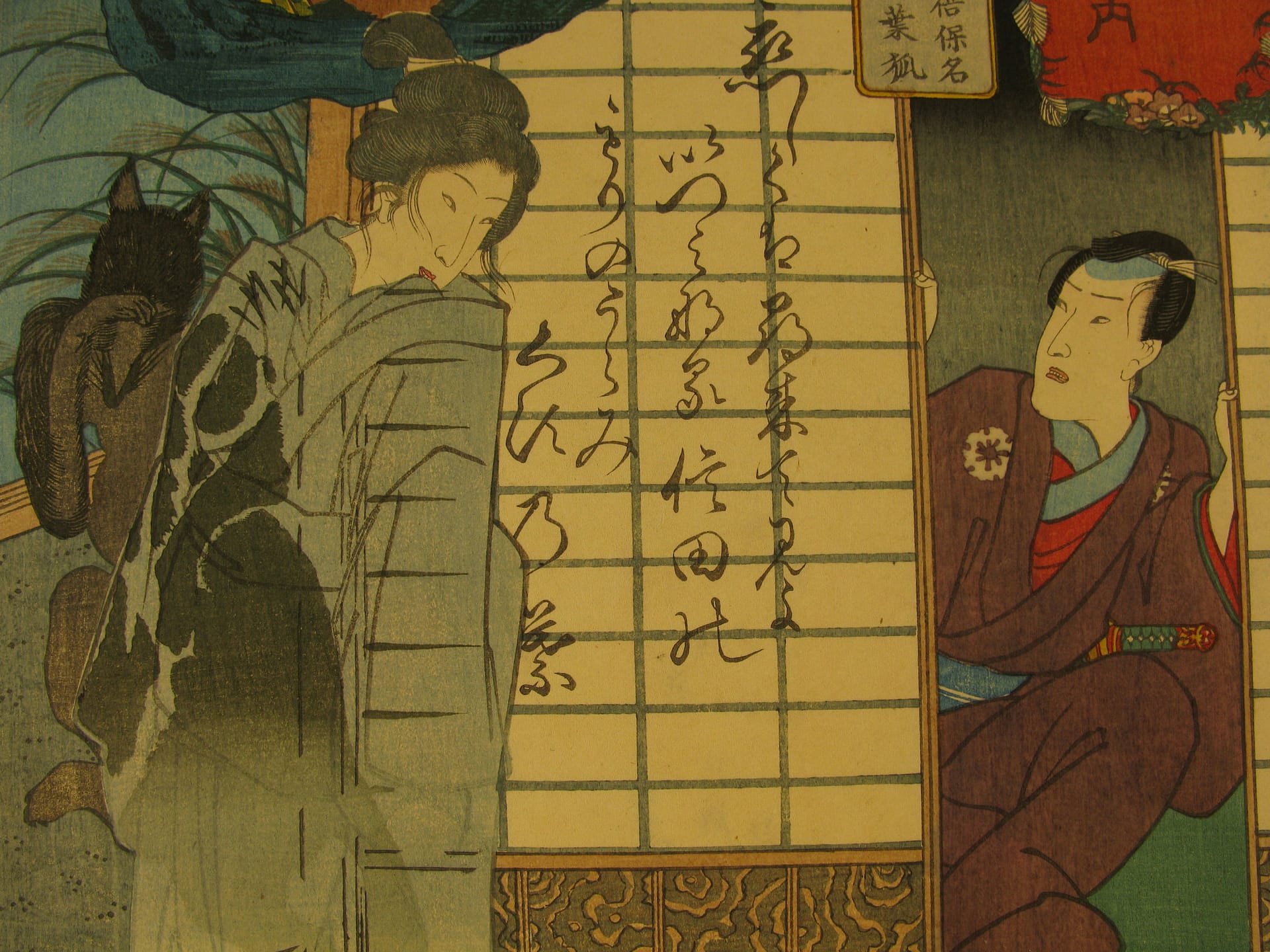
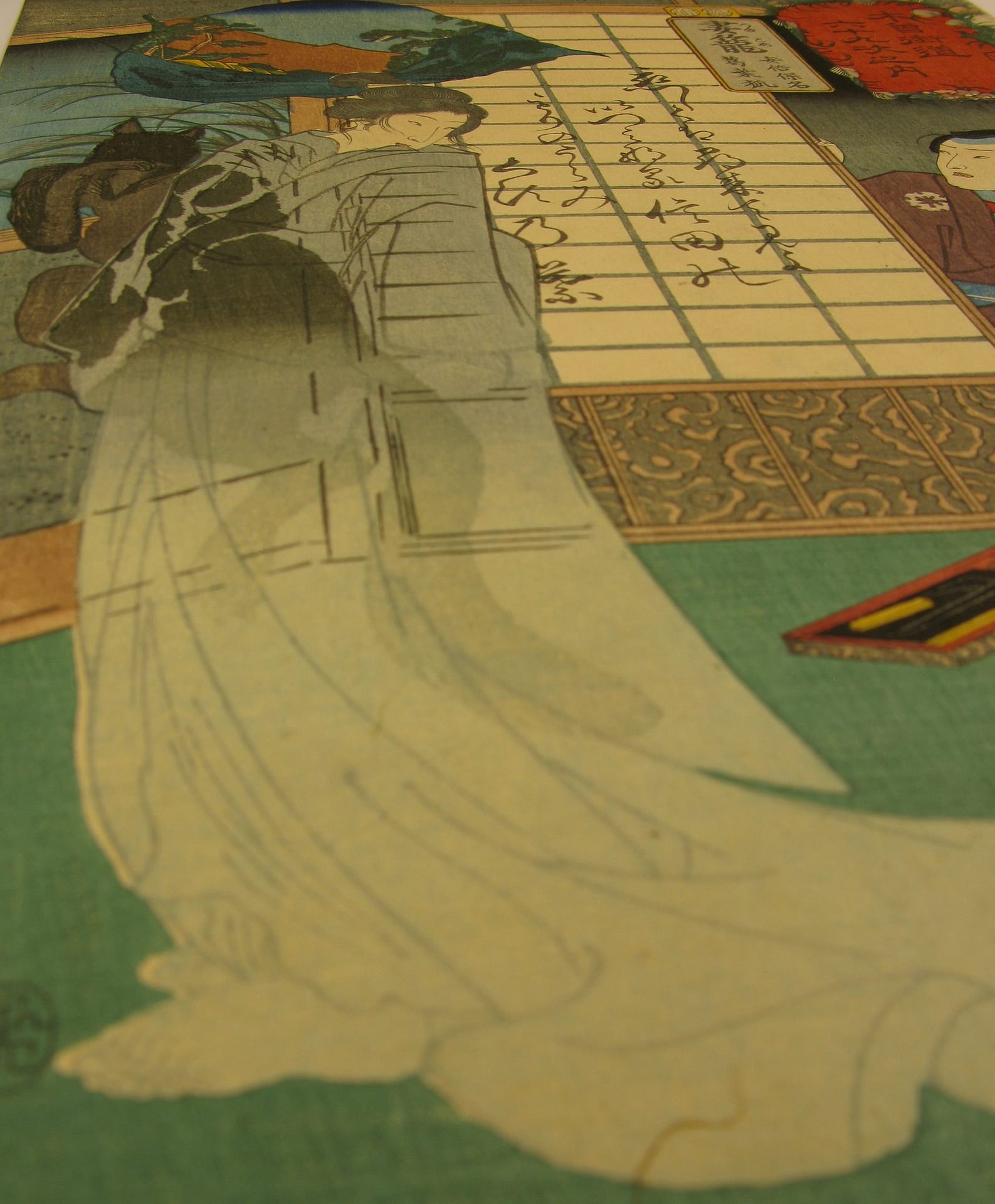
The tale of the print – Kuzunoha (葛葉狐), the fox wife who loved deeply, wrote poetry using her teeth, and broke everyone’s heart.
Tsumagome’s print turns to one of the most beloved and bittersweet fox‑spirit legends in Japanese folklore — the story of Kuzunoha, the magical fox who becomes the wife of Abe no Yasuna.
The place‑name Tsumagome contains tsuma, meaning “wife,” which makes this the perfect station for a tale about love, marriage, and a farewell that still haunts the stage.
The story begins when Yasuna, devastated by the suicide of his fiancée during a feud between two families of court magicians, wanders into Shinoda Wood. There he meets a beautiful woman who claims to be the dead girl’s younger sister.
She is, in fact, a fox who has fallen in love with him and taken human form. Edo audiences adored this twist — it’s romance, grief, and supernatural shapeshifting all in one.
Yasuna and the fox Kuzunoha marry and have a son, who will grow up to be the legendary court magician Abe no Seimei. Their domestic bliss lasts until the real Lady Kuzunoha appears, and the truth comes out. Fox Kuzunoha must return to the forest, leaving behind her husband and child.
The farewell scene is one of the most famous in Japanese theatre: In human form, she bites her collar to keep from crying. In fox form, she raises a paw to wipe her tears. Her hands are already turning into paws as she embraces her little boy. The child clings to her robe, not understanding why his mother is changing shape.
Before she leaves, she writes a poem on the sliding door — holding the brush in her teeth — telling Yasuna where he can find her if his love is true. Kuniyoshi shows the moment of transformation with heartbreaking clarity.
The series border is made of autumn grasses from Shinoda Wood, and the inset landscape is shaped like an arrowroot leaf (kuzu no ha) — the name of the woman the fox impersonates. It’s a visual pun wrapped in a botanical metaphor wrapped in a supernatural love story.
So in Tsumagome, the pun is tender and tragic: tsuma → ‘wife’, and the print becomes a portrait of a fox‑spirit mother caught between love and destiny, leaving behind a poem, a child, and one of the most unforgettable scenes in Japanese folklore.
For an excellent analysis of the prints and series, I would encourage you to get the book:The Sixty-nine Stations of the Kisokaido by Sarah E. Thompson.