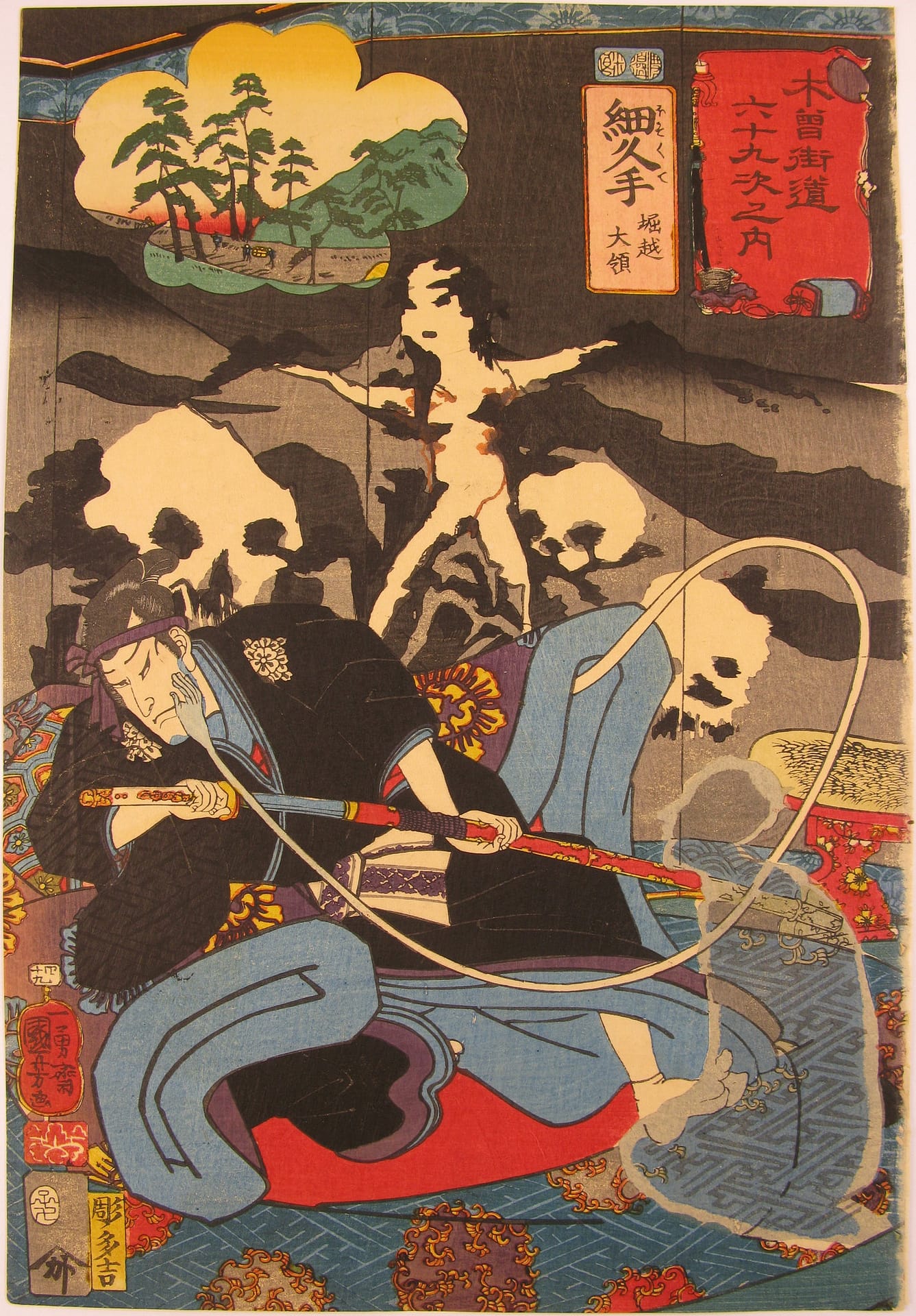
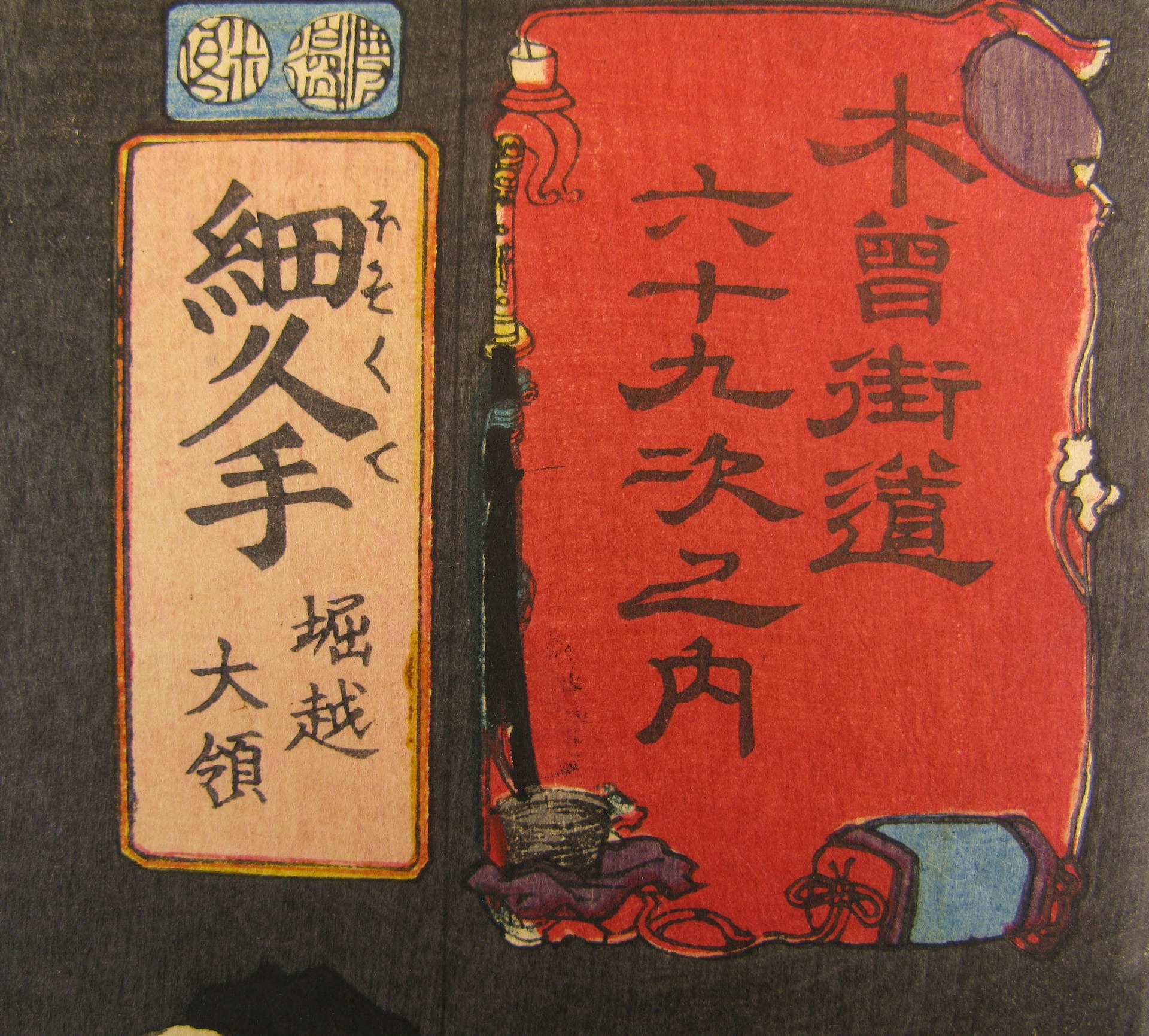
Station: Hosokute (細久手)
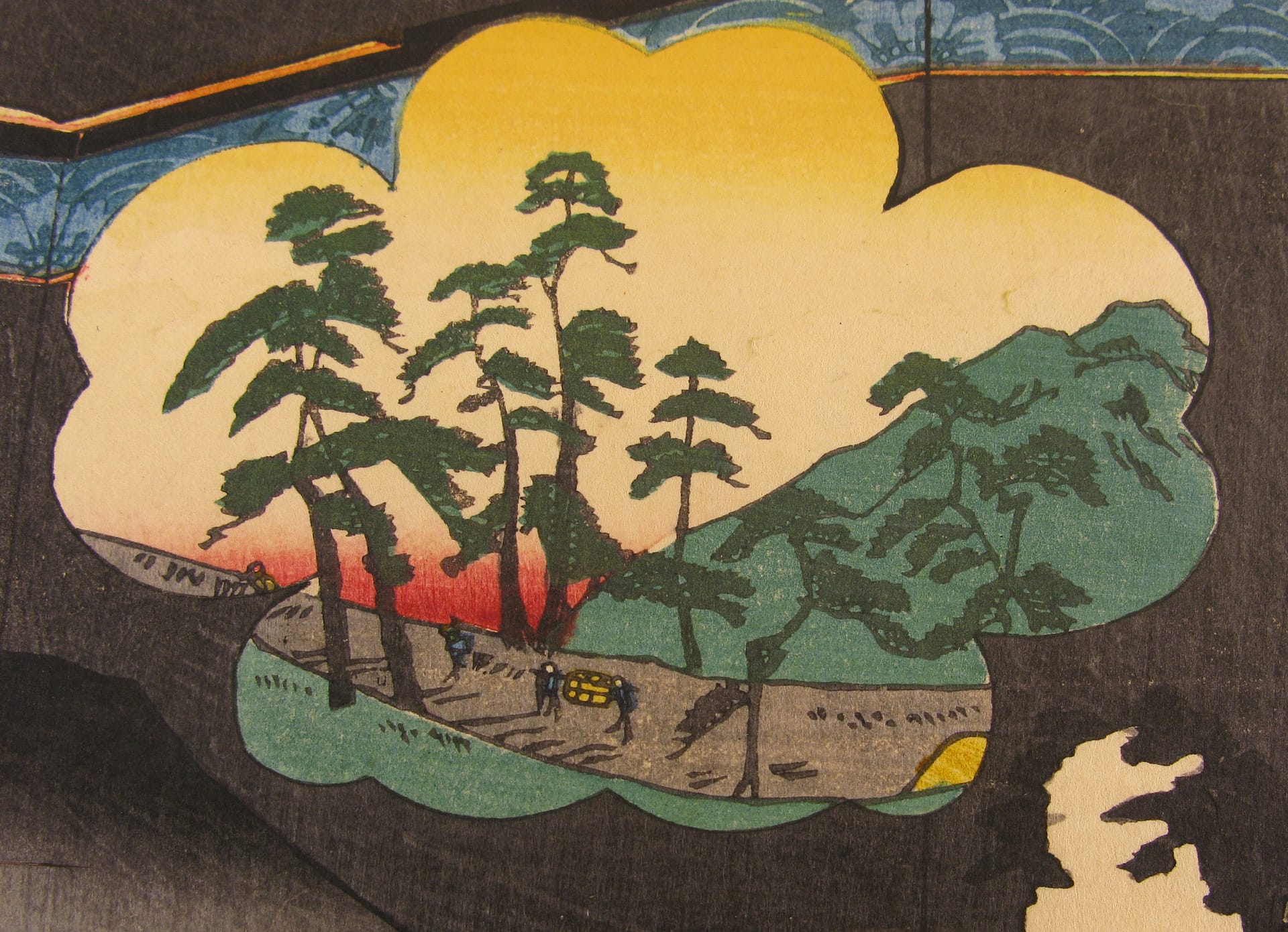
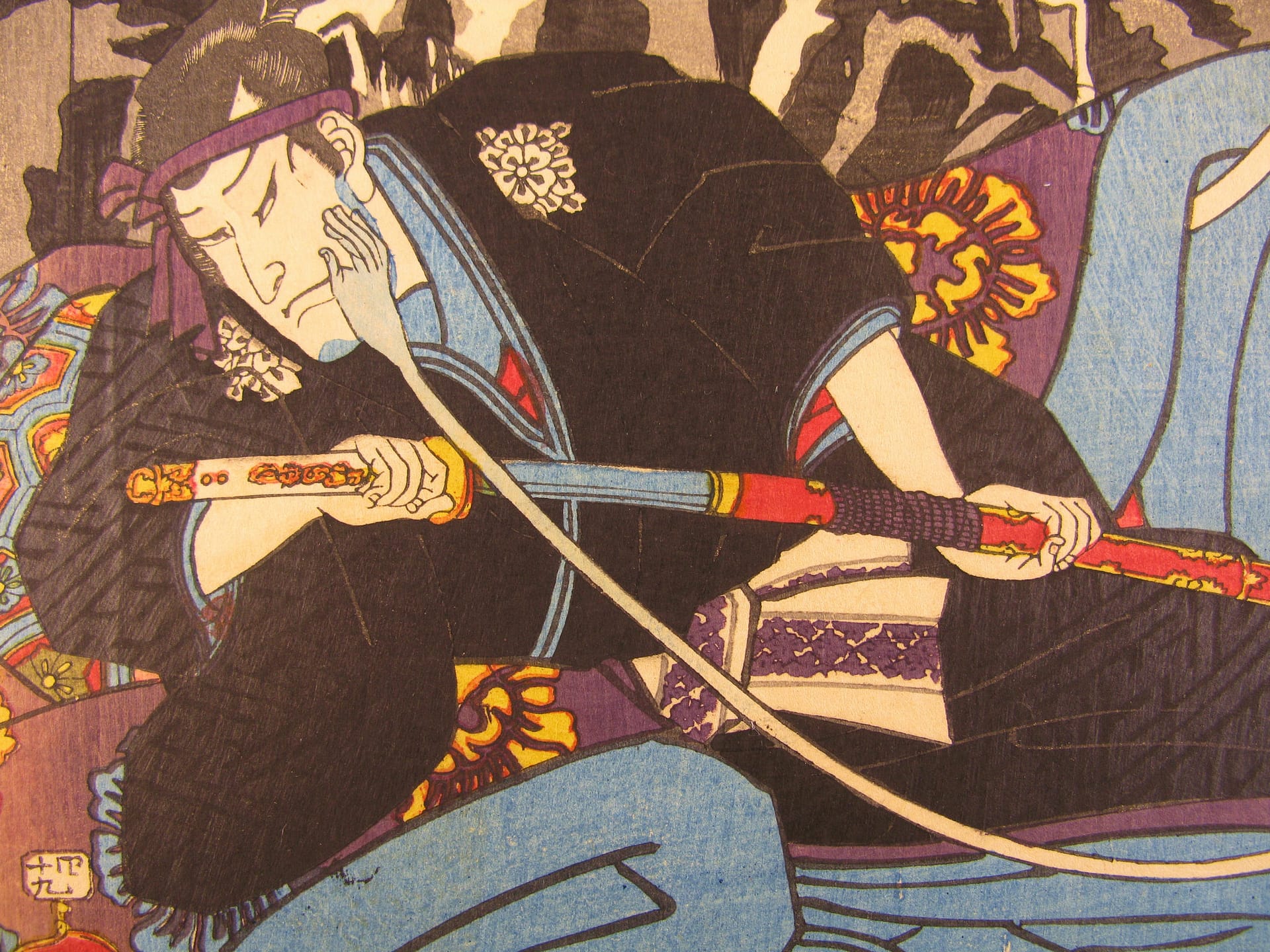
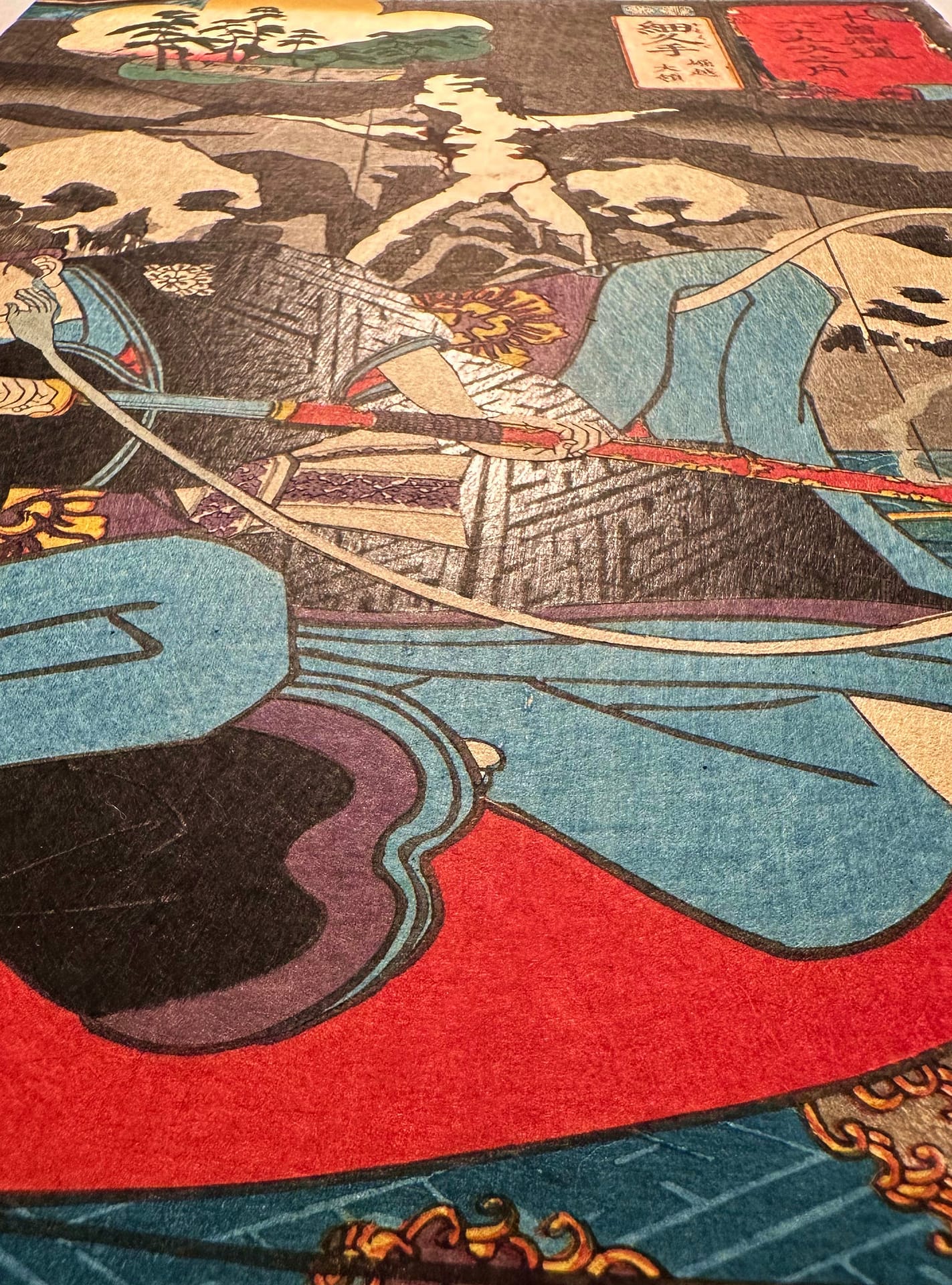
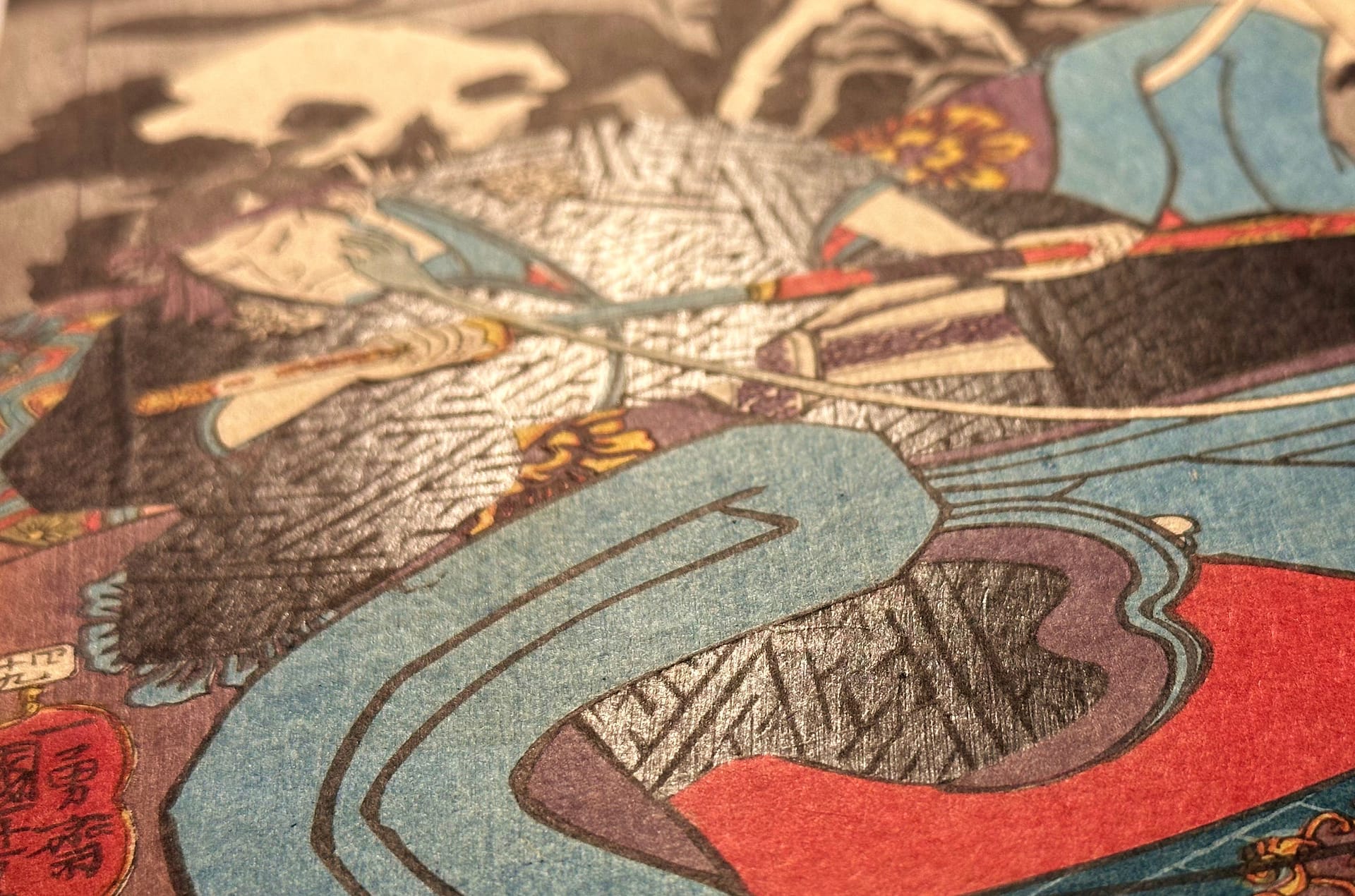
Description: Horikoshi Dairei drawing his sword against the ghost of Asakura Tôgo in a scene from the kabuki play ‘Higashiyama Sakura sôshi’. The landscape panel insert shows a sunset road and pines, within the sakura shaped border.
Series: Kisokaidô rokujûku tsugi. The sixty-nine post stations of the Kisokaido
Print No: 49
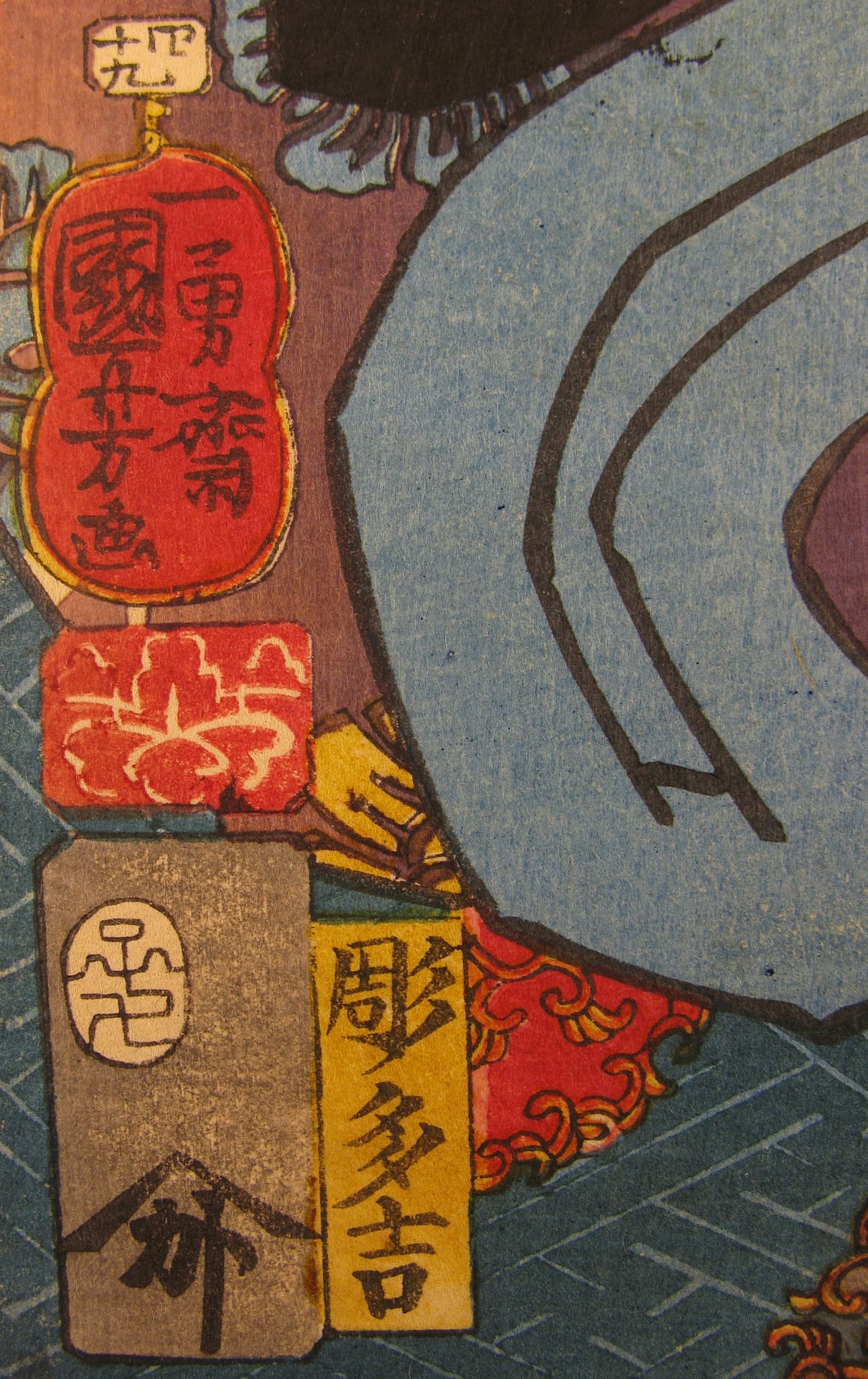
Artist: Utagawa Kuniyoshi (1797-1861)
Signature: Ichiyusai Kuniyoshi ga and kiri seal
Date: 1852 (Kaei 5), 7th month
Cens: Mera, Watanabe, Rat 7
Publisher: Yawataya Sakujirō
Block cutter: Ōtaya Takichi (Hori Takichi)
Size: Oban tate-e,
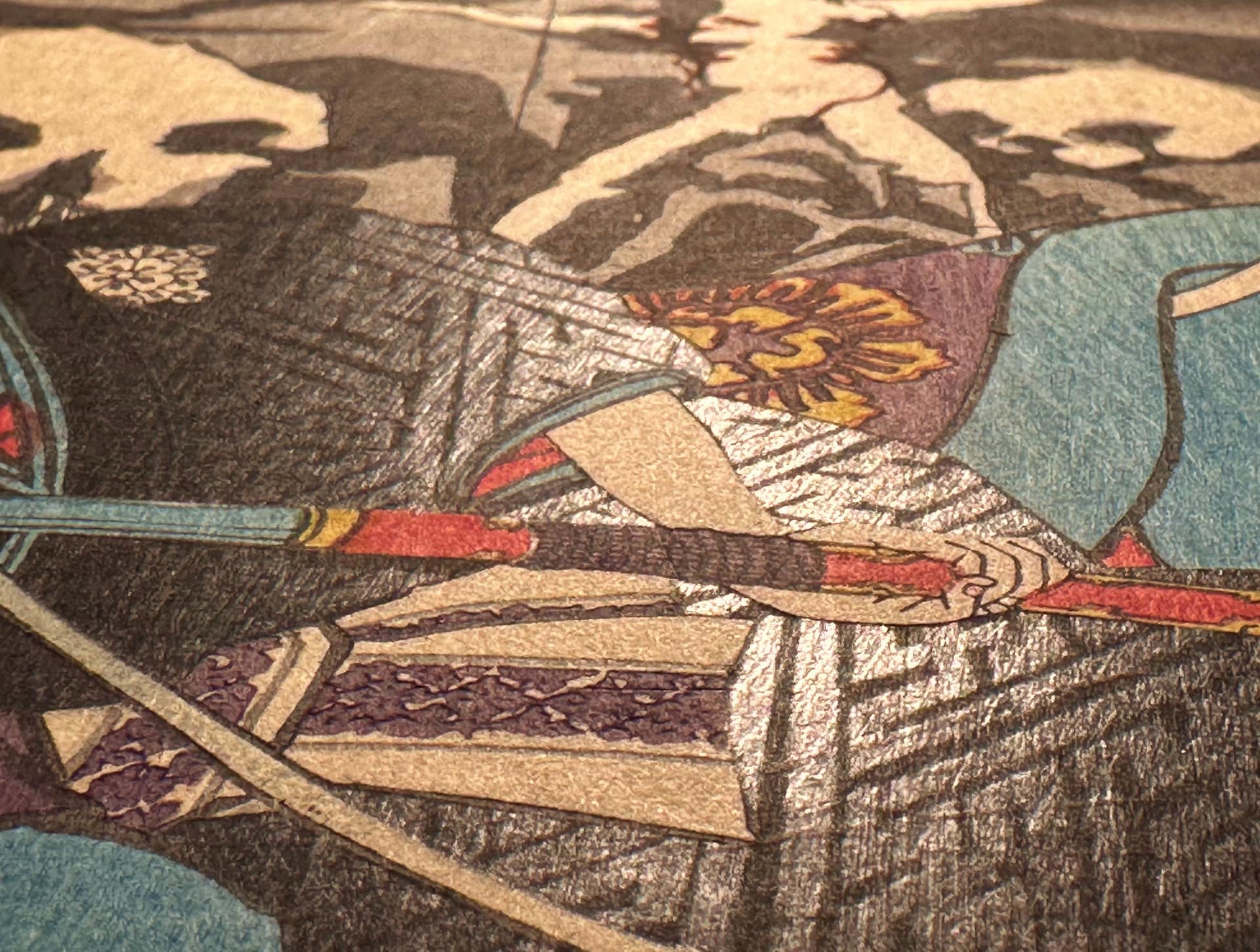
Condition: Very good impression, colour and condition, with blind printing, burnishing and nicely applied bokashi
Price: TBC
References: Robinson S74.50; BMFA – William Sturgis Bigelow Collection, 11.38972.50;
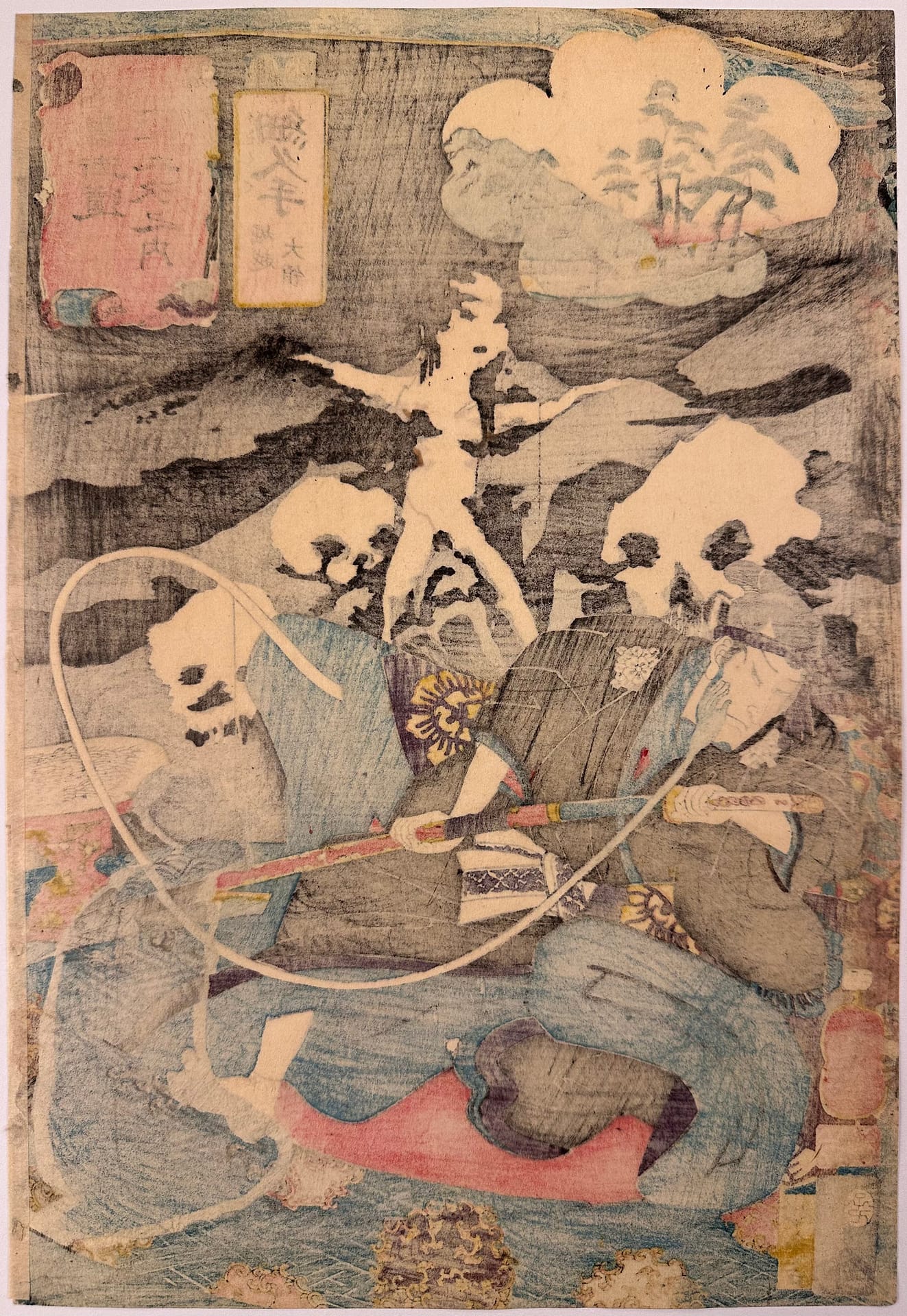
The tale of the print – Asakura Tōgō: The peasant hero whose ghost came back with receipts, and the ectoplasmic friend who was rather cheeky – who ya gonna call?
Hosokute’s print draws from one of the great jitsuroku‑style legends of Edo: the story of Sakura Sōgorō, the peasant leader who dared to petition the shogun directly to stop a tyrannical lord — knowing full well that doing so meant death for himself and his entire family.
The kabuki version, ‘A Storybook of Cherry Blossoms in the Eastern Hills of Kyoto’, had premiered just months before Kuniyoshi designed this print, so the tale was still buzzing in the public imagination.
In the play, names are lightly disguised: Sakura Sōgorō becomes Asakura Tōgō, Lord Hotta becomes Lord Horikoshi Masatomo – Horikoshi Dairyō (堀越大領), but the moral remains the same: a cruel lord, a brave peasant, and a justice system that needs a supernatural nudge.
The scene Kuniyoshi chooses takes place after Tōgō’s execution, when the wicked lord lies ill in bed, tormented by the ghosts of the people he has wronged. His purple headband signals his deteriorating mind — a kabuki shorthand for “this man is not doing well.”
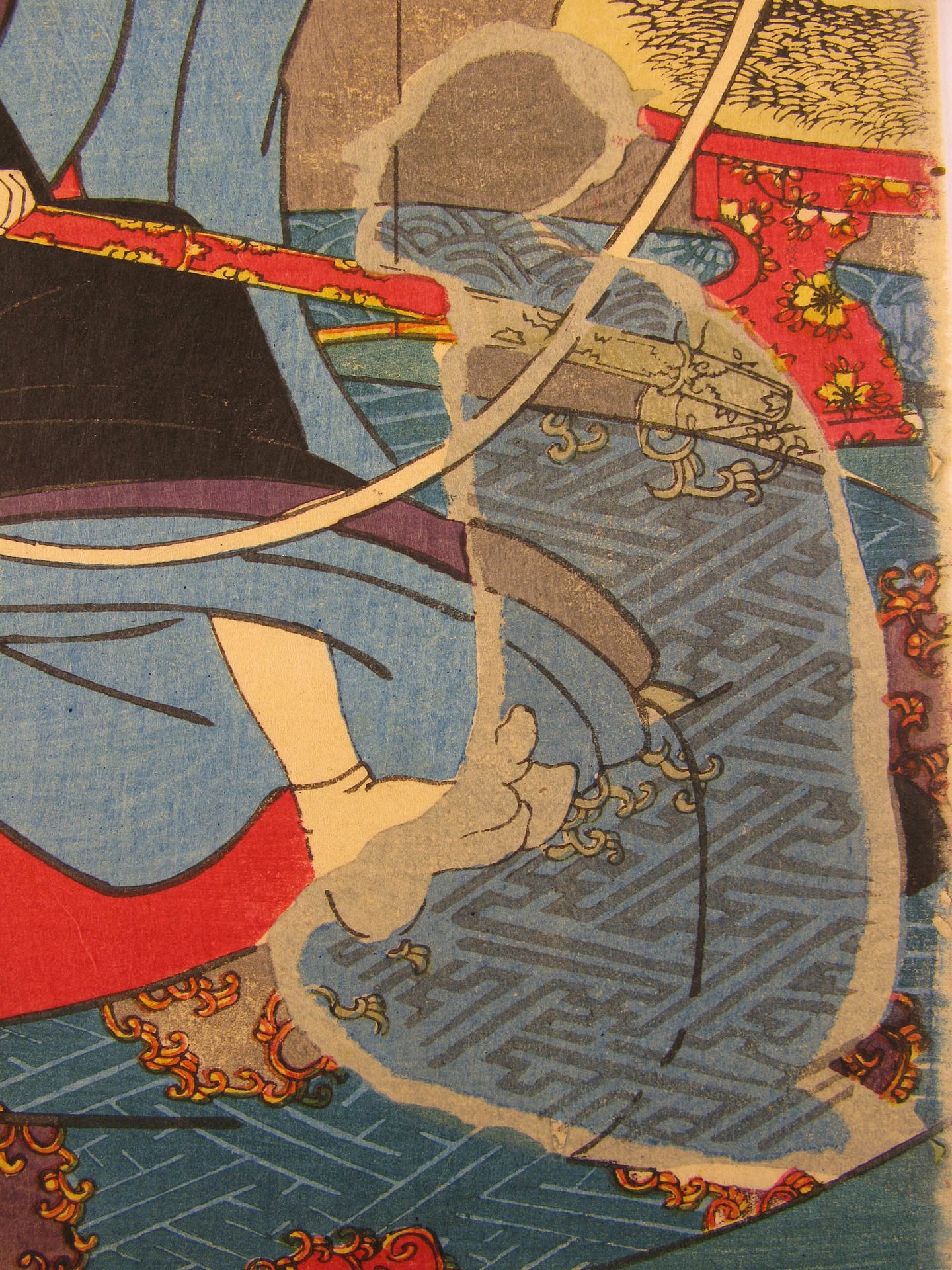
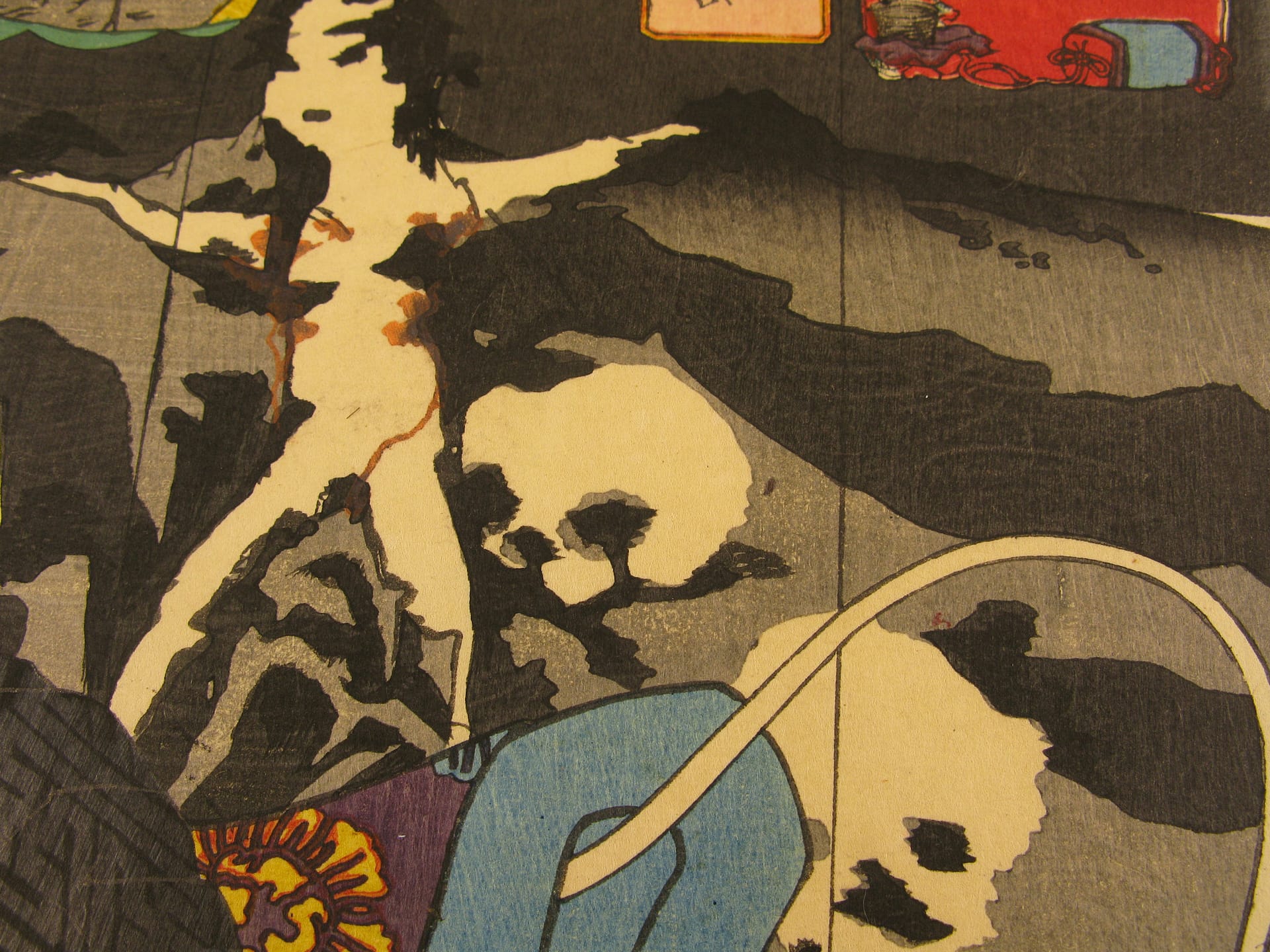
The room is filled with eerie details: A ghost kneels before Horikoshi, begging him to change his ways. The folding screen behind him has warped into shapes of skulls and a crucified figure — unmistakably the martyred Tōgō. And from beneath the bedclothes, an ectoplasmic hand emerges and gently pats the lord’s cheek.
This last detail is Kuniyoshi’s joke: Hosokute → “hosoi te” → “narrow hand.” So the ghost literally reaches out with a “narrow hand” to give the villain a spectral tap on the face. Edo humor at its finest.
The border is decorated with bedroom furnishings — pillows, fans, candle stands, and Horikoshi’s sword, which is utterly useless against ghosts. The inset landscape is shaped like a stylized cherry blossom, referencing both the play’s title and the original location of the real Sōgorō’s story: Sakura.
So in Hosokute, the pun is ghostly and delightful: Hosokute → narrow hand, and the print becomes a supernatural morality play in which a tyrant is confronted by the consequences of his cruelty — one haunting, cheek‑patting apparition at a time.
Related print: Togo’s ghost
For an excellent analysis of the prints and series, I would encourage you to get the book:The Sixty-nine Stations of the Kisokaido by Sarah E. Thompson.