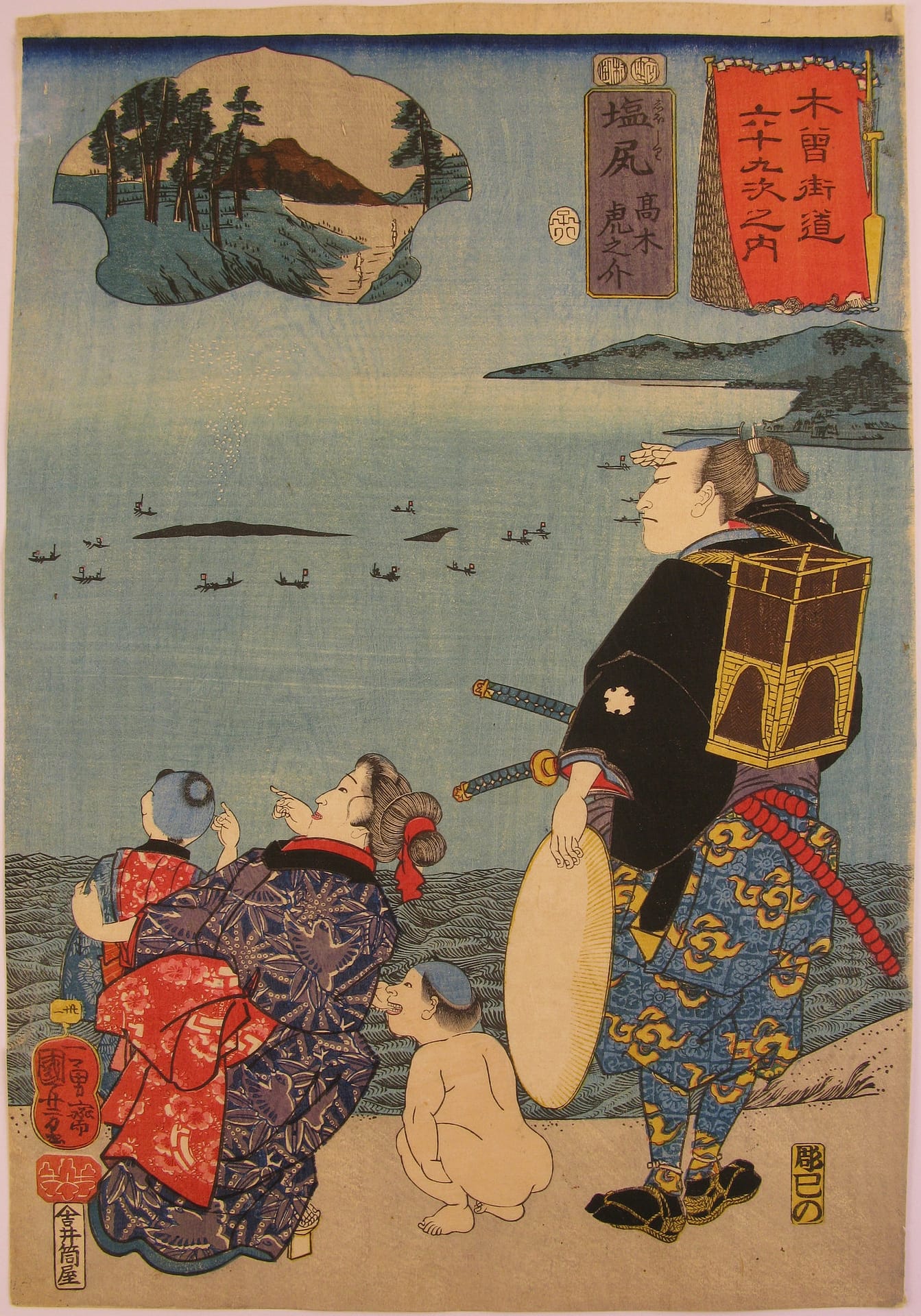
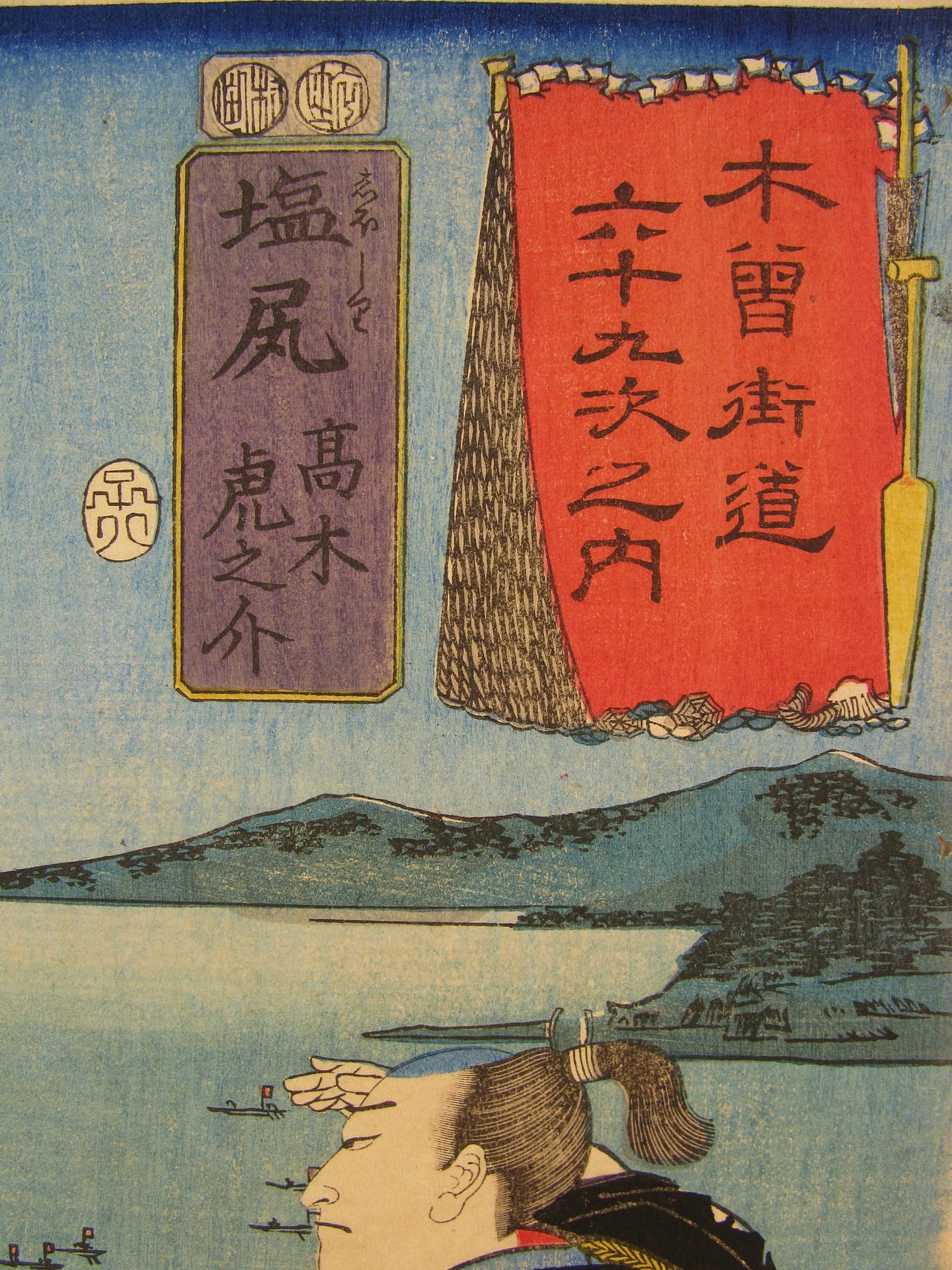
Station: Shiojiri (塩尻)
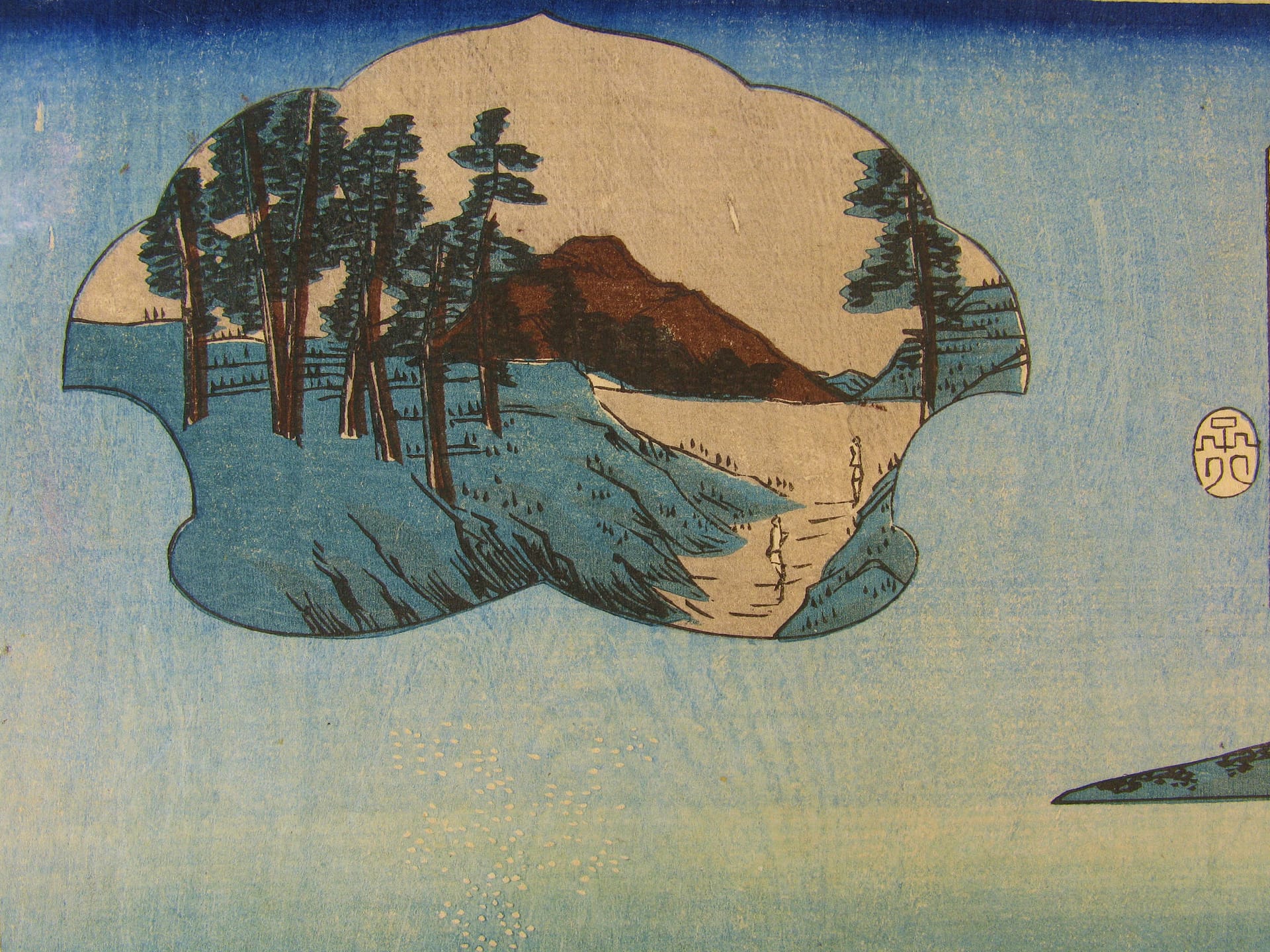
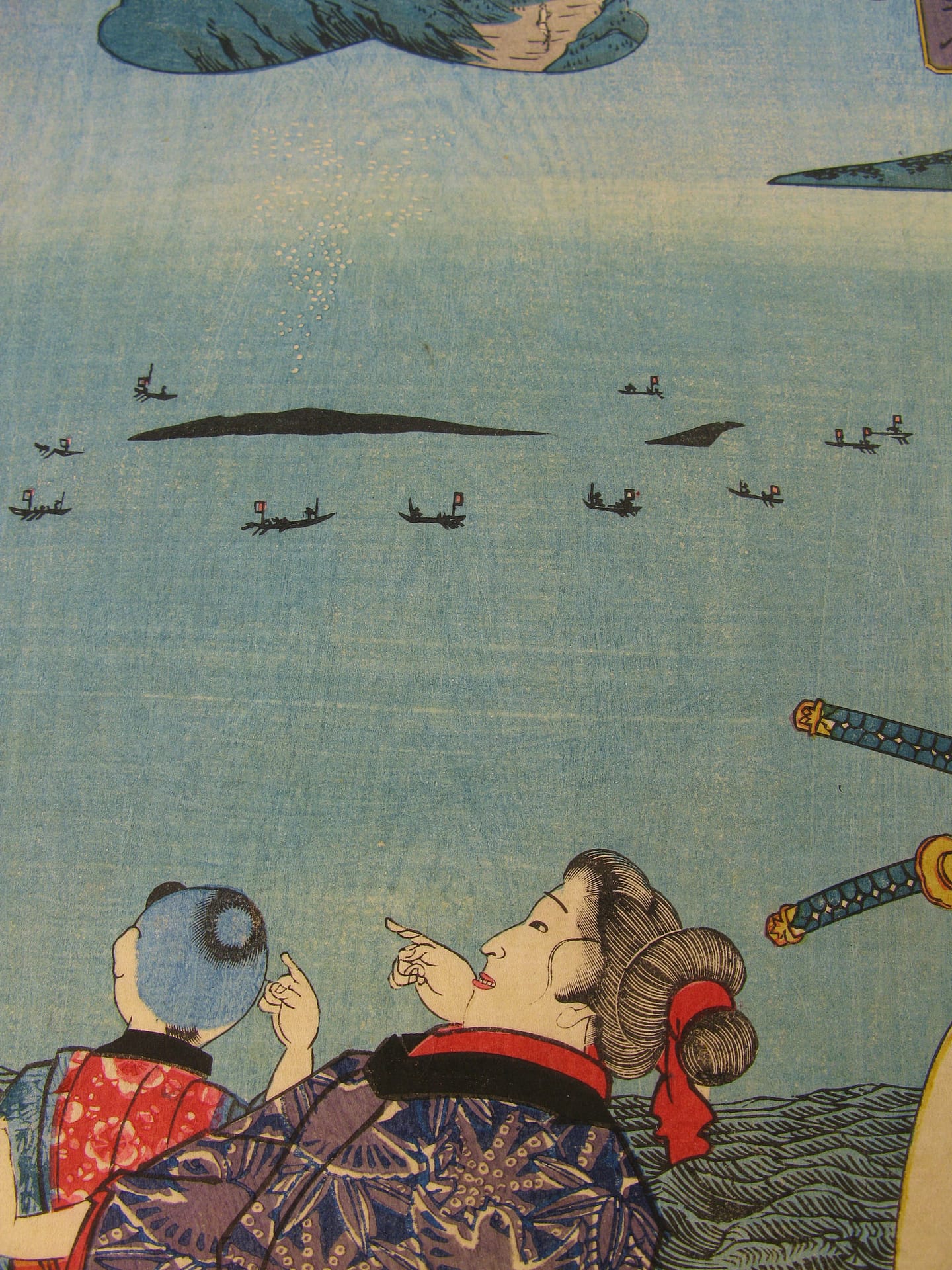
Description: Takagi Toranosuke with his wife and children looking out over the sea with a half-submerged whale. The landscape panel insert shows a road amoung trees .
Series: Kisokaidô rokujûku tsugi. The sixty-nine post stations of the Kisokaido
Print No: 31
Artist: Utagawa Kuniyoshi (1797-1861)
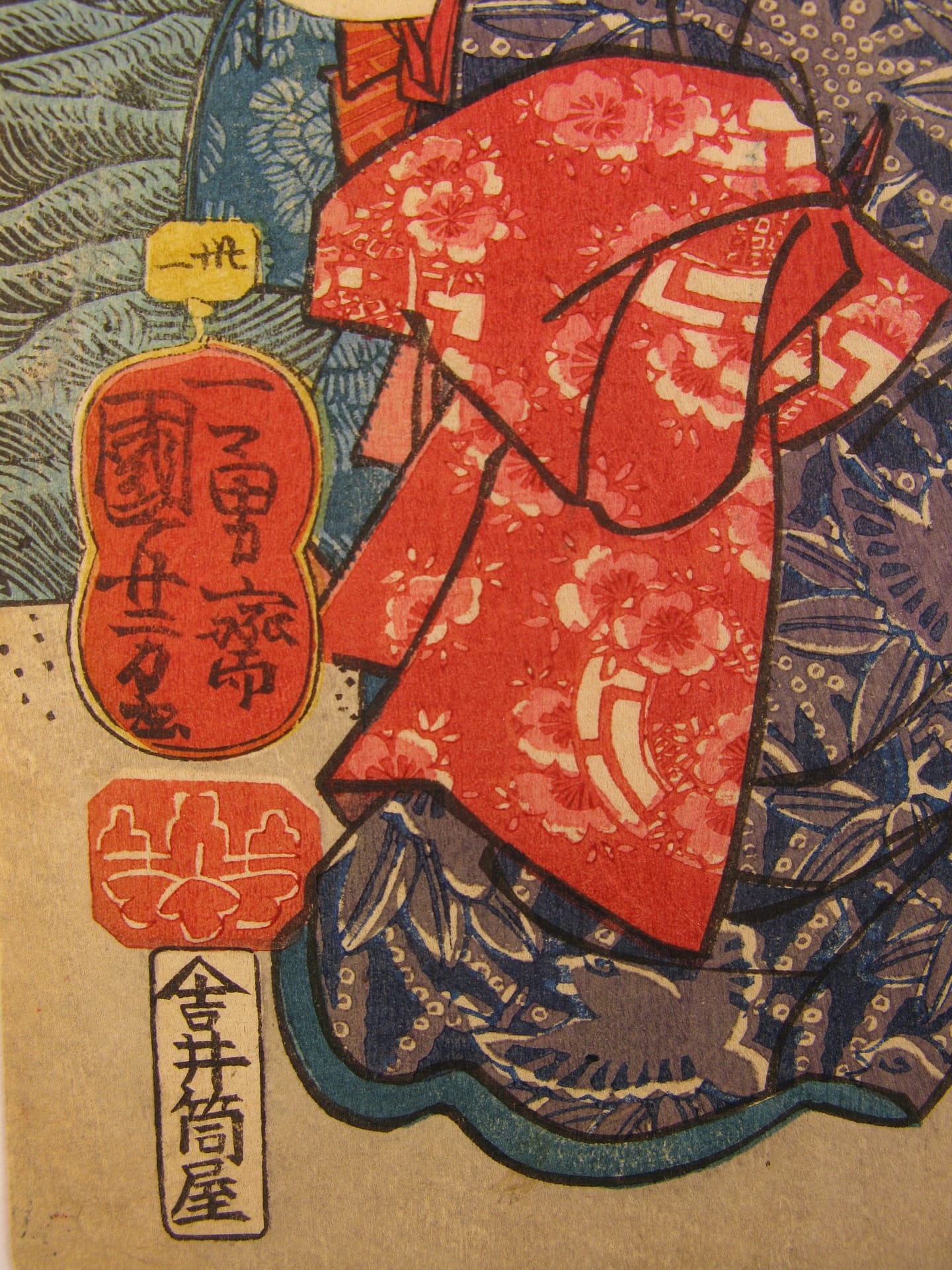
Signature: Ichiyusai Kuniyoshi ga and kiri seal
Date: 1852 (Kaei 5), 8th month
Cens: Kinugasa, Murata, Rat 8
Publisher: Izutsuya Shōkichi
Block cutter: Koizumi Minokichi (Hori Mino)
Size: Oban tate-e,
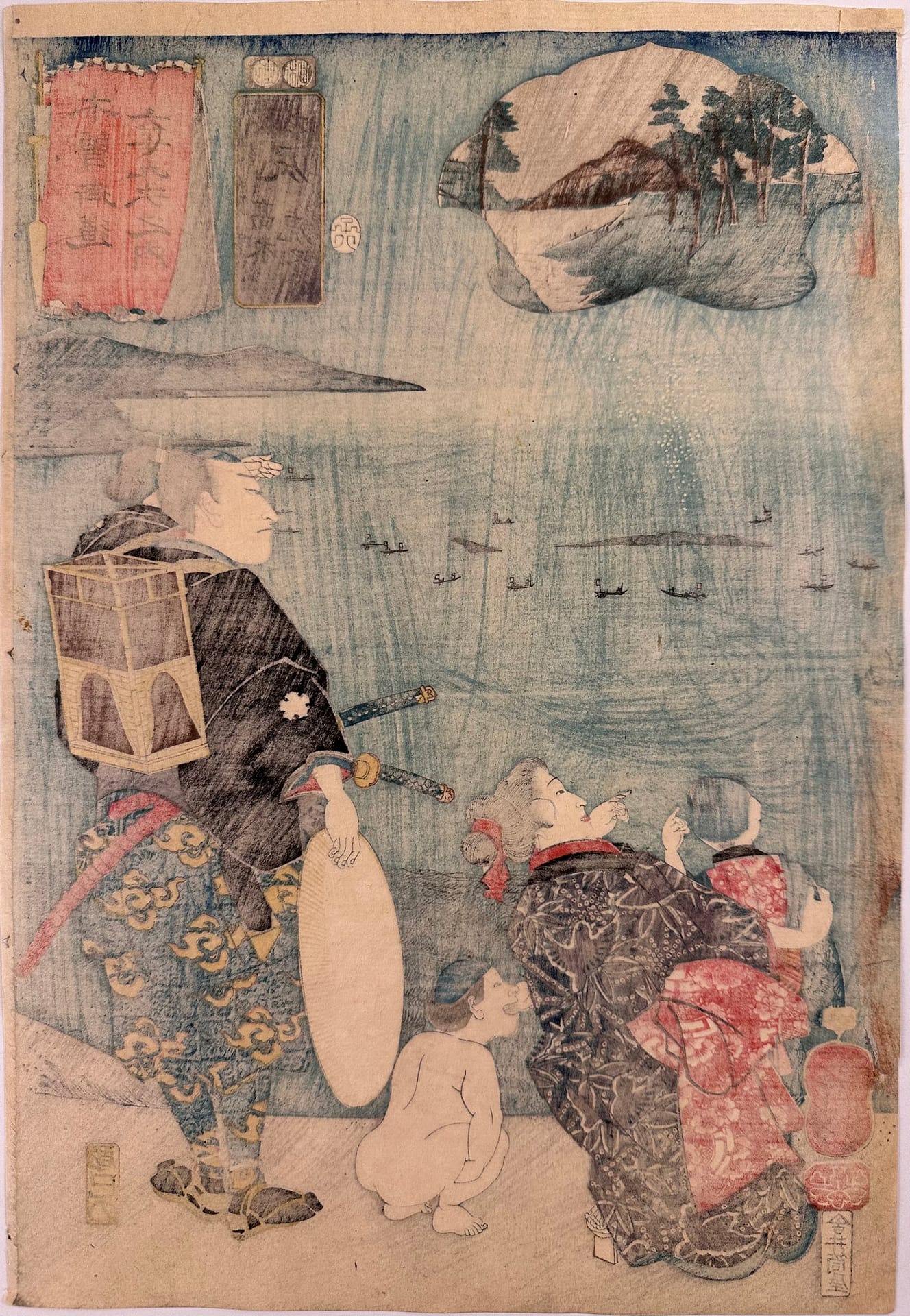
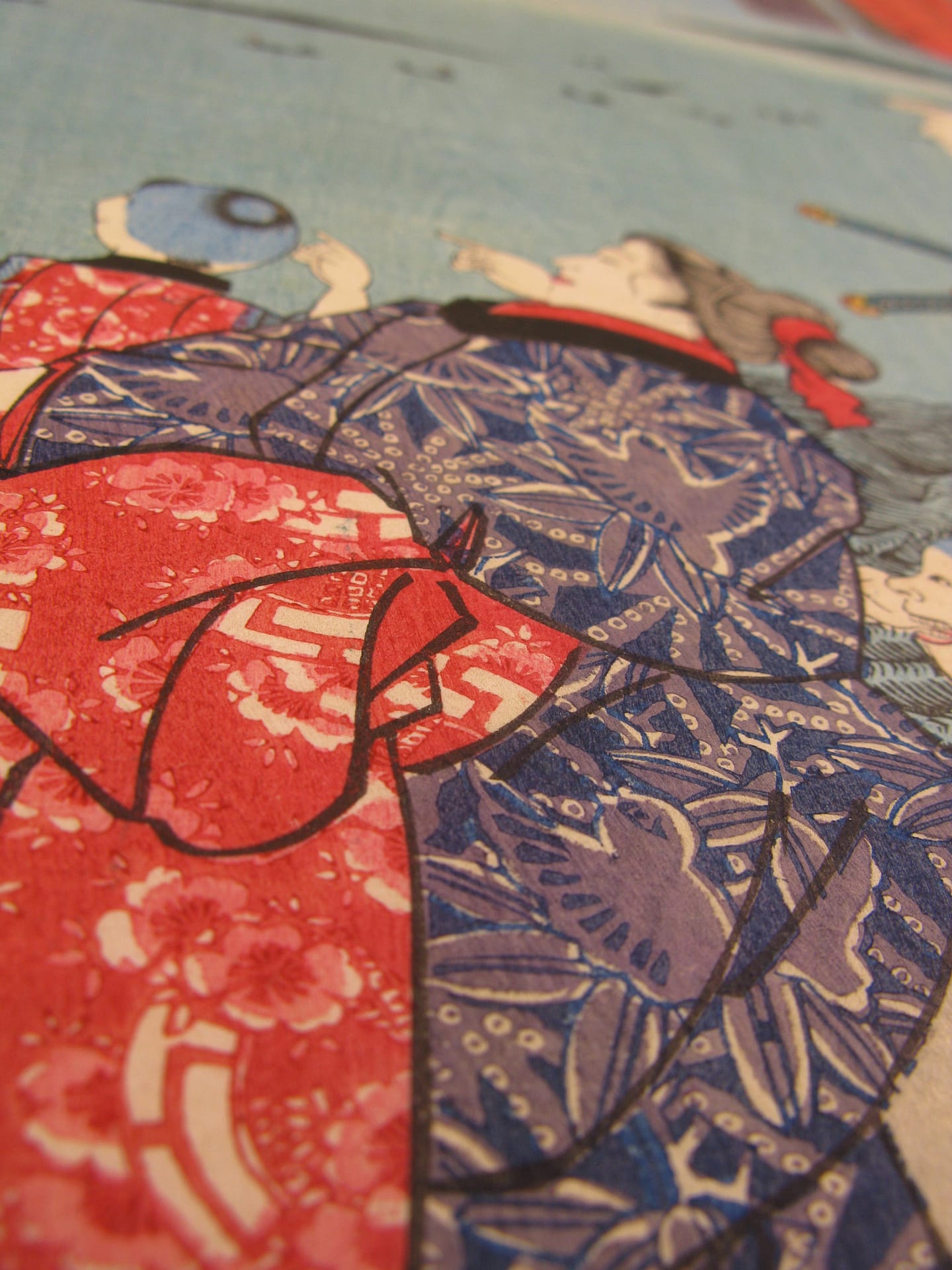
Condition: Very good impression, colour and condition, beautiful strong wood grain and delicately applied gradation allowing the whale’s blow spray to be seen. Has a thin spot on the edge with tear next to signature panel.
Price: TBC
References: Robinson S74.32; BMFA – William Sturgis Bigelow Collection, 11.38972.32;
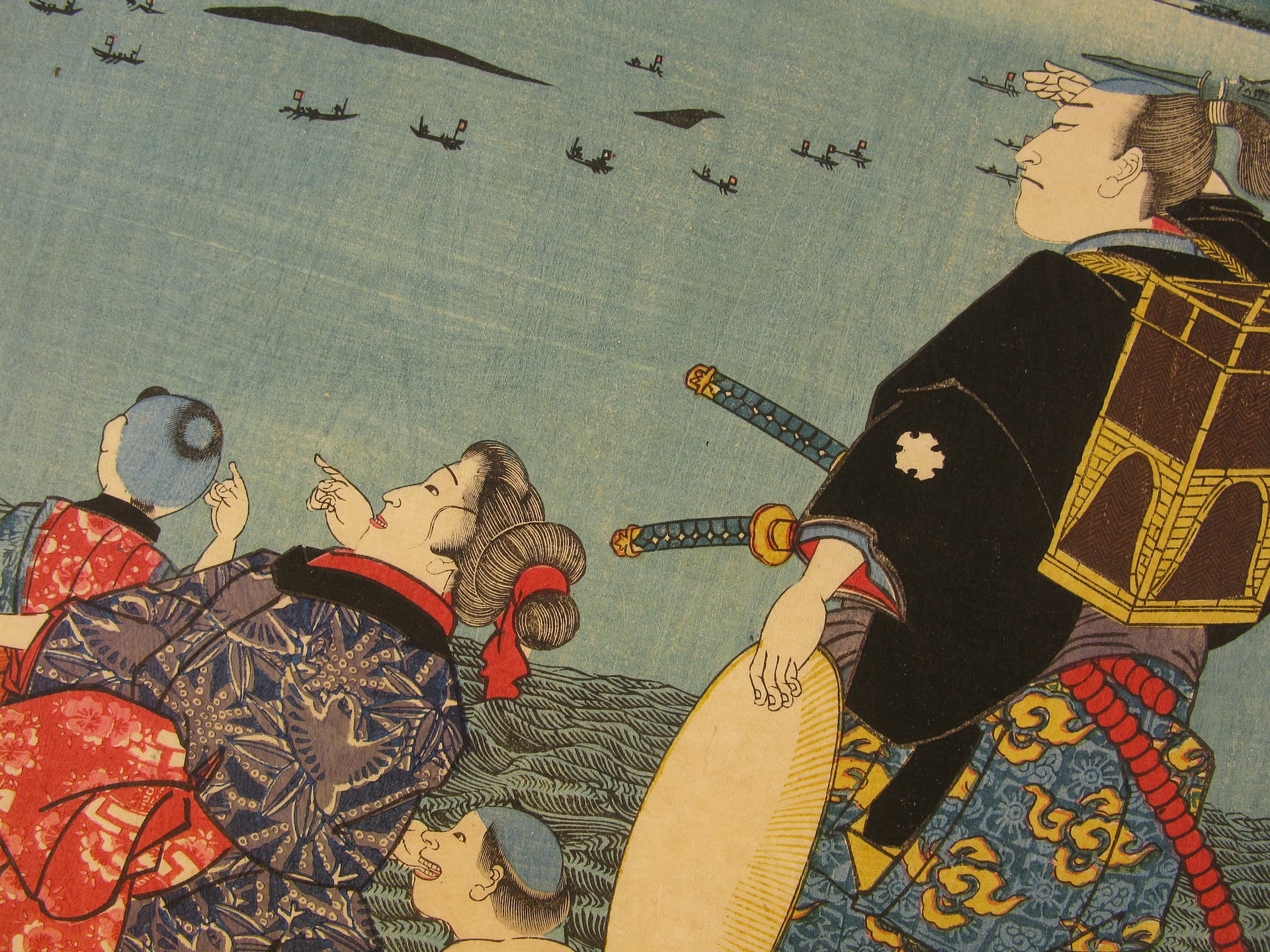
The tale of the print – Takagi Toranosuke (髙木虎之助), the wandering monster‑fighter who may be about to punch a whale ….
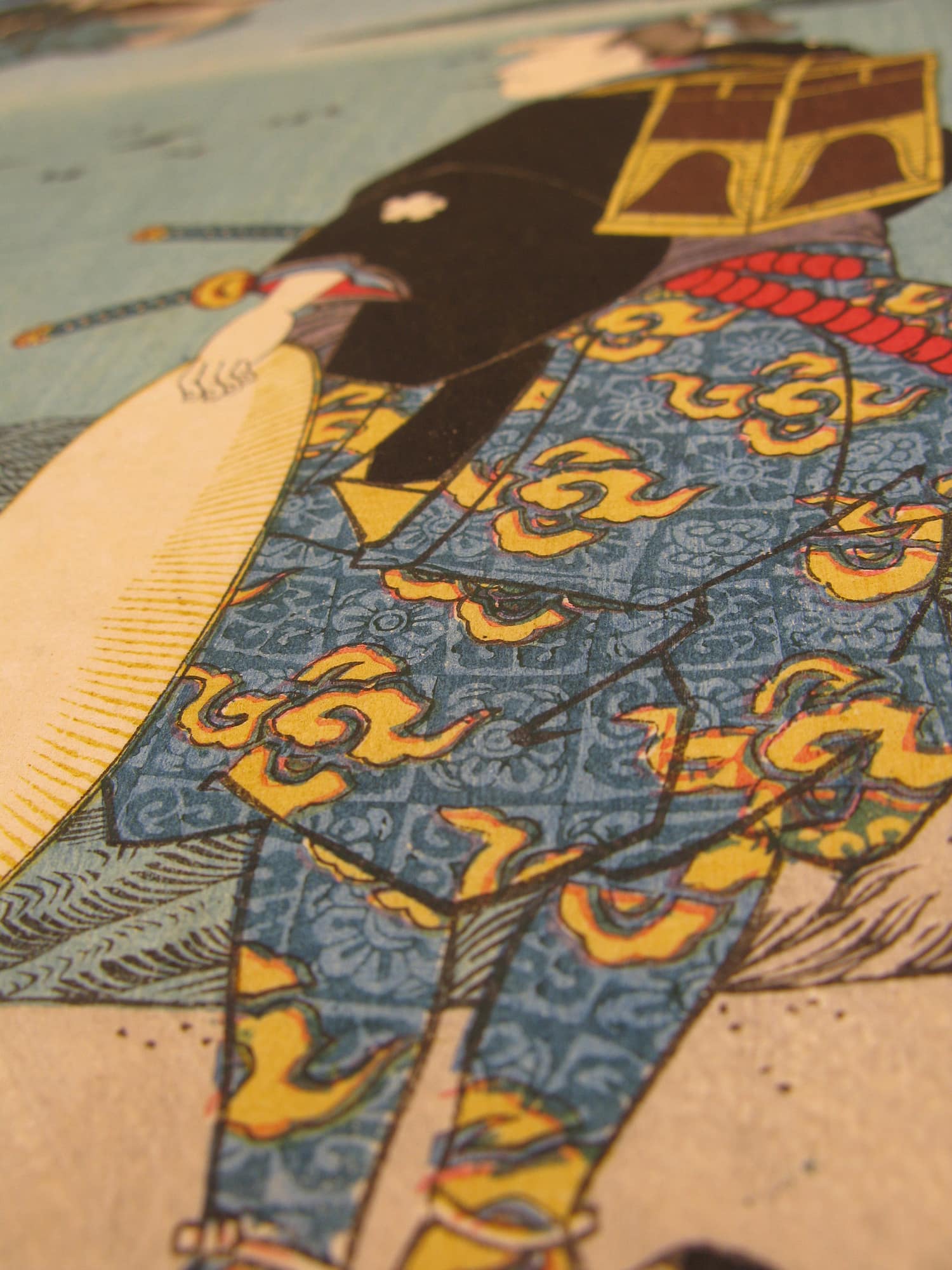
Shiojiri’s print features Takagi Toranosuke, a wandering samurai whose résumé consists mostly of “travels a lot” and “fights things that should not exist.”
He stands on a seaside cliff in full travel gear, gazing out at a dramatic scene: fishing boats circling a trapped whale. His companions — a woman and two small boys, likely his family — watch with the calm resignation of people who know Dad might jump into the ocean at any moment to wrestle a sea creature.
The station name Shiojiri begins with shio, meaning “salt” or “seawater,” which makes the maritime setting a perfect fit. Kuniyoshi reinforces the theme with a border decorated in fishing gear: nets, floats, harpoons, oars, and seashells. It’s basically a nautical gift basket.
Toranosuke himself is a bit of a mystery. He appears in several prints by Kuniyoshi and Yoshitoshi, always battling something improbable — a “river tiger,” an “evil fish,” a female demon — which strongly suggests he’s a fictional hero inspired by real martial artists from the Takagi lineage.
Edo storytellers loved taking historical figures and giving them monster‑fighting side quests.
Given his track record, the whale in this print may not be a whale at all, but a stand‑in for some supernatural aquatic menace. Kuniyoshi had already illustrated Miyamoto Musashi fighting a whale, so the idea of Toranosuke doing the same would have felt right at home in the genre.
So in Shiojiri, the pun is simple: Shio → seawater, and the print becomes a moment of suspense as a monster‑slayer, his family, and a very unlucky whale converge on the same stretch of coastline.
Whether Toranosuke is here to watch or to leap into battle is left to the viewer — but given his reputation, the whale should probably be nervous.
For an excellent analysis of the prints and series, I would encourage you to get the book:The Sixty-nine Stations of the Kisokaido by Sarah E. Thompson.