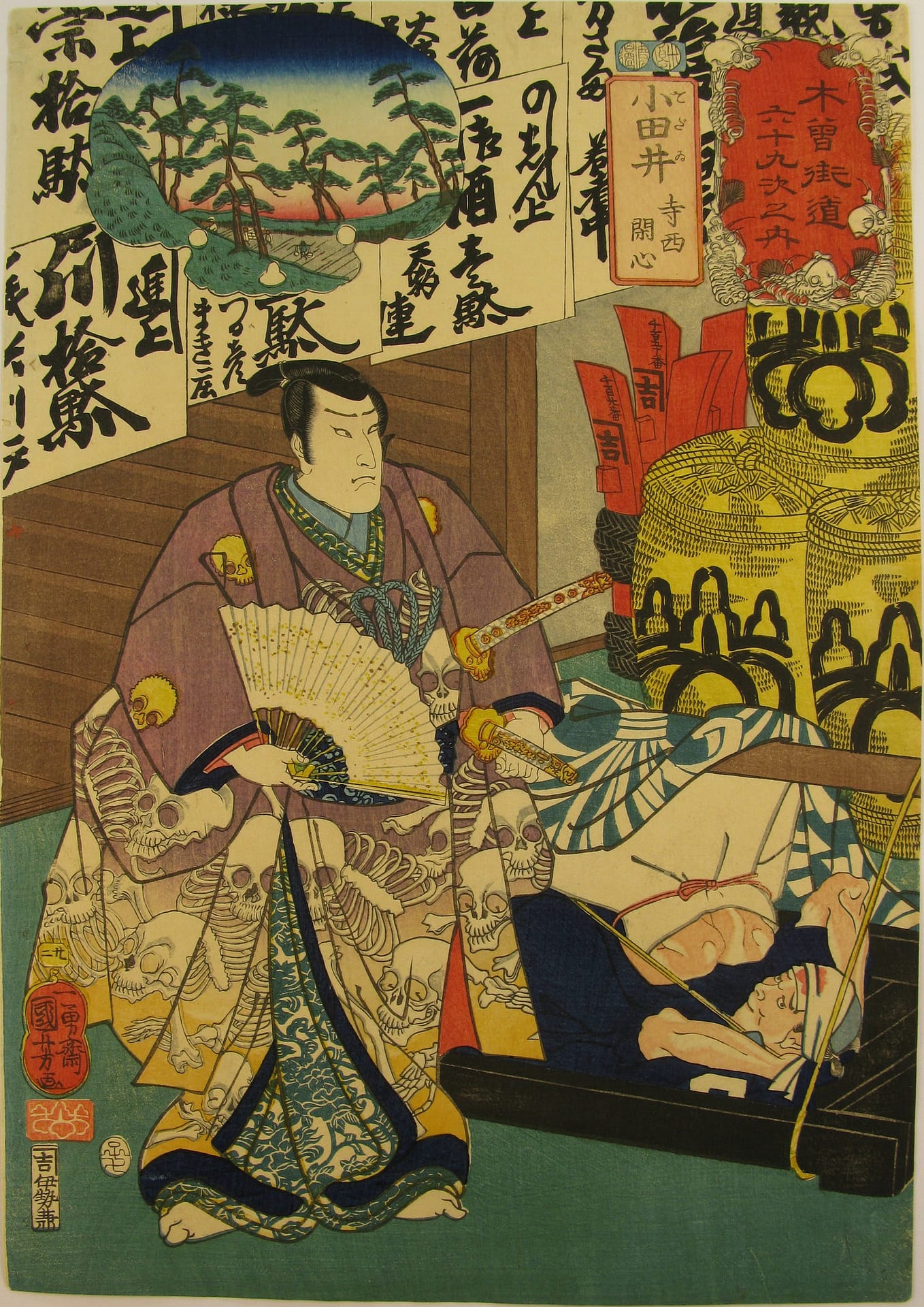
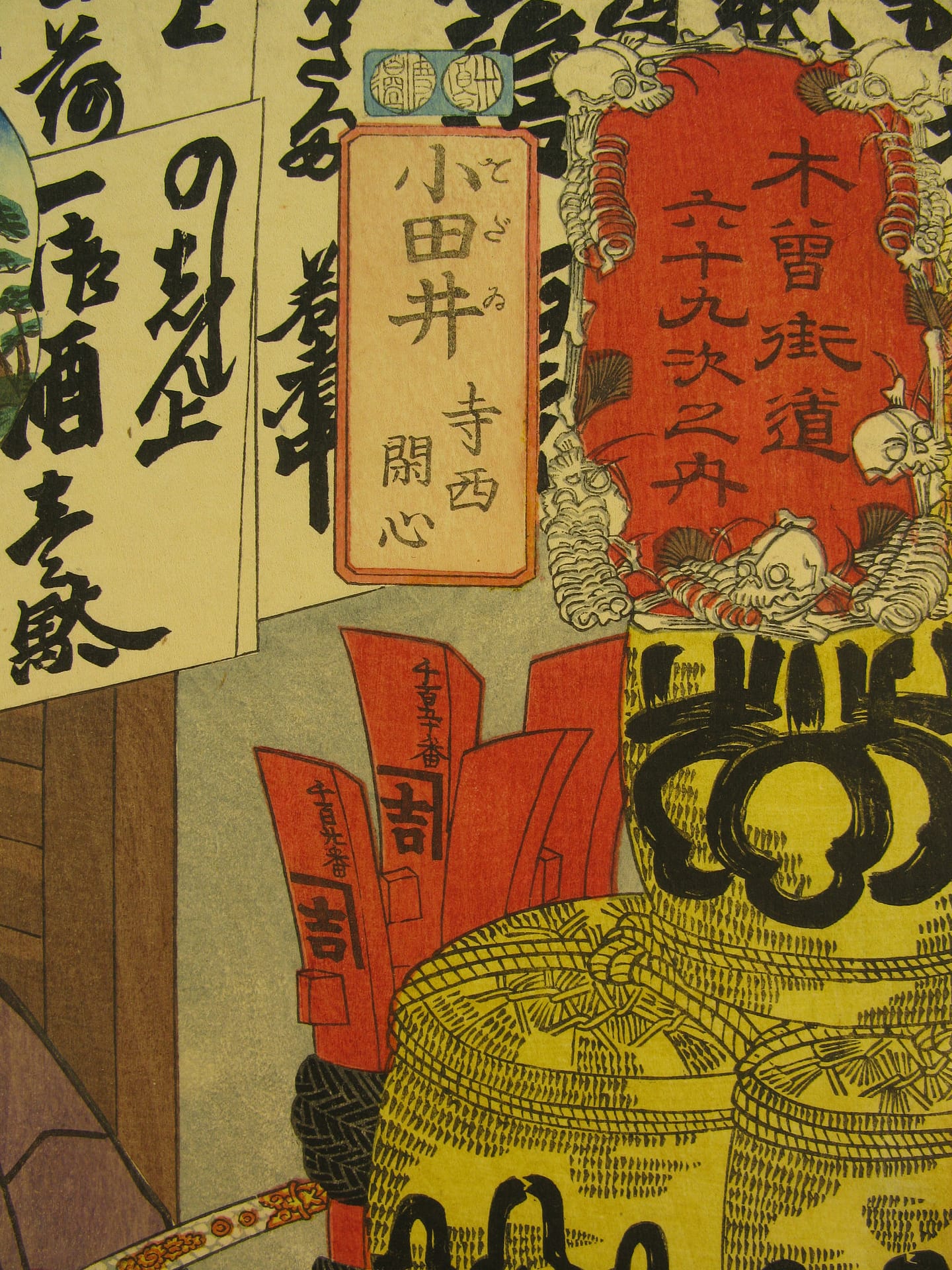
Station: Odai (小田井)
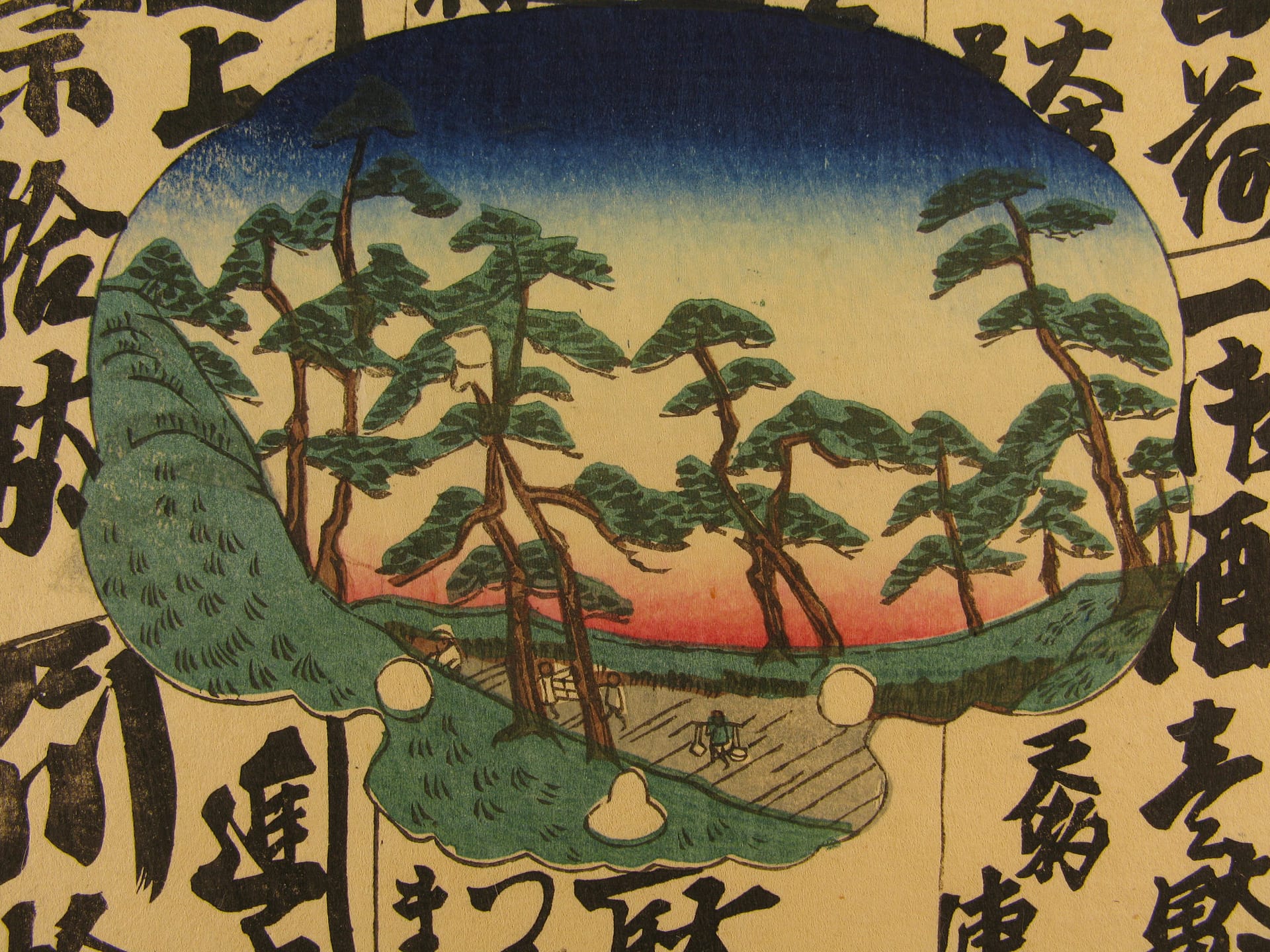
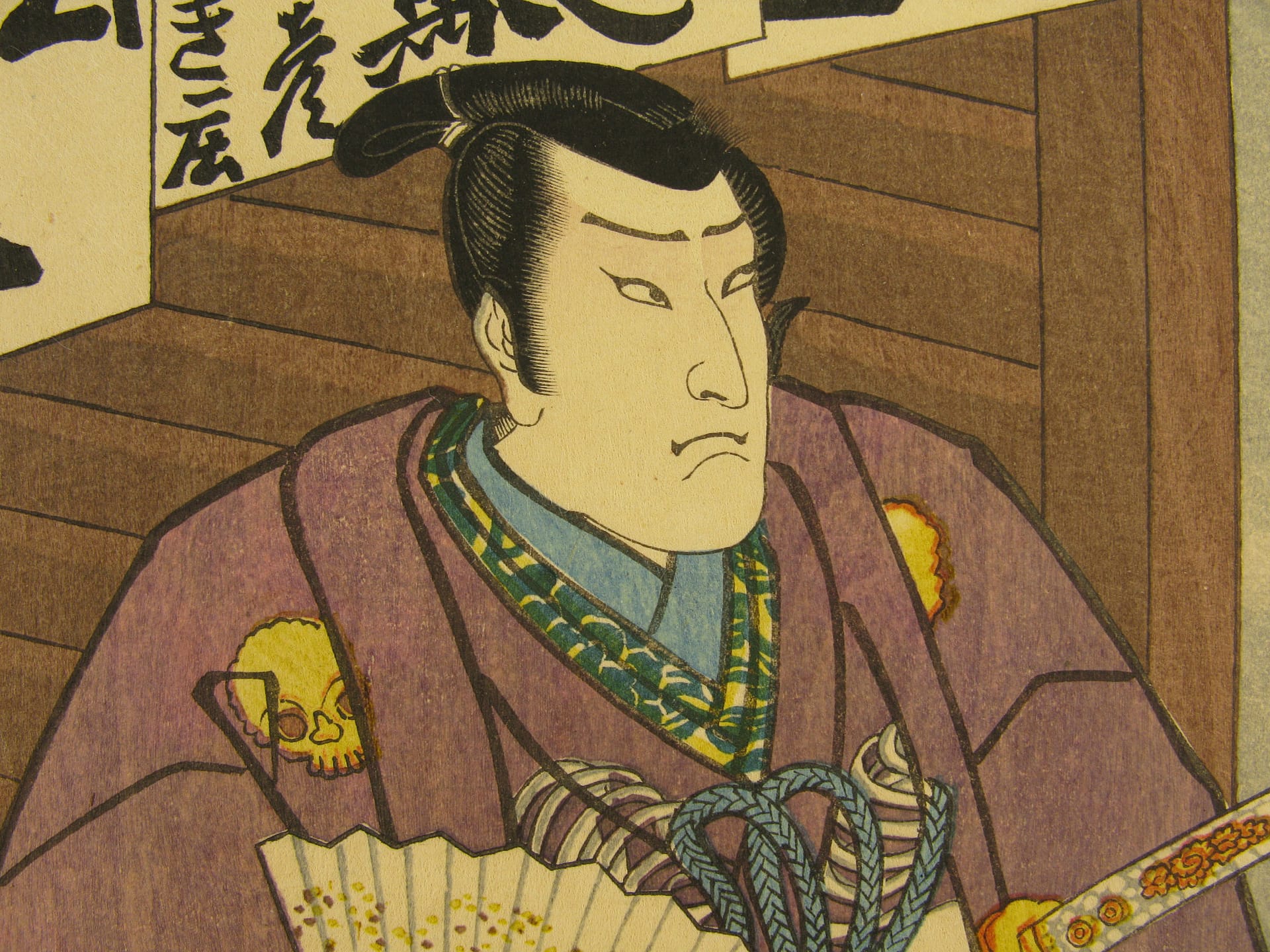
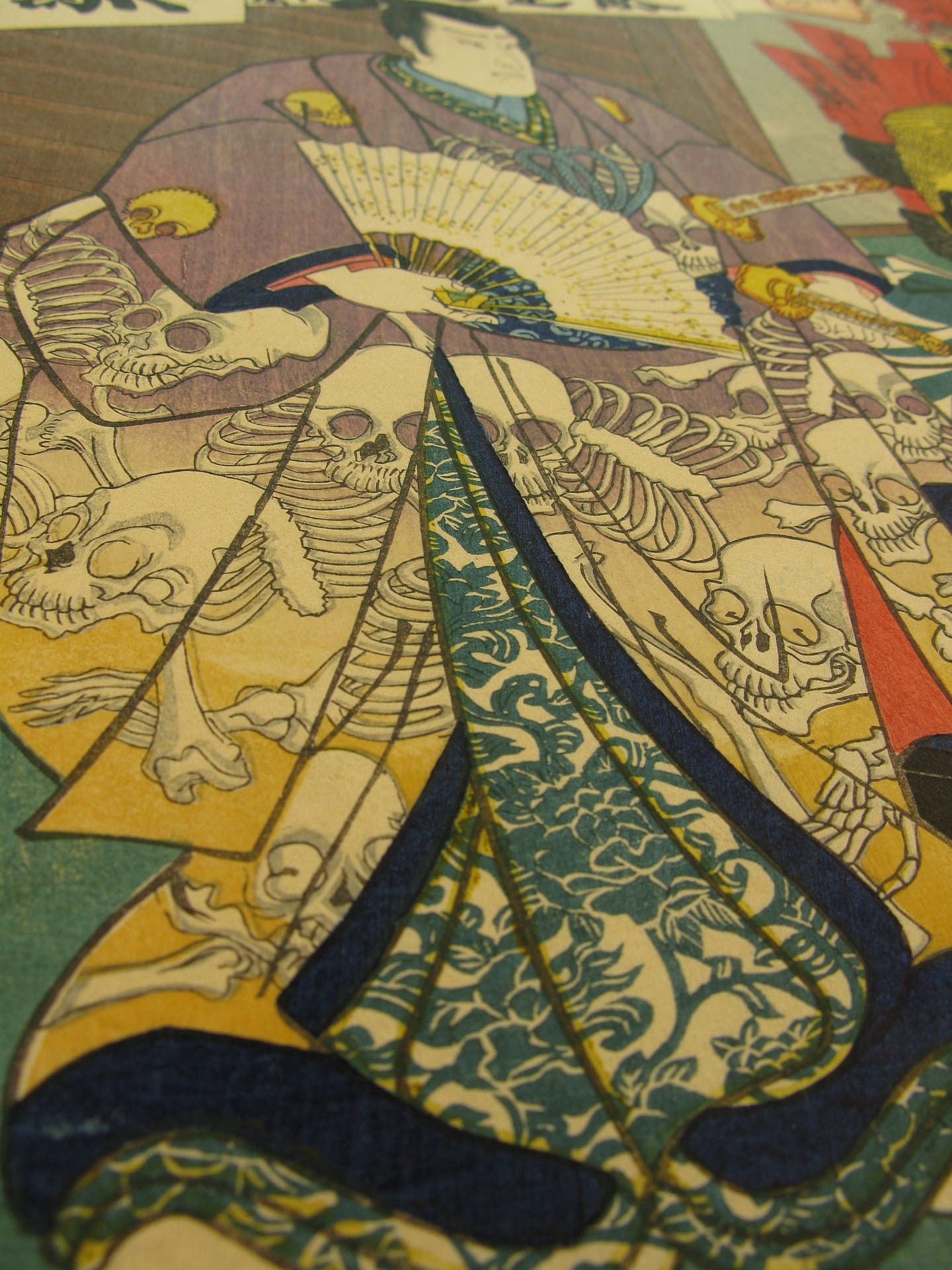
Description: Teranishi Kanshin, his kimono patterned with skeletons, standing by his ‘tied up’ follower Dotesuke, and three barrels of sake. The landscape panel insert shows a road among hills and pine trees at sunset within the shape of a skull
Series: Kisokaidô rokujûku tsugi. The sixty-nine post stations of the Kisokaido
Print No: 22
Artist: Utagawa Kuniyoshi (1797-1861)
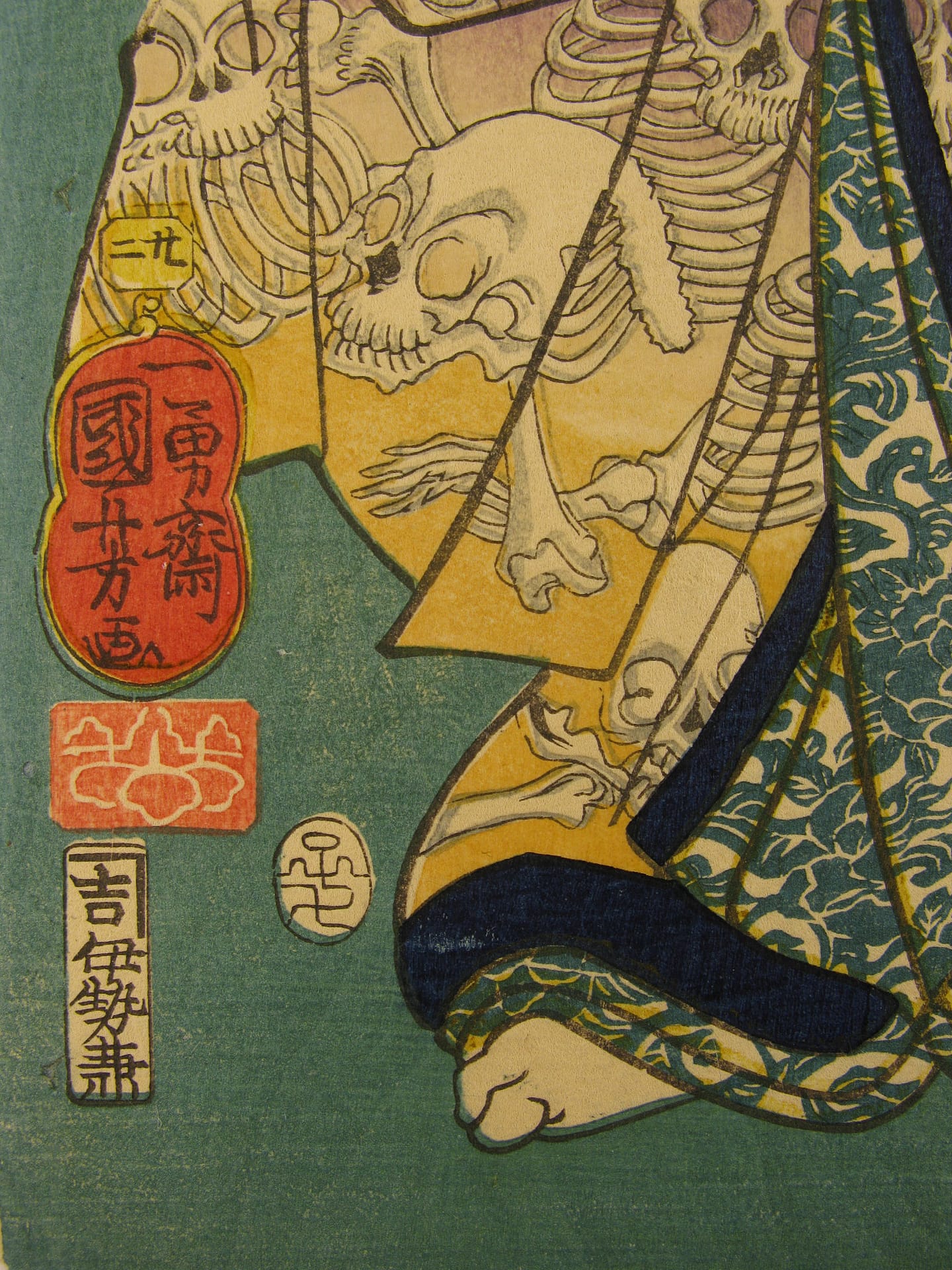
Signature: Ichiyusai Kuniyoshi ga and kiri seal
Date: 1852 (Kaei 5), 7th month
Cens: Mera, Watanabe, Rat 7
Publisher: Iseya Kanekichi
Size: Oban tate-e, 36.2 x 26.7 cm
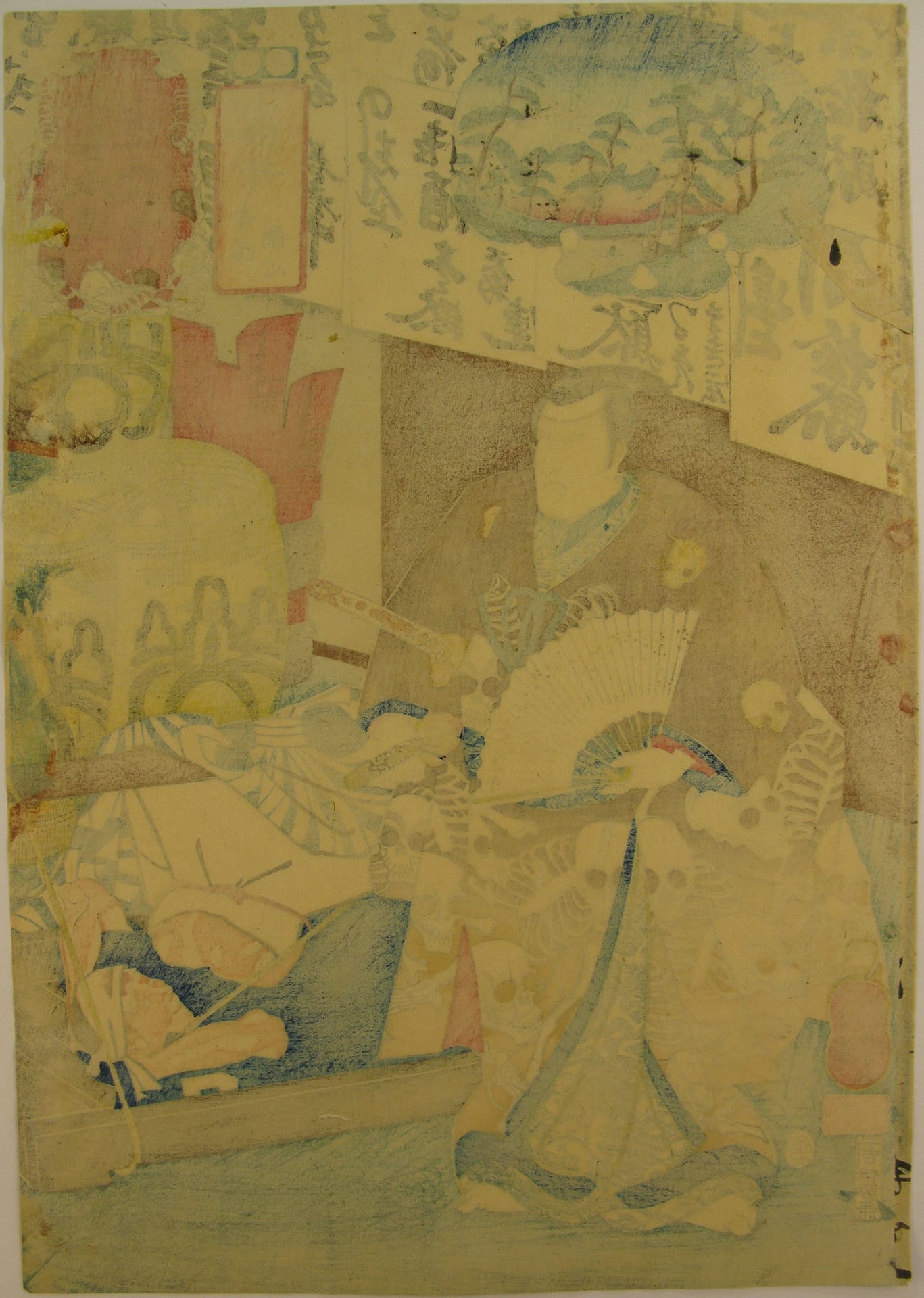
Condition: Very good impression, colour and condition. Look for Bokashi (gradient printing), Mokume-zuri (woodgrain printing) printing techniques. Slightly trimmed
Price: TBC
References: Robinson S74.23; BMFA – William Sturgis Bigelow Collection, 11.38972.23;
The tale of the print – Teranishi Kanshin (寺西閑心), the man who turned petty revenge into performance art.
Teranishi Kanshin, a kabuki character with a flair for drama, fashion, and extremely complicated insults. In the play ‘Banzui Chōbei’s Vegetarian Chopping Block’, Kanshin is a wealthy samurai who struts around Edo like he owns the place — and dresses like it too.
His kimono is covered in skeletons, his crest is a skull, and even the inset landscape is framed like a bony grin. Subtlety is not his brand.
The story begins when Kanshin’s follower Dotesuke gets slightly injured in a scuffle with Chōbei’s young son. Most people would settle this with an apology.
Kanshin instead stages a full‑scale culinary revenge performance: he poses Dotesuke like a giant fish ready for slicing and sends him to Chōbei’s house on the day of a strictly vegetarian memorial service. It’s the Edo‑period equivalent of sending someone a steak during Lent.
Chōbei responds in kind — by pretending he’s about to prepare sashimi out of Dotesuke, then placing his own child on the chopping block and offering him to Kanshin. This is so wildly over‑the‑top that Kanshin is moved to tears, abandons the feud, and becomes Chōbei’s ally. Nothing bonds men like mutually escalating absurdity.
Kuniyoshi adds his own visual jokes: The giant straw‑wrapped sake barrels in the background are stamped with Kuniyoshi’s personal crest, as if he’s photobombing his own print.
The wooden sake tubs behind them carry the publisher’s trademark, turning the whole scene into a sly advertisement.
As for the station name Odai, it plays on two possibilities: ‘dai’ → the food stand where Dotesuke is posed like a fish, or ‘ōdai’ → a big sea bream, which Dotesuke is meant to resemble.
Either way, the pun lands perfectly in a story where a man is literally delivered like banquet seafood. So Odai becomes the stage for a tale of skull‑themed fashion, culinary revenge theatre, and a protagonist who discovers friendship through the power of extremely bad etiquette.
For an excellent analysis of the prints and series, I would encourage you to get the book:The Sixty-nine Stations of the Kisokaido by Sarah E. Thompson.