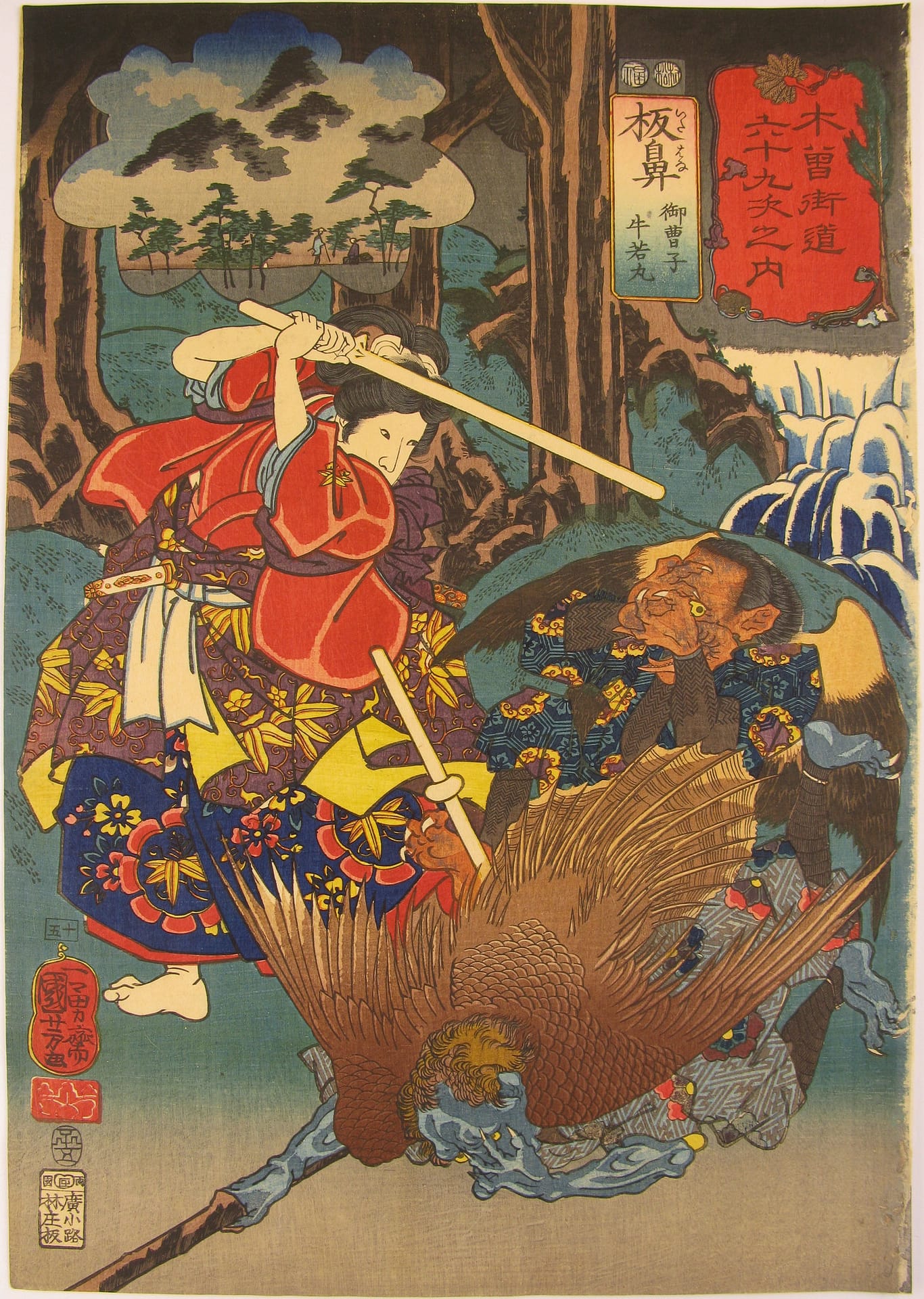
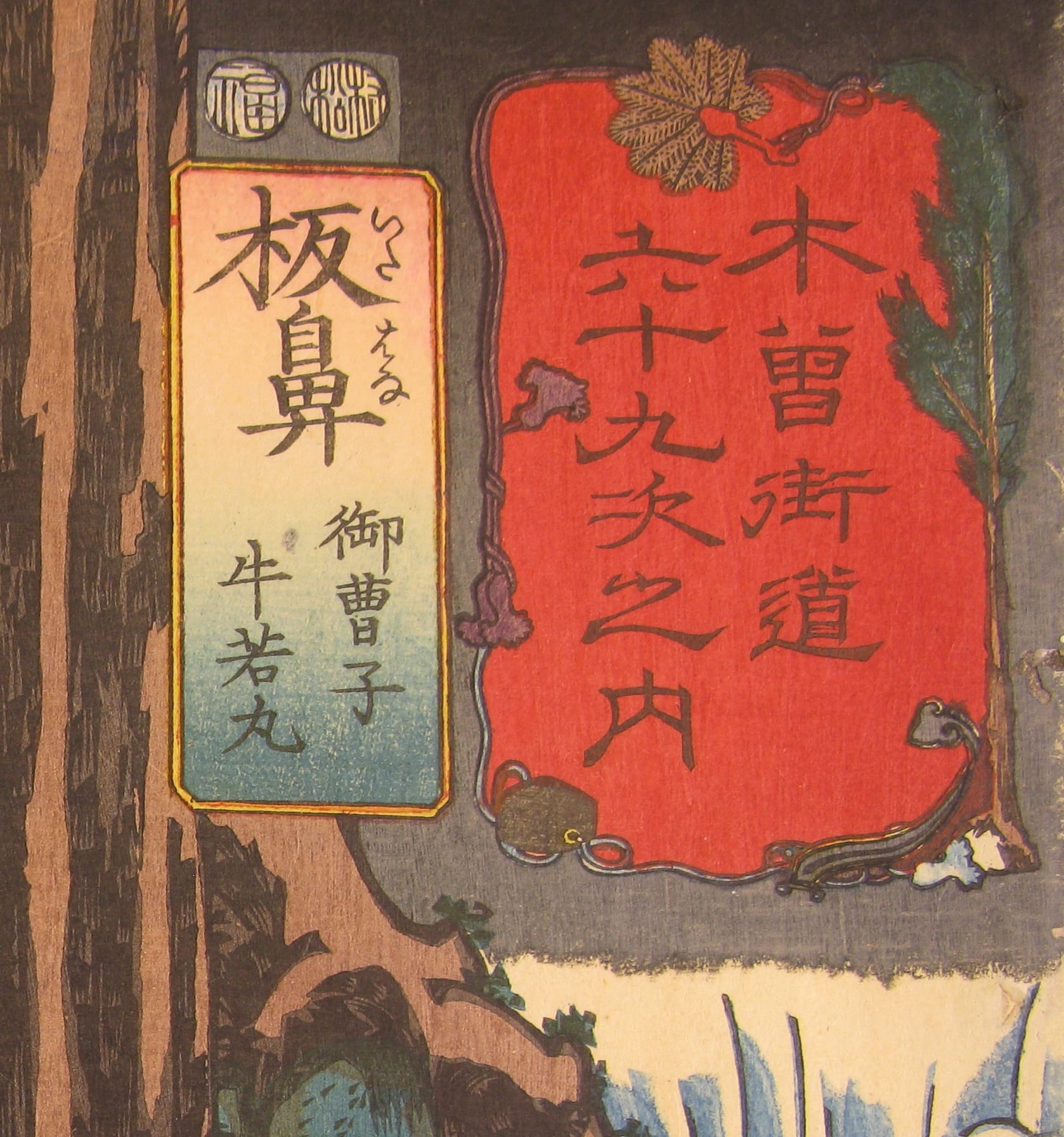
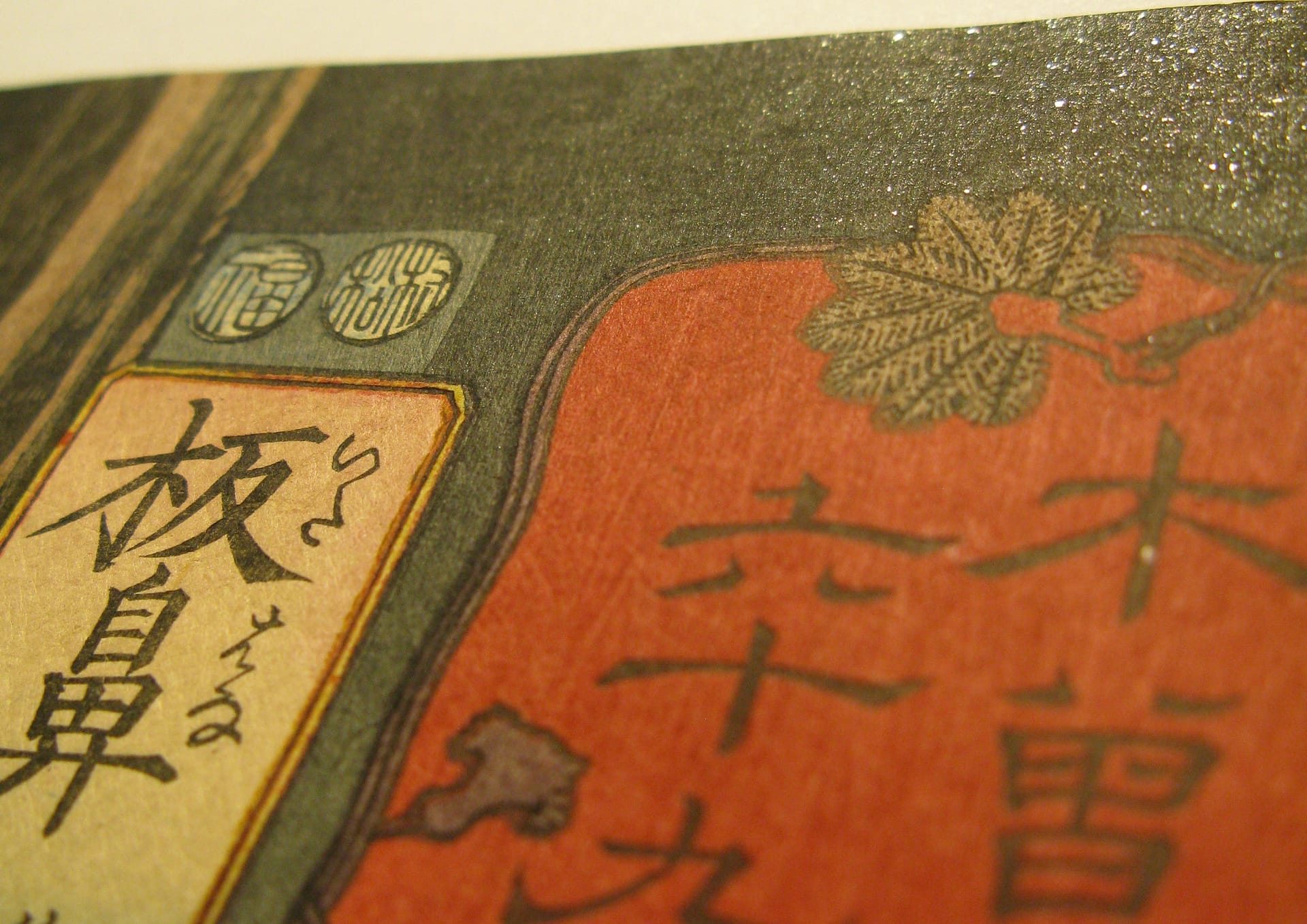
Station: Itahana (板花)
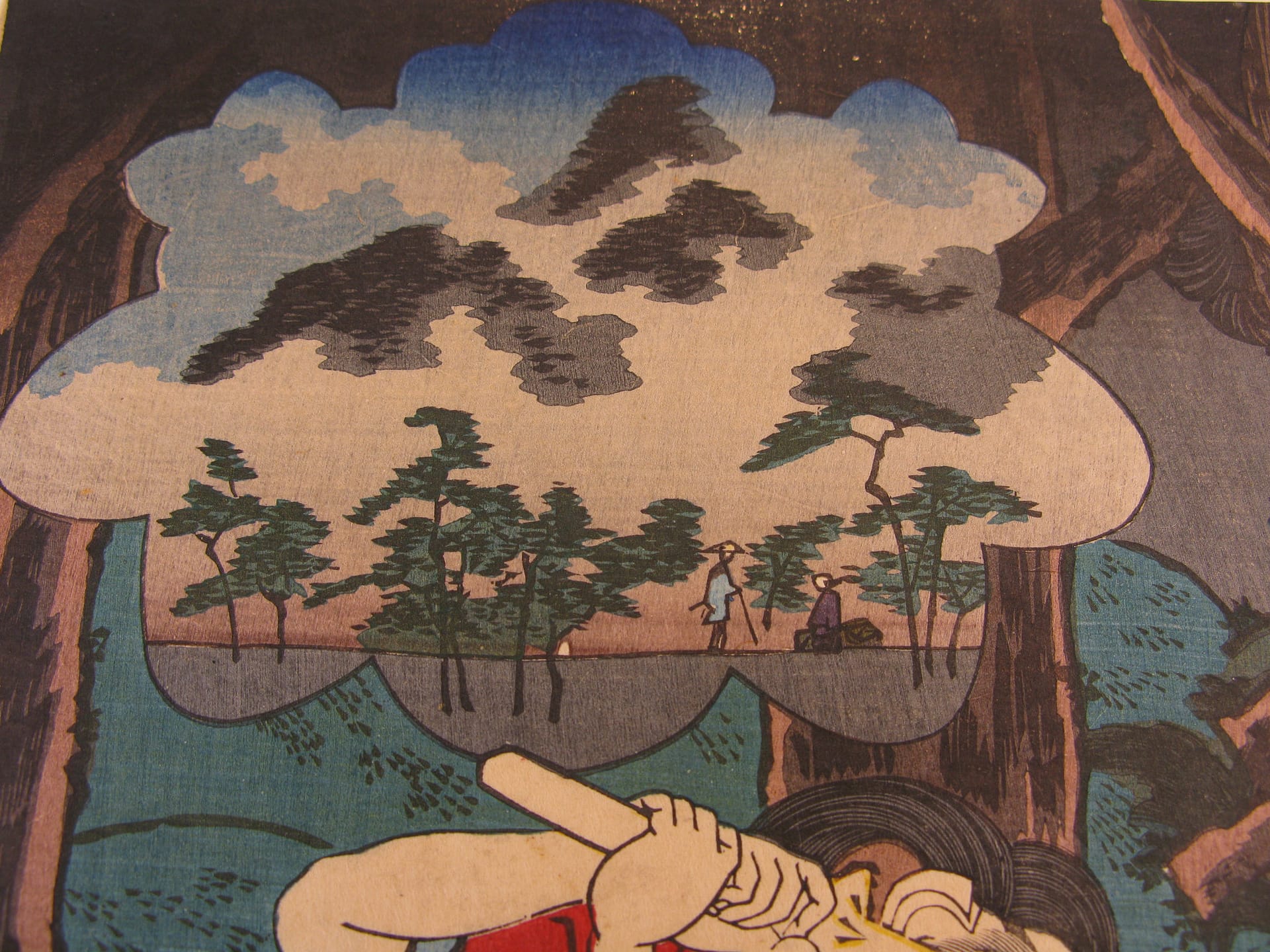
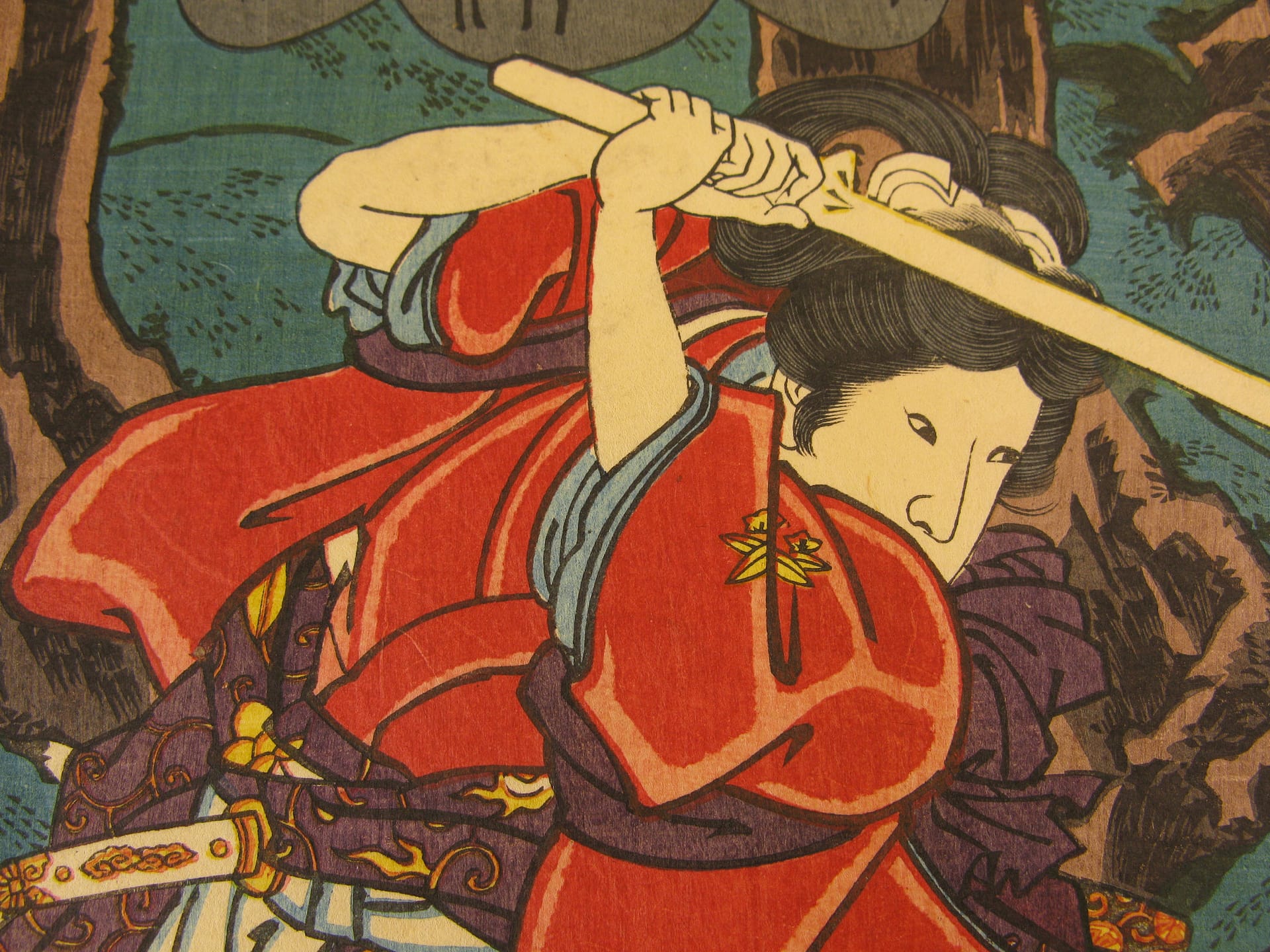
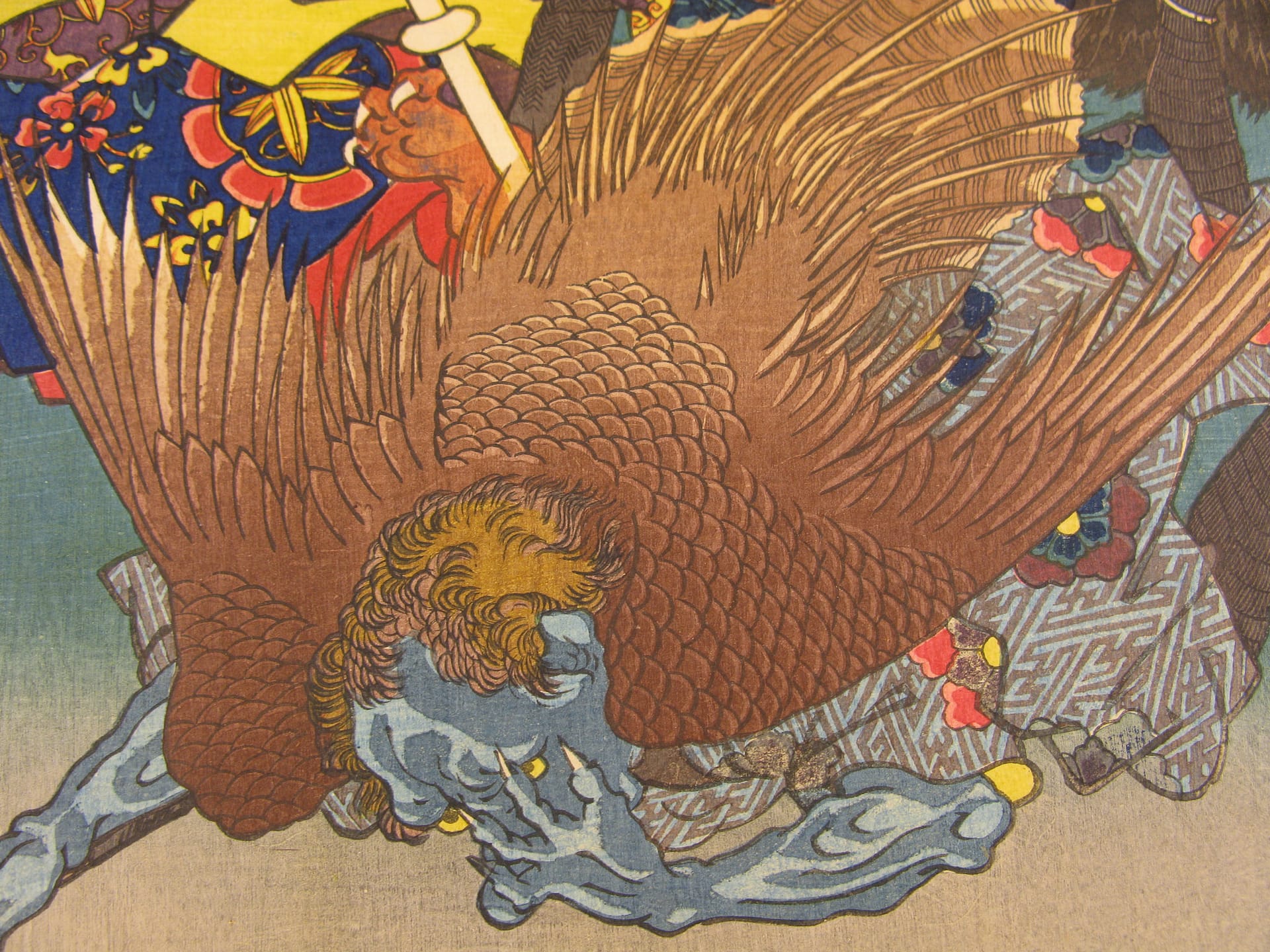
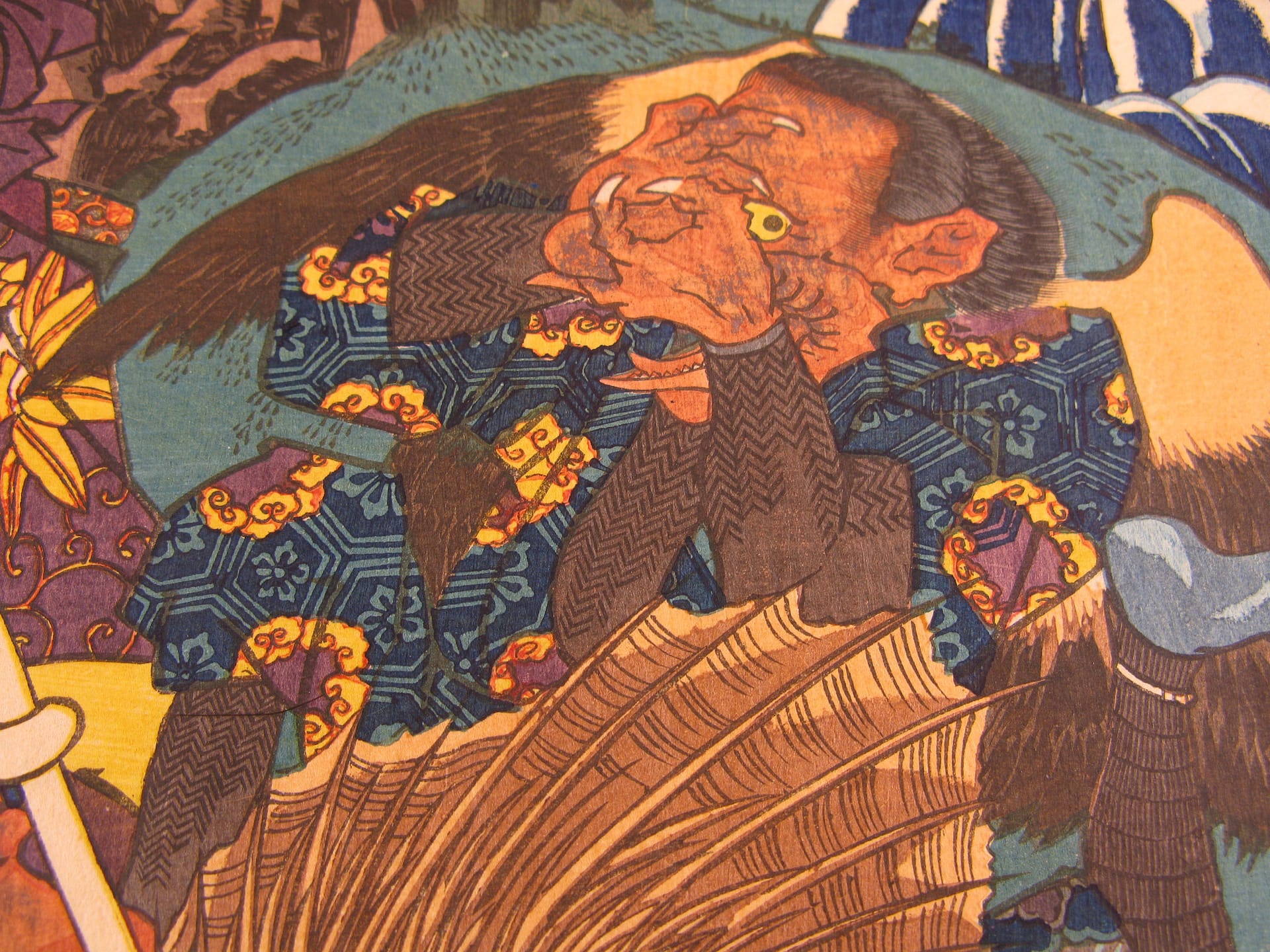
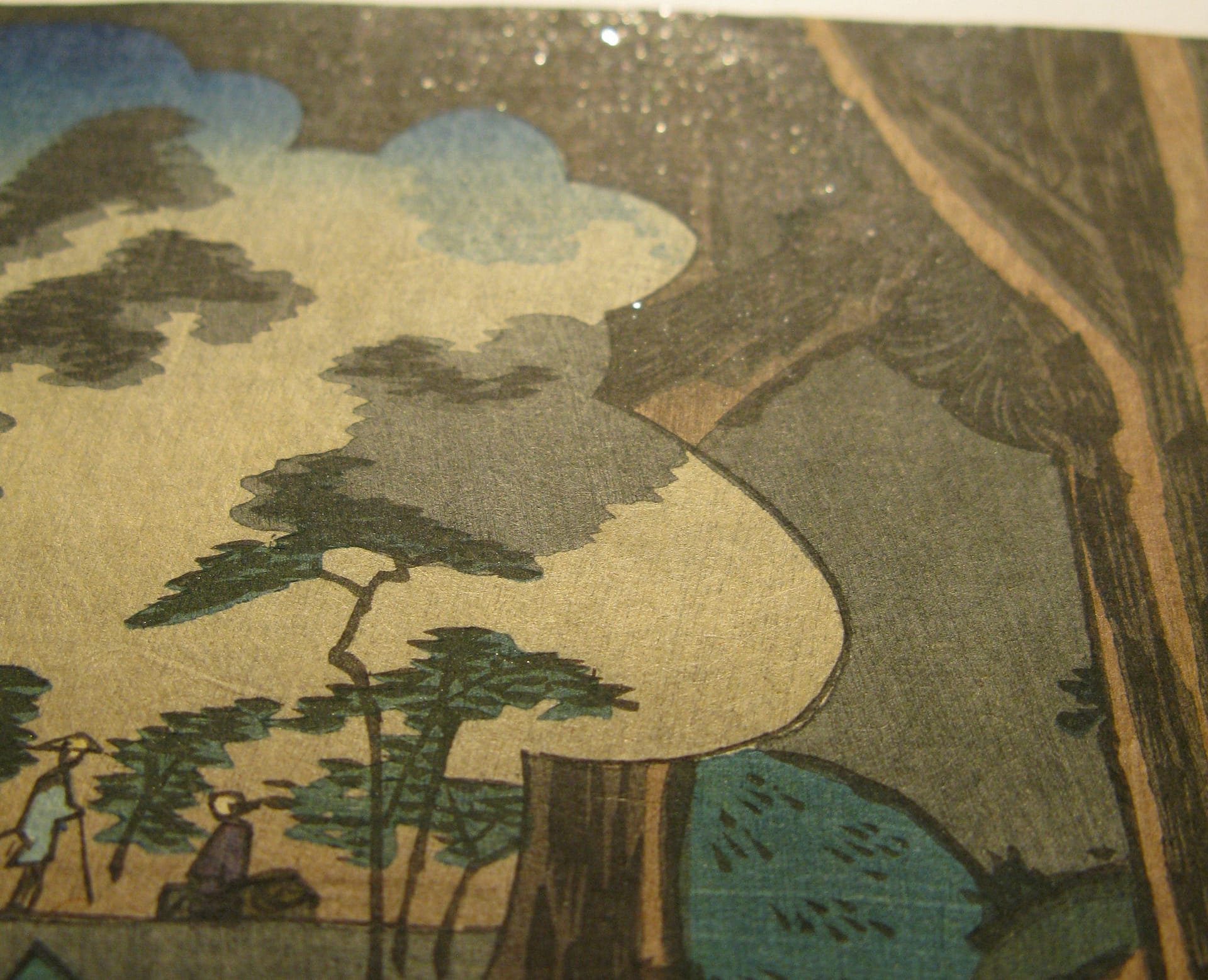
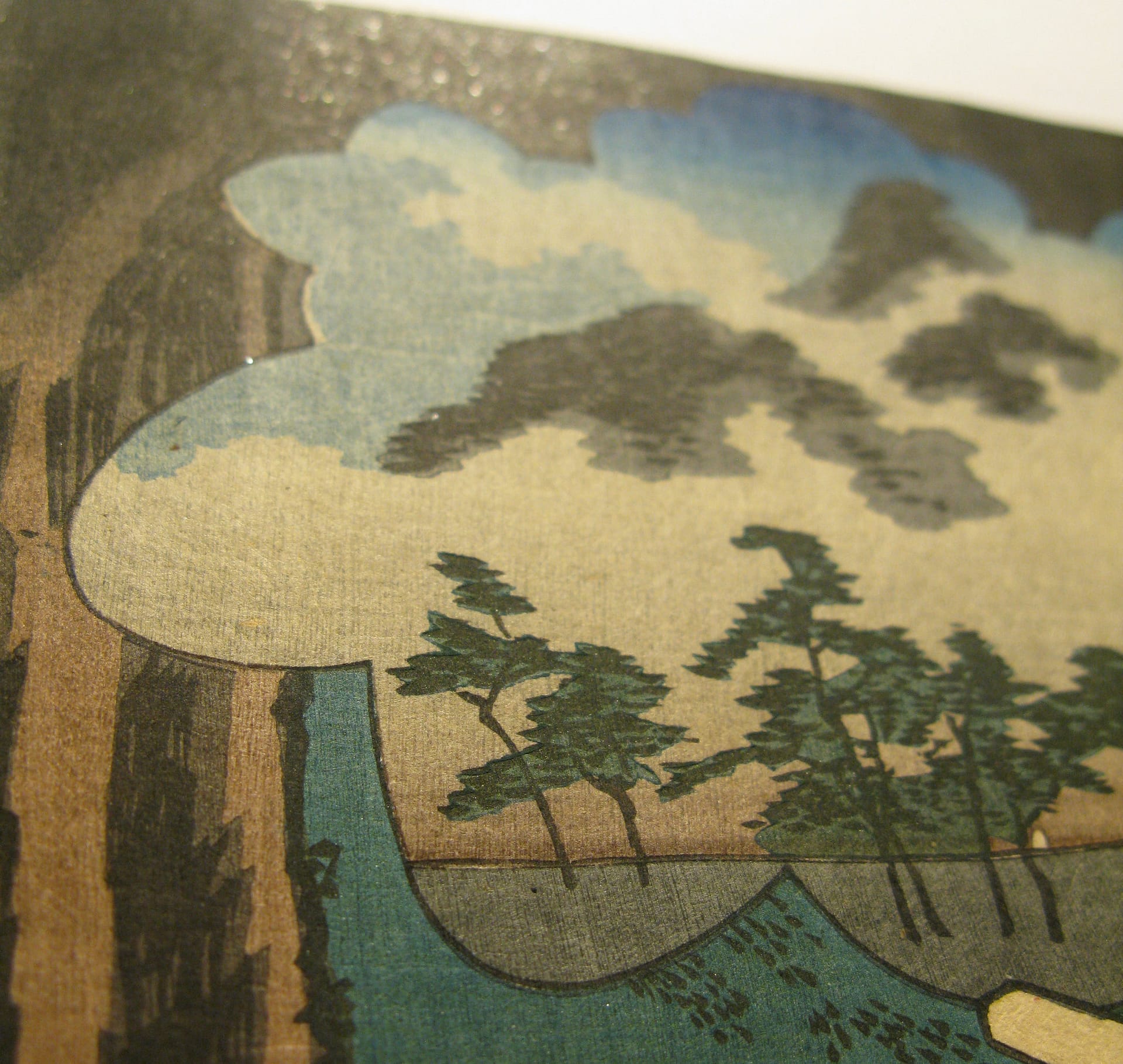
Description: The young Ushiwaka Maru, bokken raised, having just whacked two tengu across the nose. The landscape insert panel shows misty mountains within the Tengu king’s fan shape
Series: Kisokaidô rokujûku tsugi. The sixty-nine post stations of the Kisokaido
Print No: 15
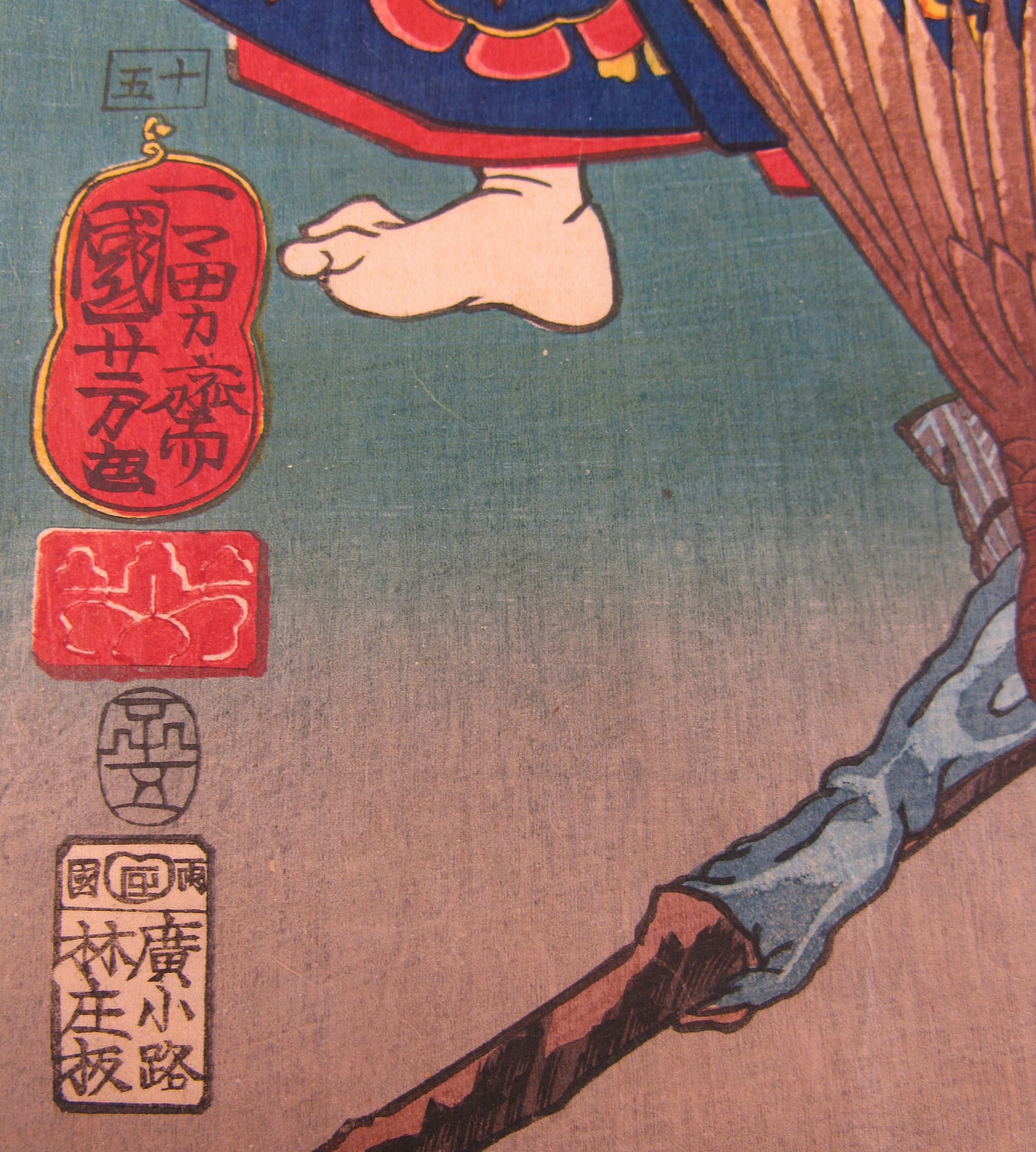
Artist: Utagawa Kuniyoshi (1797-1861)
Signature: Ichiyusai Kuniyoshi ga and kiri seal
Date: 1852 (Kaei 5), 5th month
Cens: Fukushima, Muramatsu, Rat 5. Noting: These are the censors for the 6th month
Publisher: Hayashiya Shōgorō
Size: Oban tate-e, 37.5 x 26.7 cm. Full size
Condition: Fine (superb) impression, colour and condition. With fine bokashi, oxidation and mica application.
Price: Not for sale at this stage
References: Robinson S74.16; BMFA – William Sturgis Bigelow Collection, 11.38972.16;
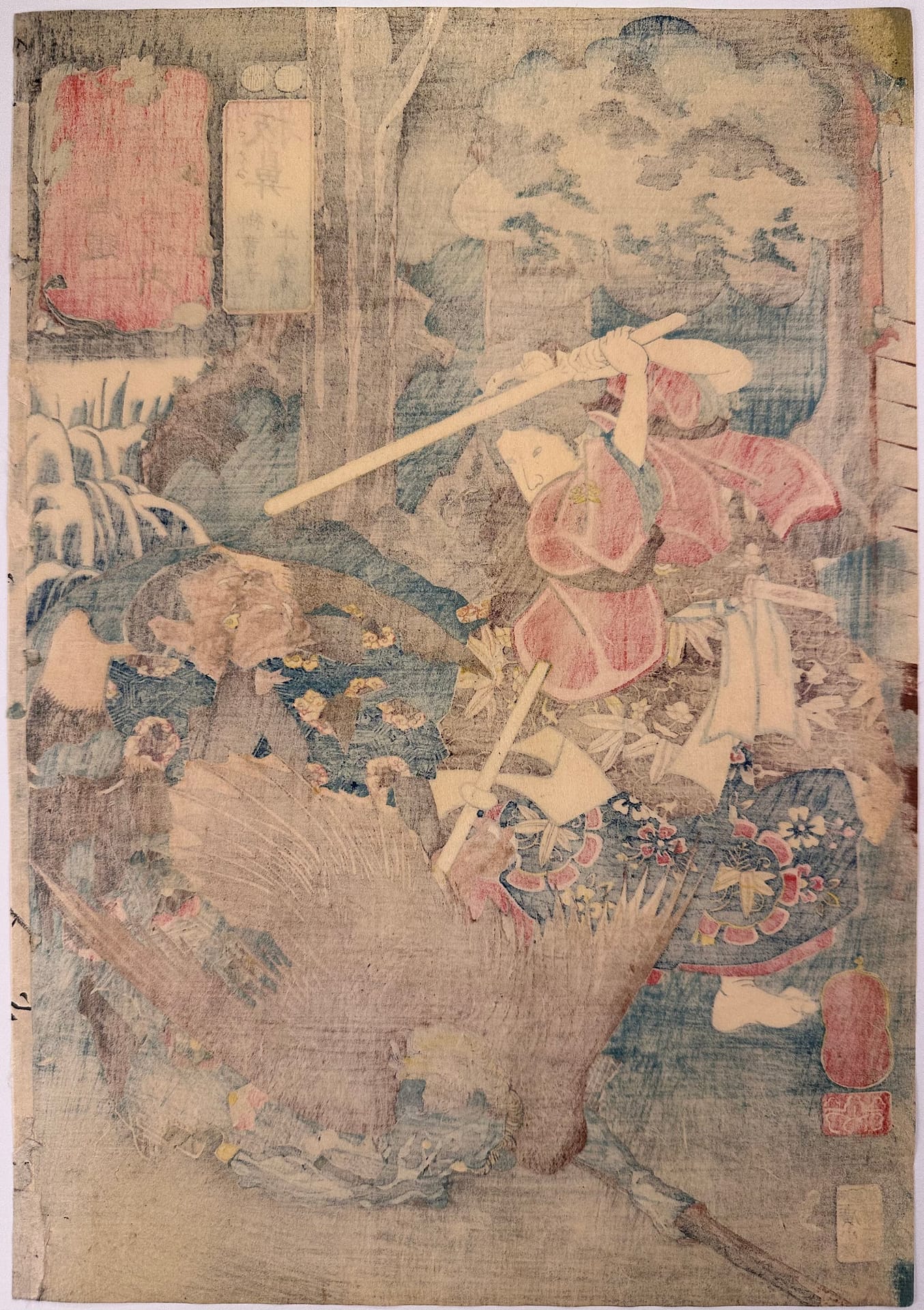
The tale of the print – Onzôshi Ushiwaka Maru (御曹子牛若丸) vs the Tengu, childhood training … a real pain in the nose.
One of the most charming legends in Japanese folklore: young Ushiwakamaru (the future Minamoto Yoshitsune) practicing swordsmanship on Mount Kurama by sparring with tengu — those half‑bird, half‑human mountain goblins famous for wings, magic, and noses long enough to require their own postal code.
In Kuniyoshi’s version, the tengu are clutching their noses in agony because Ushiwakamaru has just smacked them with his wooden sword.
This visual gag ties perfectly to the place‑name Itahana, which sounds like a pun on itai (ouch), hana (nose) although a different kanji is used for nose (鼻) — “Ouch, my nose!” The print basically turns a legendary hero’s training montage into an Edo period slapstick comedy routine.
The backstory is classic epic material: after the Minamoto clan’s defeat, Ushiwakamaru was sent to a temple to become a monk. Instead, he secretly trained to avenge his father, and the tengu — who supposedly lived on Kurama — agreed to teach him.
If you can fight airborne goblins with supernatural reflexes, ordinary human opponents start to look like warm‑up exercises.
The inset landscape is shaped like the feather fan of the tengu king, a magical item often associated with transformation and mischief. The series border includes the tengu’s distinctive hat and a stylized tree, reinforcing the mountain‑forest setting where this supernatural training session takes place.
So in this print, Itahana becomes the perfect stage for a pun‑filled legend: a boy destined for greatness, two goblins with very sore noses, and a mountain full of magical mentors who probably regretted volunteering.
For an excellent analysis of the prints and series, I would encourage you to get the book:The Sixty-nine Stations of the Kisokaido by Sarah E. Thompson.