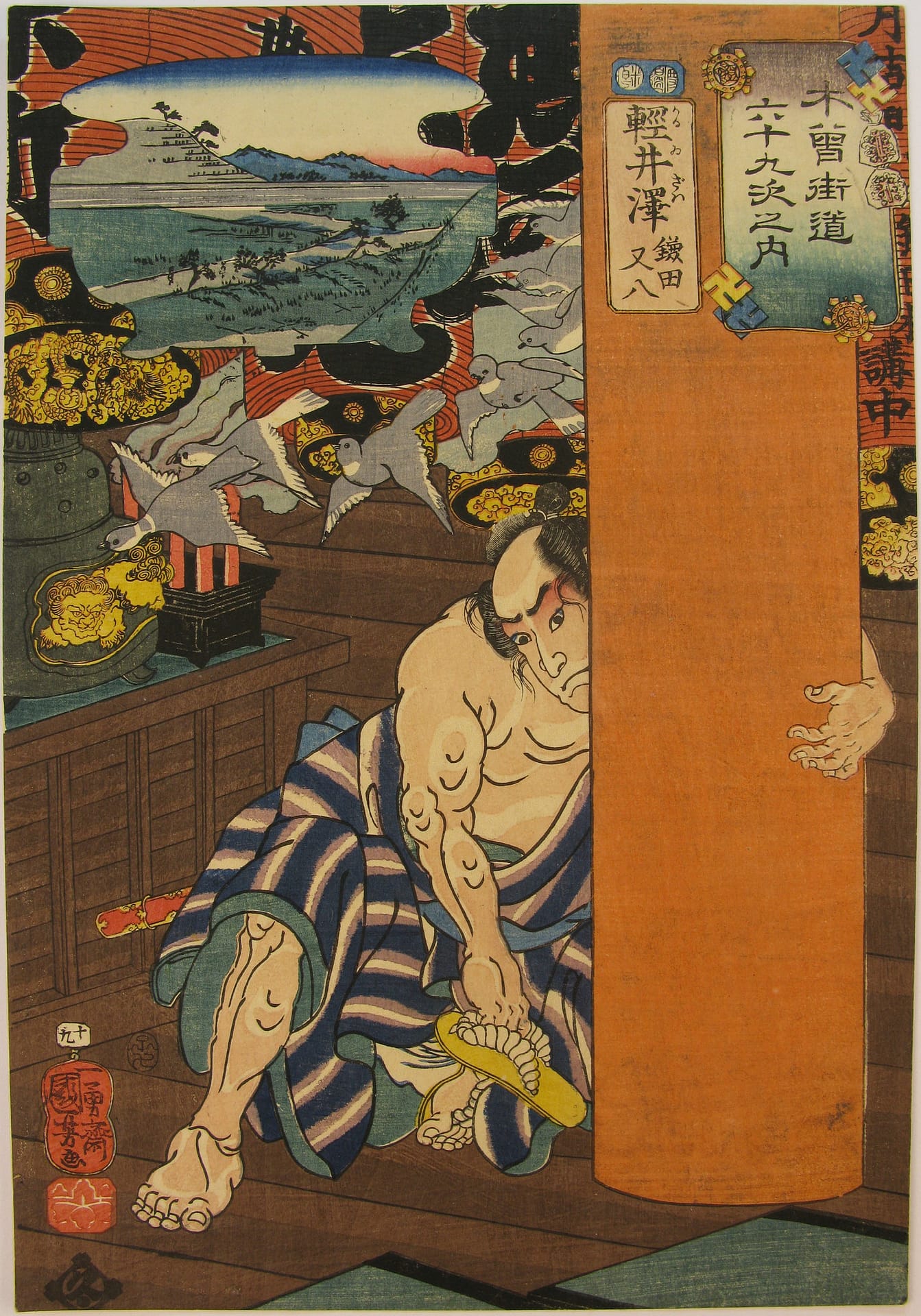
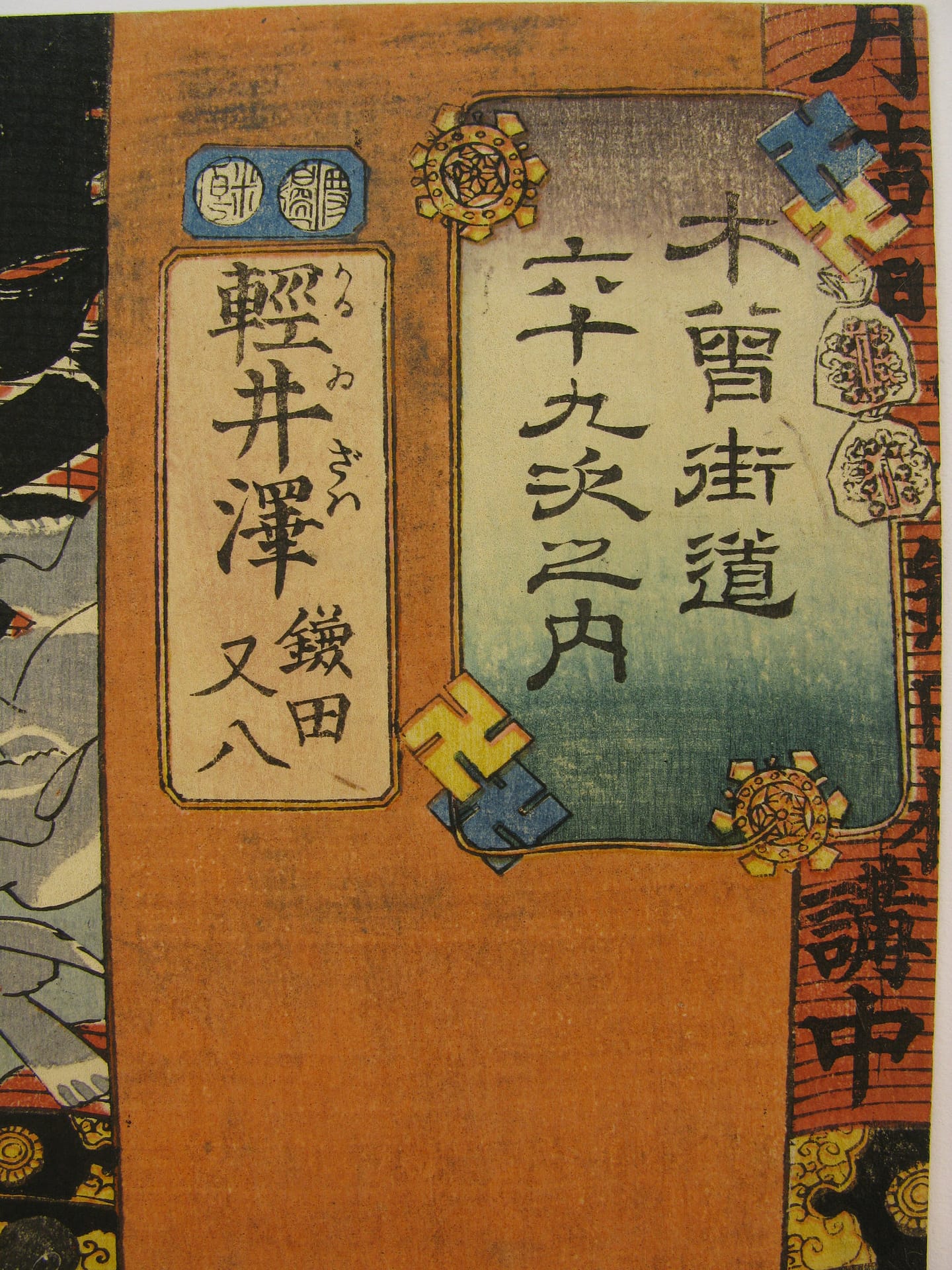
Station: Karuizawa (軽井澤)
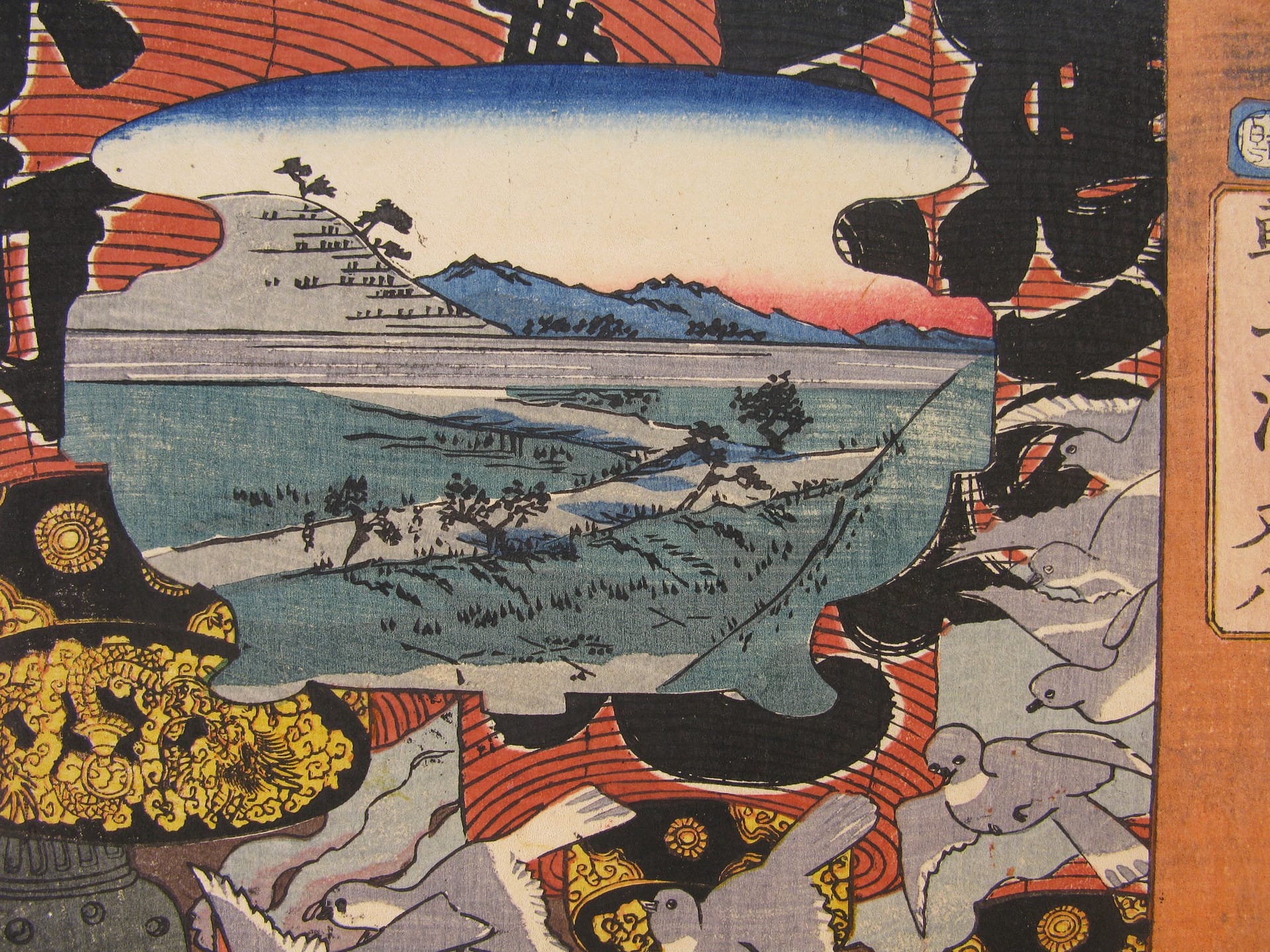
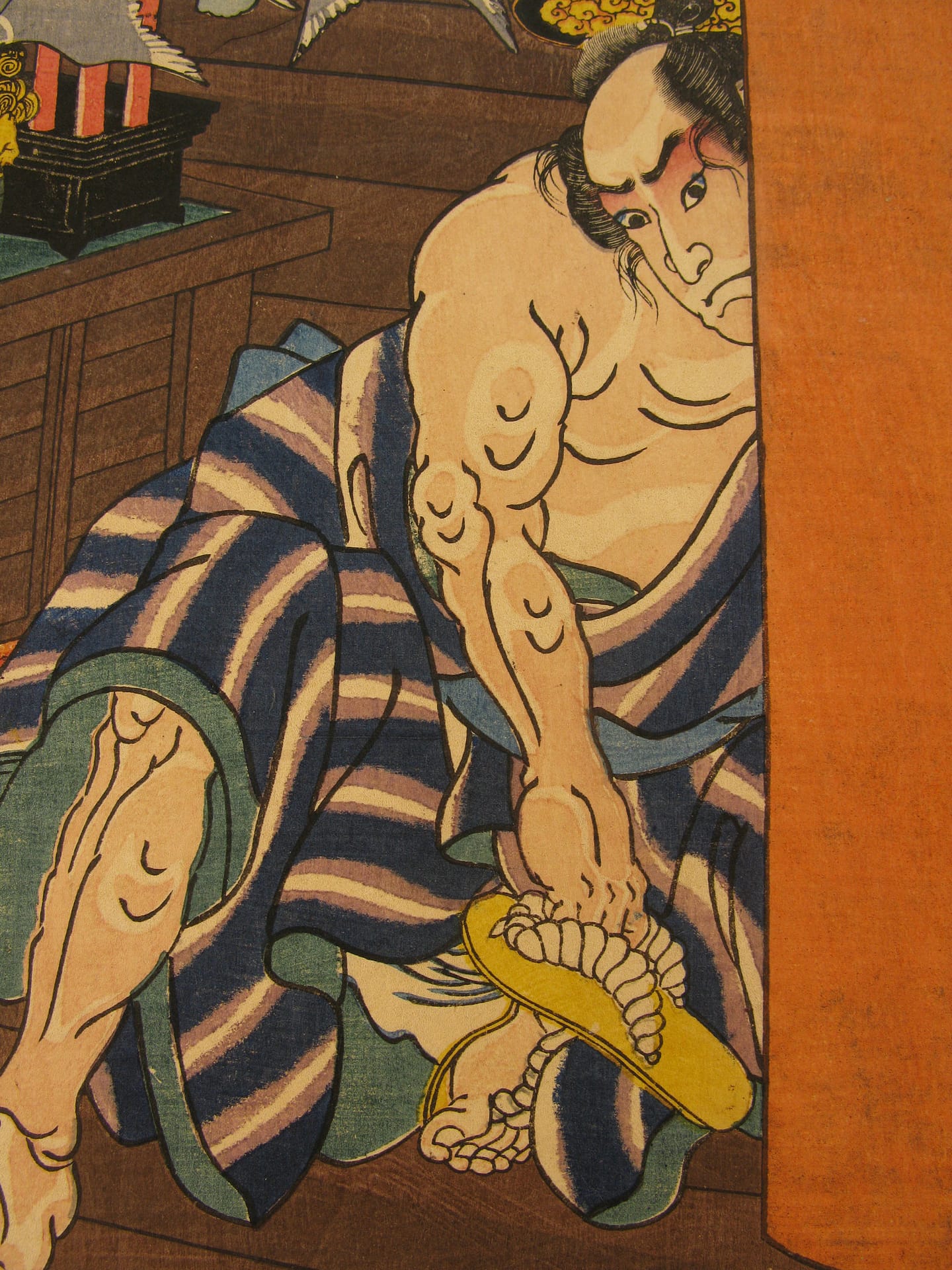
Description: Kamada Matahachi, using his great strength to lift the huge pillar of a Buddhist temple far enough to slip a straw sandal beneath it, and then again to remove it. The landscape panel insert shows a road amid hills with a band of mist in the shape of an incense burner.
Series: Kisokaidô rokujûku tsugi. The sixty-nine post stations of the Kisokaido
Print No: 19
Artist: Utagawa Kuniyoshi (1797-1861)
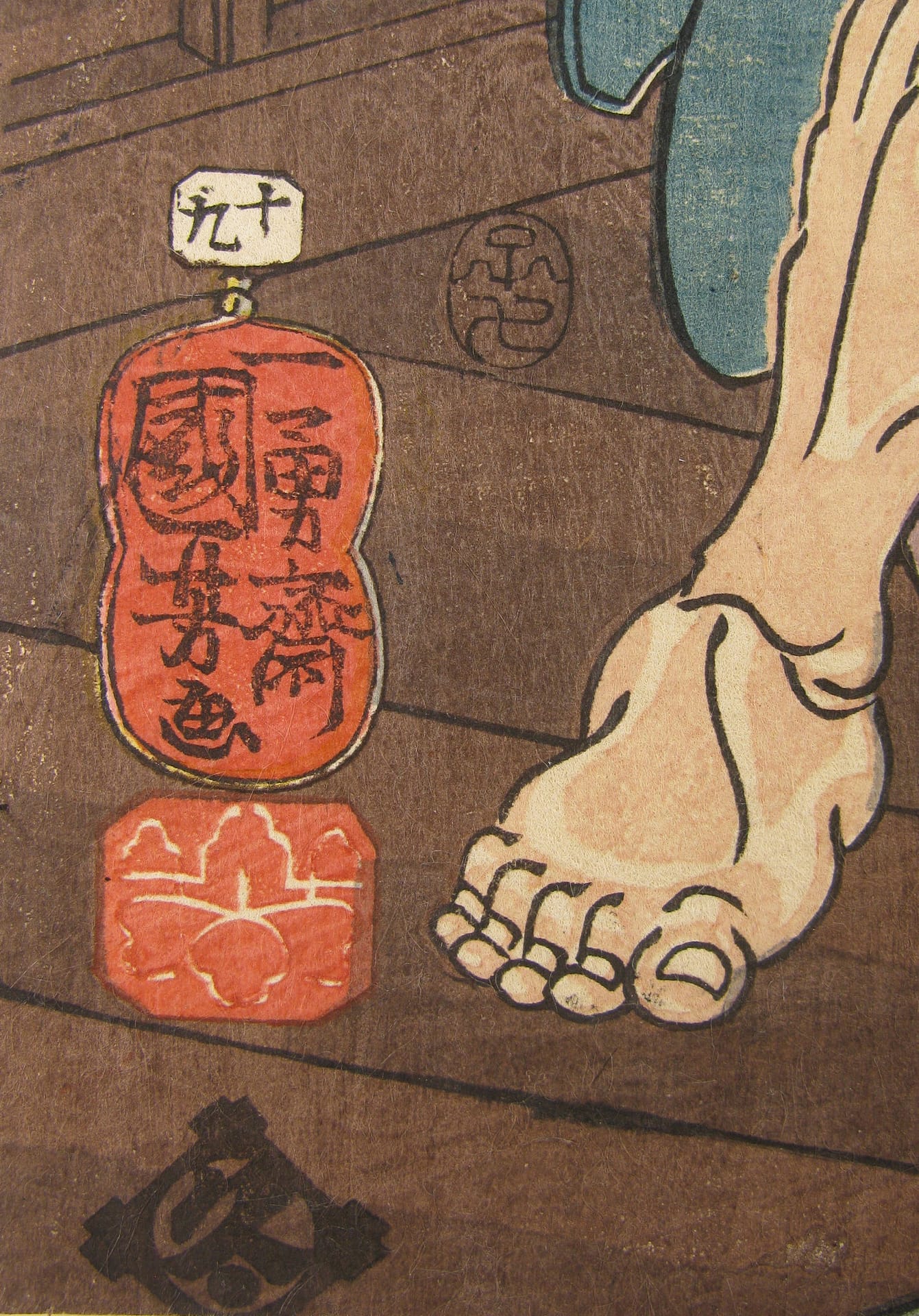
Signature: Ichiyusai Kuniyoshi ga and kiri seal
Date: 1852 (Kaei 5), 7th month
Cens: Mera, Watanabe, Rat 7
Publisher: Takeda-ya Takezô
Size: Oban tate-e, 36.2 x 24.8 cm
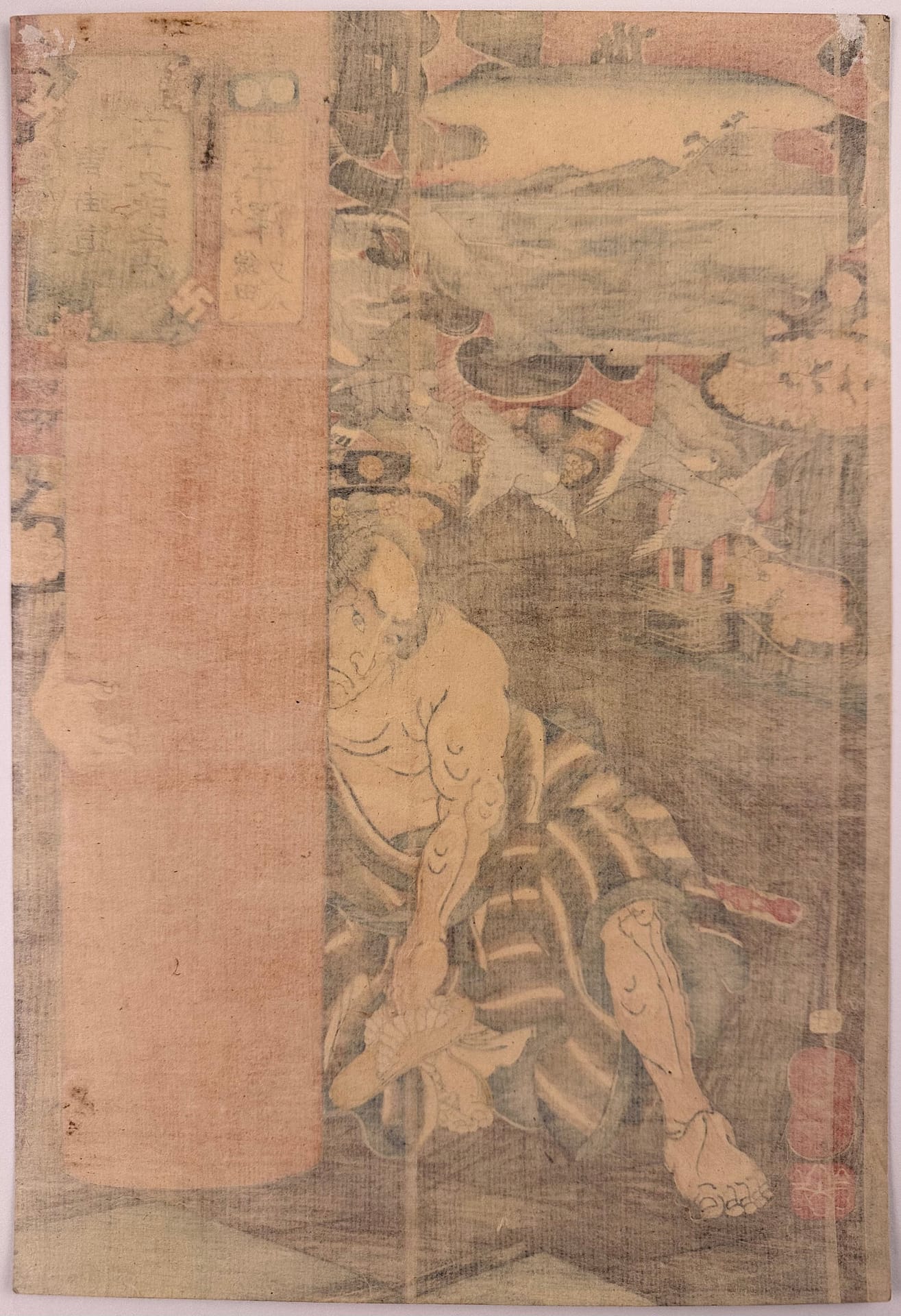
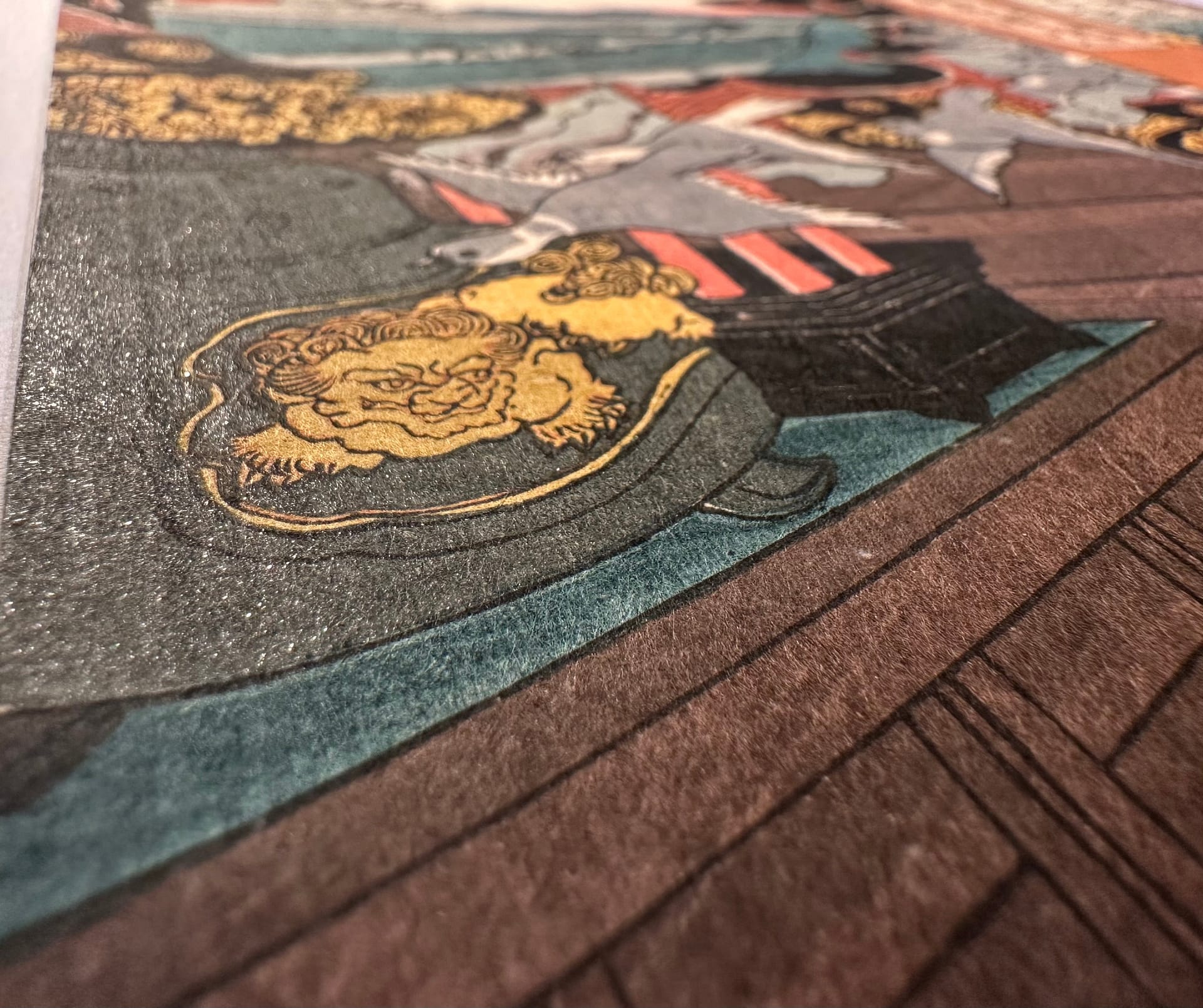
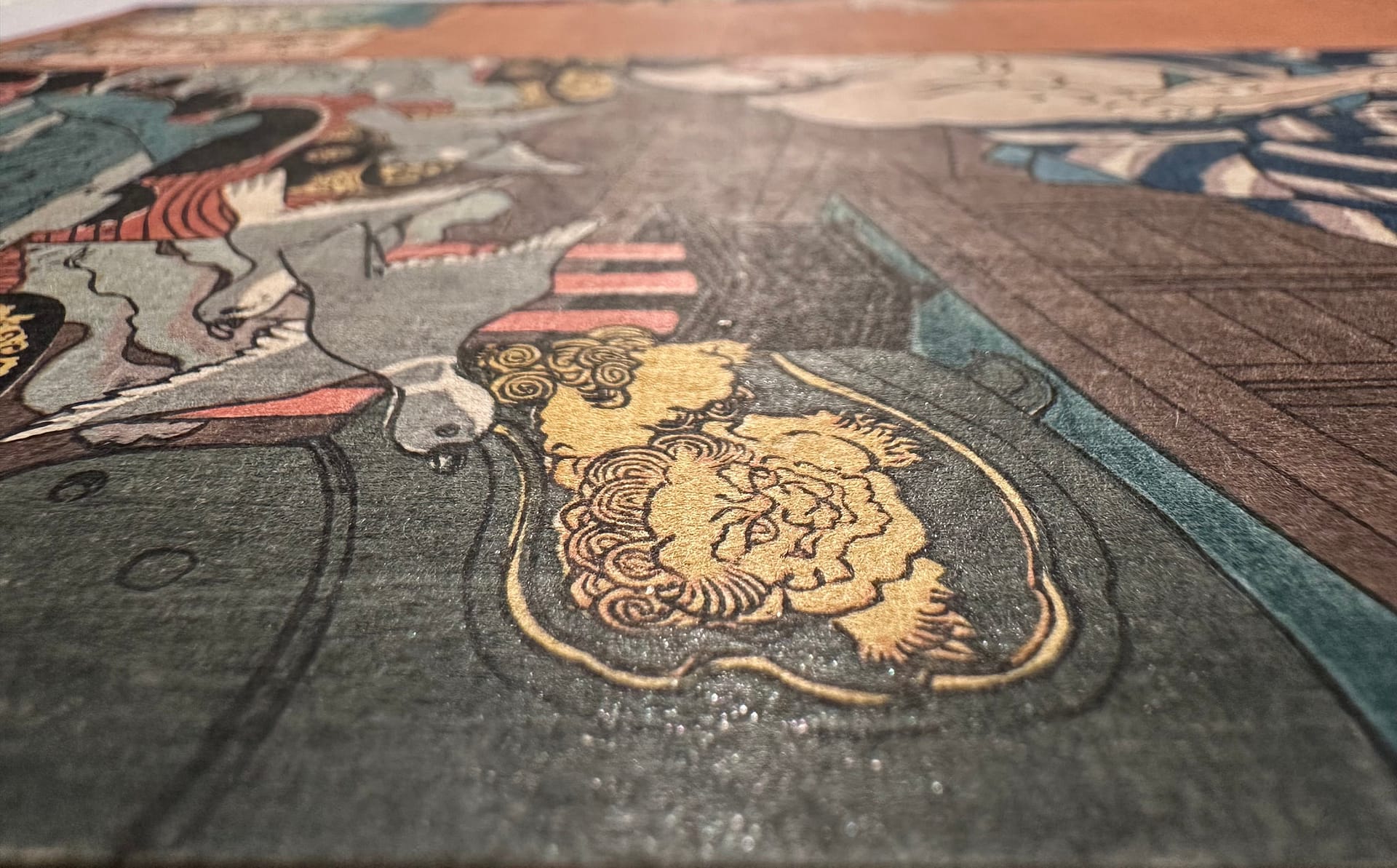
Condition: Very good impression, colour and condition with gauffrage, oxidation, delicate mica application on the incense burner. Retains Japanese album backing paper
Price: TBC
References: Robinson S74.7; BMFA – William Sturgis Bigelow Collection, 11.38972.20;
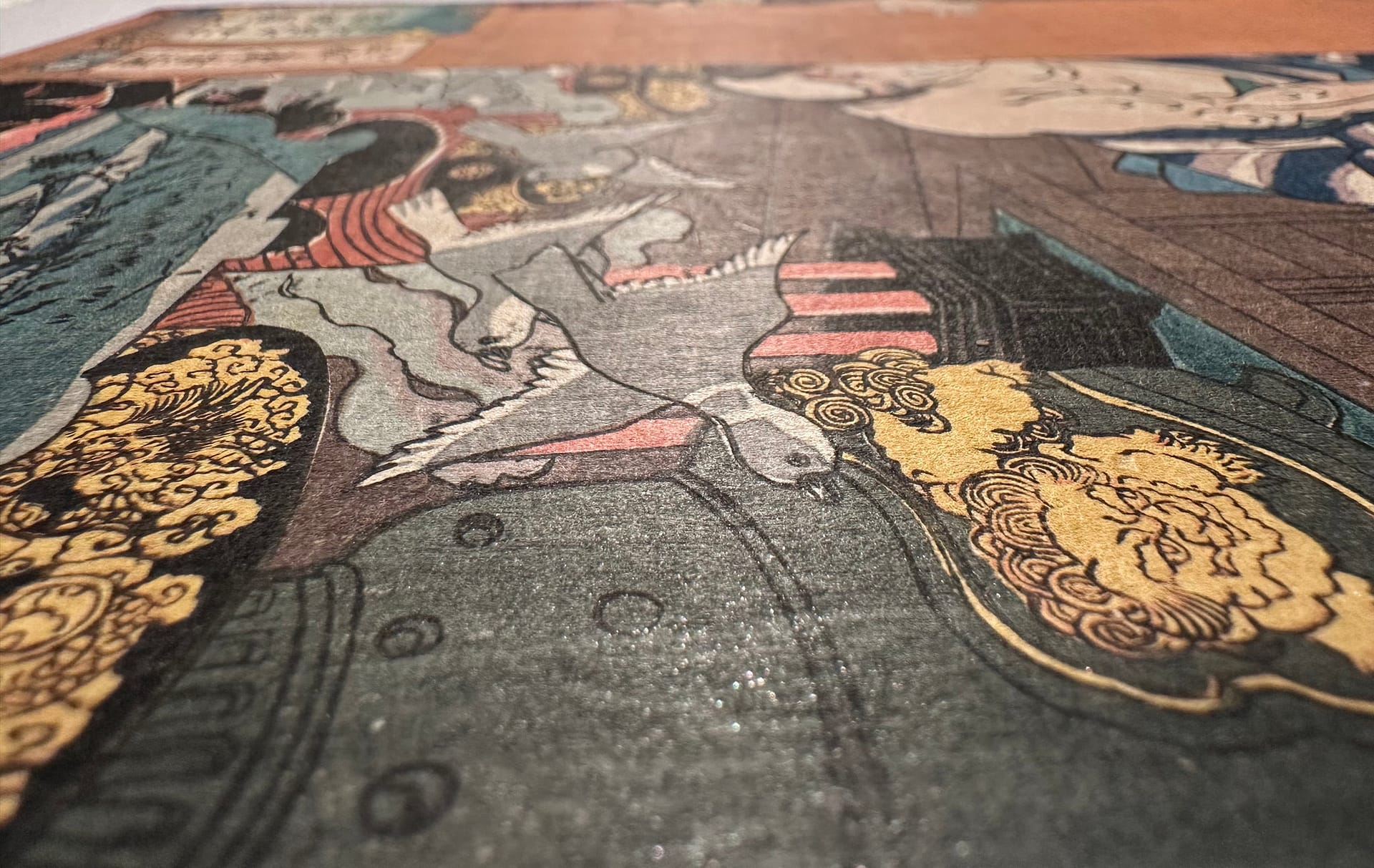
The tale of the print – Kamada Matahachi (鎌田叉八), the man who treated temple architecture like a gym workout.
Karuizawa’s print stars Kamata Matahachi (sometimes Kamado Matahachi), a fictional strongman whose favourite saying was: “I’m not a smart man … but I can lift heavy things.”
His signature feat — shown in the print — is casually hoisting one of the massive pillars of a Buddhist temple high enough to slide a straw sandal underneath it… and then lifting it again to pull the sandal back out. This is the Edo‑period equivalent of bench‑pressing a building just to prove a point.
Kuniyoshi leans into the temple theme: the series border is decorated with Buddhist symbols, the inset landscape is shaped like a giant incense burner, and a flock of pigeons flutters past as Matahachi shifts the pillar, presumably wondering why the architecture is suddenly moving.
Matahachi appears in several popular books, though he seems to be entirely fictional — a folk hero invented to answer the question, “What if a man was so strong he made carpenters nervous?” His earliest known appearance is in an illustrated story from 1769 about him defeating monsters, which tells you everything you need to know about his career trajectory.
The specific scene Kuniyoshi adapts comes from an 1807 novel by Santō Kyōden, where Matahachi performs this temple‑lifting stunt under a row of lanterns — a detail Kuniyoshi faithfully recreates. It’s a moment that blends religious architecture, slapstick physics, and pure muscle‑powered absurdity.
**Unlike many Kisokaidō designs built on overt puns, the Karuizawa print seems to pair station and hero by atmosphere rather than wordplay. A mountain post-town is matched with a temple strongman, while the straw sandal—humble badge of the traveller—becomes the measure of superhuman strength. Kuniyoshi, as usual, may be joking quietly.
And there’s a wonderful comic undertone in the feat itself: he lifts a temple pillar… just to park a sandal under it. Heroic strength applied to something gloriously pointless.
For an excellent analysis of the prints and series, I would encourage you to get the book:The Sixty-nine Stations of the Kisokaido by Sarah E. Thompson.