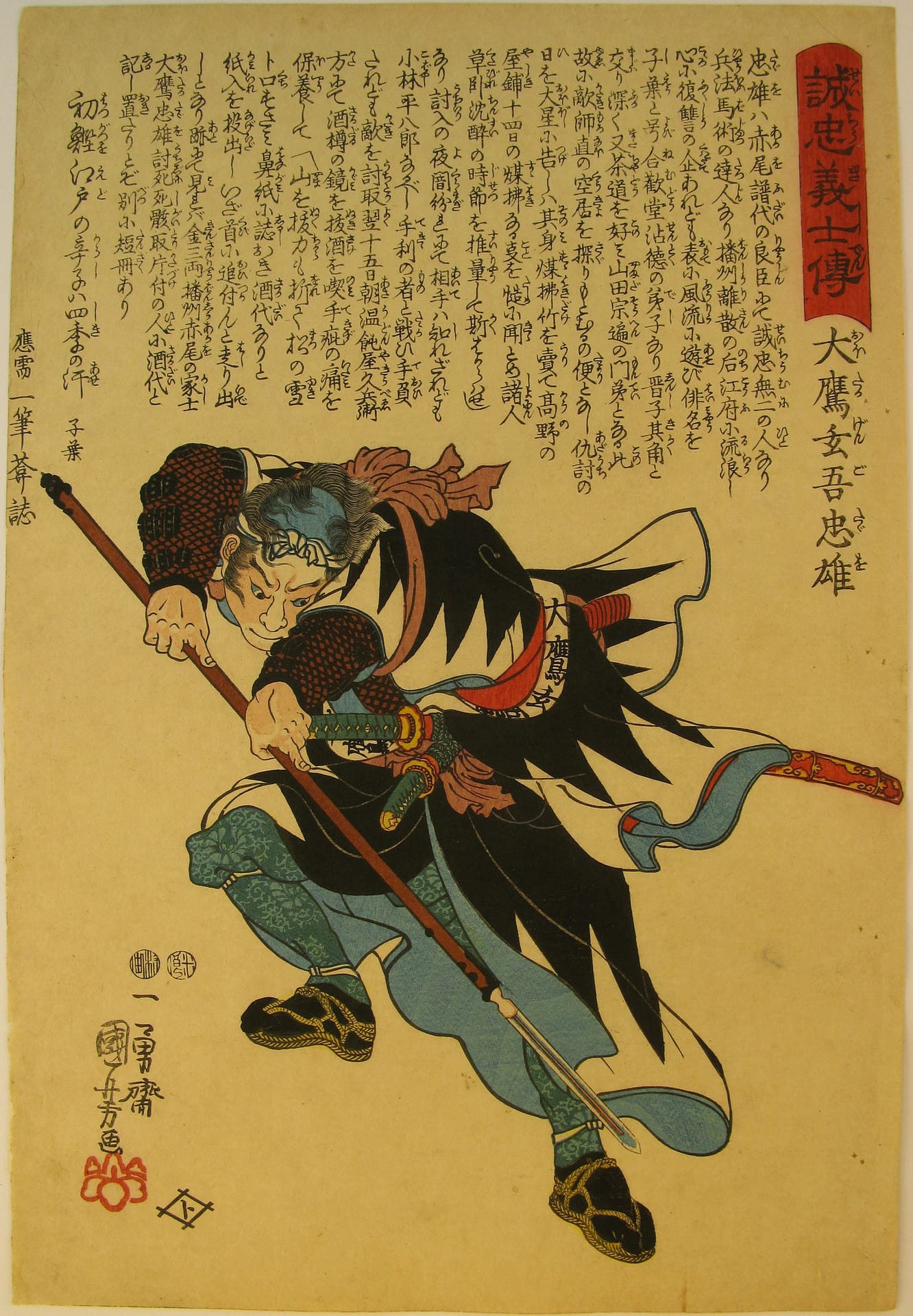
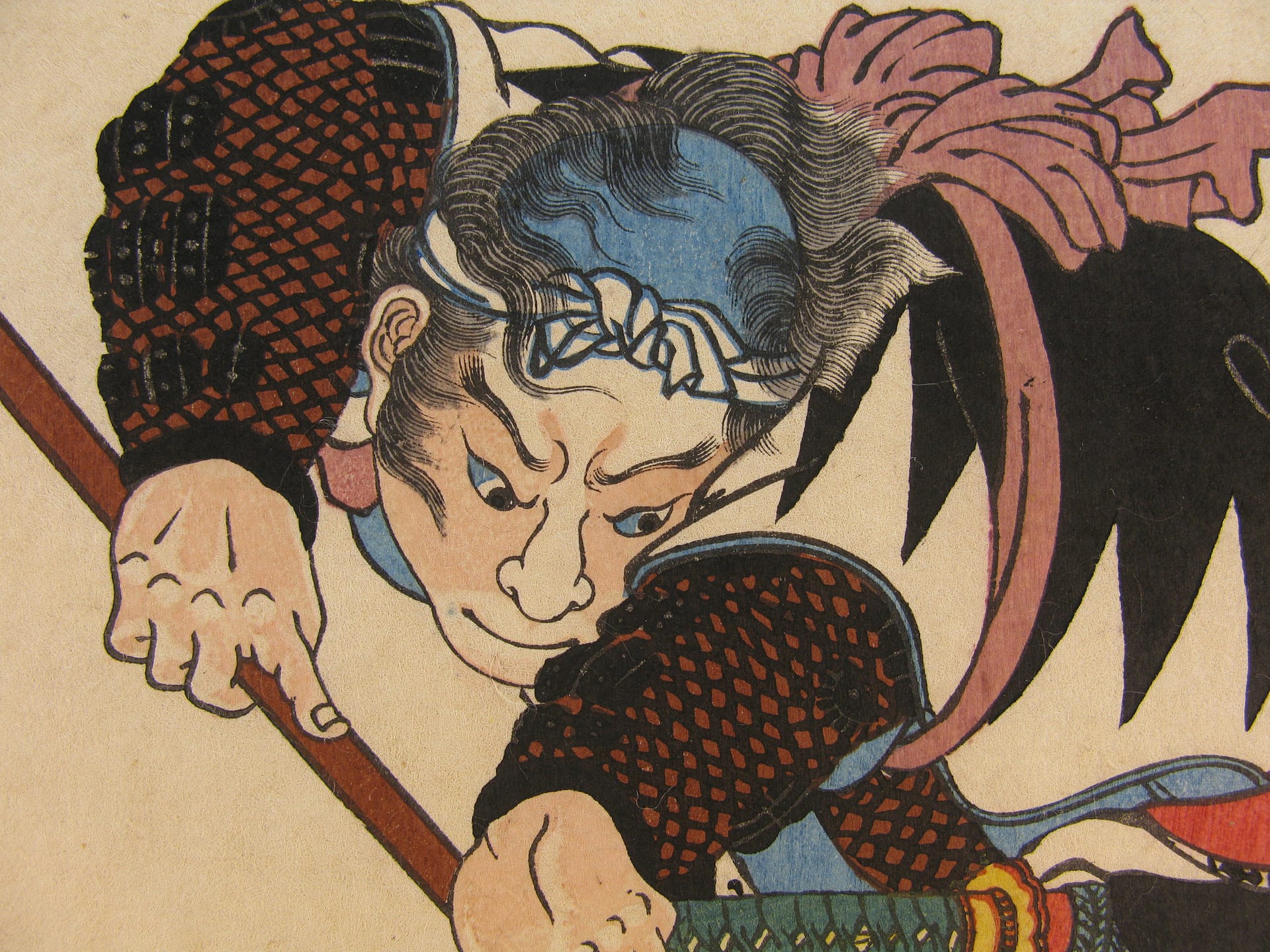
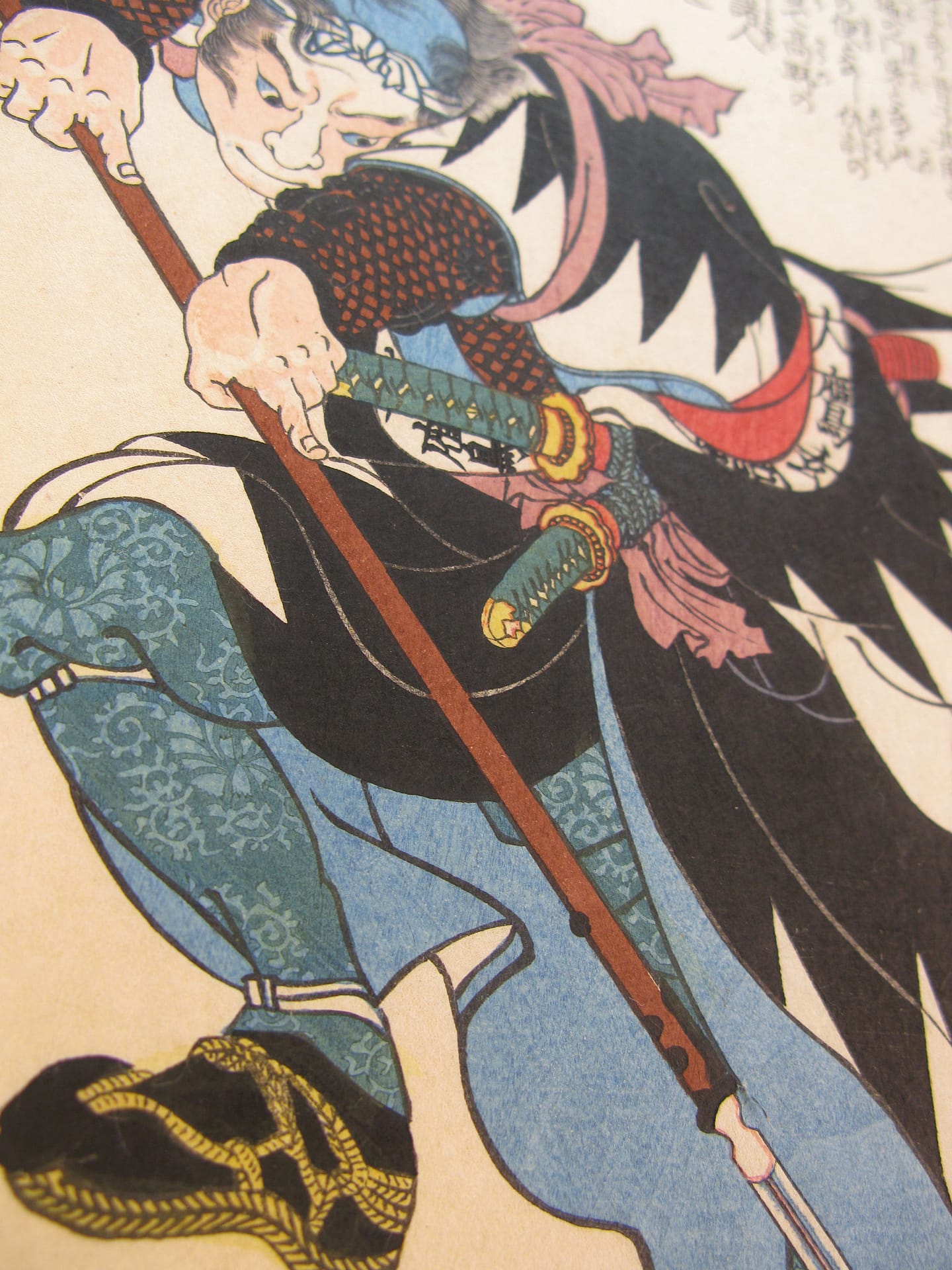
Subject: The ronin Otaka Gengo Tadao (kabuki name) – taking careful aim with his yari against the skilled opponent, Kobayashi Heihachirō
Series: Seichu gishi den (Stories of the true loyalty of the faithful samurai)
Print No: 1.14
Artist: Utagawa Kuniyoshi (1797-1861)
Signature: Ichiyusai Kuniyoshi ga and kiri seal
Date: 1847-48
Cens: Mera – Murata
Publisher: Ebi-ya Rinnosuke
Size: Oban tate-e, 37.6 x 25.4 cm
Condition: Fine impression, colour and condition. Un-numbered state
Price: Not for sale at this stage
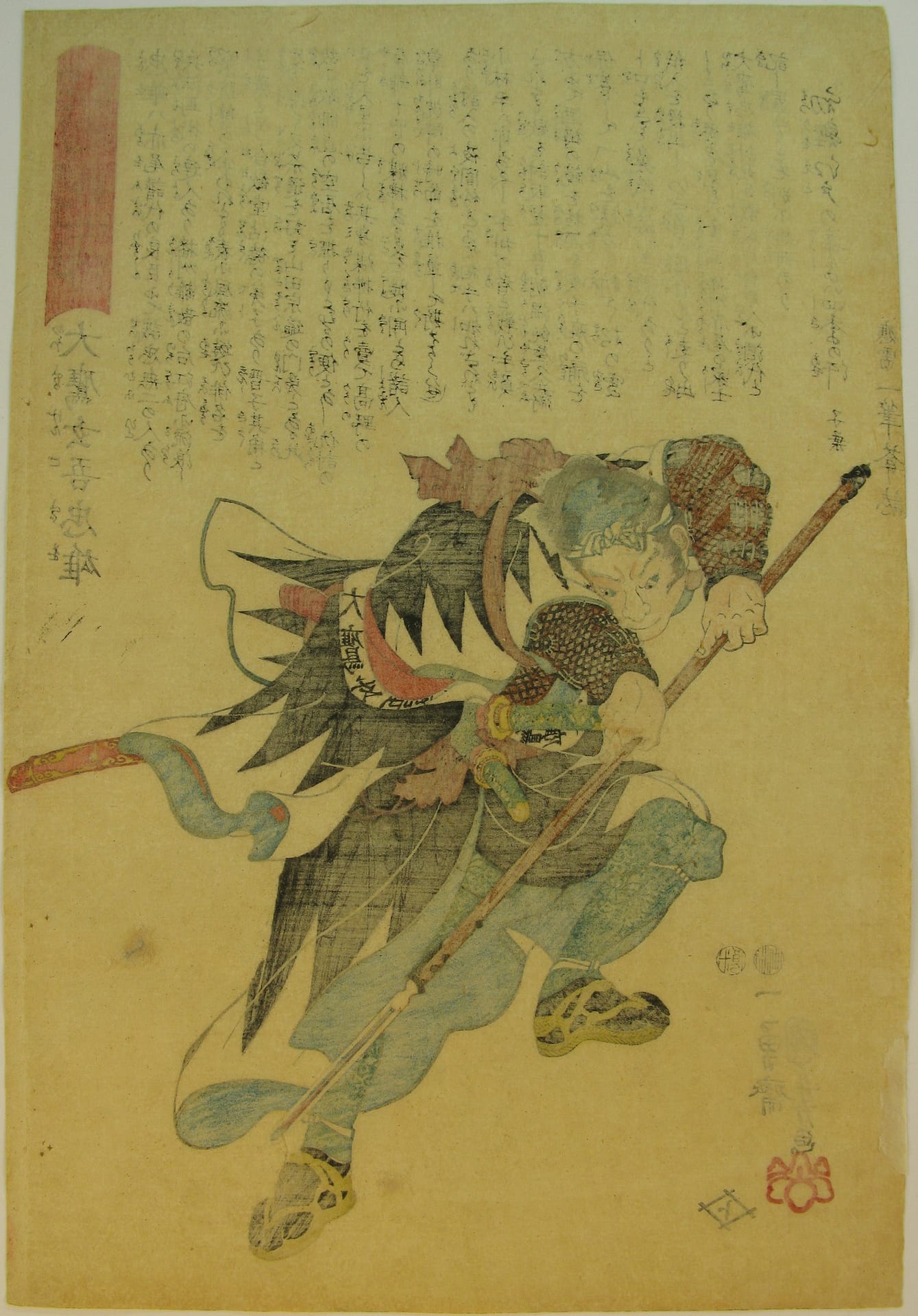
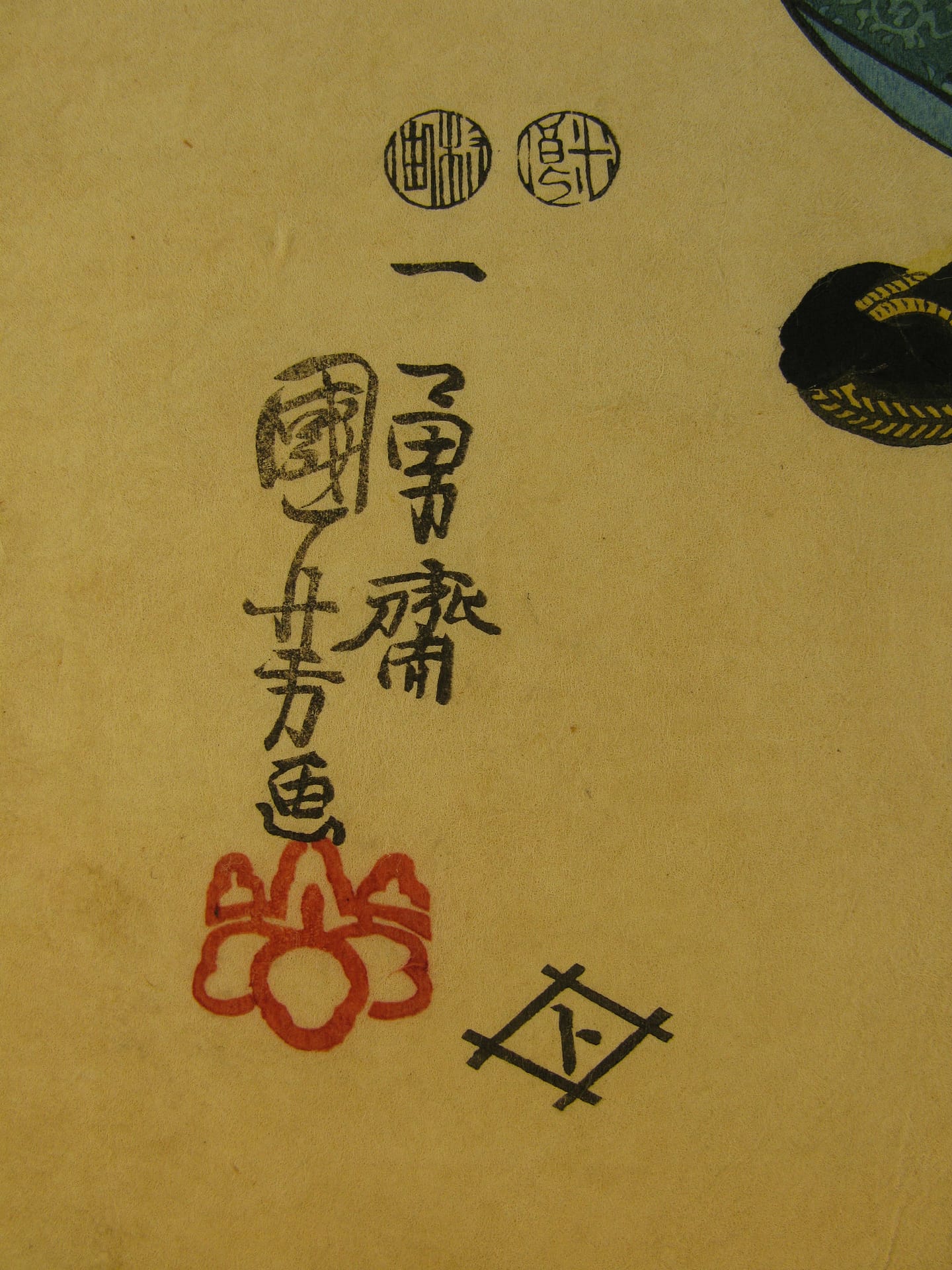
True name: Ōtaka Gengo Tadatake (大高 源五 忠雄)
Age: 32
Katana mei: Tomohisa (2,1), length 2 shaku 6 sun
Wakizashi mei: Masakuni (5,1), length 9 sun 5 bu
The tale of the text – with a little twist
Ōtaka Gengo Tadao had the useful combination of loyalty, martial skill, and a talent for appearing harmless. A retainer of the Akao family, he spent his time in Edo posing as a cultivated man of taste—writing haiku, studying tea ceremony, and generally giving no indication that he was quietly planning revenge.
These refined interests were not without purpose. His tea connections allowed him to inspect his target’s residence, while his side business selling bamboo cleaning tools revealed a critical detail: the household was thoroughly cleaned on the 14th of each month. By evening, the occupants would be exhausted, likely drunk, and in no condition to repel determined visitors. Strategy, in this case, hinged on housekeeping.
When the night came, Tadao fought bravely, though not without injury. By morning, he had repaired to a noodle shop, where—bleeding but composed—he drank sake, tended his wound, and wrote a poem about snow bending pine branches. Priorities, clearly, were in order.
Before returning to the action, he tossed down his purse with instructions that it be spent on sake, and thoughtfully included a note promising payment to whoever might have to deal with his remains. Few warriors combine foresight with such courtesy.
He also carried a second poem celebrating the small pleasures of Edo life—fish, spices, and honest labour—suggesting that even in the midst of vengeance, he retained a certain appreciation for the everyday.
A poet, then, a spy. And, above all, a man who ensured that, whatever happened, someone would at least be able to afford a drink afterward.
For an accurate translation of the print text, I would encourage you to get the book: Kuniyoshi -The faithful samurai by David R Weinberg.