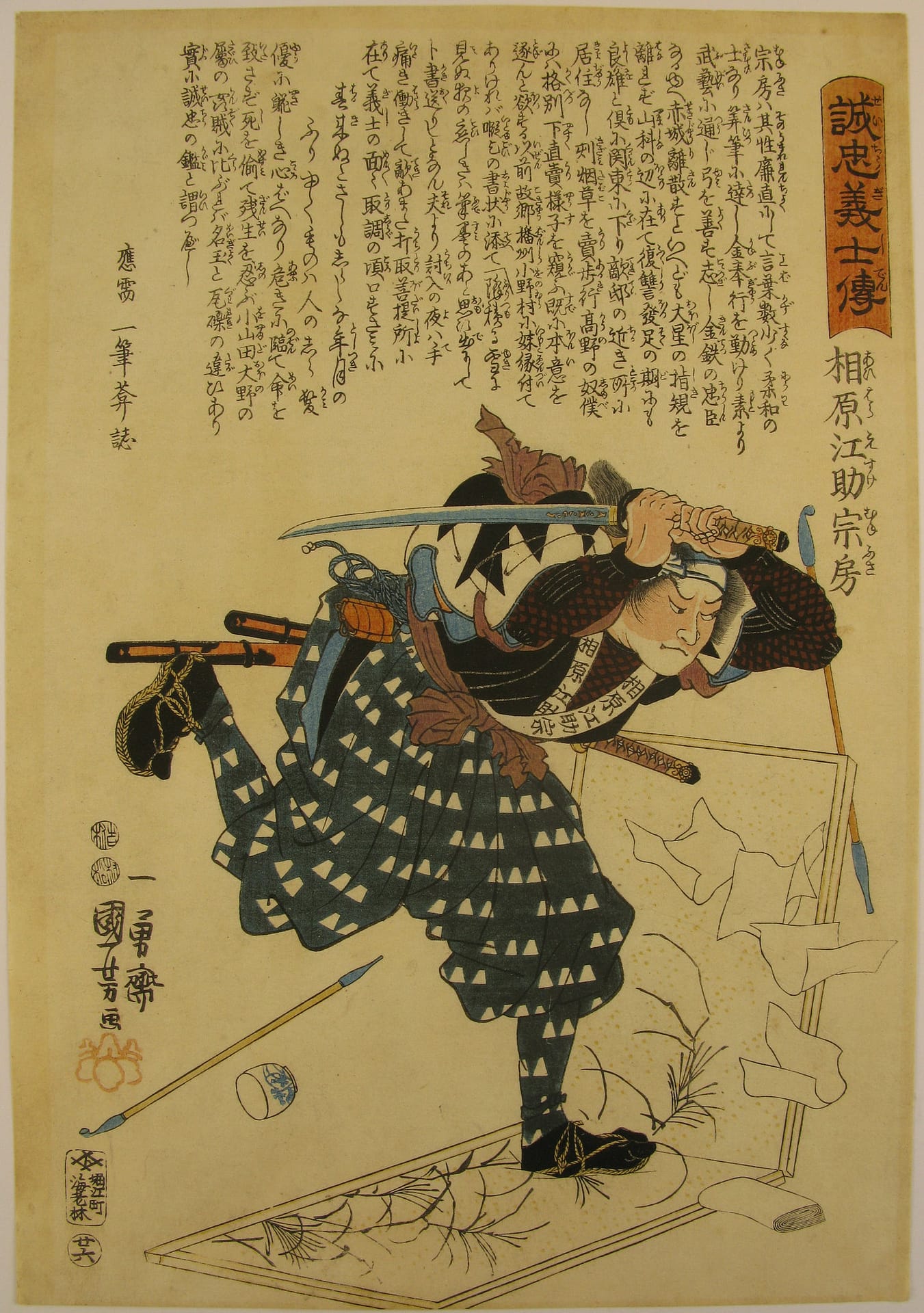
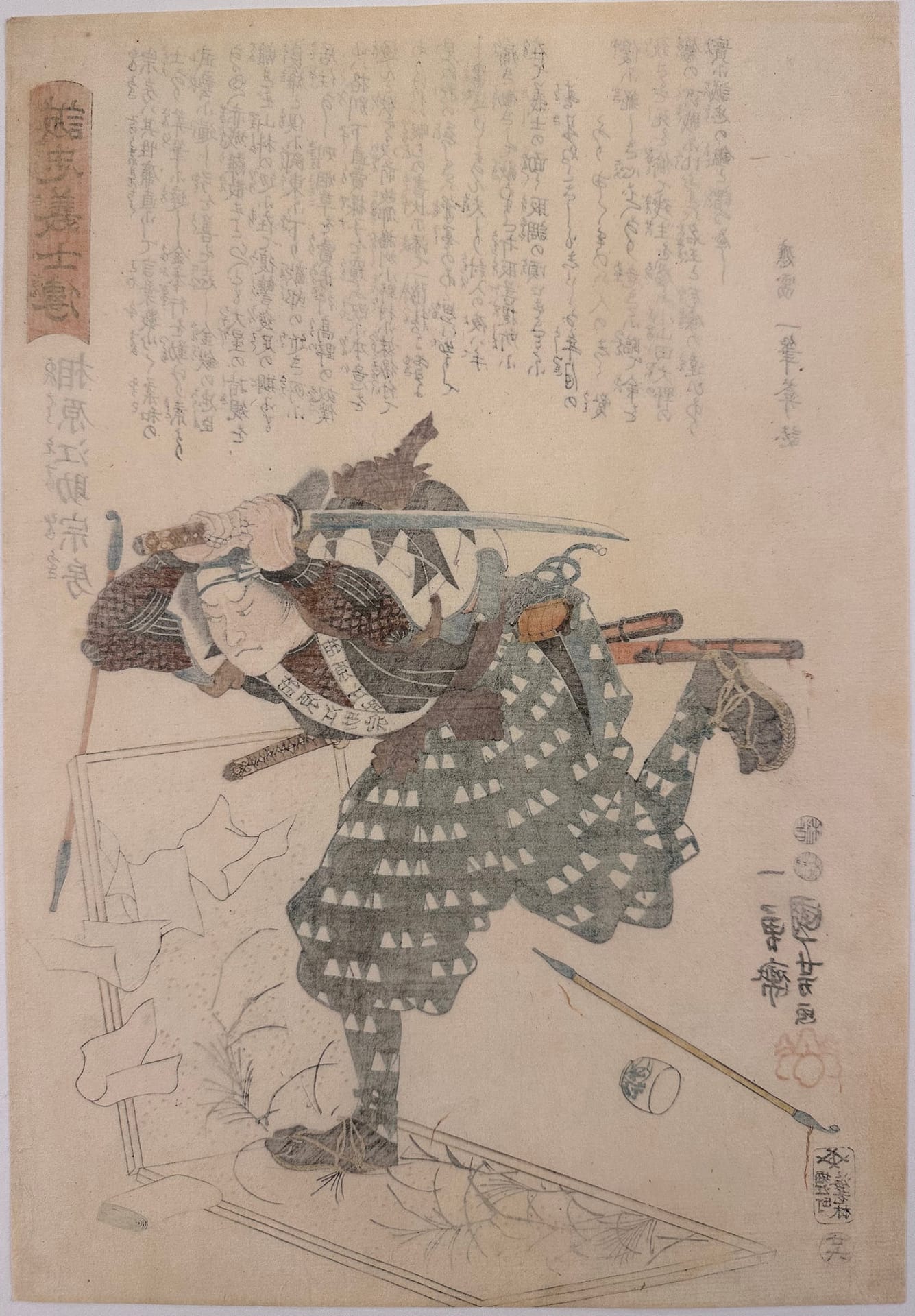
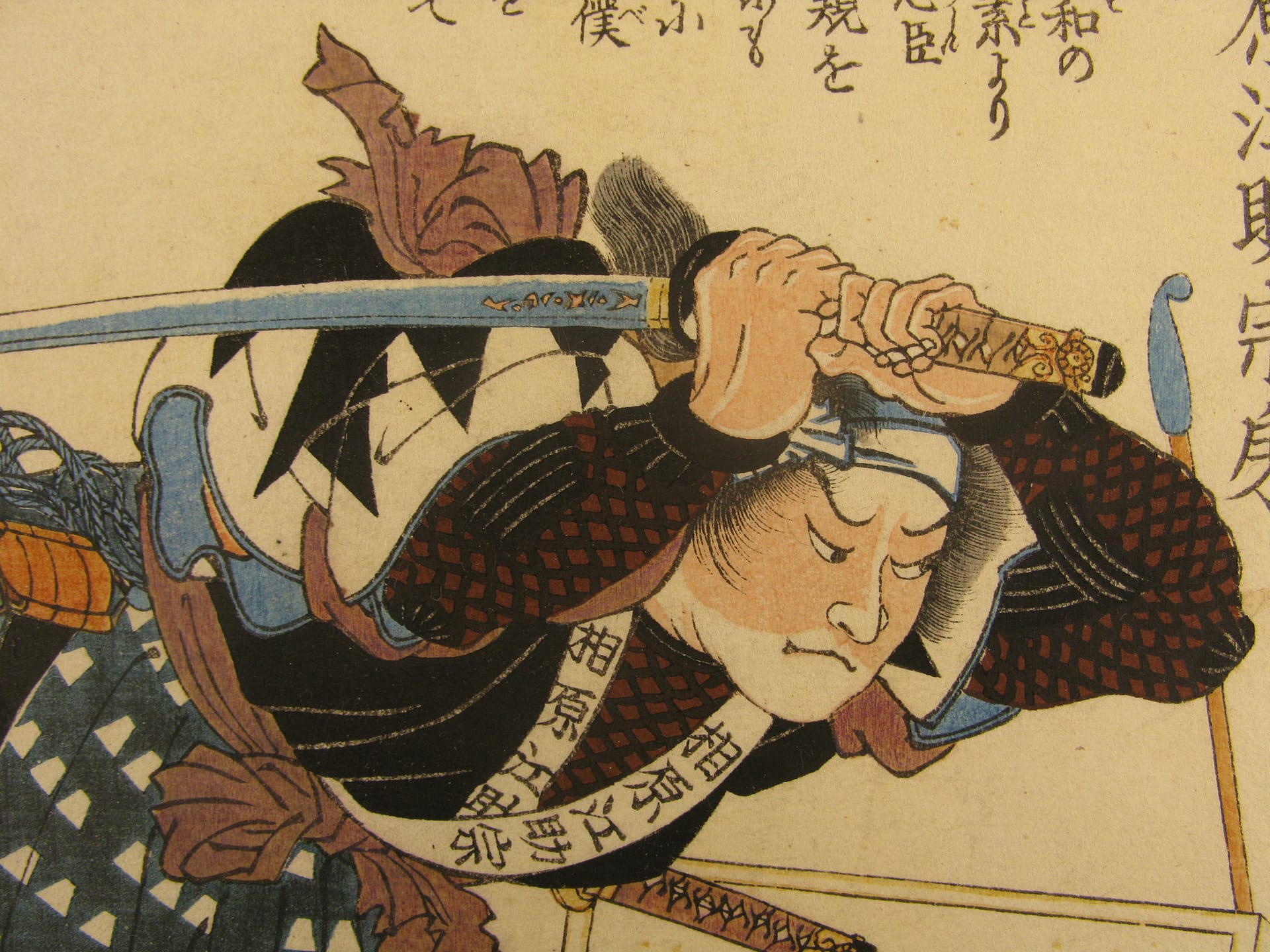
Subject: The ronin Aihara Esuke Munefusa (kabuki name) – trampling a low writing screen
Series: Seichu gishi den (Stories of the true loyalty of the faithful samurai)
Print No: 1.26
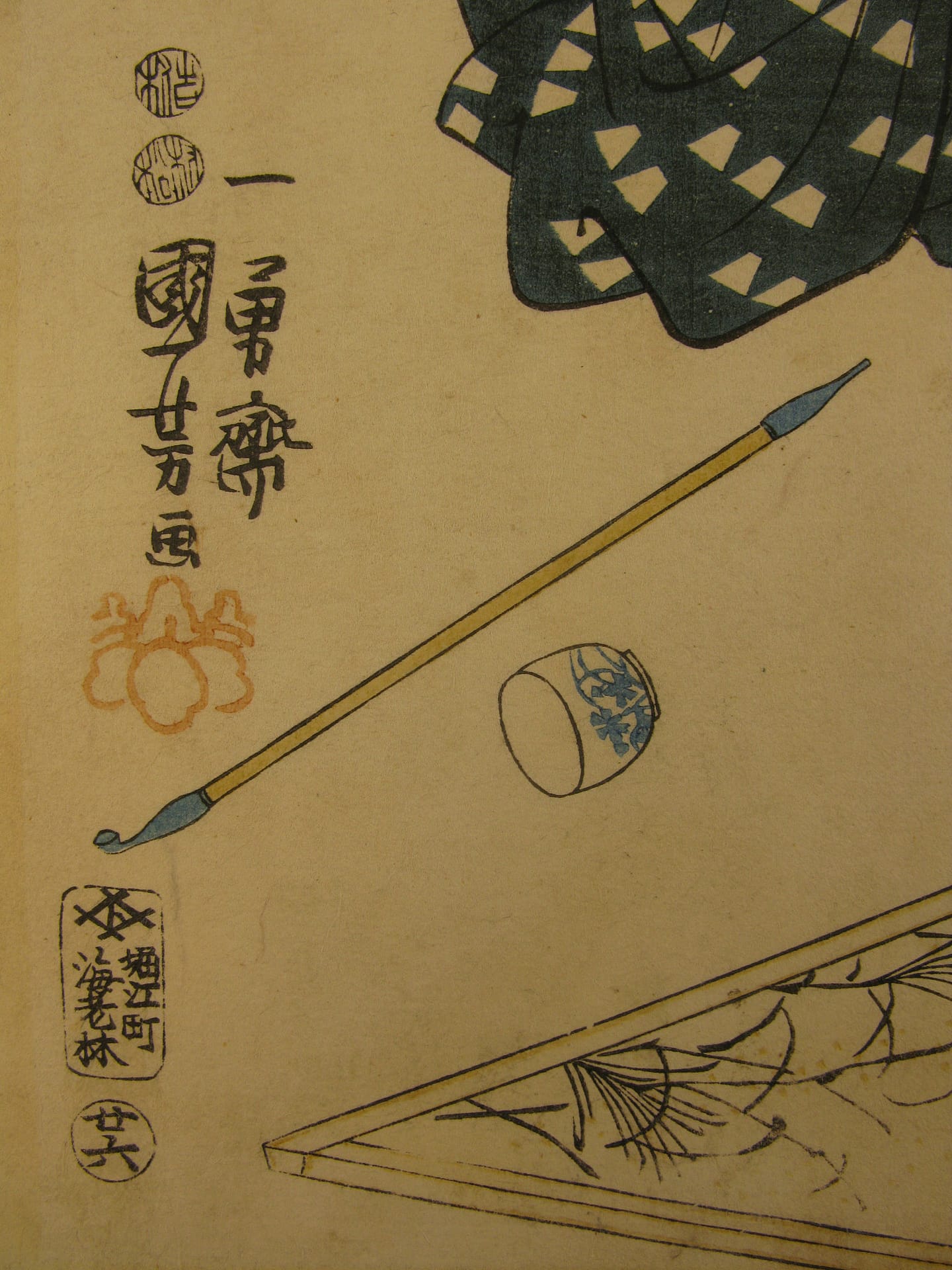
Artist: Utagawa Kuniyoshi (1797-1861)
Signature: Ichiyusai Kuniyoshi ga and kiri seal
Date: 1847-48
Cens: Muramatsu – Yoshimura
Publisher: Ebi-ya Rinnosuke
Size: Oban tate-e, 36.7 x 24.8 cm
Condition: Fine impression, colour and condition. Numbered state
Price: Not for sale at this stage
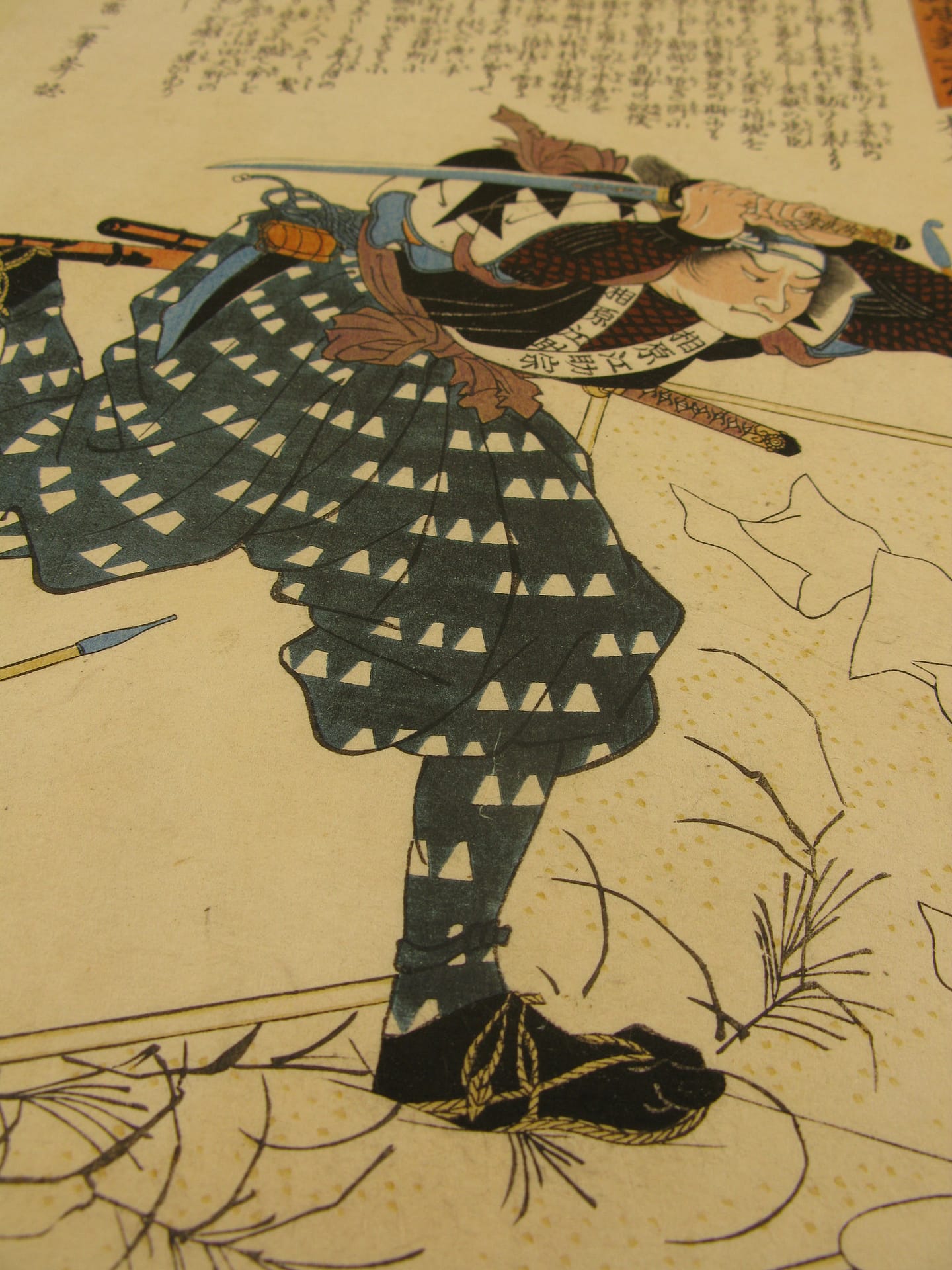
True name: Maebara Isuke Munefusa (前原 伊助 宗房)
Age: Unknown
Katana mei: not documented
Wakizashi mei: not documented
The tale of the text – with a little twist
Munefusa was the kind of man who could balance the books, shoot a bullseye at fifty paces, and still apologize for taking up too much space in the room. A gentle soul with the emotional volatility of a warm cup of tea, he somehow ended up in the middle of one of the most dramatic revenge plots in Japanese history.
When the Akao clan fell apart, Munefusa didn’t panic or run off to start a noodle shop. He simply nodded, packed his things, and followed Oboshi like a loyal golden retriever with excellent archery skills. He even moved near the enemy mansion and became a pipe‑tobacco salesman—because nothing says “undercover operative” like haggling over leaf blends with your enemy’s servants.
Before the big attack, he wrote his sister a poem so beautifully melancholy that even the snow probably felt self‑conscious. Then he calmly joined the raid and proceeded to fight like a man who had been storing all his unexpressed emotions in a quiver.
The next day, during interrogation, he composed another poem—because apparently even imminent execution couldn’t stop his creative flow.
Meanwhile, other men like Oyamada and Ono, who failed to place their lives on the line in the face of danger, were still trying to explain why they had suddenly remembered urgent errands before the battle. Comparing Munefusa to them is like comparing gems to gravel. Which is generous—gravel at least tries to be useful in a driveway.
Munefusa, on the other hand, was the real deal: loyal, brave, poetic, and quietly unstoppable.
For an accurate translation of the print text, I would encourage you to get the book: Kuniyoshi -The faithful samurai by David R Weinberg.