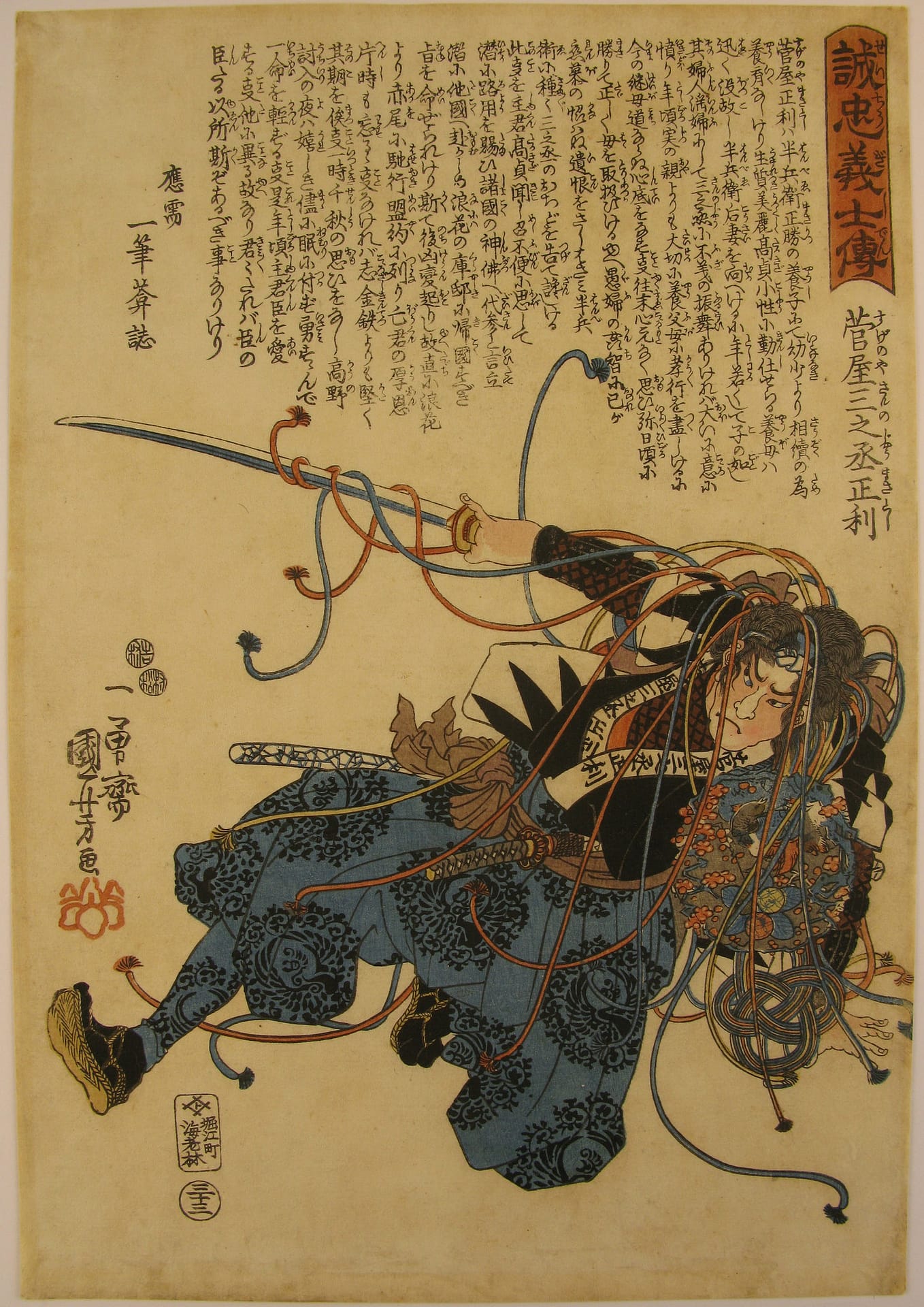
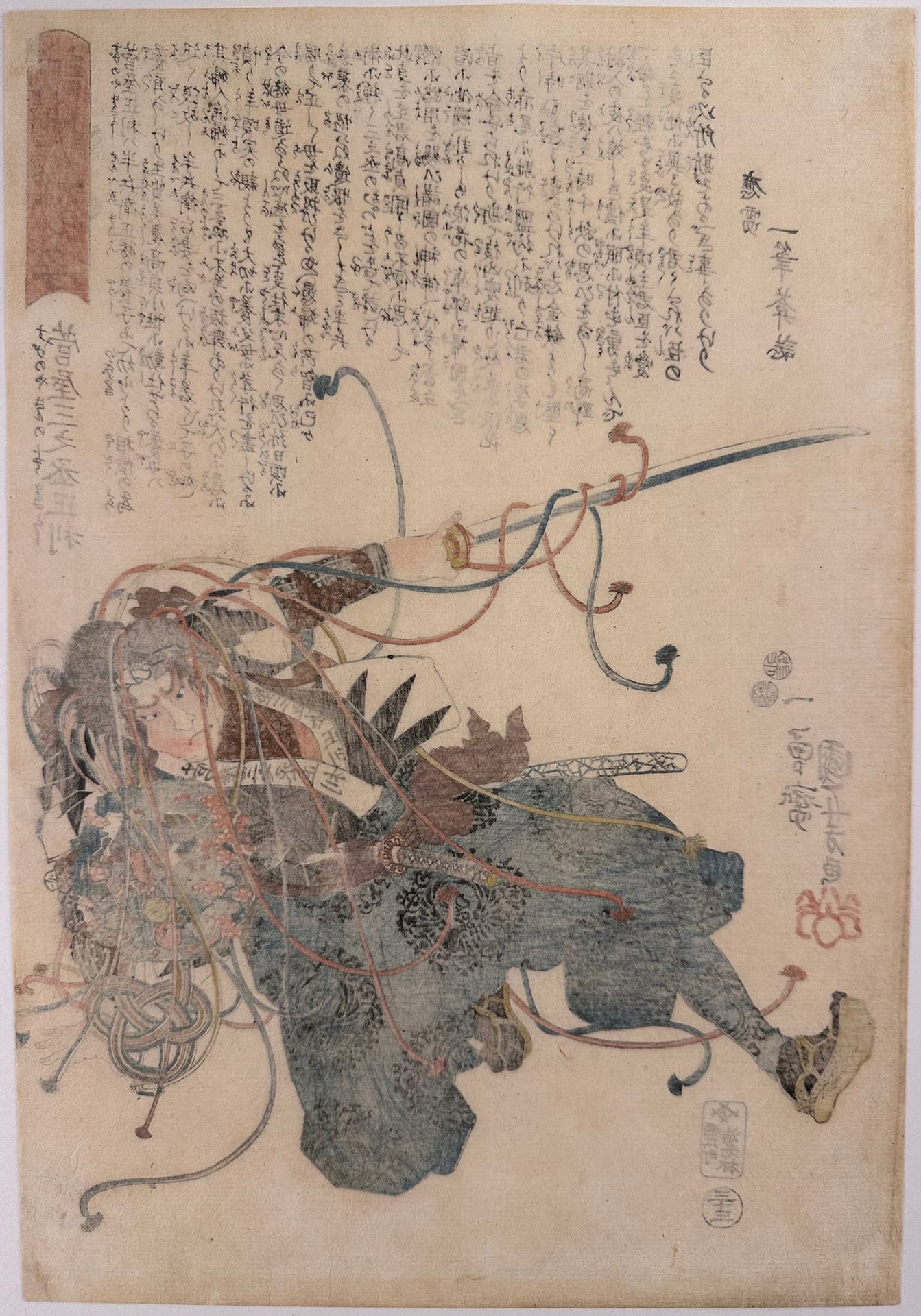
Subject: The ronin Sugenoya Sannojo Masatoshi (kabuki name) – entangled in the streamers of a kusudama (scented ball used to de-odorise garments and space)
Series: Seichu gishi den (Stories of the true loyalty of the faithful samurai)
Print No: 1.33
Artist: Utagawa Kuniyoshi (1797-1861)
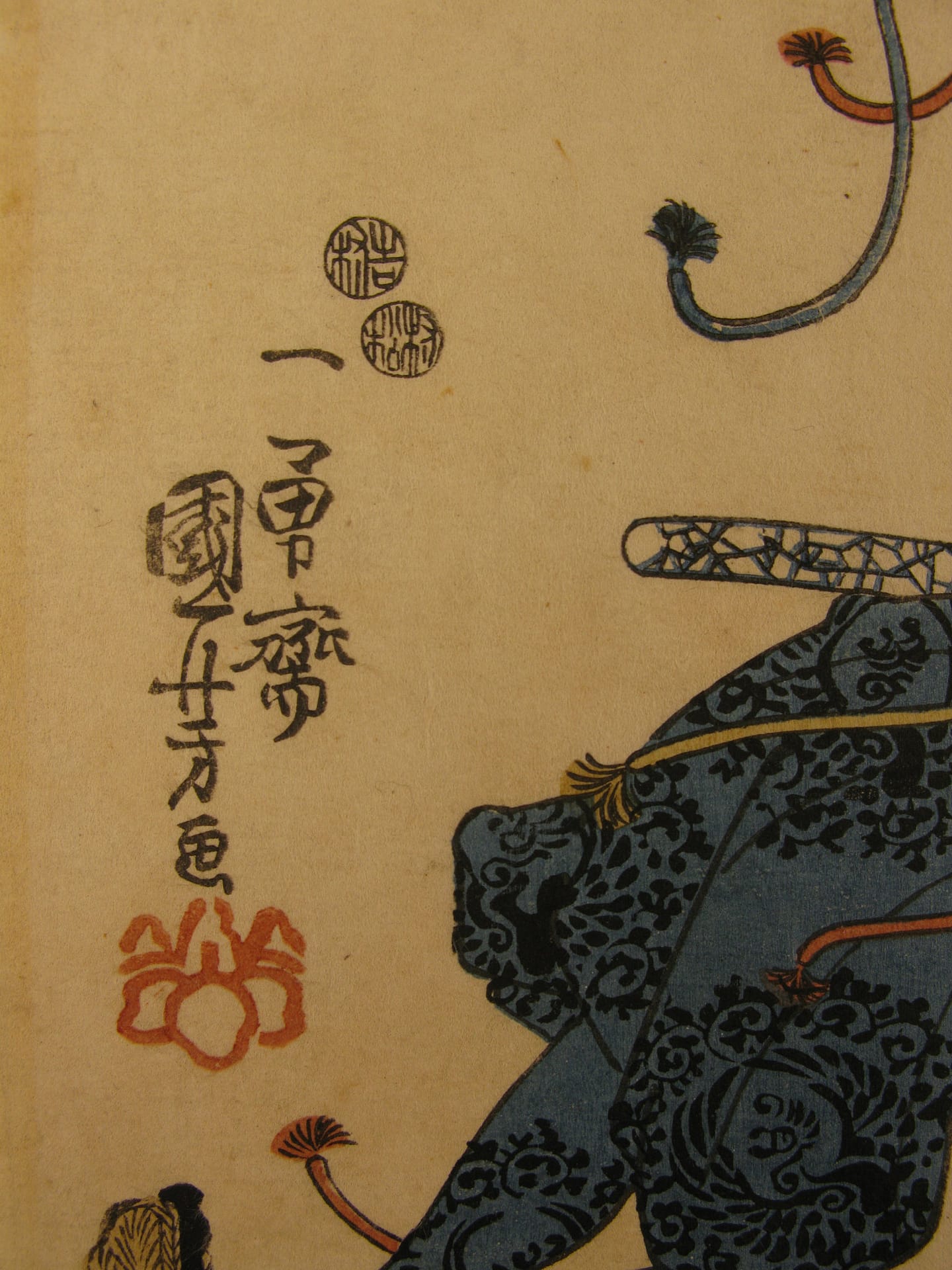
Signature: Ichiyusai Kuniyoshi ga and kiri seal
Date: 1847-48
Cens: Muramatsu – Yoshimura
Publisher: Ebi-ya Rinnosuke
Size: Oban tate-e, 36 x 25 cm
Condition: Fine impression, very good colour and condition. Numbered
Price: Not for sale at this stage
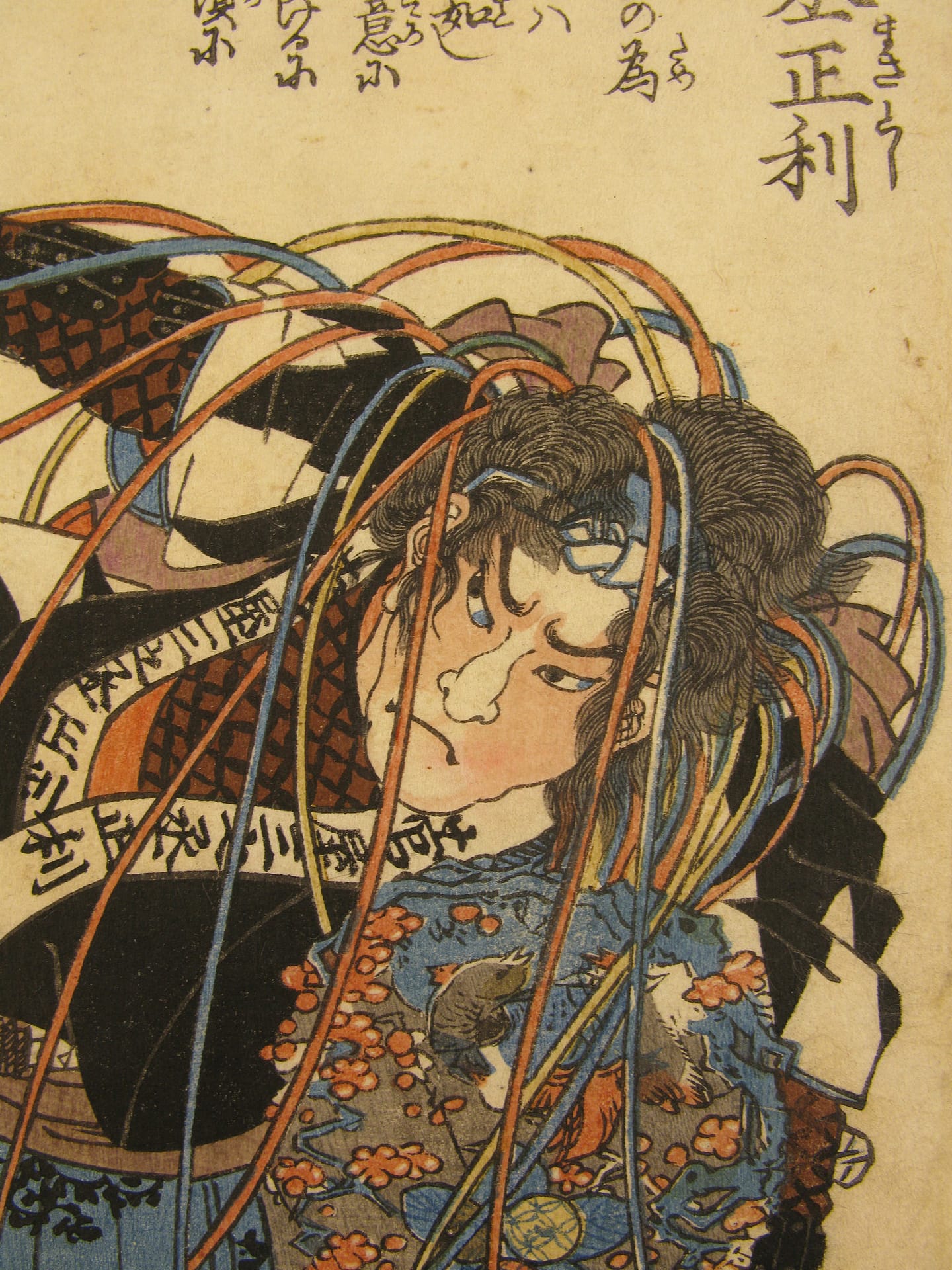
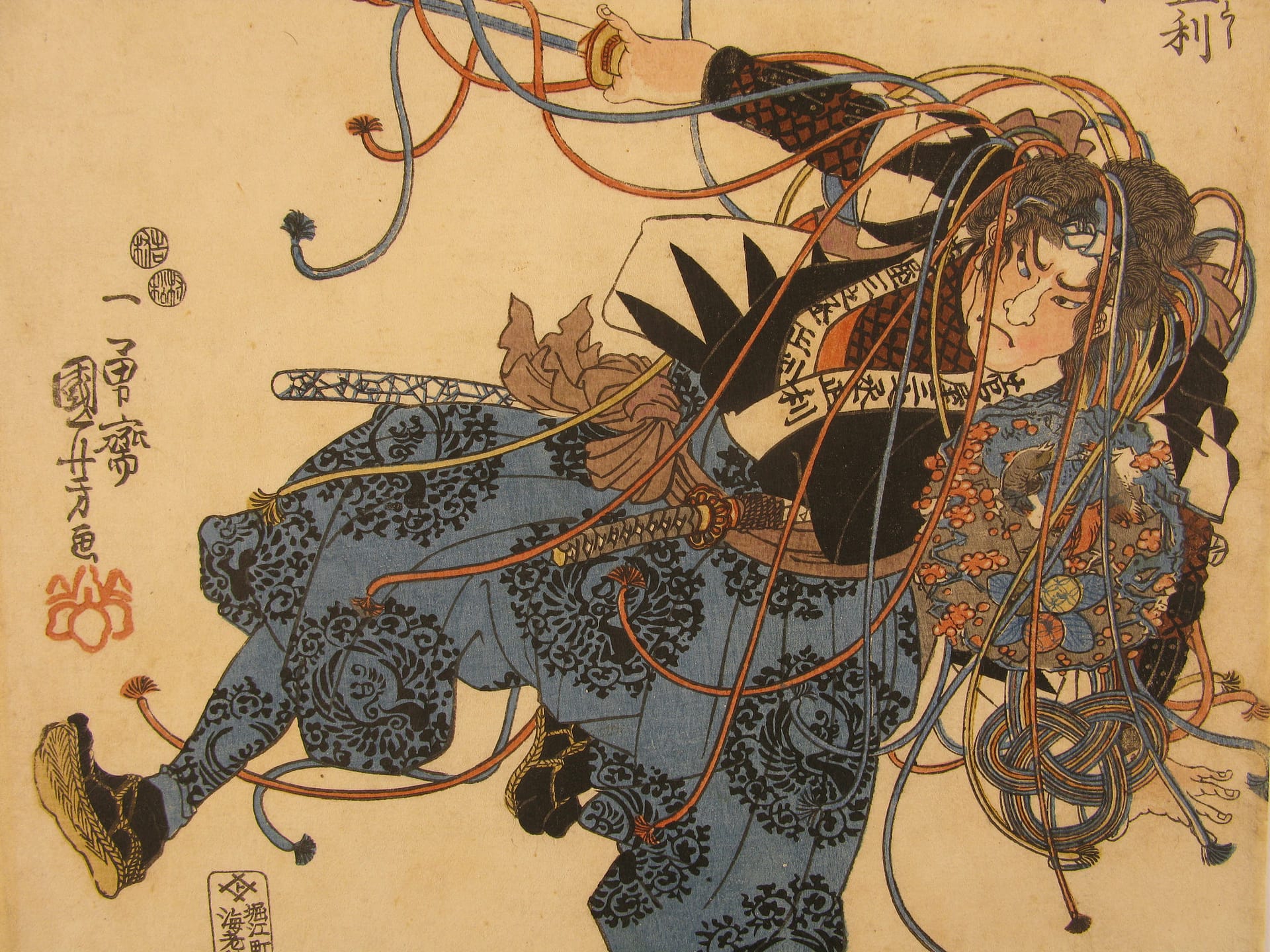
True name: Sugaya Hannojō Masatoshi (菅谷 半之丞 政利)
Age: 44
Katana mei: Michinaga, length 2 shaku 8 sun
Wakizashi mei: mumei, length unknown
The tale of the text – with a little twist
Sugenoya Masatoshi had the kind of life that would make a playwright sigh—handsome, well‑bred, loyal, and tragically surrounded by people who made everything complicated.
First, his foster mother passed away. Then his foster father remarried a woman who was basically Masatoshi’s age and had the moral restraint of a fox in a henhouse. She started making eyes at him, which horrified him so much he probably tried to spend as much time as possible staring at walls.
Masatoshi behaved with flawless propriety, but Hanbei—his foster father—managed to convince himself that the two were having an affair anyway. Masatoshi could have been reciting sutras in the next room and Hanbei still would’ve been muttering, “Suspicious…”
Lord Takasada eventually heard about the domestic drama and decided, very diplomatically, “Absolutely not.” He quietly handed Masatoshi travel money and sent him off on a wholesome pilgrimage to shrines and temples, which is the Edo‑period equivalent of telling someone to “take a long, calming vacation before this gets messy.”
After finishing his assigned duties in Naniwa, Masatoshi sprinted back to Akao and joined the revenge plot with the enthusiasm of a man who finally found a problem he wanted to deal with. His loyalty was so intense that waiting for the attack felt the same to him whether it was an hour or a millennium.
When the night finally came, he was too excited to sleep—like a kid on New Year’s Eve, except instead of fireworks he was preparing for armed combat.
He charged into the mission with total fearlessness, because in his mind, life weighed nothing compared to loyalty. The narrator concludes with a firm moral: a lord is a lord, a subject is a subject, and Masatoshi understood that better than anyone.
For an accurate translation of the print text, I would encourage you to get the book: Kuniyoshi -The faithful samurai by David R Weinberg.