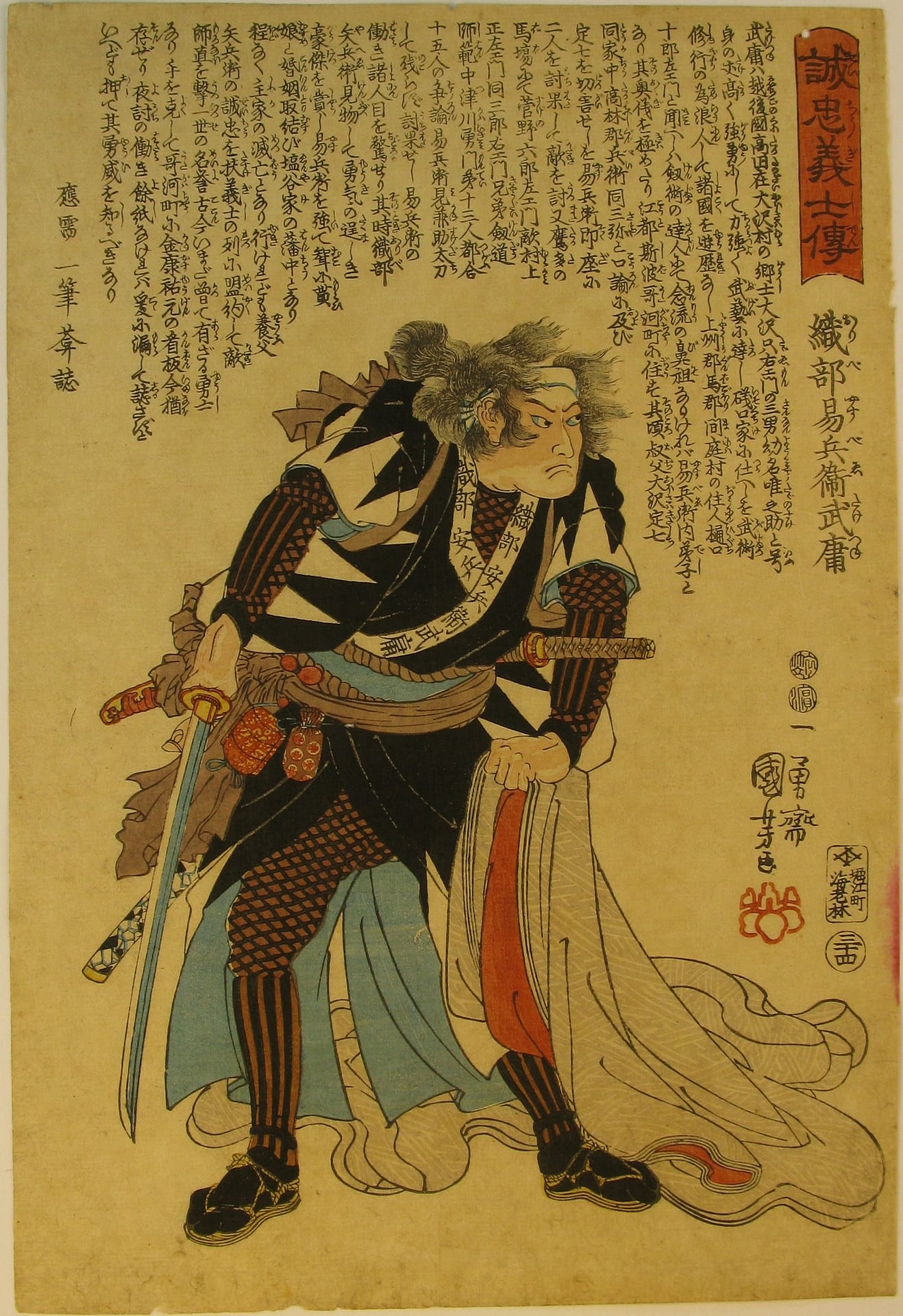
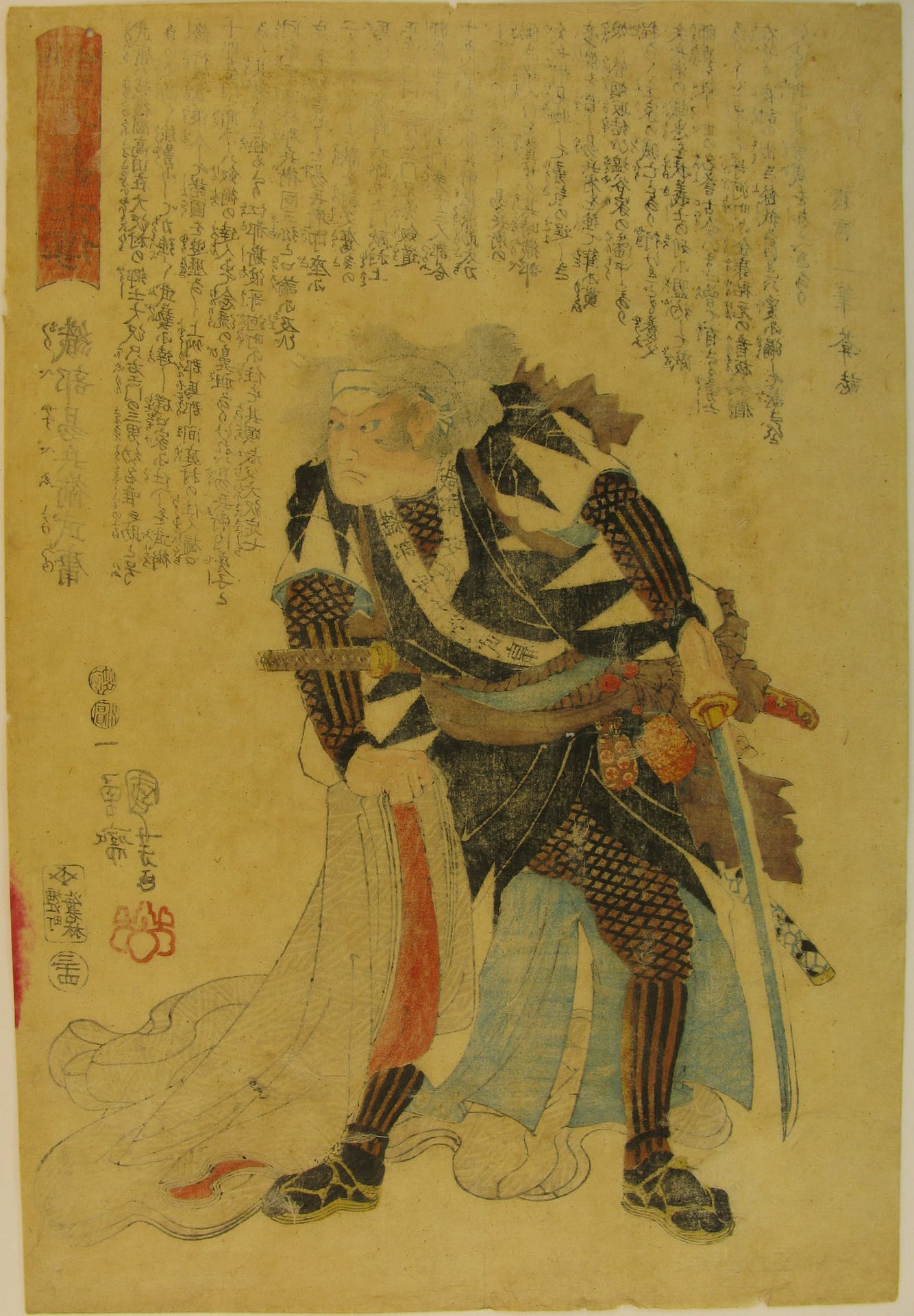
Subject: The ronin Oribe Yasubei Taketsune (kabuki name) – with Moronao’s robe in hand, his exploits that night are not told, but known to all
Series: Seichu gishi den (Stories of the true loyalty of the faithful samurai)
Print No: 1.34
Artist: Utagawa Kuniyoshi (1797-1861)
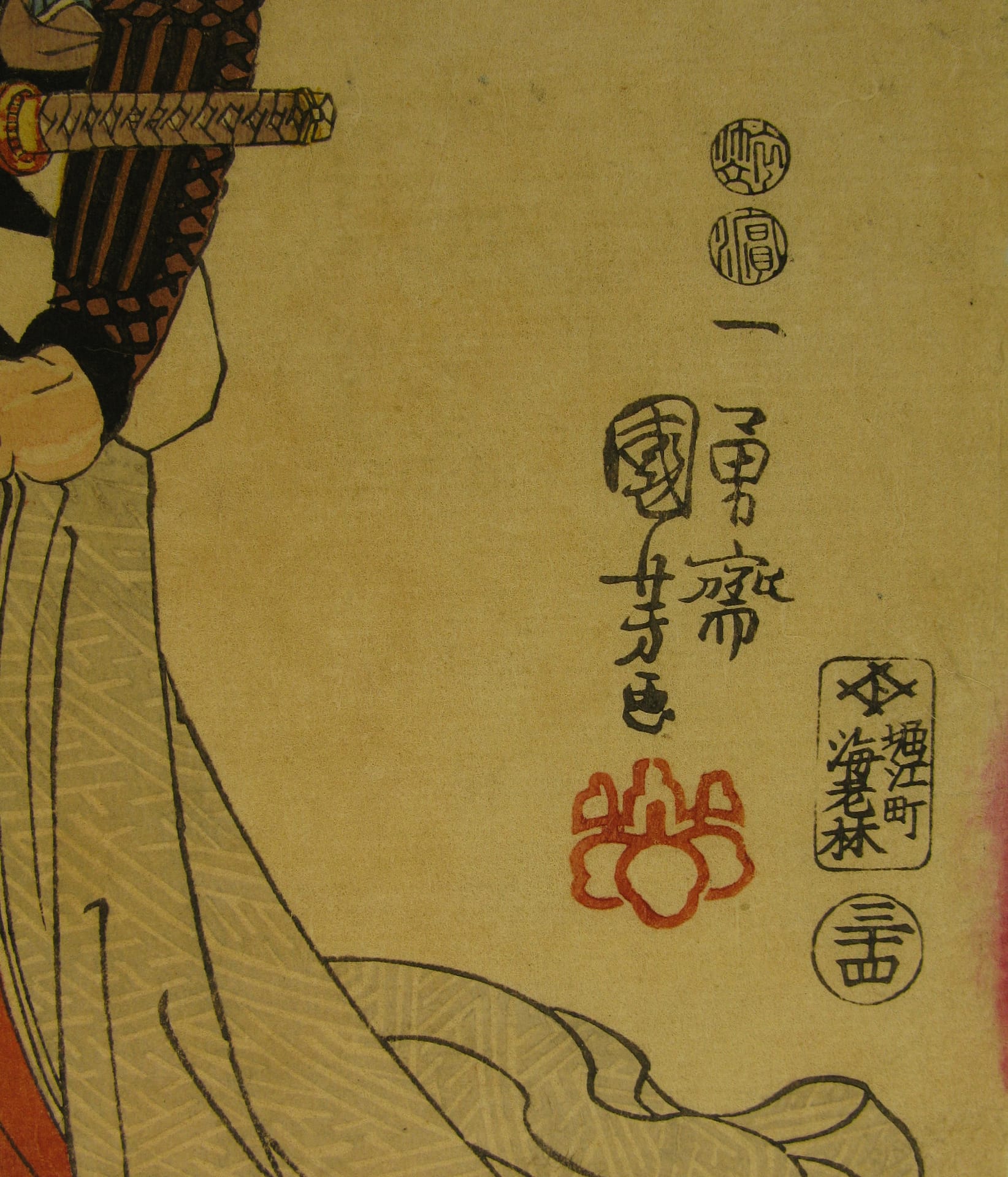
Signature: Ichiyusai Kuniyoshi ga and kiri seal
Date: 1847-48
Cens: Hama – Kinugasa
Publisher: Ebi-ya Rinnosuke
Size: Oban tate-e, 37.6 x 25.4 cm
Condition: Very good impression, good colour and condition, some marks and staining. binding hole. Numbered
Price: Not for sale at this stage
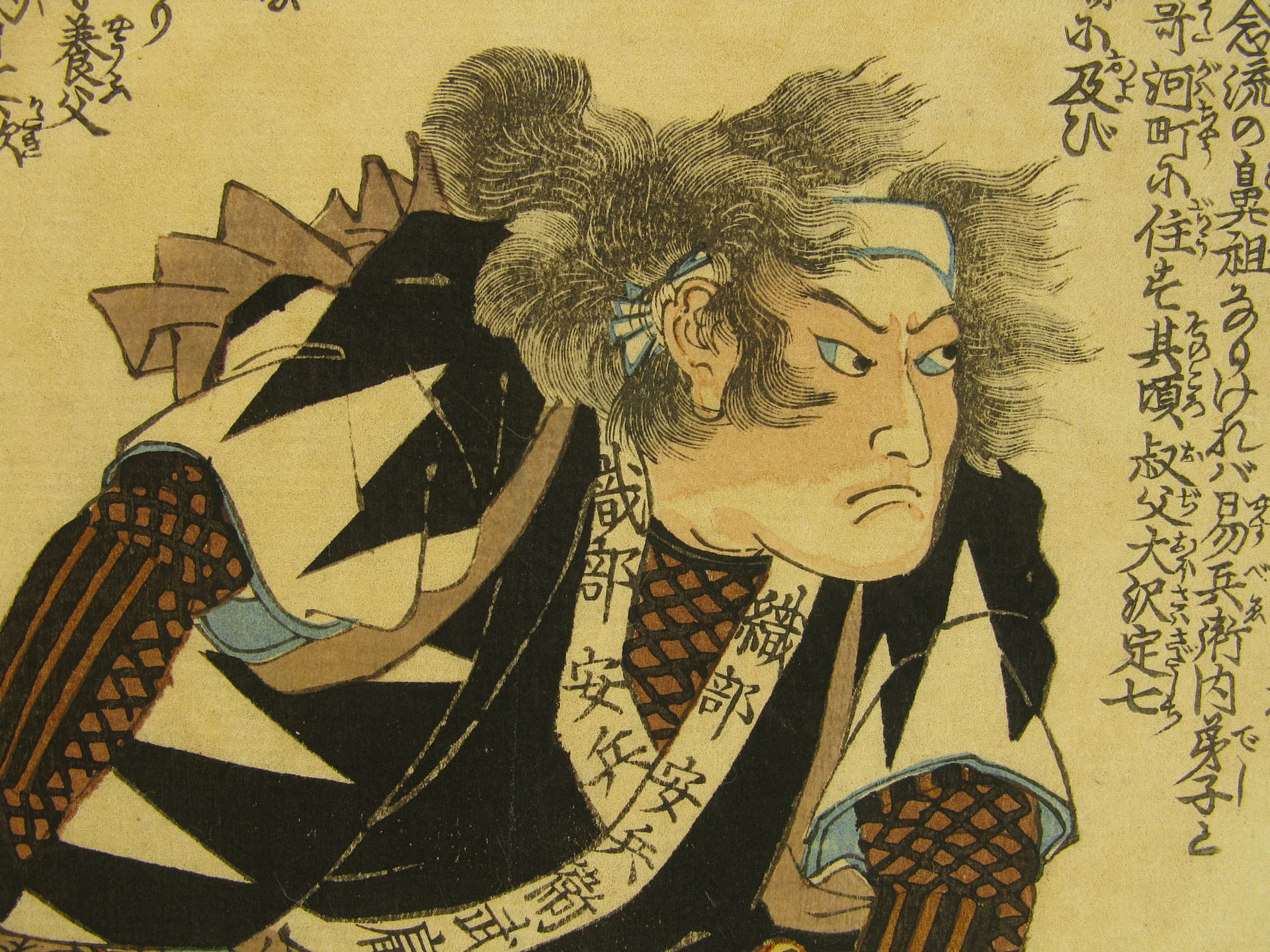
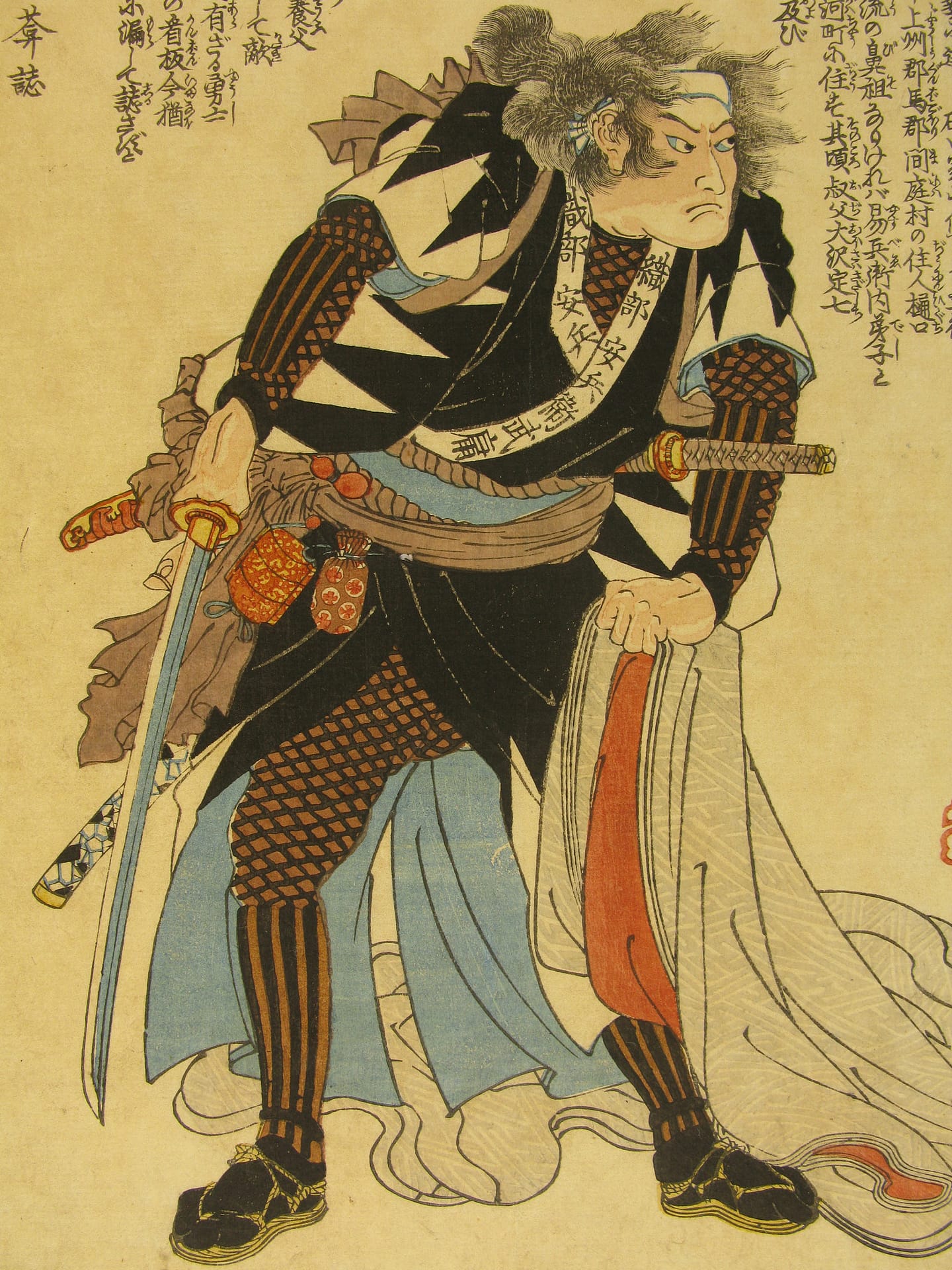
True name: Horibe Yasubei Taketsune (堀部 安兵衛 武庸)
Age: 34
Katana mei: Kanekuni, length 2 shaku 8 sun
Wakizashi mei: mumei, length unknown
The tale of the text – with a little twist
Osawa Yasubei — later known as Oribe Yasubee — started life as the third son of a respectable Echigo family, but he quickly decided that “respectable” wasn’t nearly exciting enough. Tall, strong, and trained in weaponry, he drifted into rōnin life like a man auditioning for the role of “Most Dangerous Guy in Edo.”
He wandered the provinces sharpening his skills until he found Higuchi Jūrōzaemon, founder of the Nenryū school — a swordsman so legendary he probably made people nervous just by standing still. Yasubei became his disciple and mastered the entire curriculum, which was essentially “How to Win Fights You Shouldn’t Be Able to Win.”
While living in Edo, Yasubei ran into some family drama: his uncle got into an argument with two Takahashi brothers, who solved the disagreement by killing him. Yasubei responded by killing them, which is one way to settle a family dispute. Most people would write a stern letter. Yasubei wrote a three‑body problem.
Then came the Takata‑no‑Baba incident, where Yasubei single‑handedly defeated fifteen men — including Murakami Masazaemon, his brother Saburōzaemon, and thirteen kendō students — all by himself. No backup, no dramatic soundtrack, just Yasubei and a growing pile of people who regretted their life choices.
Oribe Yahei happened to witness this display of “extreme conflict resolution” and was so impressed that he immediately offered Yasubei his daughter’s hand in marriage. This is the Edo‑period equivalent of seeing someone win a bar fight and deciding, “Yes, that one should join the family.” Yasubei accepted, took the Oribe name, and officially joined the En’ya clan.
Unfortunately, the En’ya house dissolved almost immediately afterward — which is the historical version of starting a new job and finding out the company is bankrupt on your first day. Yasubei, unfazed, simply joined his new father‑in‑law and the other rōnin in the vendetta against Moronao.
As for his role in the night attack? The chronicler basically throws up his hands and says, “There isn’t enough room on the page to describe everything Yasubei did.” Which is historian‑speak for:
“He did so much chaos we can’t even list it.”
And honestly, given his track record — fifteen‑man duels, family‑avenging rampages, and spontaneous marriage proposals — it’s probably for the best. If they’d written down all of Yasubei’s exploits, the book would’ve needed its own scaffolding.
Even now, the storytellers of Utagawa Chō are still dramatizing his feats, probably because audiences enjoy tales of a man who treated swordsmanship like a competitive sport and life like a series of increasingly dramatic side quests.
For an accurate translation of the print text, I would encourage you to get the book: Kuniyoshi -The faithful samurai by David R Weinberg.