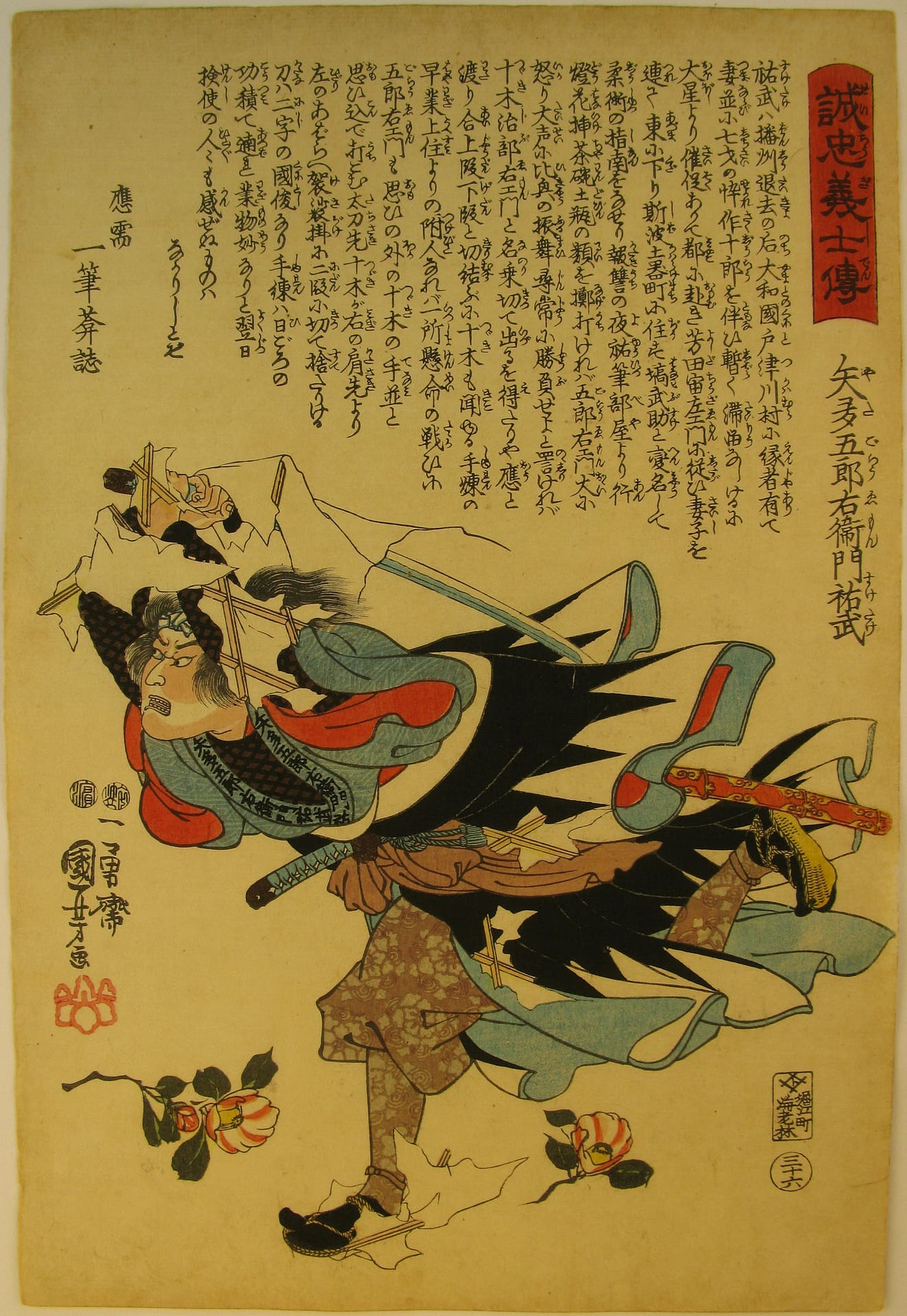
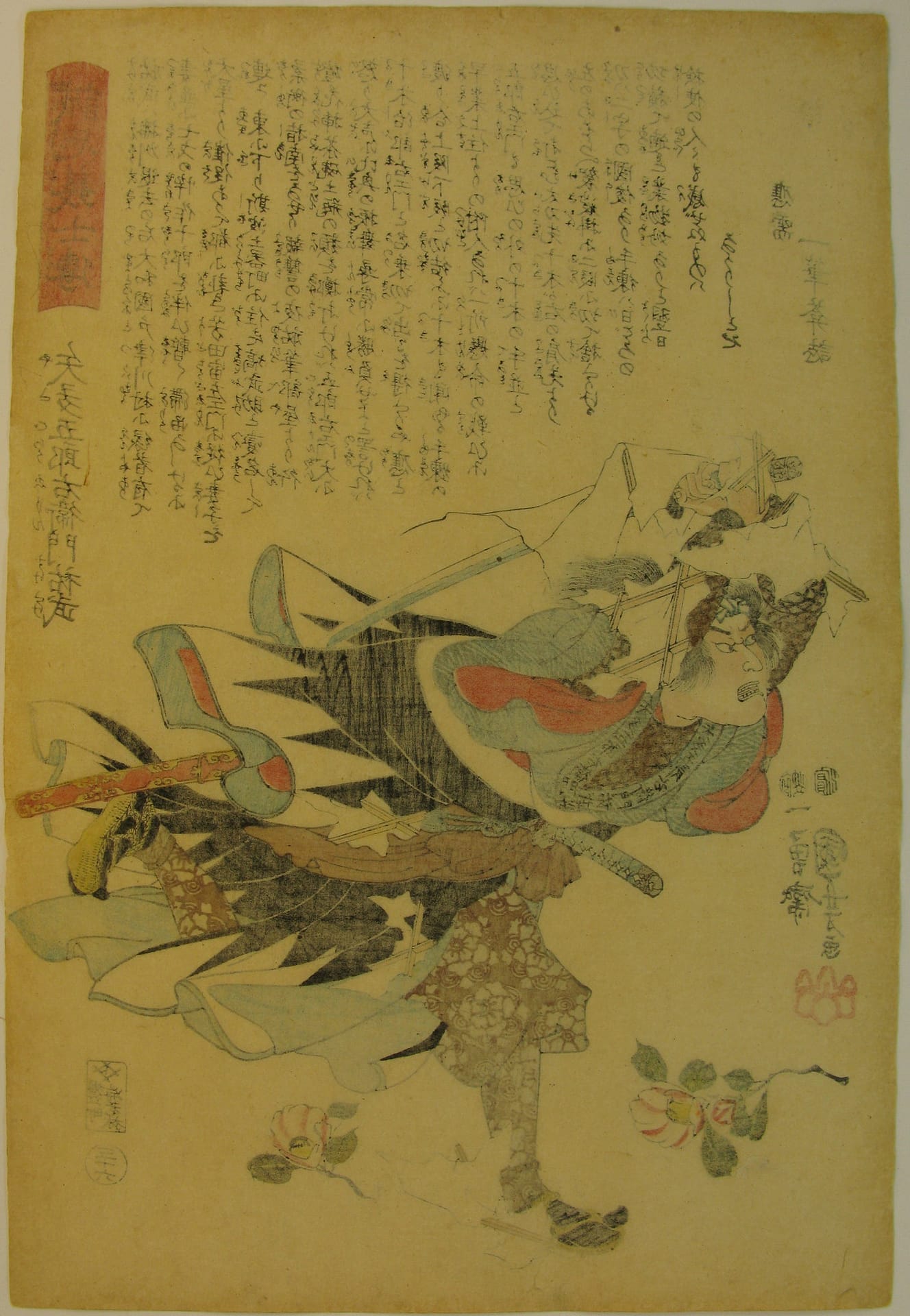
Subject: The ronin Yata Goroemon Suketake (kabuki name) – assialed by a lamp, flower vase, tea bowl and an earthen pot, he finally is about to face the highly skilled swordsman Tsuzuki Jitsuemon
Series: Seichu gishi den (Stories of the true loyalty of the faithful samurai)
Print No: 1.36
Artist: Utagawa Kuniyoshi (1797-1861)
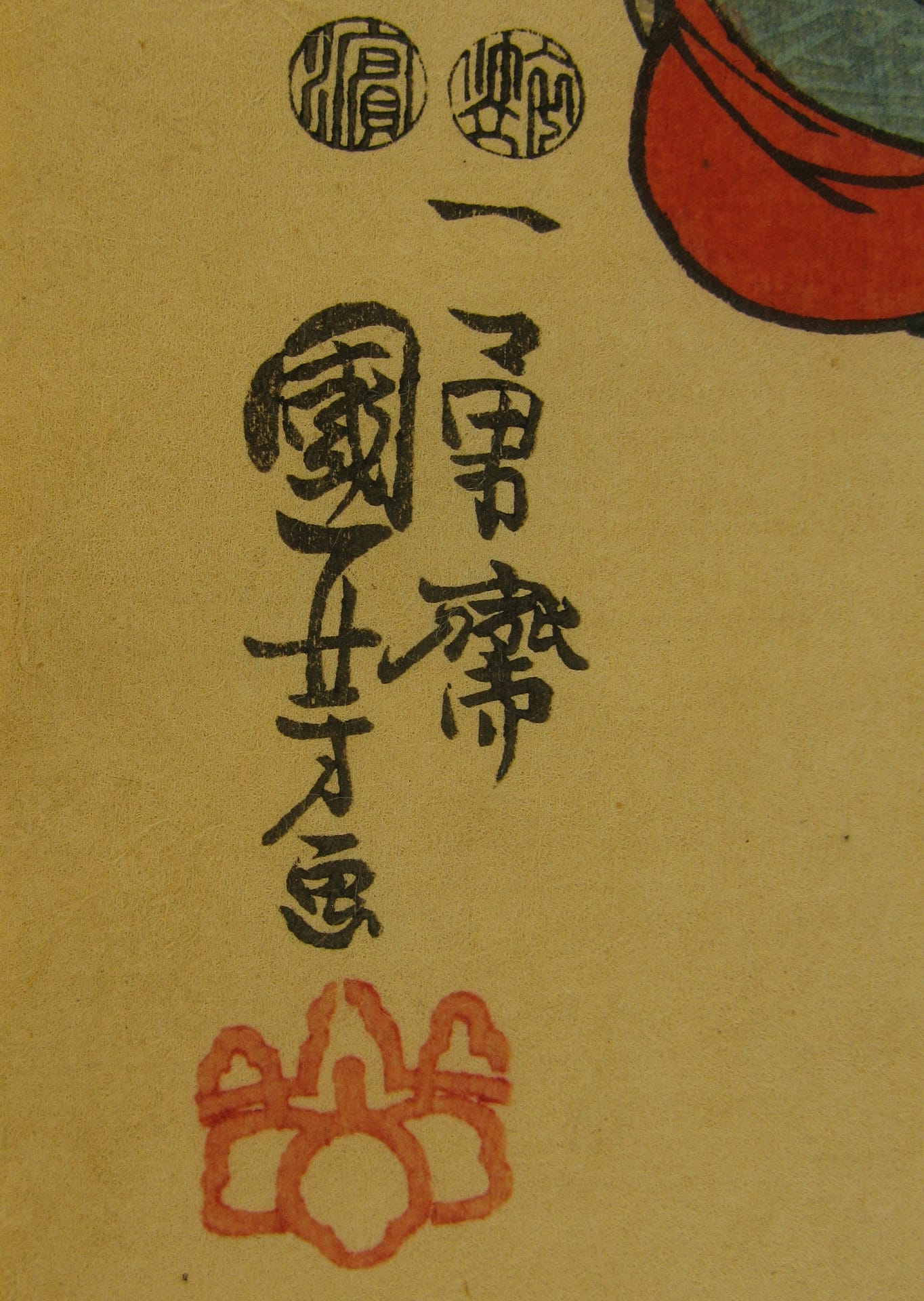
Signature: Ichiyusai Kuniyoshi ga and kiri seal
Date: 1847-48
Cens: Hama – Kinugasa
Publisher: Ebi-ya Rinnosuke
Size: Oban tate-e, 37.6 x 25.4 cm
Condition: Fine impression, colour and condition. Numbered state
Price: Not for sale at this stage
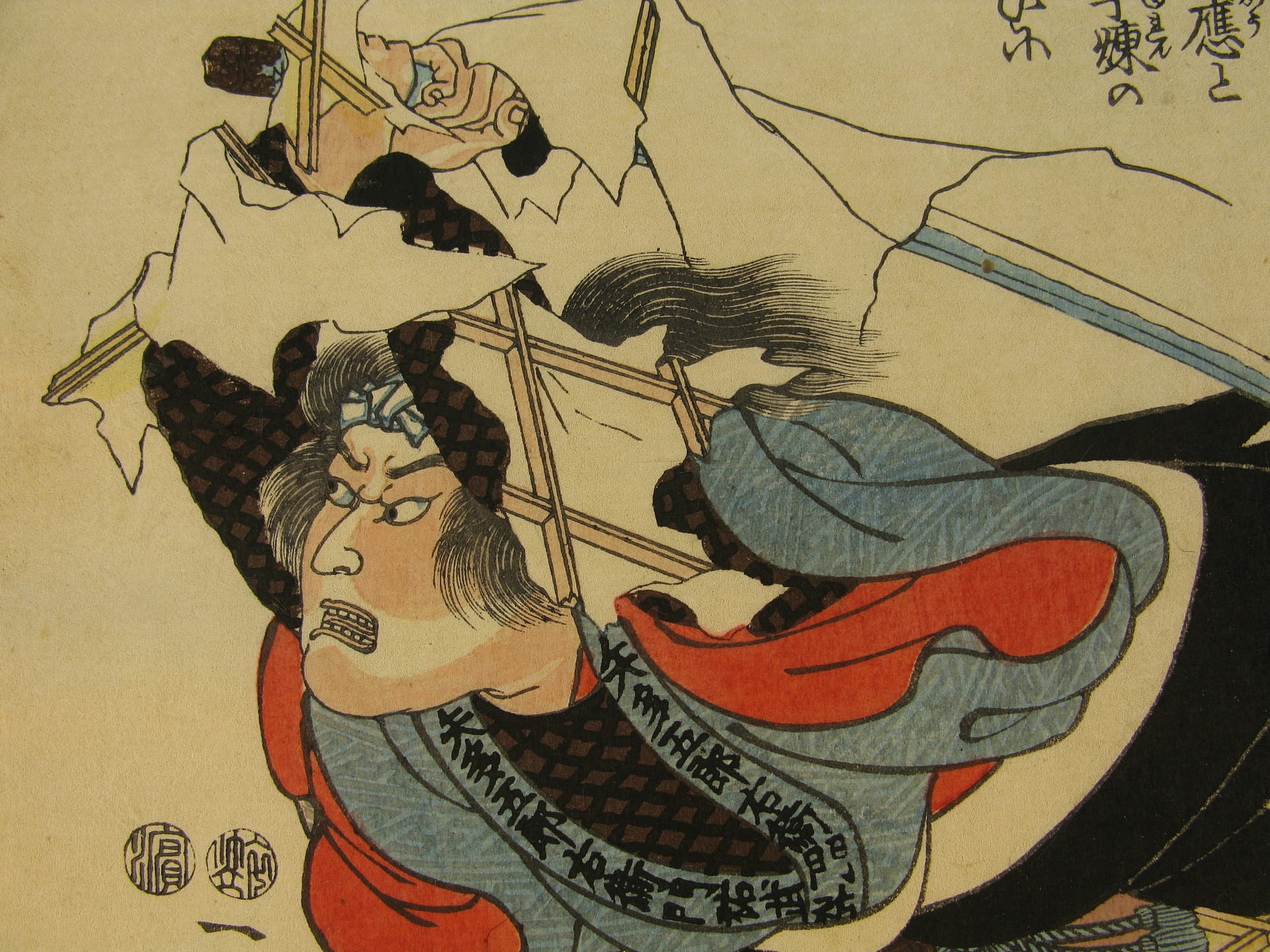
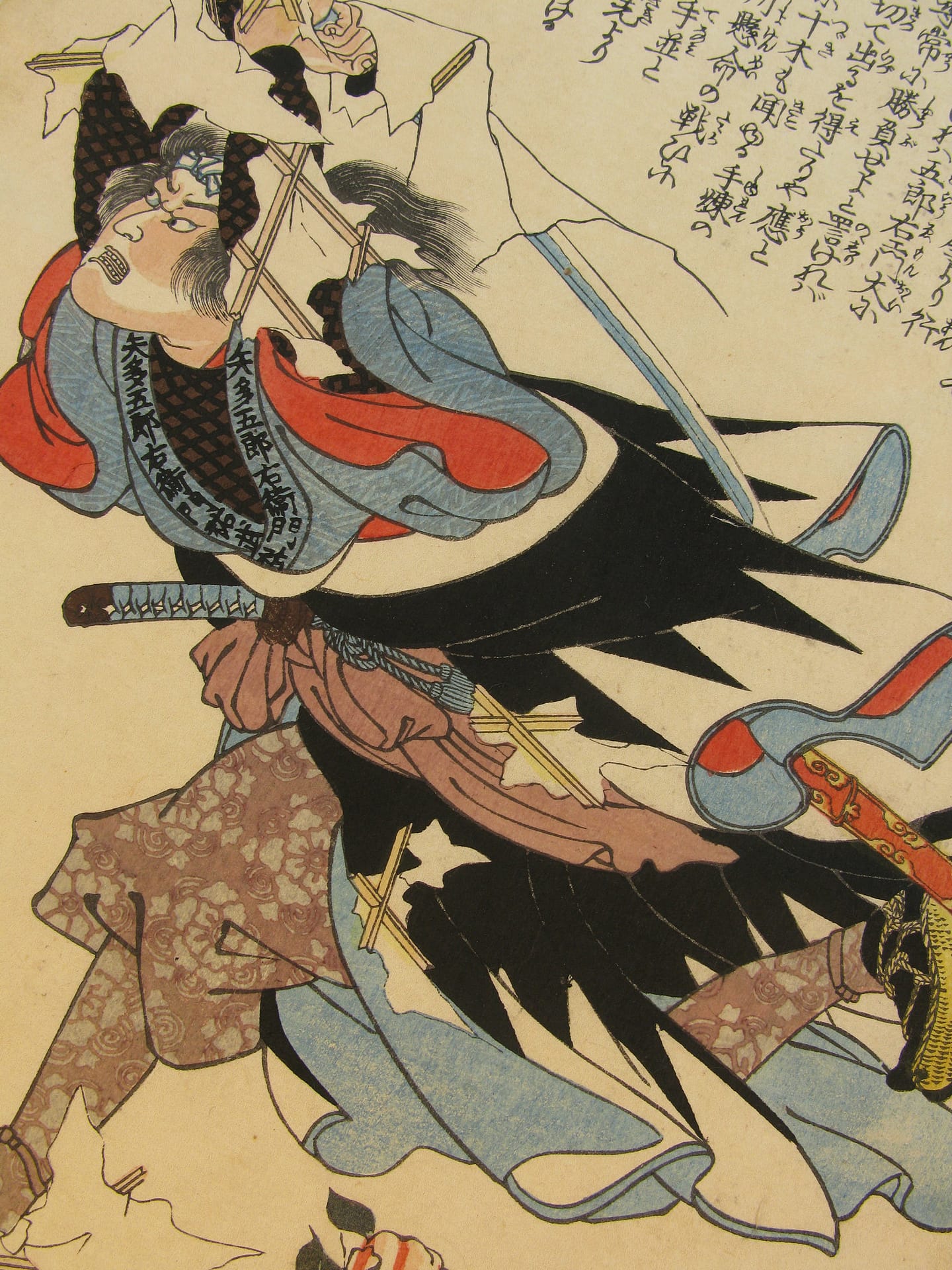
True name: Yada Gorōemon Suketake (矢田 五郎右衛門 助武)
Age: 29
Katana mei: Kunisuke (1,2), length 2 shaku (although the print text suggests it was signed niji mei (2 character) ‘Kunitoshi’)
Wakizashi mei: mumei, length 1 shaku 6 sun
The tale of the text – with a little twist
After the fall of the Akao clan, Taketsune Suketake packed up his life, his wife, and his seven‑year‑old son Sakujūrō and headed to Totsukawa to stay with relatives. Most people in that situation would focus on rebuilding their lives. Suketake instead treated it like a brief layover before his next major revenge‑related career move.
Sure enough, word arrived from Ōboshi: the rōnin were regrouping in the Kantō. Suketake immediately set off again — first to Kyoto, then all the way to Azuma — dragging his wife and child along like they were on the world’s least relaxing family holiday. Once in Shiba Kawarakemachi, he reinvented himself as Hanawa Busuke, a mild‑mannered jujitsu instructor. Nothing suspicious about that at all.
On the night of the attack, Suketake stormed into the mansion ready for battle — only to be greeted not by swords, but by a barrage of household items: a lamp, a flower vase, a tea bowl, and an earthen pot. It was less “samurai duel” and more “angry pottery class.” Understandably offended, Suketake shouted something along the lines of, “Stop throwing décor at me and fight properly!”
This finally coaxed out Tsuzuki Jitsuemon, who stepped forward swinging his sword and announcing his name like he was entering an MMA ring. The two exchanged thrusts high and low, each trying to outdo the other in dramatic technique. Tsuzuki was no amateur — he was an Uesumi assistant and fought with the enthusiasm of a man who had not expected to be woken up by a vengeful jujitsu teacher.
Suketake, impressed but not intimidated, eventually landed a decisive strike that ended the duel. His sword, bearing the characters of Kunitoshi, gleamed with the kind of craftsmanship that makes weapon collectors sigh wistfully.
When inspectors arrived the next day, they marveled at Suketake’s technique. It’s not every day you see a man who can travel across Japan with his family, run a jujitsu school under an alias, and still deliver a performance worthy of a swordsmanship exhibition — even after being pelted with half the contents of a secretary’s room.
Suketake proved himself a warrior of skill, discipline, and remarkable patience for airborne ceramics.
For an accurate translation of the print text, I would encourage you to get the book: Kuniyoshi -The faithful samurai by David R Weinberg.