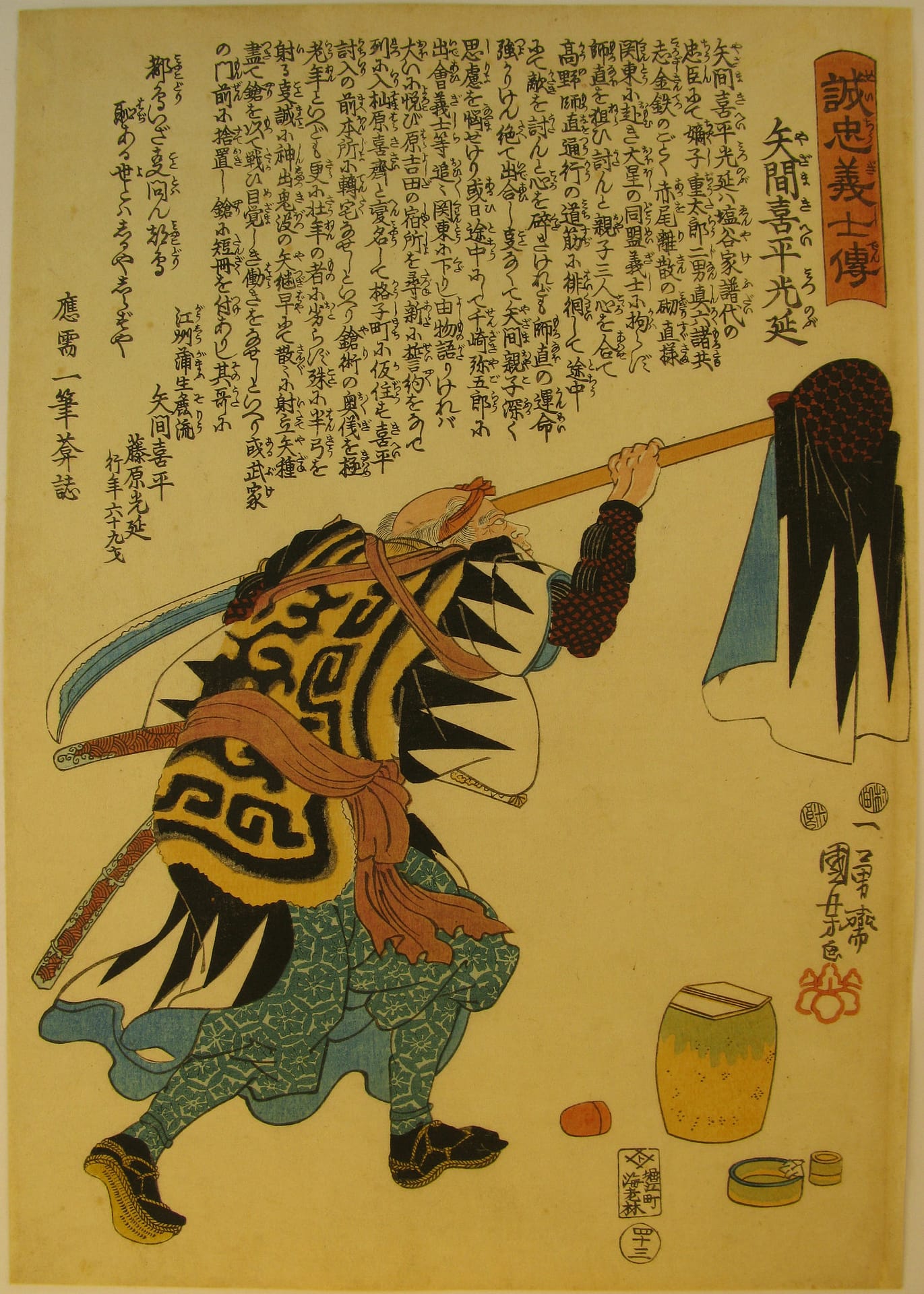
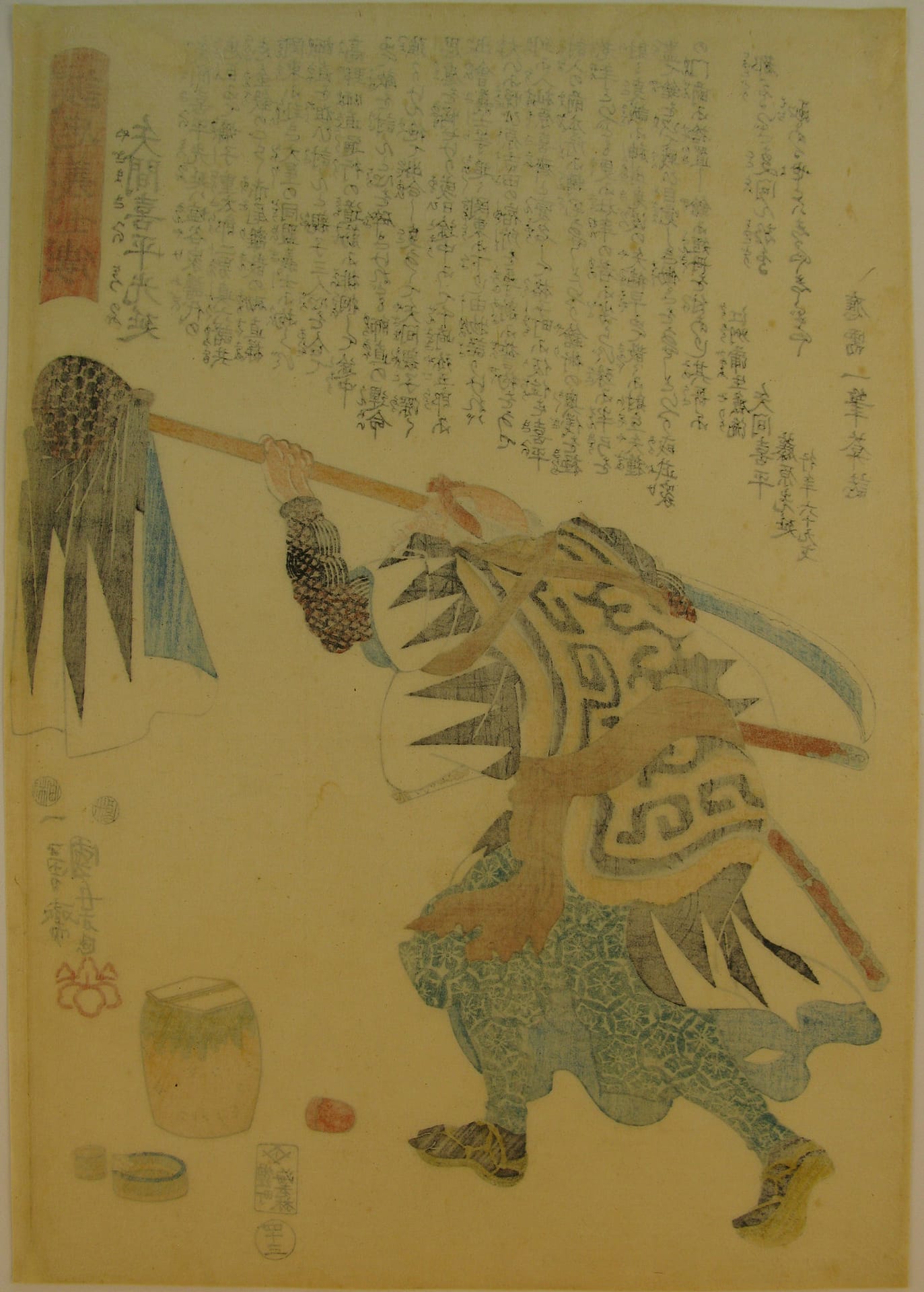
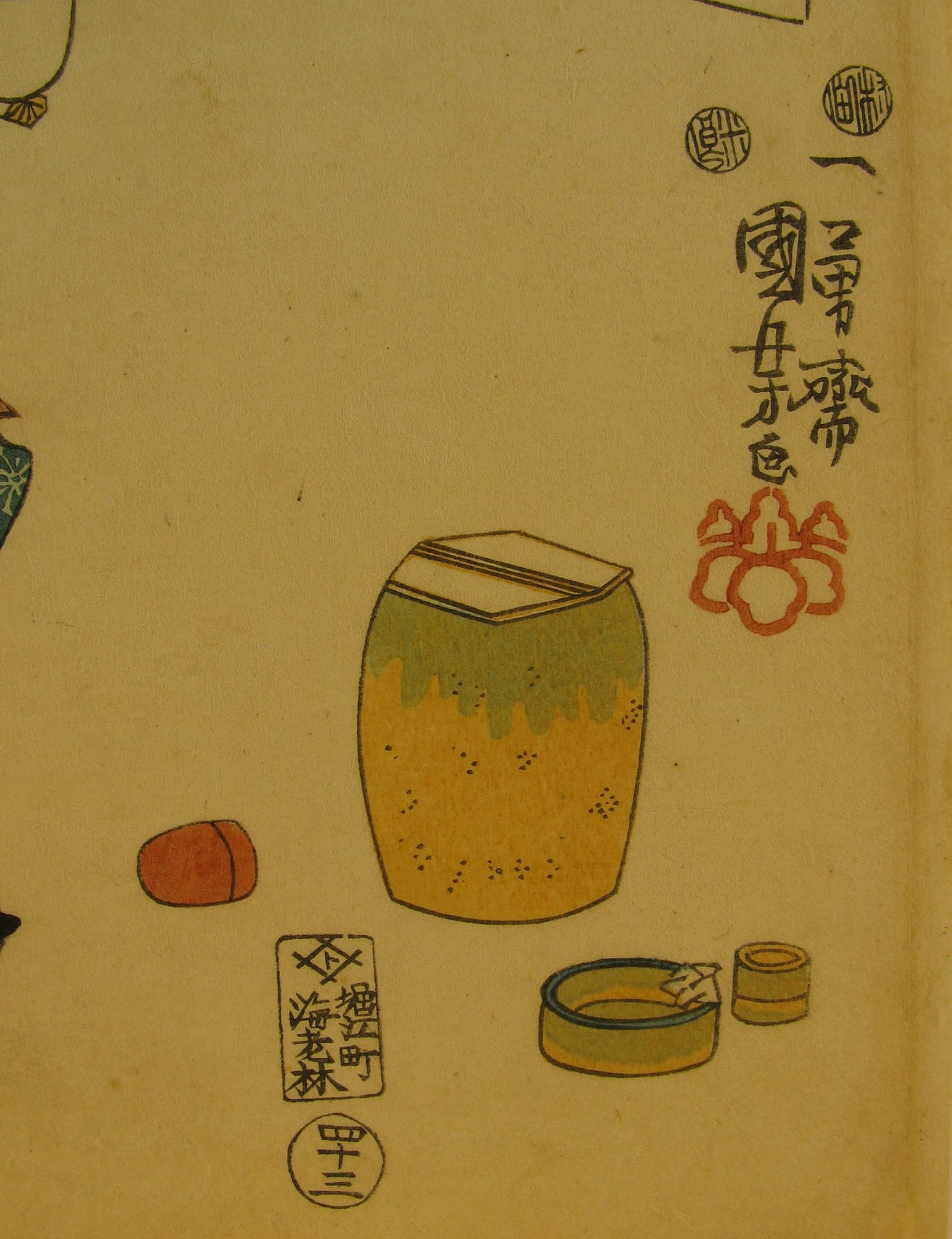
Subject: The ronin Yazama Kihei Mitsunobu (kabuki name) – helmet and cape on the blunt end of his naginata with jar and cups on the ground
Series: Seichu gishi den (Stories of the true loyalty of the faithful samurai)
Print No: 1.43
Artist: Utagawa Kuniyoshi (1797-1861)
Signature: Ichiyusai Kuniyoshi ga and kiri seal
Date: 1847-48
Cens: Mera – Murata
Publisher: Ebi-ya Rinnosuke
Size: Oban tate-e, 36.3 x 25.4 cm
Condition: Very good impression, colour and condition. Numbered
Price: Not for sale at this stage
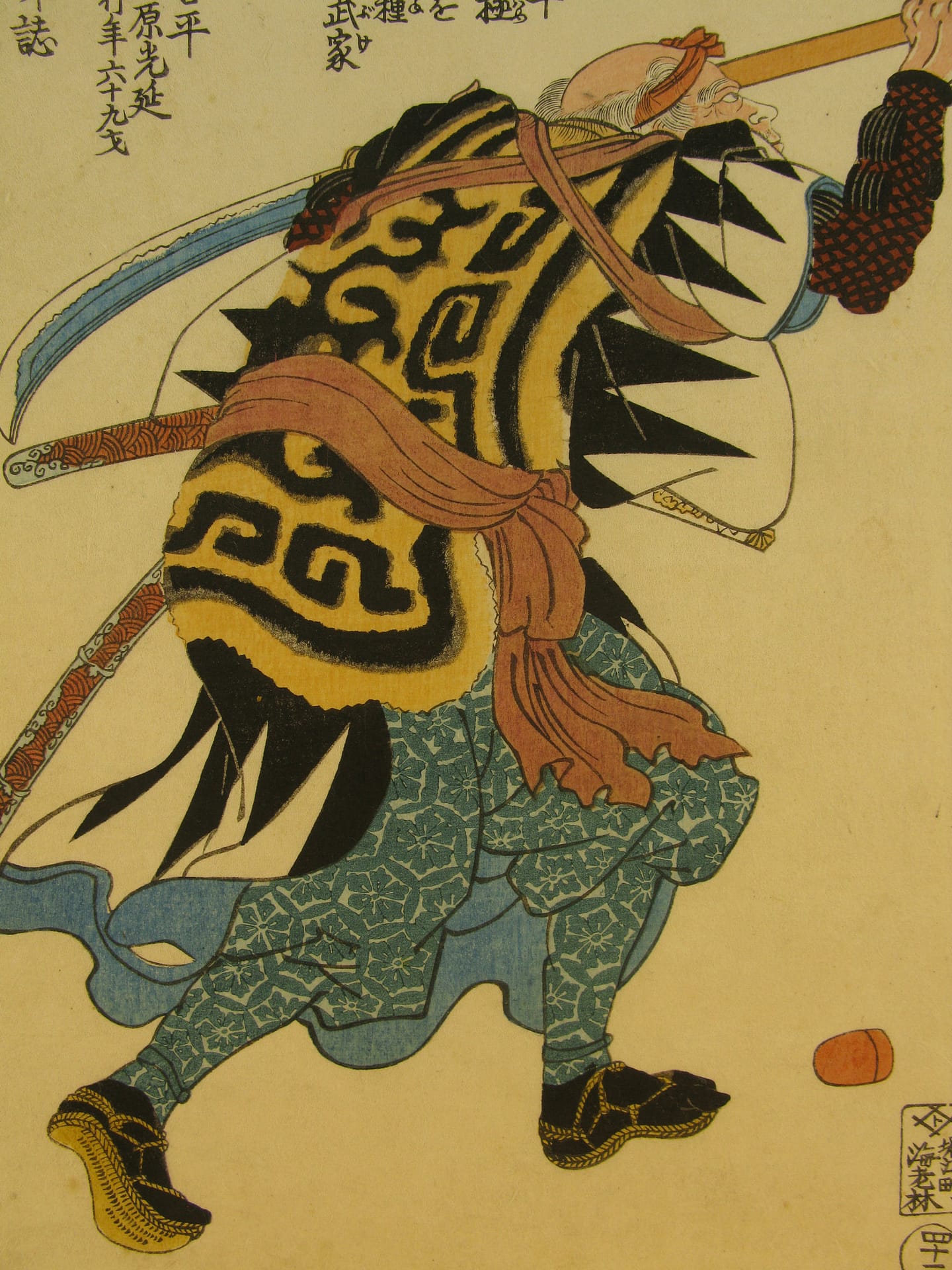
True name: Hazama Kihei Mitsunobu (間 喜兵衛 光延)
Age: 65
Katana mei: mumei, length 2 shaku 9 sun
Wakizashi mei: Teruhiro, length 2 shaku 1 sun
The tale of the text – with a little twist
Yazama Kihei Mitsunobu was a hereditary retainer of the En’ya clan — the kind of old‑school loyalist who probably polished his spear before breakfast. He had two sons, Jutarō and Shinroku, both as determined as he was, which meant the Yazama household was essentially three generations of “absolutely ready to fight someone.”
When the Akao clan fell, the Yazamas didn’t wait for instructions, a plan, or even a group chat. They simply marched off to the Kantō to kill Moronao on their own. This was admirable, if slightly awkward, because they had no idea Ōboshi’s secret revenge squad already existed. So the Yazamas spent their days lurking around the roads near the Kōno mansion like three very earnest highway bandits who kept missing their target.
Moronao, apparently blessed with extremely inconvenient karma, never appeared. The Yazamas waited. And waited. And waited. At some point they must have wondered whether Moronao was using a different door.
Then one day Kihei bumped into Senzaki Yagorō, who explained the whole Ōboshi operation. The Yazamas were thrilled — not only was there a real plan, but it didn’t involve standing by the roadside forever like disgruntled scarecrows. They immediately joined up, signing on with Hara and Yoshida like three men who had finally found the correct meeting room.
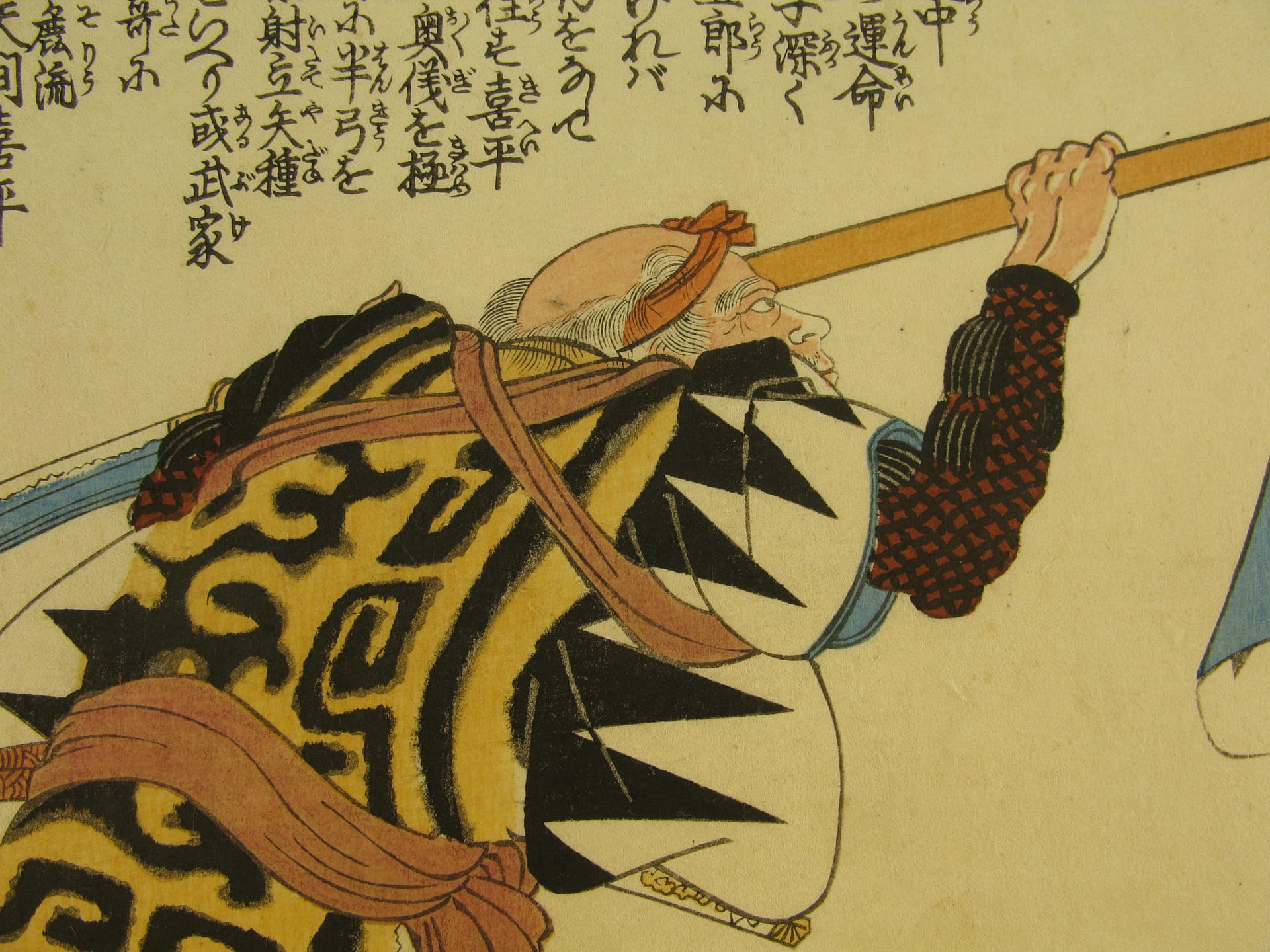
Kihei changed his name to Somahara, rented a house in Kōjimachi, and later moved to Honjō — because nothing says “I’m definitely not plotting revenge” like constantly changing your address. Despite being sixty‑nine years old, Kihei was still a master of spear technique and frighteningly good with a short bow. He could fire arrows so fast that people probably assumed there were two of him.
When his quiver was empty, he simply switched to the spear, because Kihei was not the sort of man who let a small thing like “running out of ammunition” slow him down.
Before the attack, he left his spear at the gate of a samurai house with a poem attached — a thoughtful gesture, like a very poetic calling card. The poem asked whether the world knew shame or not, which is a polite way of saying, “I’m here to restore order, and also I’m seventy and still terrifying.”
He signed it with his full name, school, and age, because if you’re going to leave a poetic threat on someone’s doorstep, you might as well make it formal.
Yazama Kihei Mitsunobu — loyal retainer, master spearman, rapid‑fire archer, and the only man in the vendetta old enough to qualify for senior discounts — proved that age is no barrier to vengeance, especially when you have two equally determined sons and a lifetime of martial arts training.
For an accurate translation of the print text, I would encourage you to get the book: Kuniyoshi -The faithful samurai by David R Weinberg.