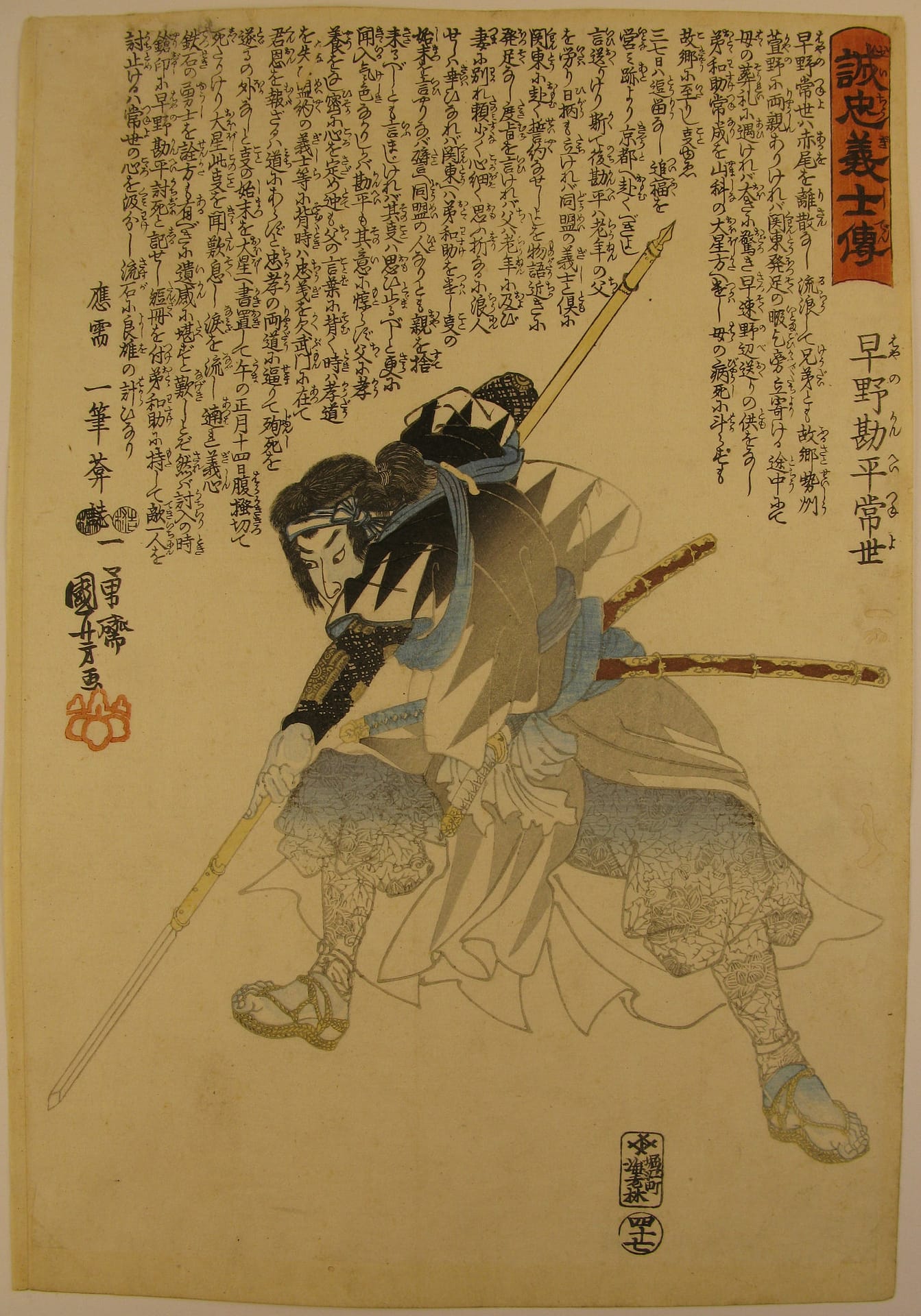
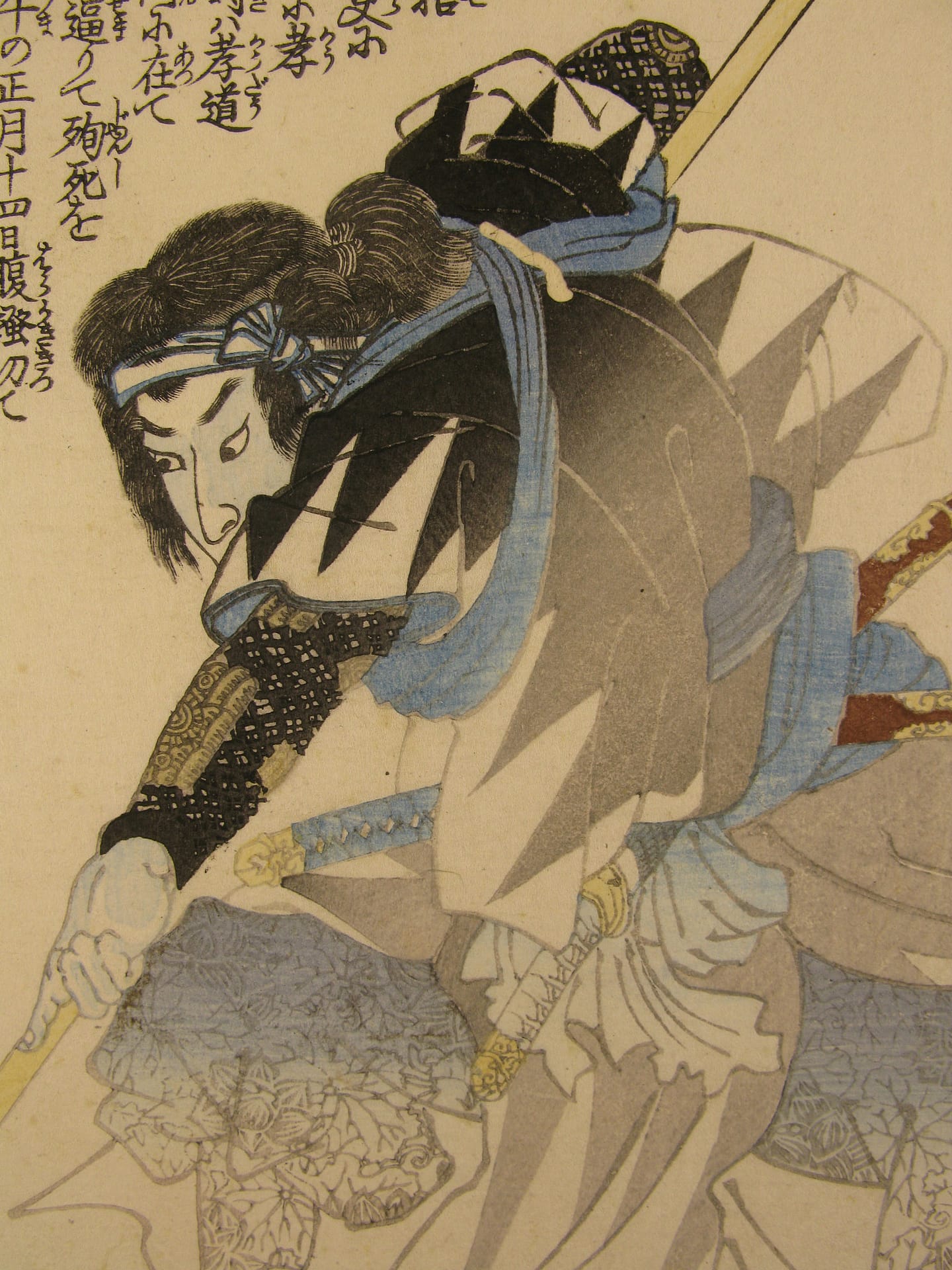
Subject: The ronin Hayano Kampei Tsuneyo (kabuki name) – as a ghost like figure thrusting his spear. He never participated in the attack, he committed seppuku prior; a man who belongs morally to the vendetta, but physically never arrives
Series: Seichu gishi den (Stories of the true loyalty of the faithful samurai)
Print No: 1.47
Artist: Utagawa Kuniyoshi (1797-1861)
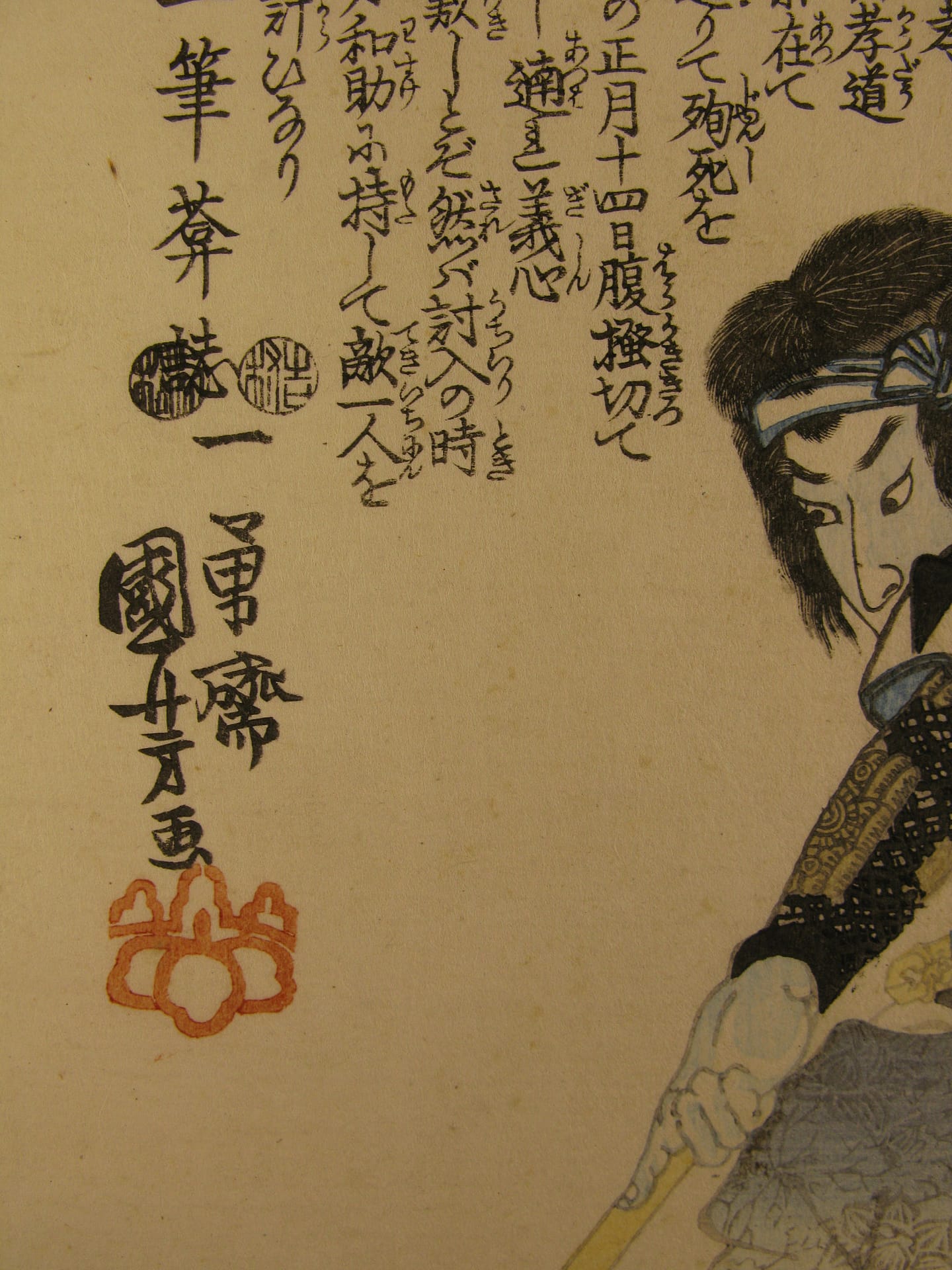
Signature: Ichiyusai Kuniyoshi ga and kiri seal
Date: 1847-48
Cens: Muramatsu – Yoshimura
Publisher: Ebi-ya Rinnosuke
Size: Oban tate-e, 36.8 x 25.4 cm
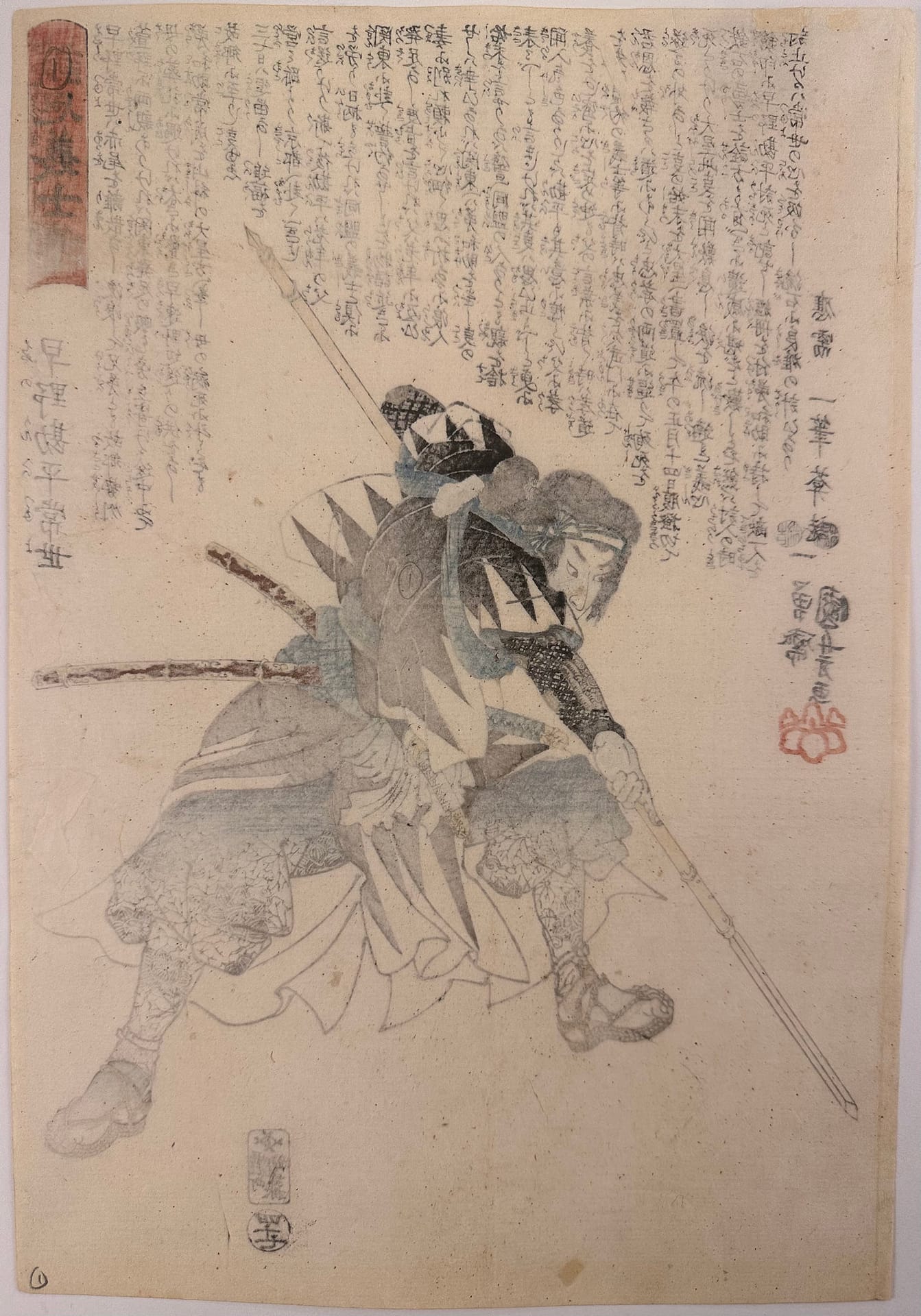
Condition: Good impression, good colour and condition, some wormage repaired. Numbered
Price: Not for sale at this stage
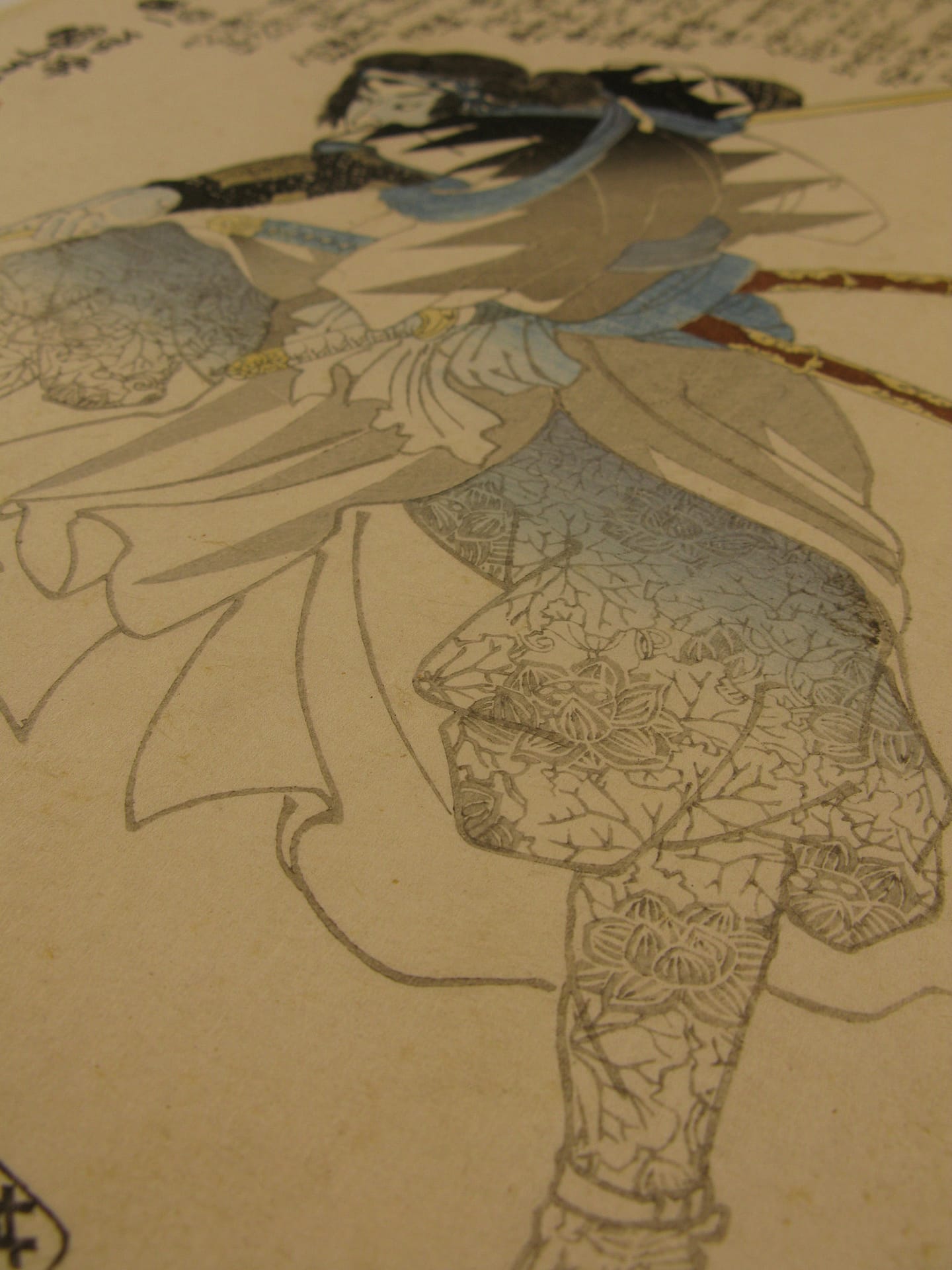
True name: Kayano Sanpei Shigezane (萱野三平重実)
The tale of the text – with a little twist
Hayano Kampei and his brother were on their way home to say a heartfelt goodbye before heading off to join the revenge squad—only to walk straight into their mother’s funeral. Not exactly the warm family reunion they’d imagined. They quietly slipped into the procession like two men who had absolutely not prepared for this plot twist.
Kampei sent his younger brother Wasuke to deliver the news to Oboshi: “Mother died. I’ll be stuck here for thirty‑seven days. Please hold all vengeance until further notice.”
While waiting out the mourning period, Kampei took care of his father, who was now grieving, exhausted, and very much not in the mood for his sons to run off and join a vendetta. When Kampei finally explained that he had sworn himself to a band of warriors heading to Kanto, his father basically said: “I’ve lost my wife, one son is already gone, and now you want to leave too? Absolutely not.”
Kampei agreed with him. Completely. Unfortunately, he also agreed completely with the samurai code, which said loyalty to one’s lord was non‑negotiable. He found himself in the worst possible Venn diagram:
Disobey father → bad son
Abandon comrades → bad samurai
Stuck between two moral walls with no exit, Kampei wrote to Oboshi and declared that the only way to honor both duties was to sacrifice his own life. On January 14th, he carried out ritual suicide, leaving his comrades heartbroken.
But Oboshi wasn’t about to let Kampei’s spirit sit this one out. During the attack, he had Wasuke carry a spear pennant reading: “Hayano Kampei, killed in battle.”
The idea was simple: if Wasuke took down even one enemy, Kampei’s spirit would get credit—like a celestial assist.
A tragic story, yes, but also a reminder that samurai loyalty came with rules so strict they made modern workplace policies look like friendly suggestions.
Related print: 69 Post stations series, print 47 – Station: Ôi (大井) – Ono Sadakurô
For an accurate translation of the print text, I would encourage you to get the book: Kuniyoshi -The faithful samurai by David R Weinberg.