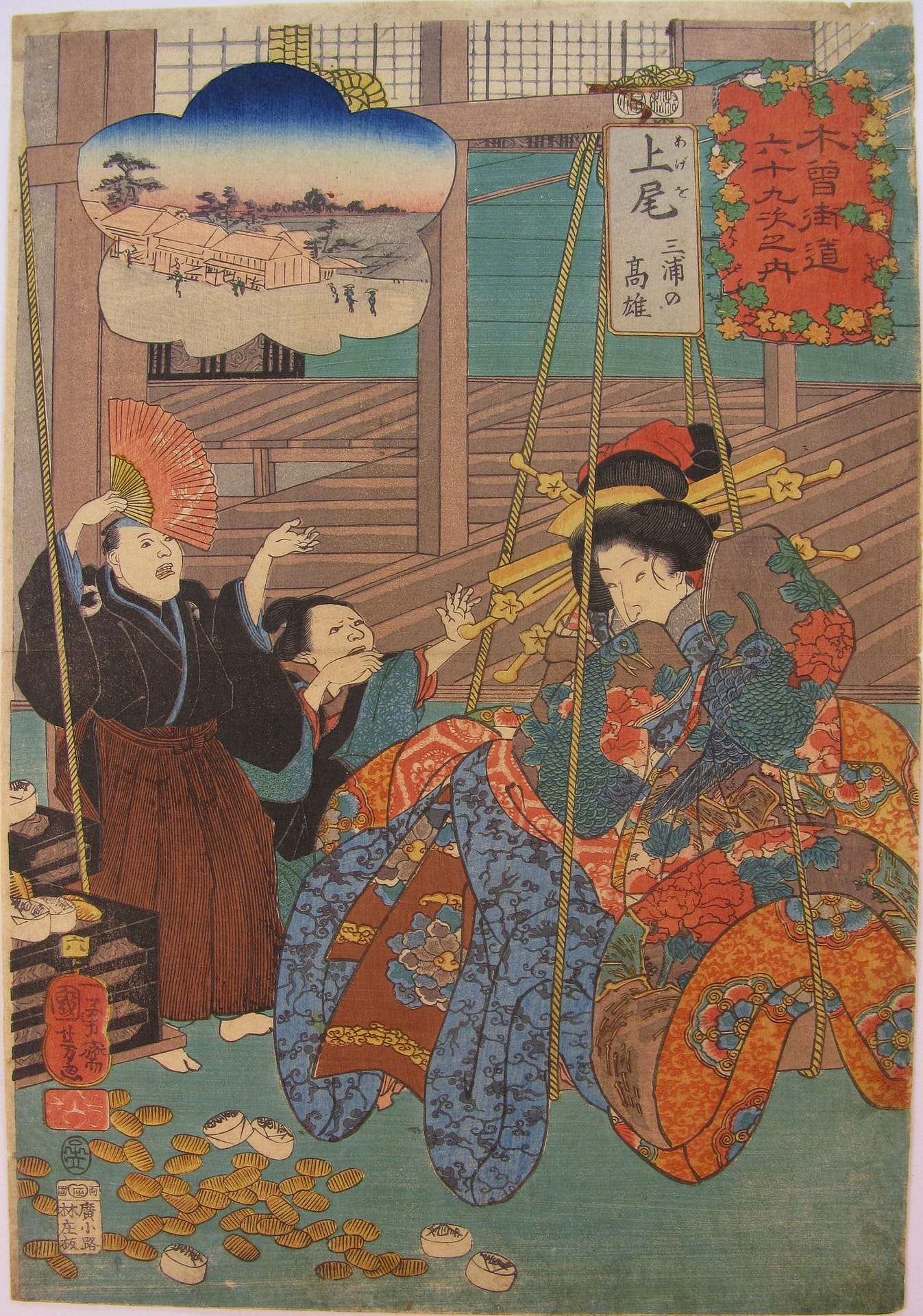
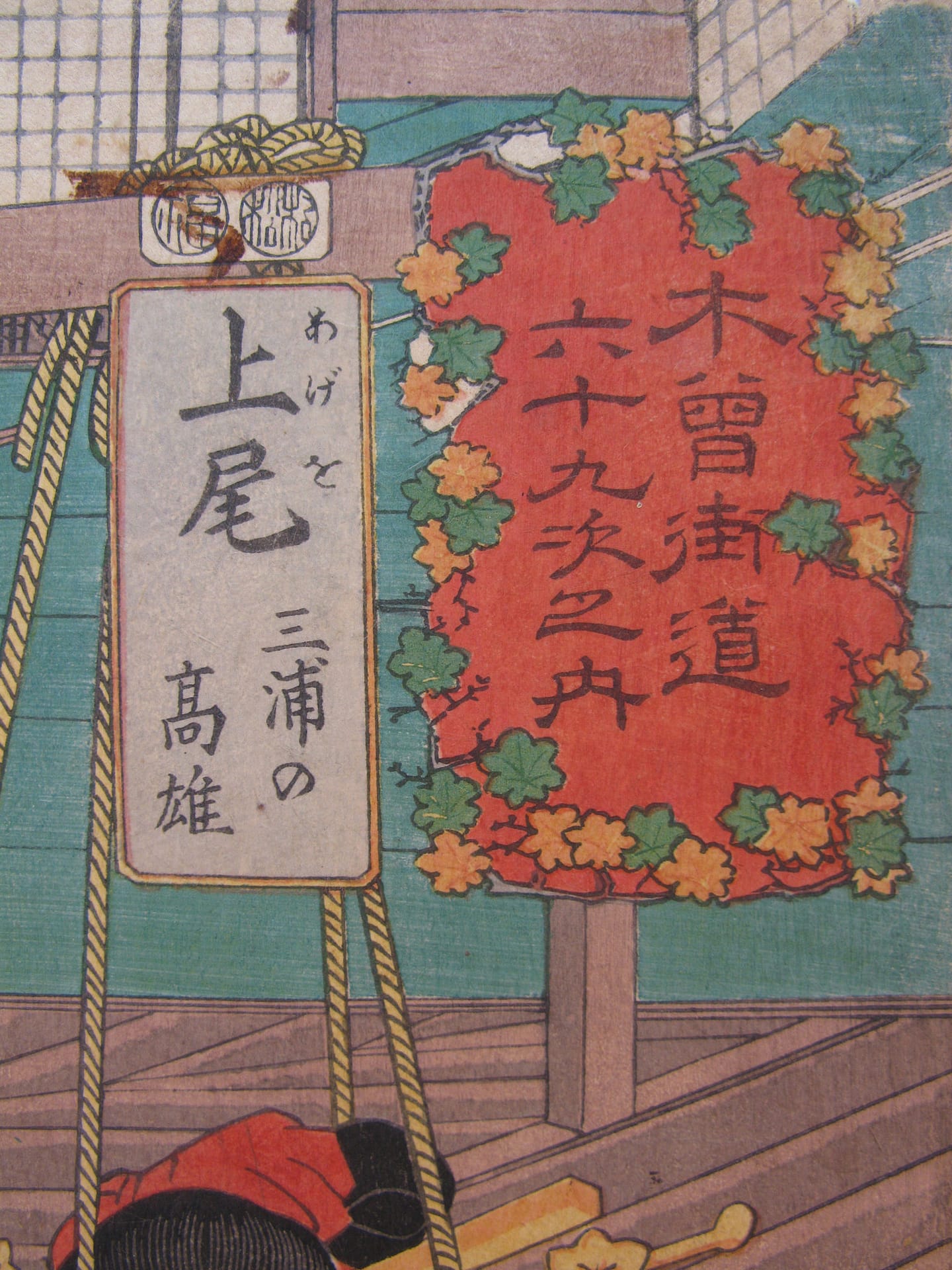
Station: Ageo (上尾)
Description: The courtesan Miura no Takao being weighed against gold coins, (some wrapped in paper). The landscape panel insert shows a sunset village and rice paddies within a maple leaf border.
Series: Kisokaidô rokujûku tsugi. The sixty-nine post stations of the Kisokaido
Print No: 6
Artist: Utagawa Kuniyoshi (1797-1861)
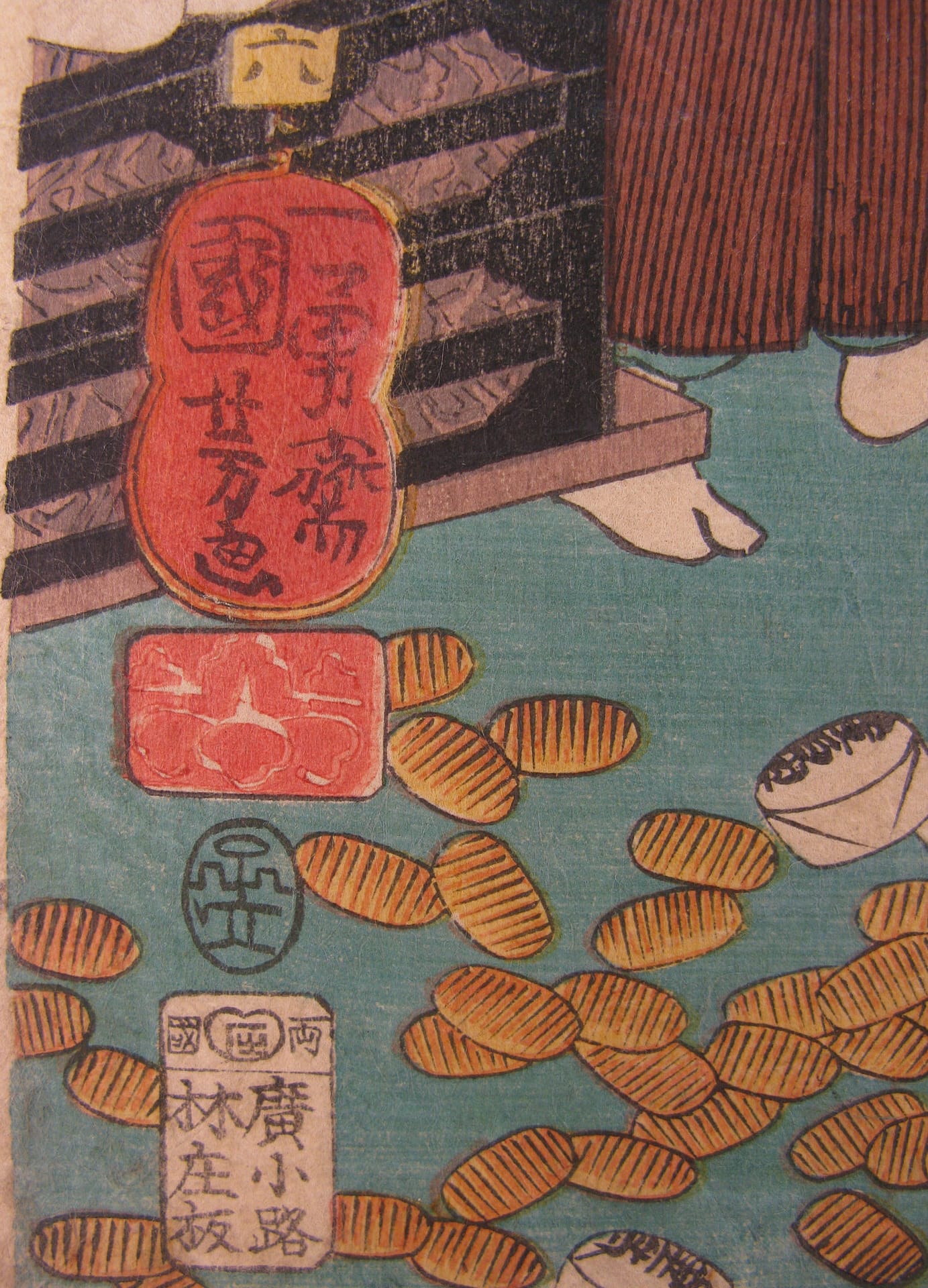
Signature: Ichiyusai Kuniyoshi ga and kiri seal
Date: 1852 (Kaei 5), 6th month
Cens: Fukushima, Muramatsu, Rat 6
Publisher: Hayashiya Shōgorō
Size: Oban tate-e, 36.2 x 26.7 cm
Condition: Very good impression, good colour and condition, centre fold, some marks, and soiling
Price: TBC
References: Robinson S74.7; BMFA – William Sturgis Bigelow Collection, 11.38972.7;
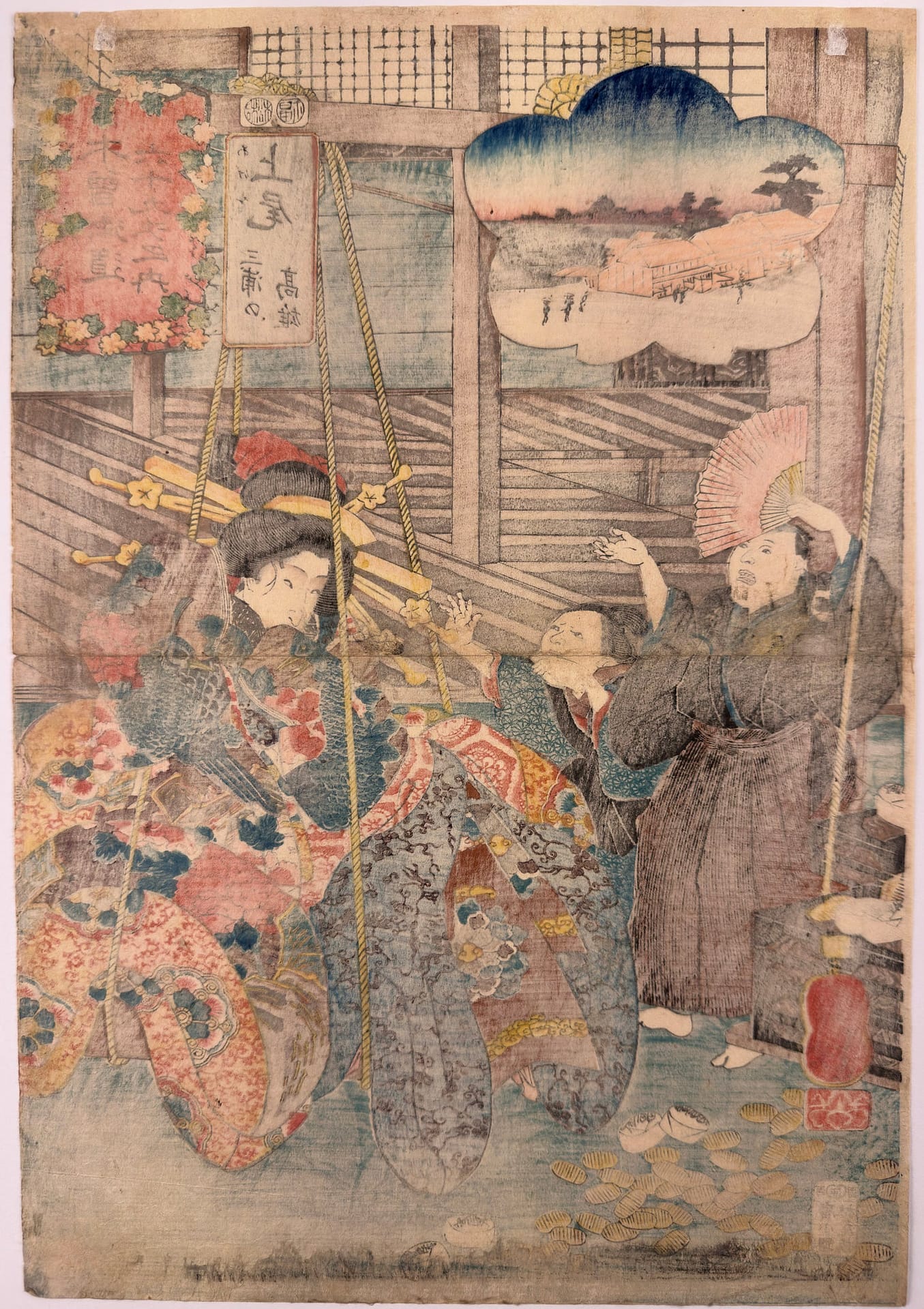
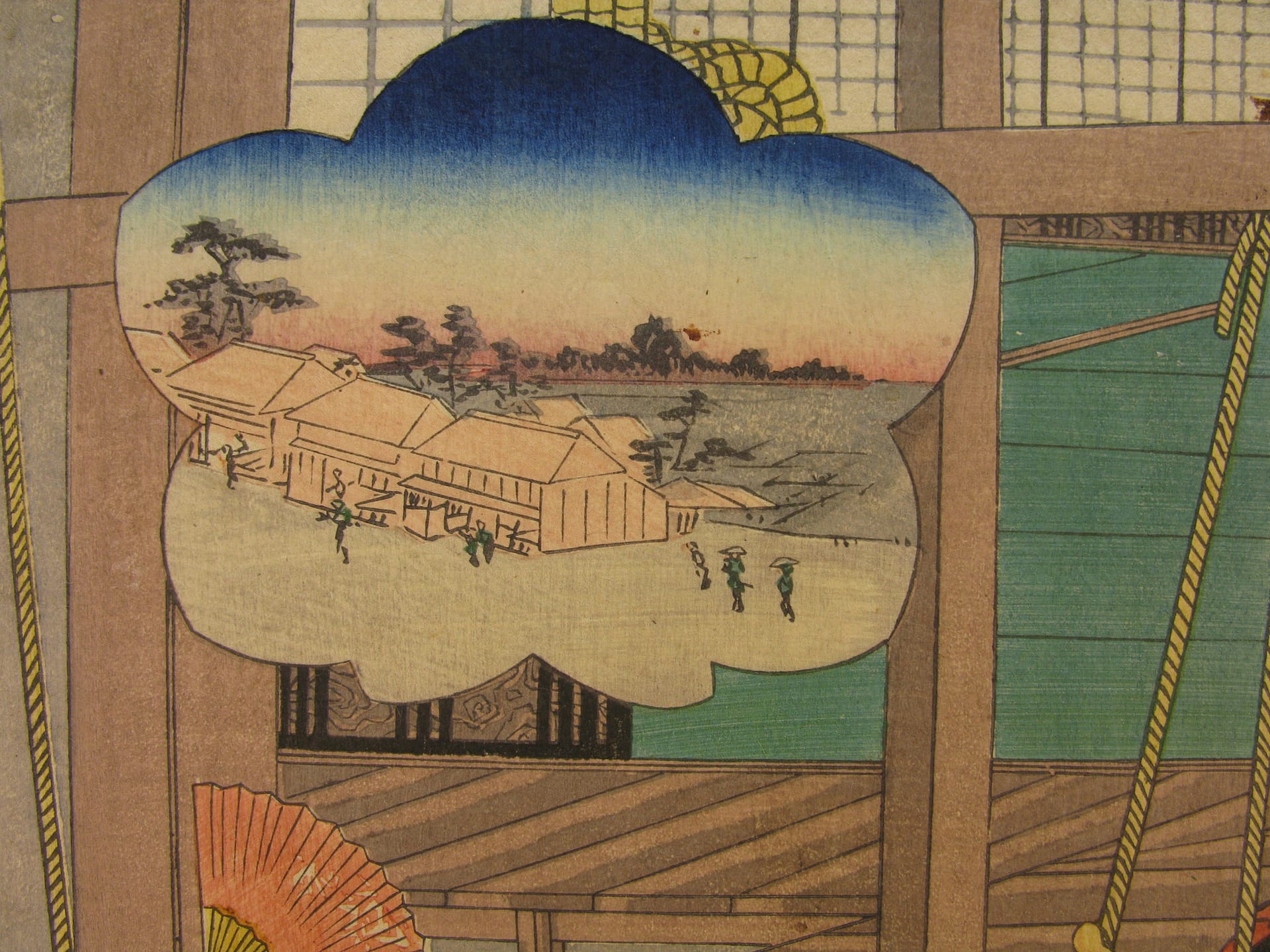
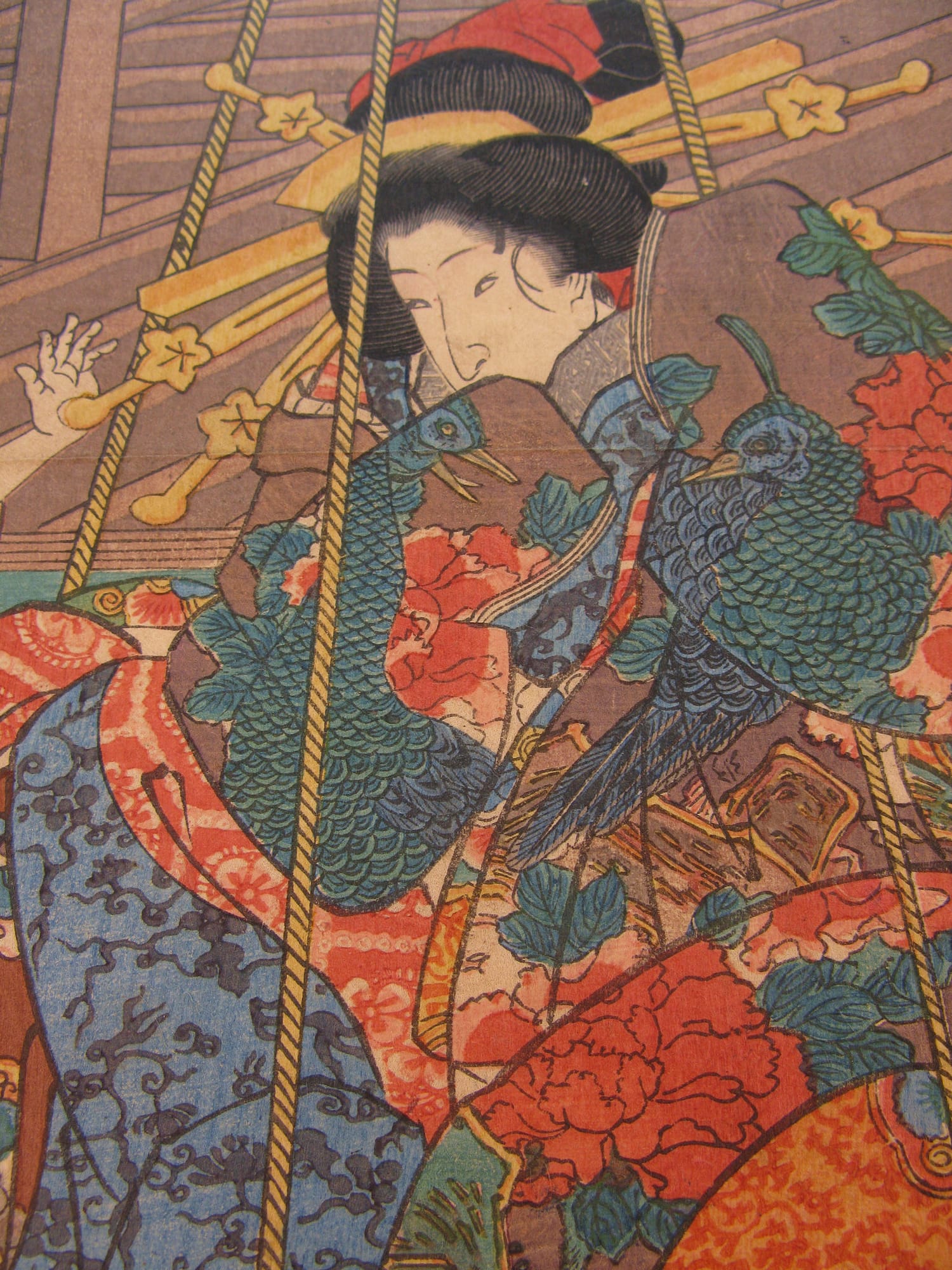
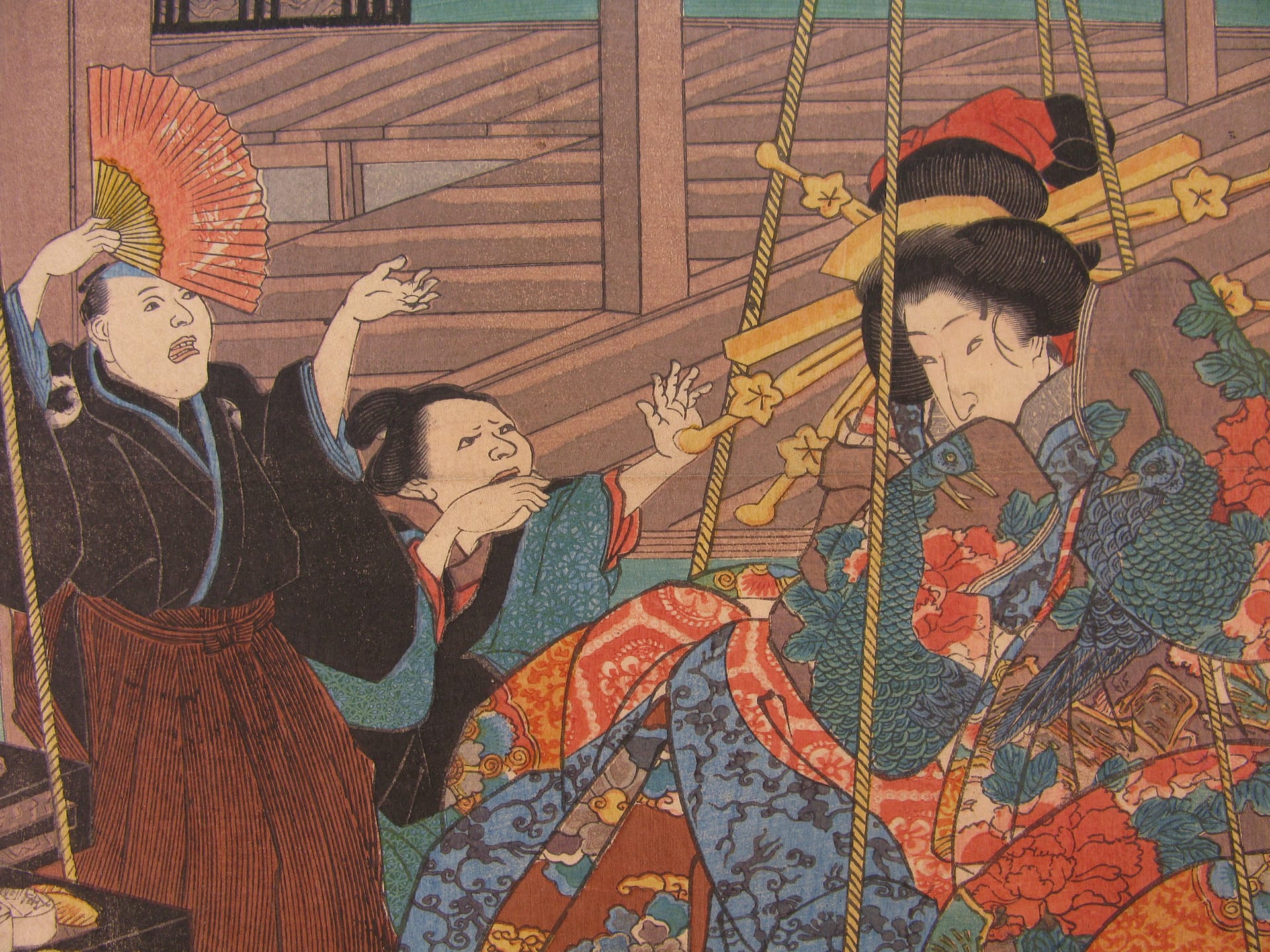
The tale of the print – Miura no Takao (三浦の髙雄), the courtesan who literally “rose” in value.
Ageo, the post station, has a first character (上) that means “to raise” or “upper,” which makes it the perfect setting for one of Edo’s favourite tall tales — the story of Takao, the superstar courtesan of the Miuraya in the Yoshiwara.
The Miuraya wasn’t just any establishment. It was the luxury brand of the pleasure quarter: elegant interiors, elite clientele, and courtesans trained in poetry, music, calligraphy, and the art of looking effortlessly fabulous. The name “Takao” was passed down through generations like a celebrity title, and each Takao was expected to be dazzling enough to justify the price tag.
The print plays on a famous urban legend: a wealthy lord supposedly bought out Takao’s contract by paying her weight in gold. In the image, she rises slowly on one side of a giant balance scale while attendants heap gold on the other. Two onlookers — likely the brothel’s management — stare in amazement, possibly because in some versions of the story they sneakily stuffed her kimono with extra lead weights to increase the payout. Business is business after all.
The maple leaf crest decorating her hairpins and the border of the print series panel ties everything together, since that emblem was associated with the Takao line. The inset landscape is also framed in a maple leaf, just in case viewers missed the theme.
Of course, the dramatic “weight‑in‑gold” scene never happened. The real historical figure behind the legend did have a relationship with a Takao, but she remained a courtesan and died young from illness. The kabuki version, however, preferred a more theatrical ending involving jealousy and tragedy — because kabuki never met a melodrama it didn’t like.
So in this print, the pun on Ageo (“to raise”) becomes literal: Takao is being raised skyward by her own value, while the gold piles up below her like a very glamorous physics demonstration.
For an excellent analysis of the prints and series, I would encourage you to get the book:The Sixty-nine Stations of the Kisokaido by Sarah E. Thompson.