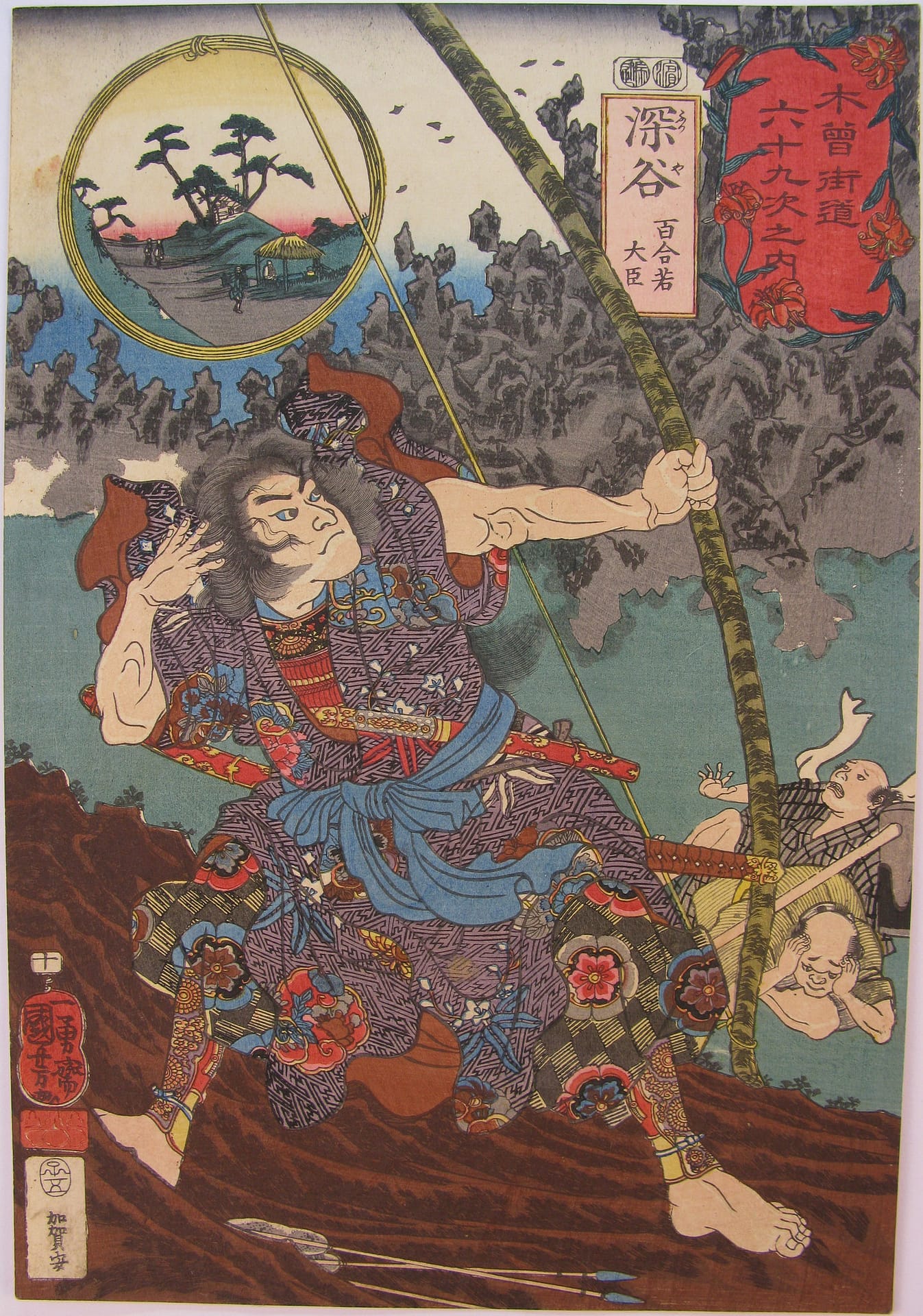
Station: Fukaya (深谷)
Description: Yuriwaka Daijin proving his identity, after a long period of absence, by stringing and shooting his huge bow; the only archer strong enough to do so. In a cartouche framed in bow strings: a road with rest house and pine trees.
Series: Kisokaidô rokujûku tsugi. The sixty-nine post stations of the Kisokaido
Print No: 10
Artist: Utagawa Kuniyoshi (1797-1861)
Signature: Ichiyusai Kuniyoshi ga and kiri seal
Date: 1852 (Kaei 5), 5th month
Cens: Hama, Magome, Rat 5
Publisher: Kaga-ya Yasubei
Size: Oban tate-e, 36.2 x 24.8 cm
Condition: Very good impression, colour and condition, retains light Japanese album backing, some marks and flaws. Rarely available print.
Price: TBC
References: Robinson S74.11; BMFA – William Sturgis Bigelow Collection, 11.38972.11;
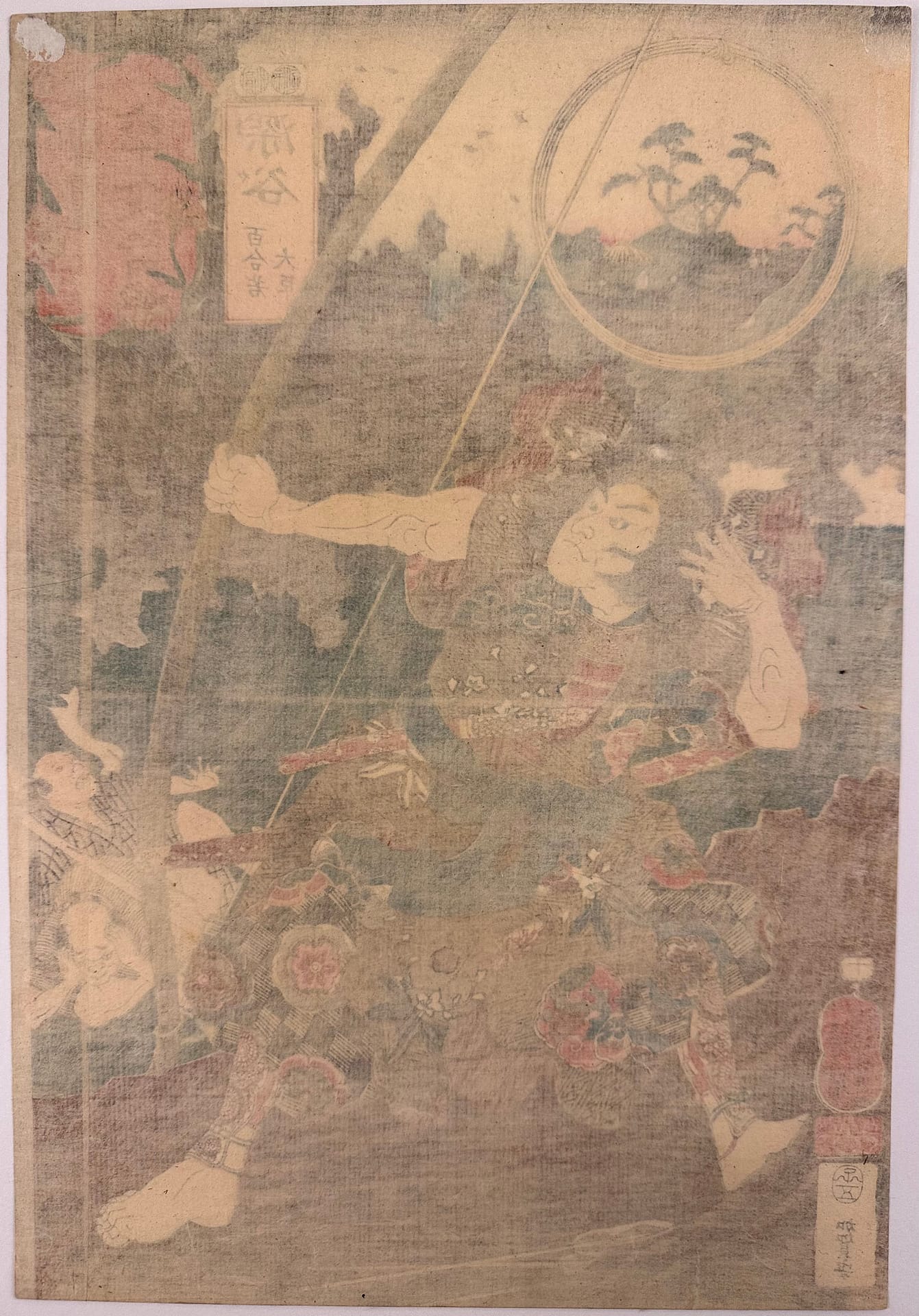
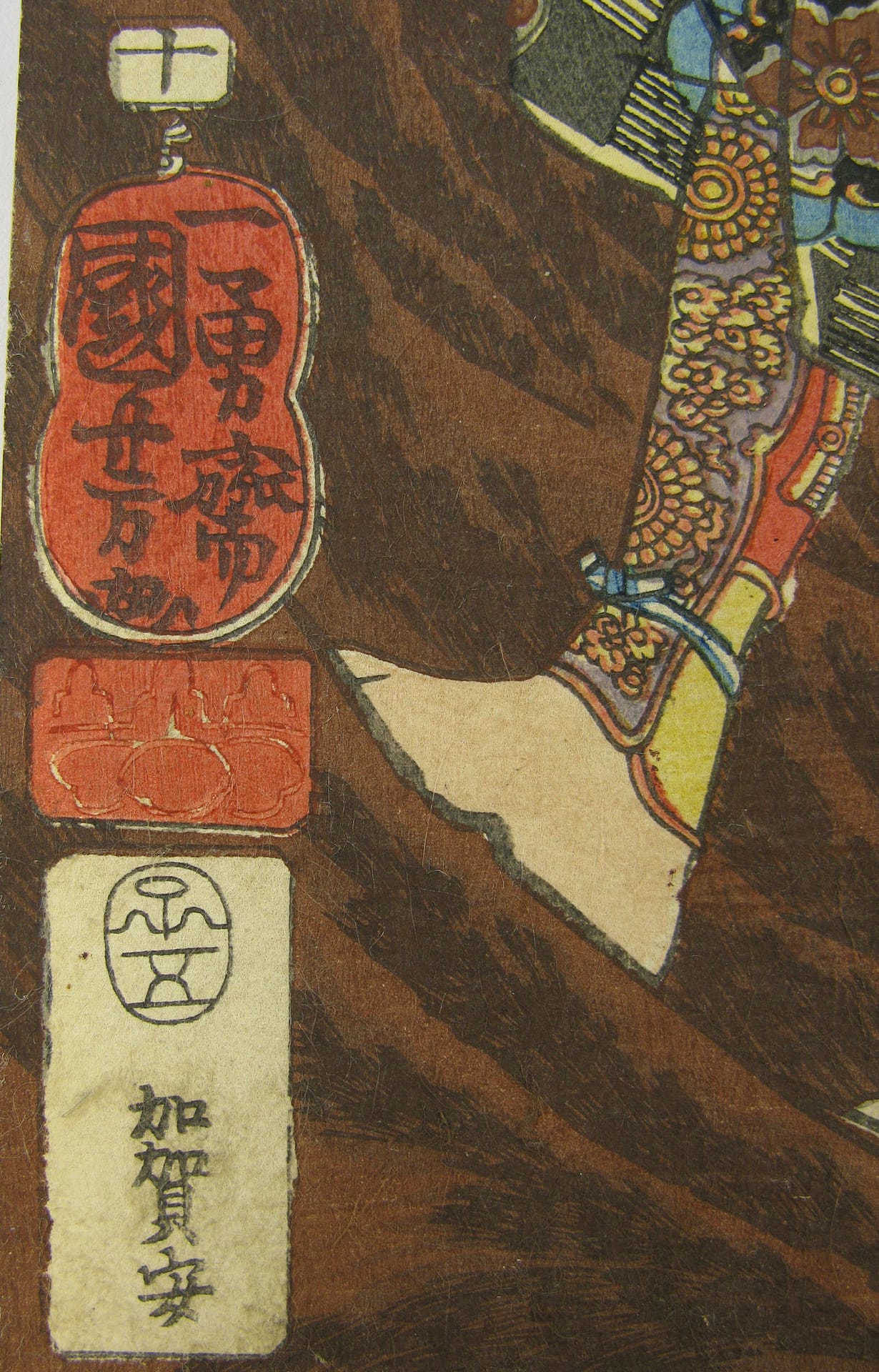
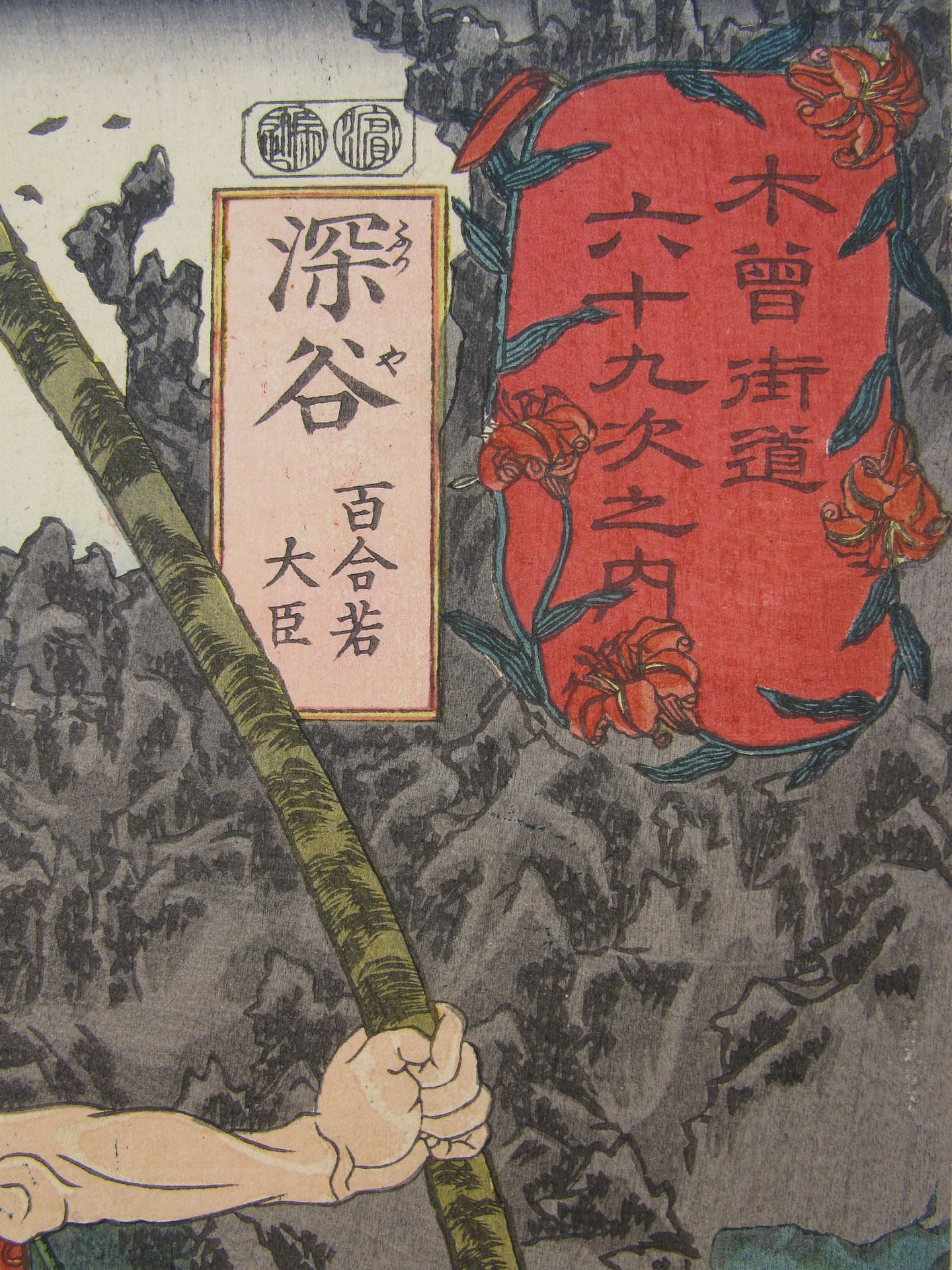
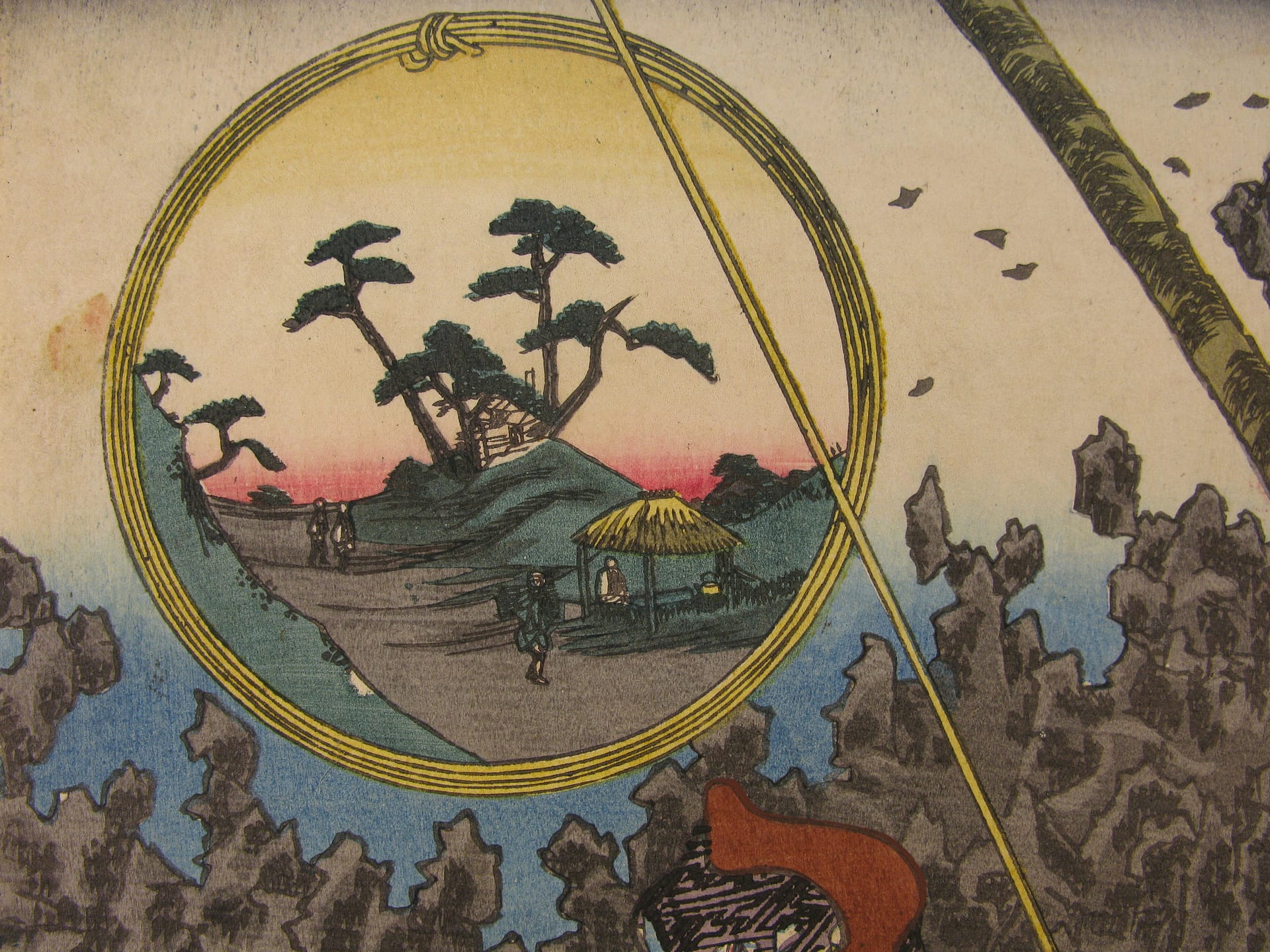
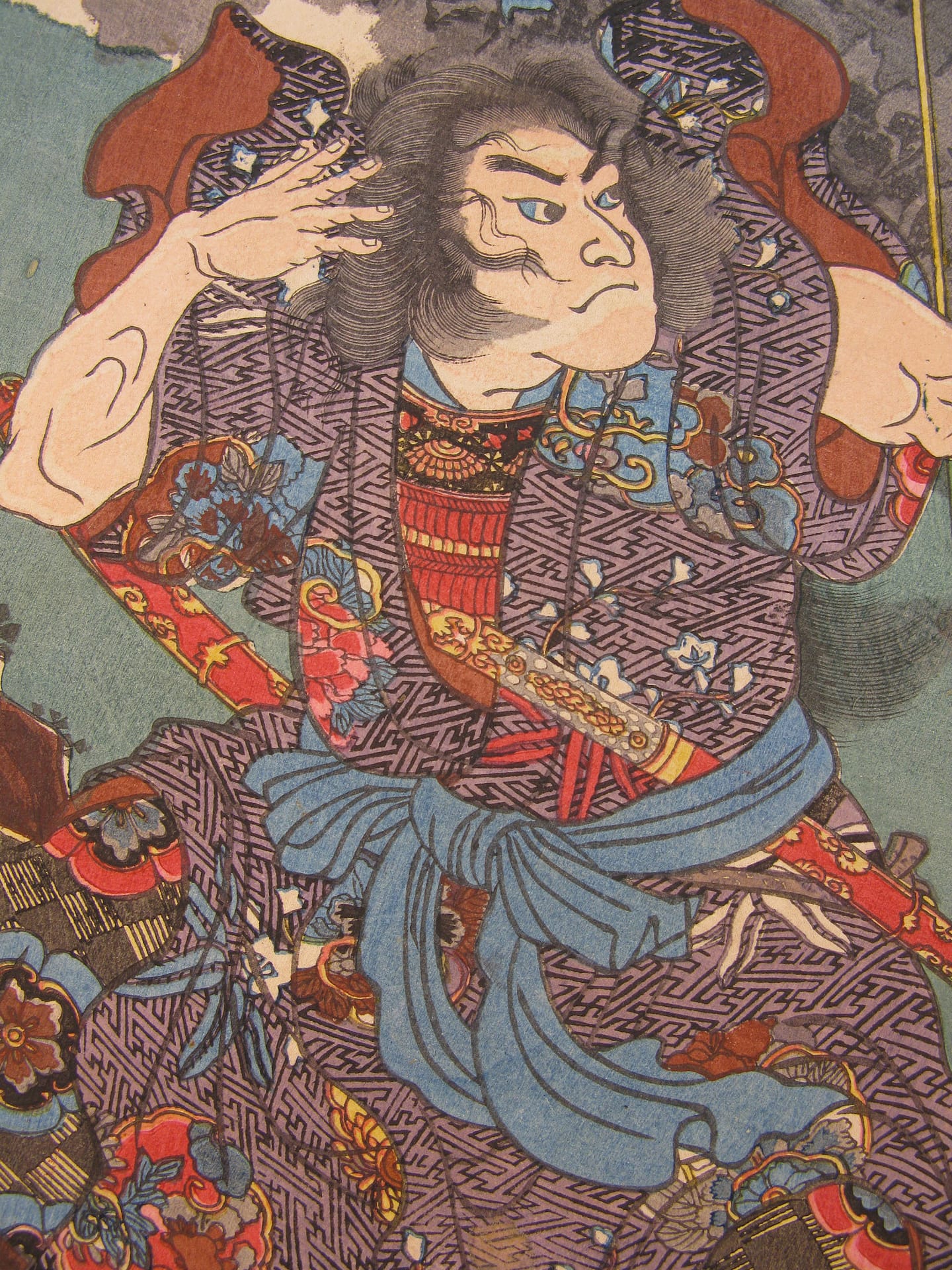
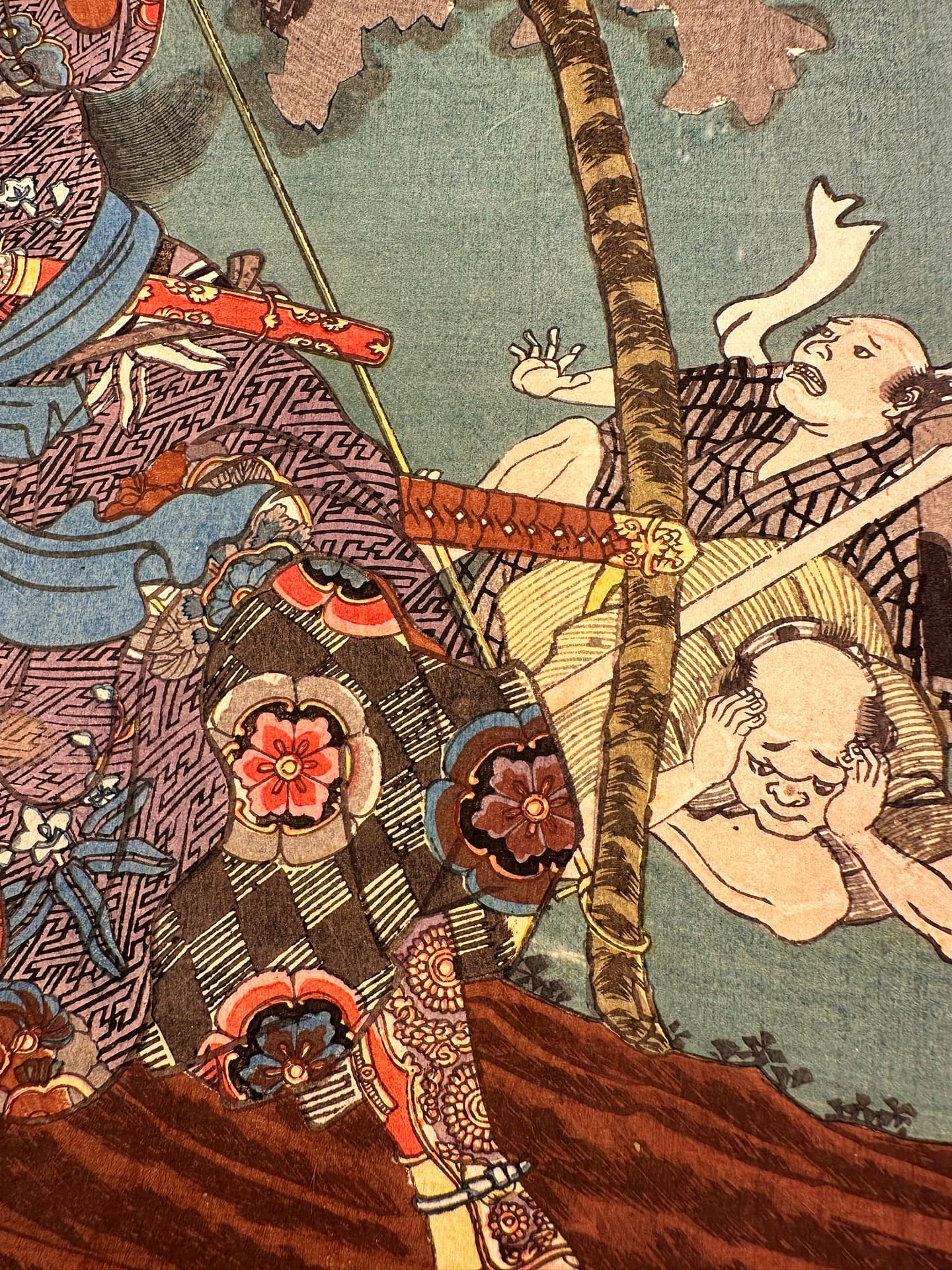
The tale of the print – Yuriwaka Daijin (百合若大臣), The Japanese Odysseus who comes home to prove he’s… himself.
Yuriwaka Daijin, a hero from a sixteenth‑century musical drama who has a suspiciously familiar résumé: goes to war, gets stranded for years, returns home unrecognizable, finds his wife being pressured by an unwanted suitor, and proves his identity by performing a feat only he can do.
If this sounds like The Odyssey, you’re not wrong — scholars have been raising eyebrows about this for over a century (with mixed agreements).
In the Japanese version, Yuriwaka returns from fighting the Mongols looking like he’s been through several seasons of a survival show. He’s been gone so long that nobody believes he’s actually himself. His wife is still loyal, but she has a problem: a villain named Beppu keeps insisting she marry him, and she keeps insisting he go stick his head in a bucket.
The print captures the big reveal: Yuriwaka strings and draws his enormous bow — the one only he can handle — and uses it to deal with Beppu once and for all. The inset landscape is framed with bowstrings, just in case viewers missed the “famous archer” theme.
Lilies decorate the border because his name literally means “Young Lord Lily,” which is a poetic way of saying “hero with excellent branding.”
The fun twist is that this story seems to have appeared out of nowhere in the late 1500’s, right when European missionaries were telling Japanese audiences about Greek epics. Even Yuriwaka’s name may be a local attempt at “Ulysses.” So the print is basically Edo Japan’s version of a cultural remix: Odysseus, but make it medieval Japanese theatre.
In short: Fukaya’s image celebrates a hero who comes home, strings a giant bow to prove himself, saves his marriage, and proves that even in the sixteenth century, audiences loved a dramatic comeback story.
For an excellent analysis of the prints and series, I would encourage you to get the book:The Sixty-nine Stations of the Kisokaido by Sarah E. Thompson.