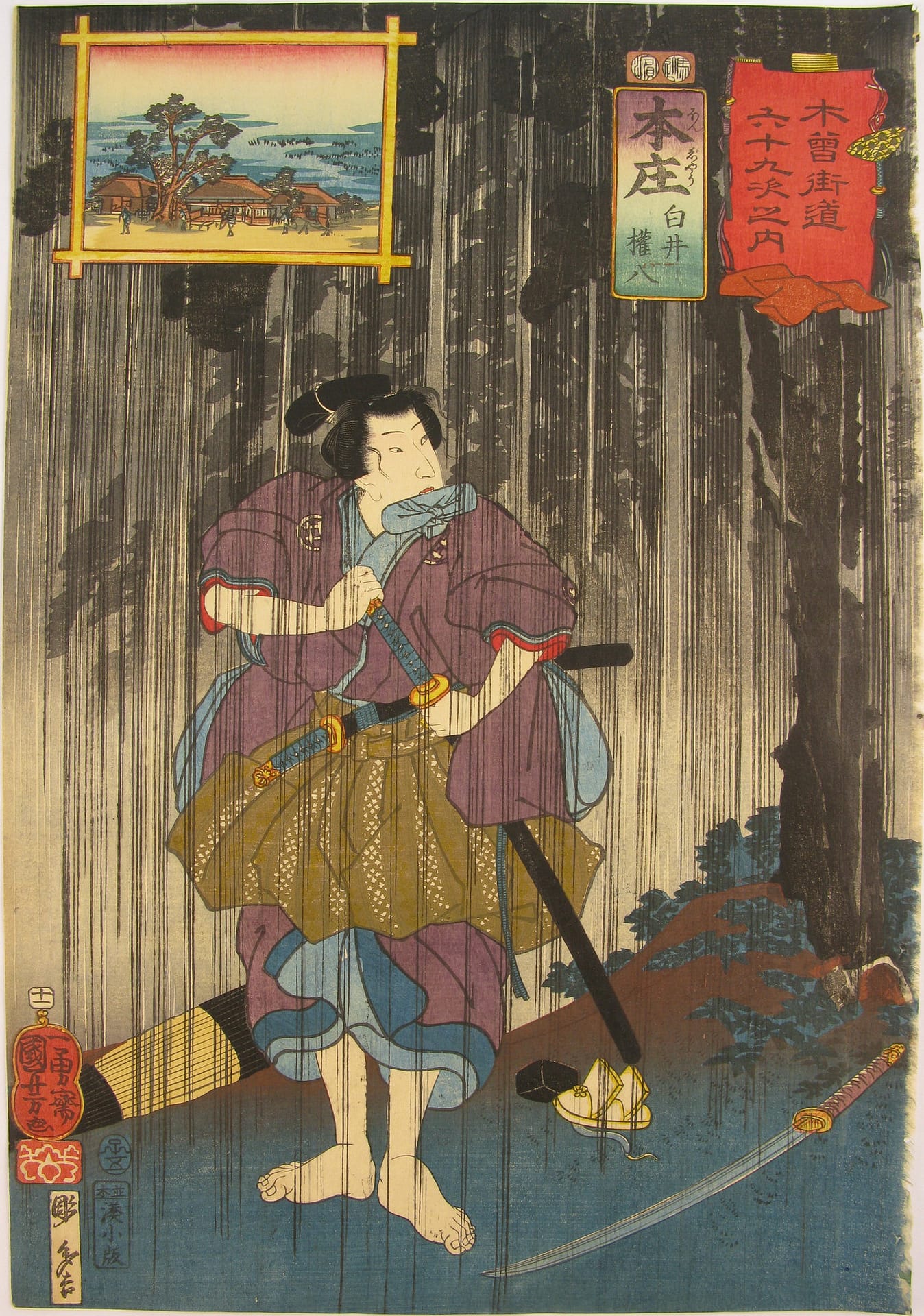
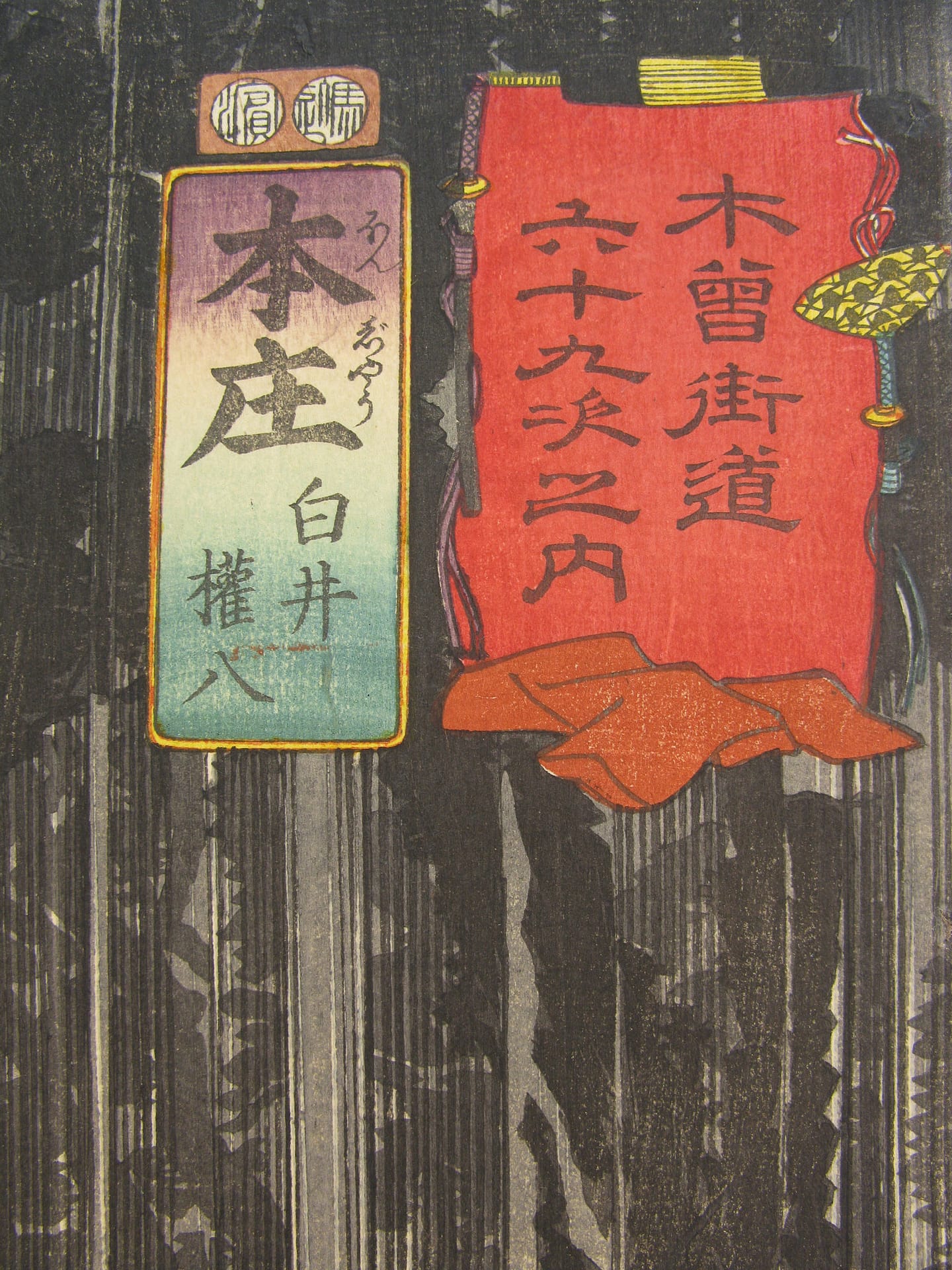
Station: Honjô (本庄)
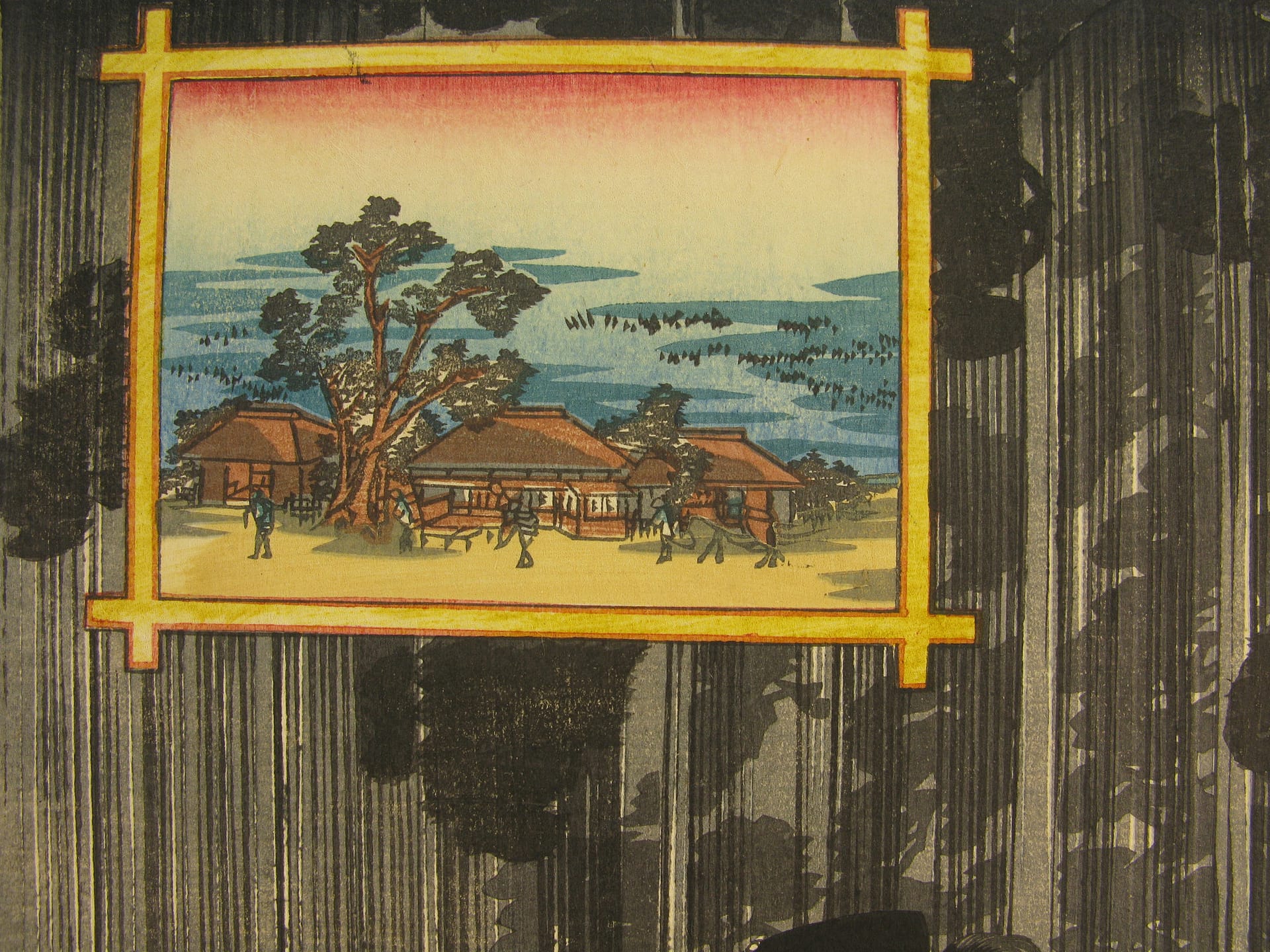
Description: Shirai Gonpachi the moment after killing Honjō Sukedayū. The landscape insert panel shows a village in front of a marsh framed by a traditional well
Series: Kisokaidô rokujûku tsugi. The sixty-nine post stations of the Kisokaido
Print No: 11
Artist: Utagawa Kuniyoshi (1797-1861)
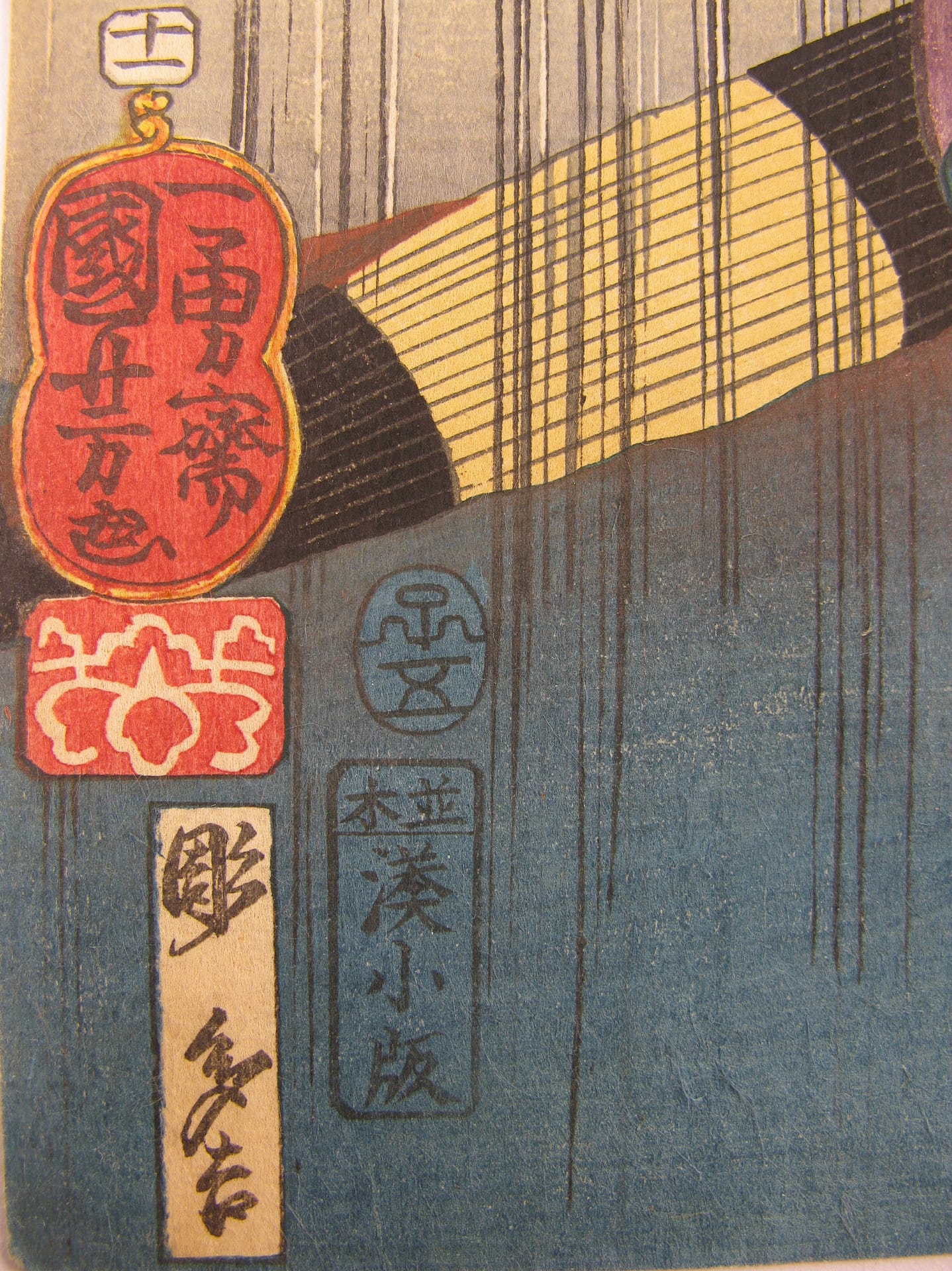
Signature: Ichiyusai Kuniyoshi ga and kiri seal
Date: 1852 (Kaei 5), 5th month
Cens: Hama, Magome, Rat 5
Publisher: Minato-ya Kohei
Block cutter: Ōtaya Takichi (Hori Takichi)
Size: Oban tate-e, 37.5 x 26.7 cm
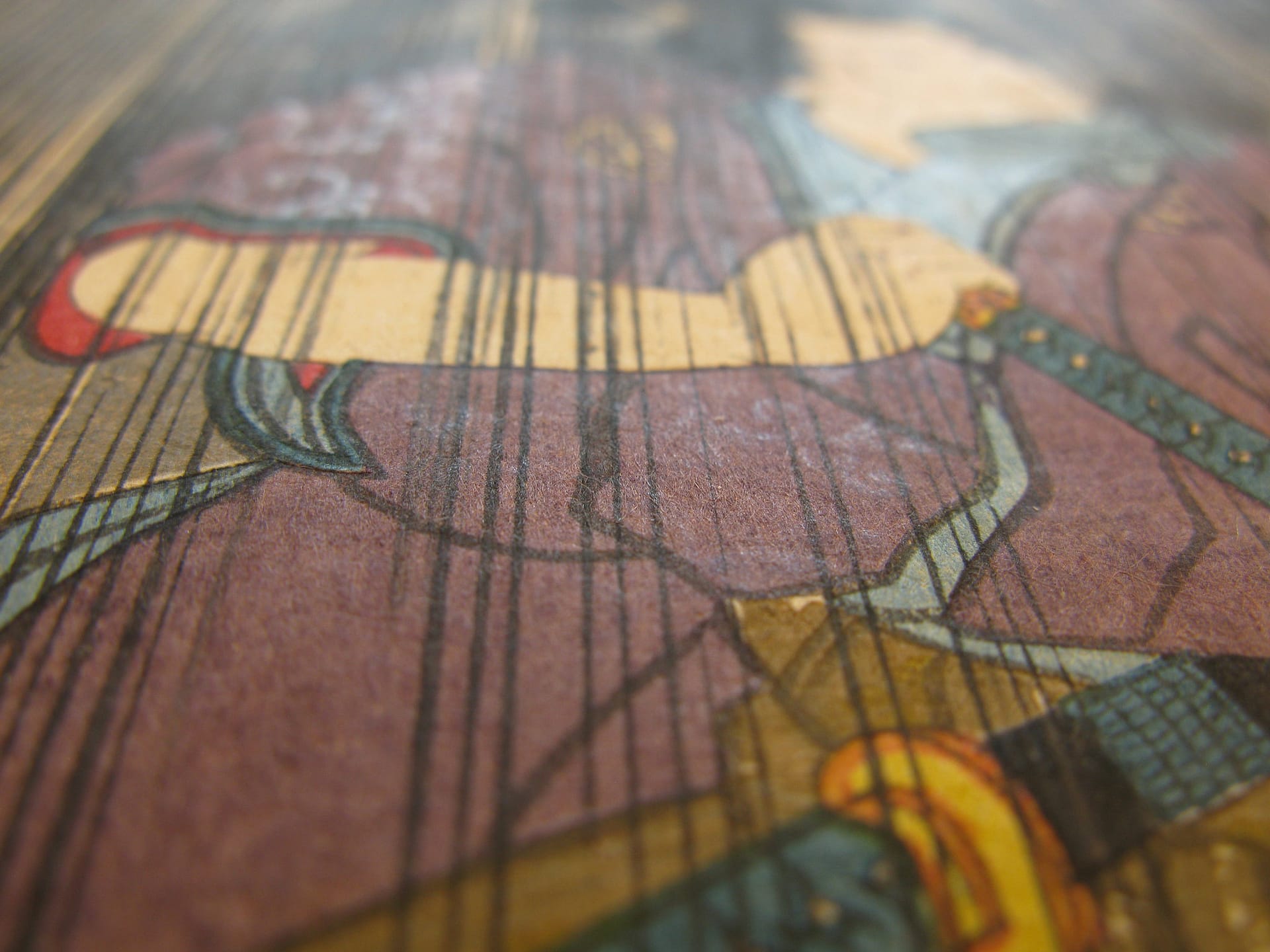
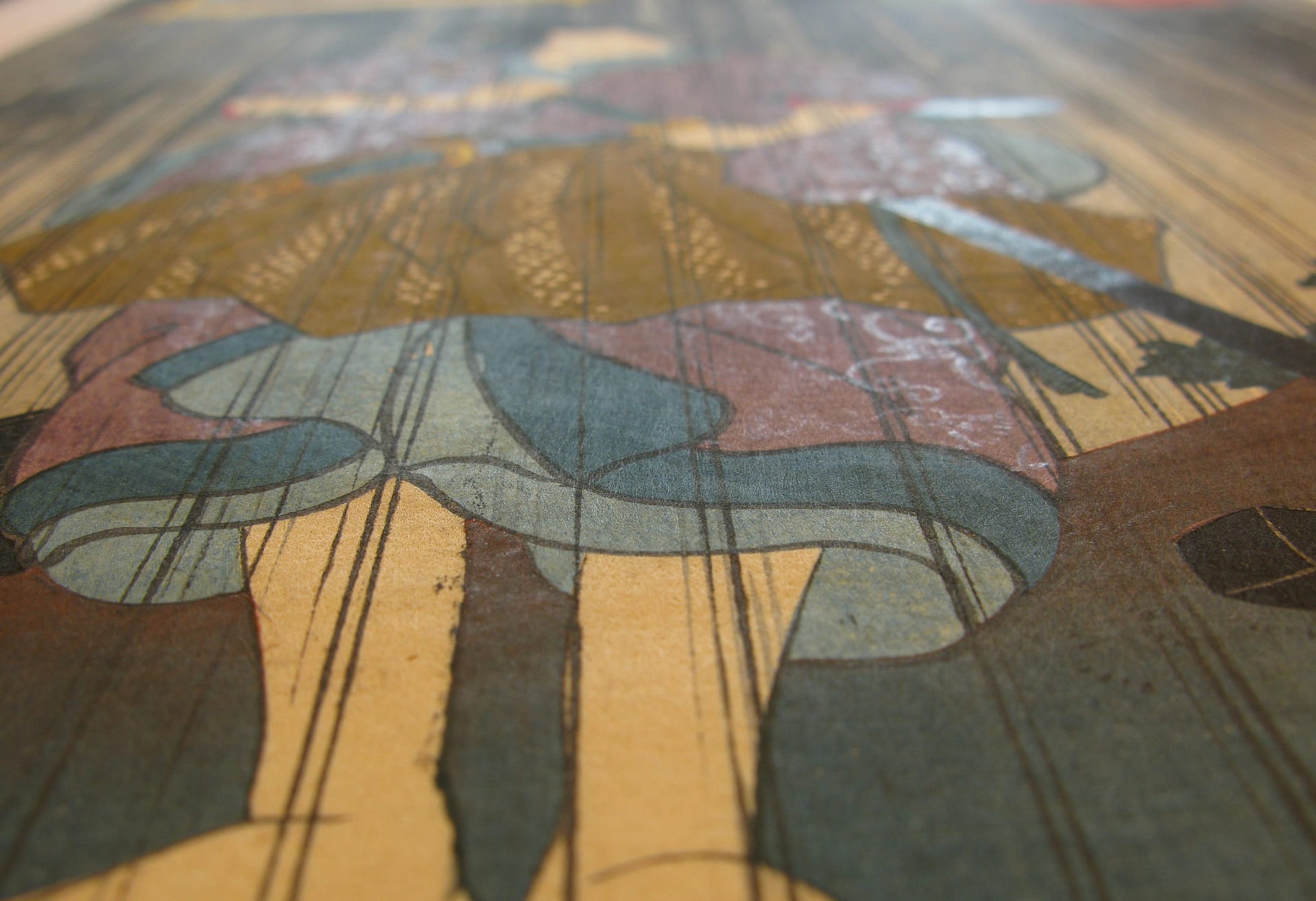
Condition: Very good impression, colour and condition, with fine bokashi and blind printing on the kimono
Price: Not for sale at this stage
References: Robinson S74.12; BMFA – William Sturgis Bigelow Collection, 11.38972.12;
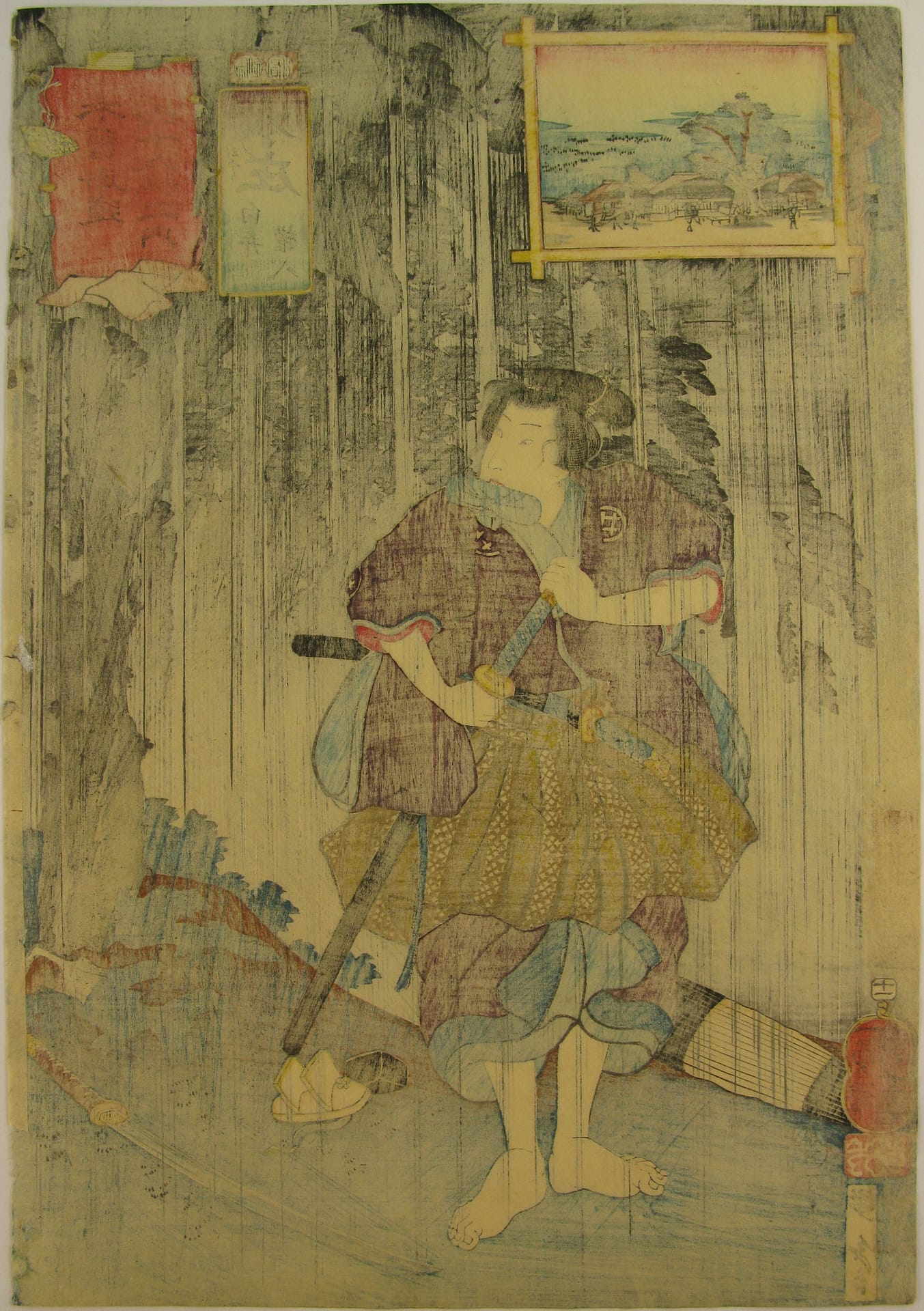
The tale of the print – Shirai Gompachi (白井権八), the handsome disaster who couldn’t stop making dramatic life choices.
Shirai Gonpachi, a real samurai‑turned-bandit whose life was so chaotic that Edo audiences immediately turned him into a tragic celebrity. His actual surname was Hirai, but playwrights politely changed it to Shirai so the censors wouldn’t have a heart attack.
“Shirai” (白井) means ‘white well’, which becomes his crest (seen on his kimono) — and Kuniyoshi leans into this by framing the inset landscape with the grid pattern of a traditional well.
The print shows the moment Gonpachi steps out of Honjō Sukedayū’s house in the rain, right after killing him — a detail that ties neatly to the post‑station name Honjo. It’s the kabuki version of “leaving the scene of the crime,” complete with a dropped umbrella, sword, rain clog on the ground and purse in his mouth, as if even the props are exhausted by his choices.
Umbrellas and swords also decorate the series border, because this story is nothing if not committed to its aesthetic.
After this incident, Gonpachi flees to Edo, where he meets the chivalrous outlaw Banzuin Chōbei — a real historical figure who, inconveniently, died decades before Gonpachi was born. Kabuki solves this problem by ignoring it entirely and declaring them instant best friends.
In Edo, Gonpachi falls in love with Komurasaki of the Miuraya, a top courtesan whose tragic devotion to him becomes the stuff of legend. In some versions, Gonpachi is romantically involved with both Komurasaki and Chōbei, because kabuki has never been shy about adding extra emotional complications.
Their story ends in heartbreak: Gonpachi is executed, and Komurasaki commits suicide on his grave. Edo audiences adored the tale — doomed lovers, noble thieves, and enough melodrama to power an entire theatre season.
So in this print, Honjo becomes the stage for the moment Gonpachi’s life veers from “troubled youth” to “full kabuki tragedy,” complete with rain, symbolism, and a well‑patterned frame reminding you that even his name is dramatic.
For an excellent analysis of the prints and series, I would encourage you to get the book:The Sixty-nine Stations of the Kisokaido by Sarah E. Thompson.