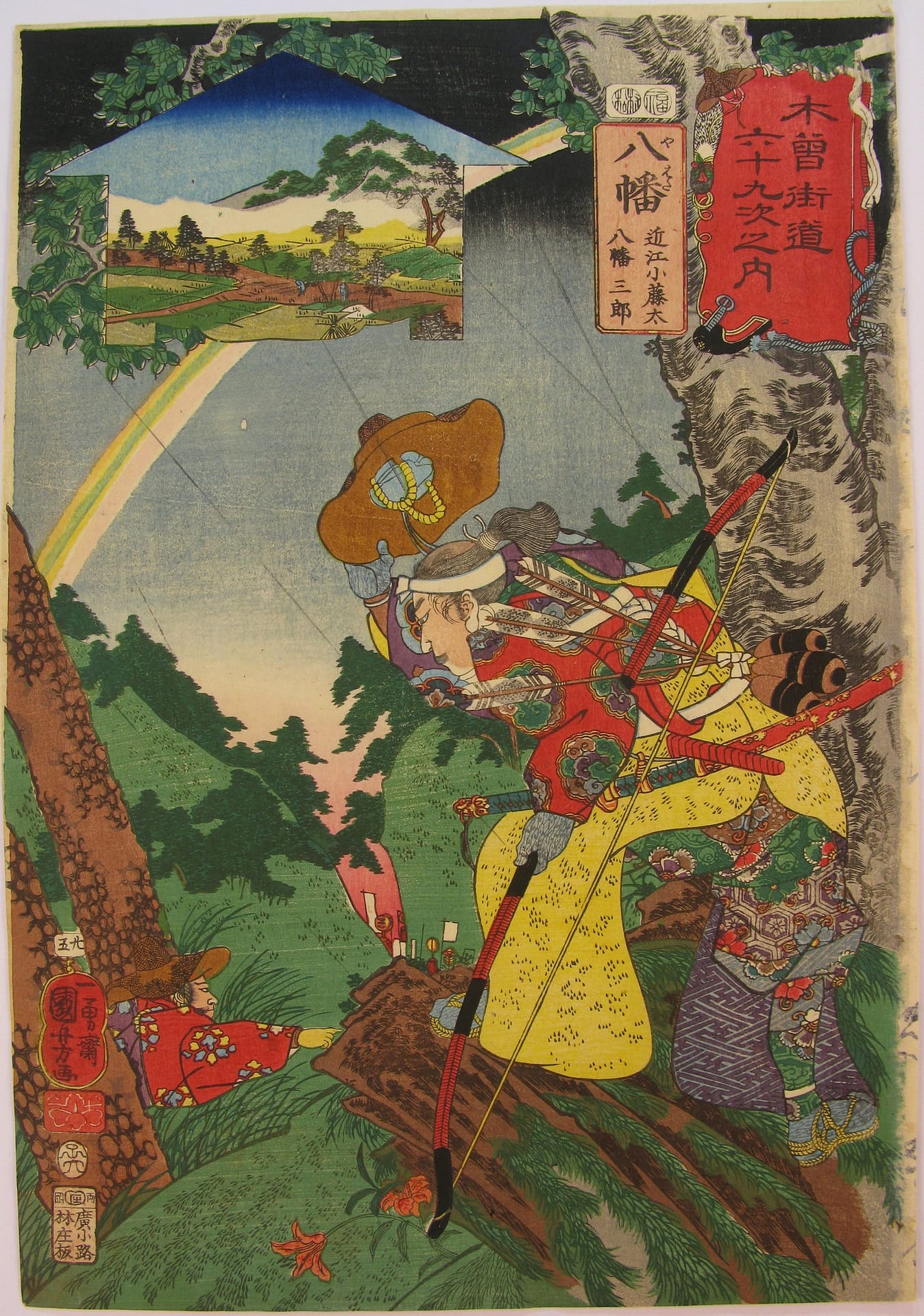
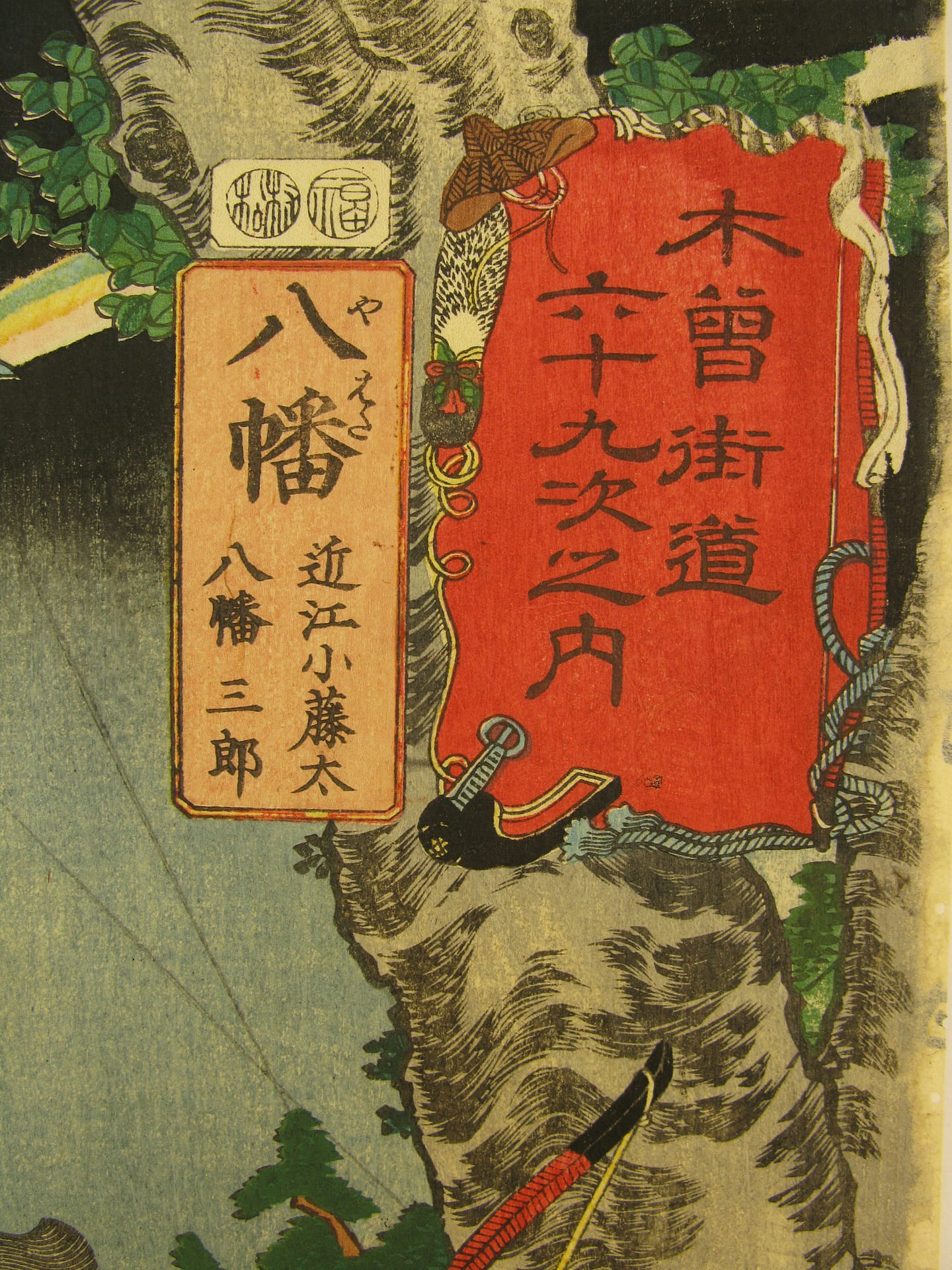
Station: Yawata (八幡)
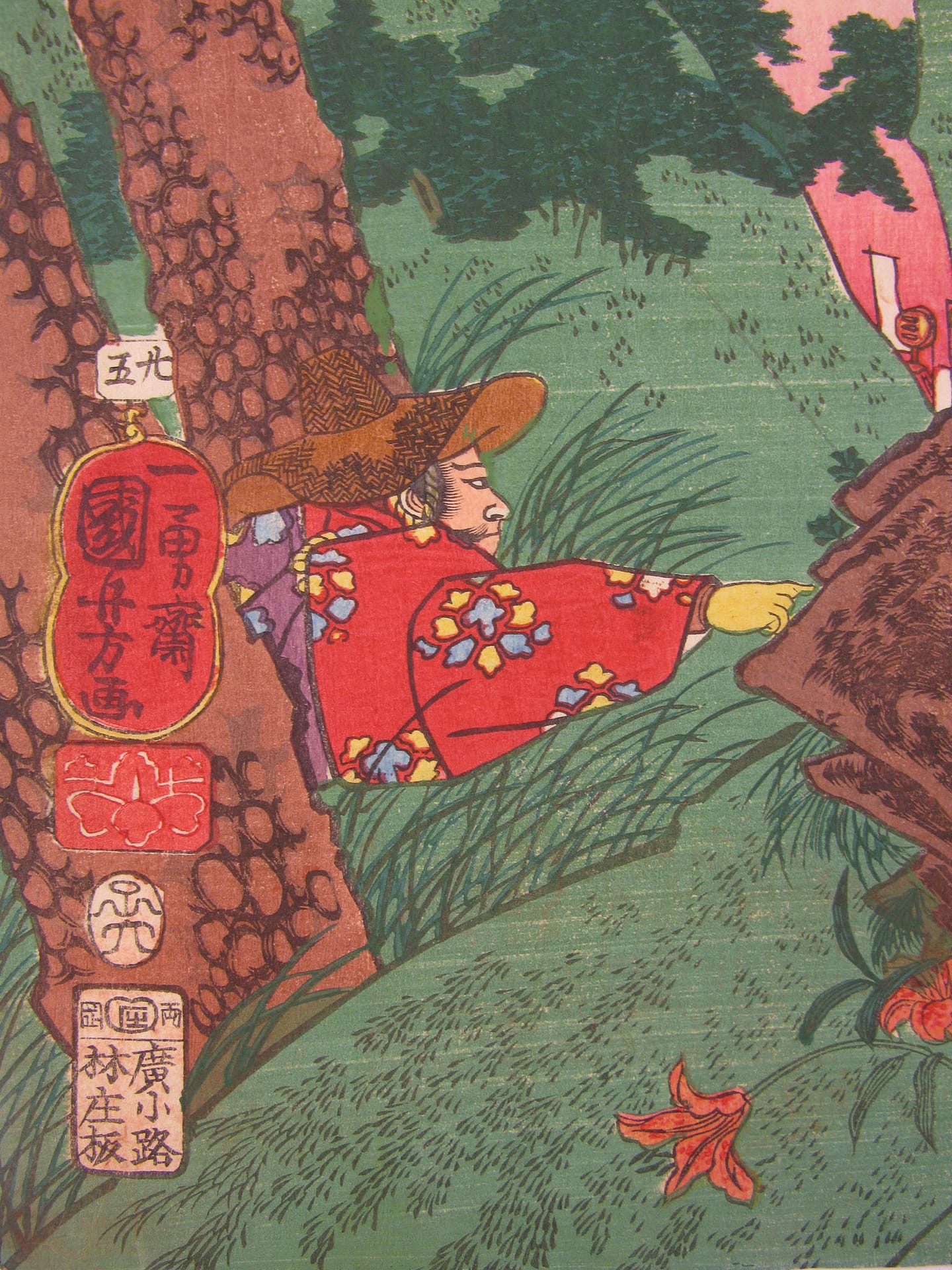
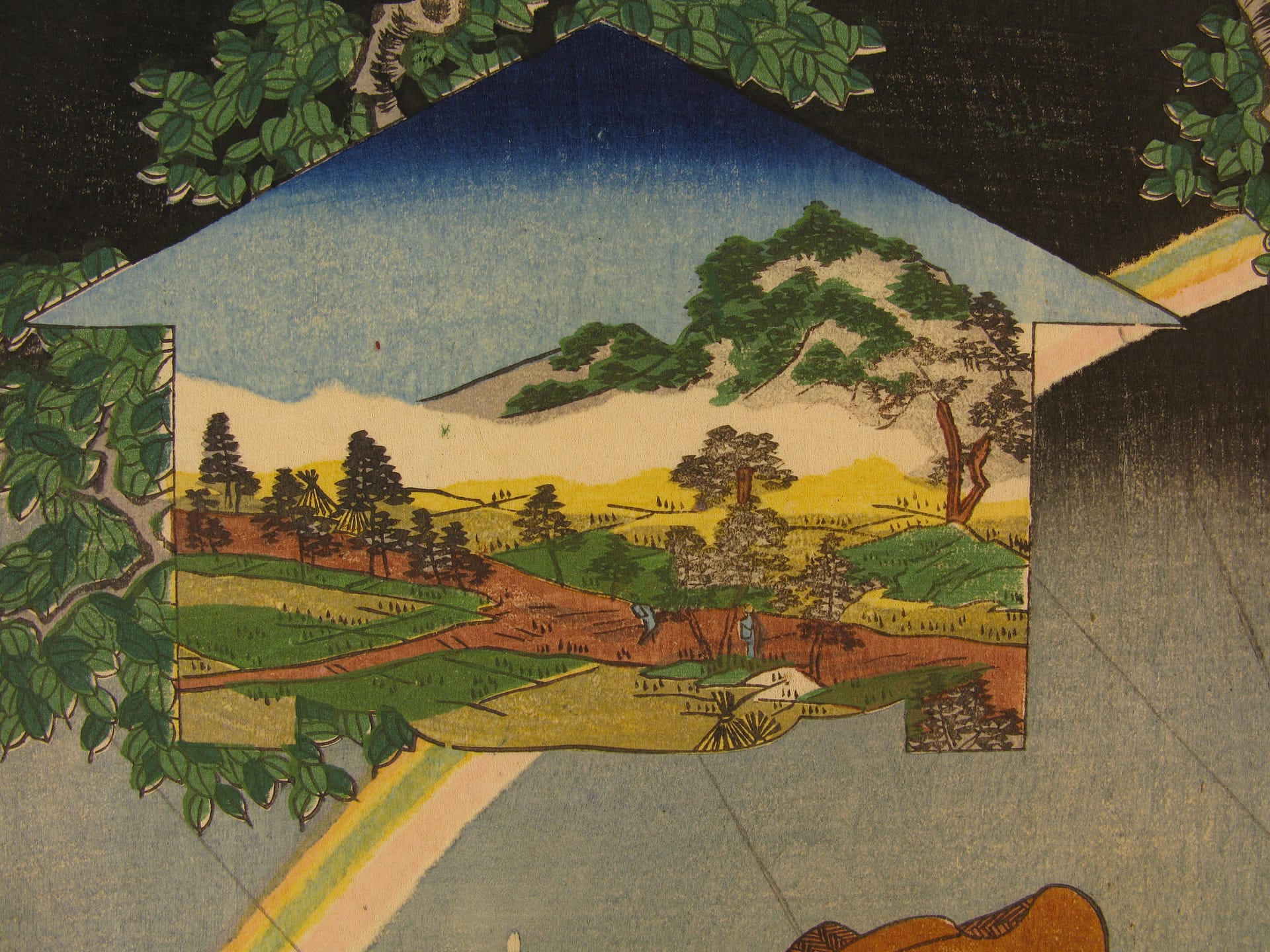
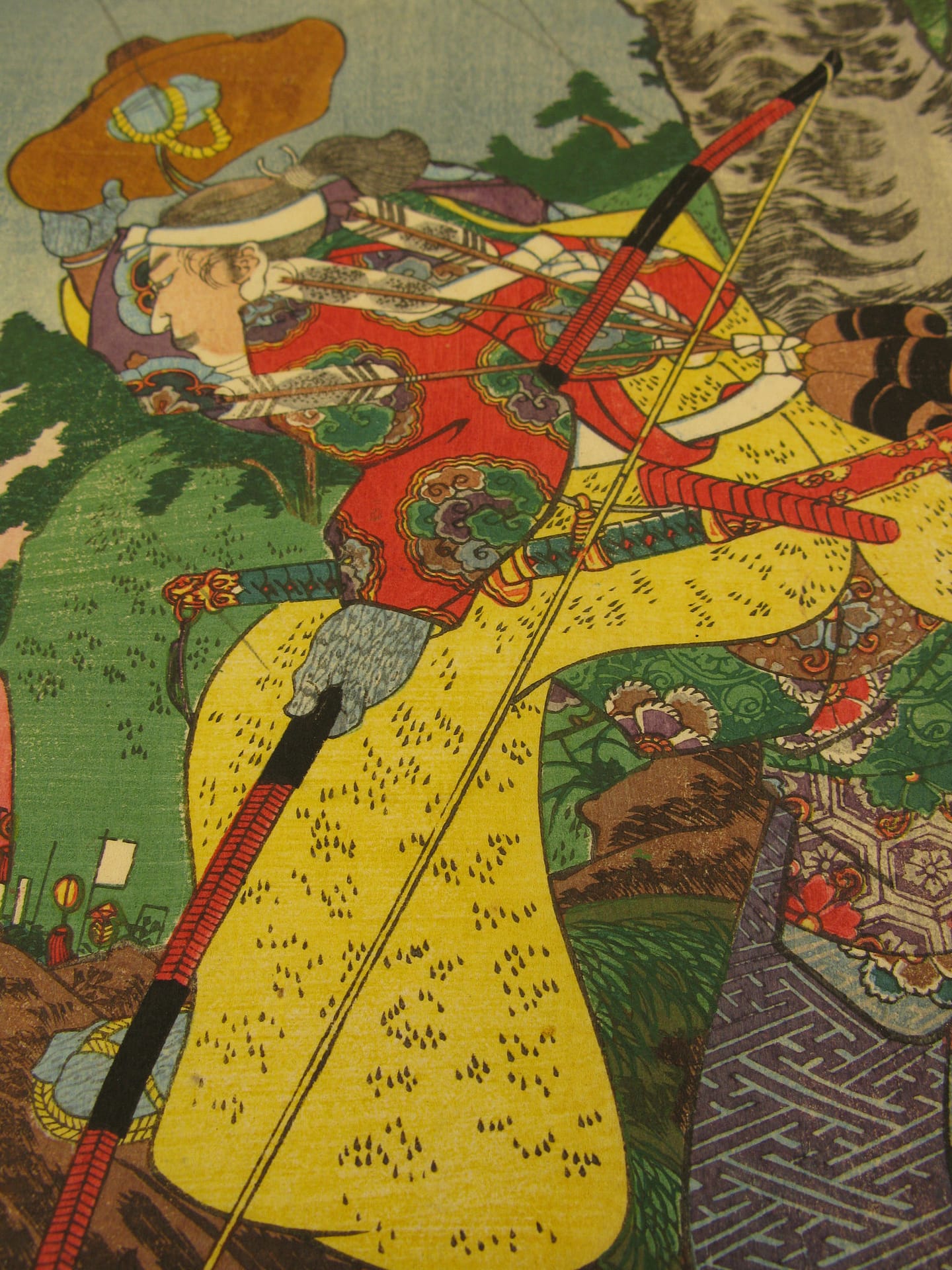
Description: Ômi Kotôda and Yawata Saburô in hunting dress observing troops moving through a gorge below them. The landscape panel insert shows a misted mountain and rice paddies within the shape of the mon associated with the tale of the Soga brothers
Series: Kisokaidô rokujûku tsugi. The sixty-nine post stations of the Kisokaido
Print No: 25
Artist: Utagawa Kuniyoshi (1797-1861)
Signature: Ichiyusai Kuniyoshi ga and kiri seal
Date: 1852 (Kaei 5), 6th month
Cens: Fukushima, Muramatsu, Rat 6
Publisher: Hayashiya Shōgorō
Size: Oban tate-e, 36.2 x 26.7 cm
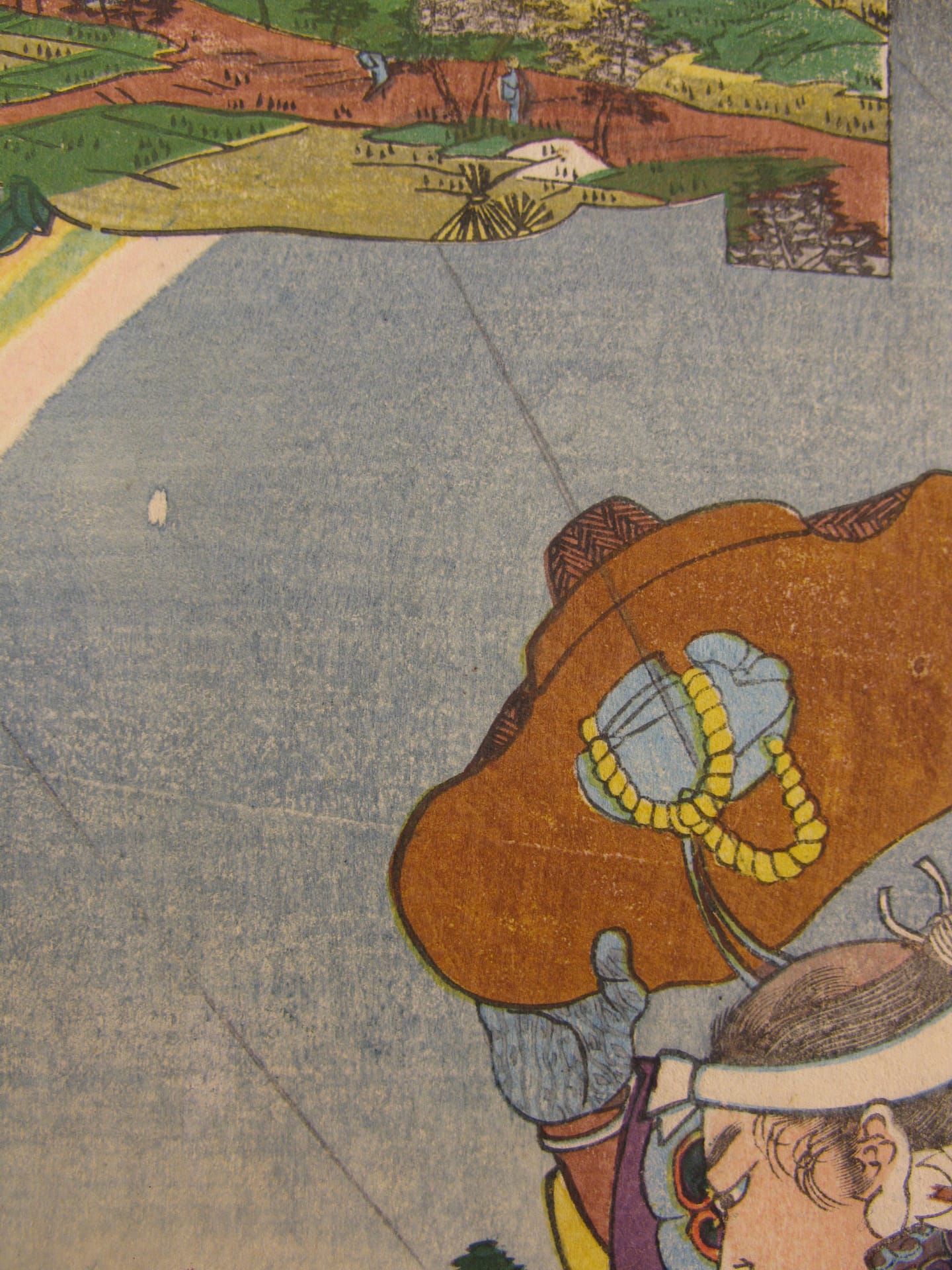
Condition: Very good impression, colour and condition with strong wood grain.
Price: TBC
References: Robinson S74.26; BMFA – William Sturgis Bigelow Collection, 11.38972.26;
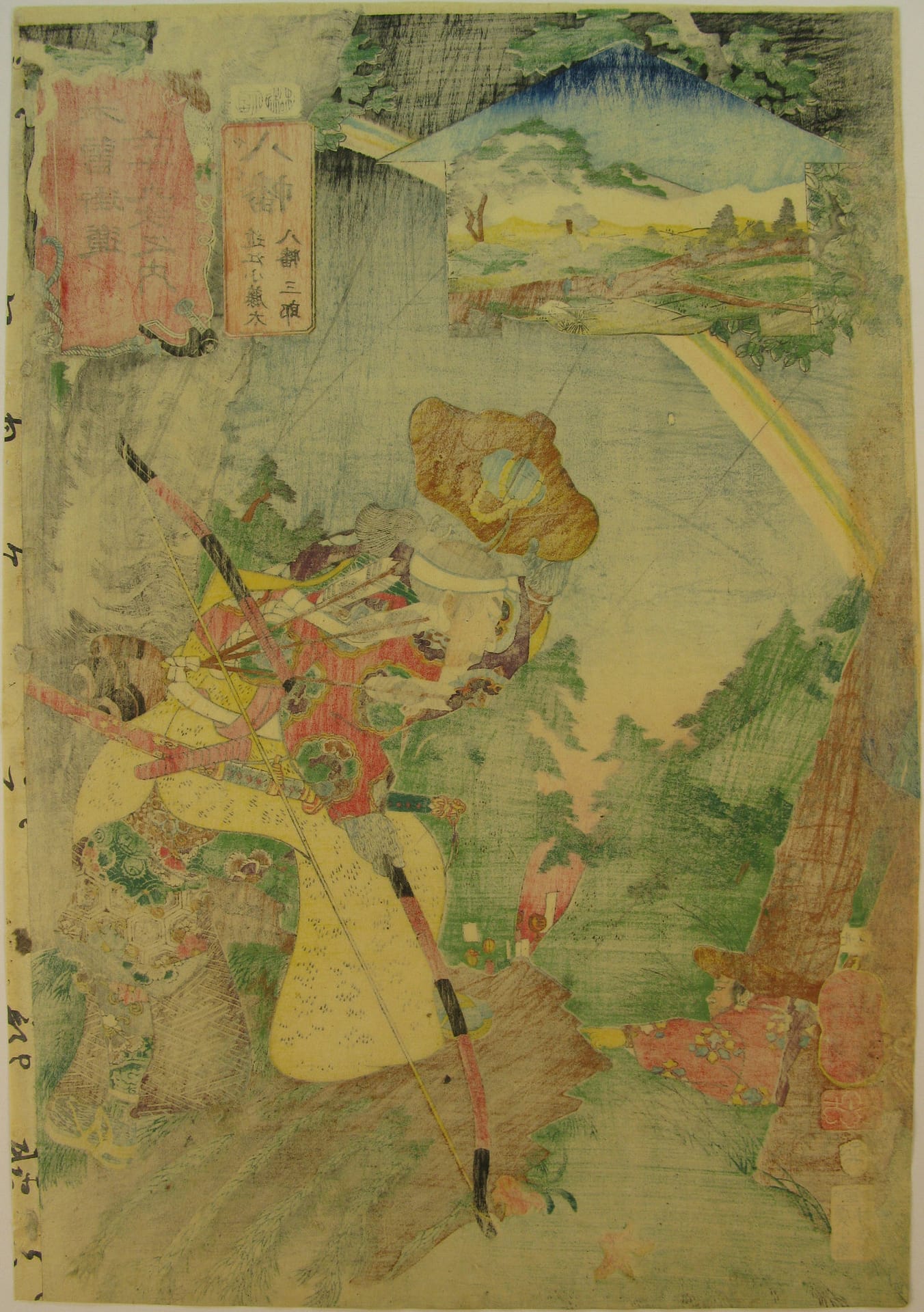
The tale of the print – Ômi Kotôda (近江小藤太) and Yawata Saburô (八幡三郎), two nervous henchmen, one botched ambush, and the beginning of a legendary revenge saga.
Yawata’s print drops us into the world of The Tale of the Soga Brothers, one of Japan’s favourite revenge epics — a story so popular it spawned songs, puppet plays, kabuki dramas, and probably more tear‑stained pamphlets than anyone could count.
Kuniyoshi chooses a pair of minor but memorable characters: Yawata Saburō (whose surname conveniently matches the station name) and his partner Ōmi Kotōda. These two work for the villain Kudō Suketsune, who wants his kinsman Itō Sukechika eliminated over an inheritance dispute. Unfortunately for them, Sukechika is a powerful lord who travels with enough armed retainers to qualify as a small parade.
Their chance finally comes during a hunting trip — a detail echoed in the print’s border, which is decorated with bows, quivers, stirrups, and other hunting gear. As Sukechika’s party returns, Yawata and Ōmi lie in wait, banners of the approaching procession fluttering in the distance. It’s all very suspenseful… until they miss their target entirely and hit Sukechika’s son, Sukeyasu, instead.
Sukeyasu, mortally wounded but still impressively composed, identifies the assassins before dying. His brother later avenges him by killing Yawata and Ōmi, but the true mastermind, Suketsune, escapes justice for years — setting the stage for the Soga brothers’ famous vendetta.
The inset landscape is shaped like the special crest used in kabuki productions of the Soga story, a visual nod to the countless theatrical retellings that kept this tale alive for centuries.
So in Yawata, the pun is simple: Yawata Station → Yawata Saburō, and the print becomes a snapshot of two henchmen whose ambush goes wrong, accidentally launching one of Japan’s most enduring revenge legends.
For an excellent analysis of the prints and series, I would encourage you to get the book:The Sixty-nine Stations of the Kisokaido by Sarah E. Thompson.