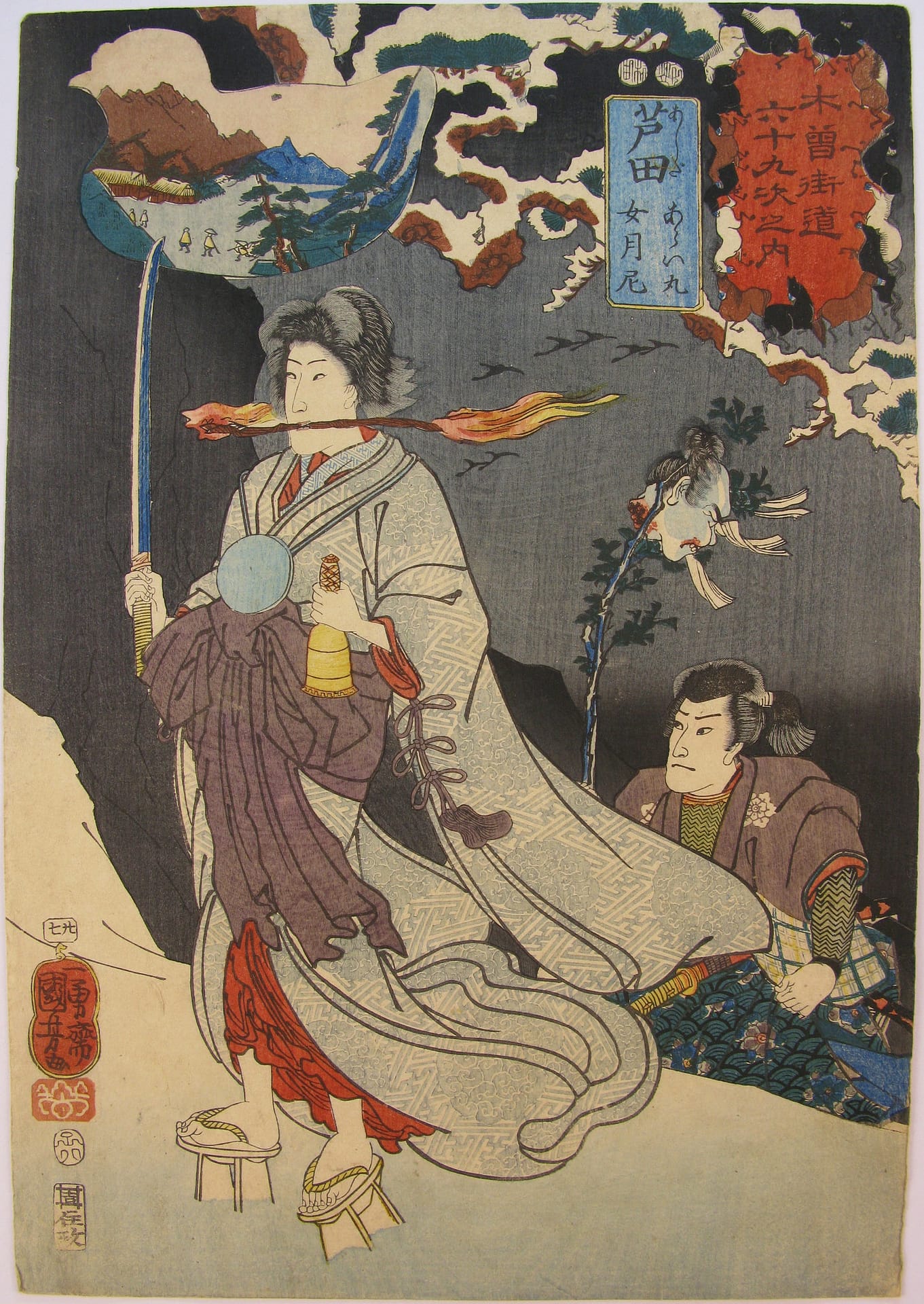
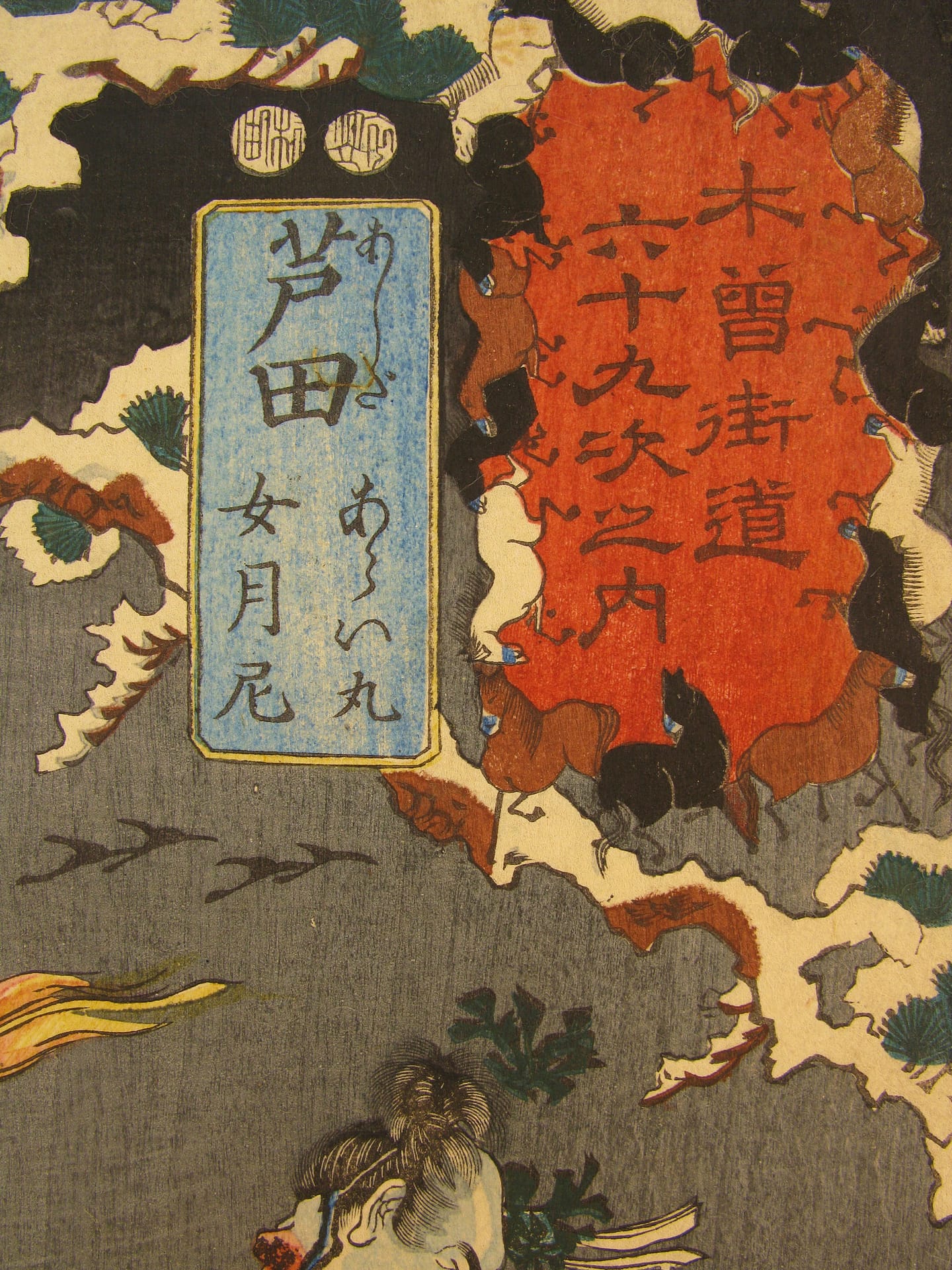
Station: Ashida (芦田)
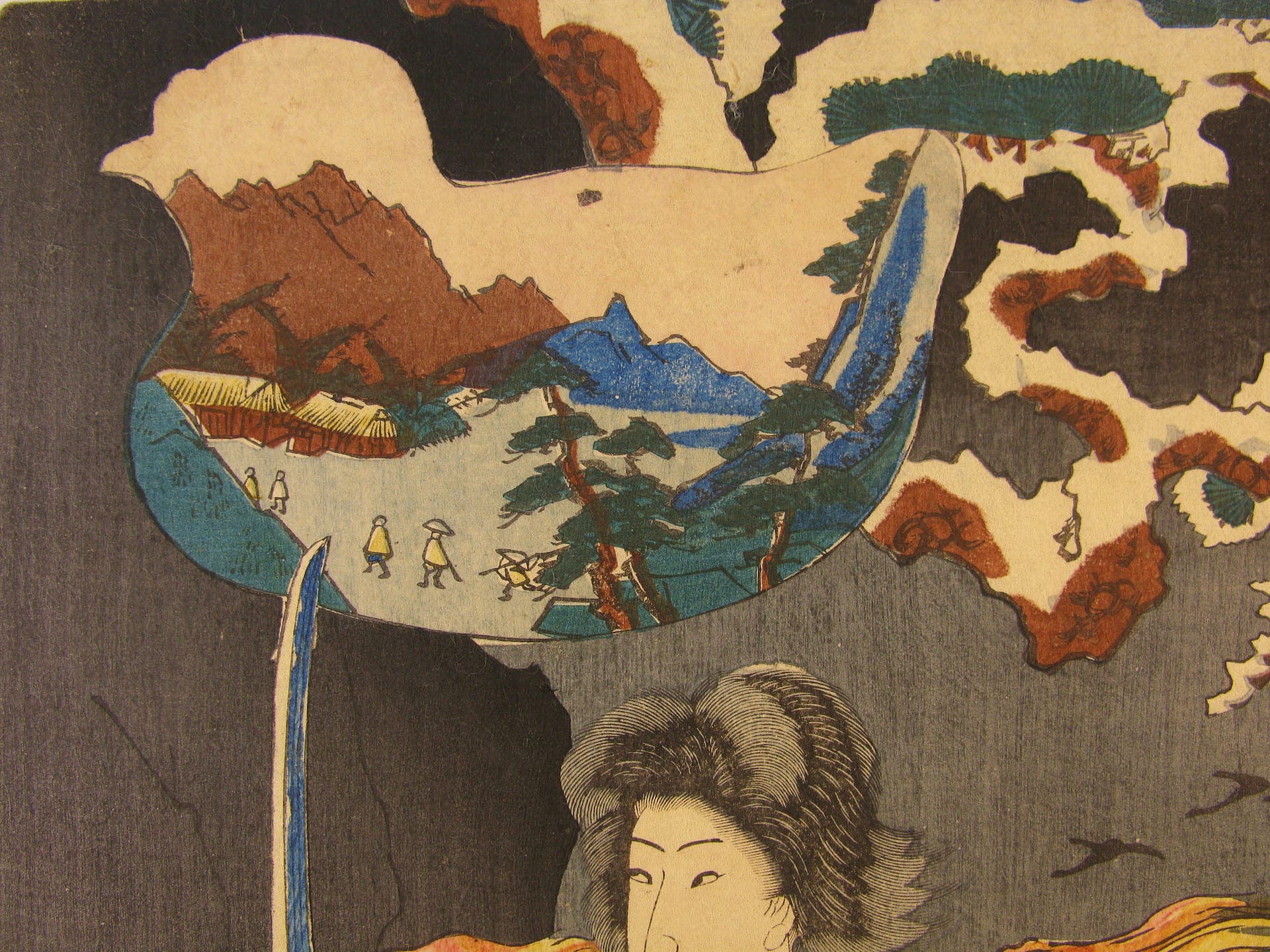
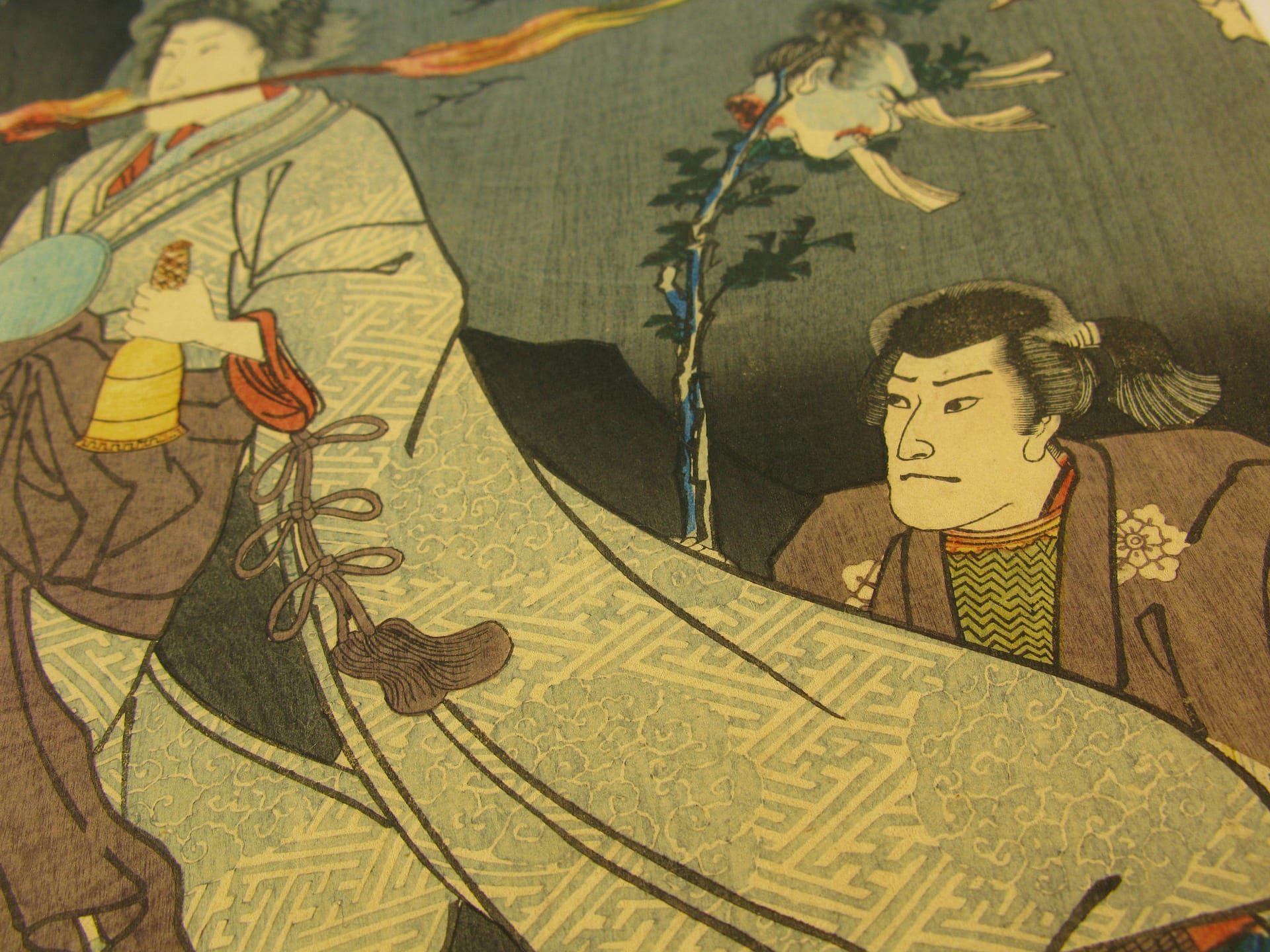
Description: The sorceress Takiyasha followed by Arai Maru carrying the head of one of her victims. The landscape panel insert shows a mountain village within the shape of a sea bird (utōyasukata).
Series: Kisokaidô rokujûku tsugi. The sixty-nine post stations of the Kisokaido
Print No: 27
Artist: Utagawa Kuniyoshi (1797-1861)
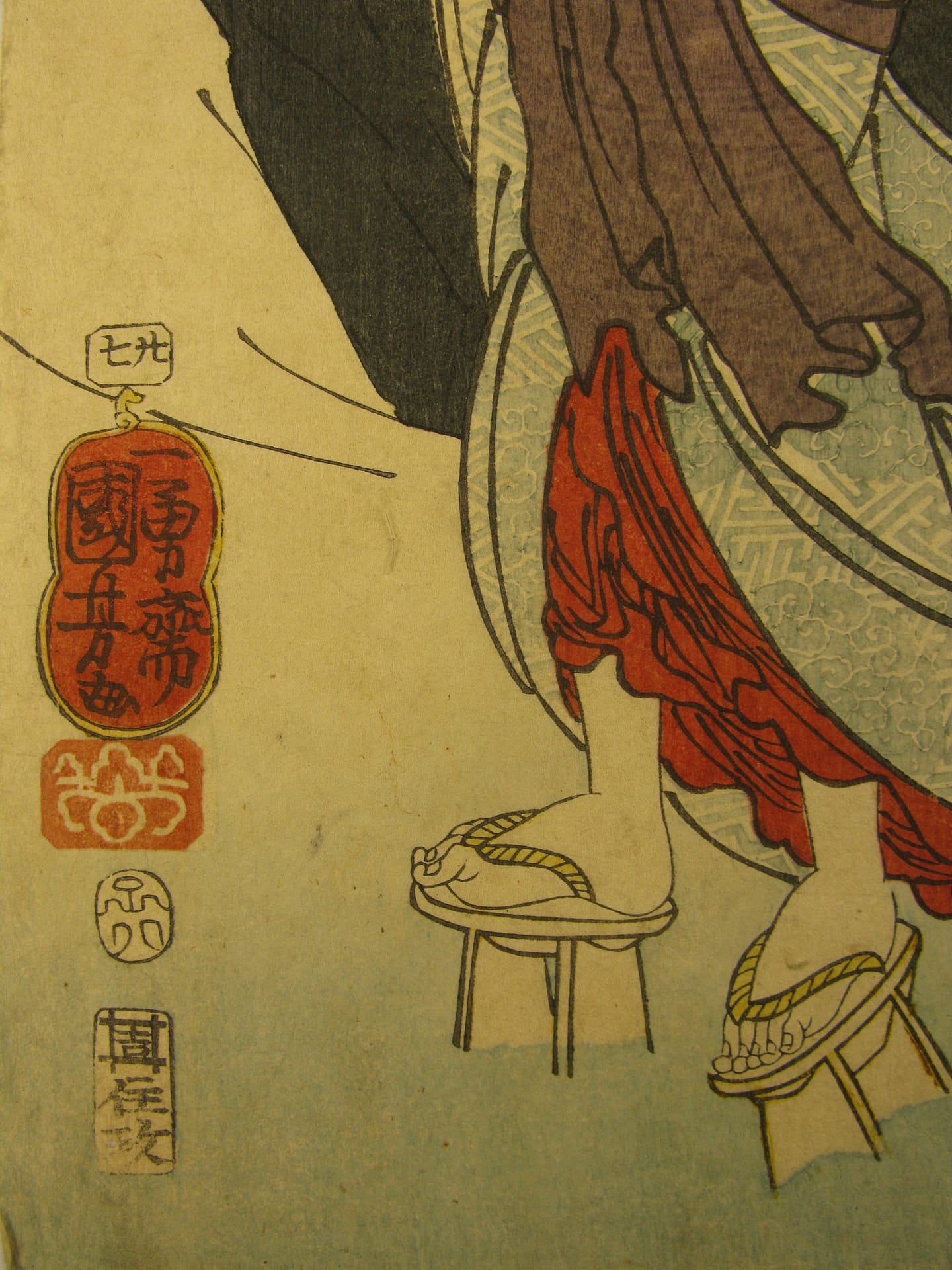
Signature: Ichiyusai Kuniyoshi ga and kiri seal
Date: 1852 (Kaei 5), 8th month
Cens: Kinugasa, Murata, Rat 8
Publisher: Sumiyoshiya Masagorō
Size: Oban tate-e,
Condition: Good impression, colour and condition, some marks, and soiling. Strong wood grain
Price: TBC
References: Robinson S74.28; BMFA – William Sturgis Bigelow Collection, 11.38972.28;
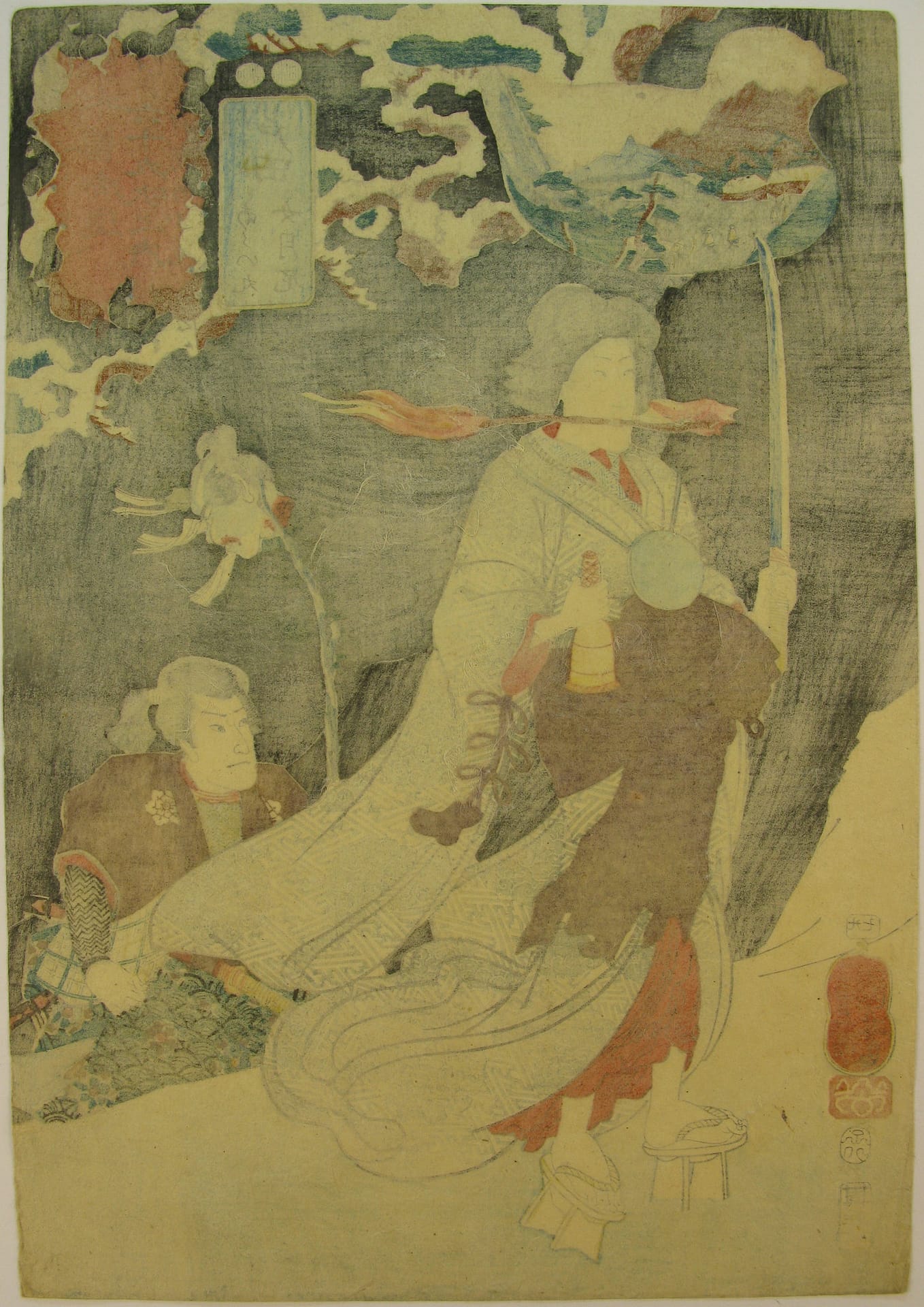
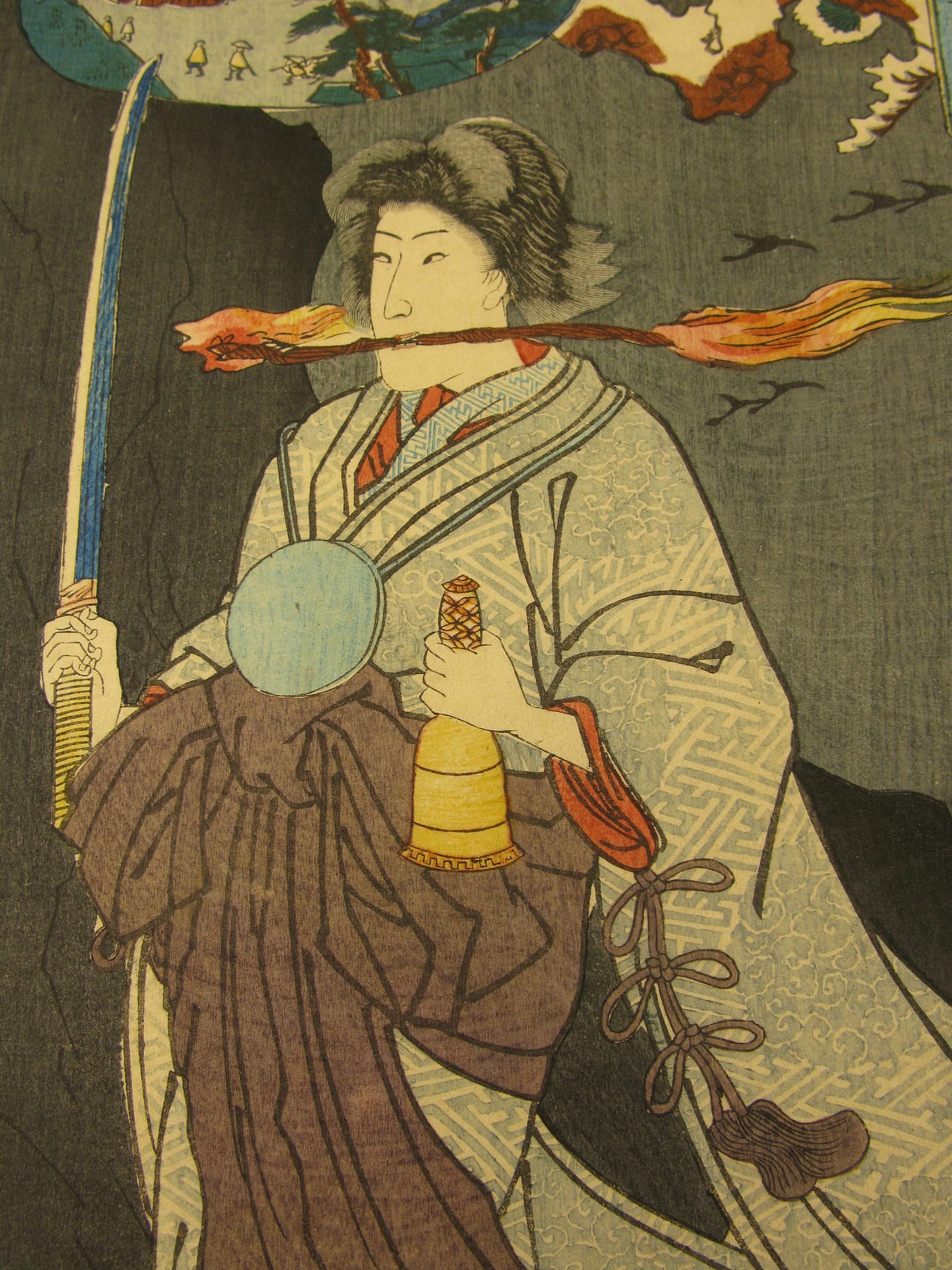
The tale of the print – The former nun Nyogetsu-ni (女月尼), who took up toad magic, high clogs, and revenge rituals, followed by Arai Maru (あらい丸).
Ashida’s print introduces Takiyasha, one of Edo fiction’s most stylish sorceresses — formerly the nun Nyogetsuni, now a practitioner of mountain magic with a flair for dramatic accessories.
Her story comes from an 1806 fantasy novel by Santō Kyōden, where she and her brother Yoshikado decide that the best way to avenge their rebel father, Taira Masakado, is to learn toad sorcery from an immortal hermit. As one does.
Their headquarters is the ruined palace at Sōma, a name that can mean “herd of horses,” which explains why the series border is decorated with horse motifs. Kuniyoshi never misses a chance to turn a pun into a design element.
The station name Ashida is a pun on ashida geta, the tall wooden clogs used for walking in snow or mud. Takiyasha wears a pair as she performs a midnight ritual: torch clenched between her teeth, mirror hanging from her neck, bell in one hand, sword in the other, hair still short from her nun days, and an overall vibe of “mountain witch chic.”
Behind her trudges her loyal henchman Araimaru, casually carrying a severed head tied to a branch — the Edo equivalent of carrying your boss’s laptop.
The inset landscape is shaped like a ‘utō’ seabird, referencing Utō Yasukata, the heroic figure whose name appears in the novel’s title. In the story, Takiyasha and her brother kill him with their magic, but his relatives eventually rally and defeat the sorcerous siblings. Edo fiction loved a good supernatural feud.
Kuniyoshi adored this tale and illustrated it many times, including his famous triptych where Takiyasha summons a giant skeleton — proof that she never did anything halfway.
So in Ashida, the pun is perfect: Ashida → ‘high clogs’, and the print becomes a snowy, torch‑lit snapshot of a sorceress who mixes religious relics, monster magic, and impeccable footwear.
For an excellent analysis of the prints and series, I would encourage you to get the book:The Sixty-nine Stations of the Kisokaido by Sarah E. Thompson.