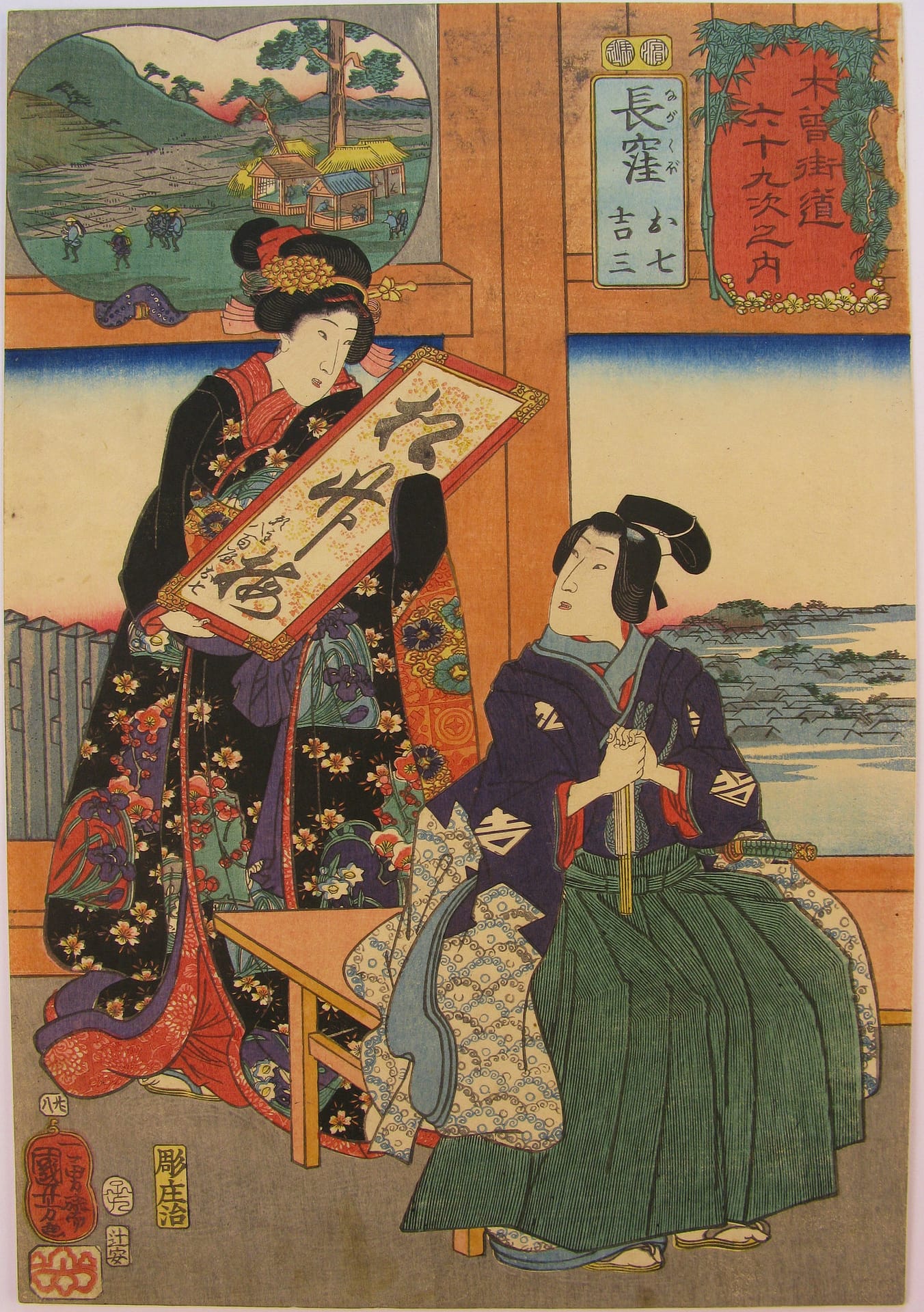
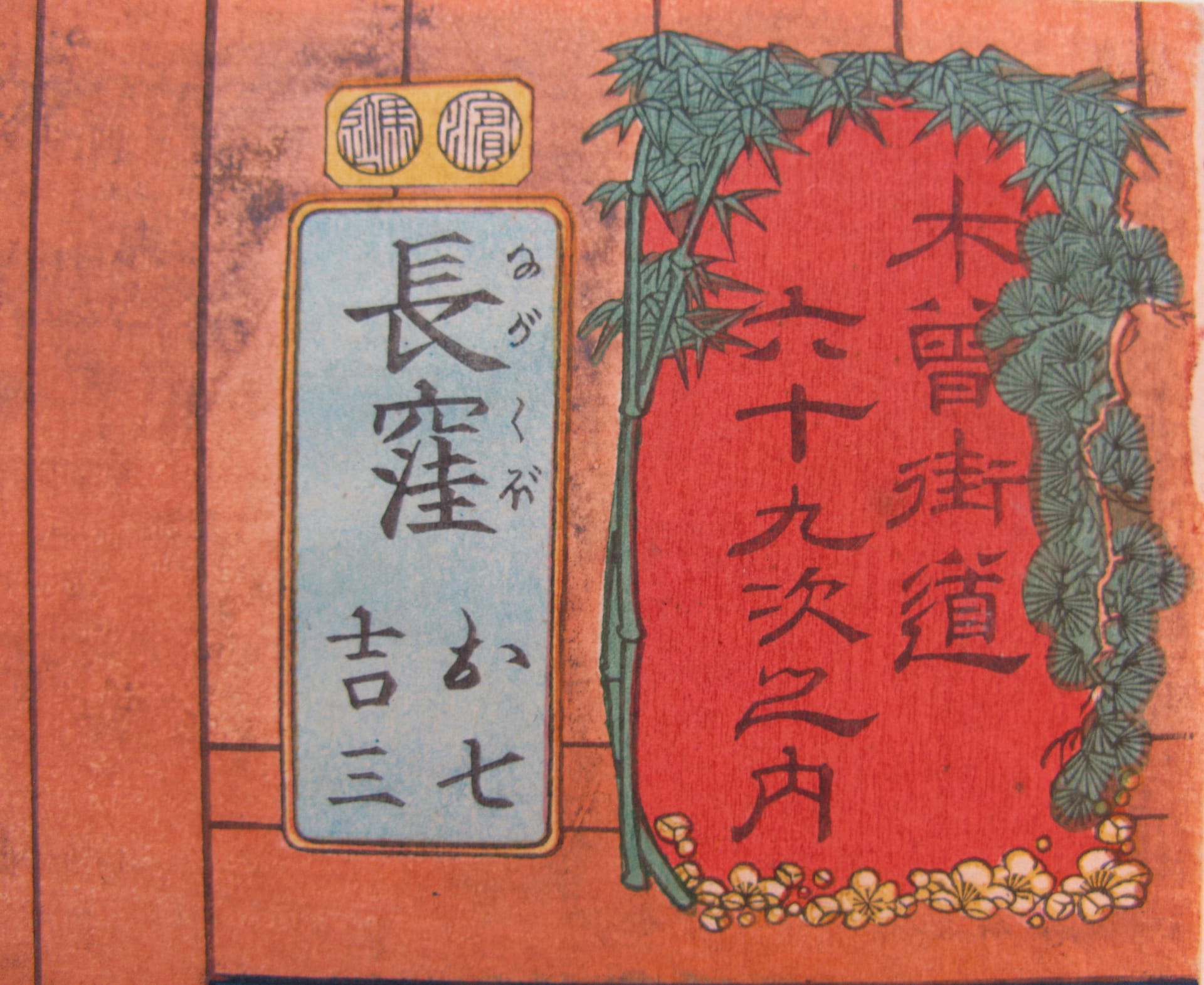
Station: Nagakubo (長窪)
Description: Kichiza seated on a bench, looks over his right shoulder at O-Shichi who holds a framed calligraphy (shôchikubai) signed by herself. The landscape panel insert shows a sunset village and rice paddies in the hillside in the shape of a plum.
Series: Kisokaidô rokujûku tsugi. The sixty-nine post stations of the Kisokaido
Print No: 28
Artist: Utagawa Kuniyoshi (1797-1861)
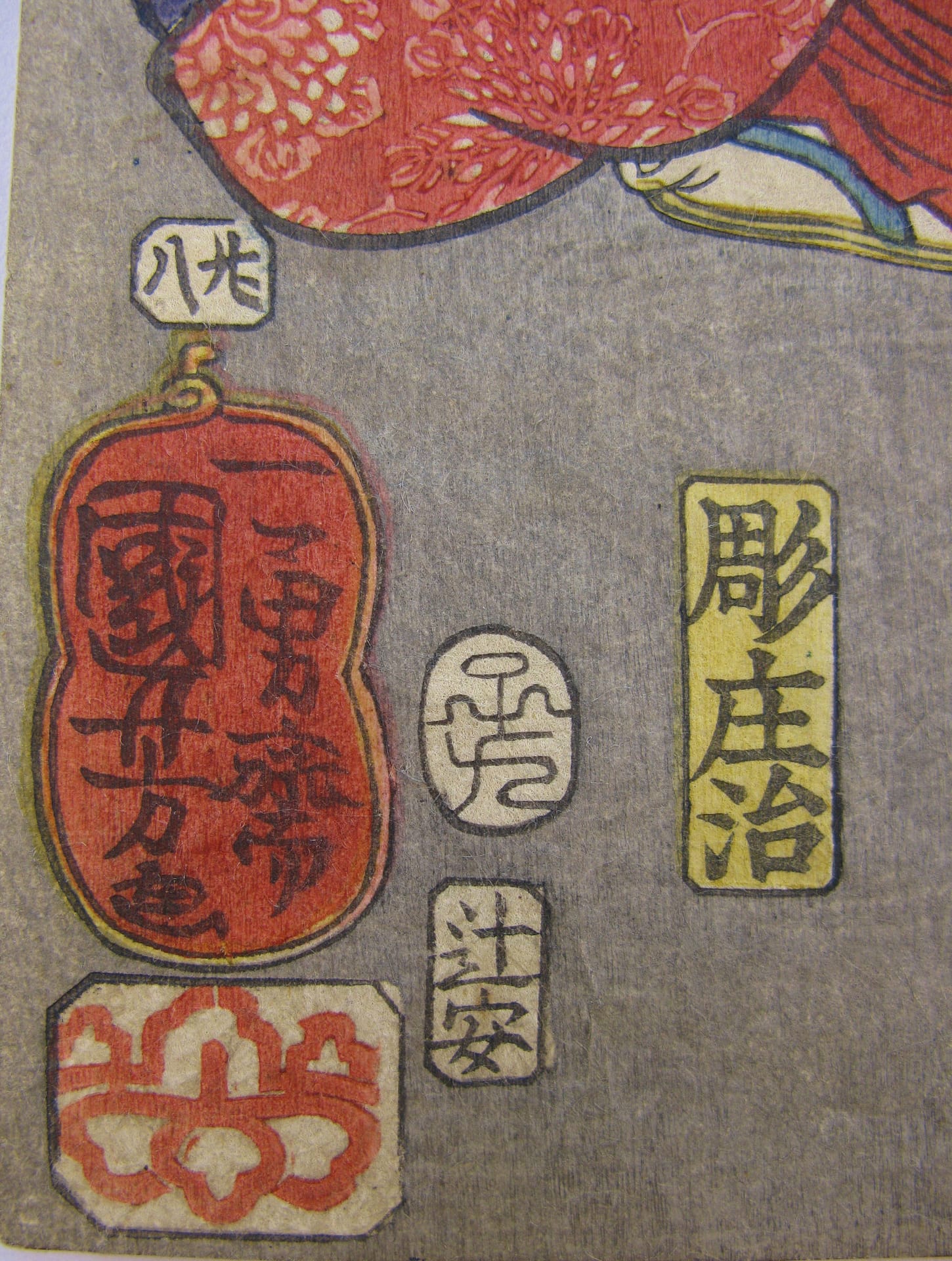
Signature: Ichiyusai Kuniyoshi ga and kiri seal
Date: 1852 (Kaei 5), 9th month
Cens: Hama, Magome, Rat 9
Publisher: Tsuji-ya Yasubei
Block cutter: Hori Shōji
Size: Oban tate-e, 36.2 x 24.8 cm
Condition: Very good impression, colour and condition, minor marks and flaws, rich oxidation or the orange pigment. Slightly trimmed, retains light Japanese album backing.
Price: TBC
References: Robinson S74.29; BMFA – William Sturgis Bigelow Collection, 11.38972.29;
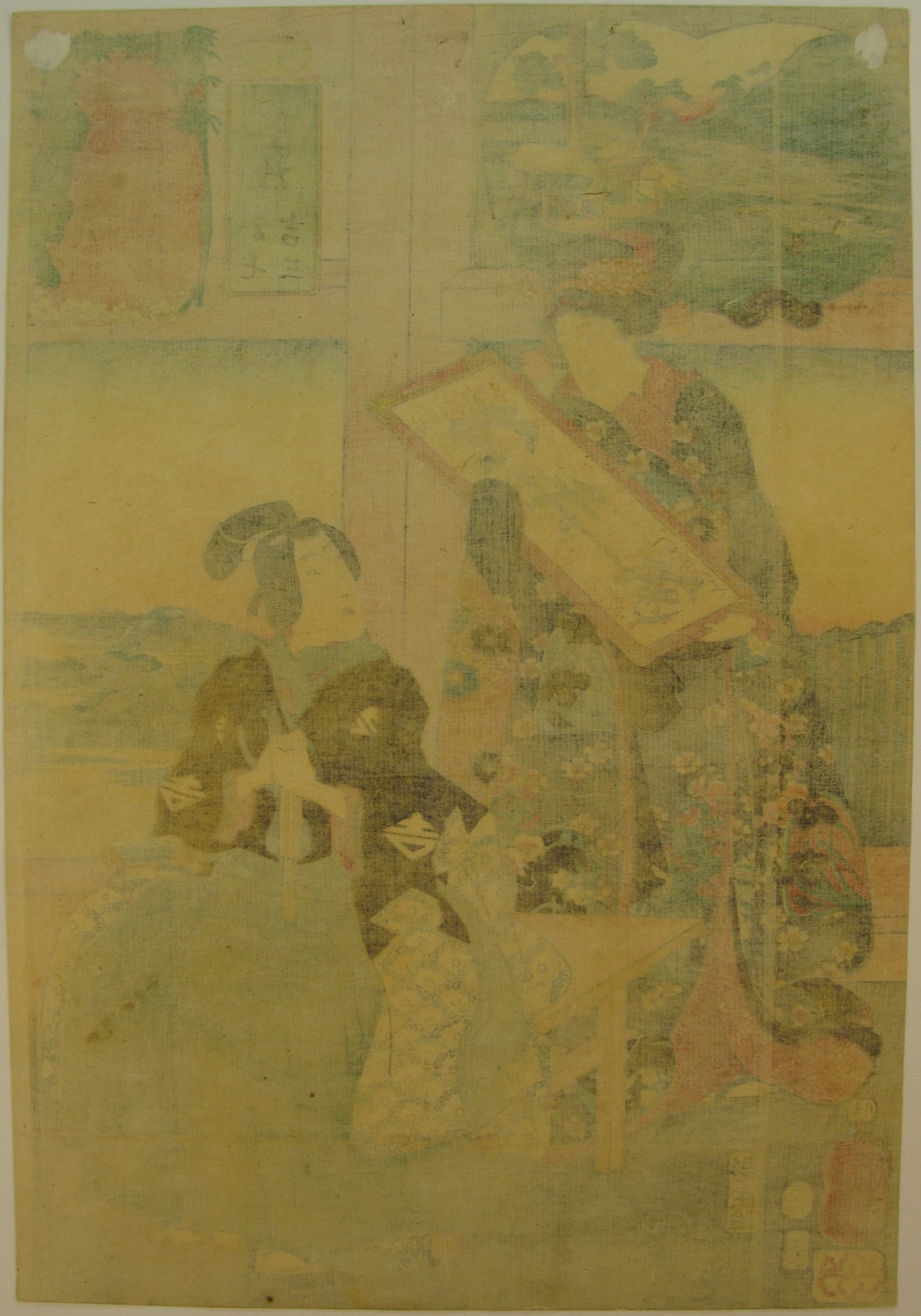
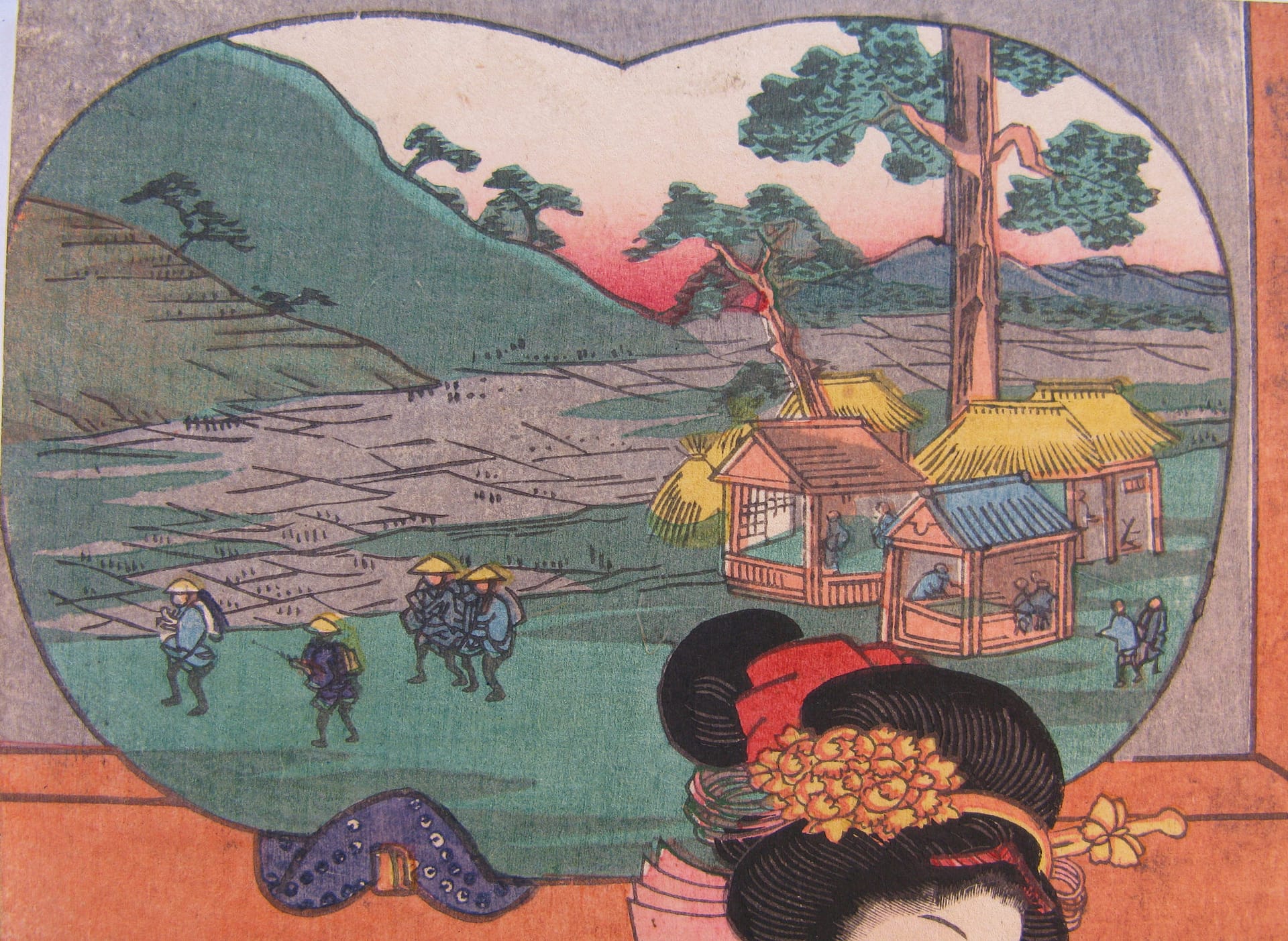
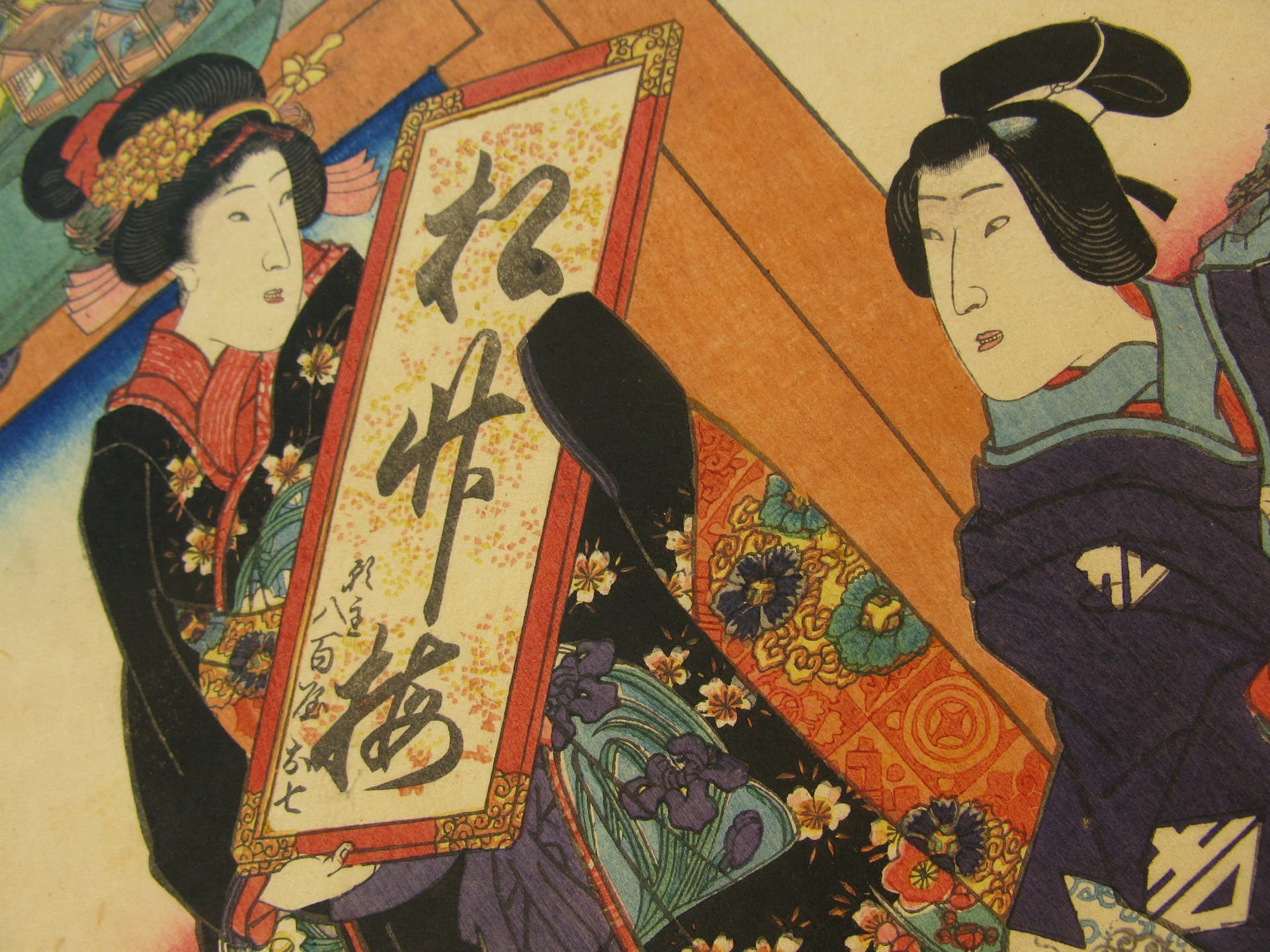
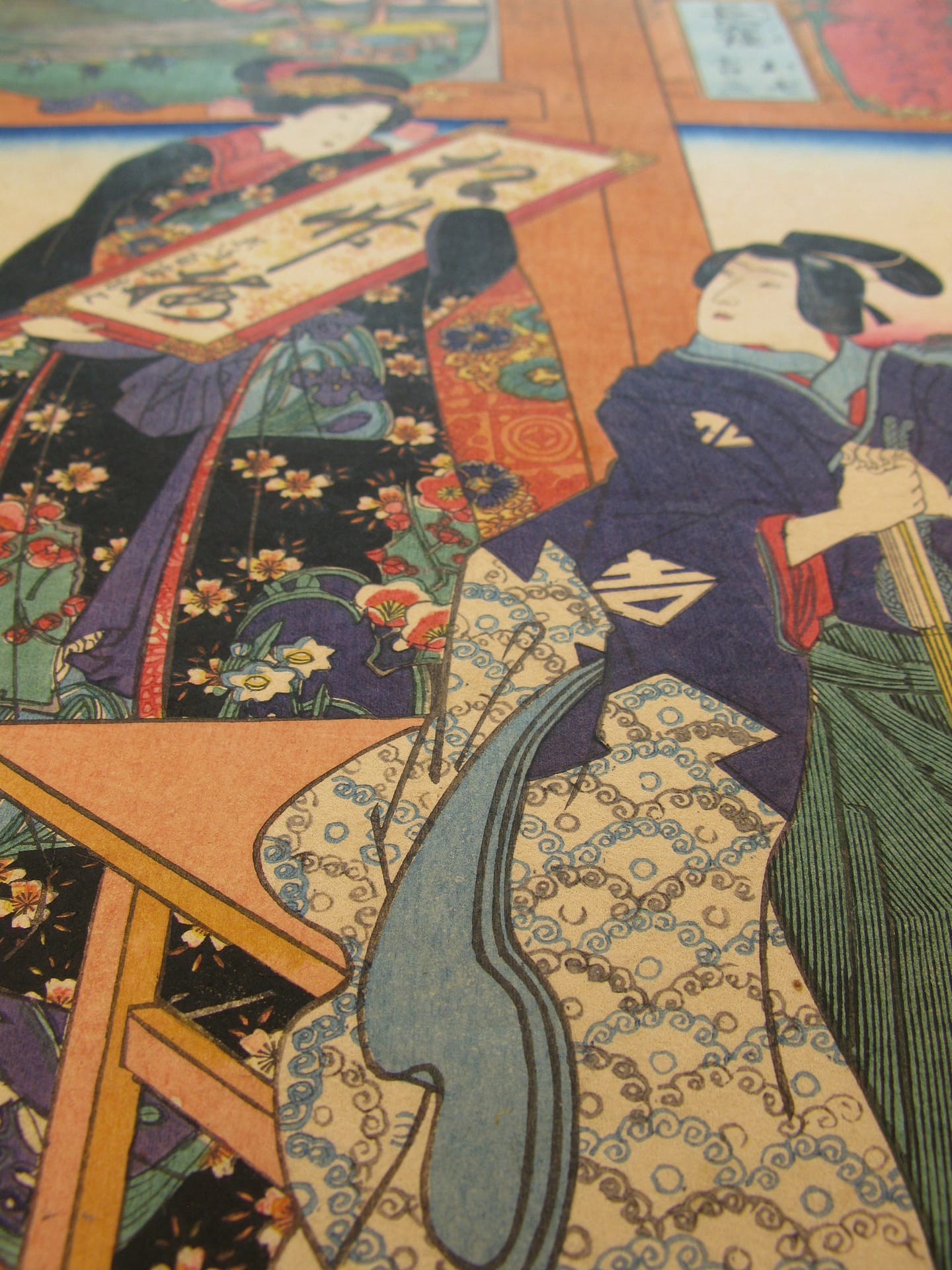
The tale of the print – Kichiza (吉三), looking at O-Shichi (お七), the girl who fell in love, made a terrible plan, and literally signed her life away.
One of Edo’s most heartbreaking legends: Yaoya Oshichi, the greengrocer’s daughter whose love story became famous across Japan. In 1682, a fire forced her family to take shelter at a temple, where Oshichi met a handsome young page. Sparks flew — the romantic kind, not the dangerous kind — and the two began a secret affair.
When she returned home, Oshichi found it nearly impossible to see him again. So she came up with a plan that was bold, misguided, and catastrophically literal: “If a fire brought us together once… maybe another fire will do it again.”
She tried to recreate the circumstances of their meeting. Fortunately the blaze was quickly extinguished, but arson in a wooden city was no small matter. Oshichi was arrested and, at eighteen, sentenced to death.
Writers quickly transformed her into a tragic heroine. Ihara Saikaku included a softened, semi‑fictional version of her story in Five Women Who Loved Love, changing the page boy’s name to Kichisaburō (Kichiza) — a name that stuck in puppet and kabuki plays for generations. Some stage versions even tried to redeem her by making the fire a false alarm meant to save her lover’s life.
At her real trial, the judge tried desperately to spare her by claiming she was still a minor. But fate intervened in the form of a votive plaque she had donated to a temple years earlier — complete with her age at the time. That plaque, meant as a pious offering, became the evidence that doomed her.
Kuniyoshi’s print shows Oshichi and her lover together with that fateful plaque, decorated with the characters for pine, bamboo, and plum — the “Three Auspicious Plants.” These same motifs form the border of the print, turning the entire composition into a frame of bittersweet symbolism.
So in Nagakubo, the story is not a pun but a mood: young love, a disastrous decision, and a wooden plaque that outlasted the girl who wrote it.
For an excellent analysis of the prints and series, I would encourage you to get the book:The Sixty-nine Stations of the Kisokaido by Sarah E. Thompson.