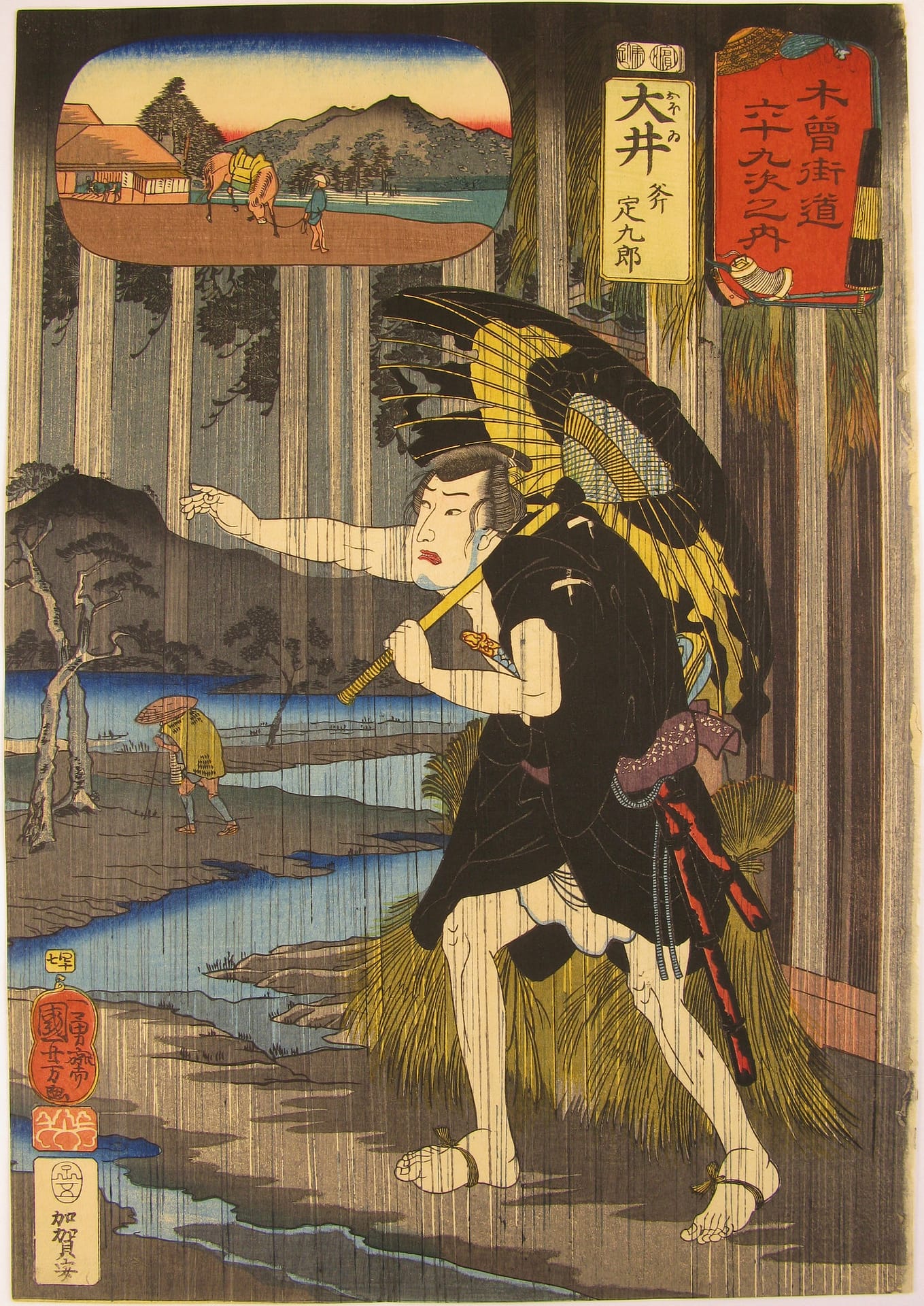
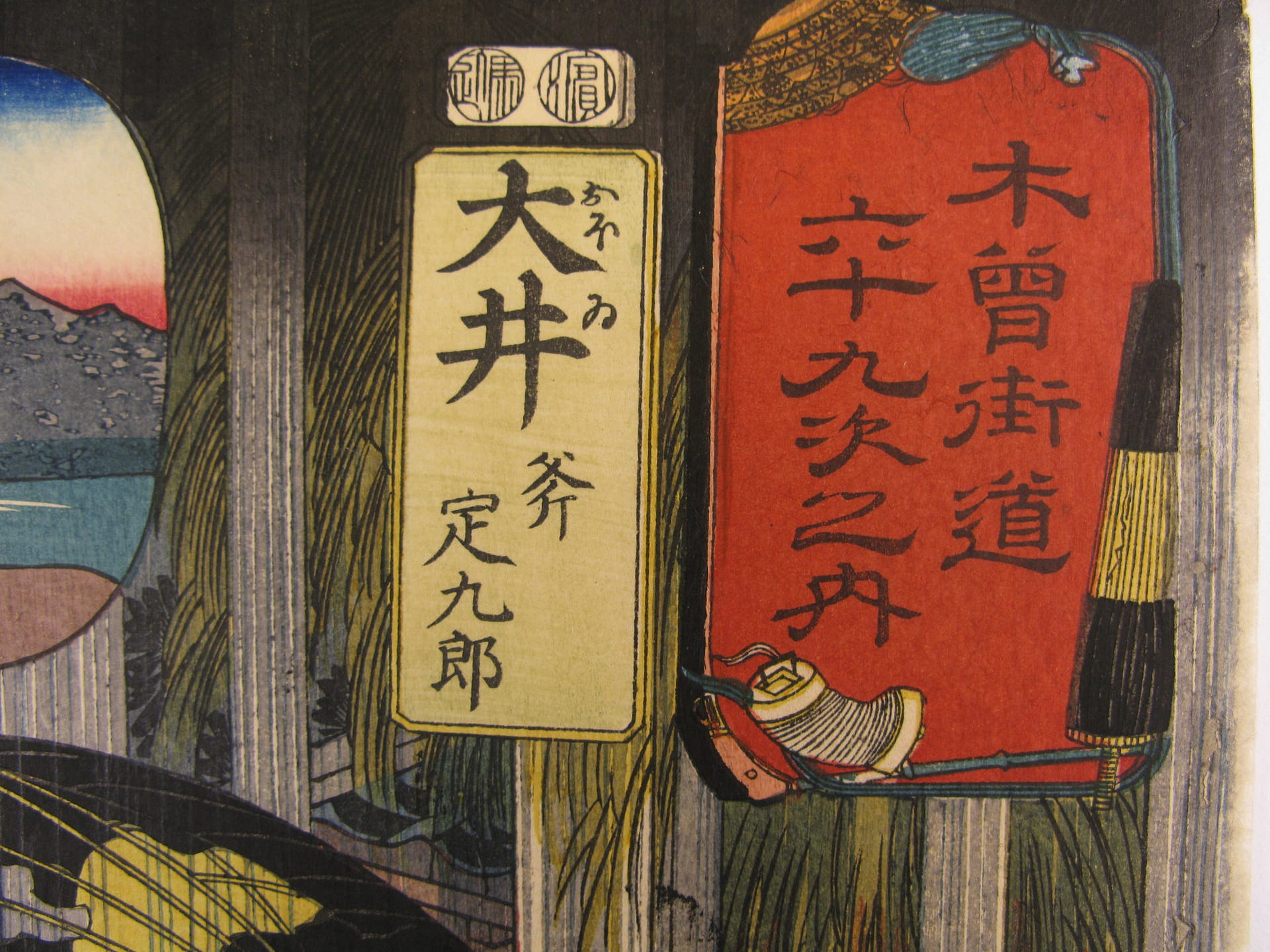
Station: Ôi (大井)
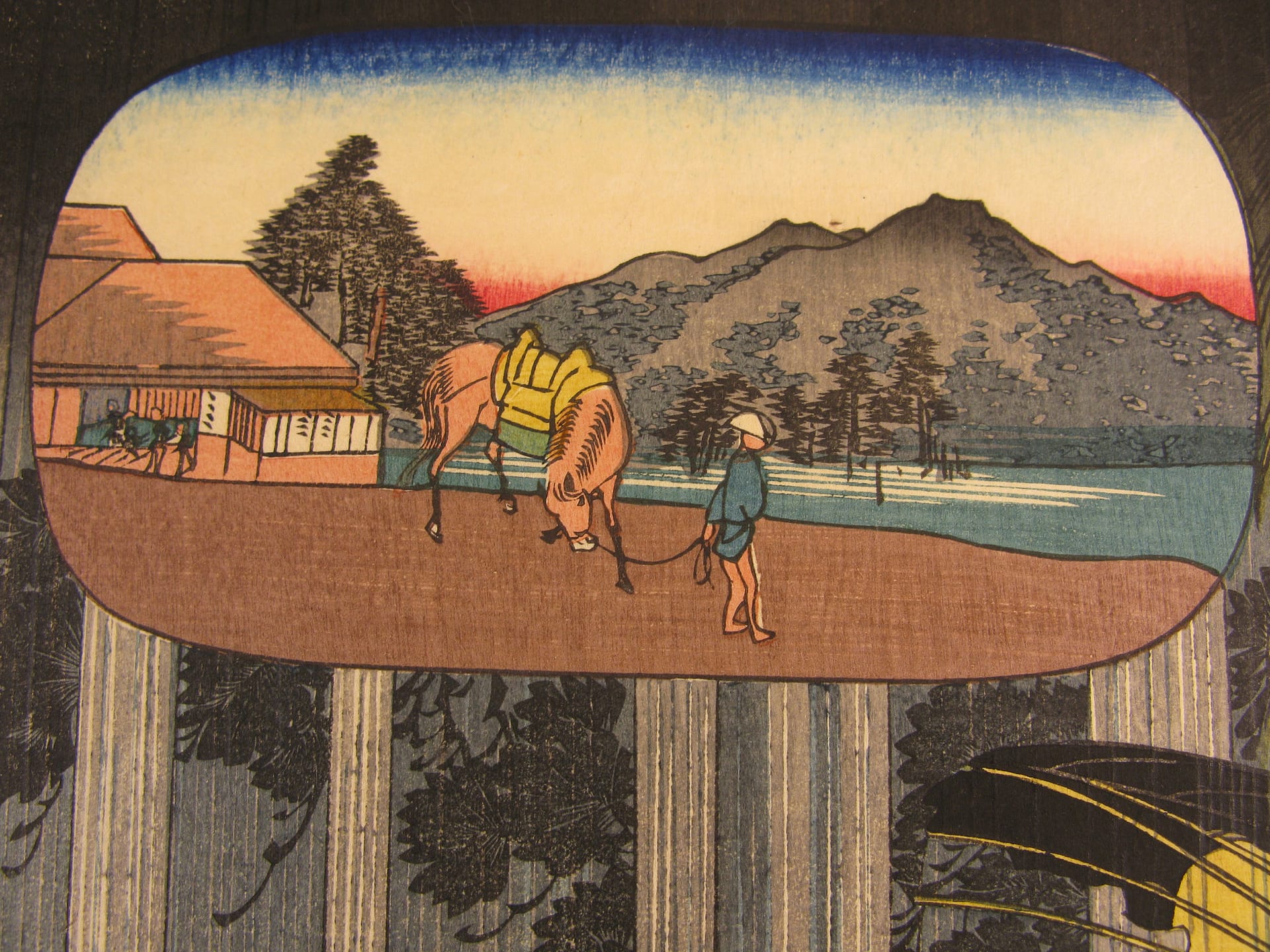
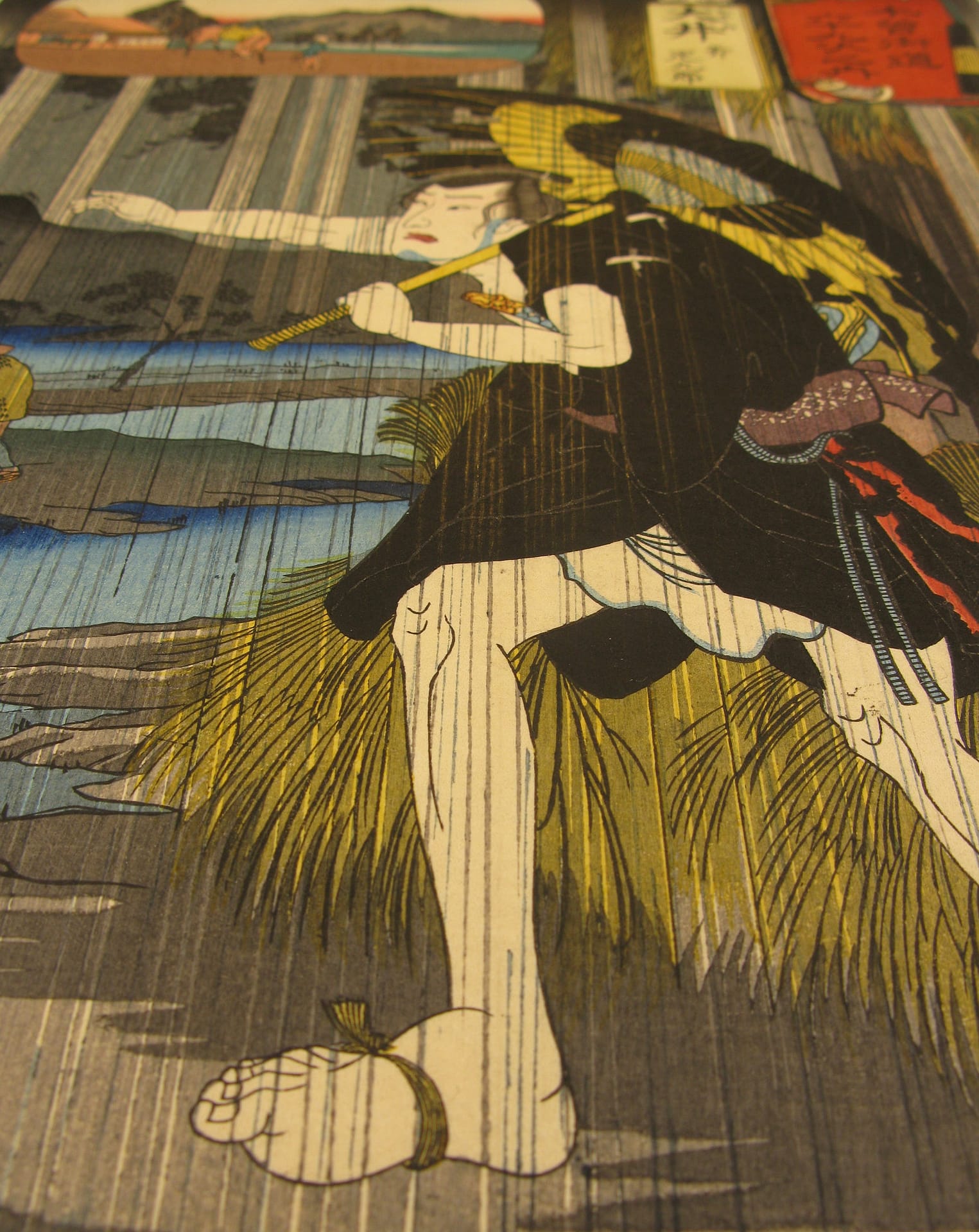
Description: The robber Ono Sadakurô calling Yoichibei (a scene from Act V of the kabuki play ‘Kanadehon chûshingura’)The landscape panel insert shows a traveler leading a horse in front of a tea-house within the shape of a gold coin
Series: Kisokaidô rokujûku tsugi. The sixty-nine post stations of the Kisokaido
Print No: 47
Artist: Utagawa Kuniyoshi (1797-1861)
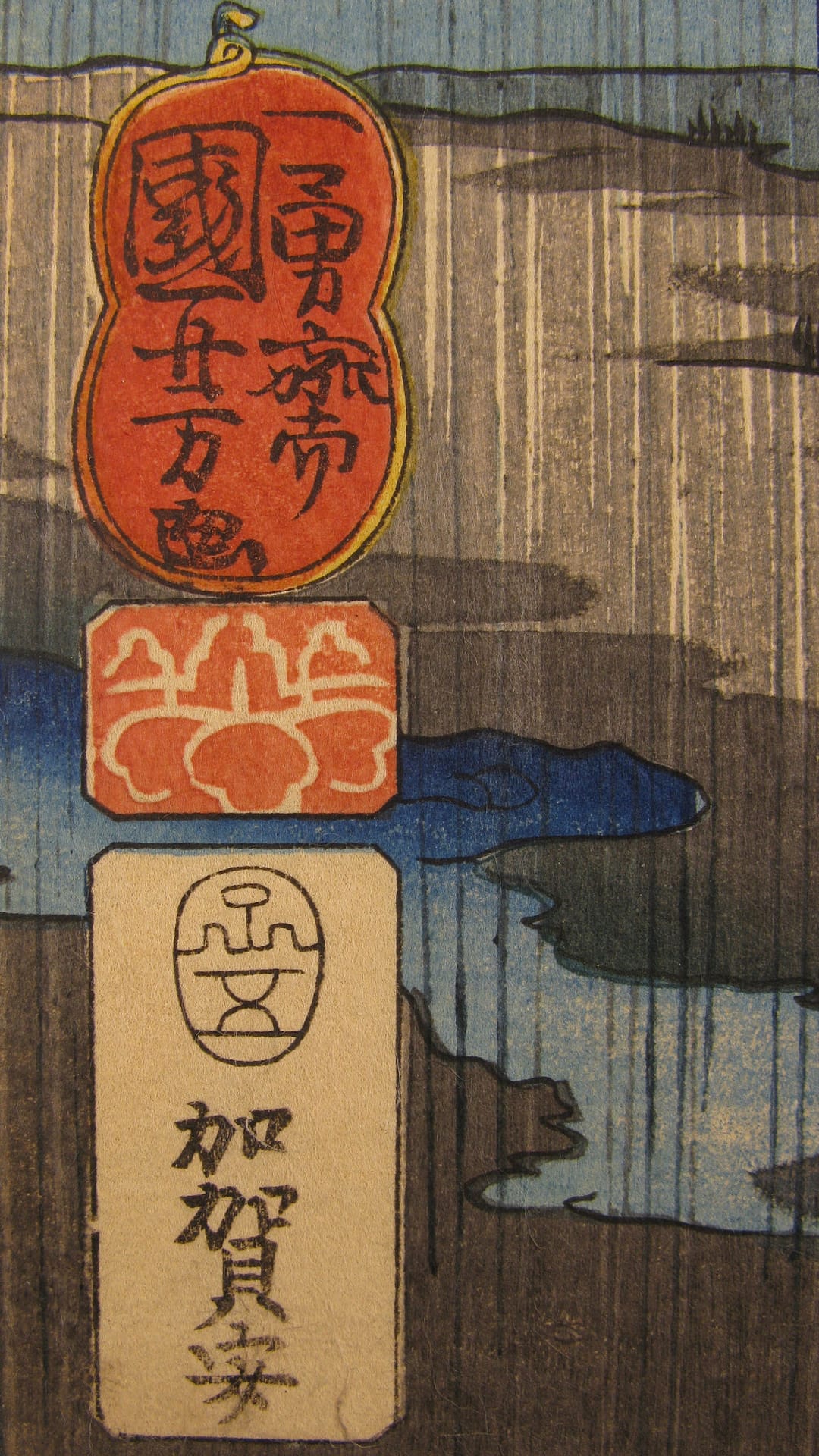
Signature: Ichiyusai Kuniyoshi ga and kiri seal
Date: 1852 (Kaei 5), 5th month
Cens: Hama, Magome, Rat 5
Publisher: Kagaya Yasubei
Size: Oban tate-e,
Condition: Fine impression, colour and condition, with fine bokashi and extensive burnishing of the rain drops
Price: TBC
References: Robinson S74.48; BMFA – William Sturgis Bigelow Collection, 11.38972.48;
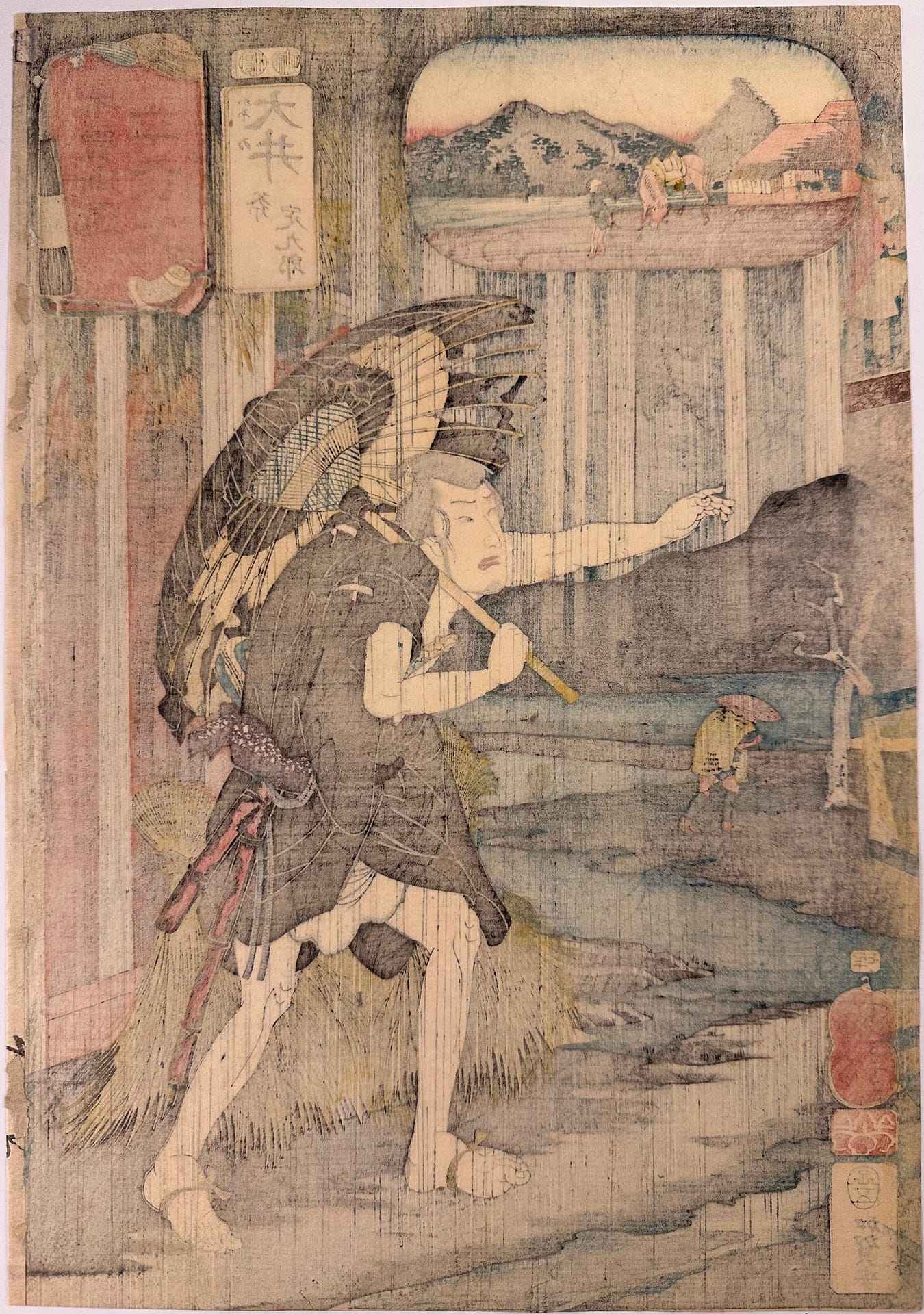
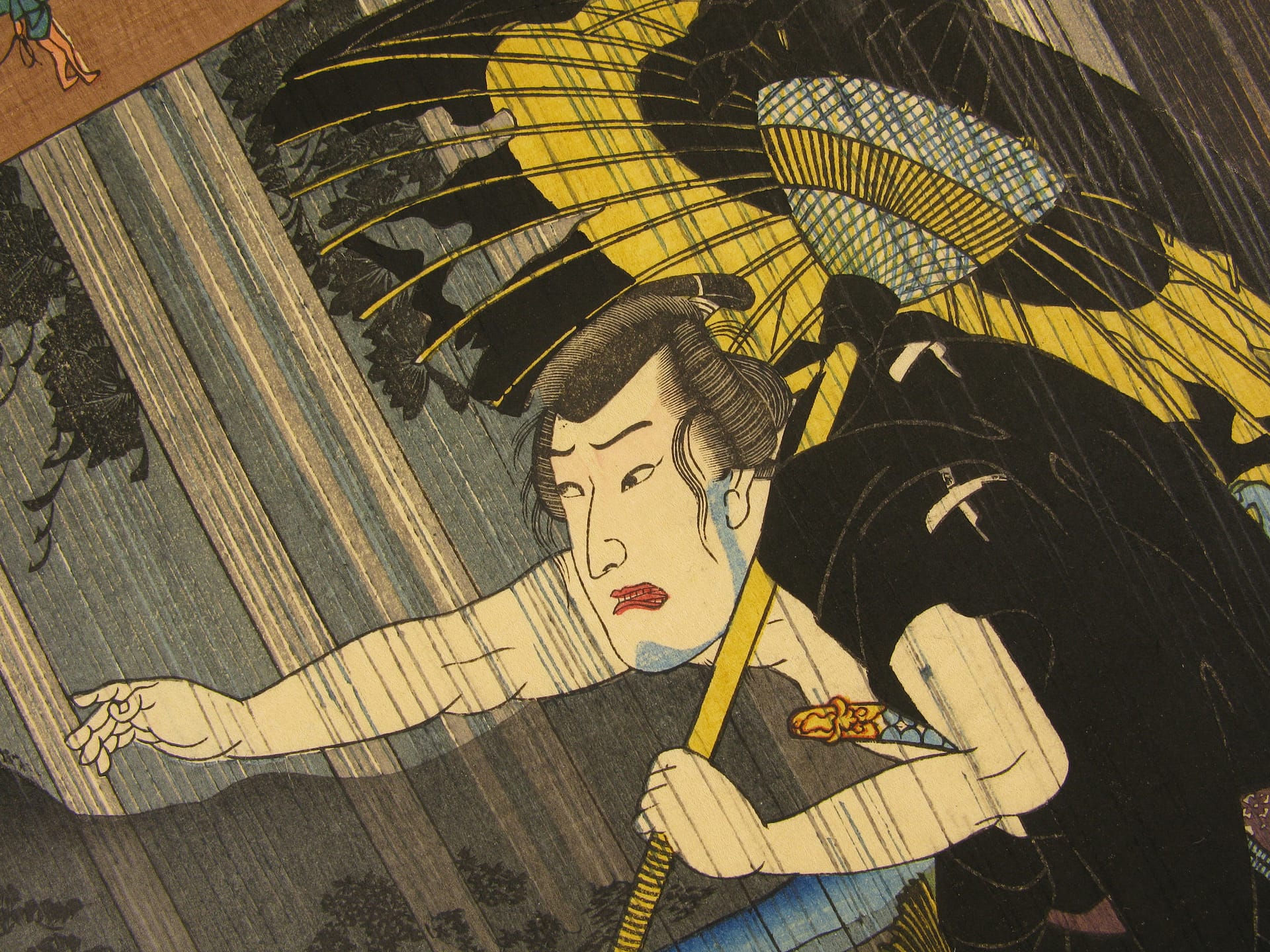
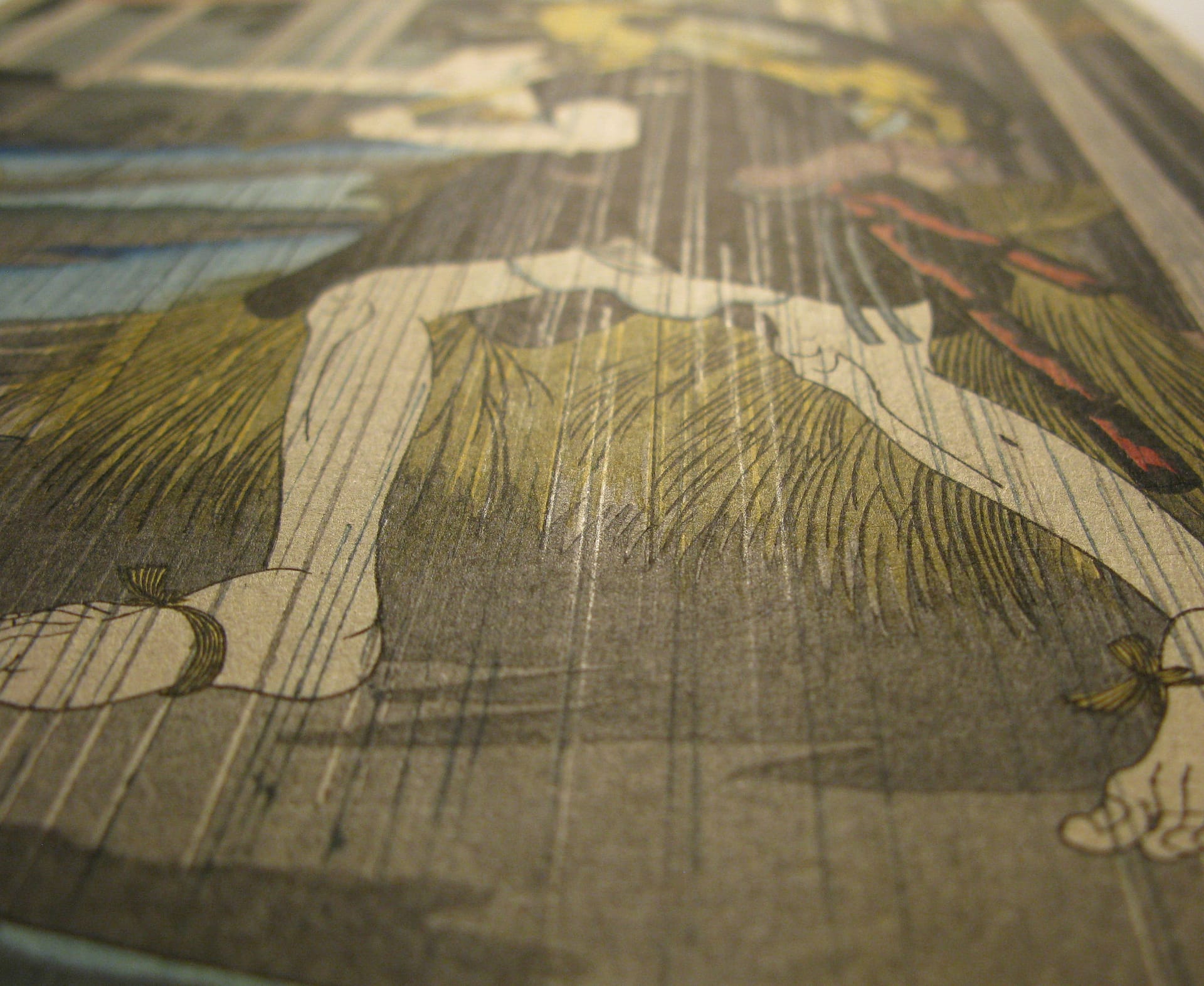
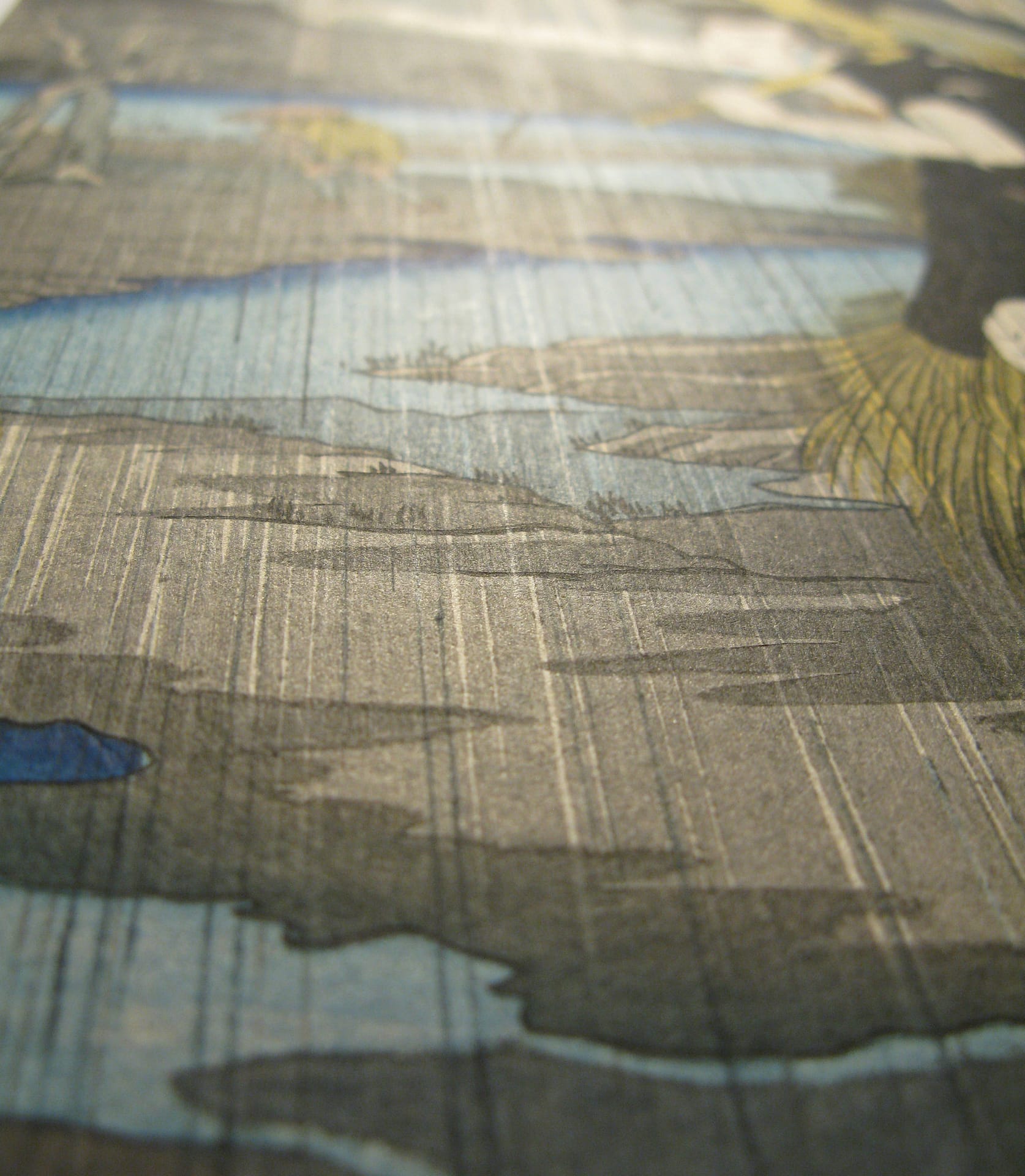
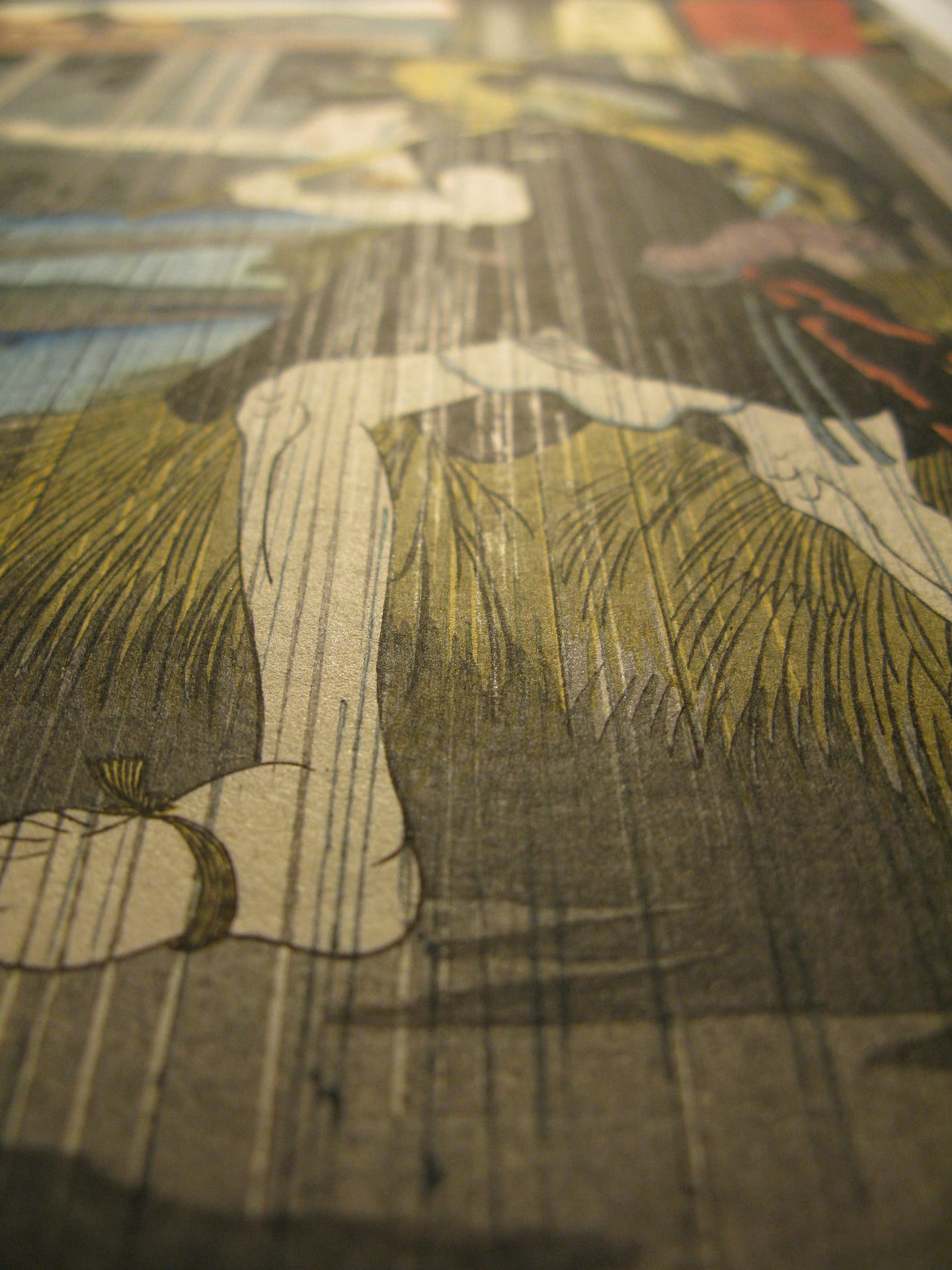
The tale of the print – Ono Sadakurō (斧定九郎): The bandit who yelled “Oi!” – so rude – and paid for it immediately.
Ōi’s print draws from The Storehouse of Loyal Retainers (Chūshingura), the most famous revenge drama in Japanese theater. The place‑name Ōi is a pun on the very first thing the villain Ono Sadakurō shouts when he enters in Act 5: “Ōi! Hey there!”
It’s the kabuki equivalent of a villain kicking down the door and announcing himself loudly.
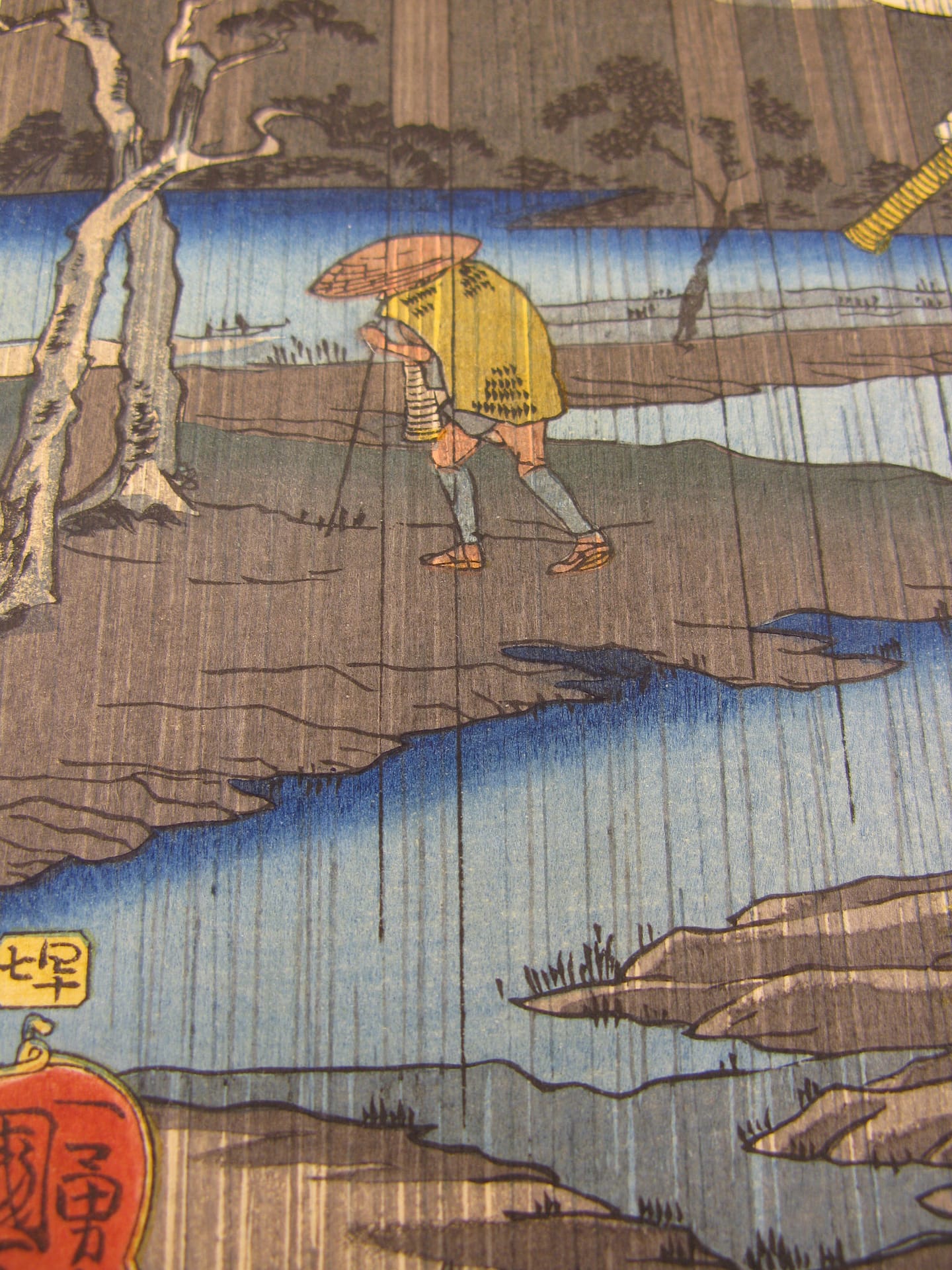
The scene takes place on the Yamazaki road during a summer storm. Sadakurō spots an elderly farmer, Yoichibei, hurrying home with a pouch of money.
What Sadakurō doesn’t know is that Yoichibei has just sold his daughter Okaru to a brothel — at her own insistence — to raise funds for the secret vendetta of the forty‑seven rōnin. It’s a heartbreaking sacrifice wrapped inside a family tragedy wrapped inside a thunderstorm.
Sadakurō, now a disgraced samurai turned bandit, murders Yoichibei and steals the money. The inset landscape is shaped like an oblong gold coin, a visual wink at the motive behind the crime.
But karma works fast in kabuki.
Moments later, Hayano Kanpei — Okaru’s husband and one of the rōnin — is out hunting to support his family. He fires at what he thinks is a wild boar and accidentally shoots Sadakurō instead. In the dark, Kanpei can’t see who he’s hit, but he finds the money and takes it home, believing he has simply been lucky.
Later, when Yoichibei’s body is discovered, Kanpei assumes he killed his father‑in‑law and, overwhelmed with guilt, takes his own life. Just before he dies the truth is revealed: Kanpei didn’t kill Yoichibei, he killed Sadakurō, the real murderer and he recovered the stolen money. And he will be honoured as one of the forty‑seven rōnin.
Kuniyoshi fills the border with objects from the scene — Kanpei’s hunting gun, Sadakurō’s battered umbrella, and other storm‑soaked props that tie the whole tragedy together.
So in Ōi, the pun is loud and immediate: Ōi! → Ōi Station, and the print becomes a darkly comic chain reaction in which a villain shouts “Hey!” into the night and sets off a sequence of misunderstandings that ultimately redeems a hero.
For an excellent analysis of the prints and series, I would encourage you to get the book:The Sixty-nine Stations of the Kisokaido by Sarah E. Thompson.