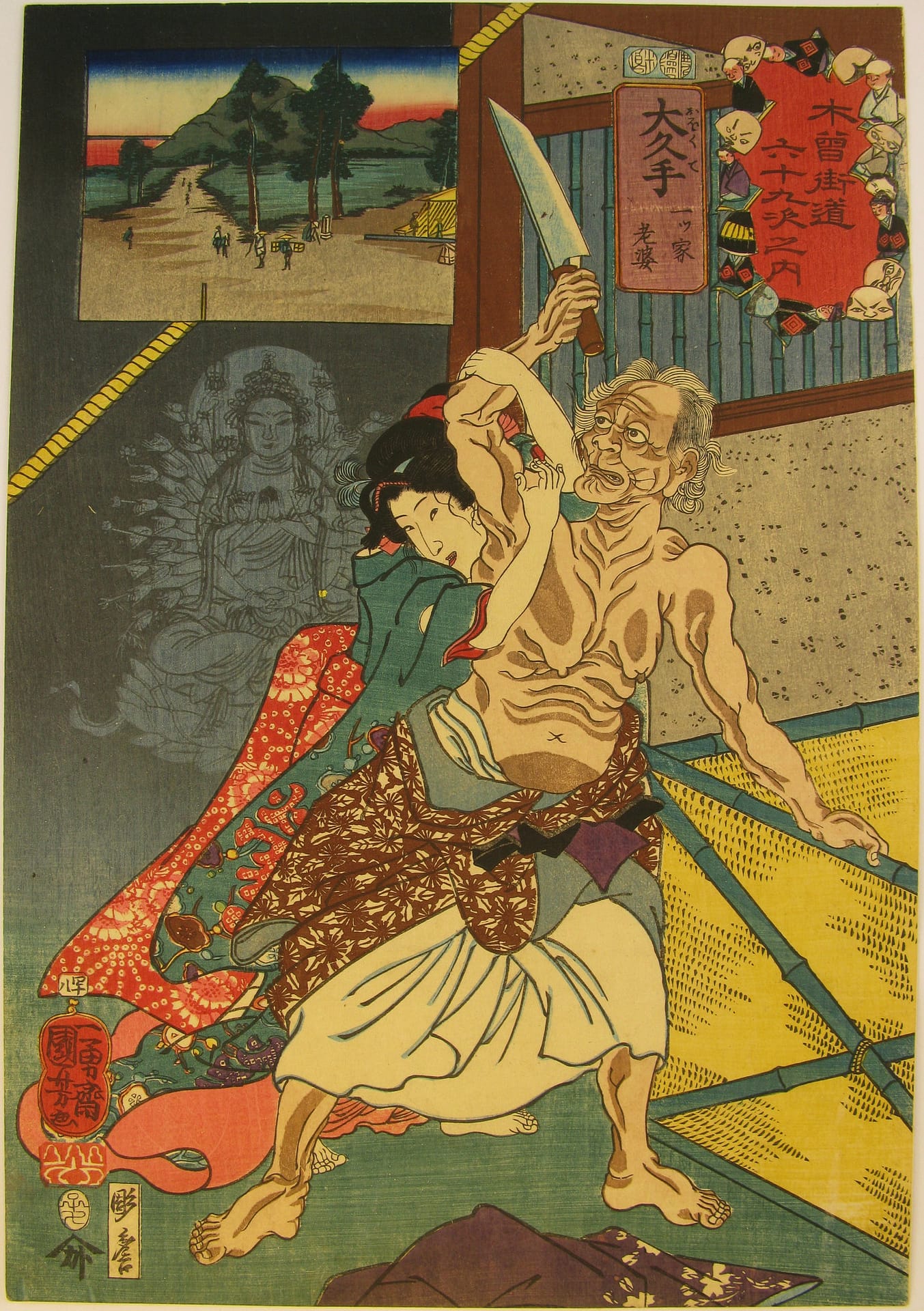
Station: Ôkute (大久手)
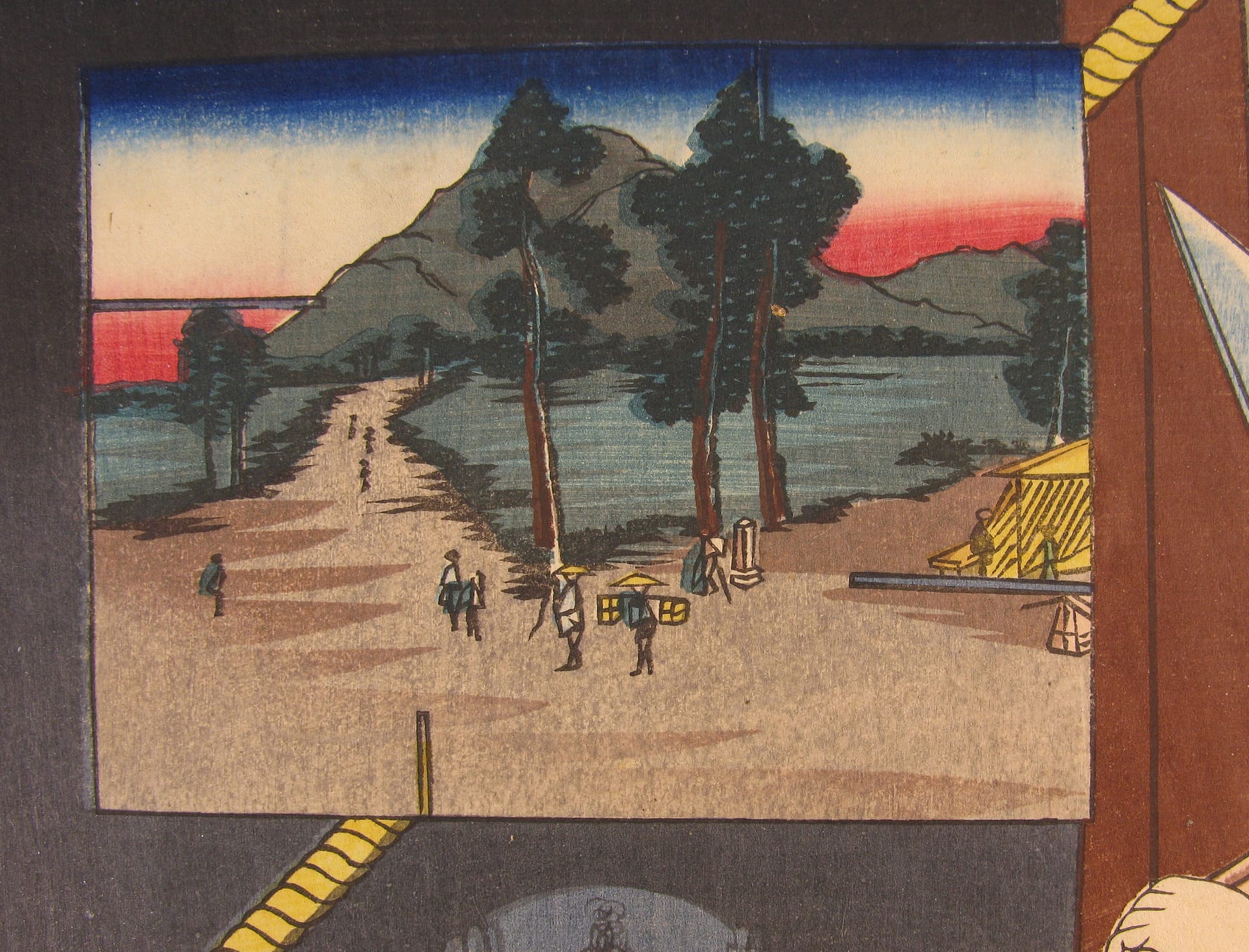
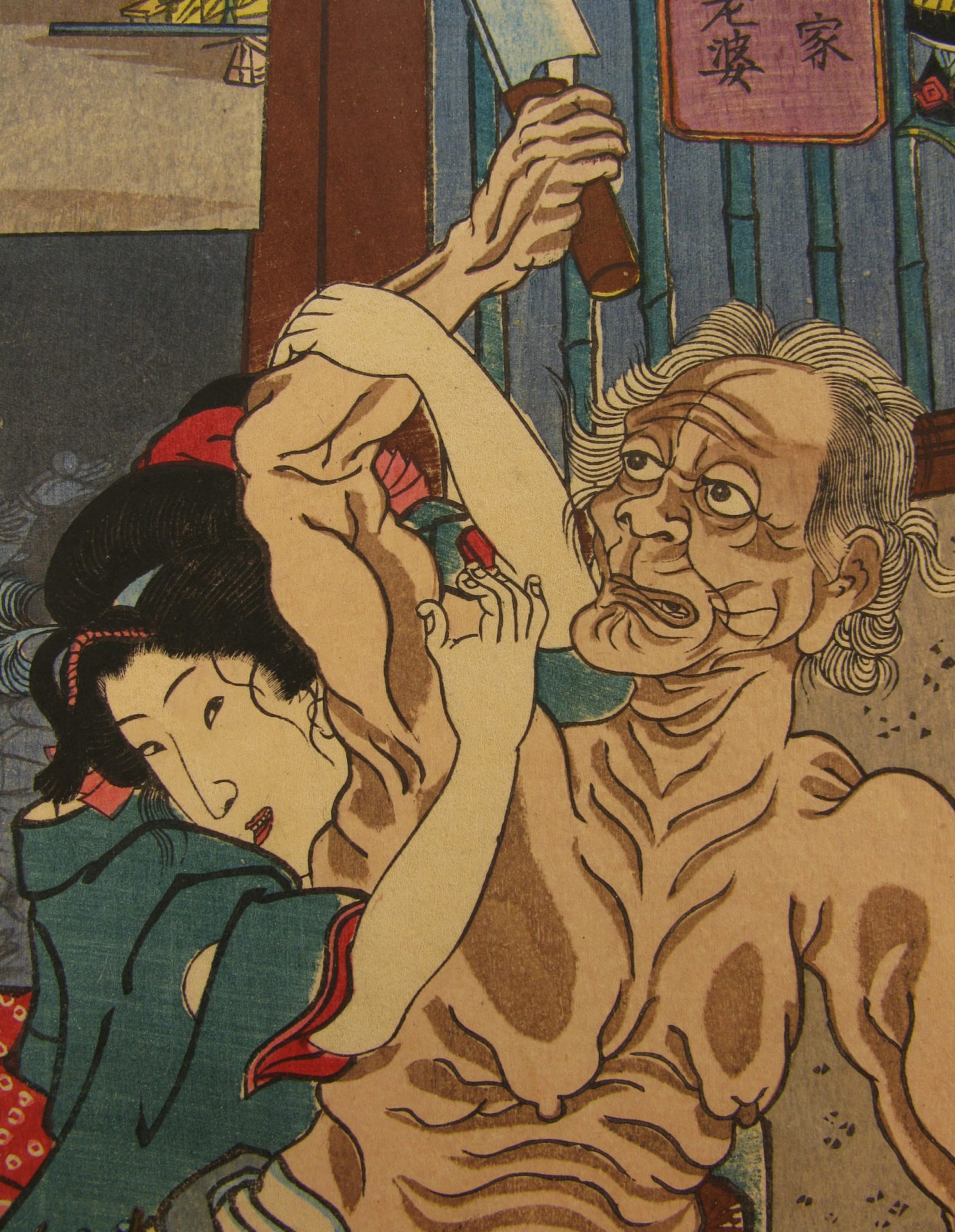
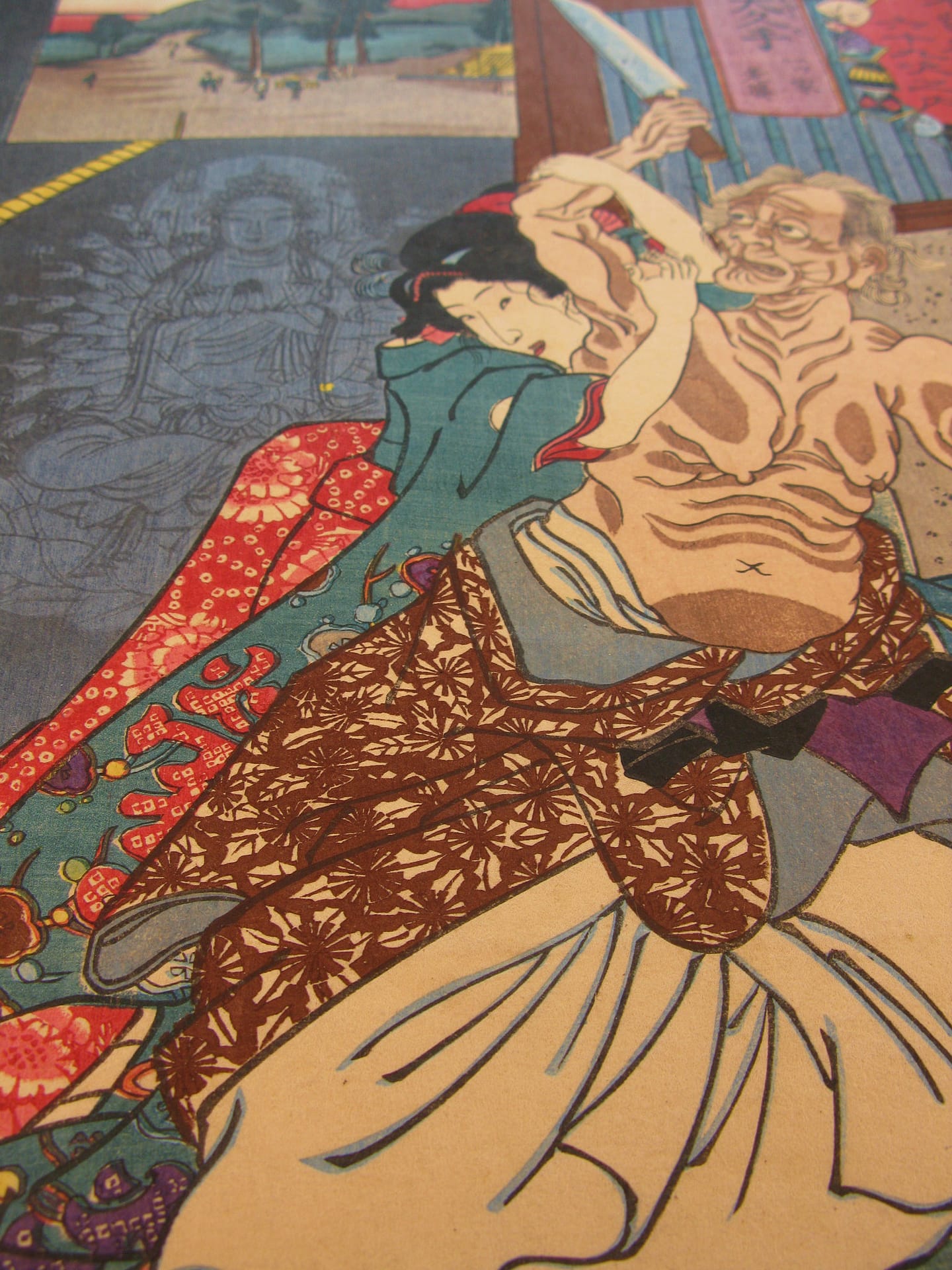
Description: The hag of the lonely house grappling with her beautiful daughter under the protection of the goddess Kannon. The landscape panel insert shows a road leading to the mountains at sunset.
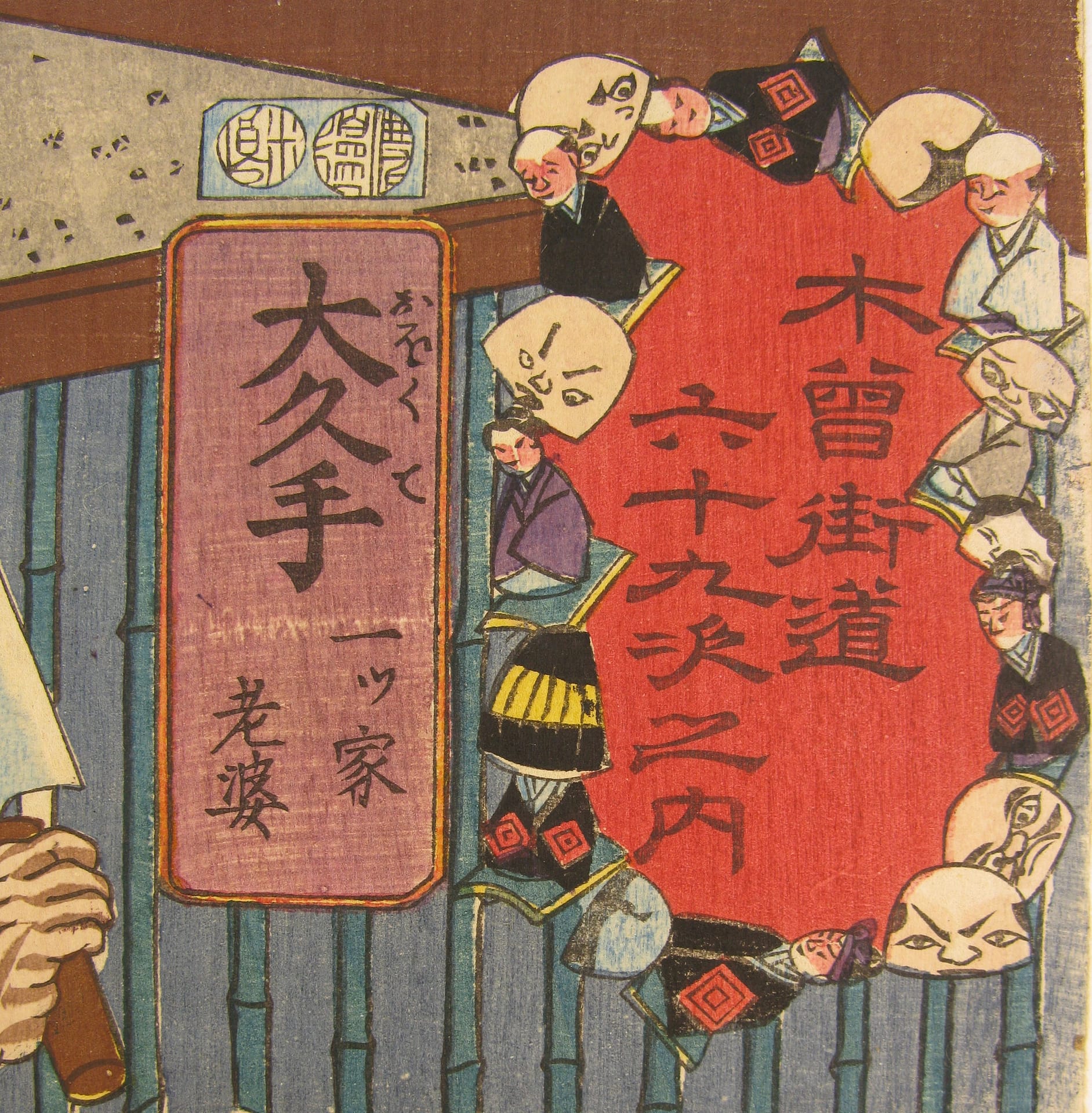
Series: Kisokaidô rokujûku tsugi. The sixty-nine post stations of the Kisokaido
Print No: 48
Artist: Utagawa Kuniyoshi (1797-1861)
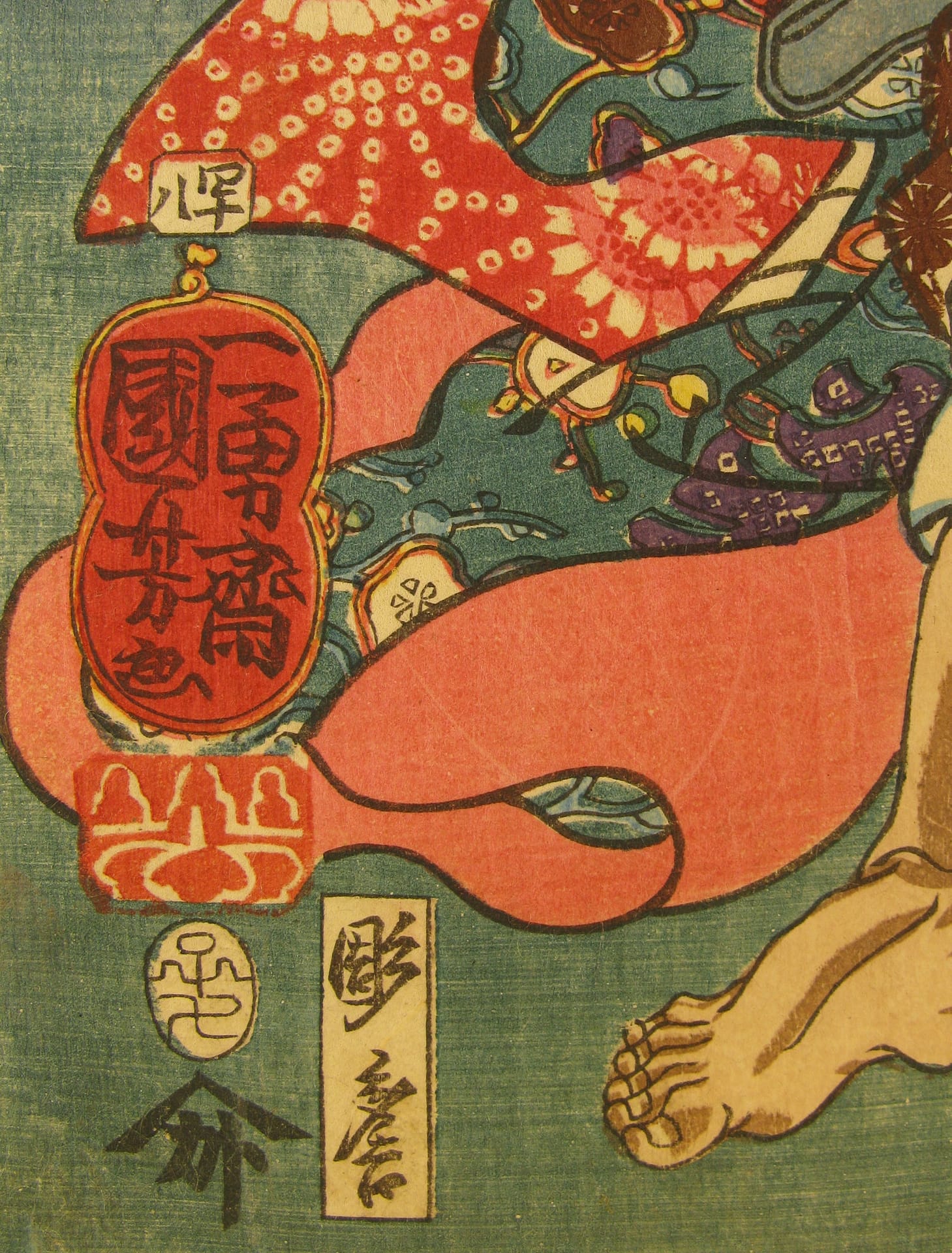
Signature: Ichiyusai Kuniyoshi ga and kiri seal
Date: 1852 (Kaei 5), 7th month
Cens: Mera, Watanabe, Rat 7
Publisher: Yawataya Sakujiro
Block cutter: Ōtaya Takichi (Hori Takichi)
Size: Oban tate-e,
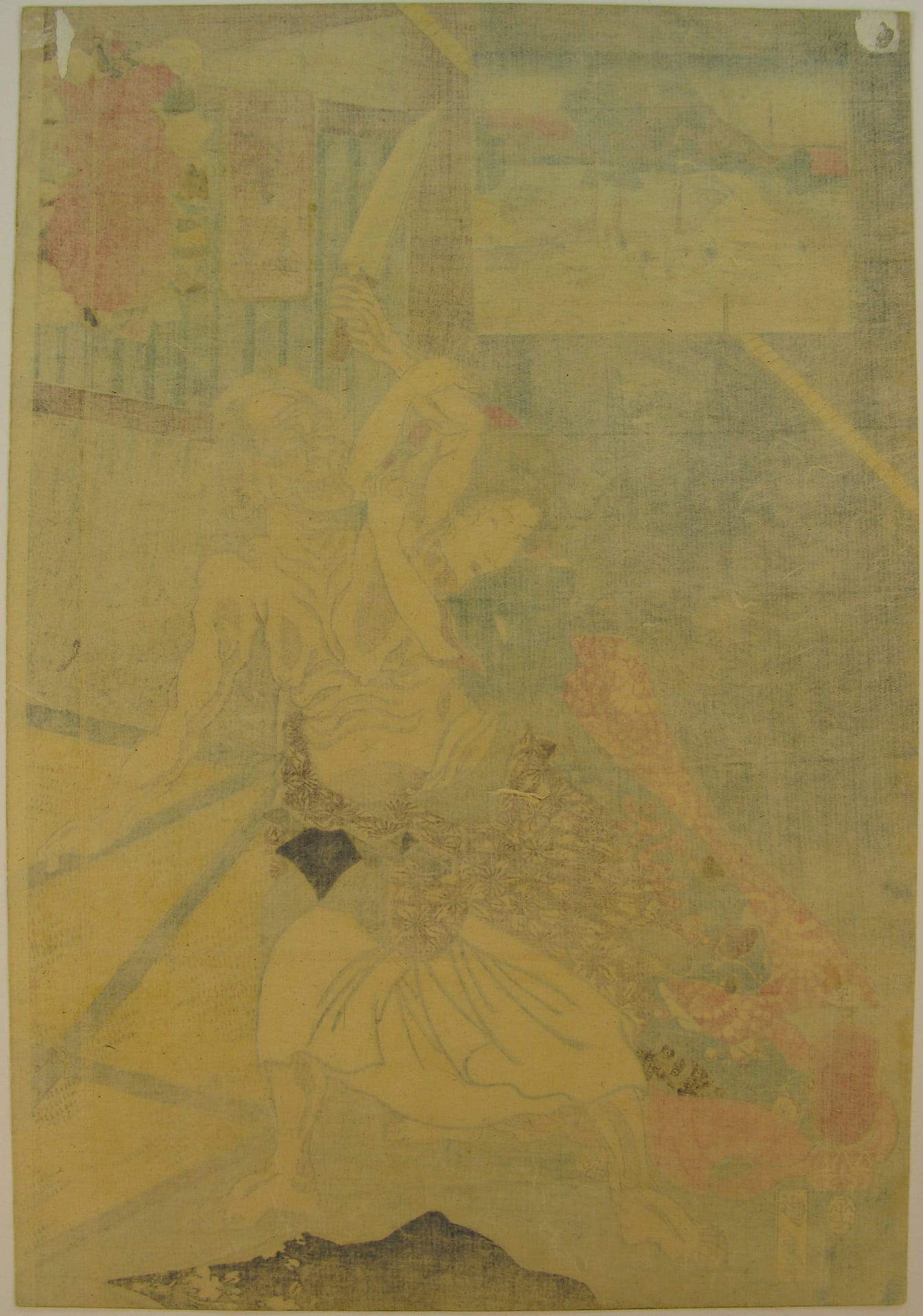
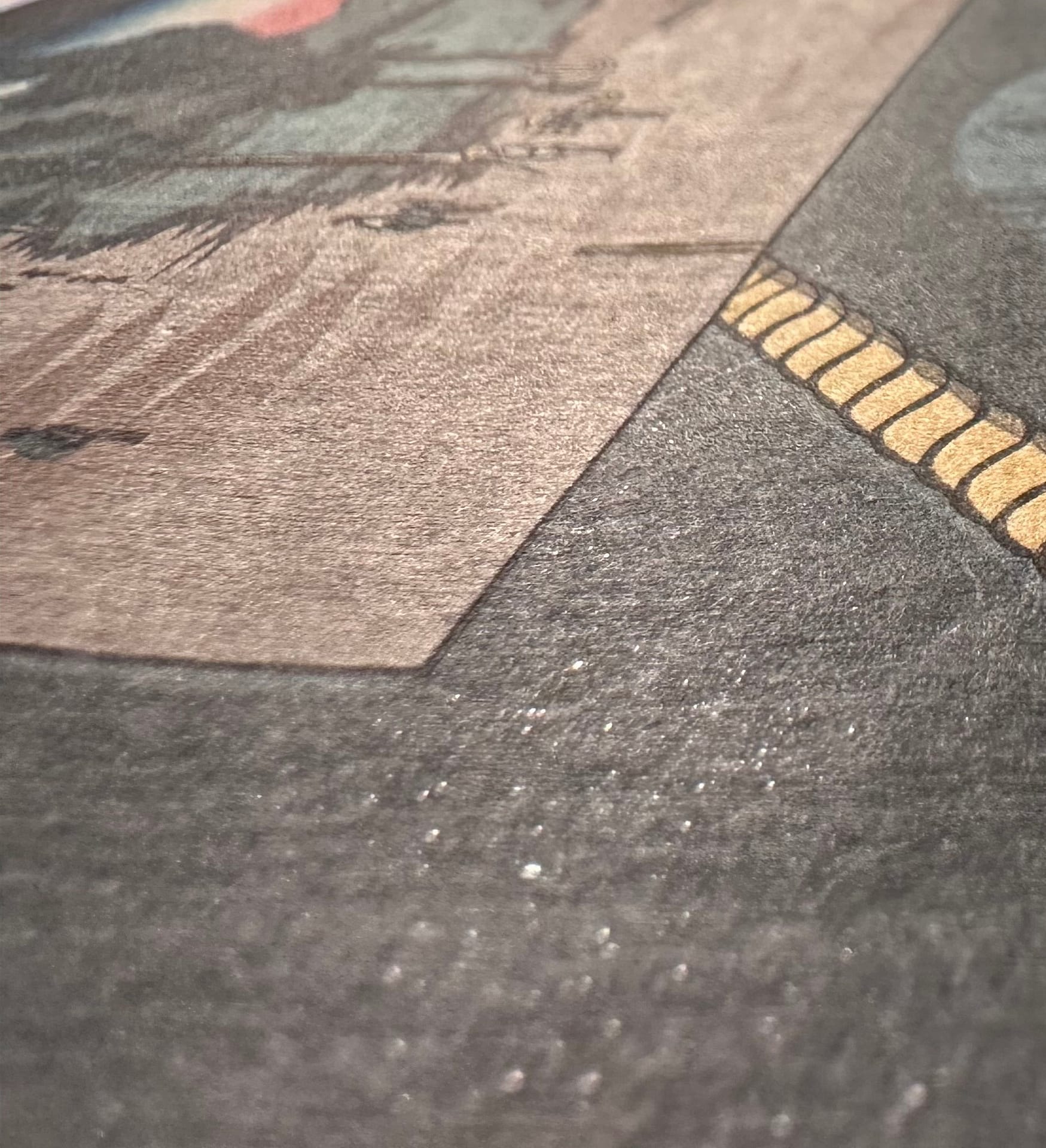
Condition: Very good impression, good colour and condition, with mica application and gauffrage. Retains Japanese album backing
Price: TBC
References: Robinson S74.48; BMFA – William Sturgis Bigelow Collection, 11.38972.48;
The tale of the print – The demon of the moor, or, ‘Hag of the lonely house’ (一ツ家老婆), the daughter with a conscience, and a thousand‑armed Bodhisattva who shows up right on time
Ōkute’s print taps into one of Japan’s oldest horror traditions: the tale of the demon woman of the lonely moor, a story so classic it appears in poetry as early as the eleventh century.
By the Edo period, the setting had shifted from distant Mutsu to Asajigahara, just outside Edo — because why let rural provinces have all the supernatural fun.
In this version, an old woman lives alone in a shabby house on a desolate moor. She welcomes travellers with grandmotherly warmth… and then murders them for their belongings. Her preferred method is wonderfully low‑tech: a giant rock suspended in the rafters, ready to drop when she cuts the rope. It’s home security at it’s simplest.
Her beautiful daughter reluctantly helps lure victims, though she hates the family business. One night, the intended target is a young temple page so pure‑hearted (or, in some tellings, so distractingly handsome) that she can’t bear to see him crushed like a melon. She tries to stop her mother — and that’s when everything changes.
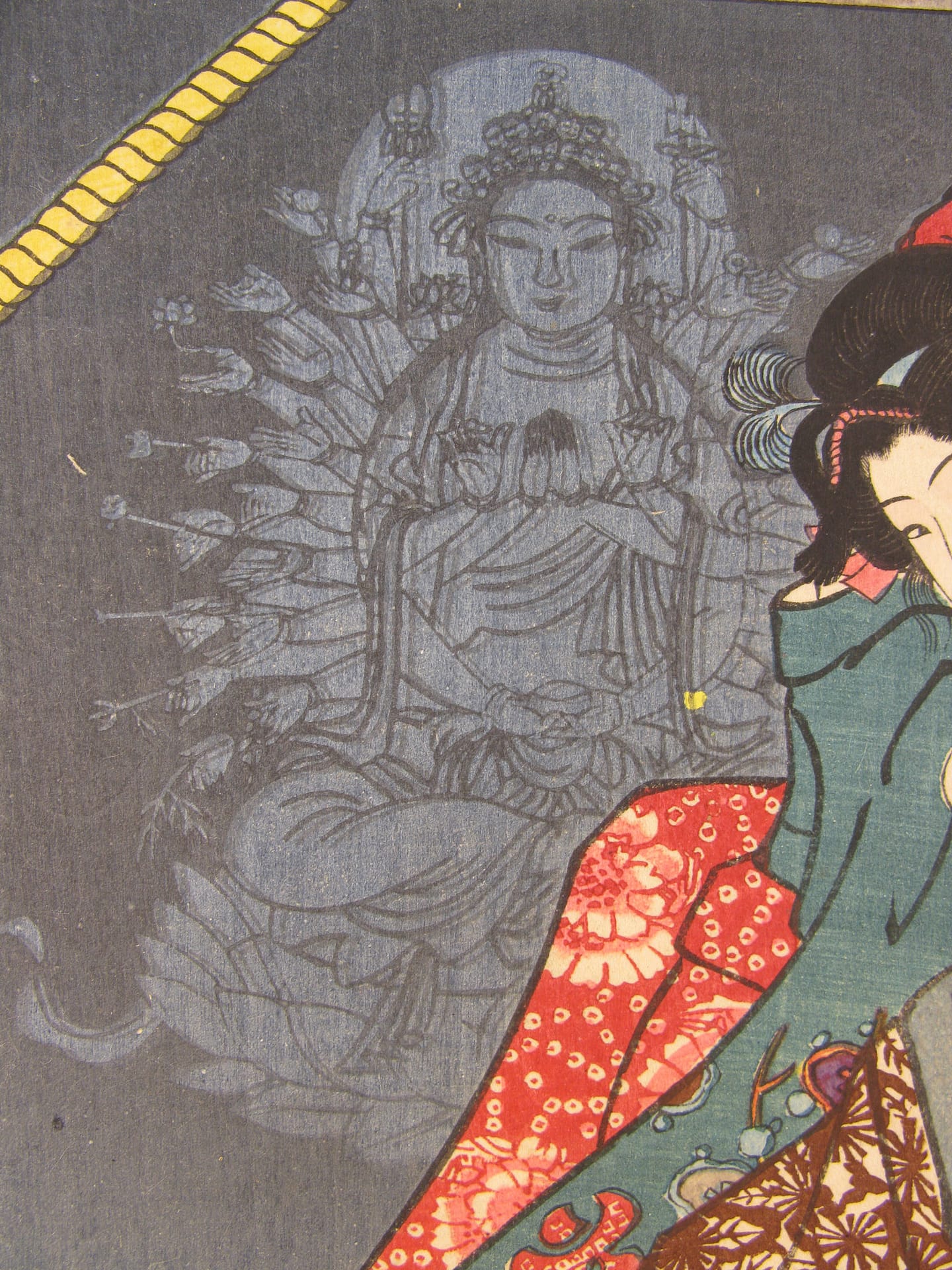
The boy is revealed to be an incarnation of Kannon, the bodhisattva of compassion, who has come specifically to put an end to the killings. In Kuniyoshi’s print, the traveller himself is absent, but his true form — the thousand‑armed Kannon — appears as a shadowy, divine presence in the background. Why the thousand‑armed version?
Because the station name Ōkute sounds like ōku‑te, “many hands.” Kuniyoshi never misses a pun.
The main image shows the dramatic struggle between mother and daughter, with the rope holding the deadly stone cutting diagonally across the composition like a visual countdown to disaster.
The border is decorated with Asakusa souvenirs — spring‑loaded jumping dolls with mask‑shaped covers — a playful nod to the nearby Sensō‑ji Temple, where Kannon is enshrined.
So in Ōkute, the pun is divine: Ōku‑te → many hands → thousand‑armed Kannon, and the print becomes a supernatural showdown on a lonely moor, complete with family drama, moral courage, and a bodhisattva who arrives just in time to stop a very large rock.
For an excellent analysis of the prints and series, I would encourage you to get the book:The Sixty-nine Stations of the Kisokaido by Sarah E. Thompson.