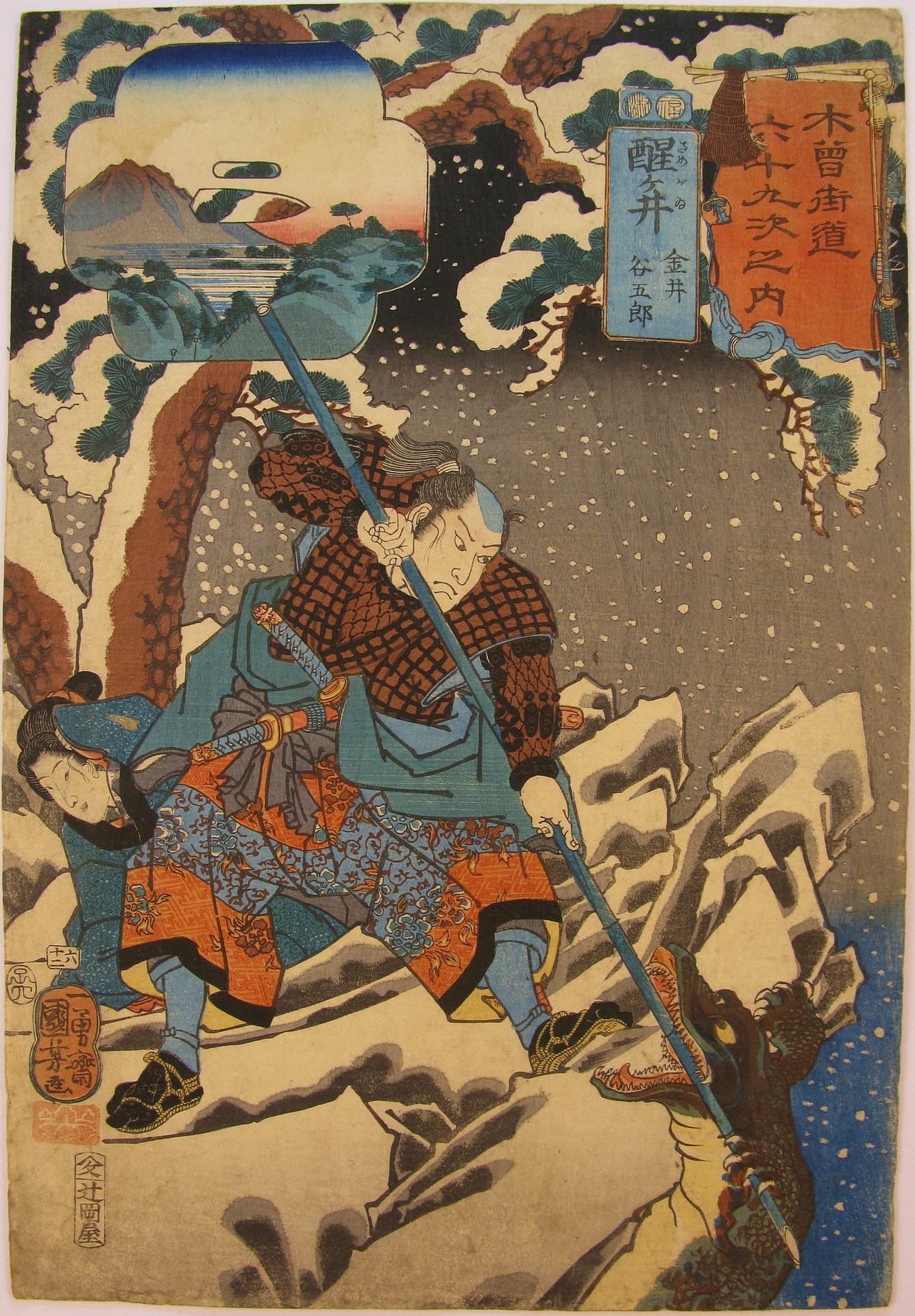
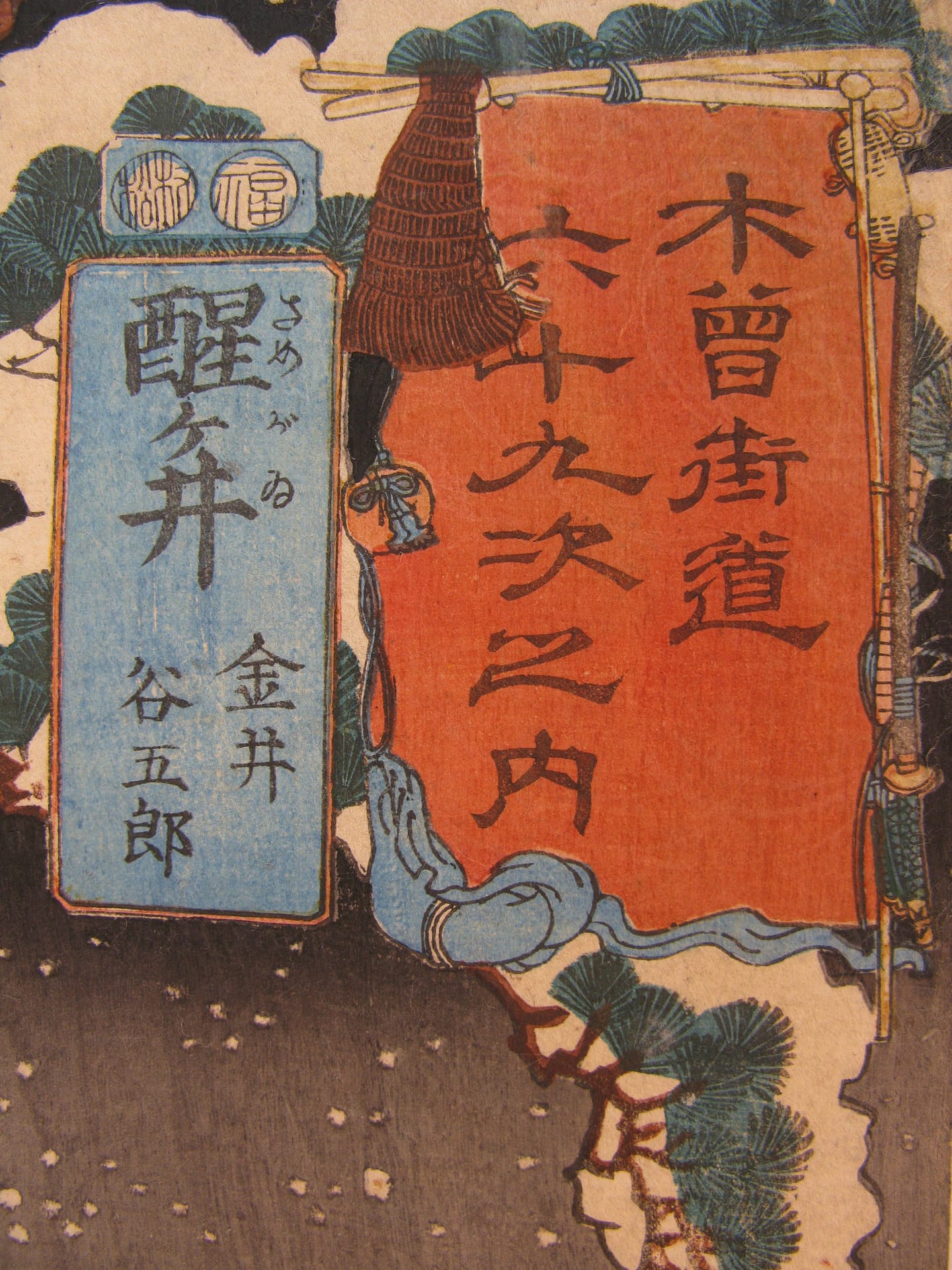
Station: Samegai (醒ヶ井)
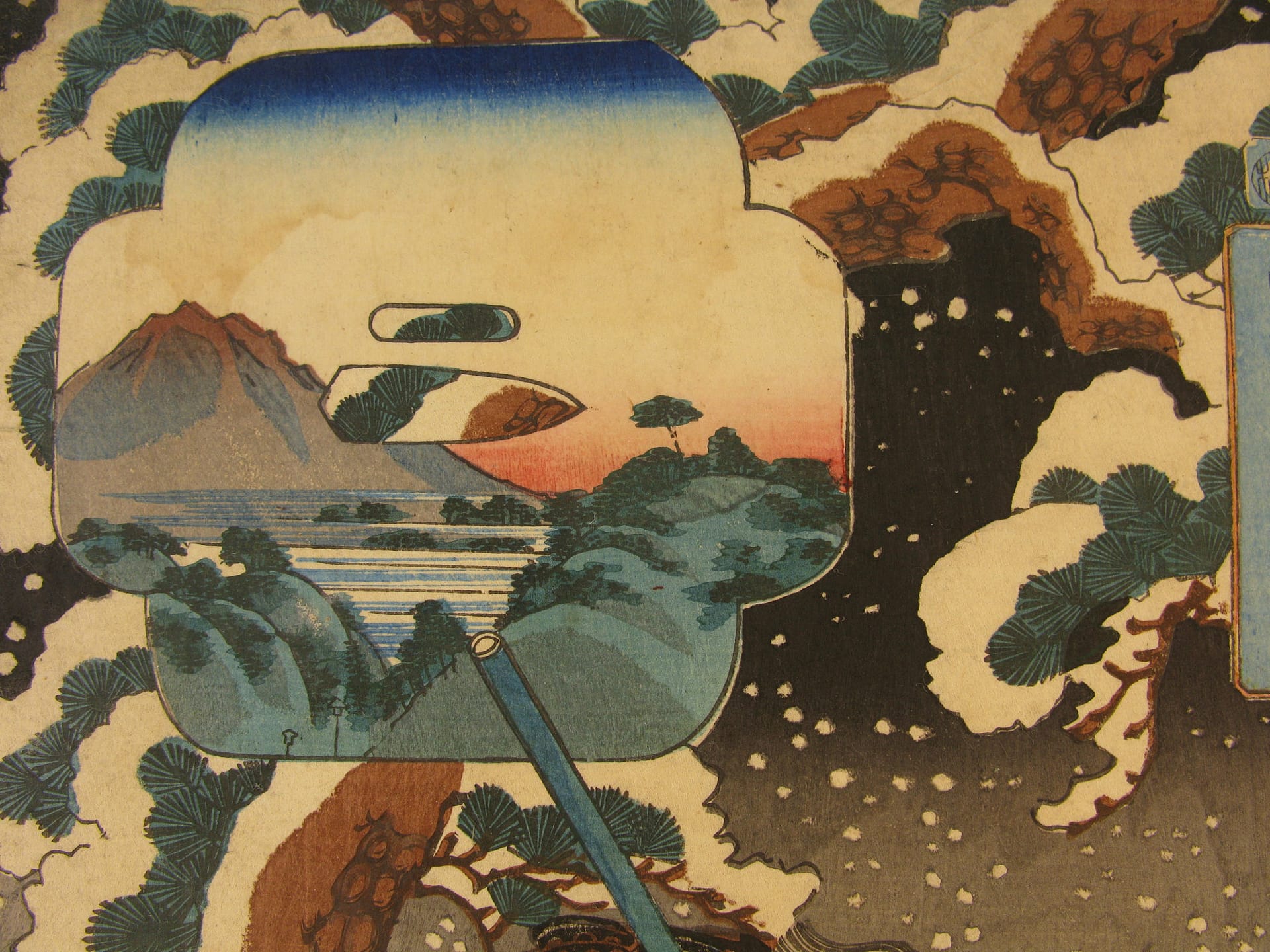
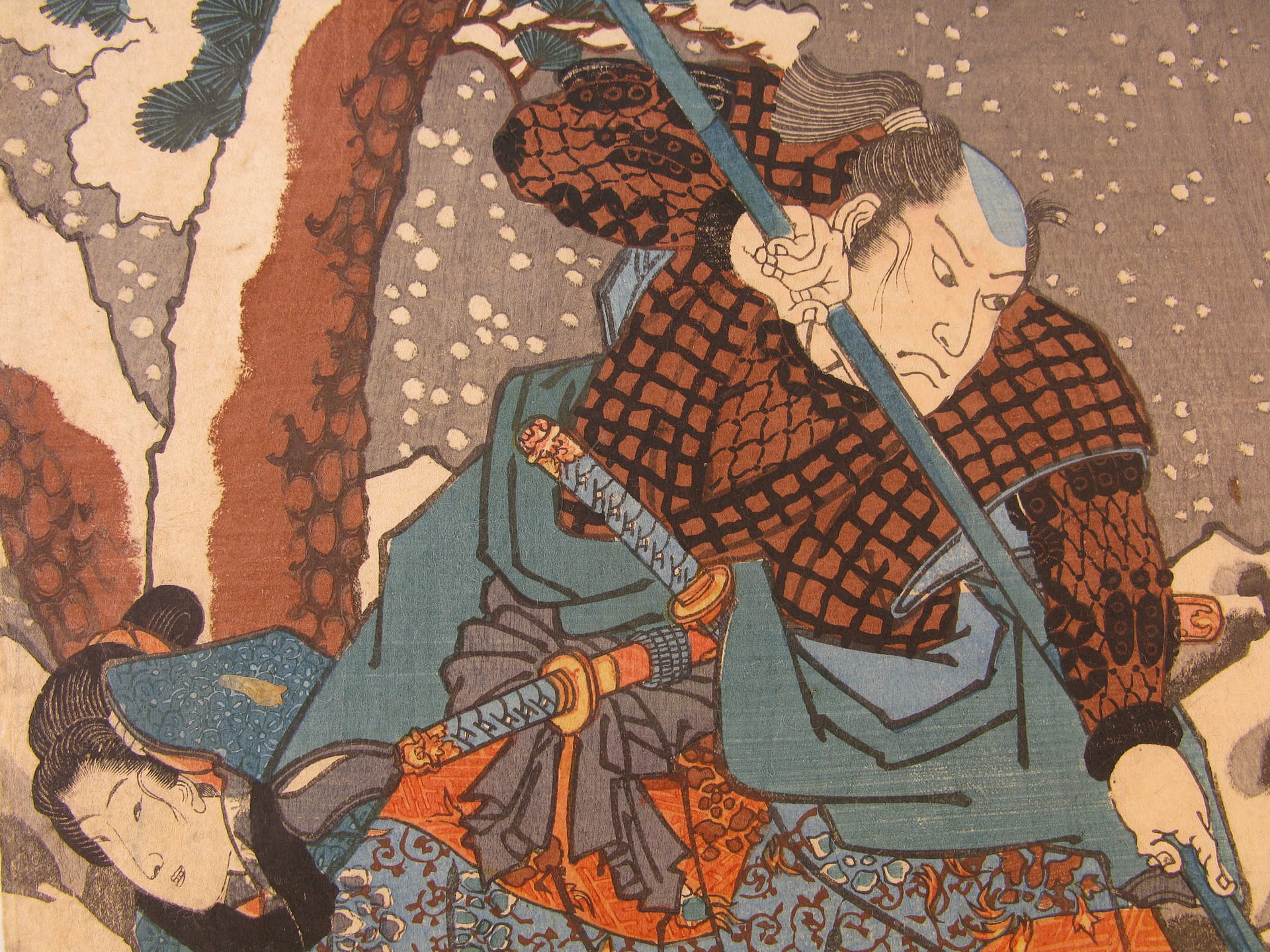
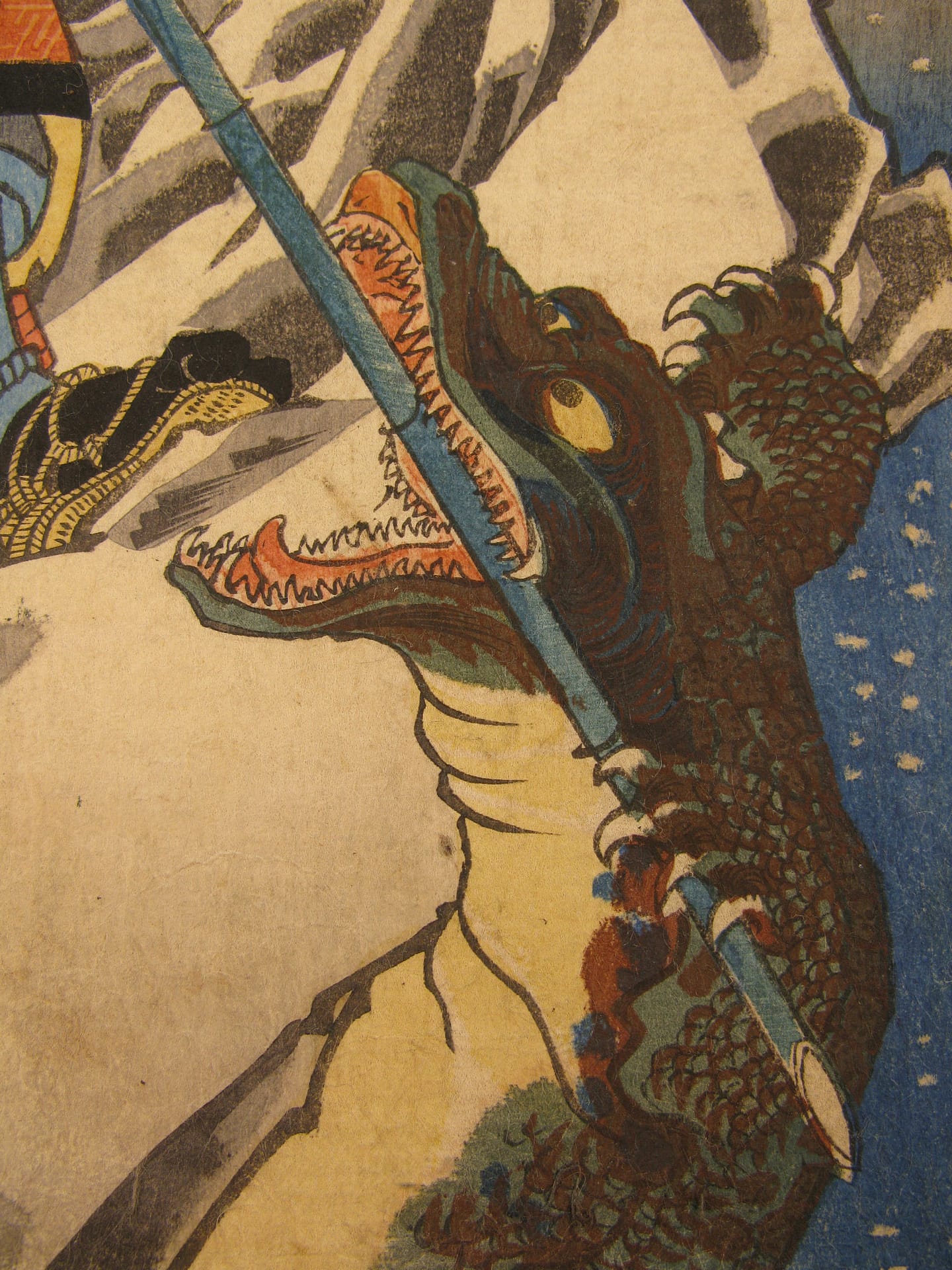
Description: Kanai Tanigorô thrusts a ‘mountain shark’ over a precipice with a bamboo spear saving a damsel in distress who cowers behind him. The landscape panel insert shows a misted mountain with a border in the shape of a tsuba (sword guard).
Series: Kisokaidô rokujûku tsugi. The sixty-nine post stations of the Kisokaido
Print No: 62
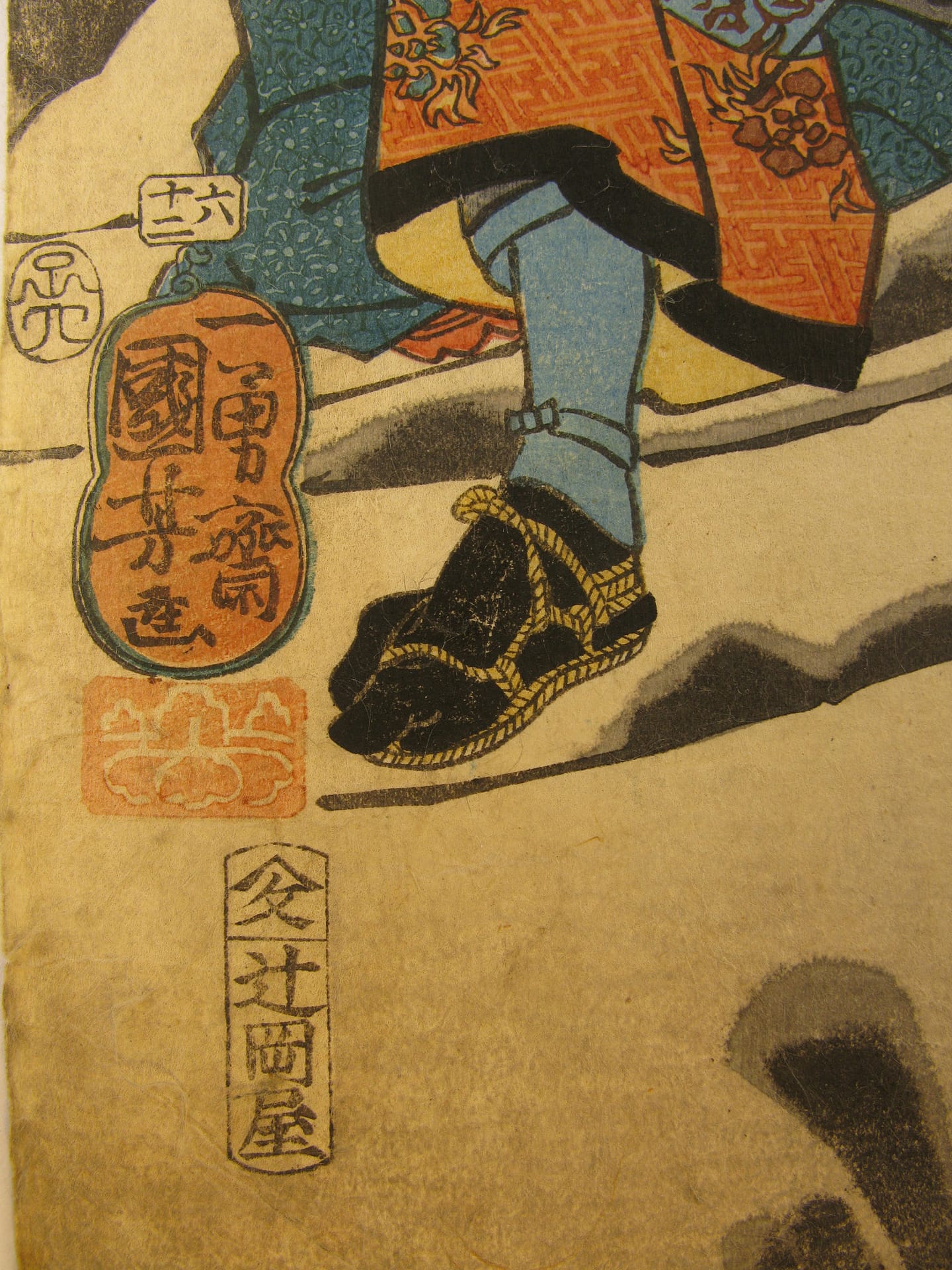
Artist: Utagawa Kuniyoshi (1797-1861)
Signature: Ichiyusai Kuniyoshi ga and kiri seal
Date: 1852 (Kaei 5), 6th month
Cens: Fukushima, Muramatsu, Rat 6
Publisher: Tsujiokaya Bunsuke
Size: Oban tate-e,
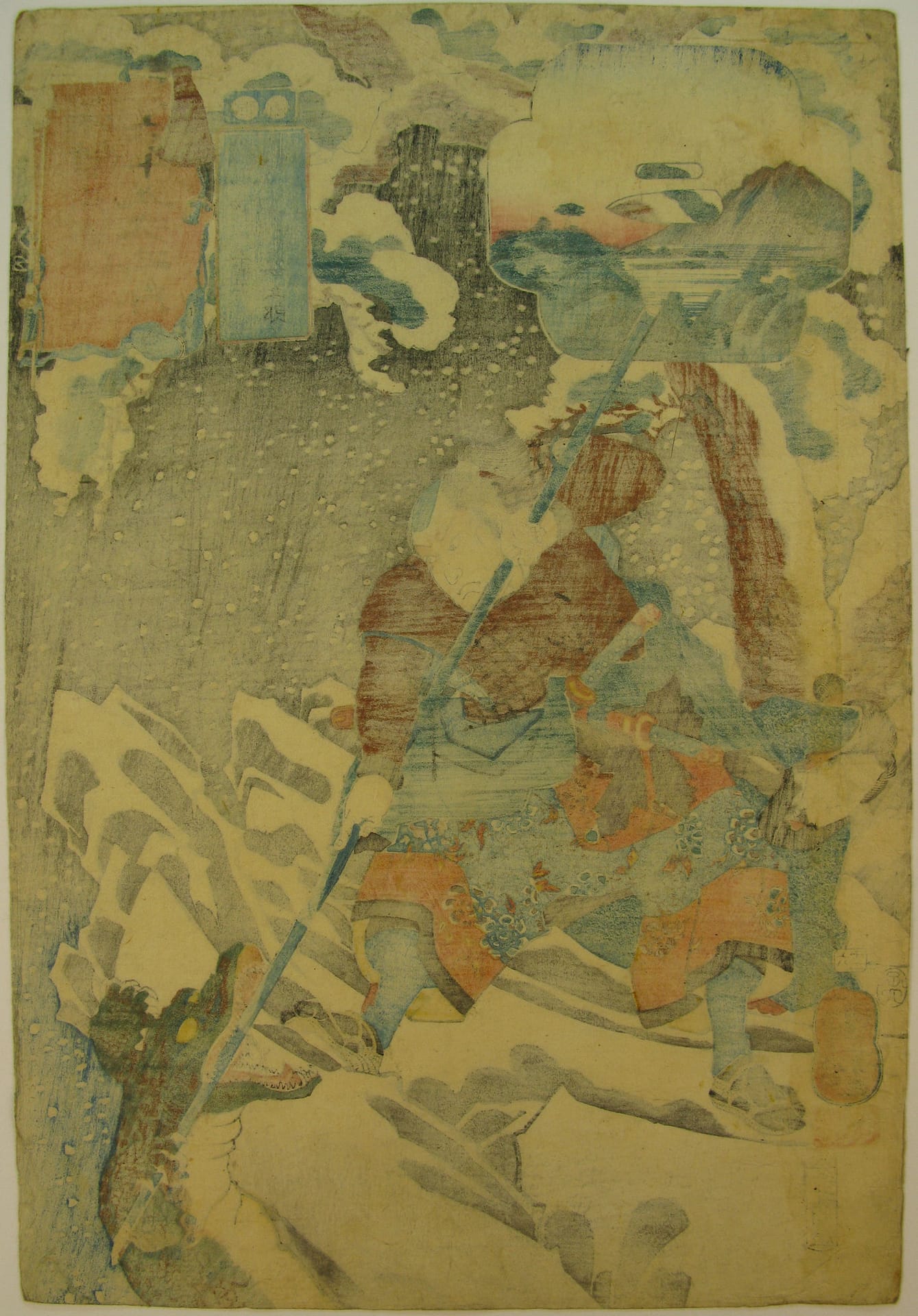
Condition: Very good impression, good colour and condition, with strong wood grain,some marks and soiling
Price: TBC
References: Robinson S74.63; BMFA – William Sturgis Bigelow Collection, 11.38972.63;
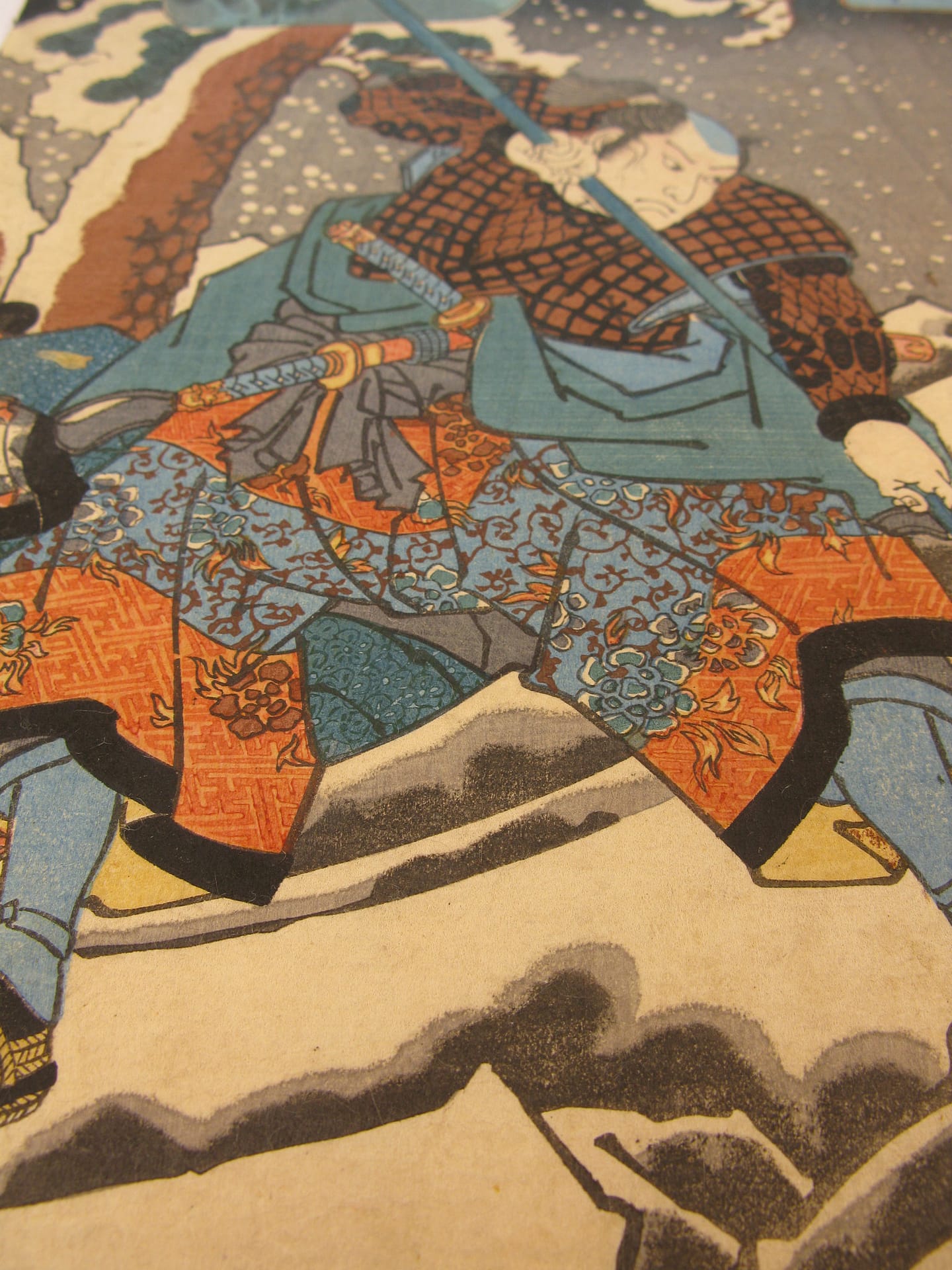
The tale of the print – Kanai Tanigorō (金井谷五郎), the wandering swordsman who somehow ended up fighting a mountain shark.
Samegai’s print is one of the great puzzles of the Kisokaidō series — a scene so dramatic, so bizarre, and so specific that scholars have spent decades trying to figure out exactly which story Kuniyoshi had in mind. The short answer: we’re not entirely sure.
The long answer: it’s probably a mash‑up of history, kabuki, and Kuniyoshi’s own monster‑loving imagination.
Historically, Kanai Tanigorō was involved in a failed 1651 coup and committed suicide when the plot collapsed. Fictionally, he appears as a wandering martial artist in works like ‘The War of the Go Board’, where he rescues two sisters who are training to avenge their father’s murder.
He then accompanies them through the mountains — and this print may depict an ‘extra’ adventure added to that journey, featuring a reptilian monster and one of the sisters hiding behind him, ready to help … or possibly just to cheer him on.
Kuniyoshi had drawn something like this before: an early 1830s print of Miyamoto Musashi fighting an alligator‑like creature. That beast was labeled a “mountain shark” (yamazame) — a creature that does not resemble any real Japanese animal but does resemble Kuniyoshi’s sense of fun.
And here’s the pun: Samegai → same (shark). So the monster is basically a giant visual joke with teeth.
The inset landscape is shaped like a sword guard (tsuba), a nod to Tanigorō’s identity as a wandering swordsman. The border is decorated with the gear such a traveller would carry: straw sandals, wooden practice swords (noting that Miyamoto Musashi was famous for using two swords, & occasionally only bokken – wooden practice swords), and other road‑worn essentials. It’s the Edo equivalent of an adventurer’s inventory screen.
So in Samegai, the pun is sharp and scaly: same → shark, and the print becomes a heroic snapshot of Tanigorō mid‑battle with a creature that looks like it escaped from a fever dream — or from Kuniyoshi’s sketchbook.
For an excellent analysis of the prints and series, I would encourage you to get the book:The Sixty-nine Stations of the Kisokaido by Sarah E. Thompson.