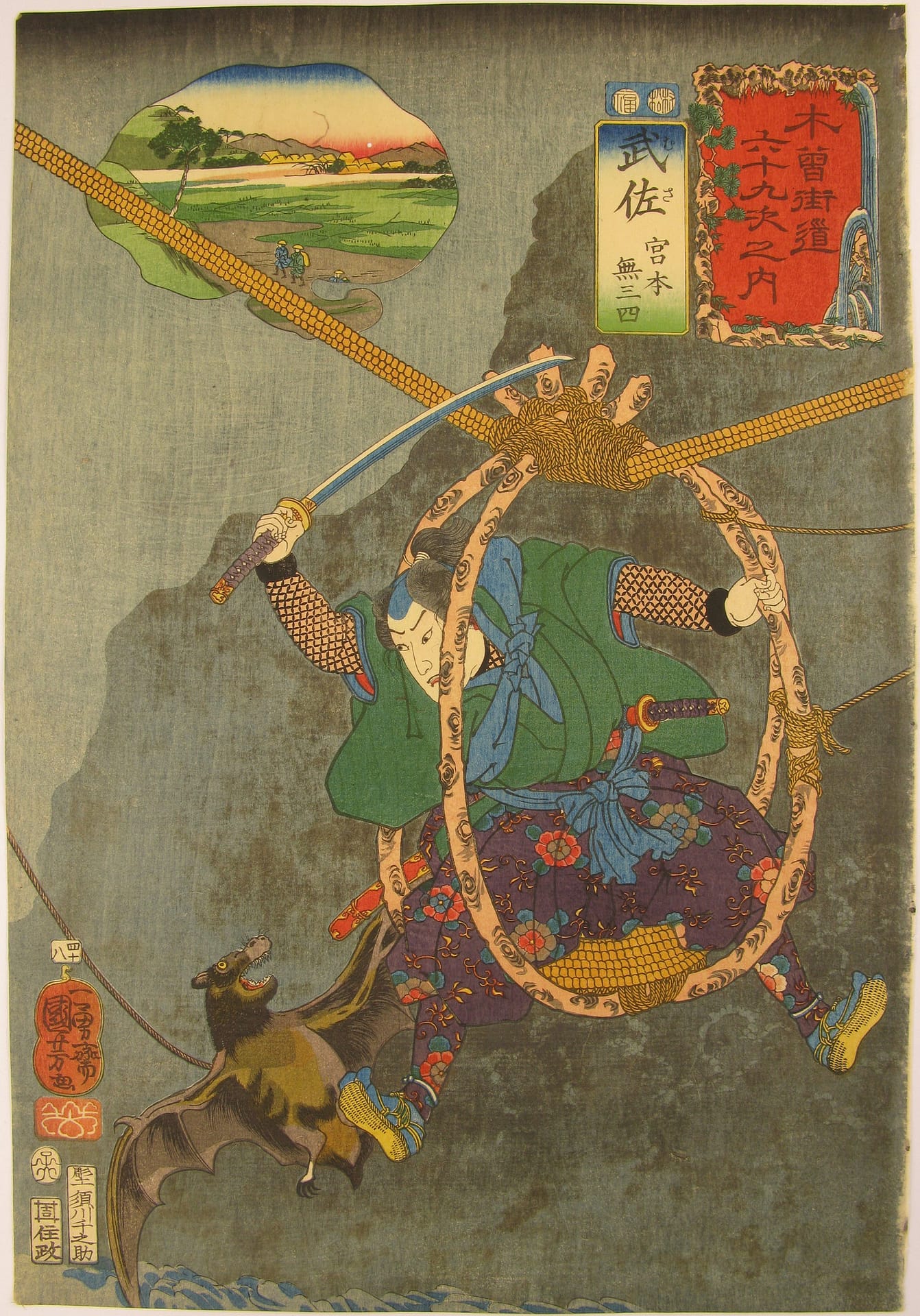
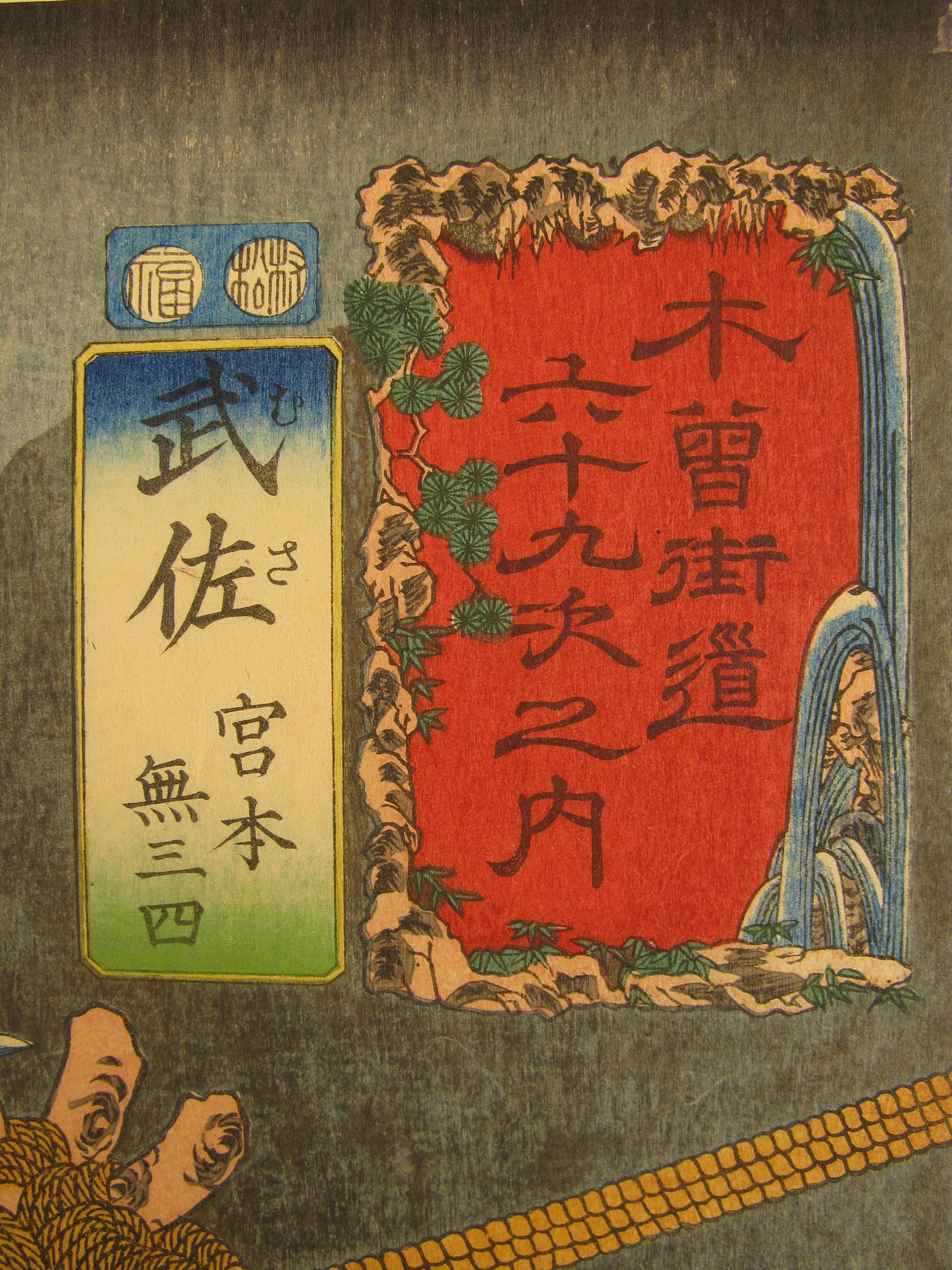
Station: Musa (武佐)
Description: The swordsman Miyamoto Musashi, suspended over a chasm in a traveling cradle, strikes at a monstrous bat. The landscape panel insert shows travellers approaching a sunset village.
Series: Kisokaidô rokujûku tsugi. The sixty-nine post stations of the Kisokaido
Print No: 67 (although the print is incorrectly labelled 48)
Artist: Utagawa Kuniyoshi (1797-1861)
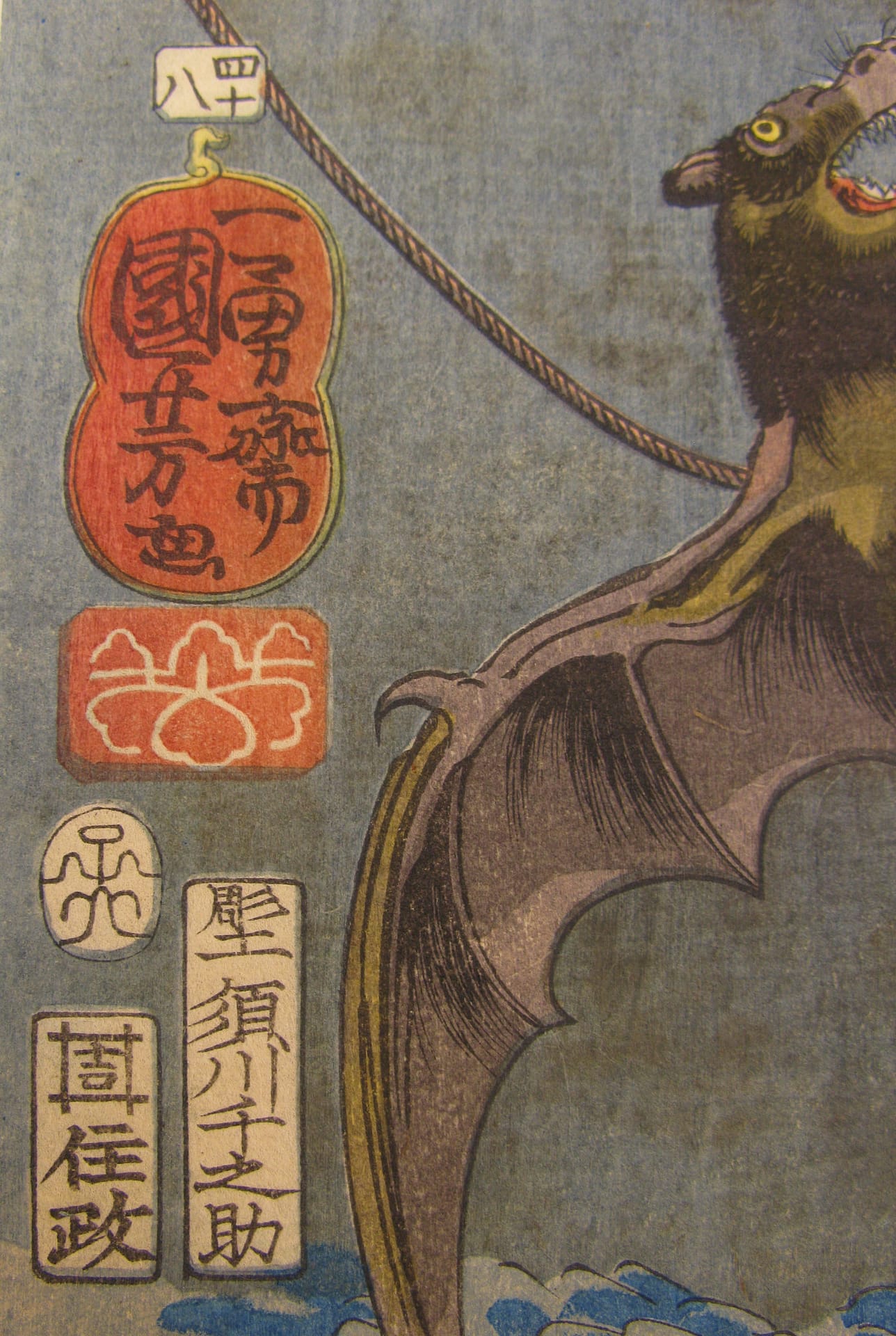
Signature: Ichiyusai Kuniyoshi ga and kiri seal
Date: 1852 (Kaei 5), 6th month
Cens: Fukushima, Muramatsu, Rat 6
Publisher: Sumiyoshiya Masagorō
Block cutter: Sugawa Sennosuke
Size: Oban tate-e,
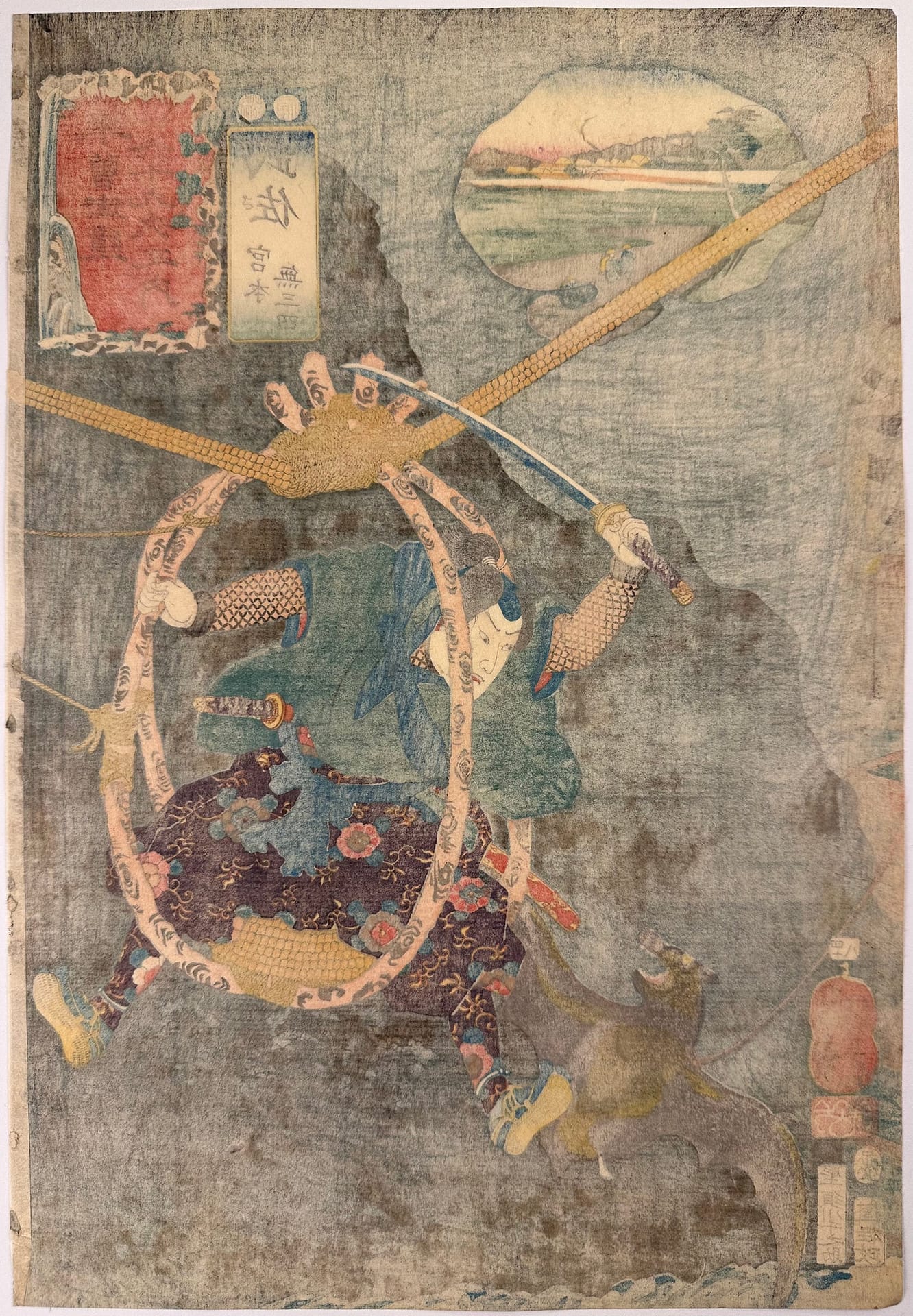
Condition: Fine impression, colour and condition of the first state, with wood grain, rustic oxidation and gauffrage
Price: TBC
References: Robinson S74.68; BMFA – William Sturgis Bigelow Collection, 11.38972.68;
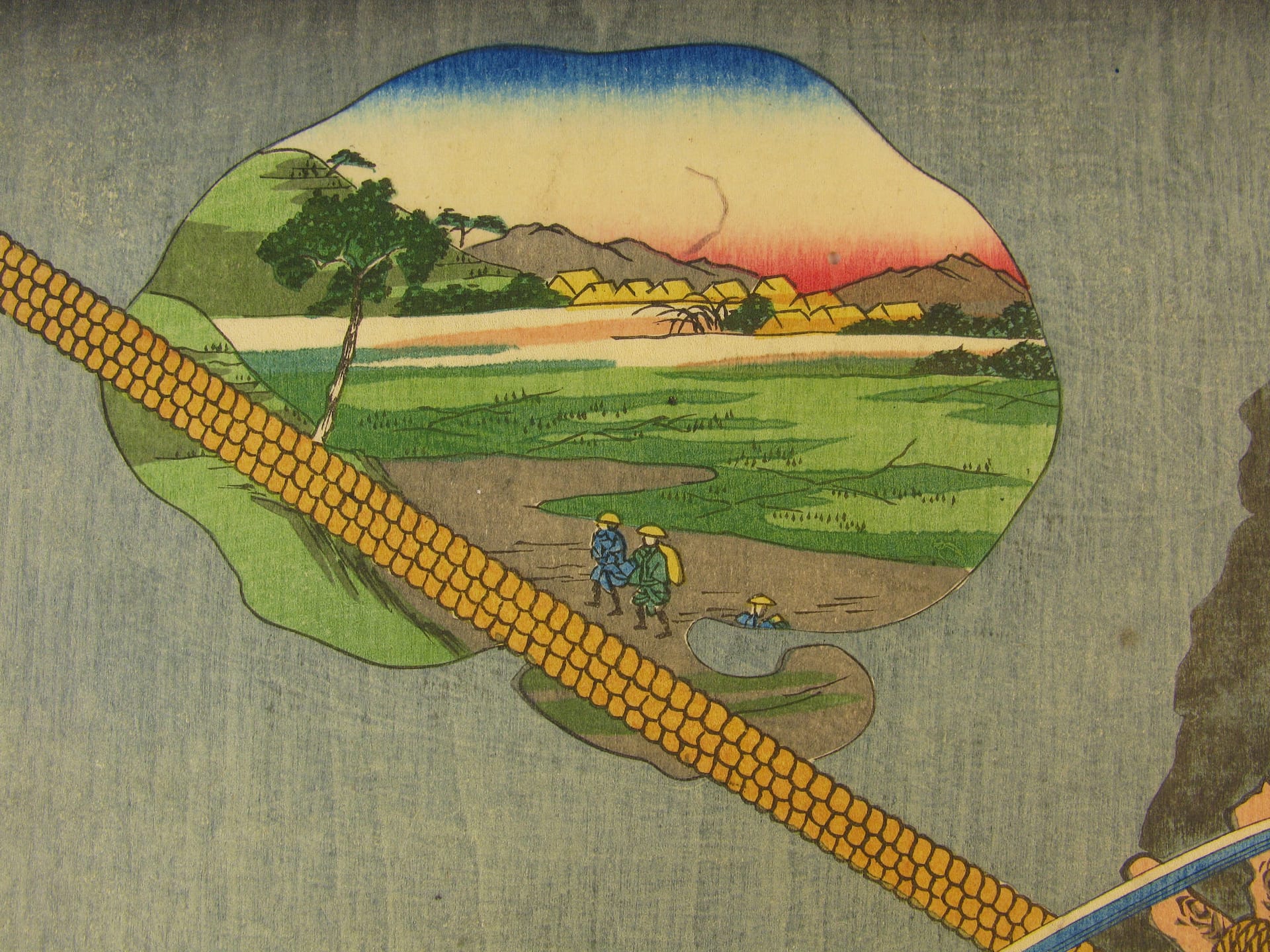
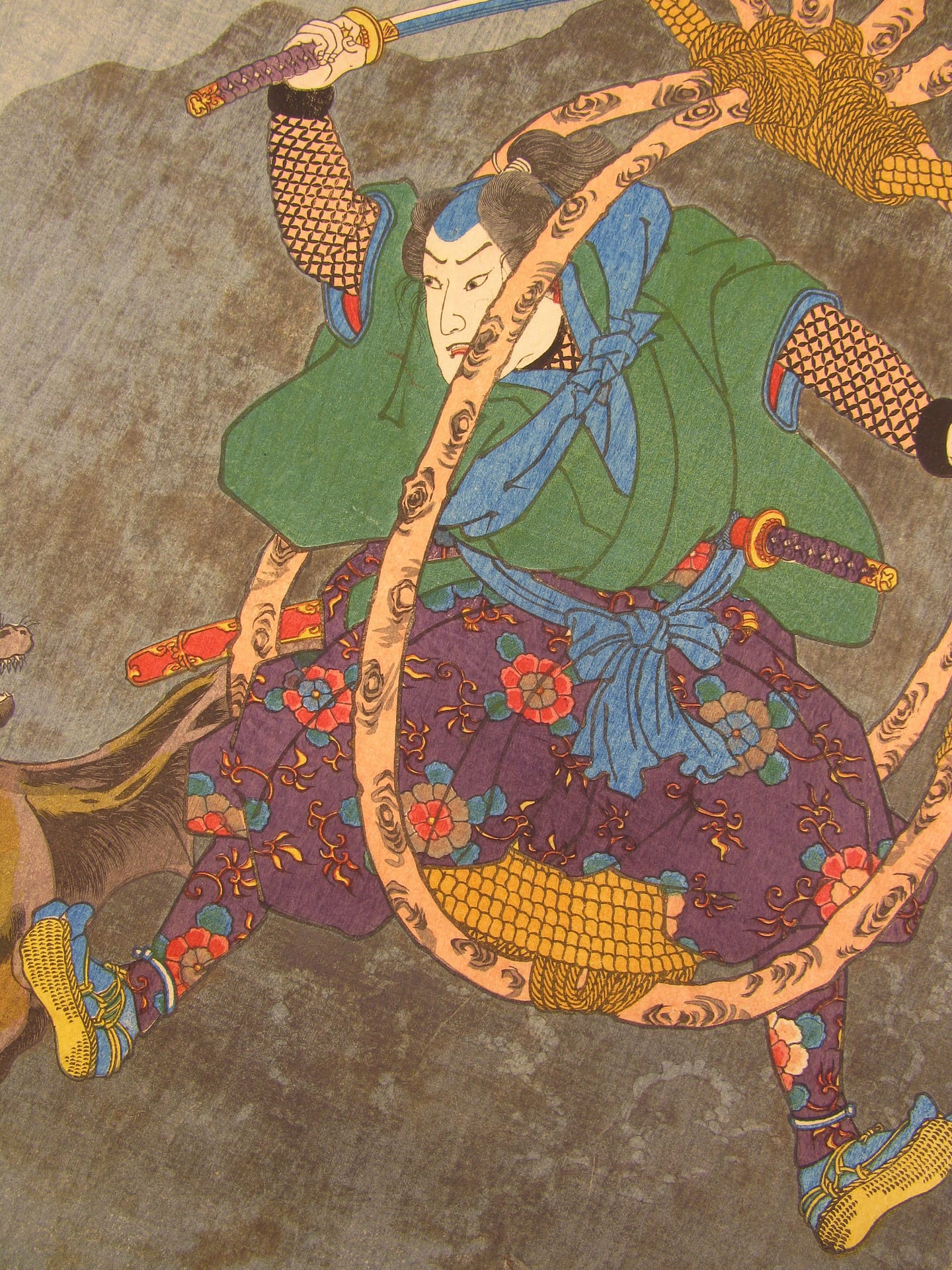
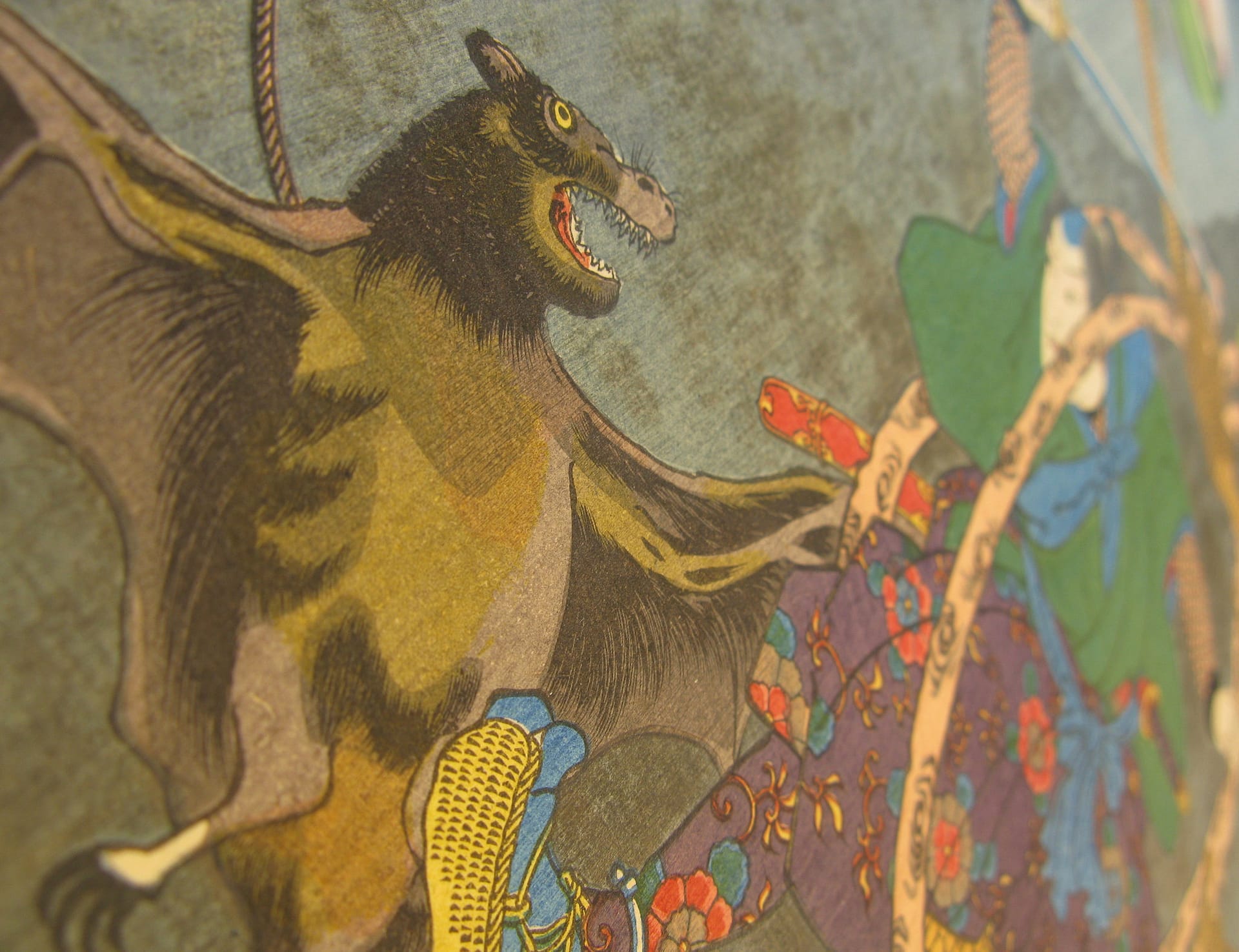
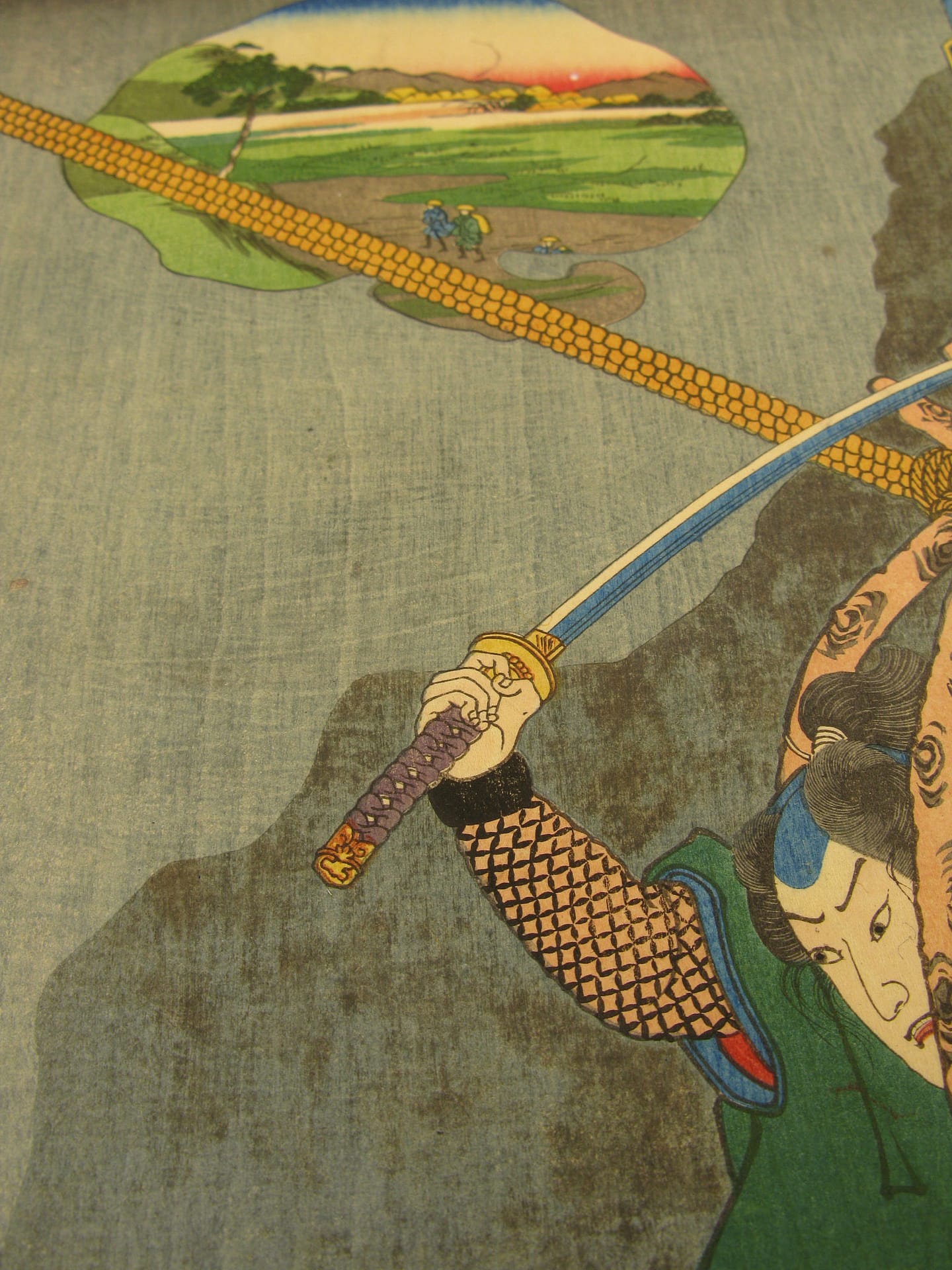
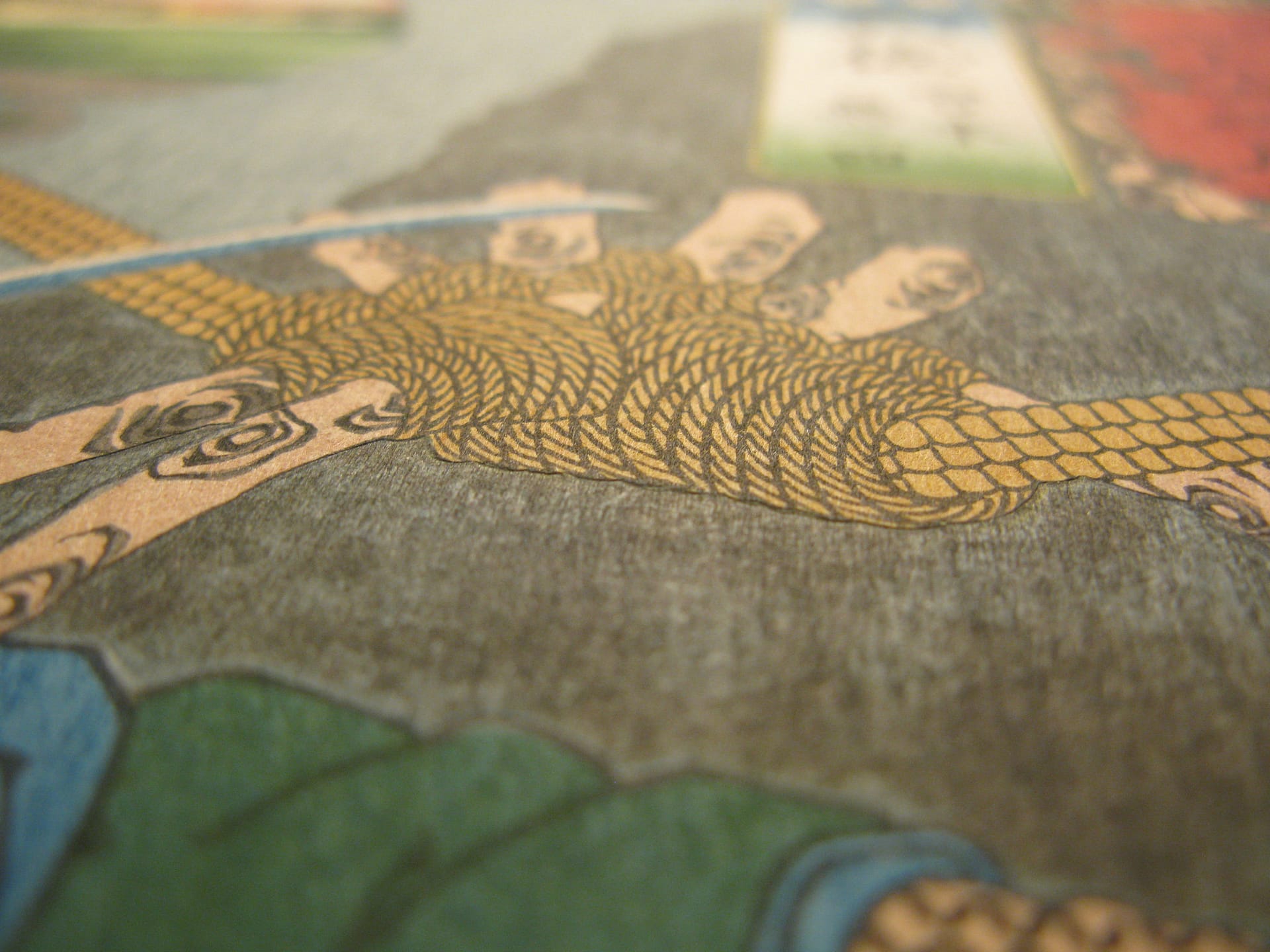
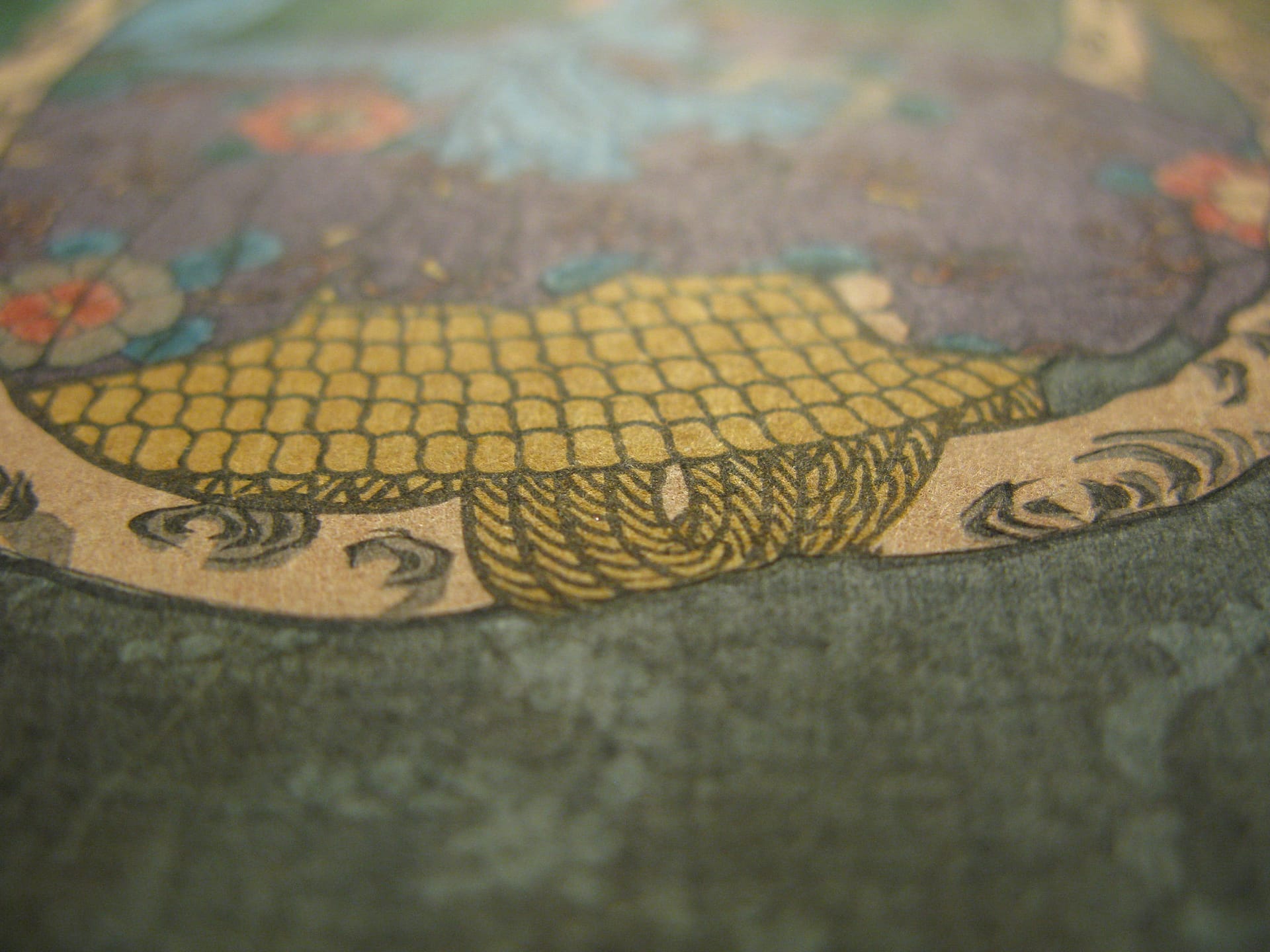
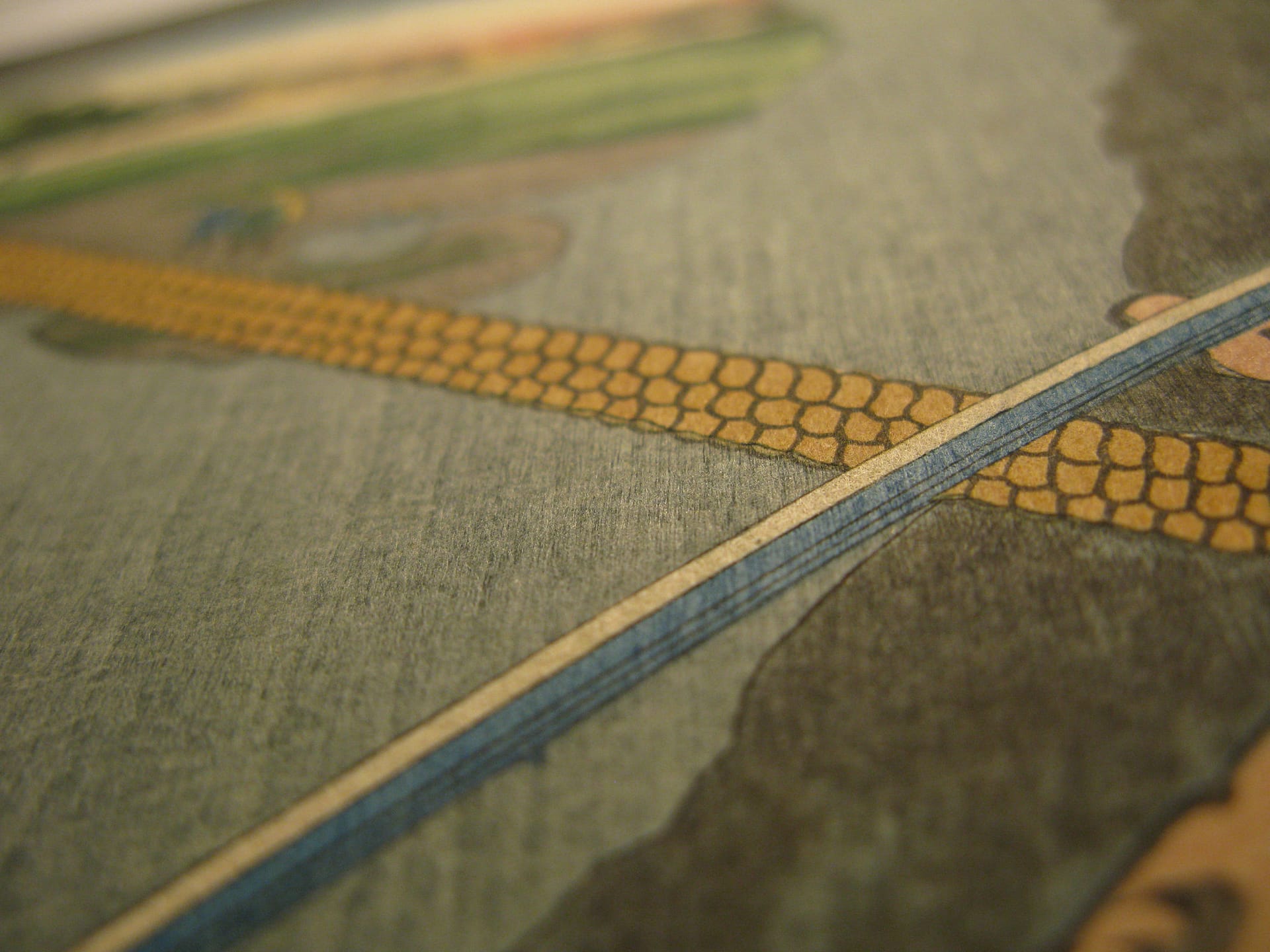
The tale of the print – Miyamoto Musashi (宮本無三四), the greatest swordsman, the worst travel companion for wildlife, and the man who fought a giant bat while riding a zip line.
Musa’s print features none other than Miyamoto Musashi, the most legendary swordsman in Japanese history — a man whose real dueling biography is thick enough, but whose mythological biography is bursting at the seams with monsters, and improbable travel arrangements.
Musashi was a real seventeenth‑century warrior, painter (under the art name Niten), and strategist (author of The Book of Five Rings).
But Edo storytellers looked at that résumé and thought, “Needs more giant animals.” So in popular fiction and prints, Musashi fights: a tengu, a “mountain shark,” a whale, and here, a giant bat the size of a small horse.
No written source for this bat battle has been found, which strongly suggests it came from oral storytelling — the Edo equivalent of a campfire tale told by someone who really wanted to impress the audience.
Kuniyoshi depicts Musashi in the most delightfully impractical situation imaginable: riding a rustic cable car over a ravine, the kind used in mountainous regions like Hida Province. Because why fight a giant bat on solid ground when you can do it while dangling from a rope over a canyon.
Kuniyoshi’s student Yoshitoshi later illustrated the same scene in 1867, describing the creature as a flying squirrel (nobuyuma) even though both artists clearly drew a bat. Yoshitoshi set the fight at a shrine; Kuniyoshi preferred the cable‑car‑over-a-chasm approach. Both choices are peak Edo theatricality.
The place‑name Musa doesn’t have a direct pun like some stations, but the association with Musashi was irresistible: Musa → Musashi, a perfect excuse to showcase Japan’s most famous swordsman doing what he does best — fighting something enormous, airborne, and deeply confused.
So in Musa, the print becomes a high‑altitude monster duel featuring a national hero, a giant bat, and a cable car that absolutely did not sign up for this.
For an excellent analysis of the prints and series, I would encourage you to get the book:The Sixty-nine Stations of the Kisokaido by Sarah E. Thompson.