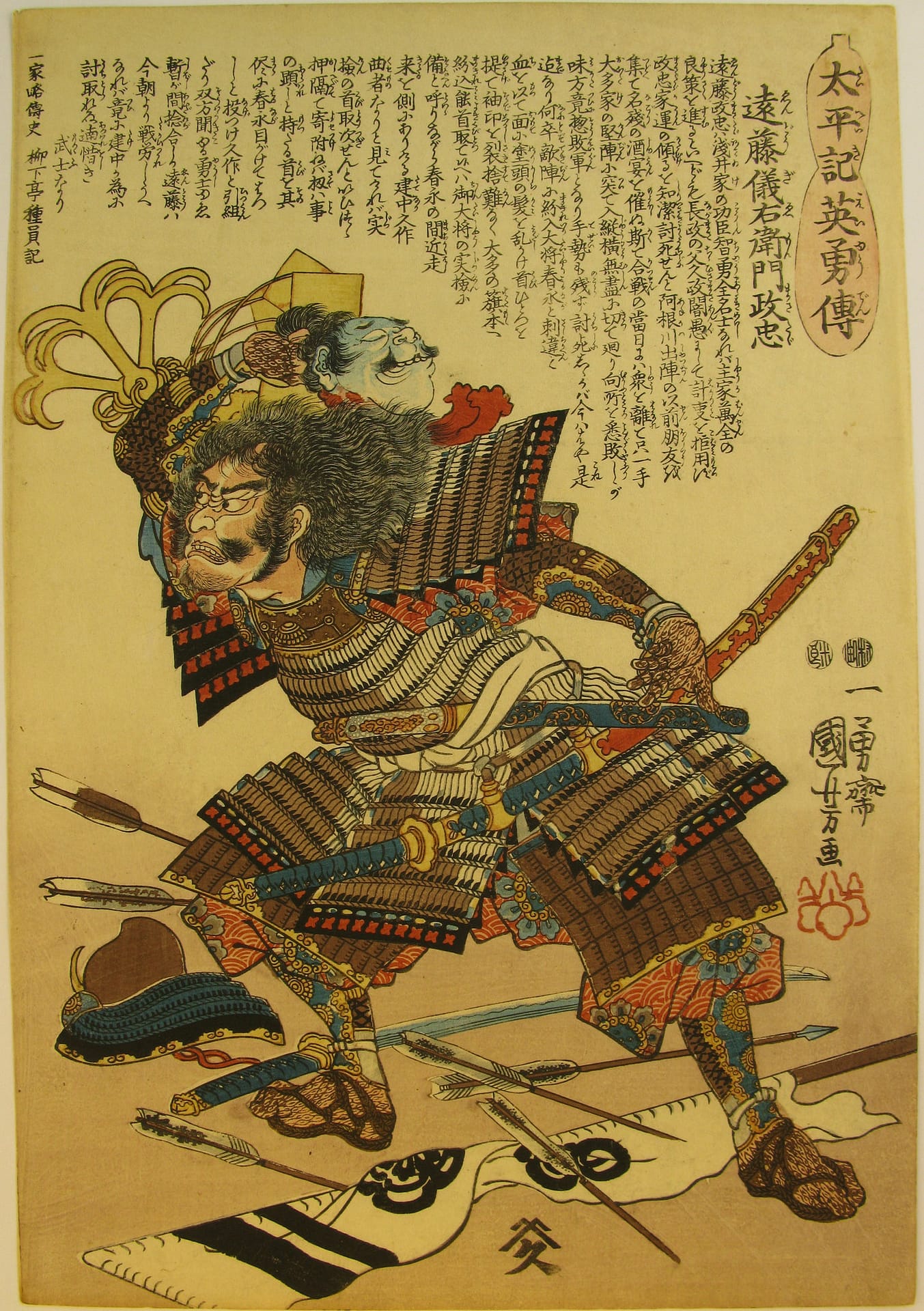
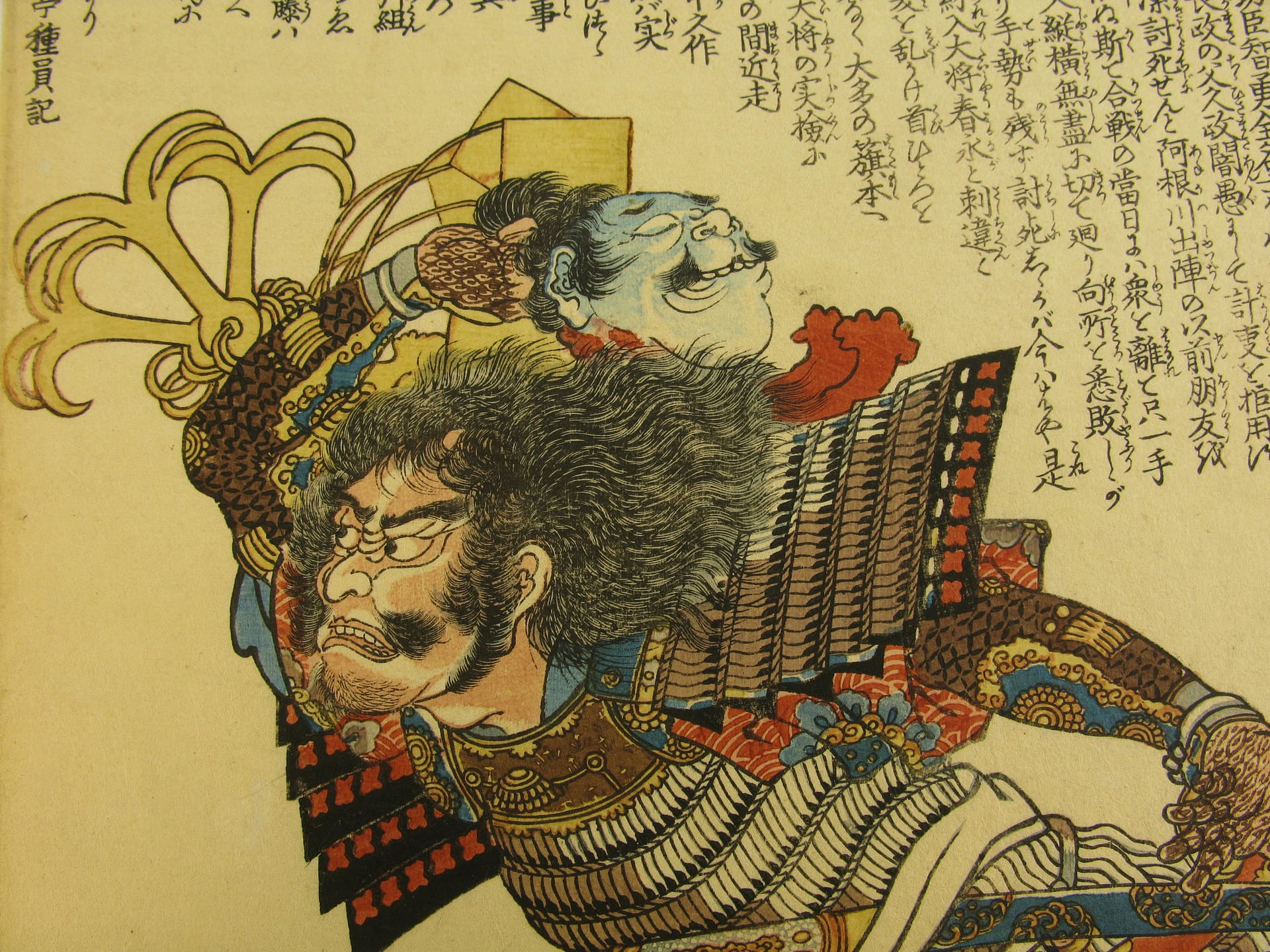
Subject: Endô Giemon Masatada, depicting Naotsugu’s last attempt on Nobunaga’s life, believed to have been during the final stages of the battle at Anegawa. He is about to hurl a severed head of some worrior, and over his shoulder you can see his weapon called a kumade (a bears clutch)
Series: Taiheiki eiyū den, Heroes of the Grand Pacification
Print No: 13
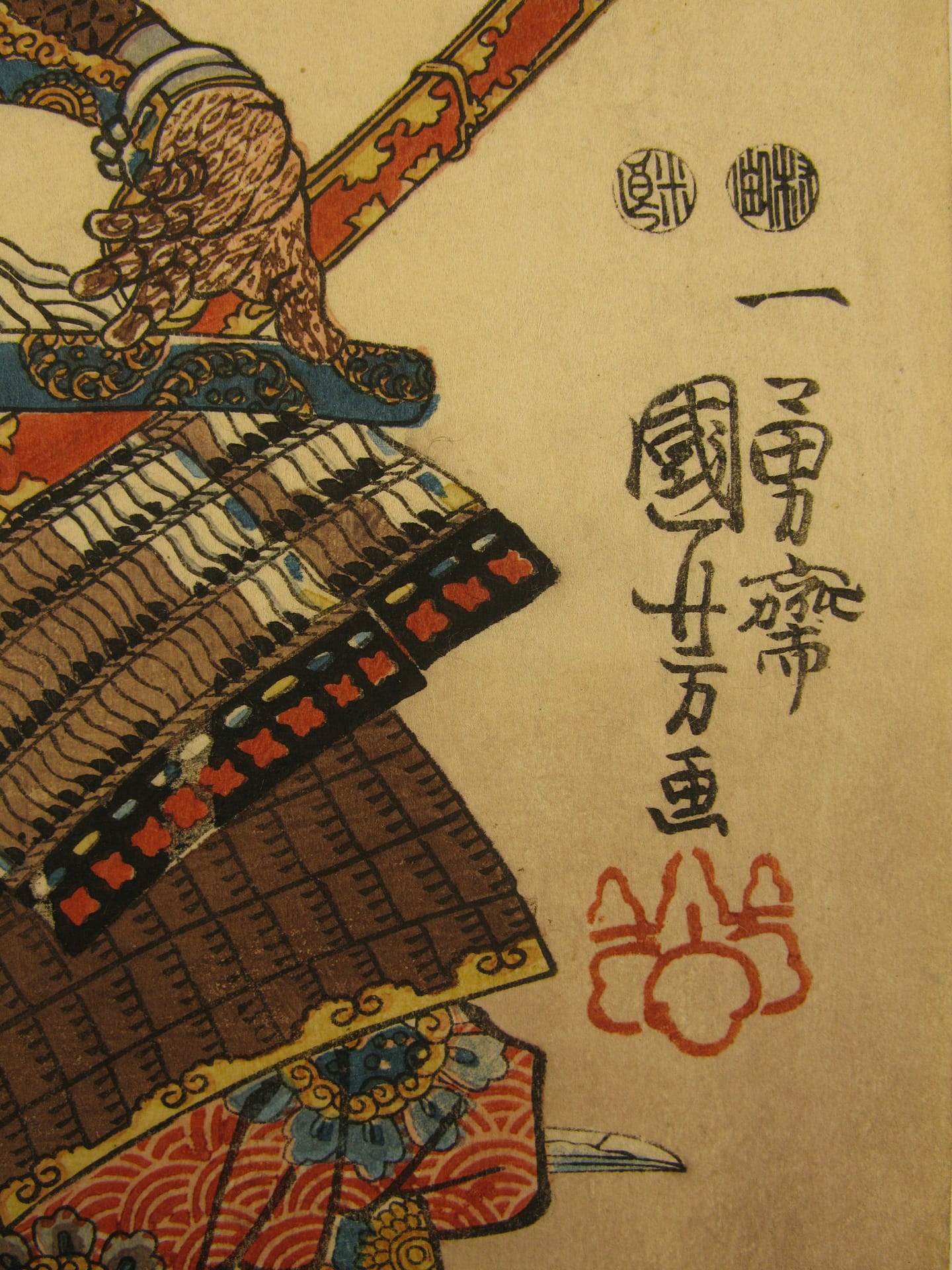
Artist: Utagawa Kuniyoshi (1797-1861)
Signature: Ichiyusai Kuniyoshi ga and kiri seal
Date: 1846-47
Cens: Mera-Murata
Publisher: Yamamoto-ya Heikichi
Size: Oban tate-e,
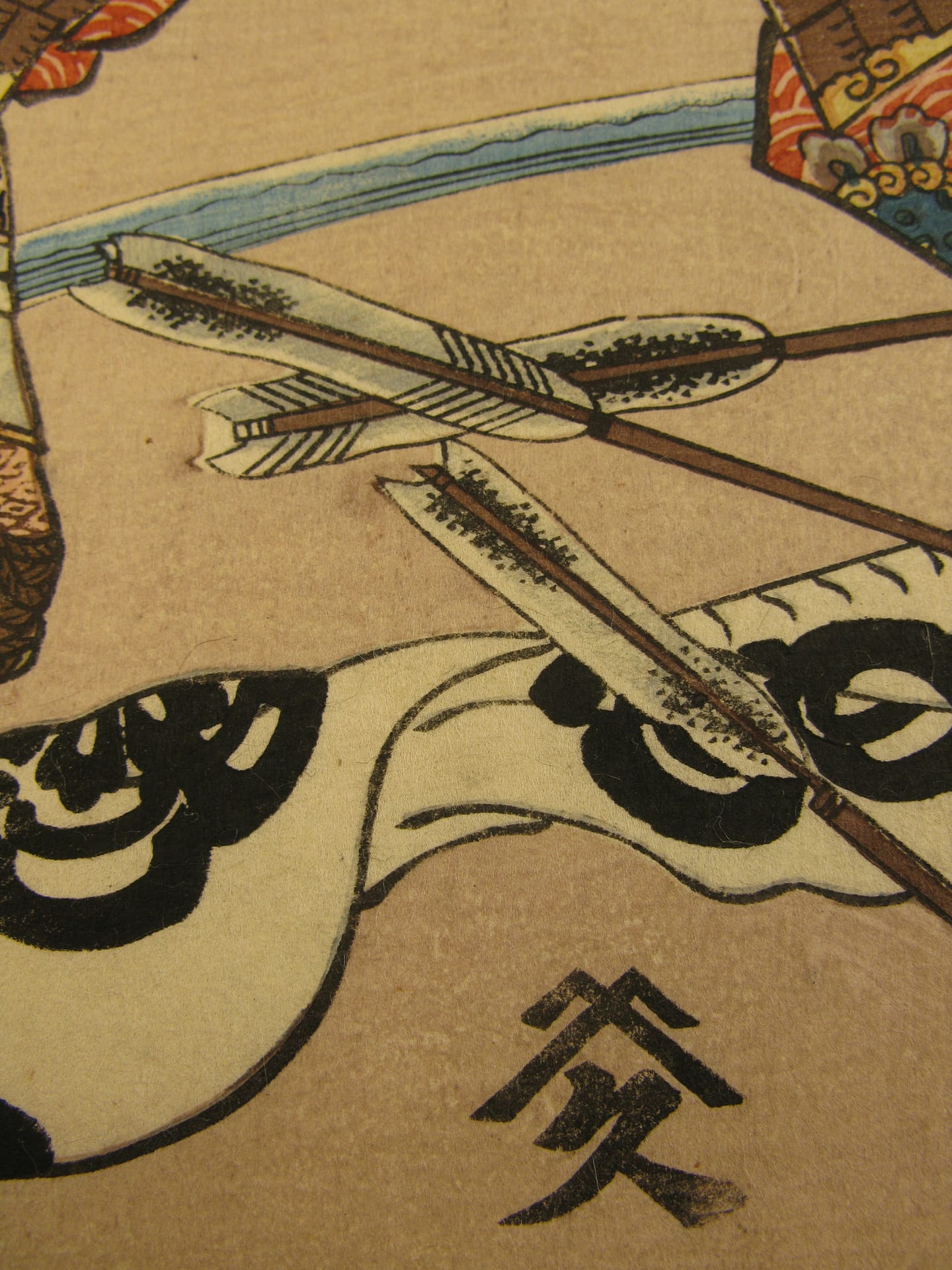
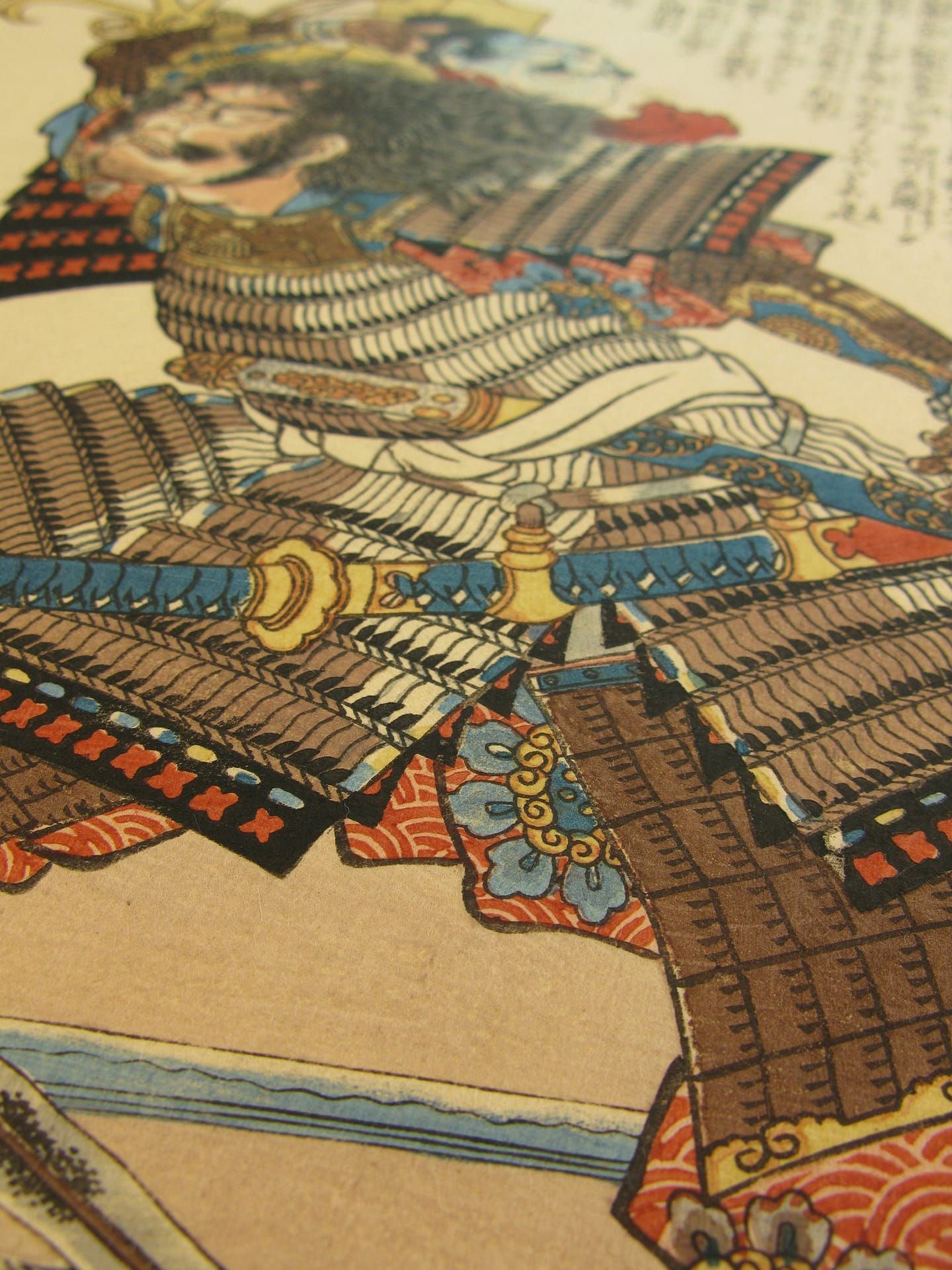
Condition: Good impression, good colour and condition. Un-numbered
Price: TBC
References: Robinson S62.50;
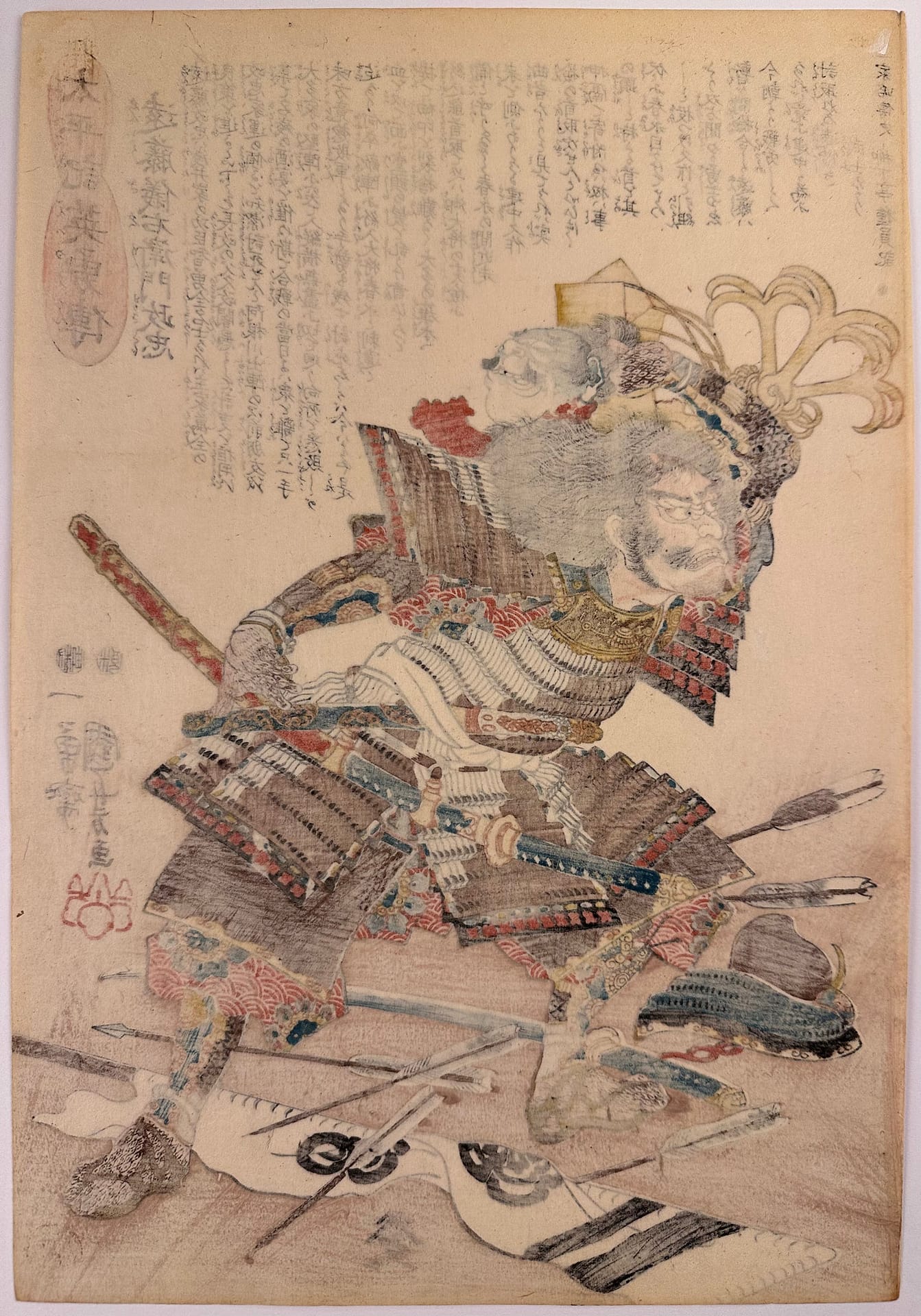
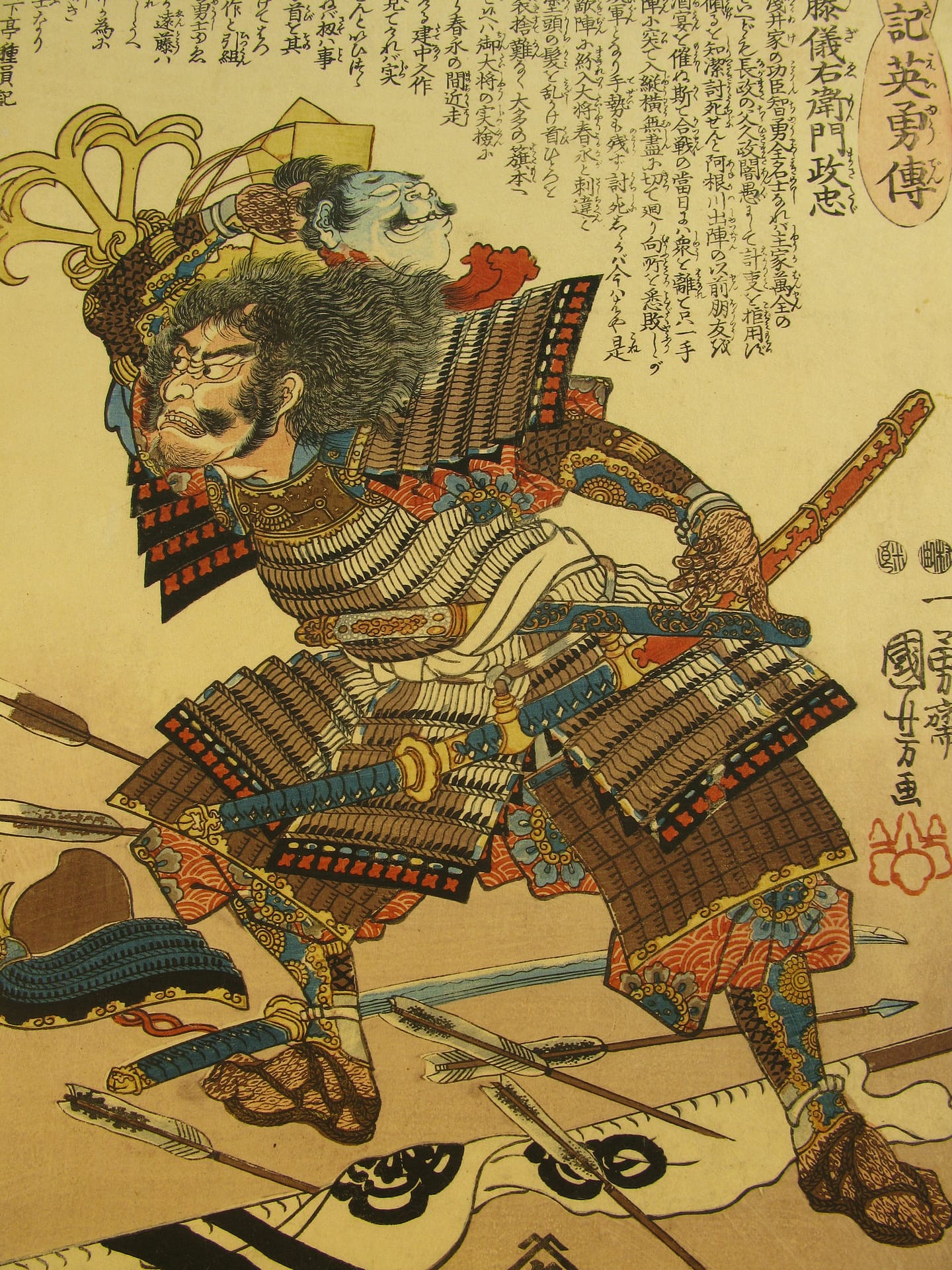
Historical true name: Endô Kiemon Naotsugu
The tale of the print – Endô Giemon Masatada (遠藤儀右衛門政忠), the loyal retainer who tried every smart idea, got ignored, and then decided to go out in the most dramatic way possible
Endō Masatada was the kind of vassal every daimyo should want: smart, loyal, brave, and annoyingly correct about everything. He kept offering flawless strategic advice to the Asai clan — the sort of plans that would have saved everyone a lot of trouble — but Hisamasa, father of Asai Nagamasa, waved them off with the confidence of a man who had never once listened to a good idea.
Masatada saw the writing on the wall. If the Asai family insisted on ignoring him, then he would at least make sure his final chapter was unforgettable.
Before the Battle of Anegawa, he gathered his closest friends for a farewell banquet — the medieval Japanese equivalent of sending a dramatic “If I don’t make it back, remember me fondly” group text. Then, on the day of the battle, he broke away from his own forces and charged alone into the fortifications of Ōta Harunaga.
And he did not tiptoe.
Masatada hacked left, slashed right, and scattered enemy soldiers like a man late for an appointment with destiny. But the Asai side was collapsing, and his small brigade was being chewed up around him. So he made a decision: If he was going to die, he was going to die taking out the enemy commander.
He smeared his face with blood, messed up his hair, grabbed a severed head (as one does), tore off his identifying sleeve, and strolled straight into the enemy ranks pretending to be one of them. It worked beautifully. He marched right up toward Harunaga, shouting something like: “Great news! I found a head! Let me show it to the boss!”
He was seconds away from pulling off the most audacious assassination of the century when Tatenaka Kyūsaku — a man with excellent eyesight and terrible timing — yelled: “Hey! That guy’s suspicious!” and blocked his path. Masatada, realizing the jig was up, did the only reasonable thing: he hurled the severed head at Harunaga and tackled Kyūsaku.
The two fought fiercely — both were renowned warriors — but Masatada had been battling nonstop since morning. Exhausted, he was finally cut down by Kyūsaku. He died exactly as he intended: bravely, dramatically, and impossible to forget.
Everyone mourned him — allies, enemies, and especially those who finally realized that maybe, just maybe, they should have listened to his advice in the first place.
For an excellent analysis of the prints and series, I would encourage you to get the book: Heroes of the grand pacification Kuniyoshji’s Taiheiki eiyu den by Elena Varshavskaya.