Nihonto research
A Short Guide to sword terminology
At first glance, a Japanese sword appears elegantly simple: a curved blade, a sharp edge, a quiet sense of authority. Then someone mentions hamon, boshi, shinogi, hada, and suddenly you feel as though you’ve wandered into a metallurgical poetry recital.
The world of nihontō has developed a remarkably precise vocabulary over centuries. Every curve, ridge, crystalline sparkle, and temper-line flourish has a name — often several. These terms are not there to intimidate (though they occasionally succeed); they exist because swordsmiths and connoisseurs needed a way to describe subtle differences that matter.
Learning this language is less about memorisation and more about training the eye. Once you know what a kissaki is, you start to see how its shape changes the character of the blade. Once you understand hada, the steel begins to reveal its texture like wood grain beneath polish. The terminology does not complicate the sword — it sharpens your perception of it.
This page is a guide to that vocabulary: a companion for curious beginners, cautious collectors, and anyone who has ever nodded knowingly while secretly wondering what nioi-guchi actually means.
No prior fluency required — only attention, and perhaps a fondness for beautiful details.
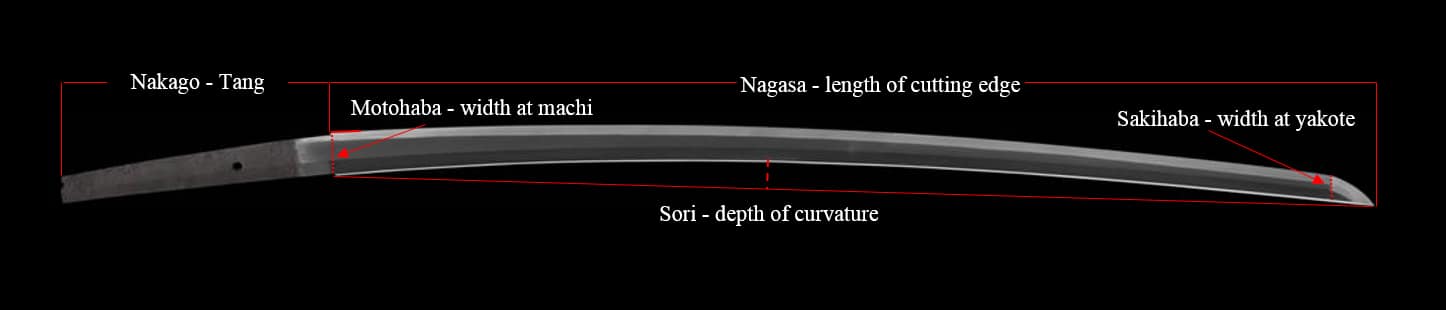
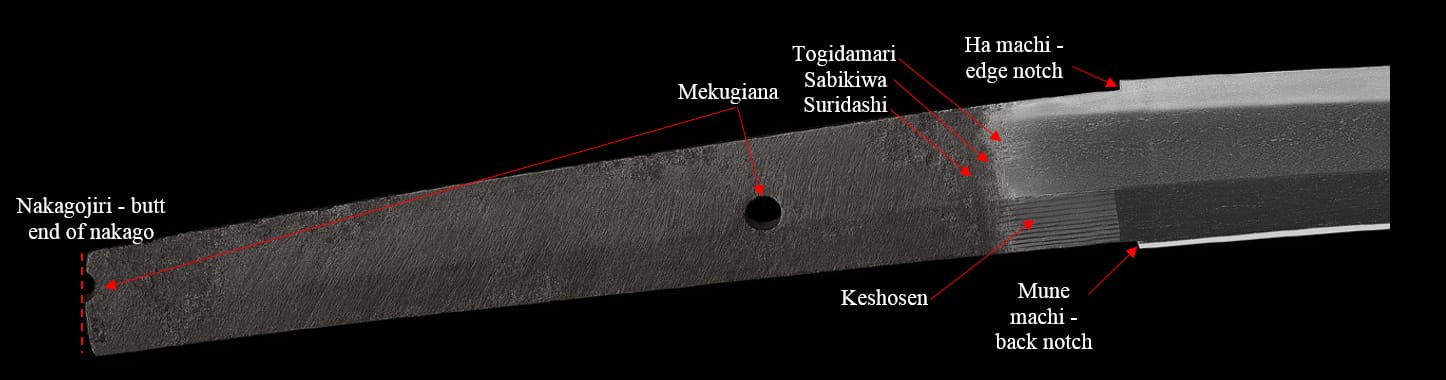
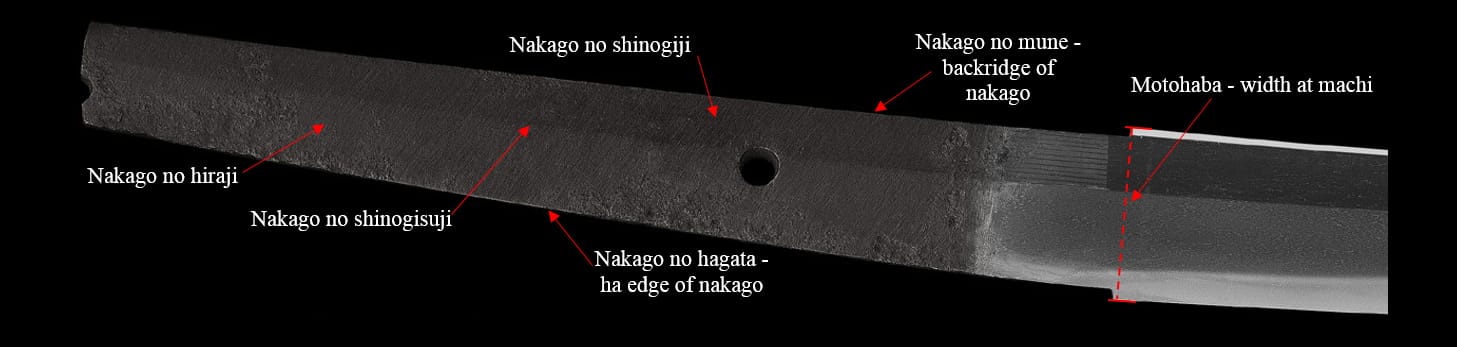
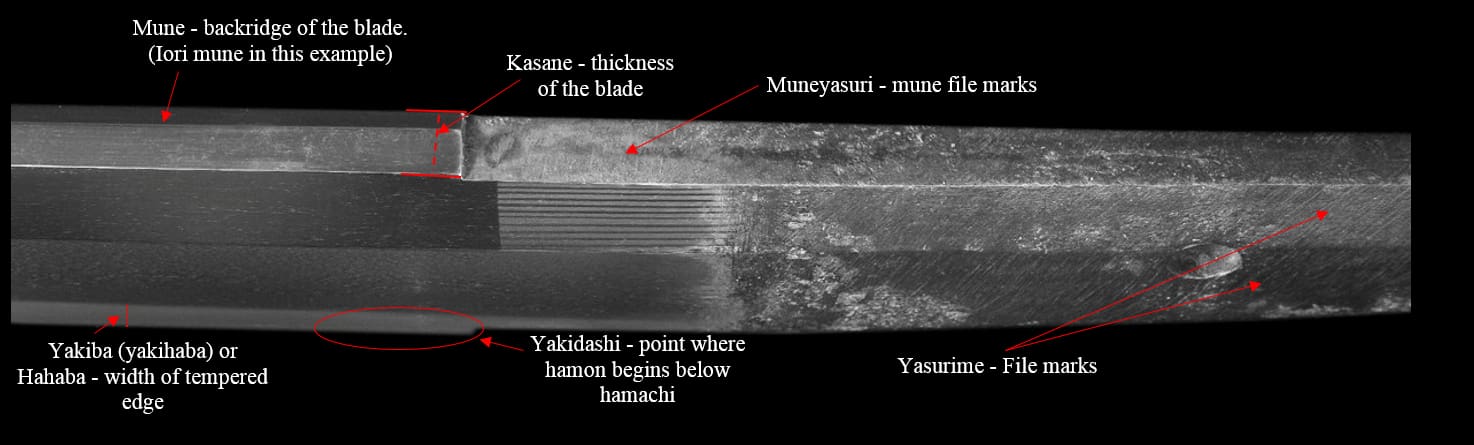
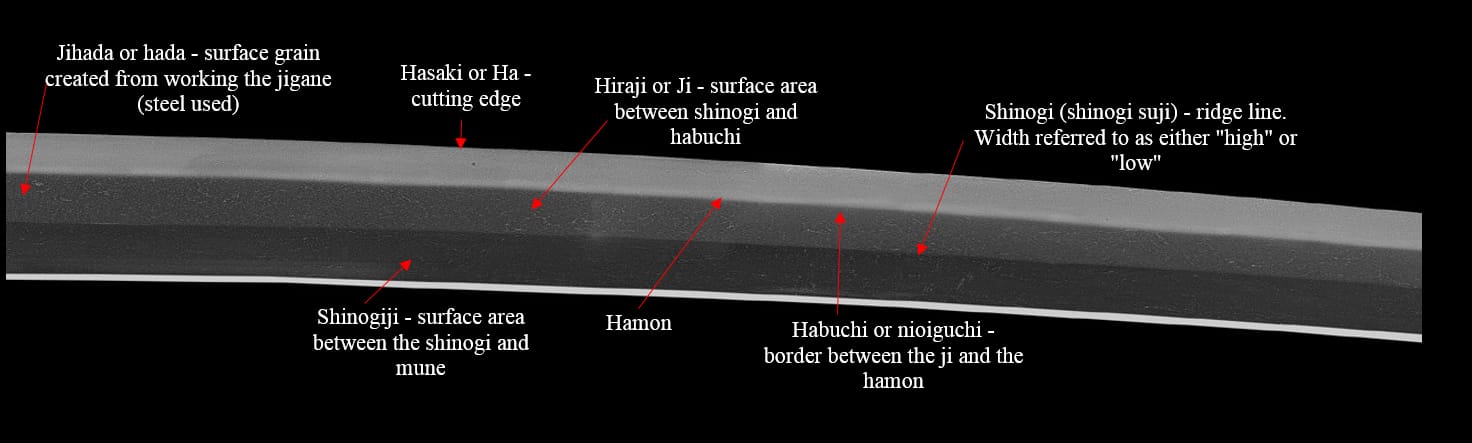
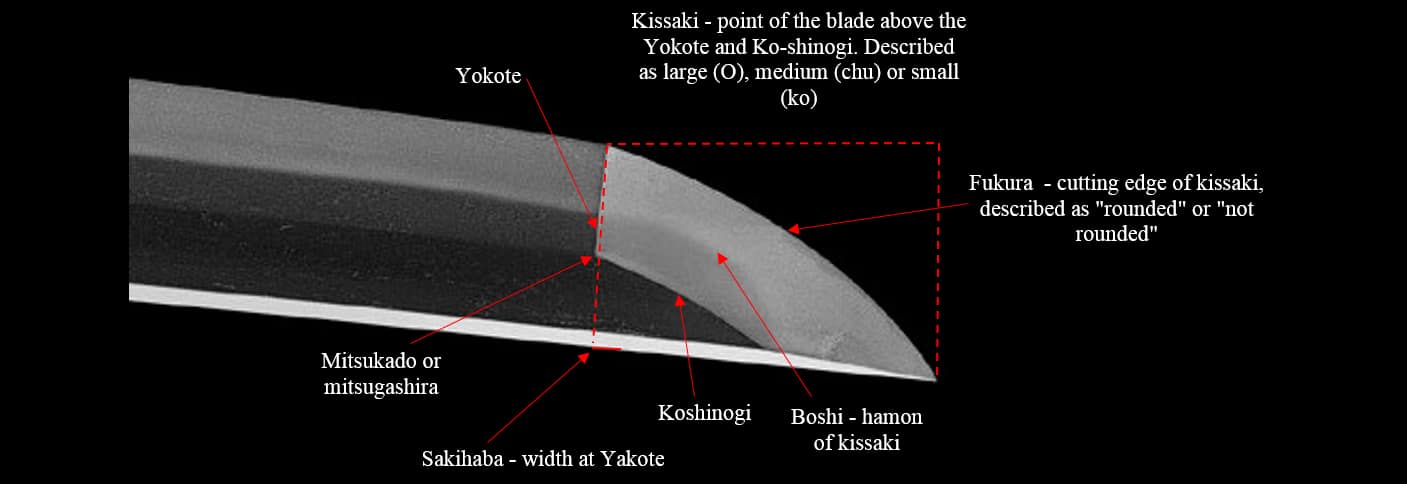
Click any image below to start the lightbox. It will auto scroll, however, you can click the pause button (top right) to stop it at anytime.