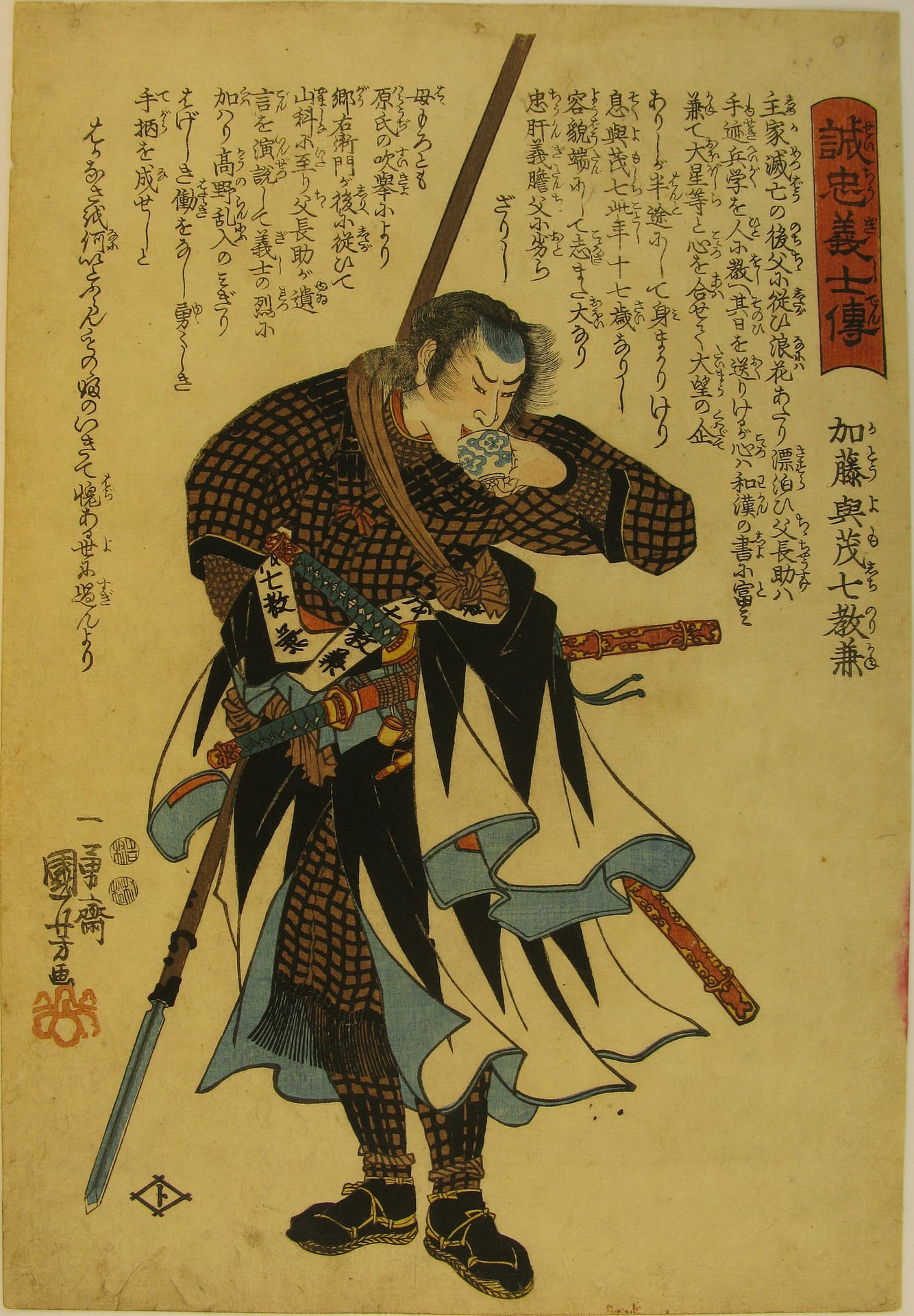
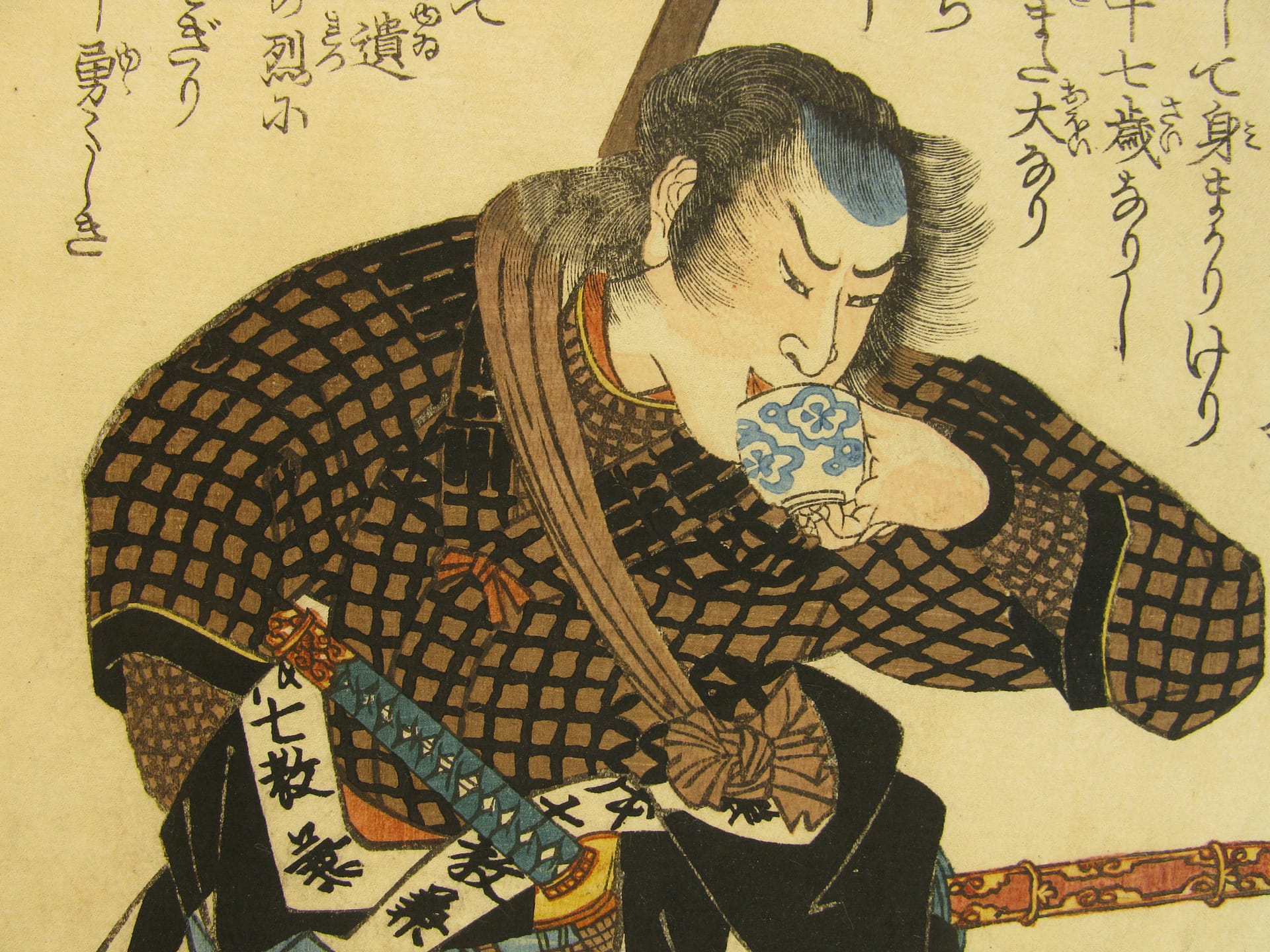
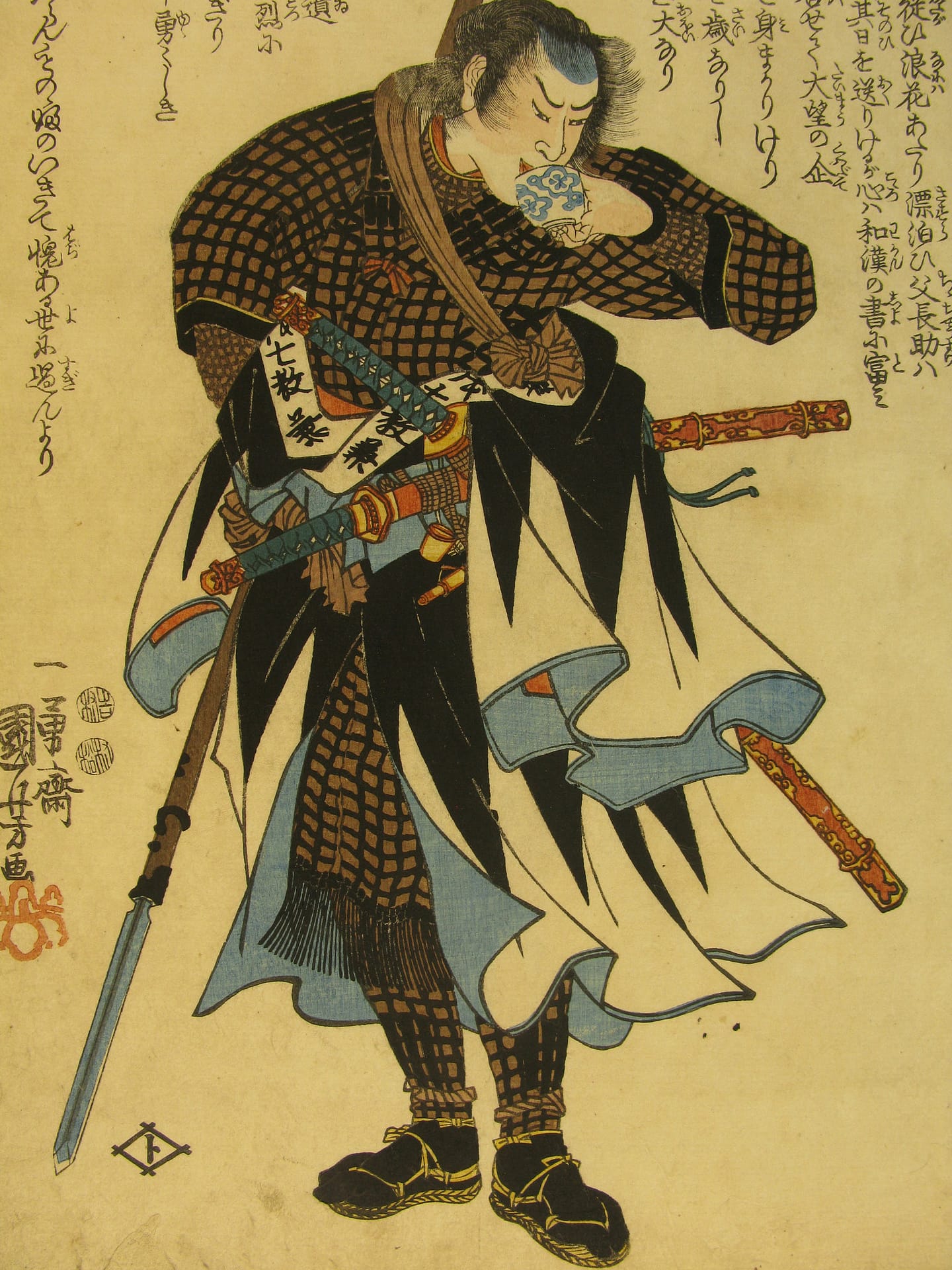
Subject: The ronin Yato Yomoshichi Norikane (Kabuki name) – holding his spear drinking from a decorated porcelain cup
Series: Seichu gishi den (Stories of the true loyalty of the faithful samurai)
Print No: 1.3 (un-numbered state)
Artist: Utagawa Kuniyoshi (1797-1861)
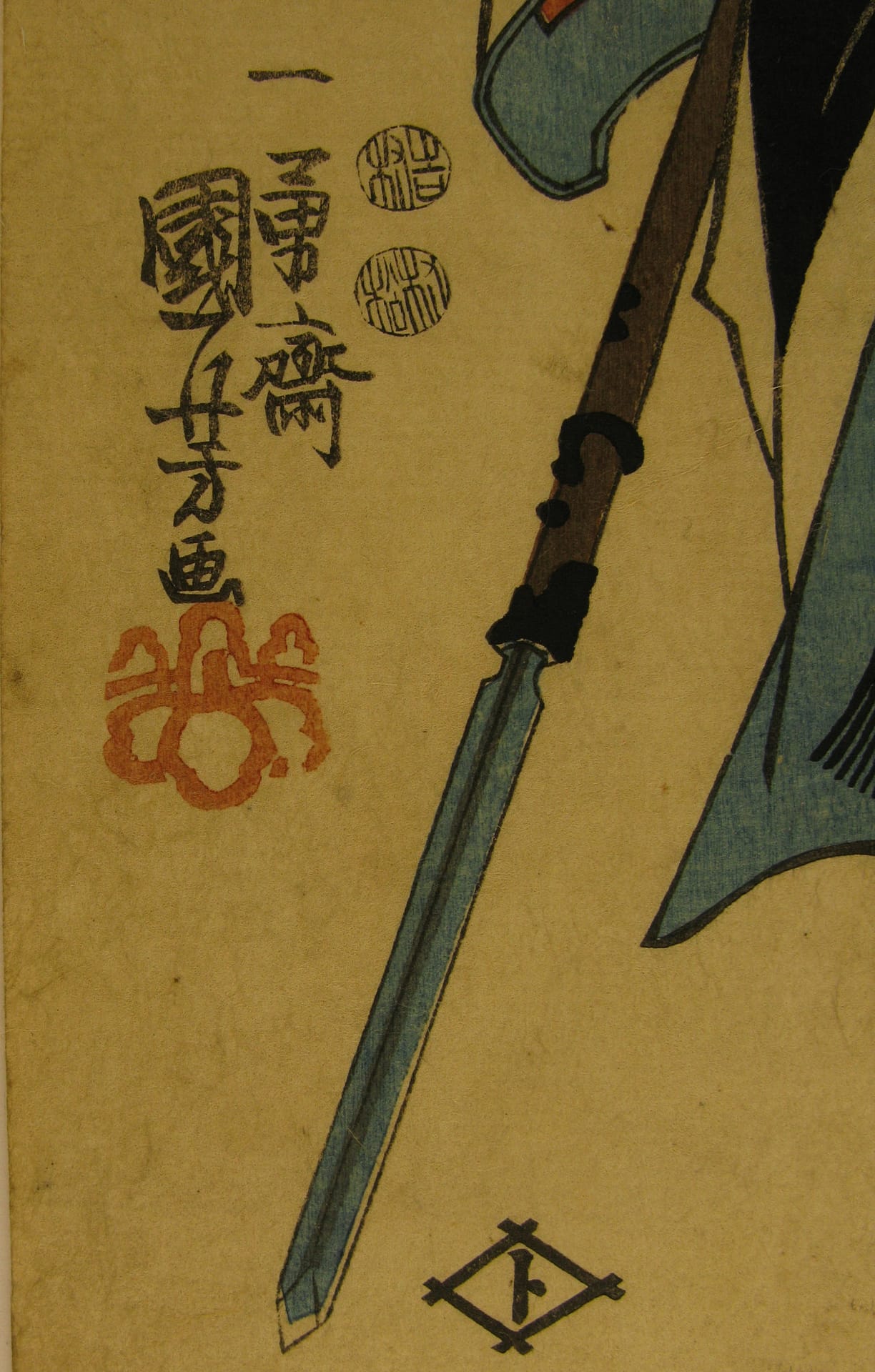
Signature: Ichiyusai Kuniyoshi ga and kiri seal
Date: 1847-48
Cens: Yoshimura – Muramatsu
Publisher: Ebi-ya Rinnosuke
Size: Oban tate-e, 37.6 x 25.4 cm
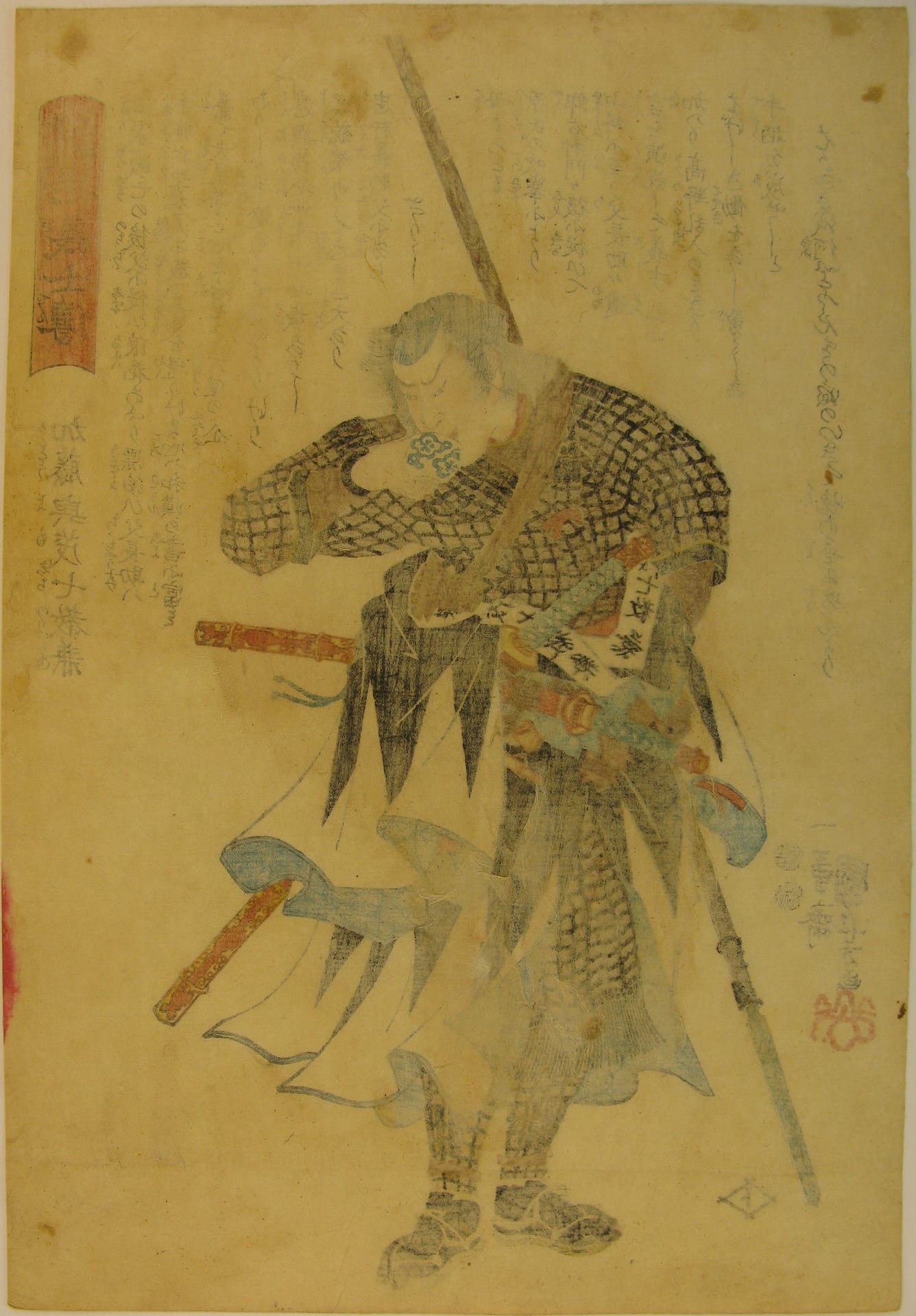
Condition: Very good impression, good colour and condition, binding holes repaired some marks and staining. Un-numbered state
Price: Not for sale at this stage
True name: Yatō Emoshichi Norikane (矢頭 右衛門七 教兼)
Age: unknown
Katana mei: not documented
Wakizashi mei: not documented
The tale of the text – with a little twist
Yomoshichi’s dad, Yato Chosuke, came from a long line of Akao retainers, which basically means his family tree was 90% loyalty and 10% questionable life choices. After their castle got confiscated — rude — he wandered around Naniwa teaching Noh chanting, the Edo‑period equivalent of giving voice lessons to pay the rent.
When Chosuke realized his time was almost up, he summoned young Yomoshichi for the classic dramatic deathbed speech. It went something like:
“Son… I promised to join Oboshi Yoshio’s revenge squad, but this illness is really inconvenient. So, tiny detail: I need you to go avenge our lord for me. You’re young, you’re spry, you’ve got nothing else going on. Great talk.”
Then he promptly died, leaving Yomoshichi with grief, responsibility, and absolutely no time to process either.
His mother, wasting zero minutes, grabbed her teenage son and marched straight to Oboshi like she was returning a defective product. Through tears, she basically said:
“My husband’s dying wish was for this child — yes, this one — to join your extremely dangerous, probably fatal vendetta. Please take him. He’s very polite.”
Oboshi, stunned that a mother was volunteering her son for a revenge mission like it was a school field trip, was deeply moved. He compared her devotion to a cow licking its calf, which is either poetic or a sign he needed to get out more.
He accepted Yomoshichi, probably thinking, “Well, if the kid survives, at least he can write haikai about it.”
At sixteen, Yomoshichi was the same age as Oboshi’s son Rikiya, but apparently even braver, stronger, and better at everything — because every story needs that one overachiever who makes everyone else look like they’re not trying hard enough.
He also wrote poetry under the name Chiho, proving that even future avengers need a hobby that doesn’t involve sharp objects. Meanwhile, his mother lived to eighty‑seven, which is impressive for someone who once handed her child to a revenge squad like she was offering cookies to neighbors. Her gravestone still stands, probably whispering, “I raised a samurai, what did YOU do?”
For an accurate translation of the print text, I would encourage you to get the book: Kuniyoshi -The faithful samurai by David R Weinberg