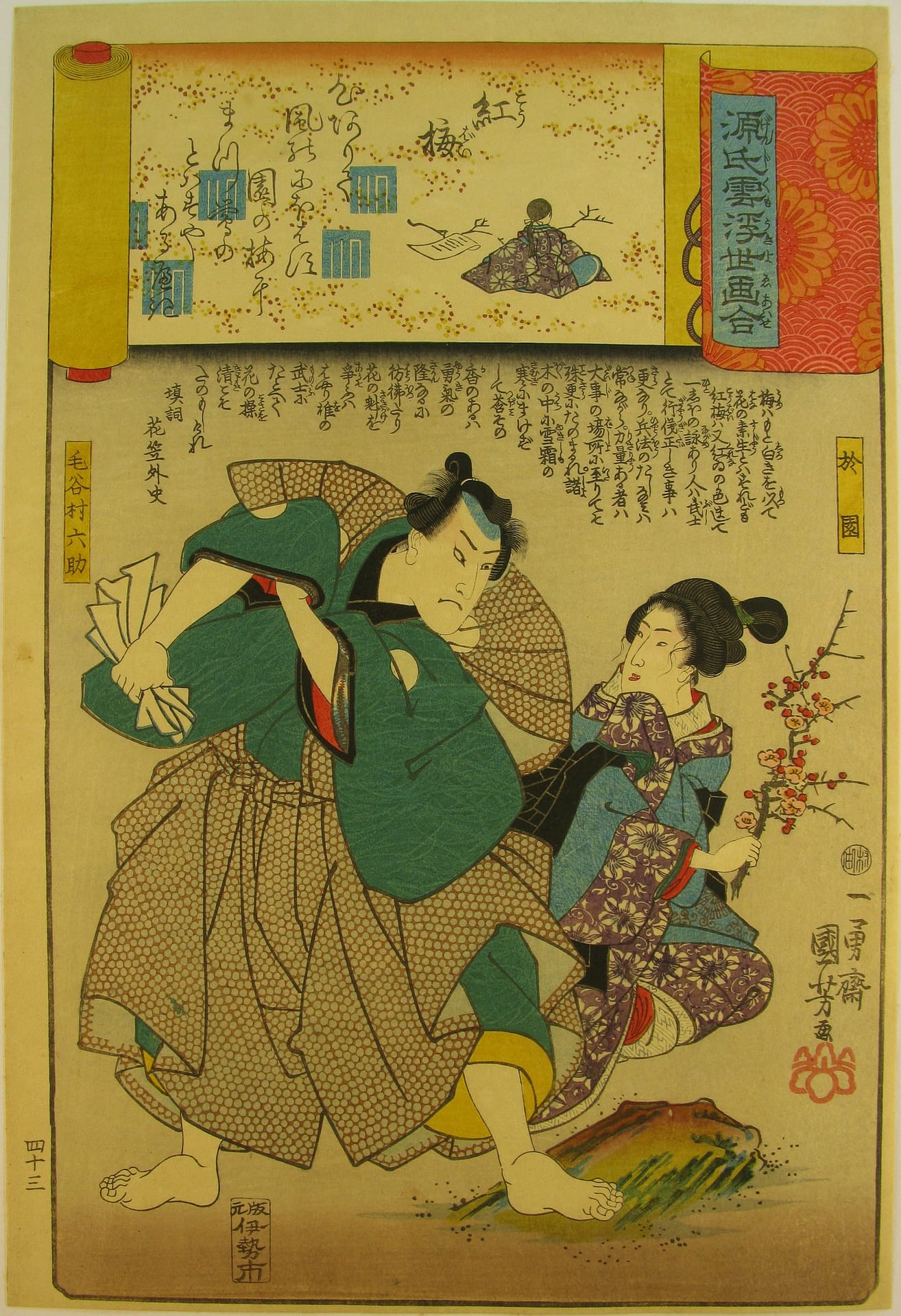
Subject: Keyamura Rokusuke (毛谷村六助) with O-Sono (於園) behind him holding plum blossoms
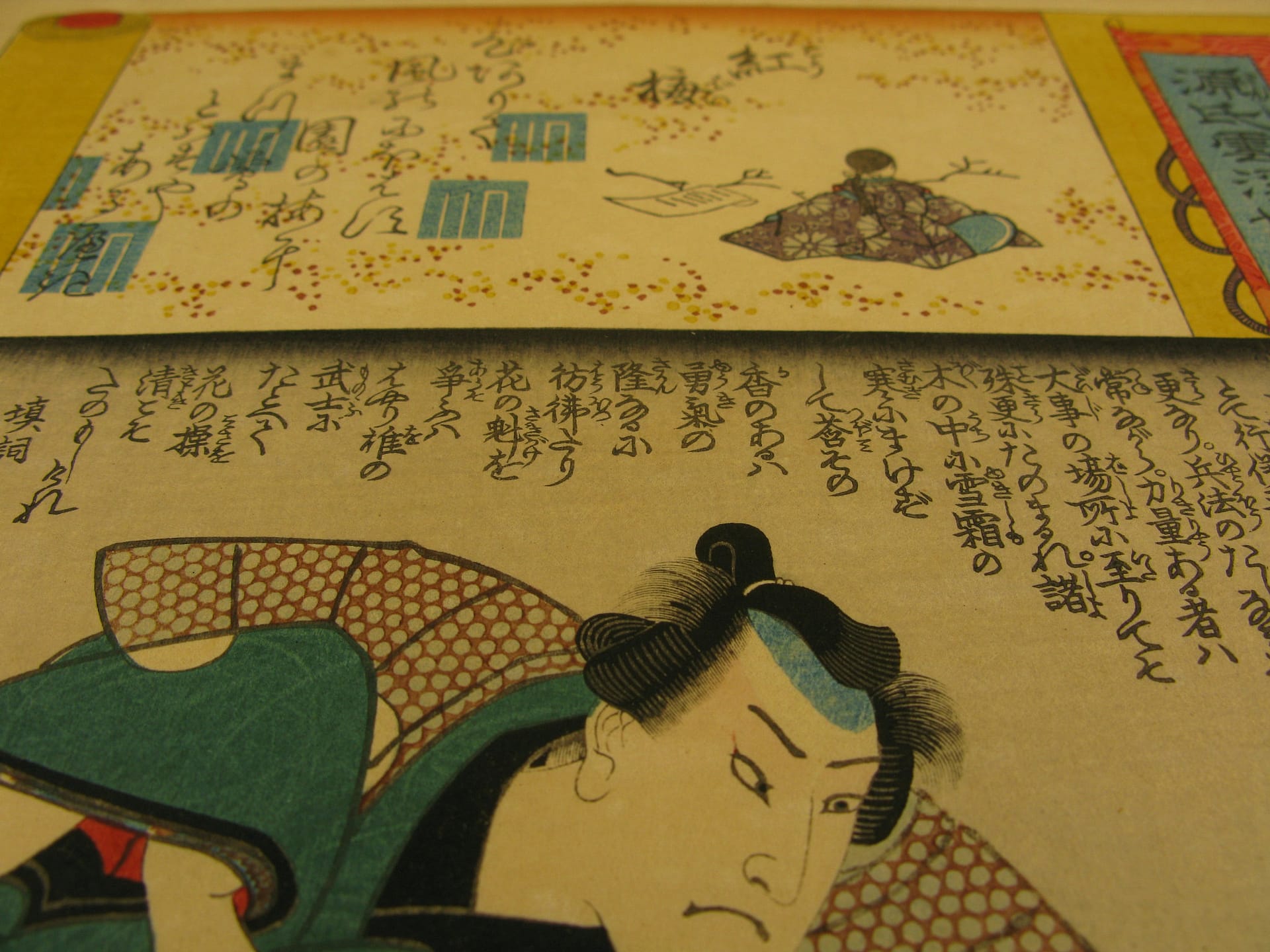
Series: Ukiyo-e Comparisons of the Cloudy Chapters of Genji – Genji kumo ukiyo-e awase (源氏雲浮世画合)
Print No: Chapter 43. Kôbai (紅梅, The Rose Plum)
Artist: Utagawa Kuniyoshi (1797-1861)
Signature: Ichiyusai Kuniyoshi ga and kiri seal
Date: 1845-46
Cens: Murata
Publisher: Ebi-ya Rinnosuke
Size: Oban tate-e, 37.6 x 25.4 cm
Condition: Good impression, colour and condition, some marks and staining
Price: Not for sale at this stage
Literature: Kuniyoshi the worrior prints – B.W. Robinson S45.43
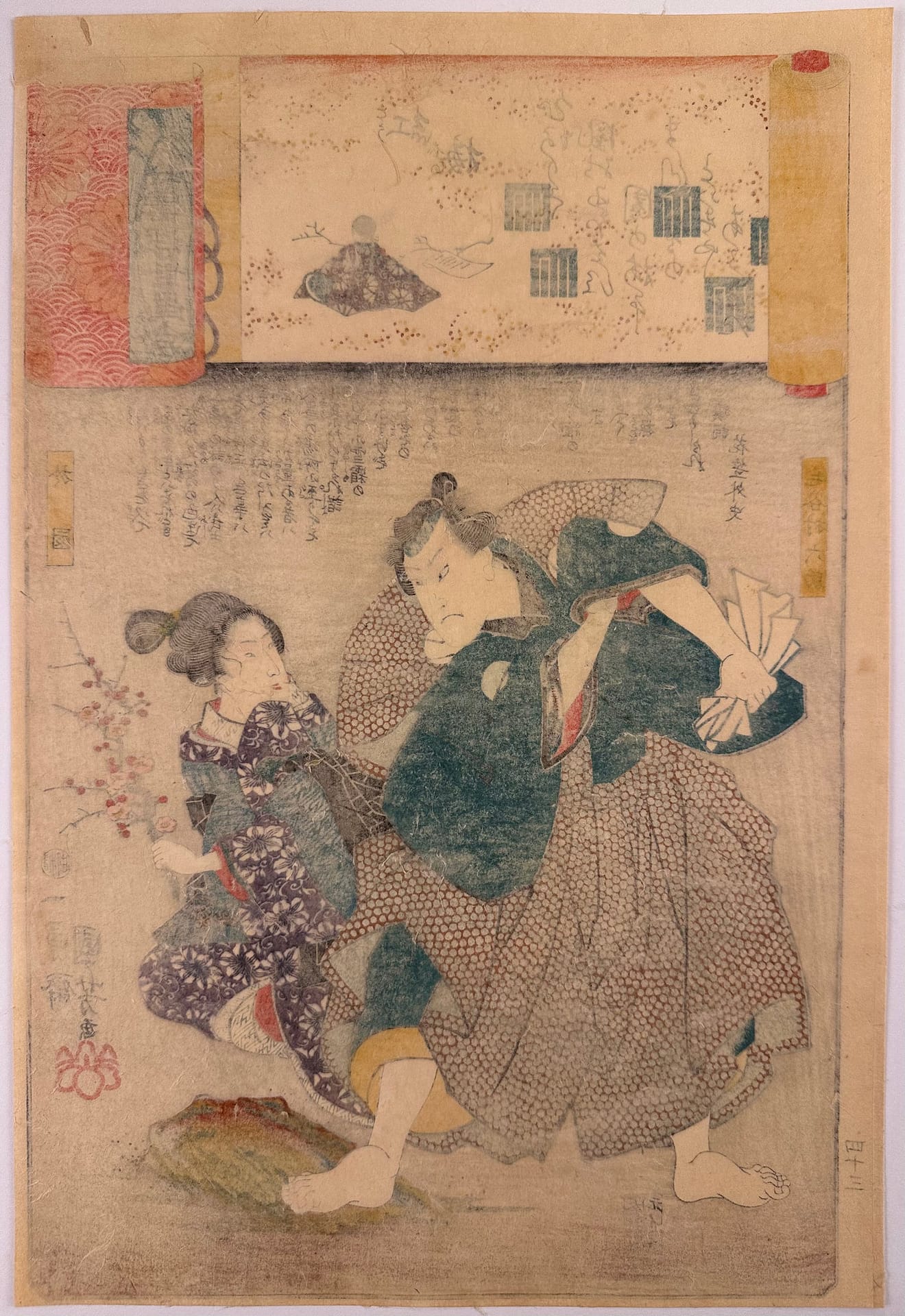
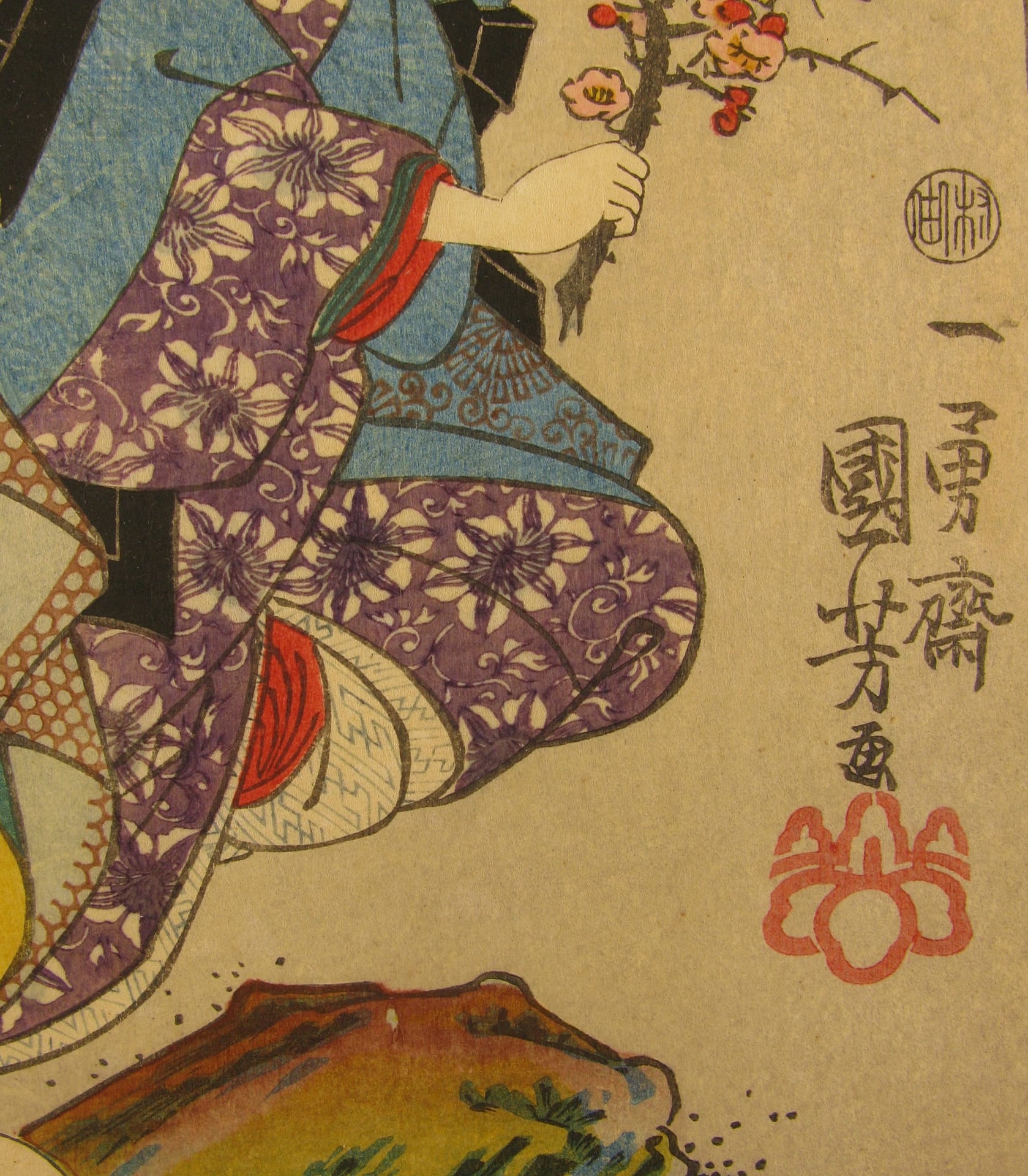
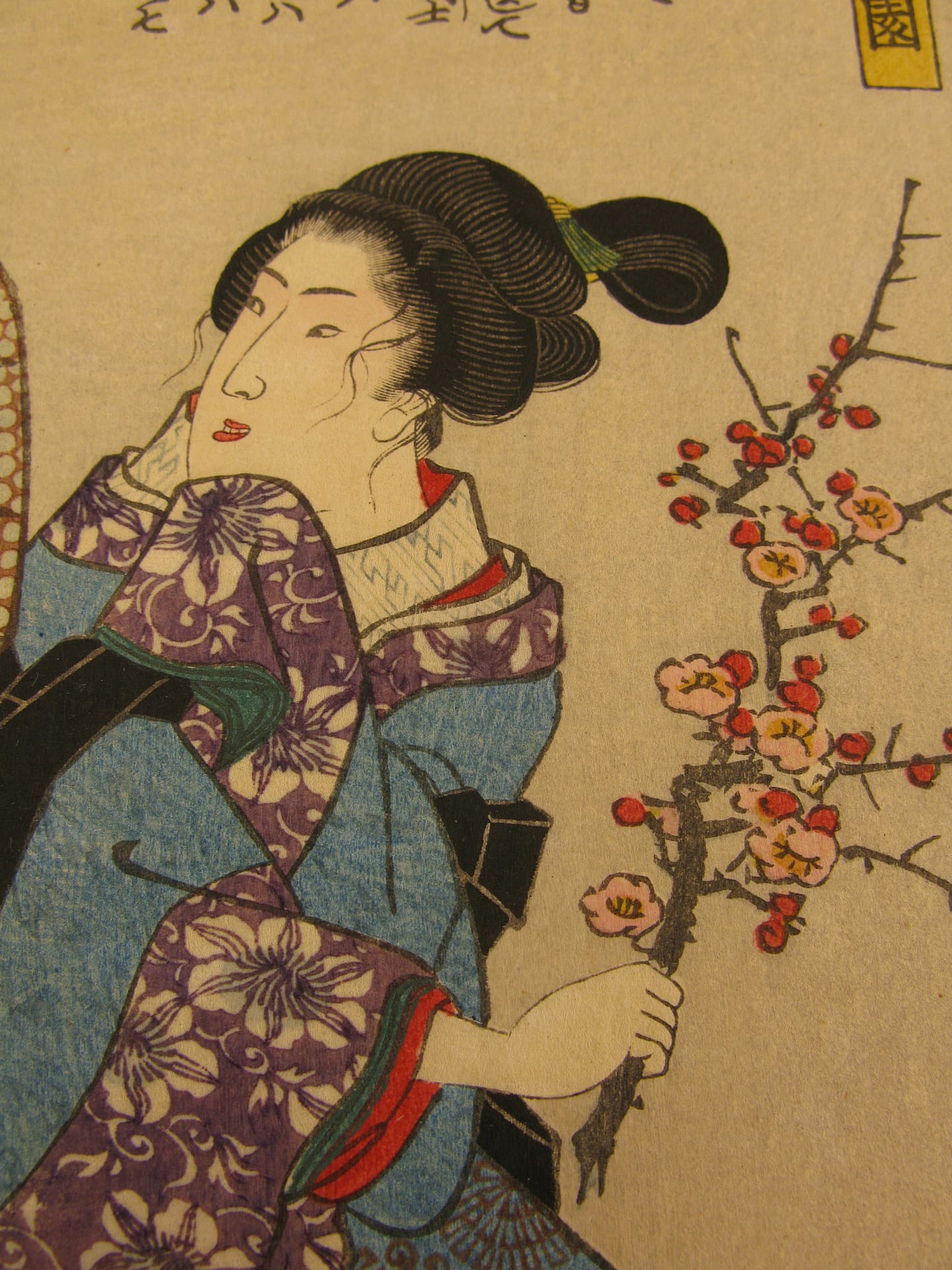
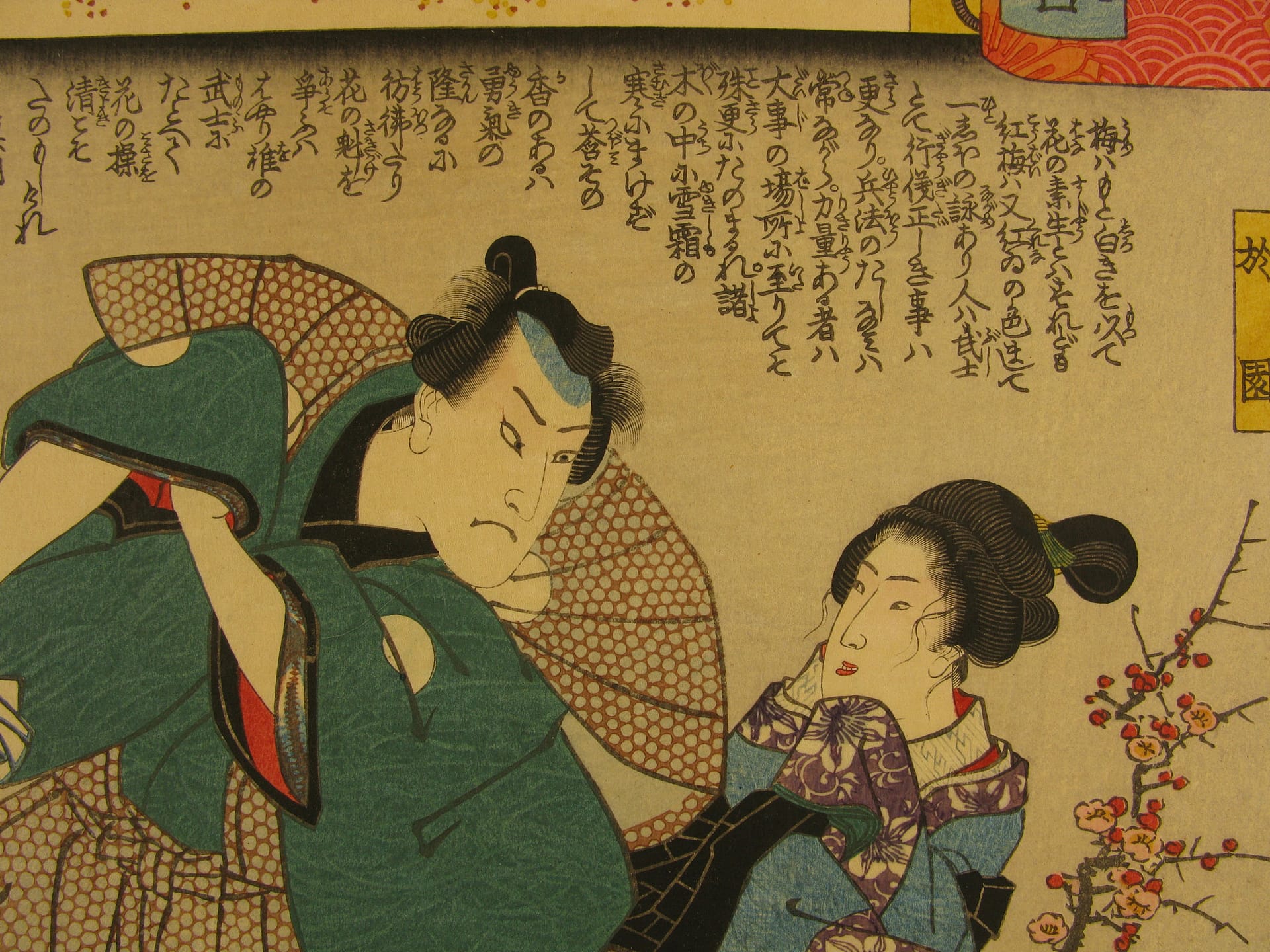
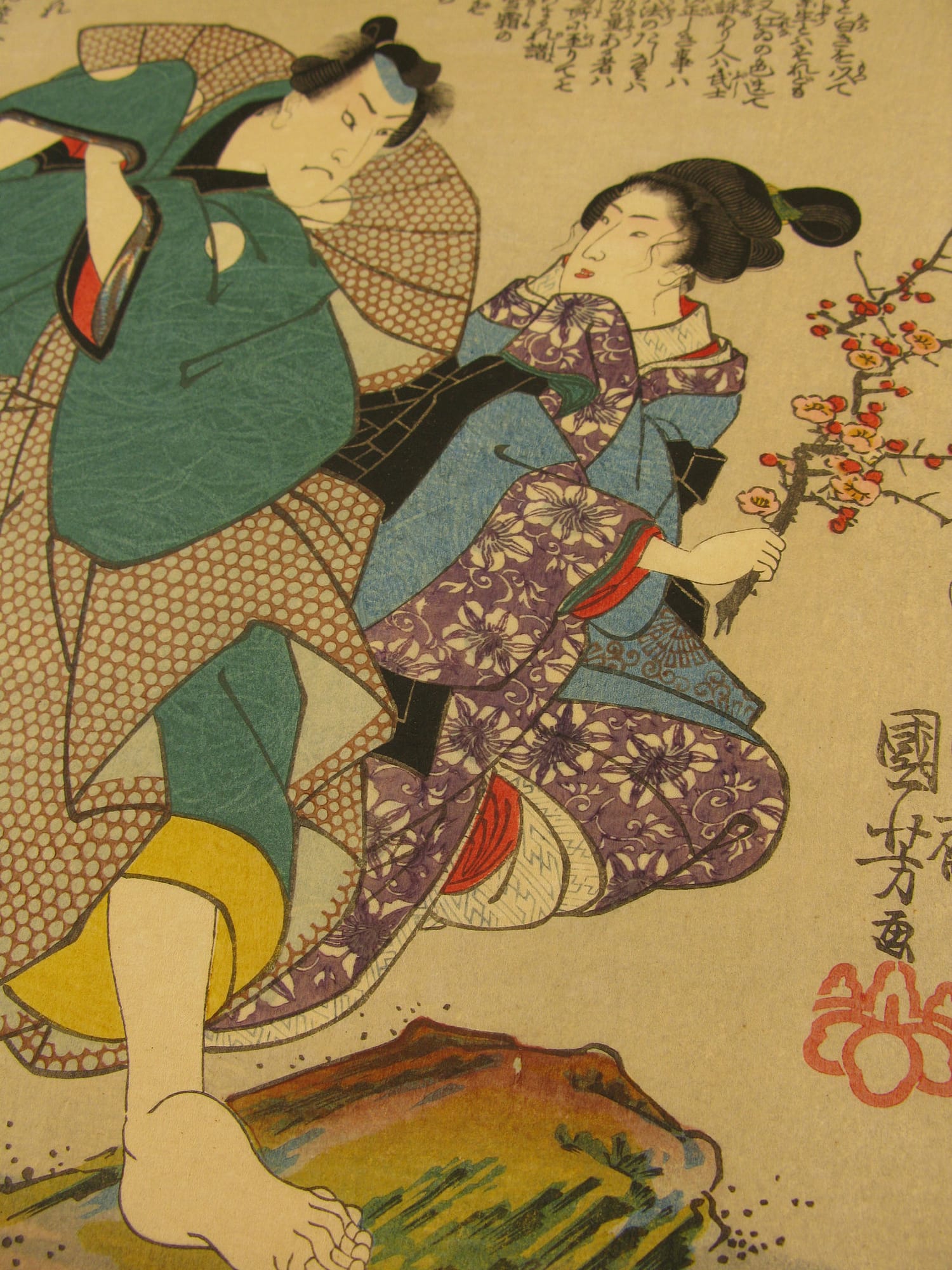
Rather than depicting the events of Kōbai, Kuniyoshi translates the chapter’s central symbol—the plum blossom—into a visual allegory. The plum, associated in both Genji and Edo literary tradition with refinement, perseverance, and moral integrity, is embodied by the loyal warrior Keyamura Rokusuke, while O-Sono’s plum branch makes the connection explicit. The accompanying prose reinforces this symbolic, rather than narrative, relationship between the Genji chapter and the kabuki subject.
The poem
Rose Plum
The fragrant spring—
the scent of the garden’s plum blossoms
lingers here,
at last revealing itself.
The tale of the text – approximately
The truly upright man is steadfast in conduct and unwavering in purpose. Skilled alike in courtesy and the martial arts, he understands their highest principles. Like the plum blossom, which withstands snow and frost while never forgetting the approach of spring, he remains faithful through adversity. The plum’s fragrance and radiant bloom express an inner nobility, making it the perfect emblem of courage, constancy, and purity. These are the virtues embodied by the warrior Keyamura Rokusuke, whose character is as enduring as the flowering plum.