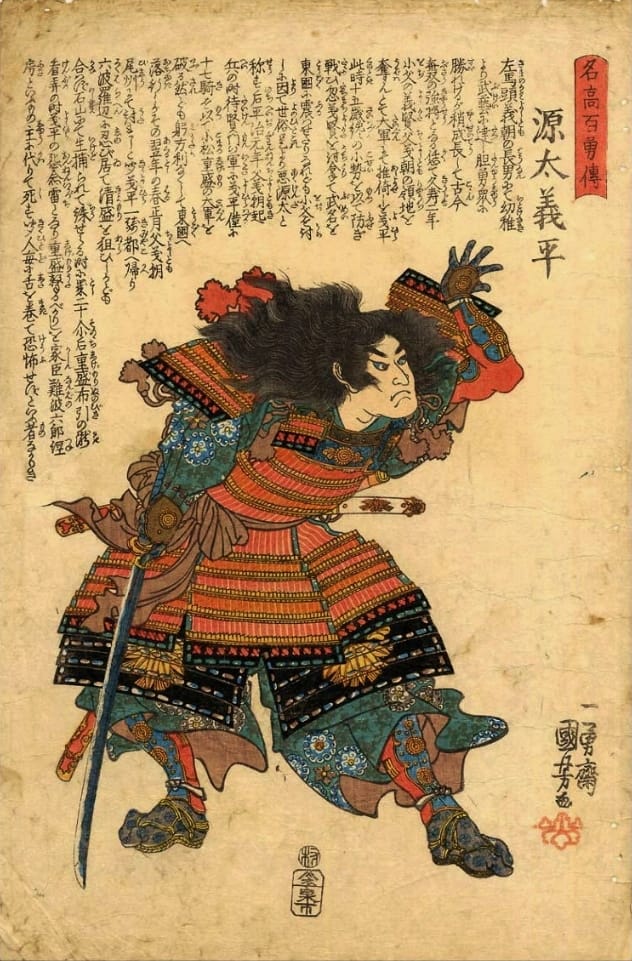
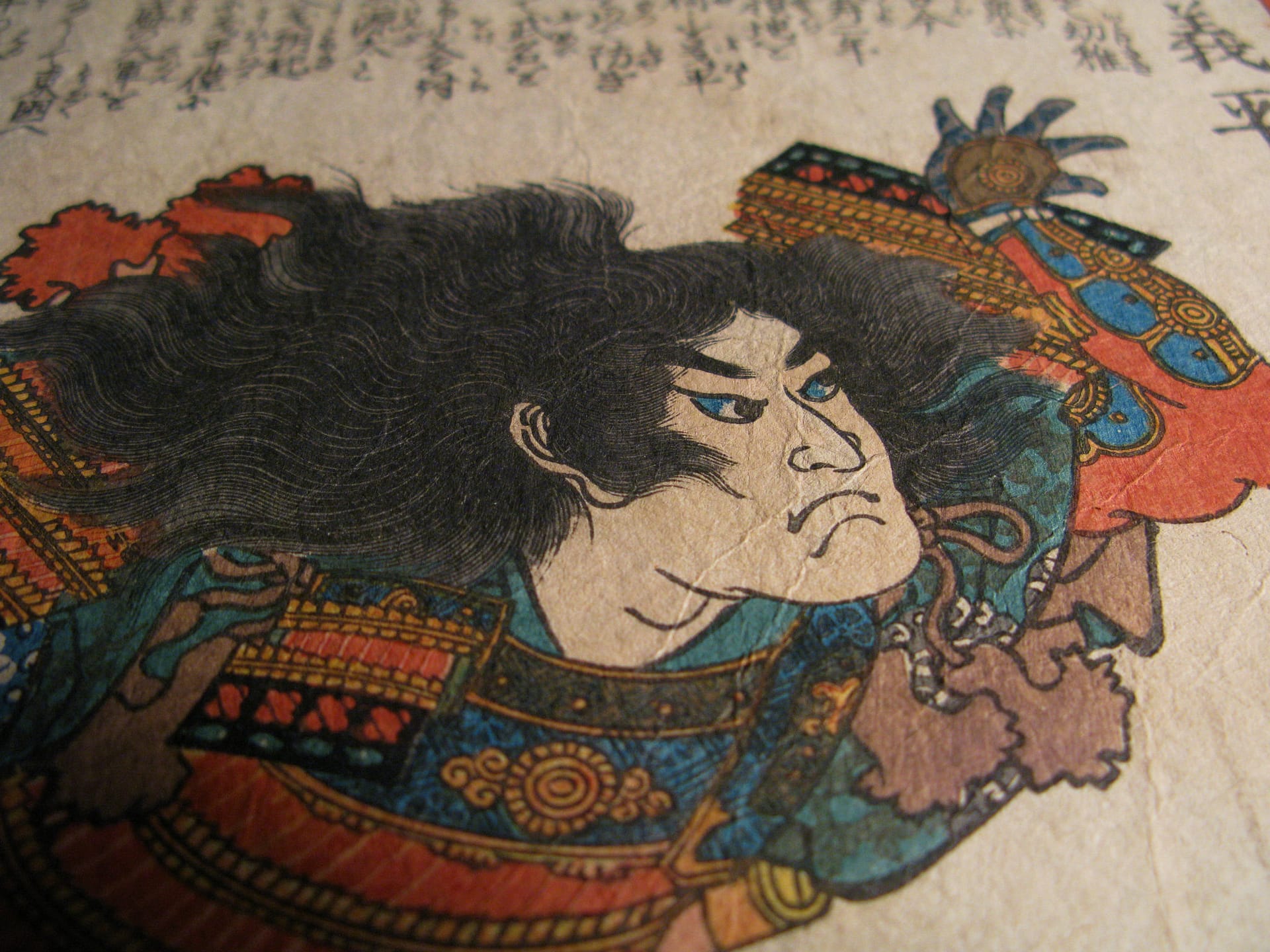
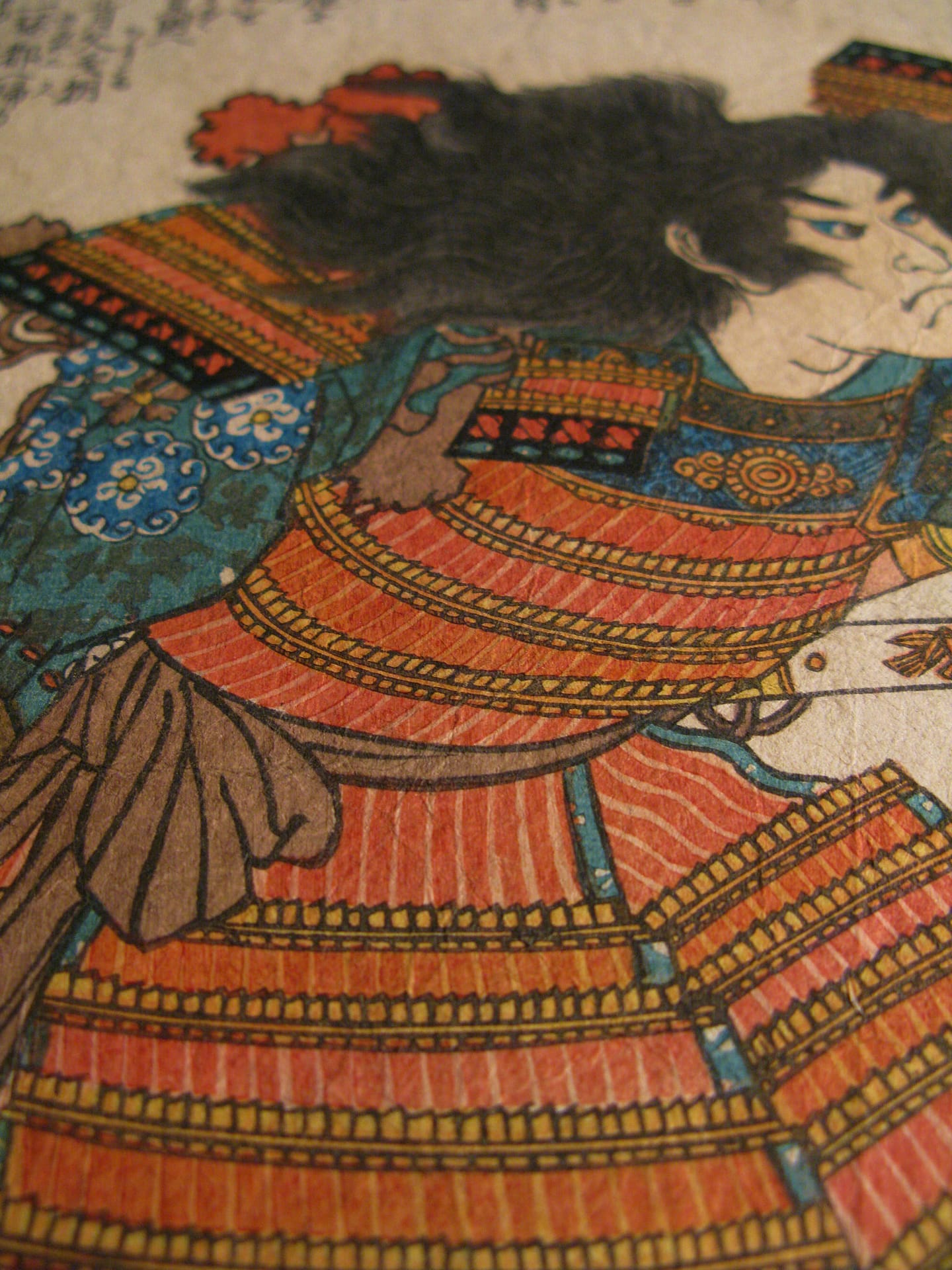
Subject: Genda Yoshihira (源太義平) bareheaded and armoured holding a sword in his right hand and gesturing with his left
Series: Meikô hyaku yû den (Stories of A Hundred Heroes of High Renown)
Robinson: S31.28
Artist: Utagawa Kuniyoshi (1797-1861)
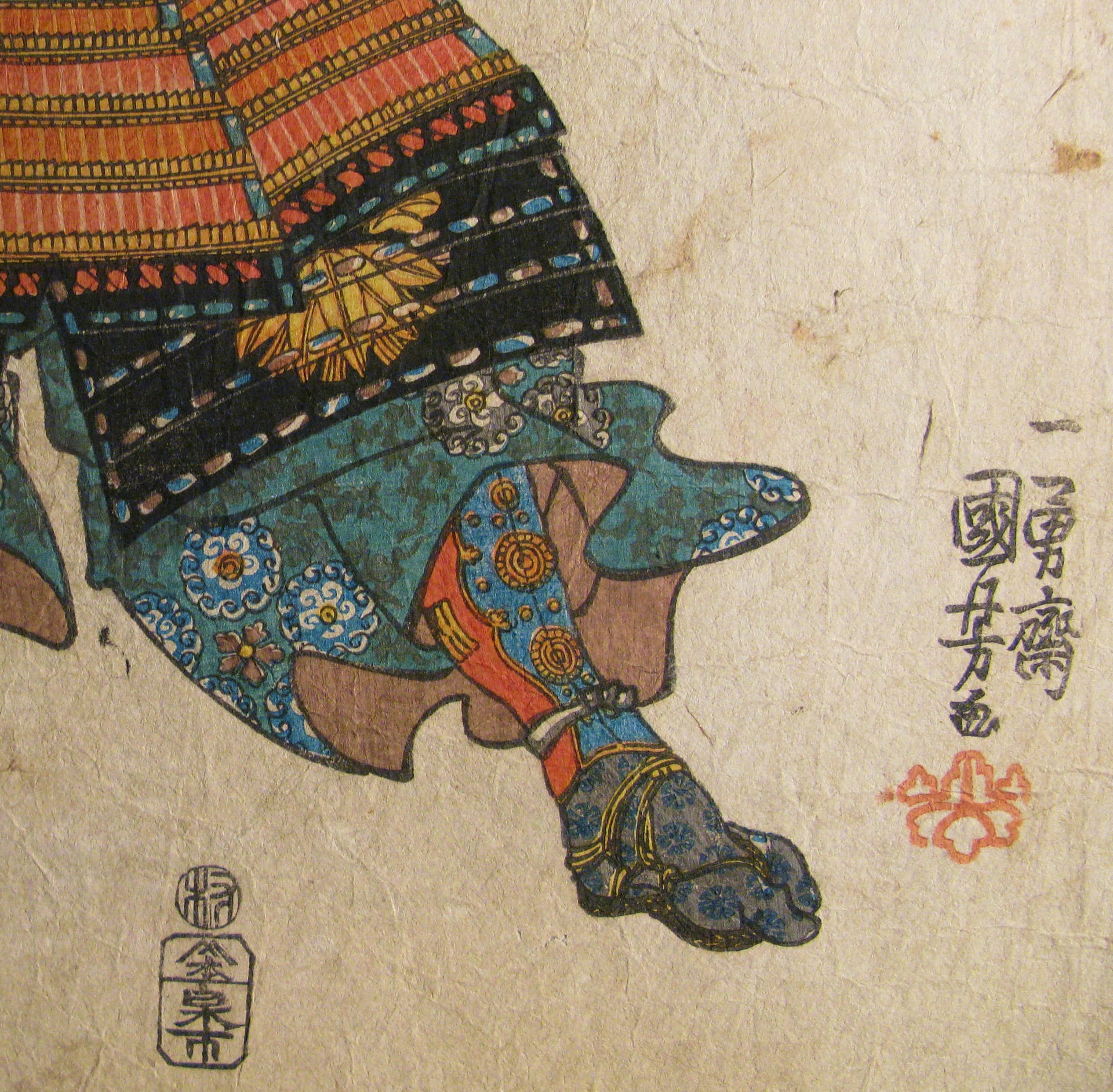
Signature: Ichiyusai Kuniyoshi ga and kiri seal
Date: 1843-44
Cens: Mura
Publisher: Izumiya Ichibei
Size: Oban tate-e,
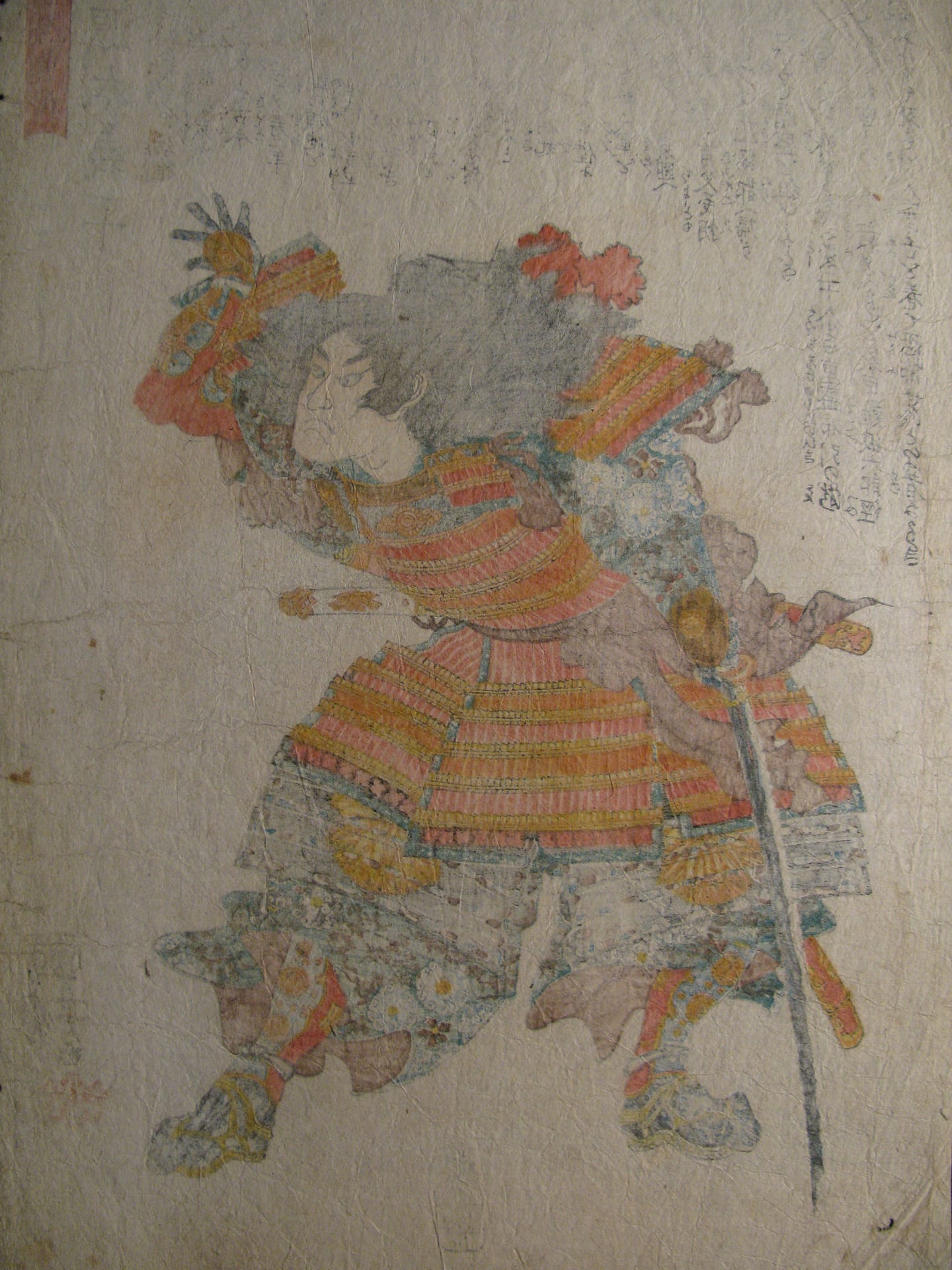
Condition: Very good impression, good colour and fair condition, some marks, staining and creases.
Price: SOLD
The tale of the text
Genta Yoshihira was the eldest son of Minamoto no Yoshitomo the ‘Left Stable Master’ (court title Sama no Kami). As a child he was called Kamada no Kanja.
Fierce and unmatched in bravery, none in the world could equal him. Following his father Yoshitomo, he fought in the eastern provinces.
At the time of the Heiji Rebellion, he distinguished himself in battle in the capital, his exploits beyond compare. However, when his father was defeated and fled toward the east, Yoshihira accompanied him.
In the end he was captured and executed at the riverbed of Rokujō. Though still young in years, his fame for bravery spread far and wide.”
Historically
Minamoto no Yoshihira, “Kamakura no Akugenta” (d. 1160) was the eldest son of Minamoto no Yoshitomo and elder brother to figures including Minamoto no Yoritomo and Minamoto no Yoshitsune. He is a central figure in the Heiji Monogatari, where he is portrayed as the archetype of the fierce, precocious young warrior.
As a youth, Yoshihira led a sudden attack on his uncle Minamoto no Yoshikata. Personally killed him in a surprise assault. This act established his reputation and earned him the nickname “Akugenta” (the fierce or “dread” Genta).
During the Heiji rebellion, Yoshihira fought alongside his father against the rising power of Taira no Kiyomori. He distinguished himself in battle despite ultimate defeat. After the collapse of the Minamoto position he escaped, then returned to Kyoto in a bold assassination attempt on Kiyomori. The attempt failed; he was captured and executed (beheaded).
In war literature, Yoshihira is depicted as cool-headed yet violent. Exceptionally brave, even reckless. A tragic “might-have-been” figure—his death precedes the later rise of his brothers.