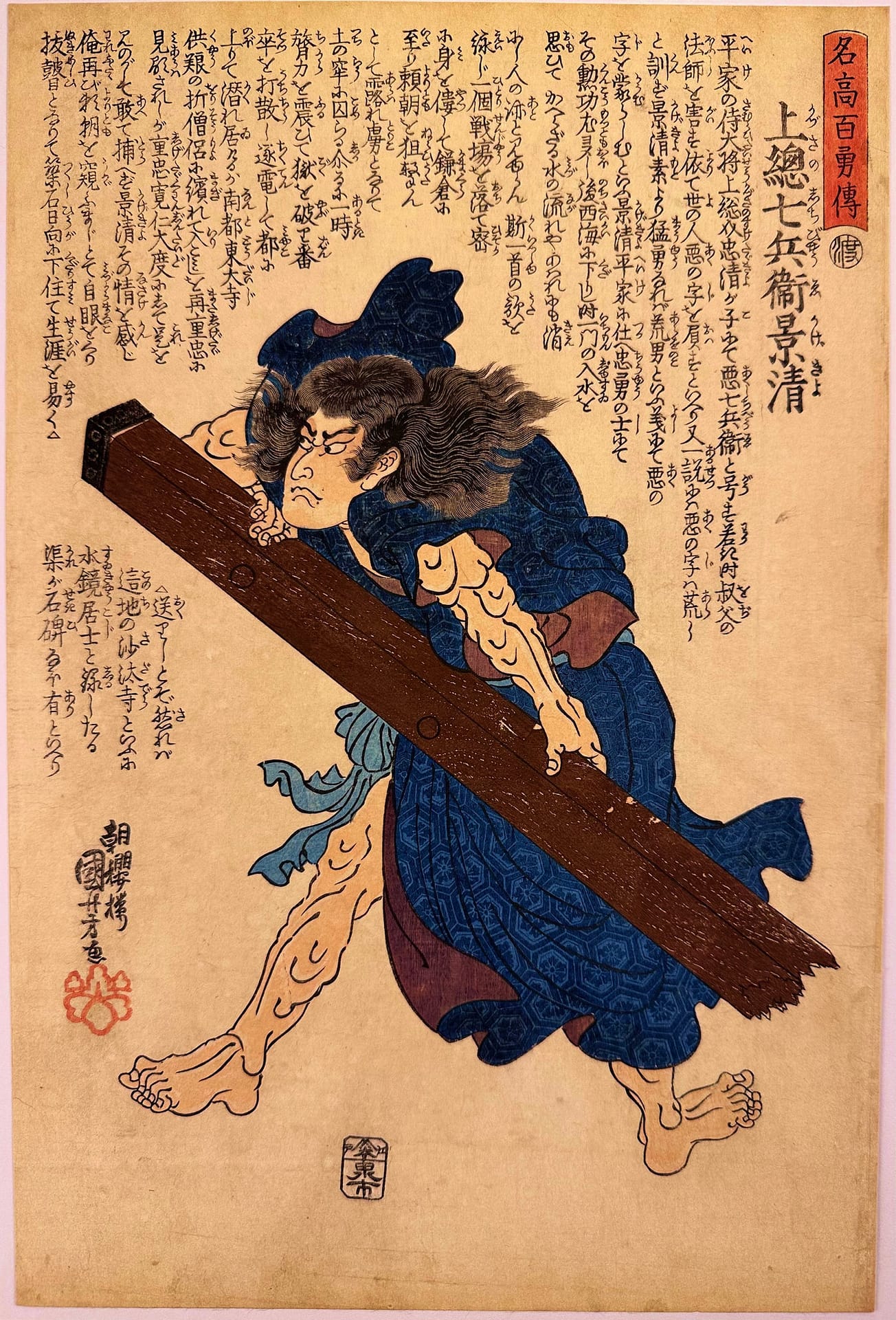
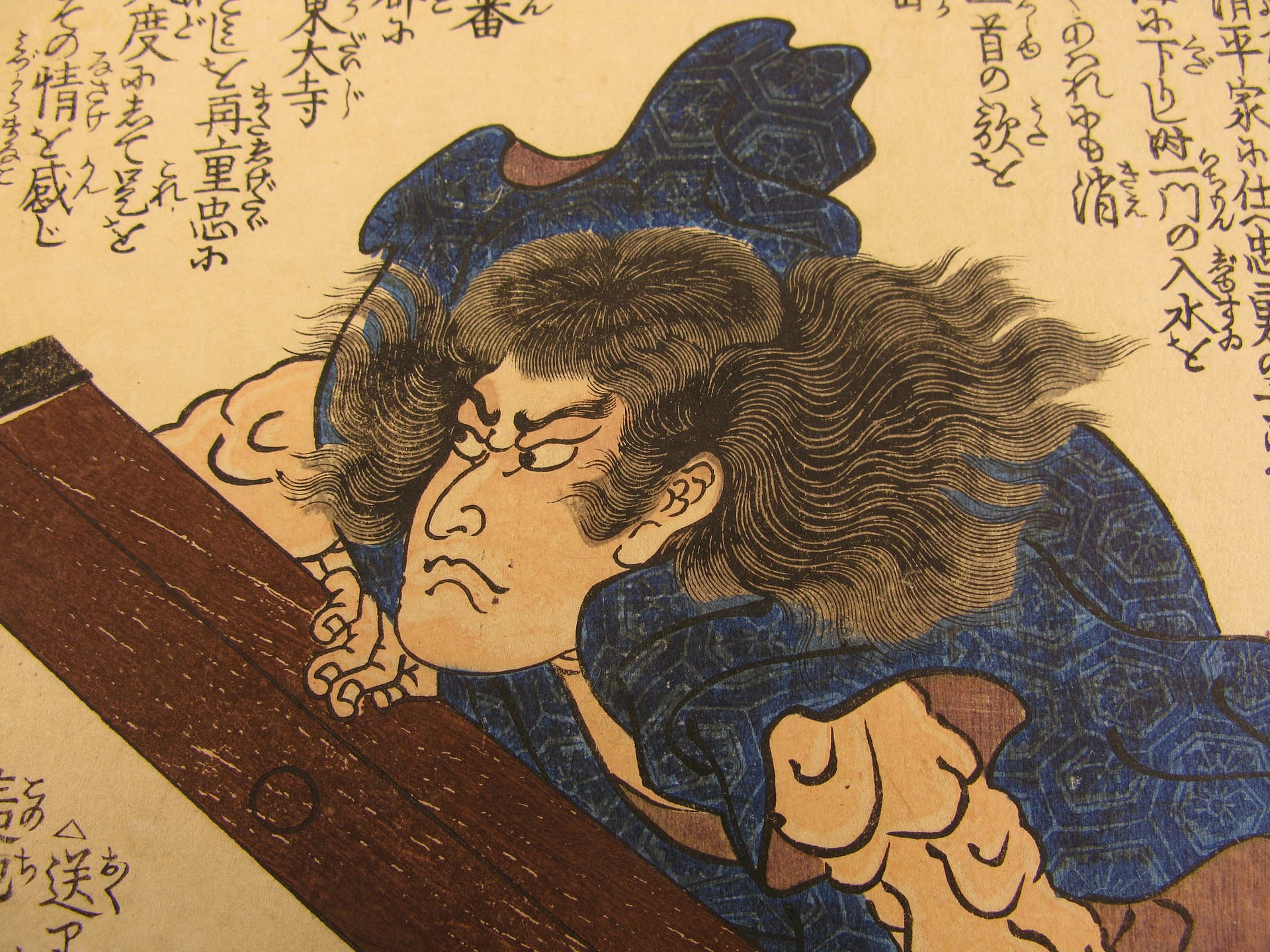
Subject: The fearsome Kadzusa no Shichibyôe Kagekiyo (上総七兵衛景清) wielding a broken beam as he resists arrest
Series: Meikô hyaku yû den (Stories of a hundred heroes of high renown)
Robinson: S31.4
Artist: Utagawa Kuniyoshi (1797-1861)
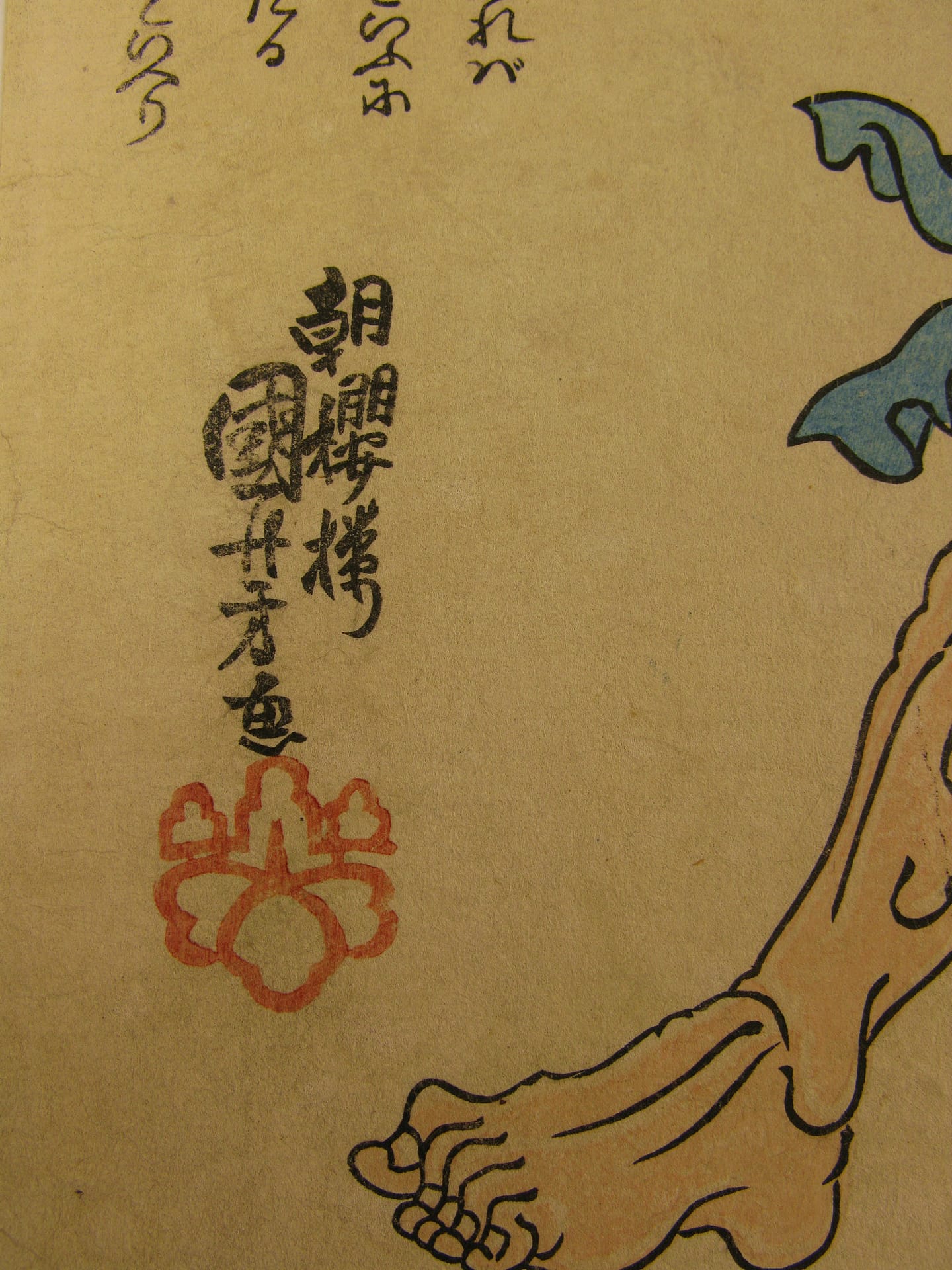
Signature: Ichiyusai Kuniyoshi ga and kiri seal
Date: 1843-44
Cens: Watari
Publisher: Izumiya Ichibei
Size: Oban tate-e,
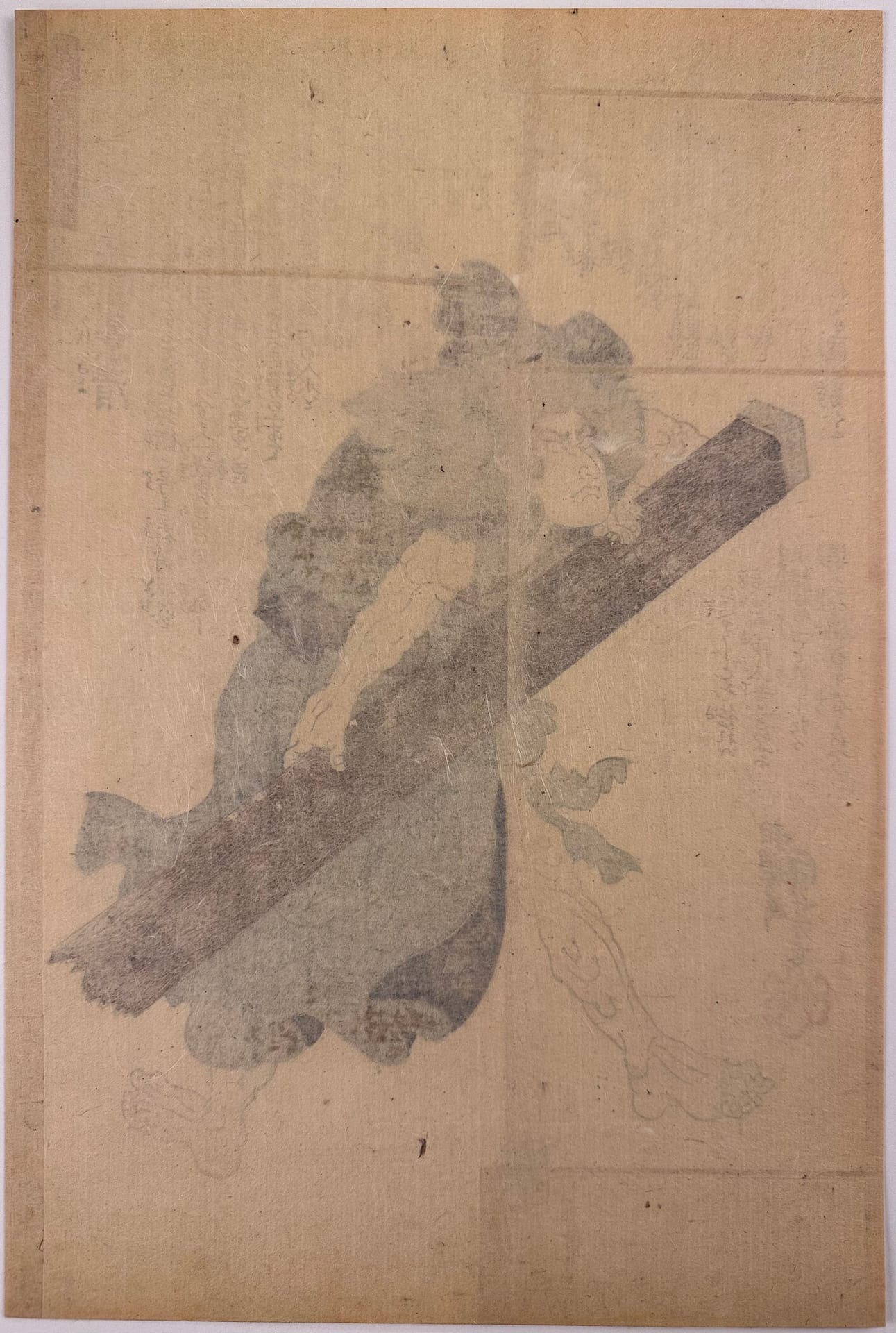
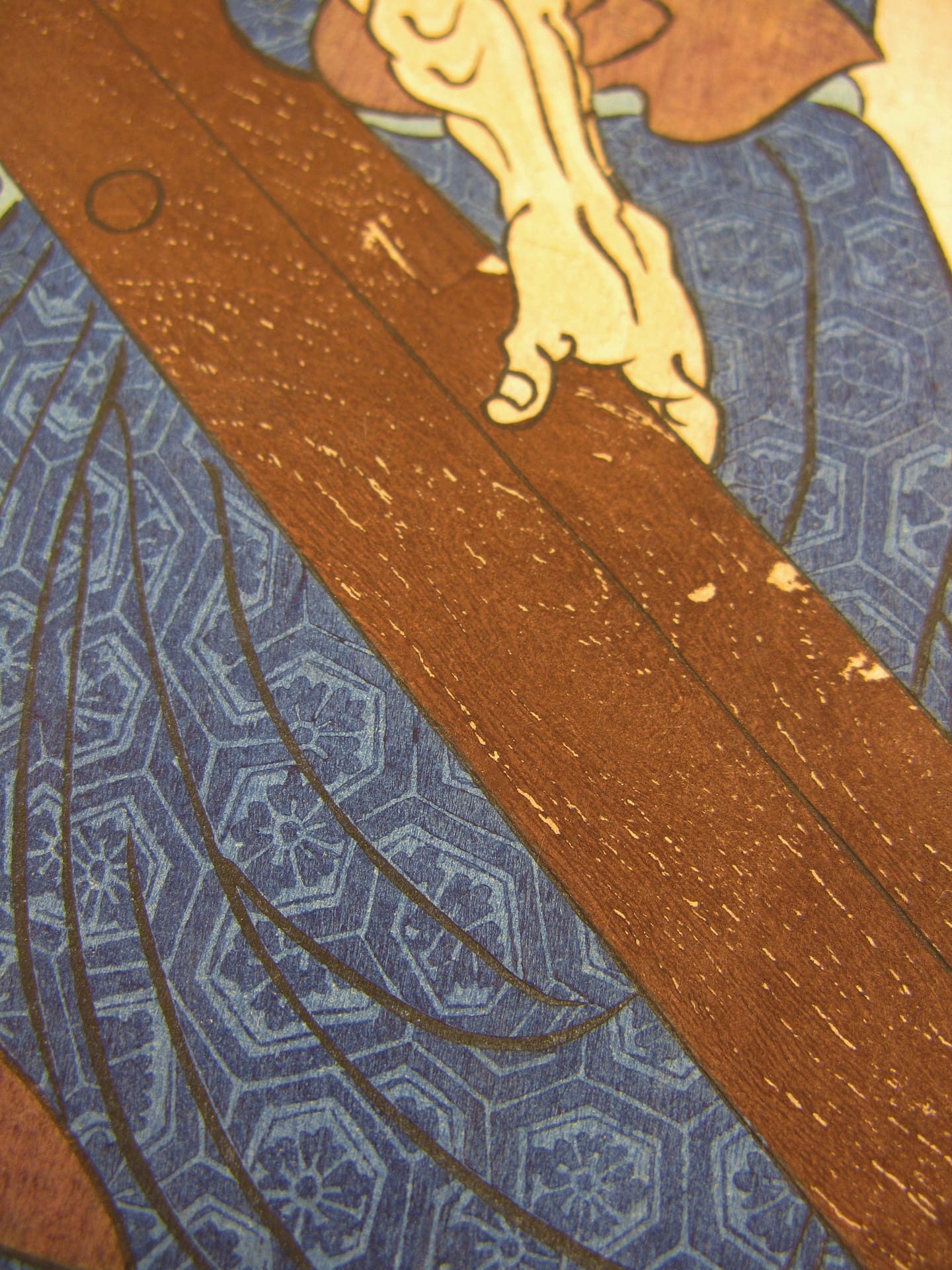
Condition: Good impression, colour and condition, some minor marks and staining. Retains Japanese backing. Note some clever wood grain within the beam.
Price: USD $350
The tale of the text
“Kazusa no Shichibyōe Kagekiyo, a commander of the Taira, took the guise of a monk and lived in concealment, and was widely known by the name ‘Akushichibyōe’ (the ‘fearsome’ Shichibyōe).
From the outset Kagekiyo was a man of fierce bravery; those who observed his movements were struck with fear.
Through the strength of a single man he fought in many battles, greatly troubling Yoritomo, and even pressing toward Kamakura.”
“At this time, in Kamakura, during the dedication ceremony of Tōdai-ji, Kagekiyo secretly infiltrated the place with the intent of assassinating Yoritomo. However, his luck had run out; the plot was discovered, and he was ultimately seized.
At that moment he displayed immense strength, throwing aside several men and unleashing his ferocity. Yet in the end he was subdued, captured, and executed at Kamakura.”
Historically
Kagekiyo emerges from the late Heian–Genpei War milieu (c. 1180–1185) as a warrior aligned with the defeated Taira (Heike) clan. His epithet “Akushichibyōe” (悪七兵衛 )—often misunderstood as “evil”—more accurately conveys ferocity or formidable strength, marking him as one of the most feared fighters of the Heike.
His historical footprint is elusive; much of what survives is mediated through war tales such as the Heike monogatari, and later theatrical traditions (Noh and Kabuki), where his persona expands into something almost archetypal.
Kagekiyo’s most famous exploit occurs at the Battle of Yashima, where he is said to have engaged a Genji warrior at close quarters, seized and tore away the helmet neck-guard (shikoro) of his opponent in combat. This episode became emblematic of his raw physical power and battlefield tenacity.
Later traditions amplify his legend further, portraying daring escape attempts from captivity, repeated almost obsessive attempts at revenge against the Minamoto (Genji), and superhuman endurance and strength in Kabuki dramatizations.
Following the Genpei war and the fall of the Taira, Kagekiyo is captured, exiled to Hyūga, and ultimately blinded and reduced to poverty, he becomes a tragic figure reflecting the impermanence of warrior fortune.
In Noh and later literature, he is transformed into a deeply human figure—a once-great warrior lingering in obscurity, sustained only by memory and resentment.