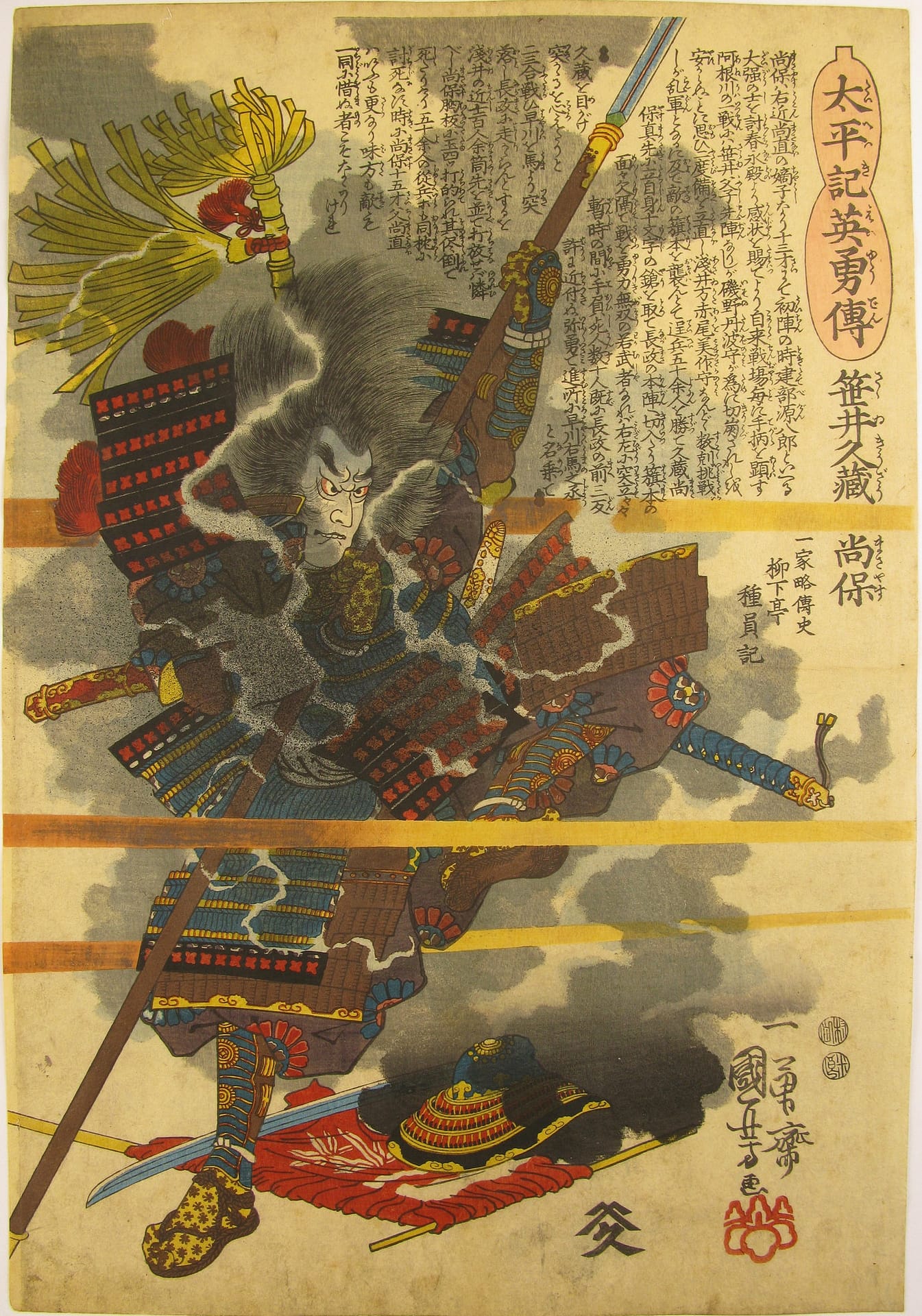
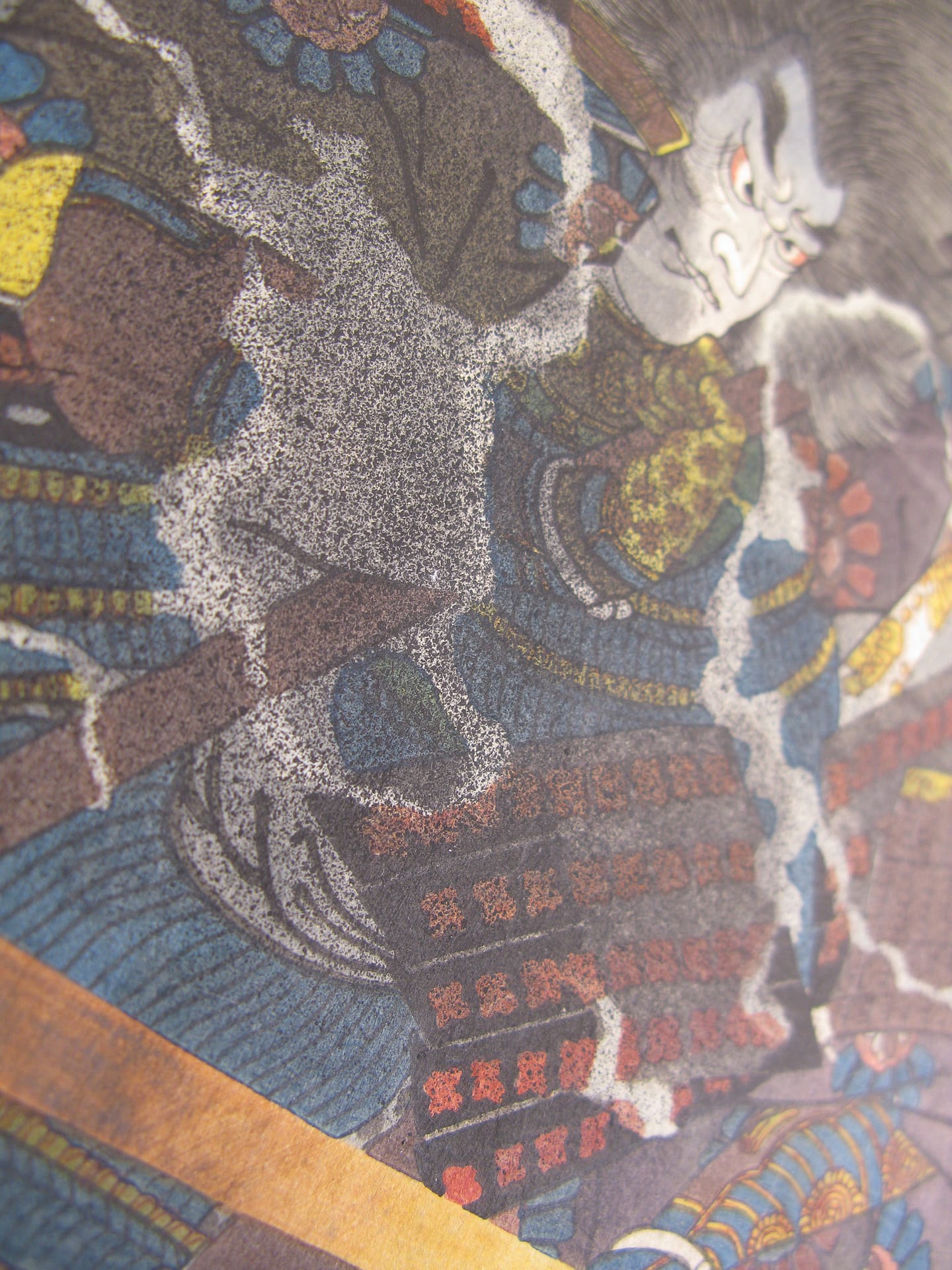
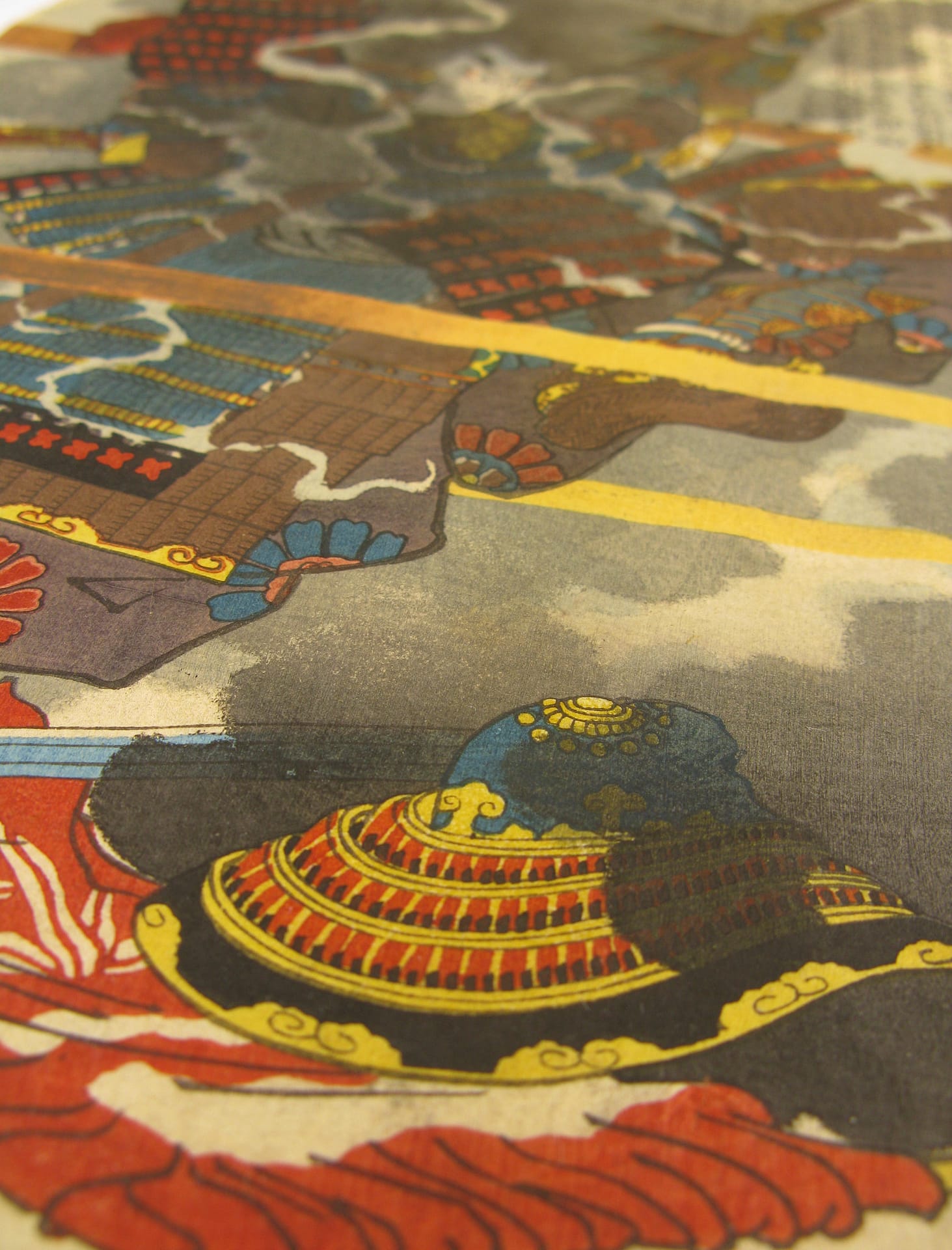
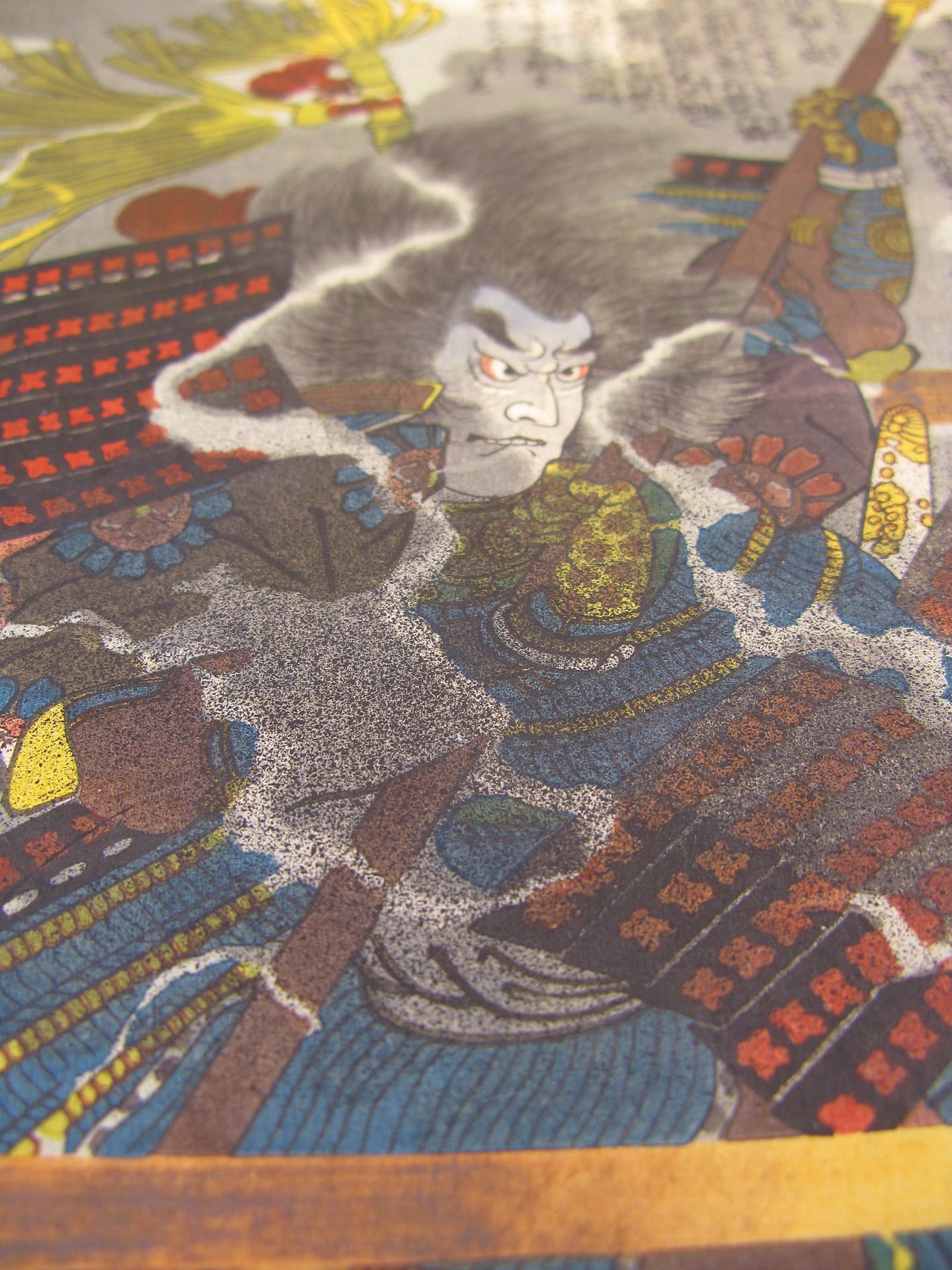
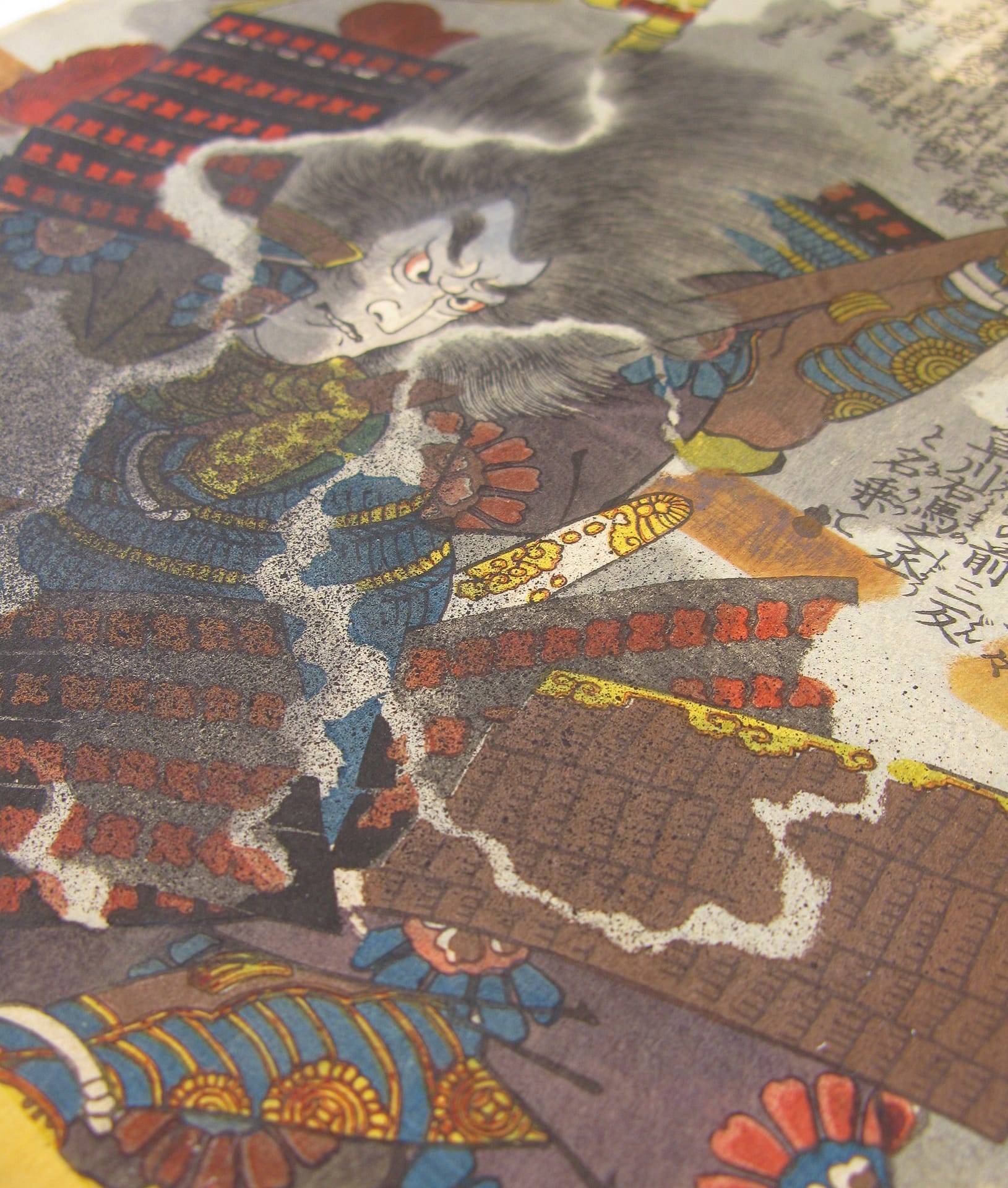
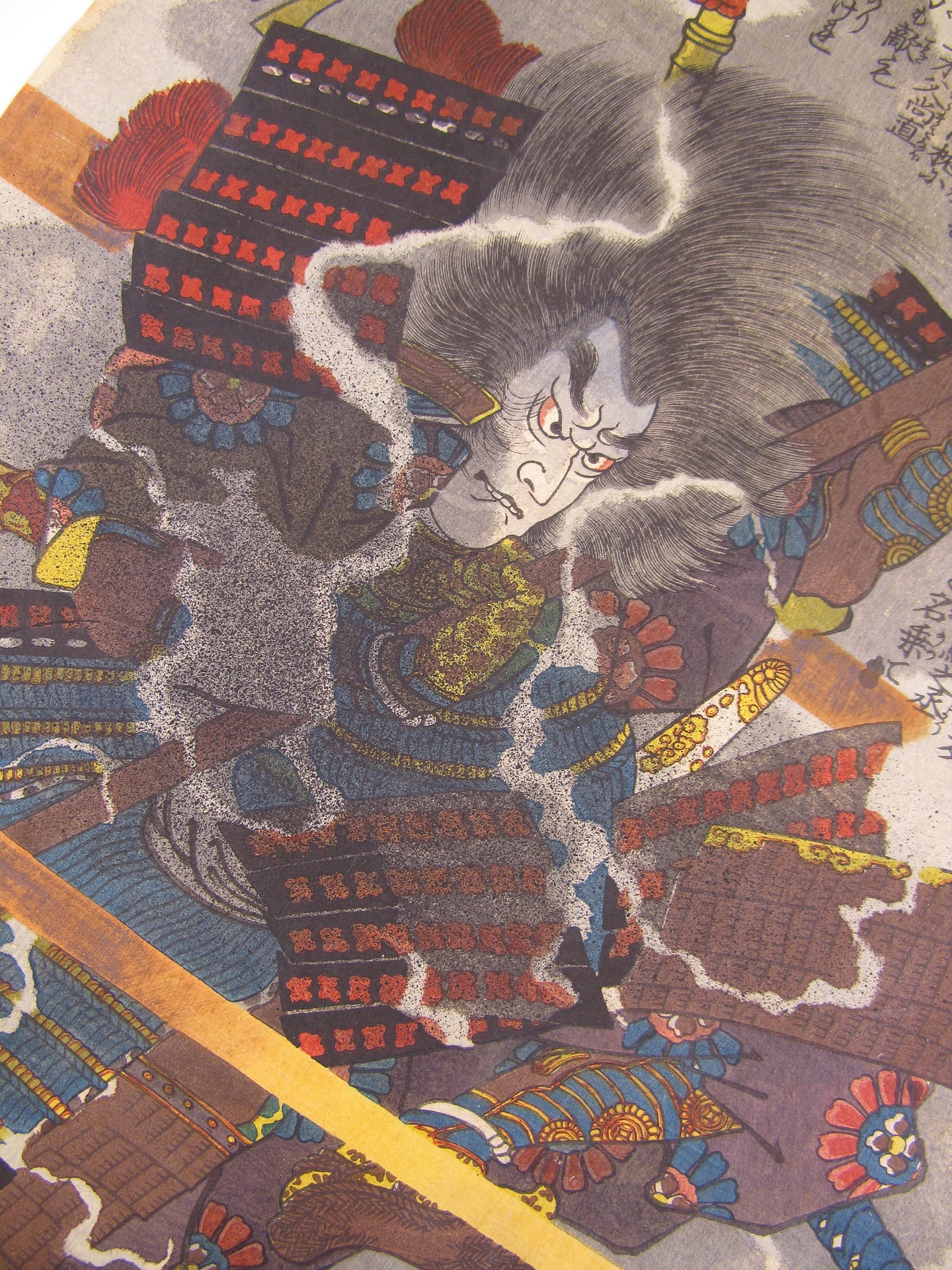
Subject: Sasai Kyûzô Masayasu, enveloped in smoke by a volley of musket fire at the Battle of the Anegawa in 1570. His sword, standard and helmet on the ground hint at his desperation and impending defeat. Widely considered the best composition in the series
Series: Taiheiki eiyû den, Heroes of the Grand Pacification
Print No: 12
Artist: Utagawa Kuniyoshi (1797-1861)
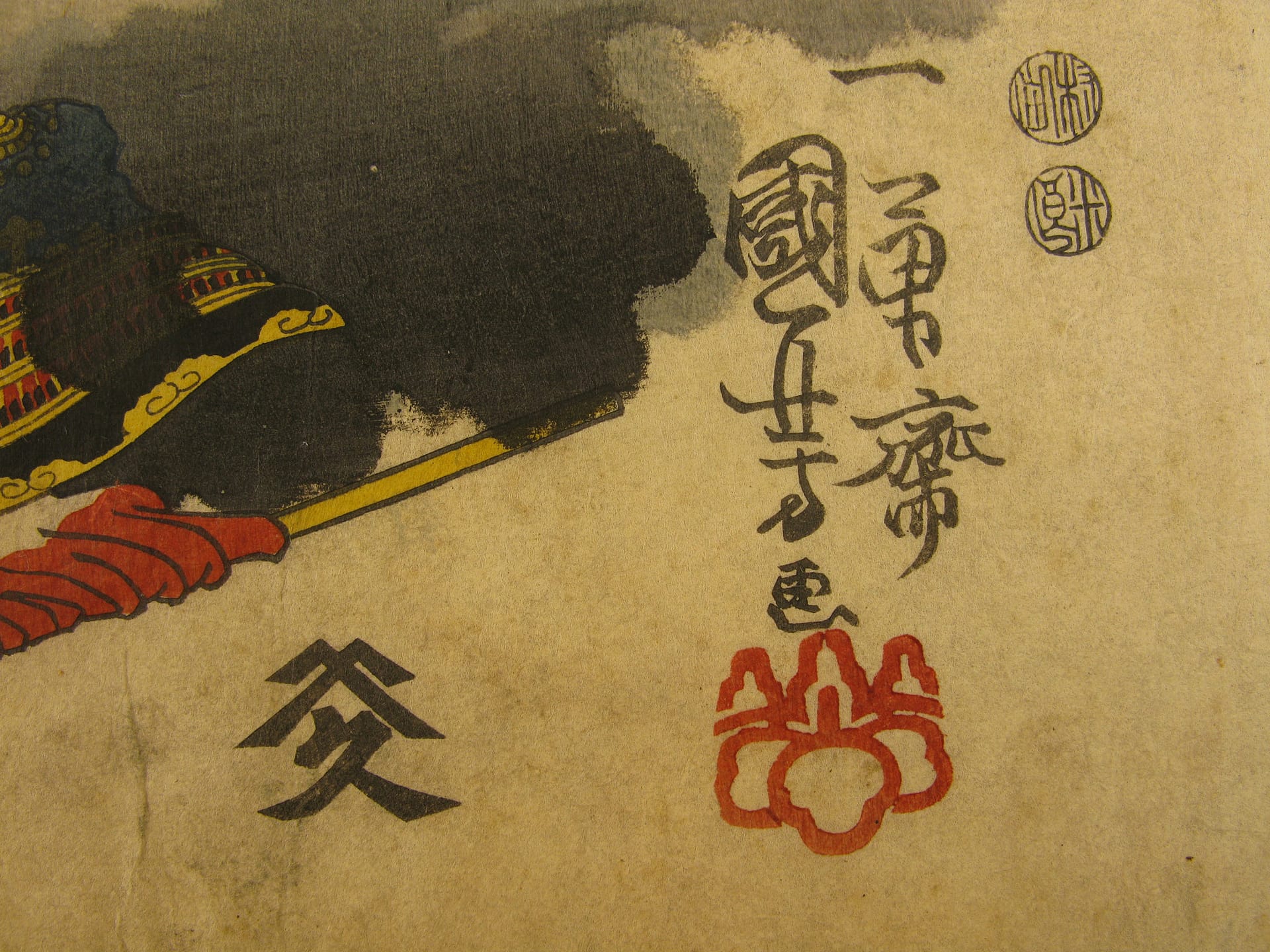
Signature: Ichiyusai Kuniyoshi ga and kiri seal
Date: 1846 – 1847
Cens: Mera-Murata
Publisher: Yamamoto-ya Heikichi
Size: Oban tate-e,
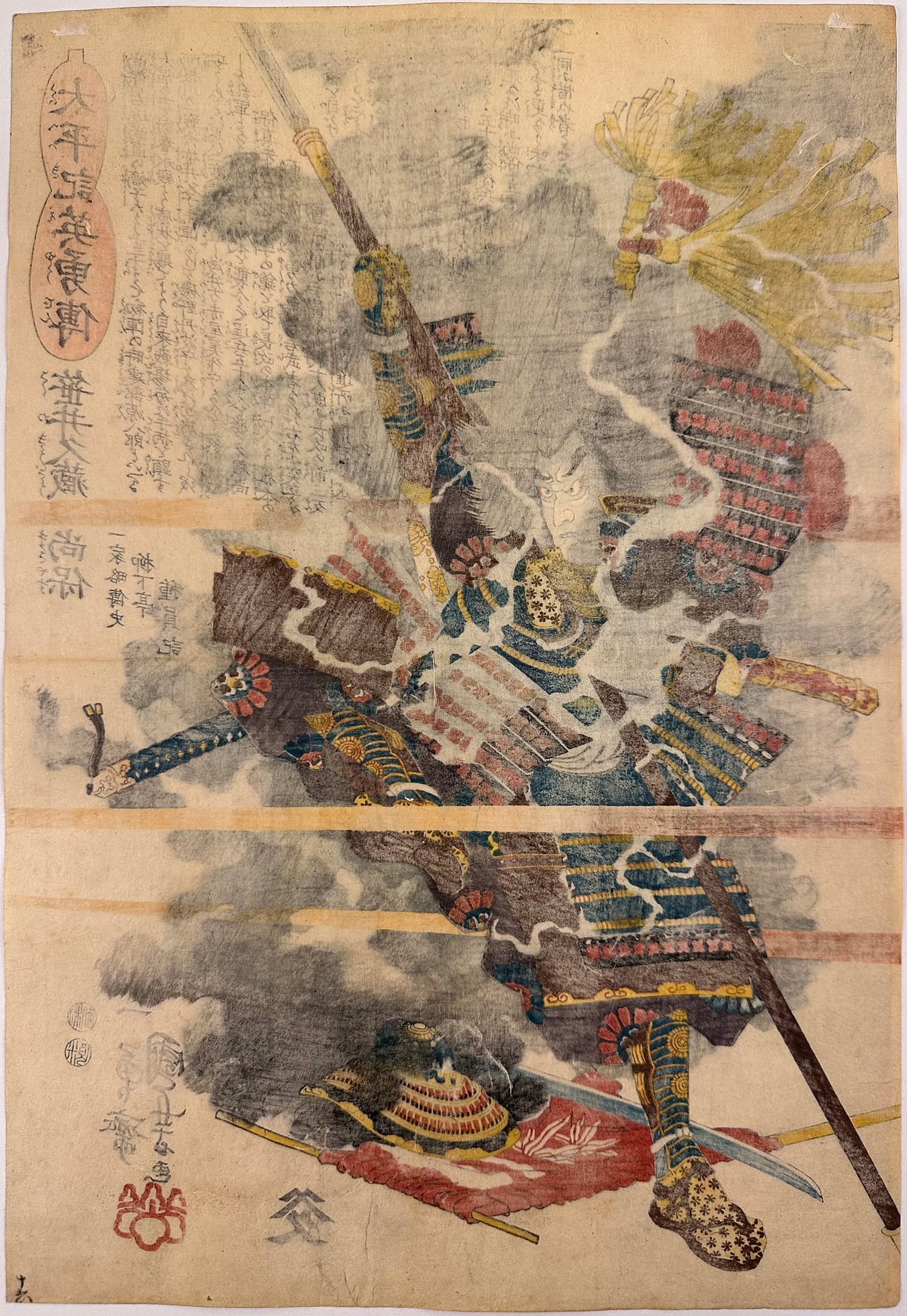
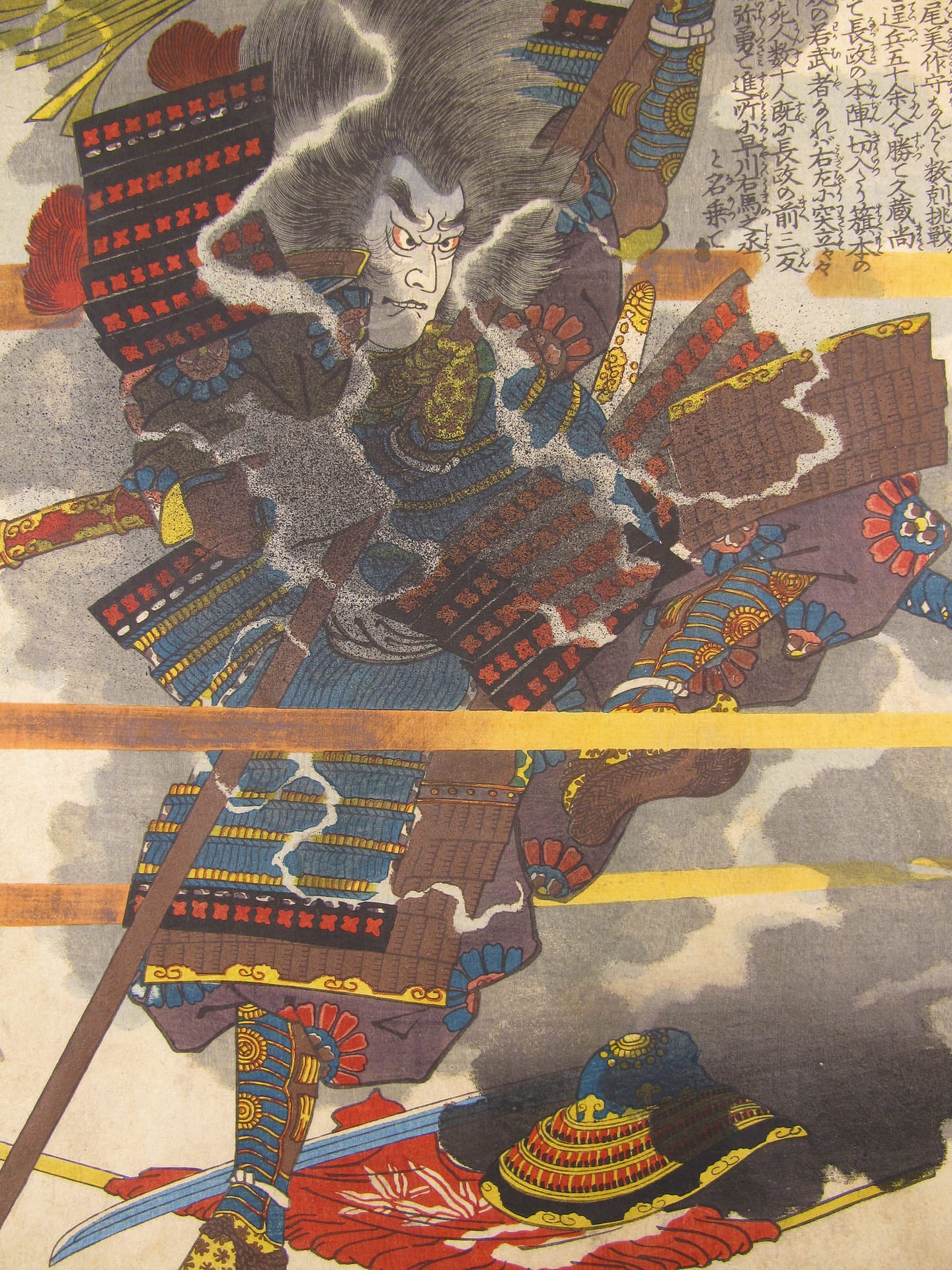
Condition: Fine early impression, colour and condition. Rarely seen hand applied ink speckling, adding dramatic depth to the ash, smoke and explosive effects flying around him. The smoke trails also appear much whiter and softer edged than other versions making me lean towards hand applied gofun over the top of some of the smoke trails. Un-numbered state
Price: Not for sale at this stage
References: Robinson S62.36;
Historical true name: Sakai Kyûzô Narishige
The tale of the print – Sasai Kyûzô Masayasu (笹井久藏尚保), the teenage yari whirlwind who charged an army, terrified everyone, and still didn’t make it to his sixteenth birthday
Masayasu was the kind of teenager who makes every other thirteen year old look like they’re still figuring out how to hold a broom. In his very first battle, he took down the famously strong Tatebe Genpachirō, earning himself a glowing commendation from Lord Harunaga — basically the medieval Japanese equivalent of getting a gold star and a scholarship on the same day.
From then on, Masayasu didn’t just fight — he excelled. Every battlefield became his personal talent show.
During the Battle of Anegawa, things were going badly for the Sasai clan. Their vanguard had been smashed by Isono Tanba no kami, and morale was sinking faster than a dropped kabuto. Then Akao Mimasaka no kami, a warrior on a hot streak, charged in and turned the field into a chaotic free for all.
Masayasu took one look at this mess and decided the best solution was: “Fine. I’ll just attack the enemy headquarters myself.”
So, with fifty extremely brave (or extremely confused) soldiers, he charged straight into Asai Nagamasa’s command center. Armed with a jumonji yari — a cross bladed spear perfect for dramatic flourishes — he carved through the enemy like a teenager who’d been told chores build character. In minutes, he’d cut down dozens.
He got within three tan (roughly nine meters) of Nagamasa himself — practically close enough to critique his armor choices — when Hayakawa Umanojō leapt in, shouting his name like a man who really wanted credit for what he was about to attempt.
The two clashed repeatedly, but Masayasu knocked Hayakawa clean off his horse and prepared to finish the job. That’s when over one hundred Asai gunners lined up, aimed, and fired.
Four bullets struck Masayasu in the chest. He fell instantly, and many of his fifty companions died in the same volley. He was fifteen years old.
His death hit everyone hard — allies, enemies, and especially his father, Masanao, who had to watch the brightest young warrior of the age burn out before he ever had the chance to grow up.
Masayasu’s legend lived on not because he survived, but because he fought like someone who believed he absolutely would.
For an excellent analysis of the prints and series, I would encourage you to get the book: Heroes of the grand pacification Kuniyoshji’s Taiheiki eiyu den by Elena Varshavskaya