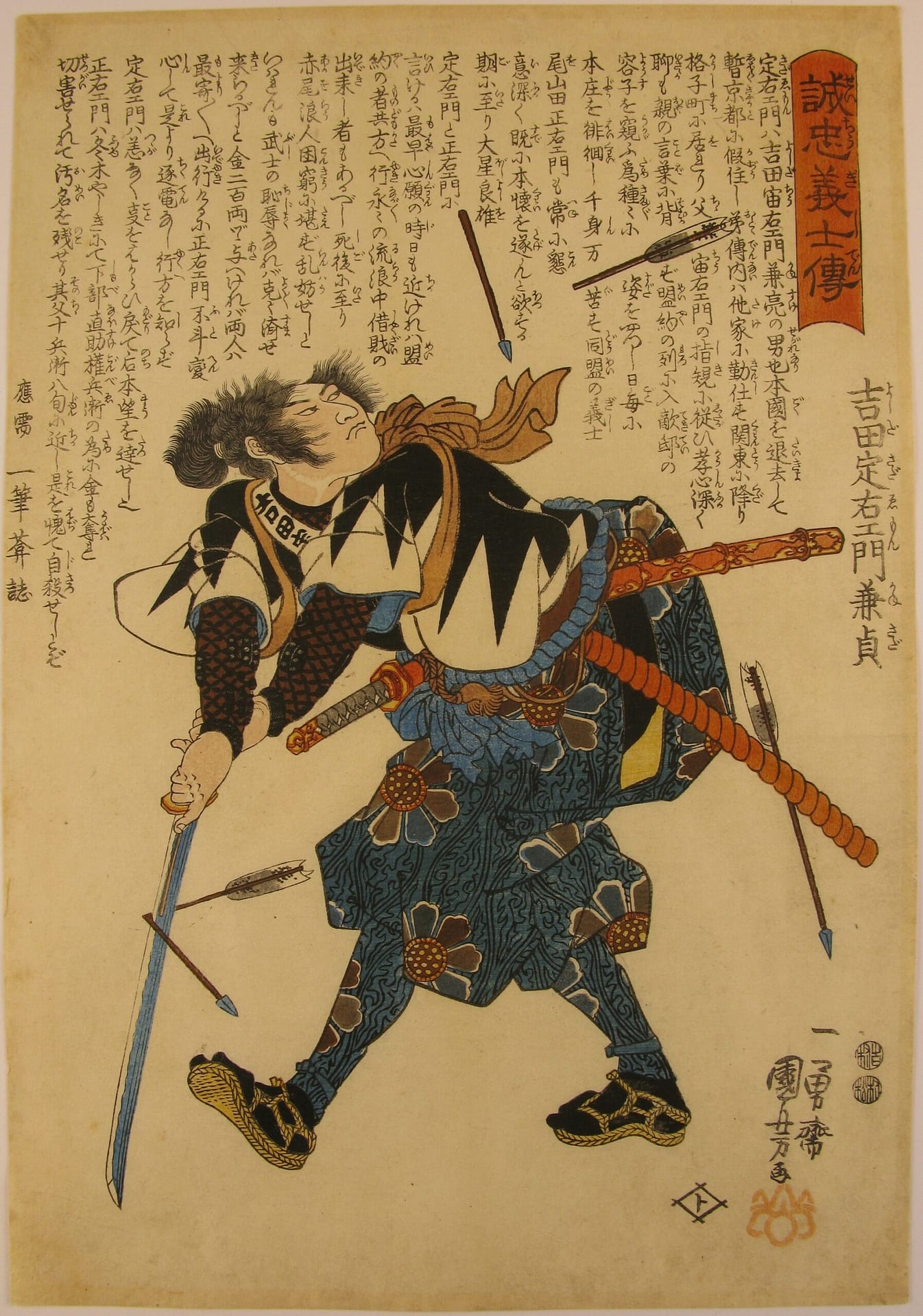
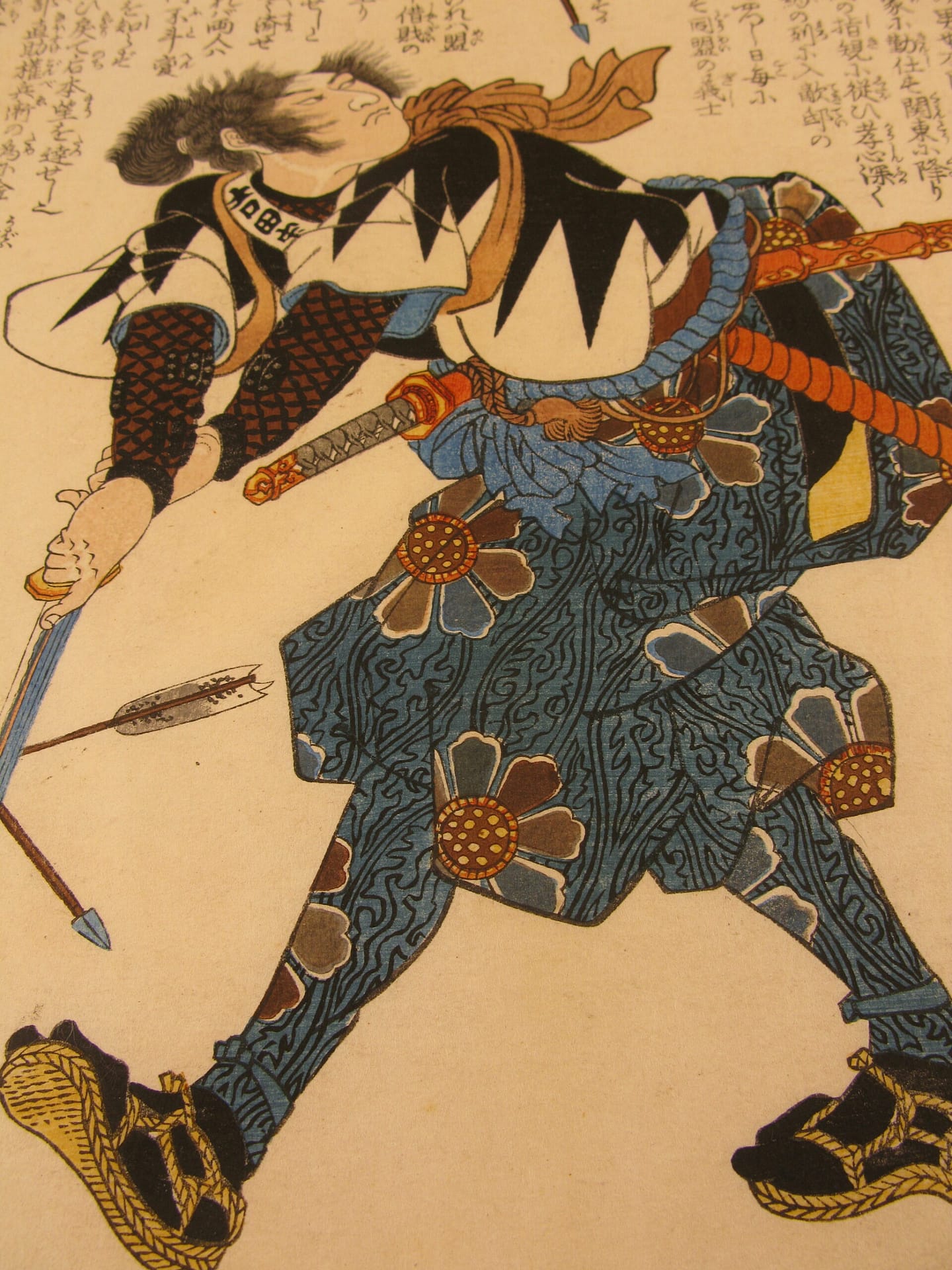
Subject: Yoshida Sadaemon Kanesada (kabuki name) – fending off arrows in flight
Series: Seichu gishi den (Stories of the true loyalty of the faithful samurai)
Print No: 1.6 (un-numbered state)
Artist: Utagawa Kuniyoshi (1797-1861)
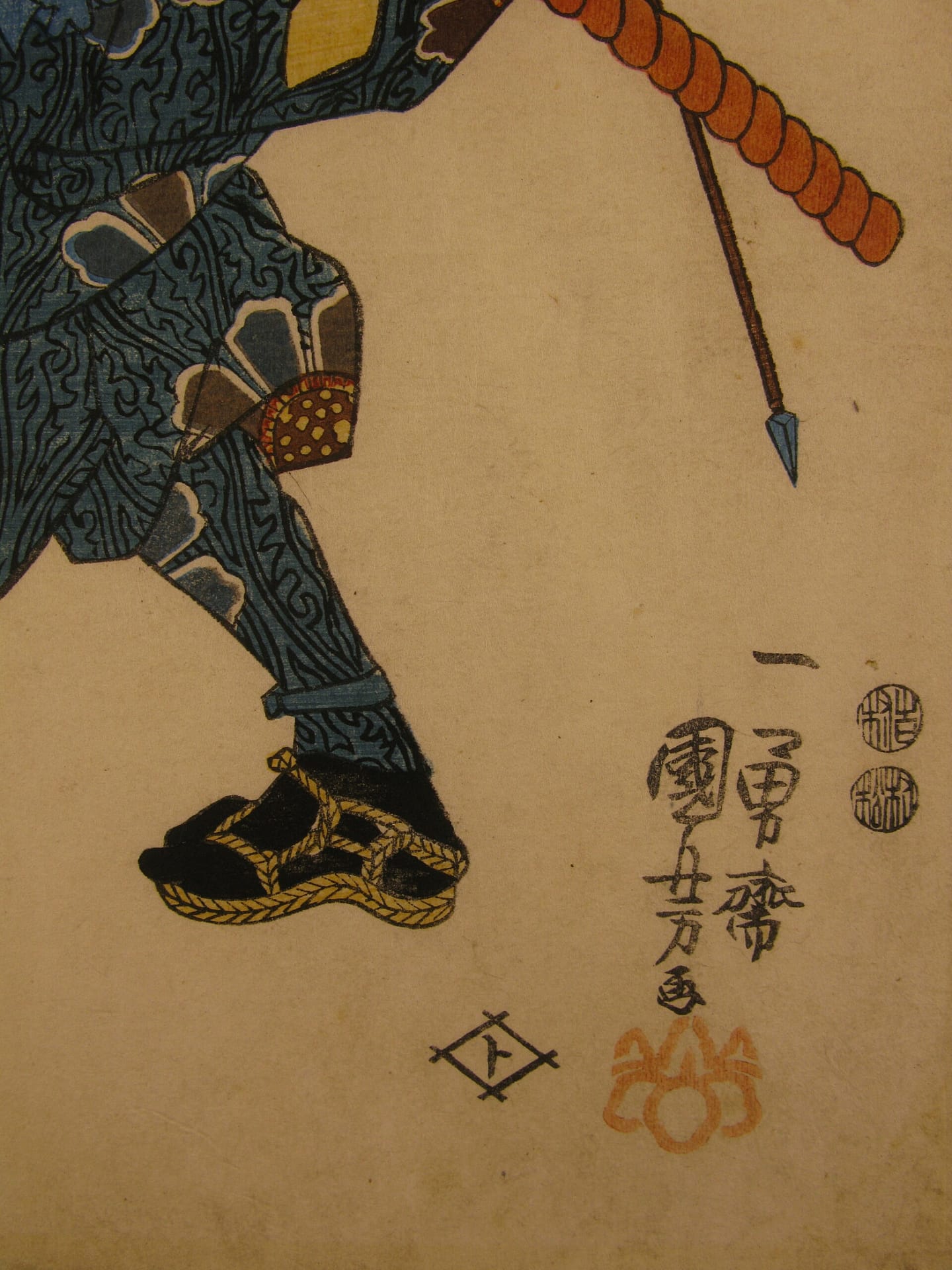
Signature: Ichiyusai Kuniyoshi ga and kiri seal
Date: 1847-48
Cens: Yoshimura – Muramatsu
Publisher: Ebi-ya Rinnosuke
Size: Oban tate-e, 37.6 x 25.4 cm
Condition: Fine impression, very good colour and condition, some marks and staining
Price: TBC
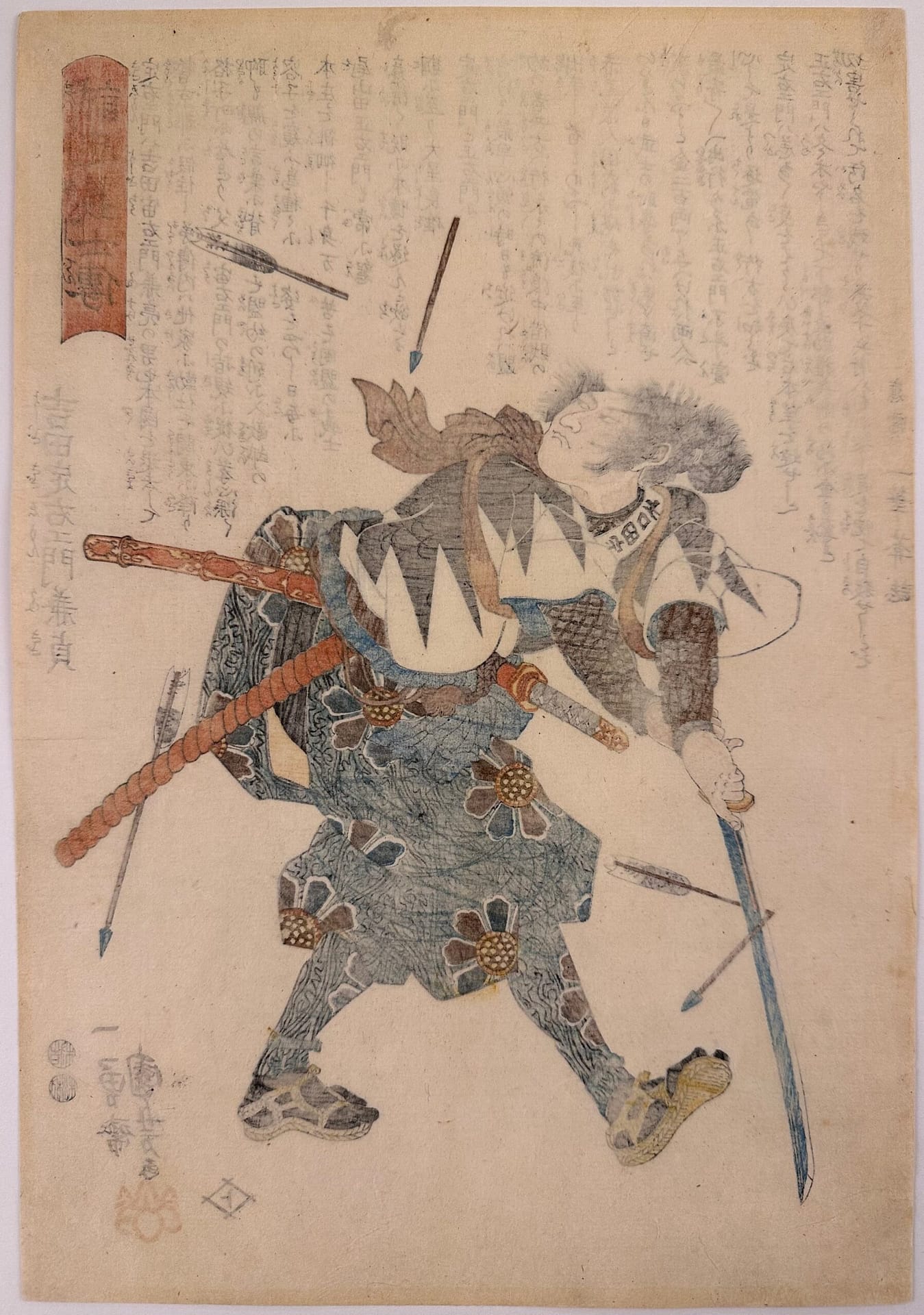
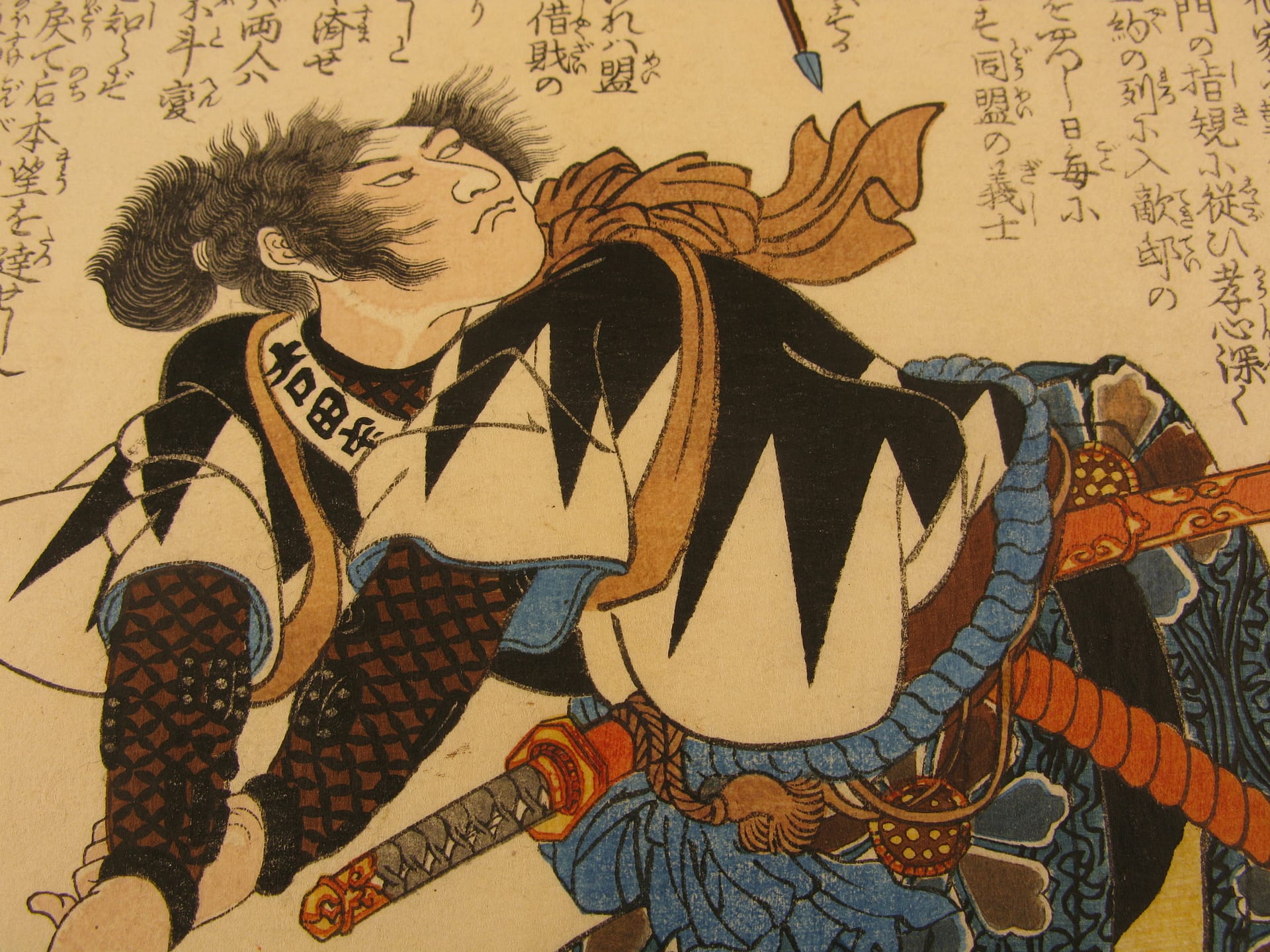
True name: Yoshida Sawa-emon Kanesada (吉田 沢右衛門 兼貞)
Age: 29
Katana attribution: Mizuta, length 2 shaku 9 sun
Wakizashi attribution: Mizuta, length 1 shaku 8 sun + long yari
Tale of the text – with a little twist
Sadaemon, son of Yoshida Chuemon Kanesuke, had a life that looked like a travel itinerary written by someone who couldn’t sit still. First Banshū, then Kyoto to hang out with his brother Dennai, then off to the Kantō where he settled in Kojimachi and spent quality time with his dad — who apparently doubled as his personal samurai tutor.
Once he joined the vendetta crew, Sadaemon became a full‑time undercover operative. Every day he put on a new disguise and wandered around Honjo like a very committed actor preparing for a role. His main partner in espionage was Oyamada Shoemon, who probably spent more time with him than anyone else.
As the big attack approached, Oboshi Yoshio summoned the two of them for a very practical samurai financial meeting. He basically said:
“Listen, once we’re all dead or famous, I don’t want people saying we skipped out on our debts. That’s not the legacy we’re going for here. Here’s 200 ryō each — go pay off your lenders before we go commit honourable mayhem.”
Sadaemon took the money and ran off to settle his accounts like a responsible adult.
Shoemon, however, took the money and ran off… in the other direction. He vanished so fast you’d think someone yelled “free dumplings and sake.” Apparently the whole “loyalty unto death” thing didn’t quite stick for him.
Sadaemon stayed, fought bravely, and became part of the victorious vendetta. Shoemon, on the other hand, reappeared later in the worst way possible — getting killed during a robbery at Fuyuki mansion. Not exactly the heroic ending he might’ve hoped for. His father Jūbei, devastated and ashamed, took his own life at nearly eighty, proving that Shoemon’s bad decisions had a very long reach.
For an accurate translation of the print text, I would encourage you to get the book: Kuniyoshi -The faithful samurai by David R Weinberg.