Senbon Zakura – Act 2: Scene of Funaikusa
Title: Senbon Zakura Act 2; Scene of Funaikusa (千本桜二段目船軍の場), Yoshitsune and the thousand cherry trees – Act 2
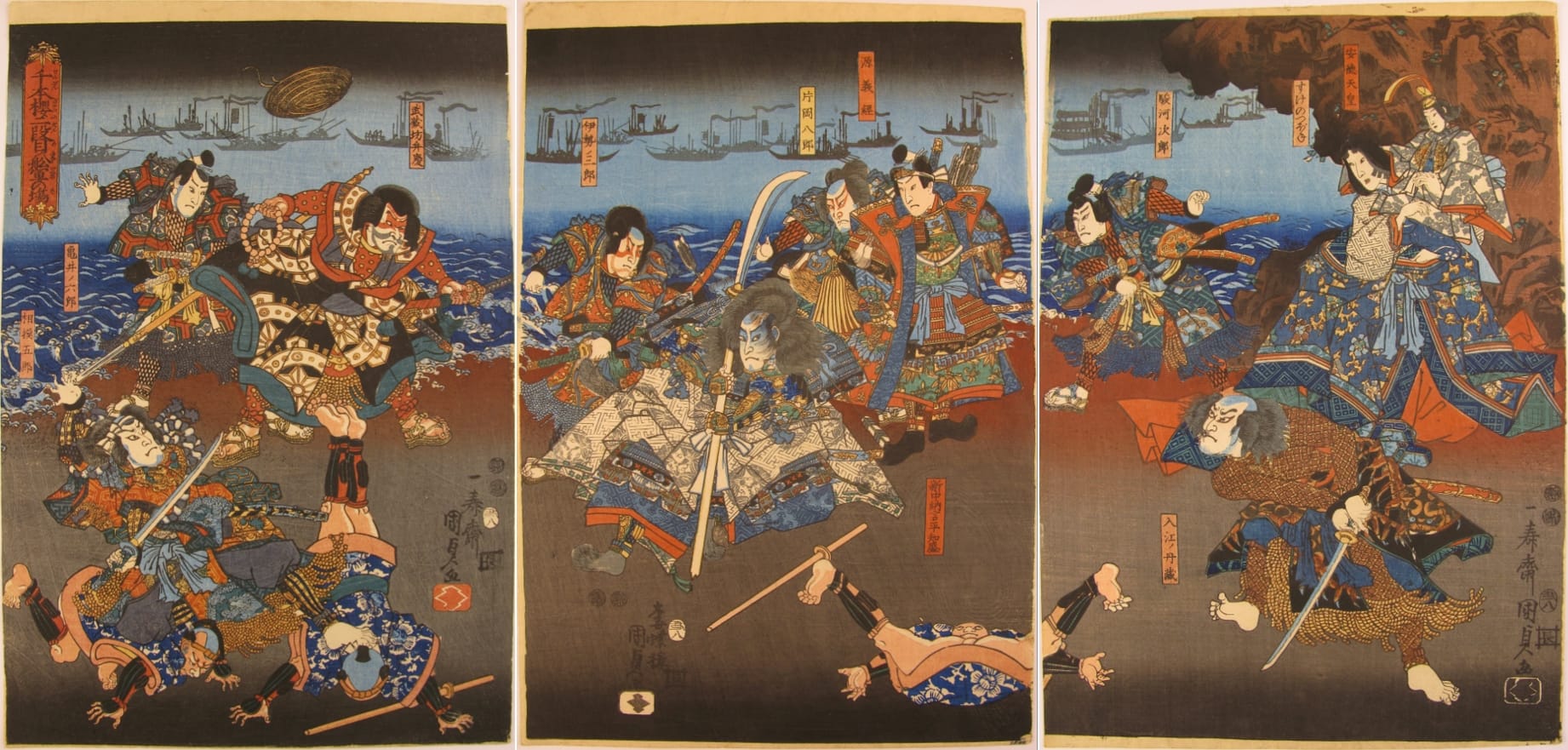
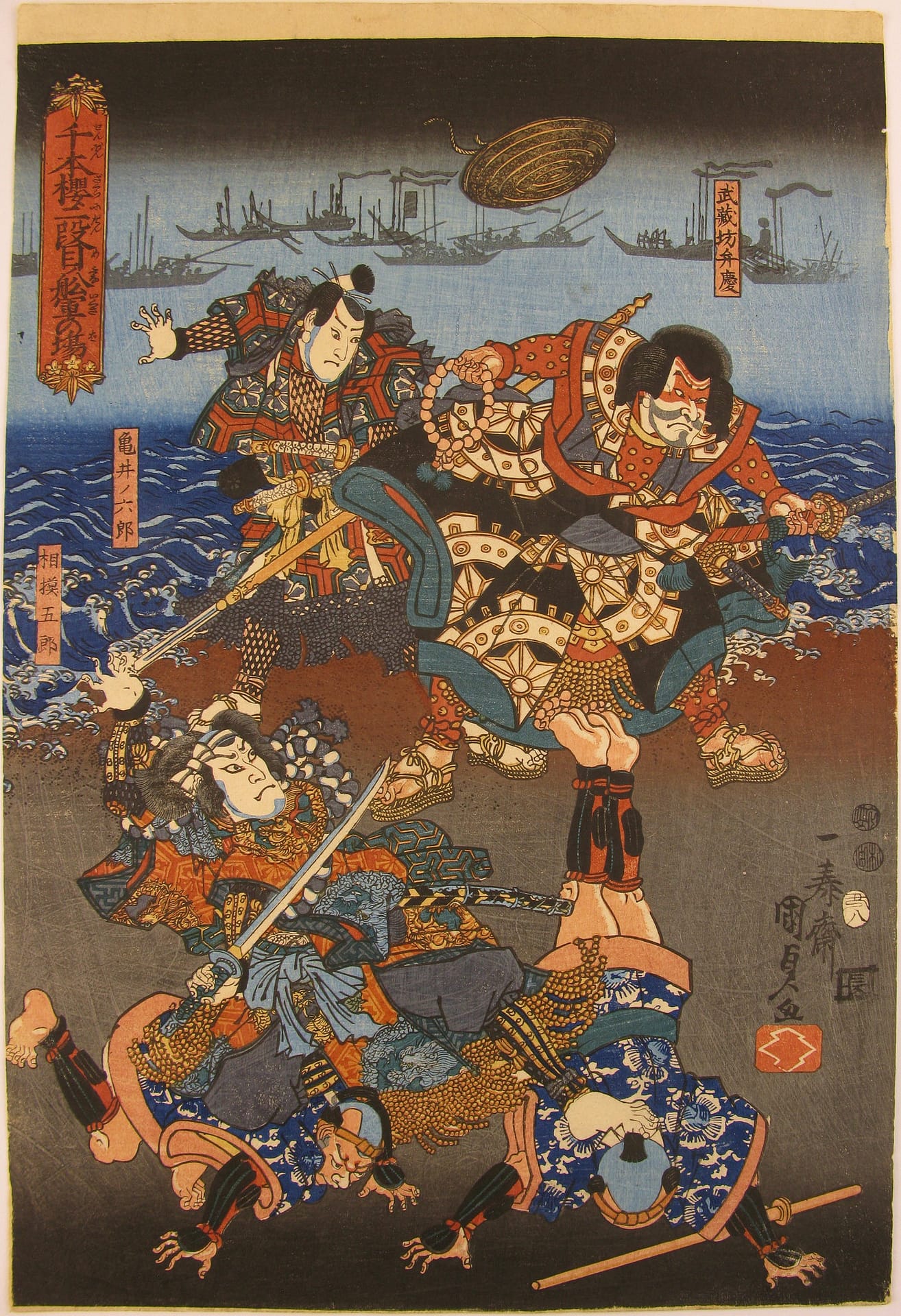
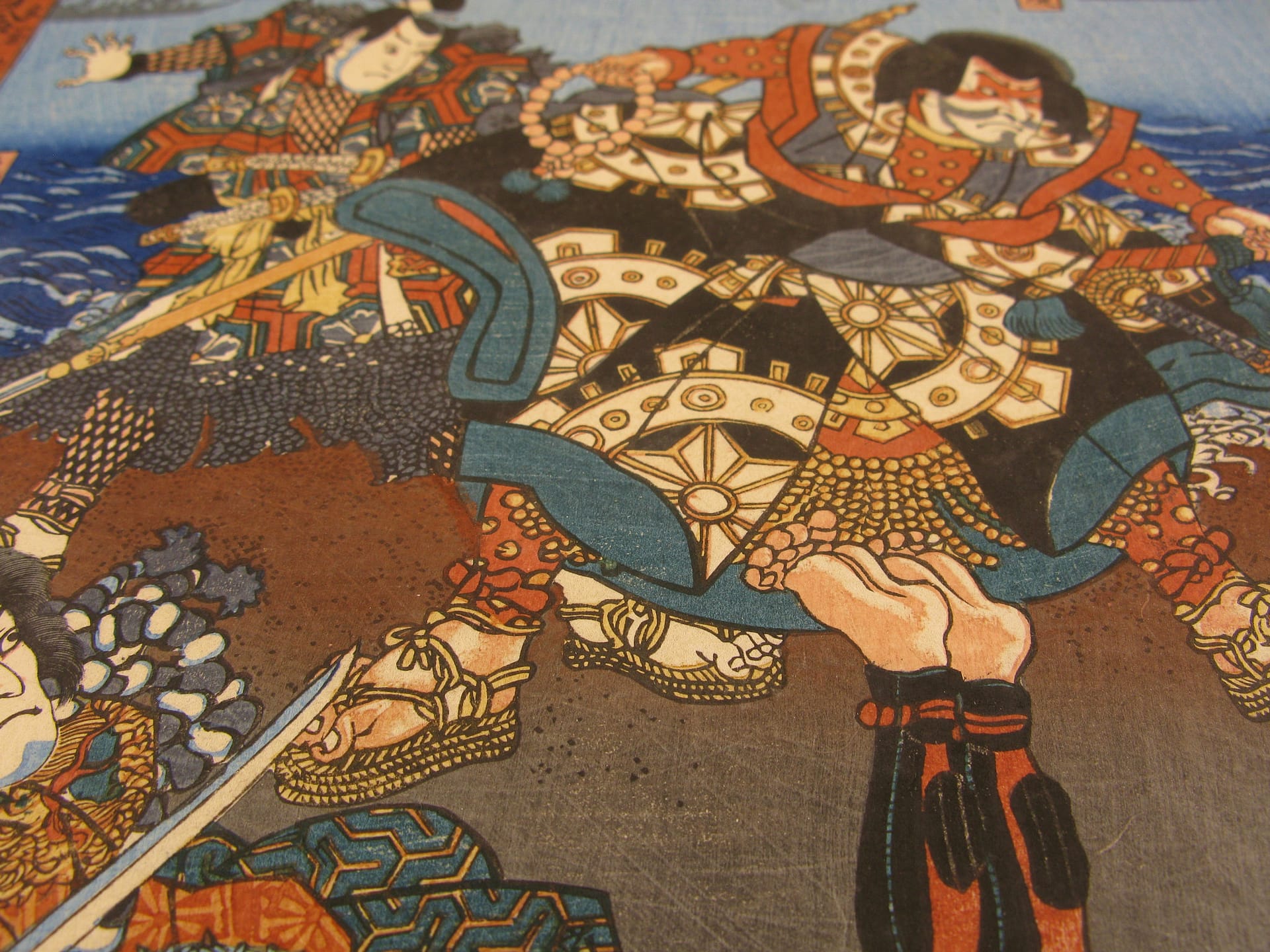
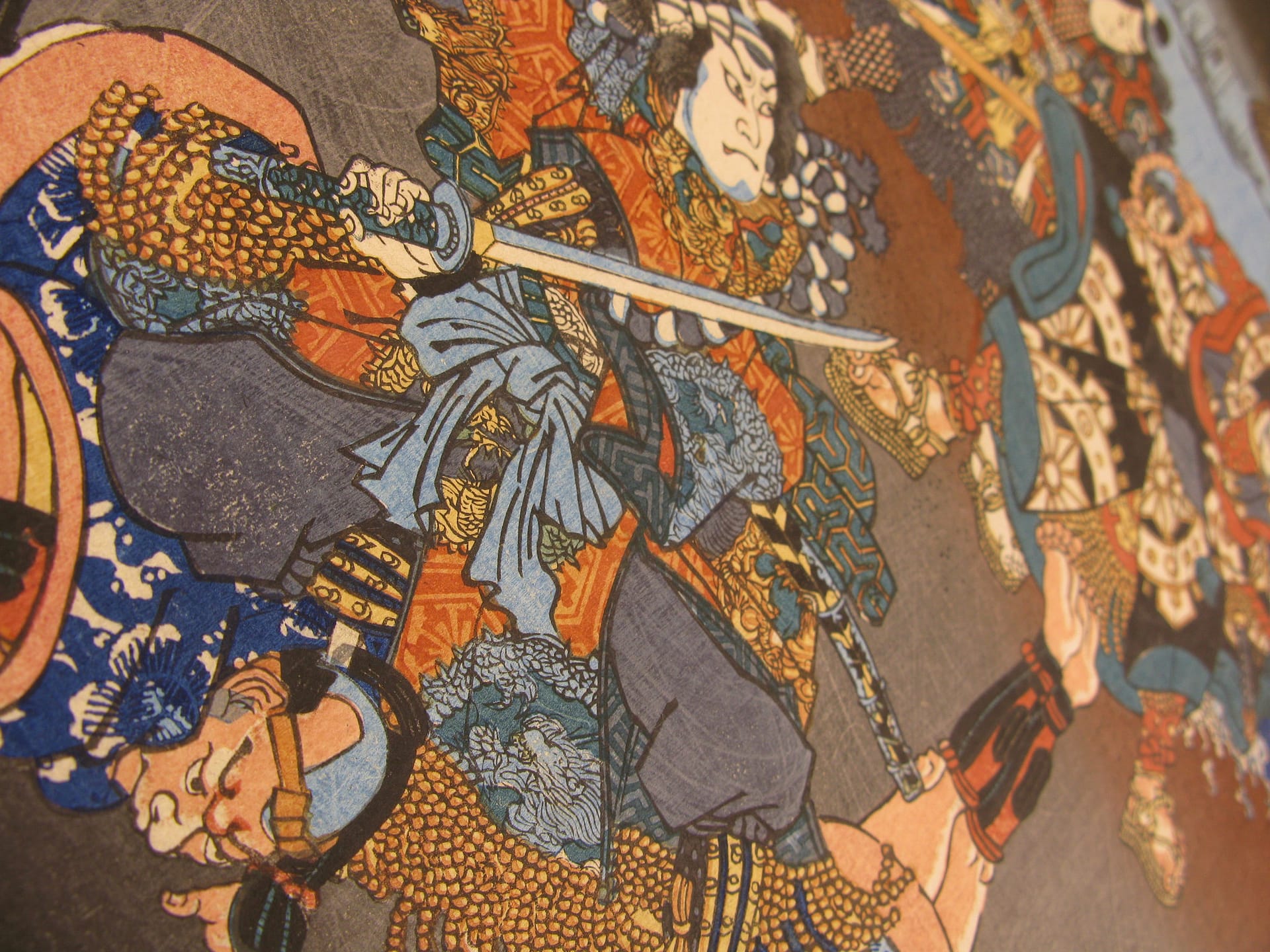
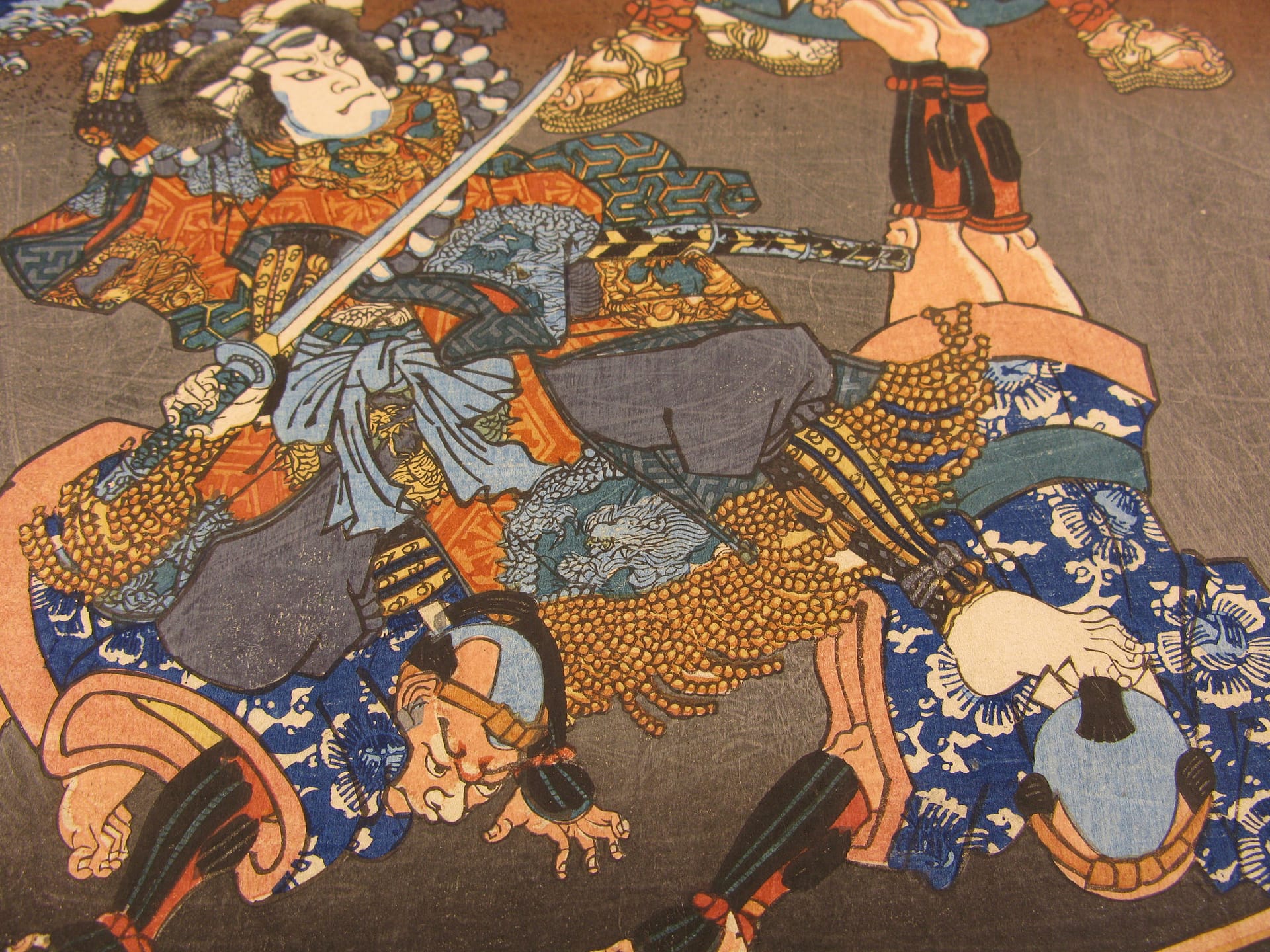
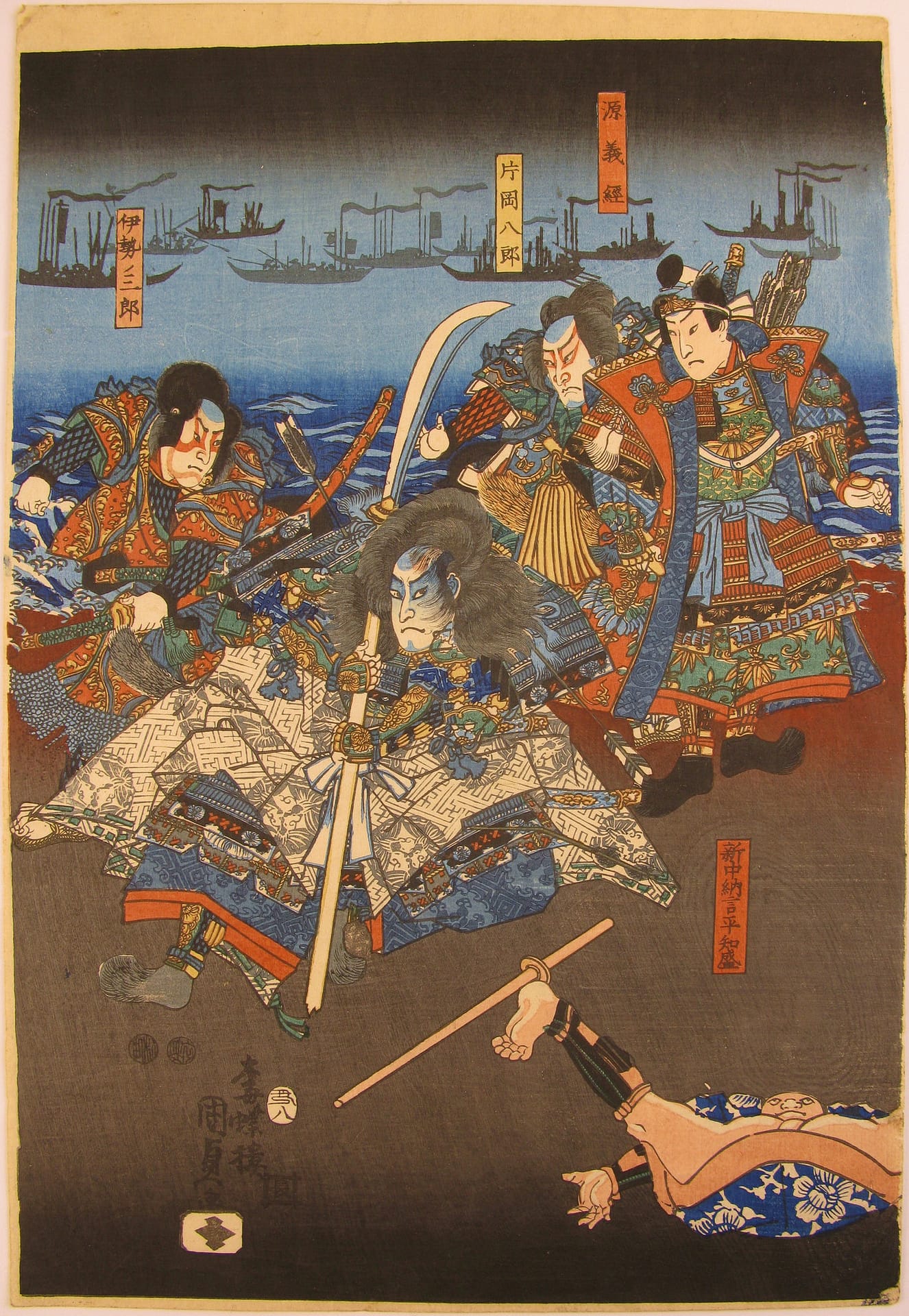
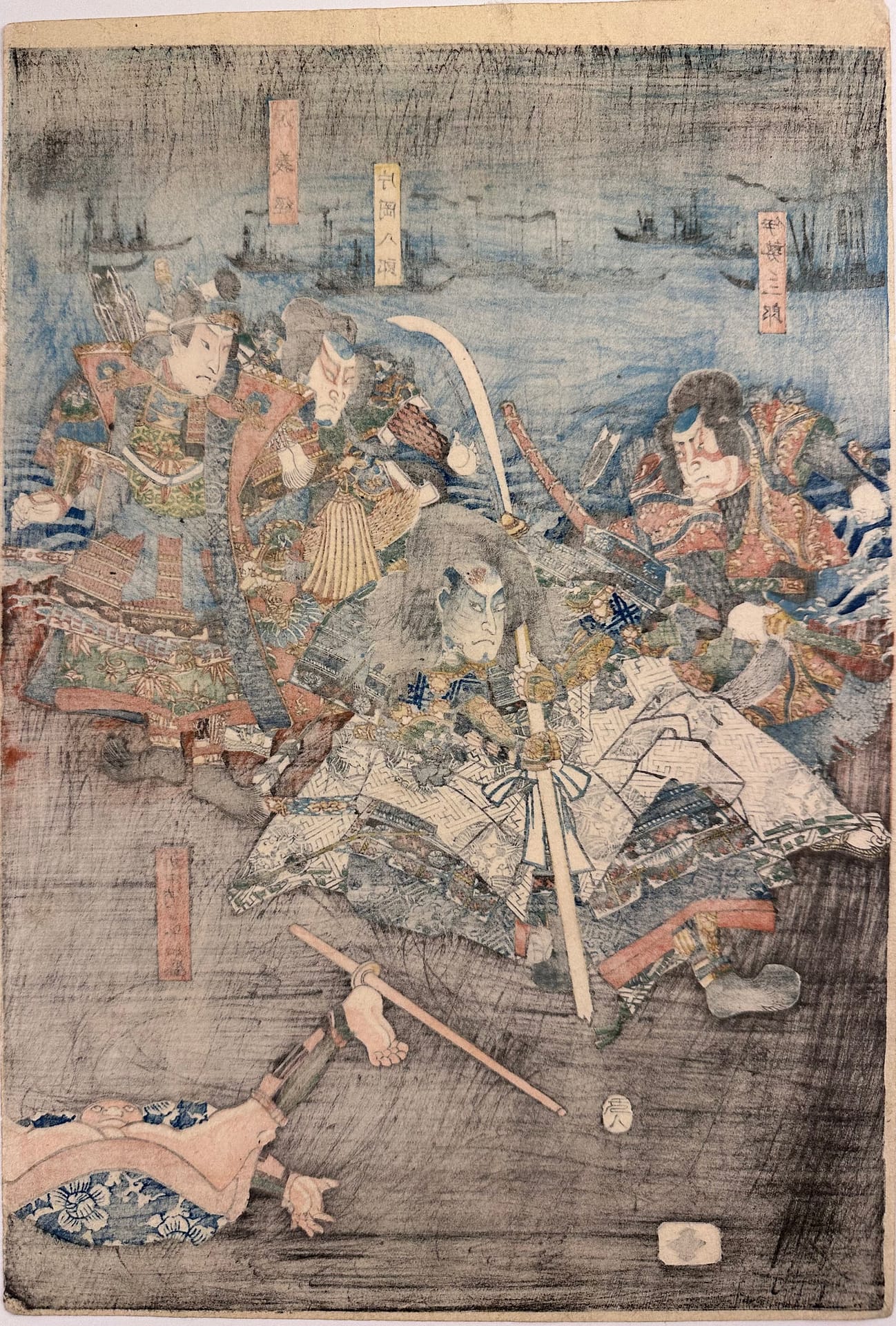
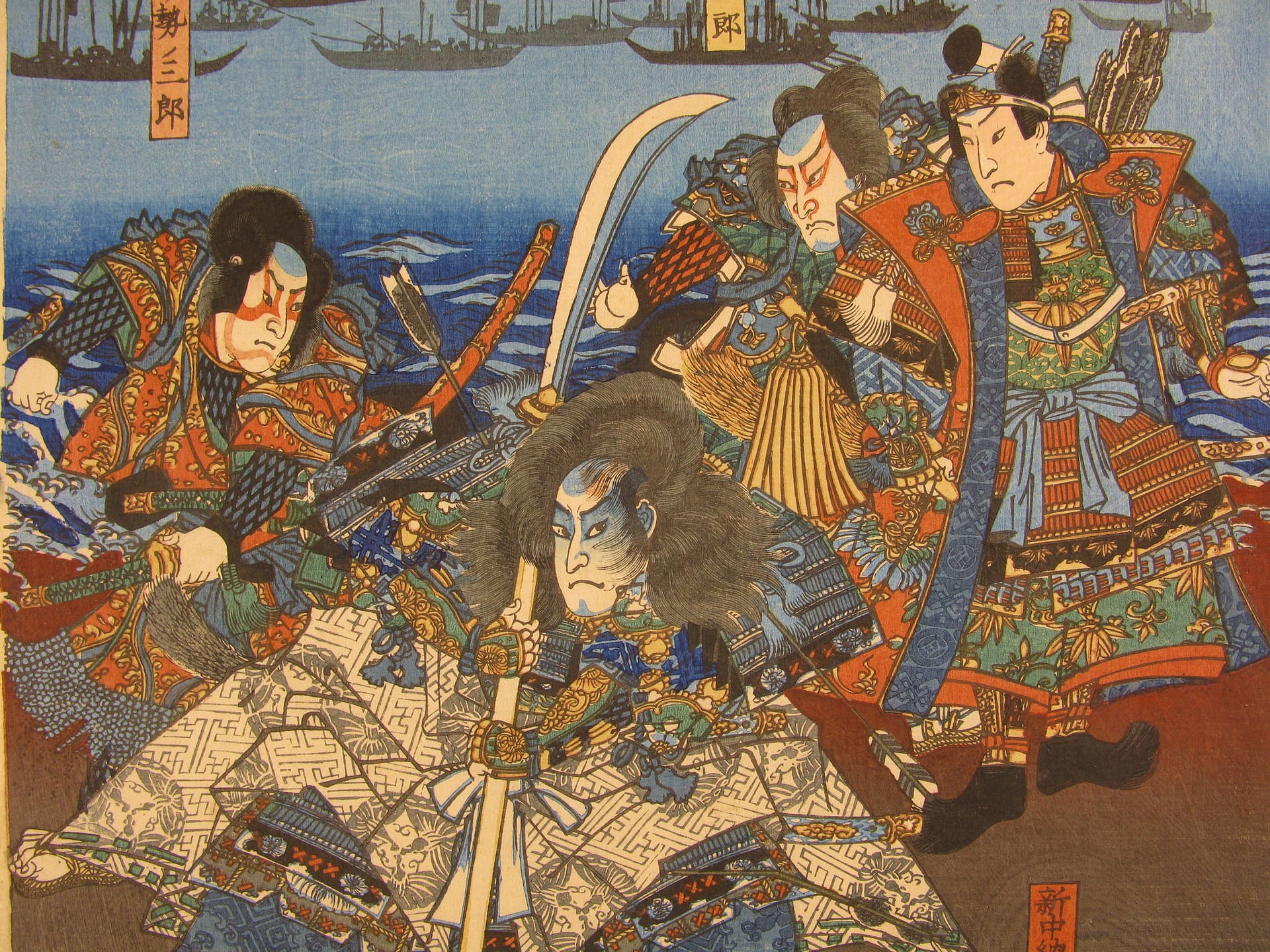
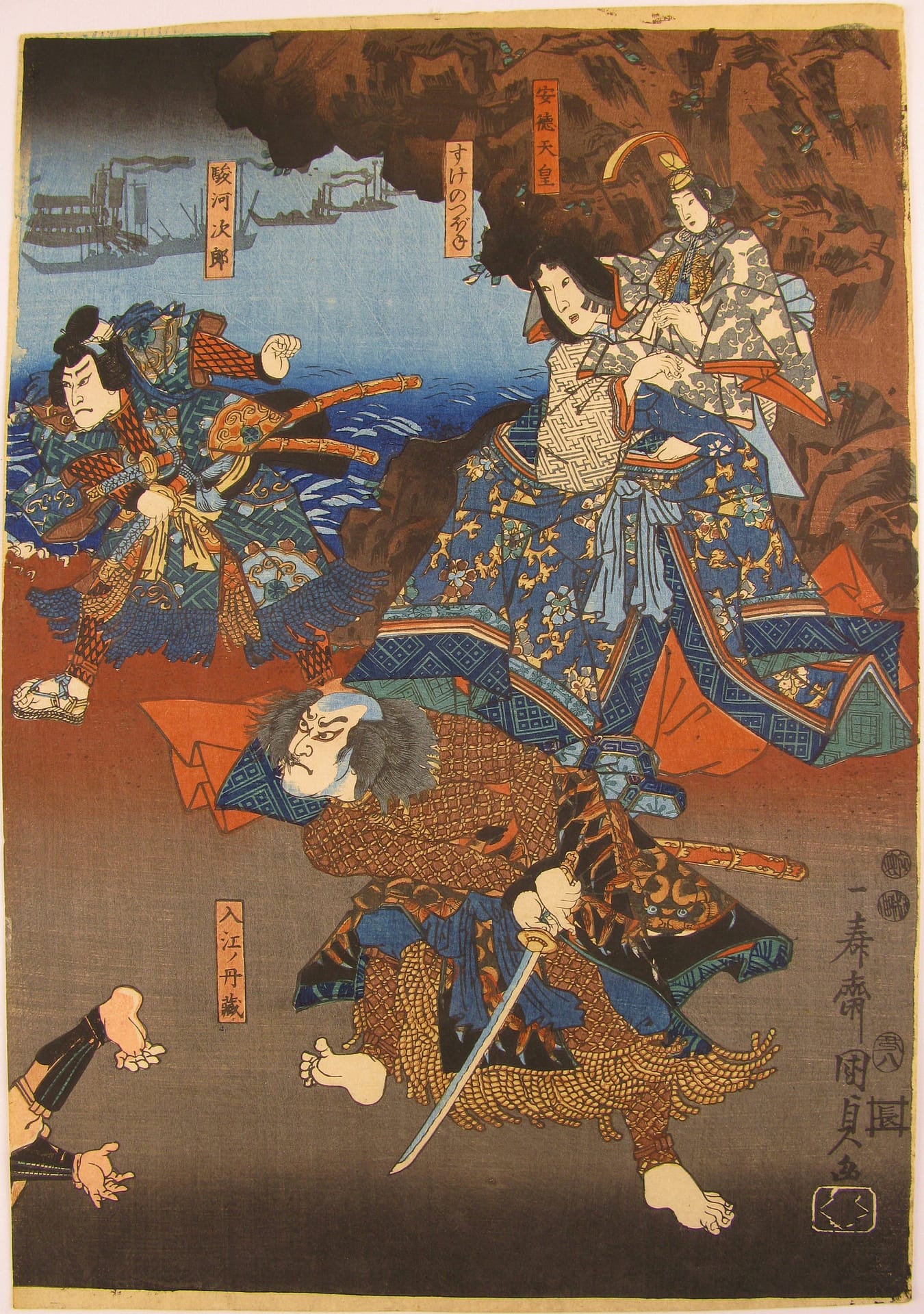
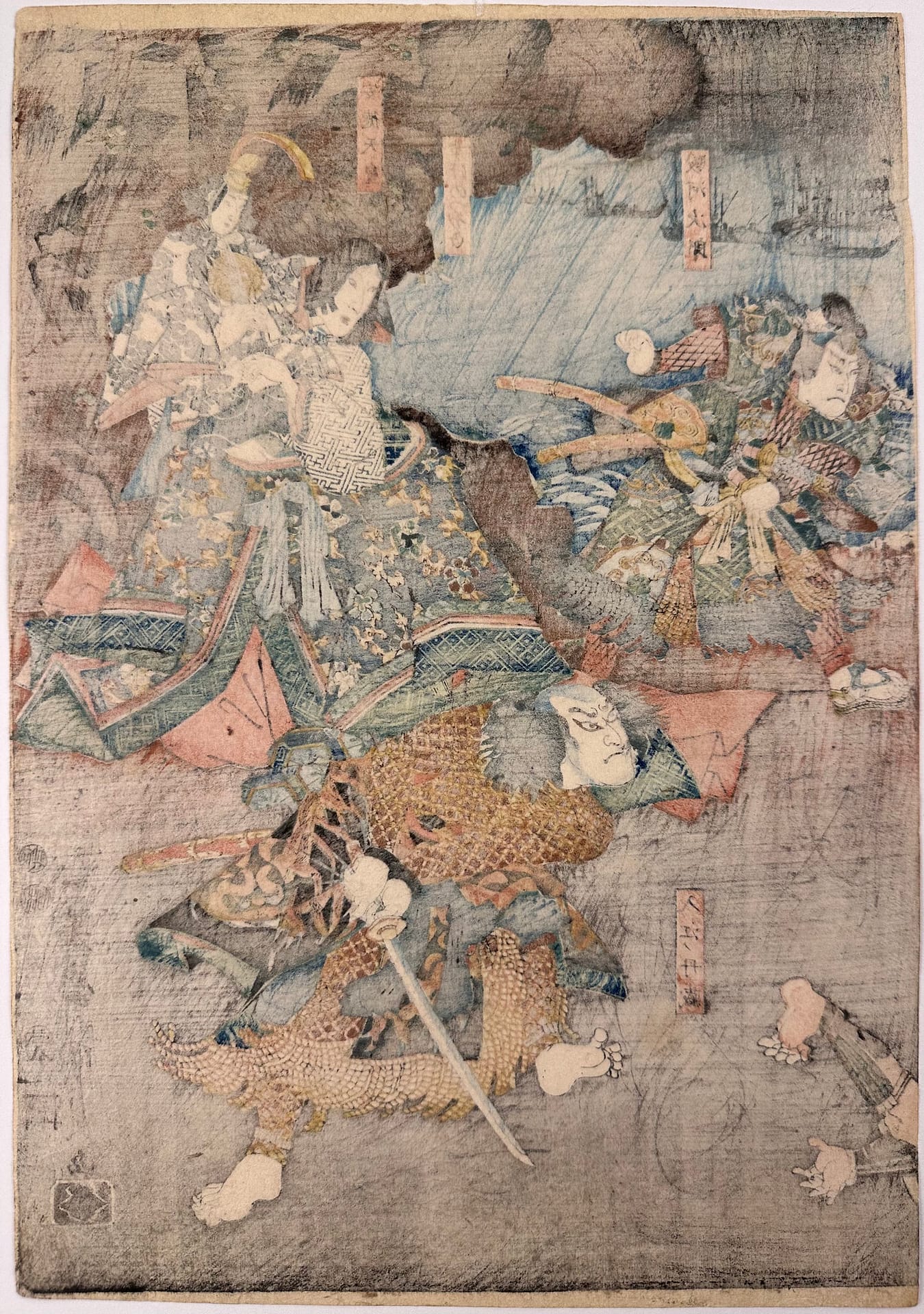
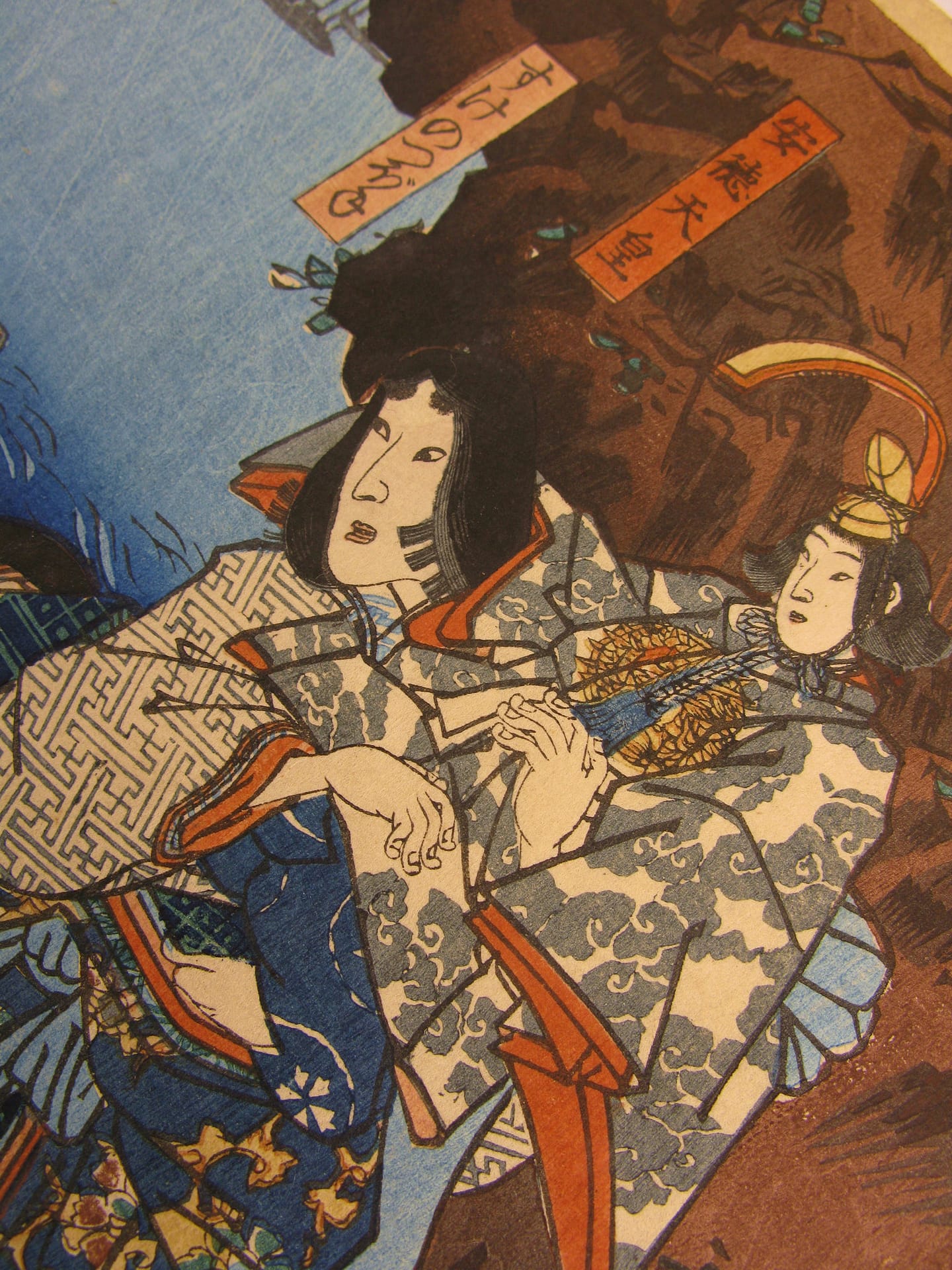
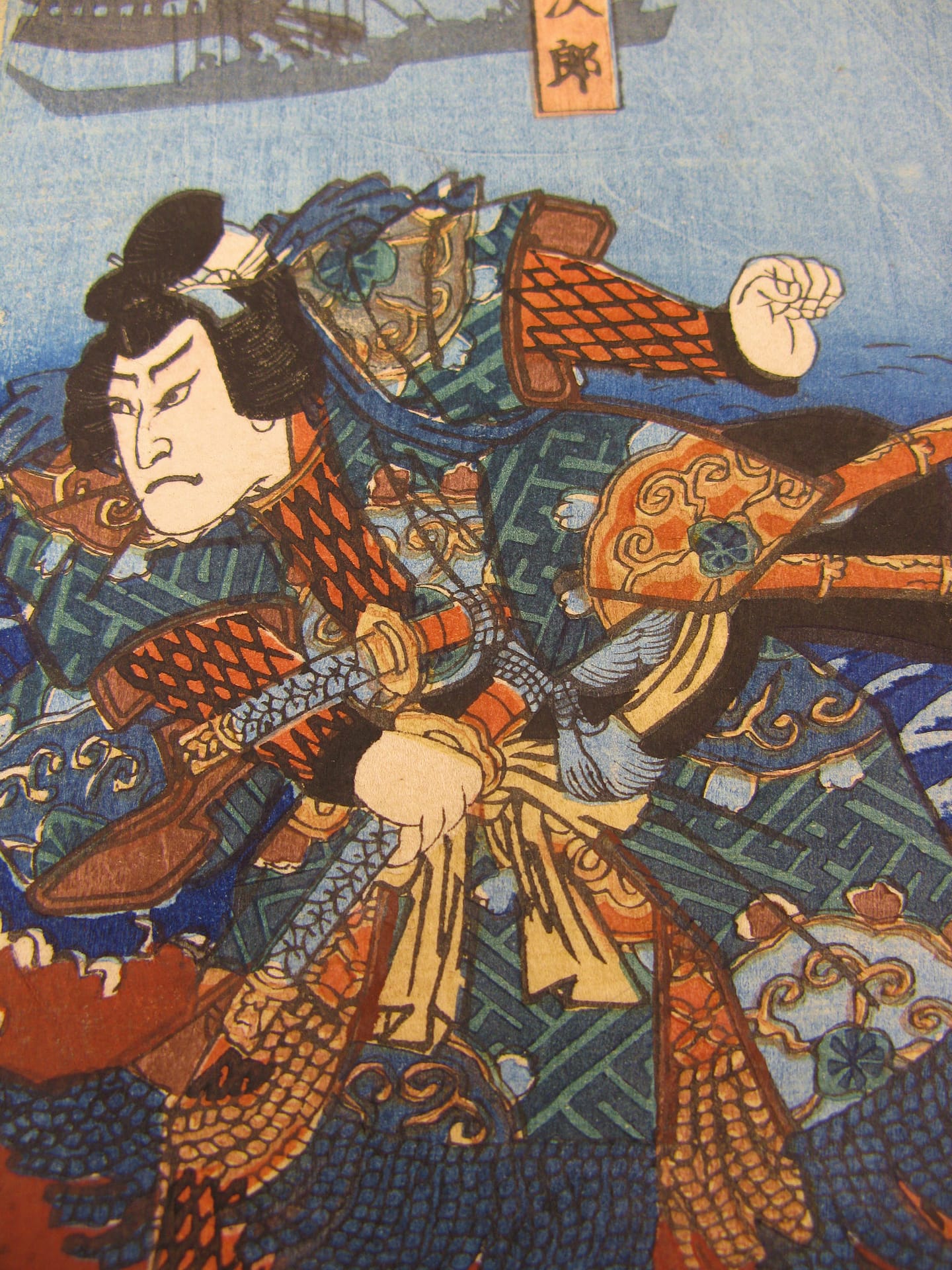
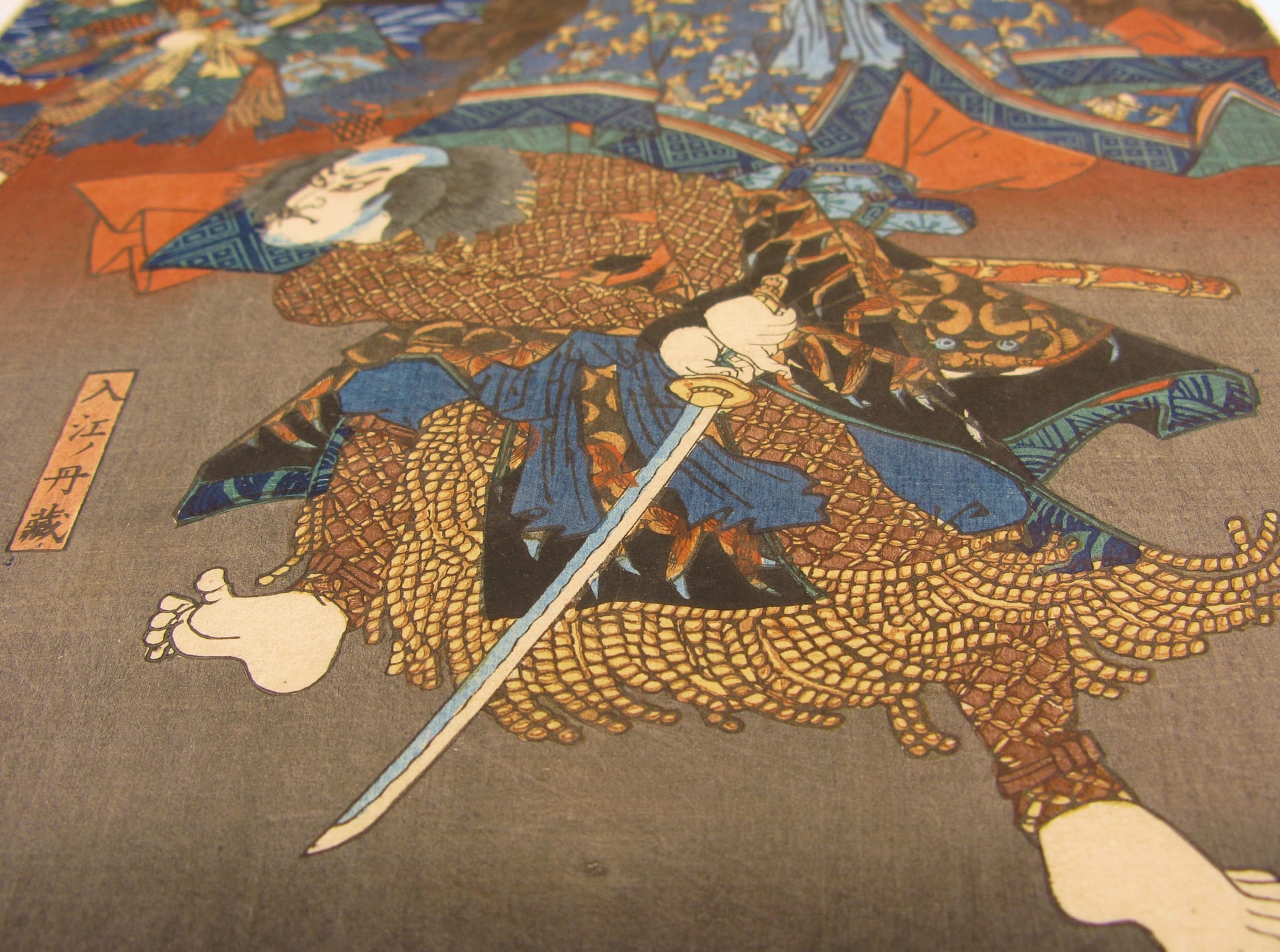
Description: In this dramatic triptych, Utagawa Kunisada II draws upon the celebrated kabuki play (Yoshitsune) Senbon Zakura, presenting a charged moment in which history, theatre, and the supernatural converge upon a lonely shore. Yoshitsune is joined by Musashibō Benkei, the ghost of Taira no Tomomori and Kamei Rokurō, among others.
Kunisada isn’t illustrating a single event, he’s giving us a visual ‘mixed tape’ of everything Edo audiences loved: the fall of the Taira, Yoshitsune’s flight, Tomomori’s ghostly vendetta, the tragic emperor, the loyal retainers, the supernatural showdown.
Artist: Utagawa Kunisada II
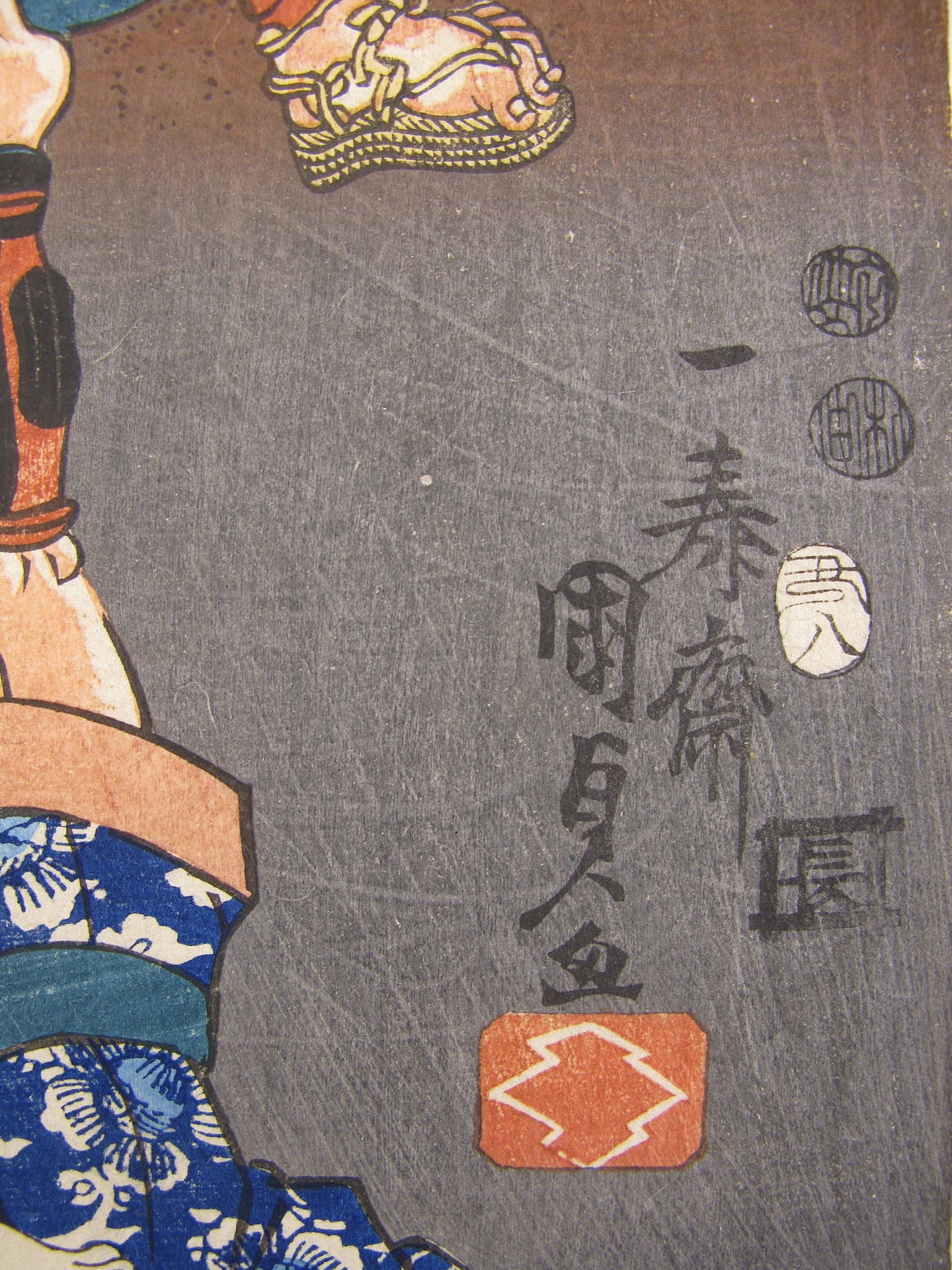
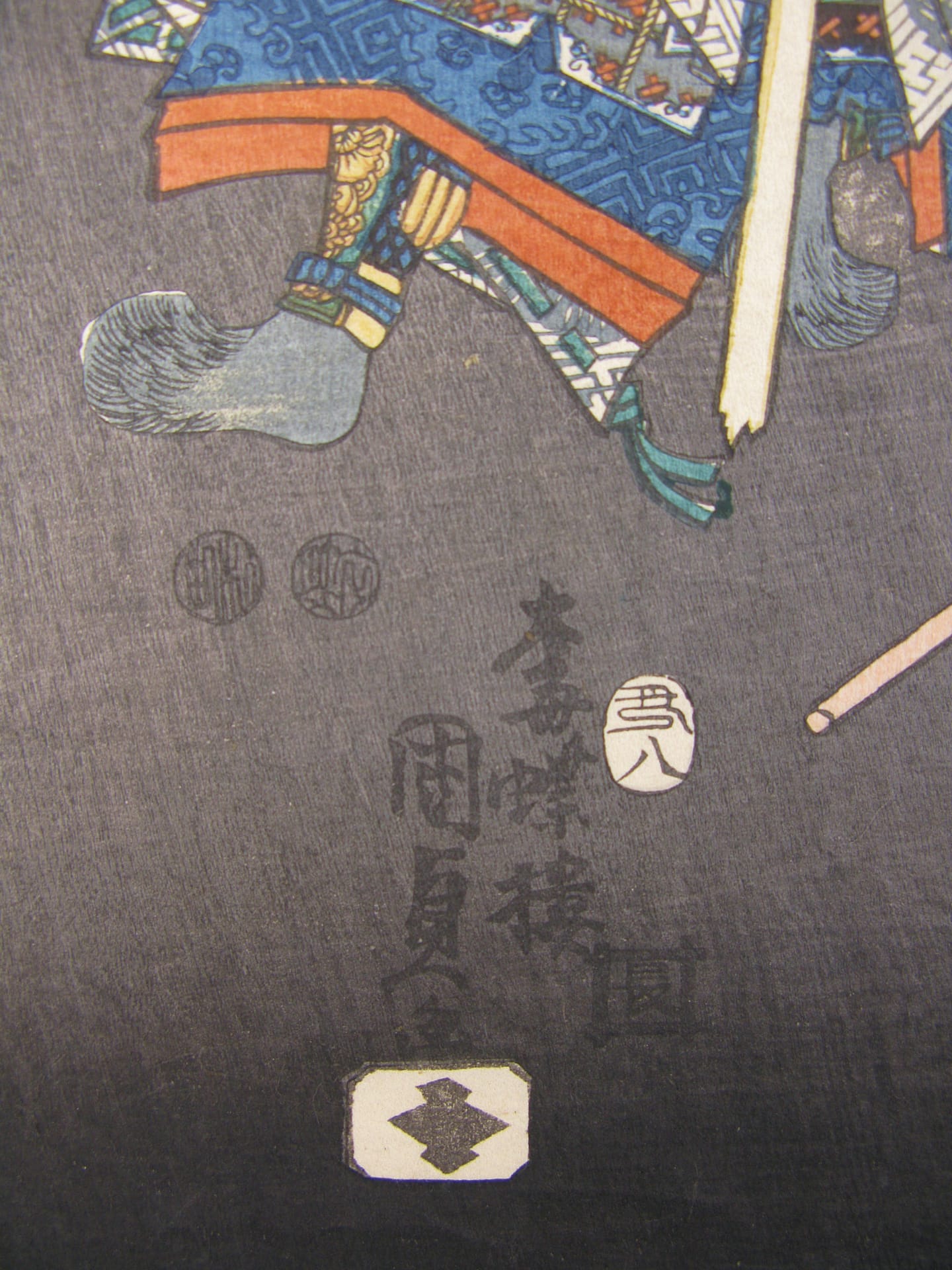
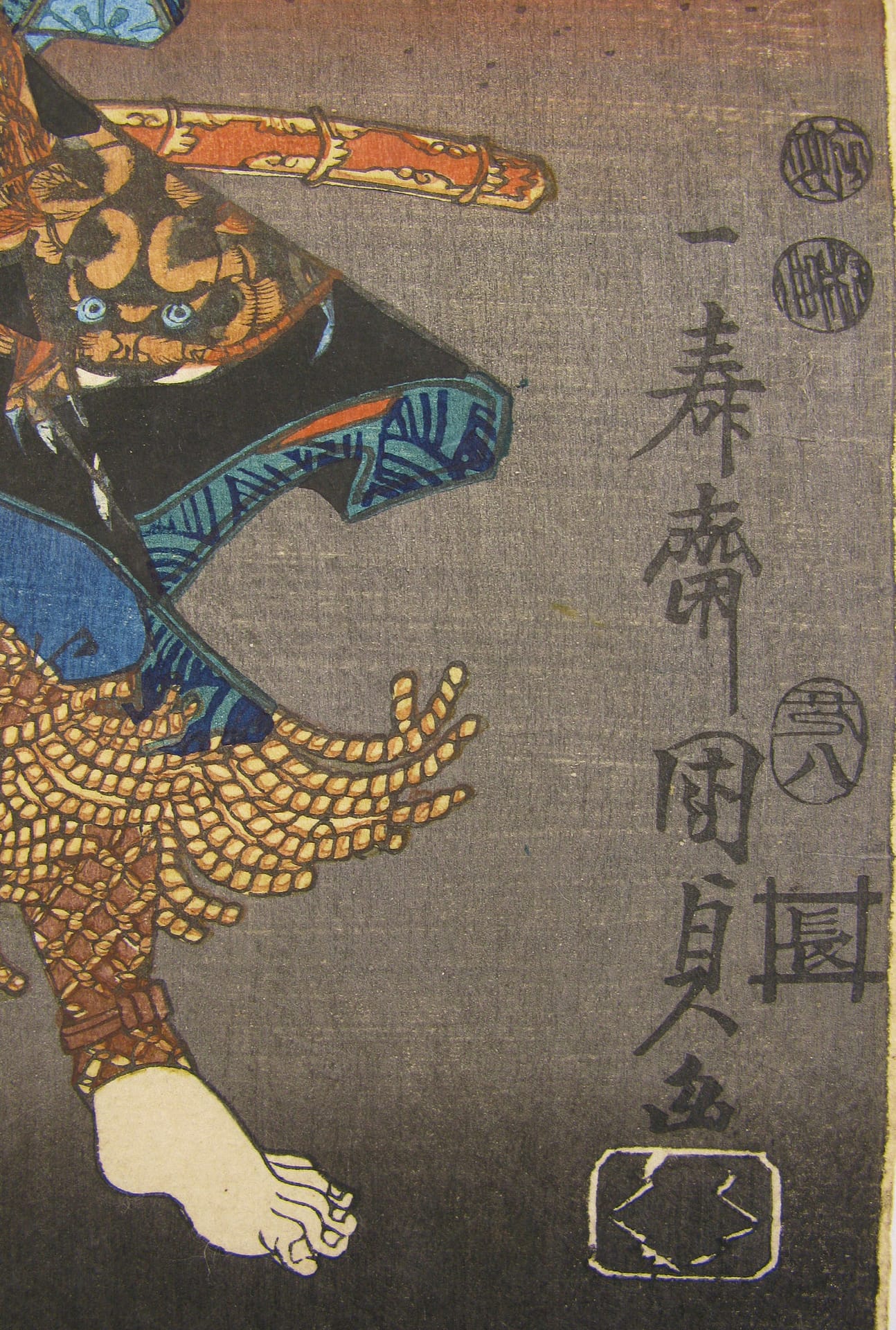
Signature: Signed on two sheets, Ichijusai Kunisada ga (一寿斎 国貞画). TBC centre sheet, XXX Kunisada ga
Date: 1853 (Kaei 6), 8th month
Publisher: Arita-ya Seiemon
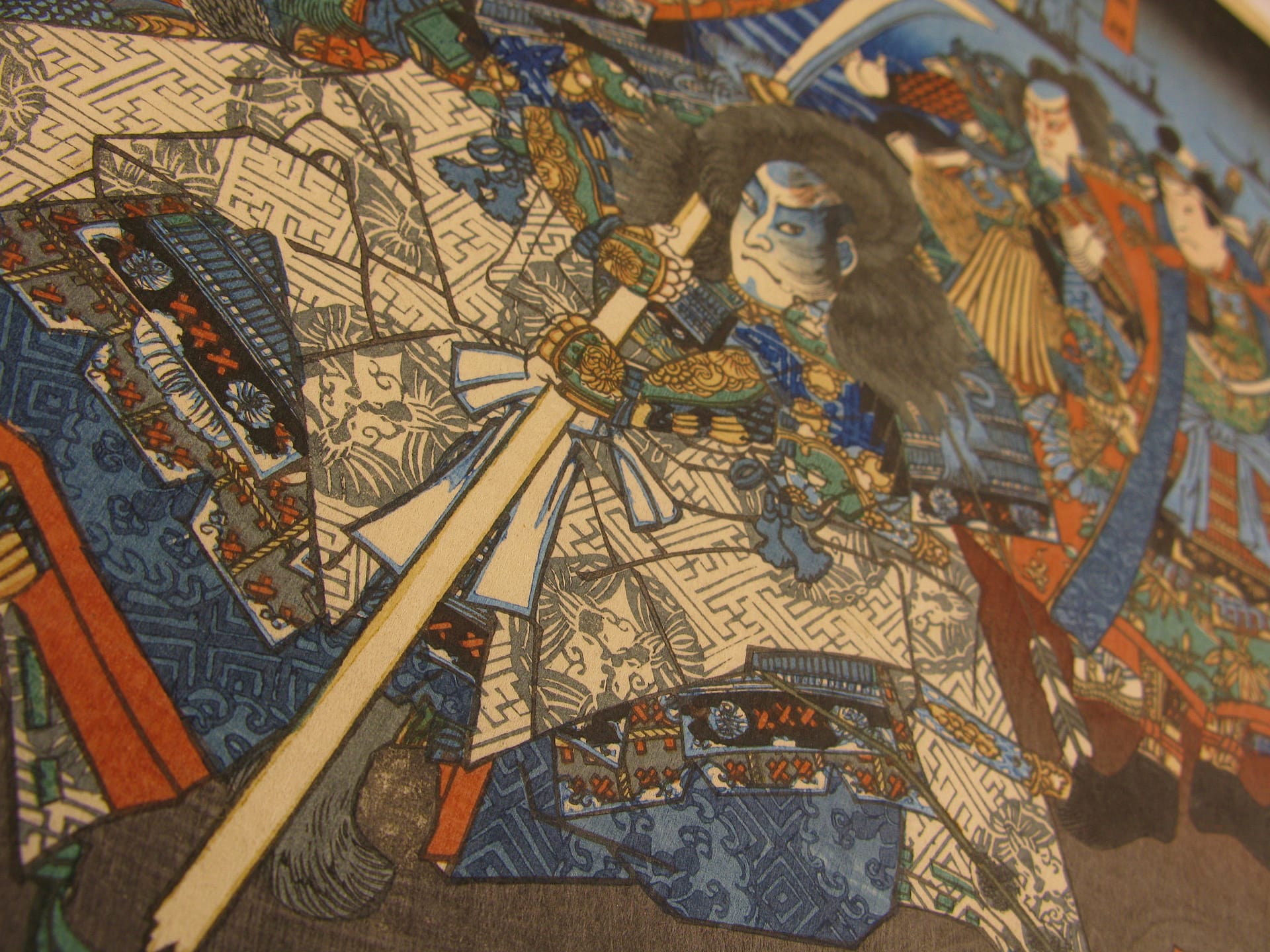
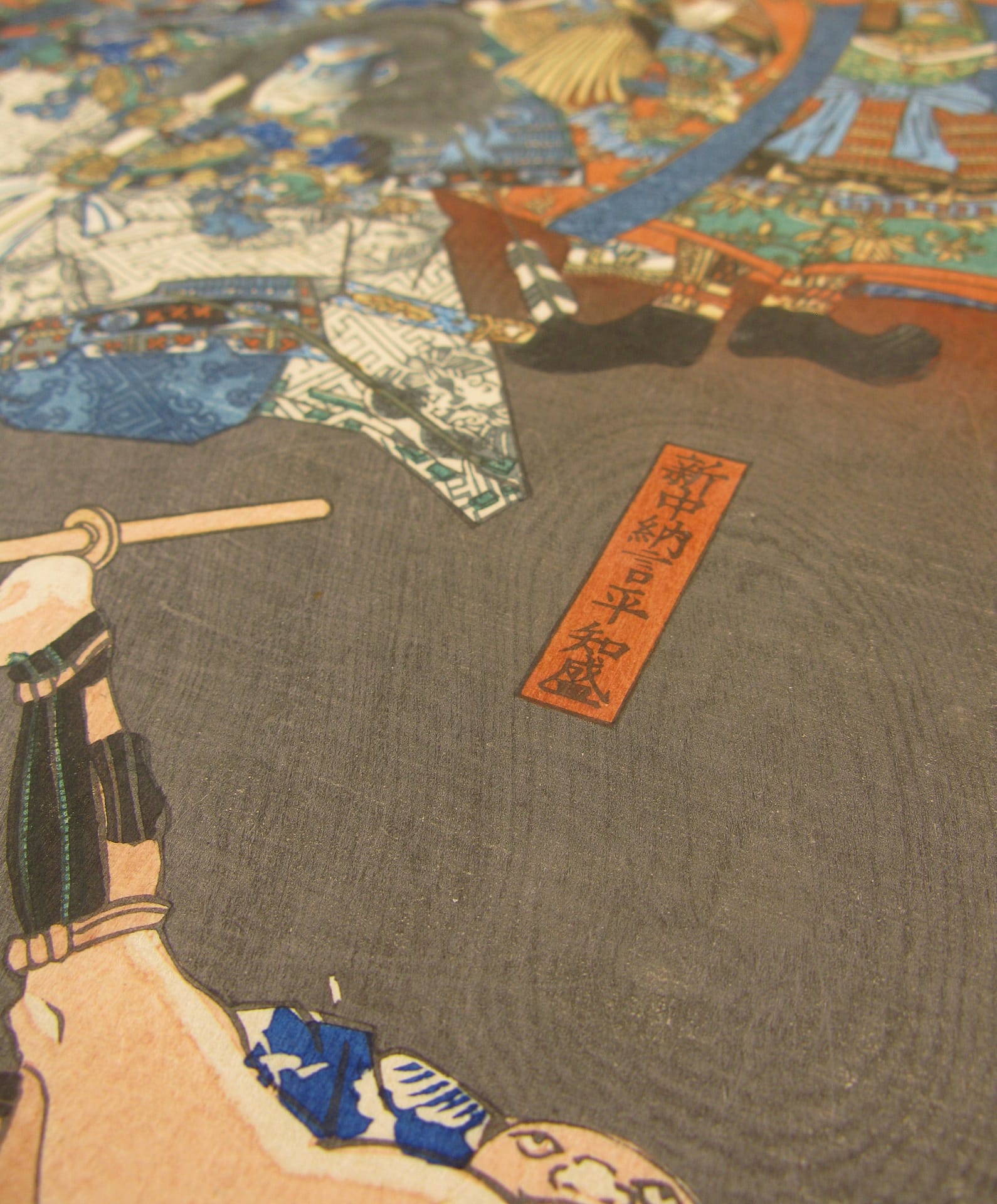
Condition: Very good impression, strong colours and beautifully applied bokashi, and strong wood grain. A truly beautiful print.
Price: TBC
Tale of the print – with a little twist
On a lonely, windswept shore, where the waves crash like they’re auditioning for a drama role, the ghost of Taira no Tomomori risen from the sea — pale blue, soaking wet, and absolutely furious. This is not the kind of beach day anyone wanted.
Tomomori, who famously tied an anchor to himself and leapt into the sea at Dan‑no‑ura, has returned because ghosts in kabuki never rest. They have grievances, dramatic timing, and impeccable costume design. He sits center stage, glowing like a supernatural lantern, while the uneasy water behind him whispers, “This man is not done being angry.”
Enter Yoshitsune’s squad, the most overqualified beach patrol in history surrounding him on the shore is Minamoto no Yoshitsune and his entourage: Benkei, the warrior monk built like a temple gate, Kamei Rokurō, always ready to pose heroically, Kataoka Hachirō, who definitely rehearsed his entrance, Ise no Saburō, who brought enough swagger for everyone.
The saddest cameo in Kabuki, is the child emperor Antoku who drowned with the Taira. His presence — whether literal, symbolic, or just kabuki being kabuki — adds a heavy dose of tragedy.
The scene draws from Act II of Senbon Zakura, the famous boat‑journey episode, where the sea is never just water — it’s a portal for ghosts, regrets, and plot twists.
The characters – from right sheet (R) – Centre sheet (C) – left sheet (L) and starting top right counterclockwise
- Emperor Antoku: Function: Symbol of the fallen Taira, Embodiment of: innocence, tragedy, legitimacy (R1)
- Suke no Tsubone: Function: Wet nurse / protector of Antoku. Emotional pivot of the scene. In kabuki she disguises herself earlier, ultimately attempts or commits self-sacrifice with the emperor. She carries the emotional weight of the Heike tragedy (R2)
- Suruga Jirō: Function: Supporting guard Reinforces Yoshitsune’s status through numbers (R3)
- Irie Tanzō: Function: Minor retainer role, Part of the expanded kabuki ensemble (R4)
- Minamoto no Yoshitsune: Function: Moral centre and legitimising authority, Not the aggressor — rather the one who resolves the conflict (C1)
- Kataoka Hachirō: Function: Secondary guard figure, Often used compositionally, flanking reacting, echoing movement (C2)
- Ise no Saburō: Function: Another trusted warrior, Helps convey: discipline, readiness, numerical strength (C3)
- Taira no Tomomori: Function: Not a simple villain — a tragic revenant. Represents the unresolved past and the fall of the Taira. In this sequence appears (sometimes first in disguise), confronts Yoshitsune. Ultimately accepts defeat and returns to the sea. He drives the drama but does not “win” it (C4)
- Musashibō Benkei: Physical powerhouse: Guardian of Yoshitsune; Often the one who confronts threats directly, and anchors the group visually (L1)
- Kamei Rokurō: Loyal lieutenant Part of Yoshitsune’s inner circle Helps form the “wall” of retainers (L2)
- Sagami Gorō: Often depicted as hot-headed / energetic, Adds movement and tension,Contrasts with Yoshitsune’s composure (L3)
About the Kabuki play ‘Senbon Zakura‘
Yoshitsune Senbon Zakura began as a Bunraku (puppet theatre) play, premiering in the 11th lunar month of 1747 at the Takemotoza in Osaka. It was an immediate success and was adapted for Kabuki the very next year.
The first Kabuki staging took place in early 1748 in Ise, featuring major actors of the time such as Kataoka Nizaemon IV and Yamamoto Koheiji. By the 5th lunar month of 1748, the play reached Edo’s prestigious Nakamuraza theatre, and later that same year it debuted in Osaka’s Naka no Shibai.
The full drama is expansive: it consists of five acts divided into fifteen scenes, weaving together history, legend, and theatrical invention surrounding Minamoto no Yoshitsune and the aftermath of the Genpei War.