Yoshitsune retrieving his bow
Title/text: Yoshitsune kyû-ryû no zu, 義経弓流之圖
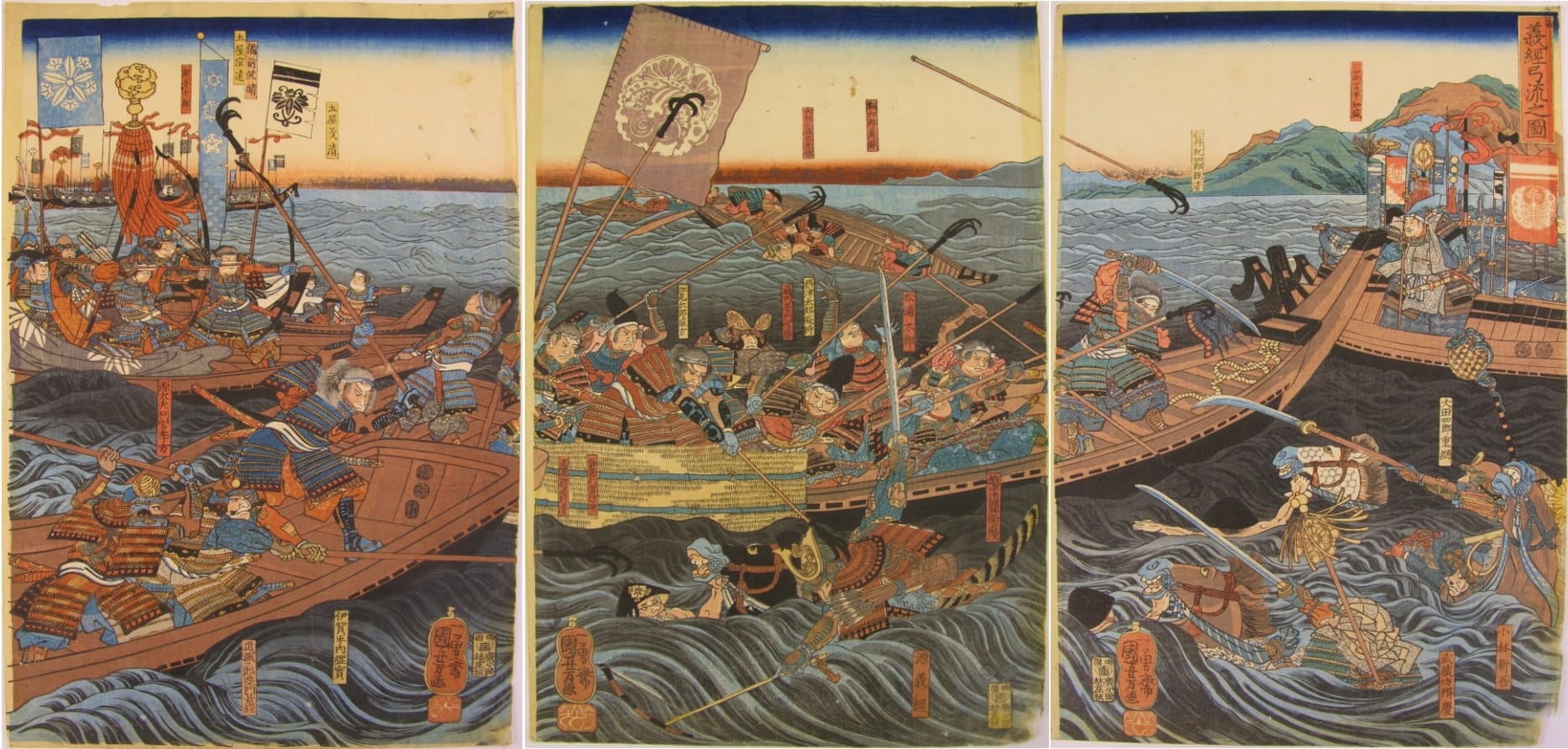
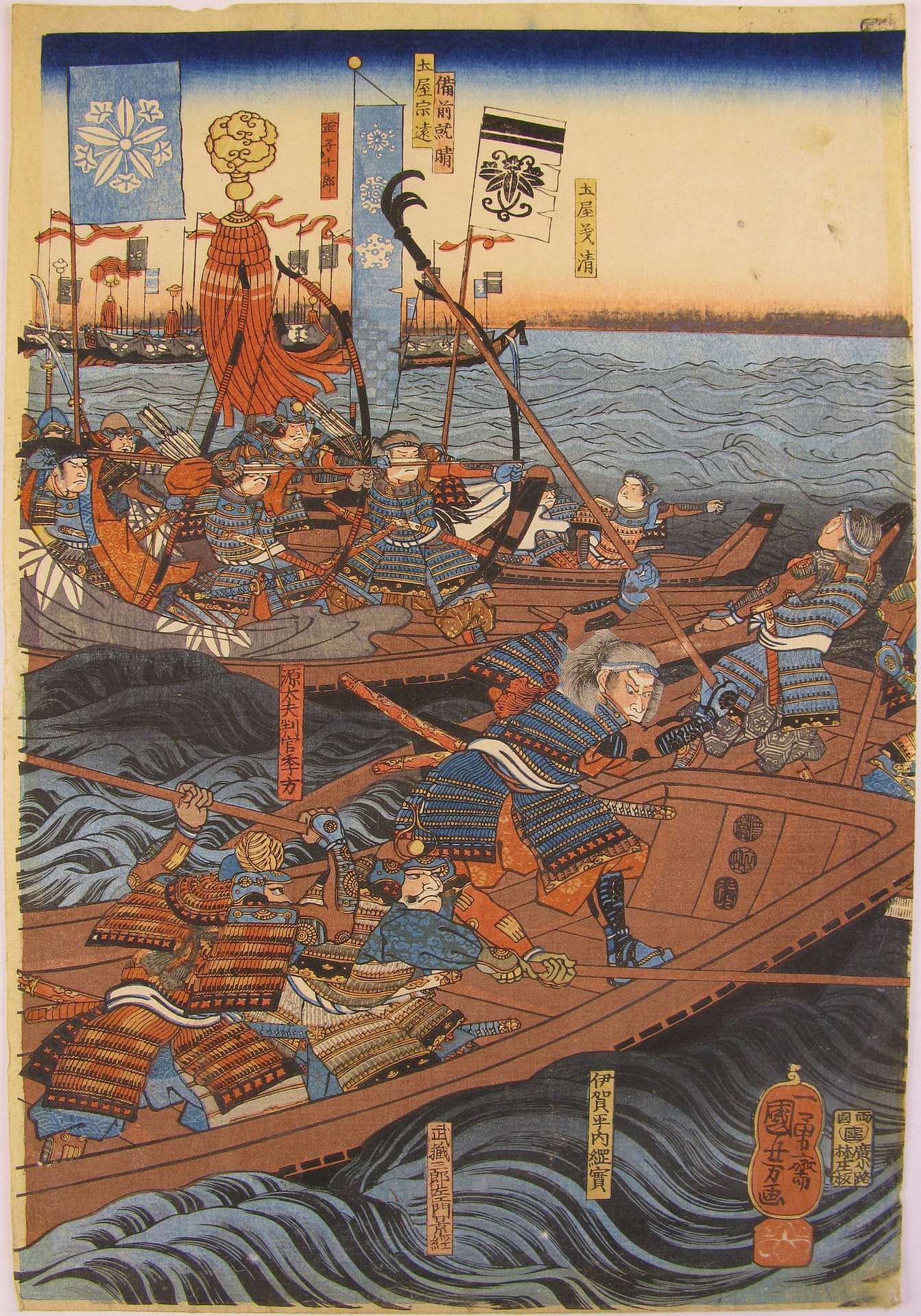
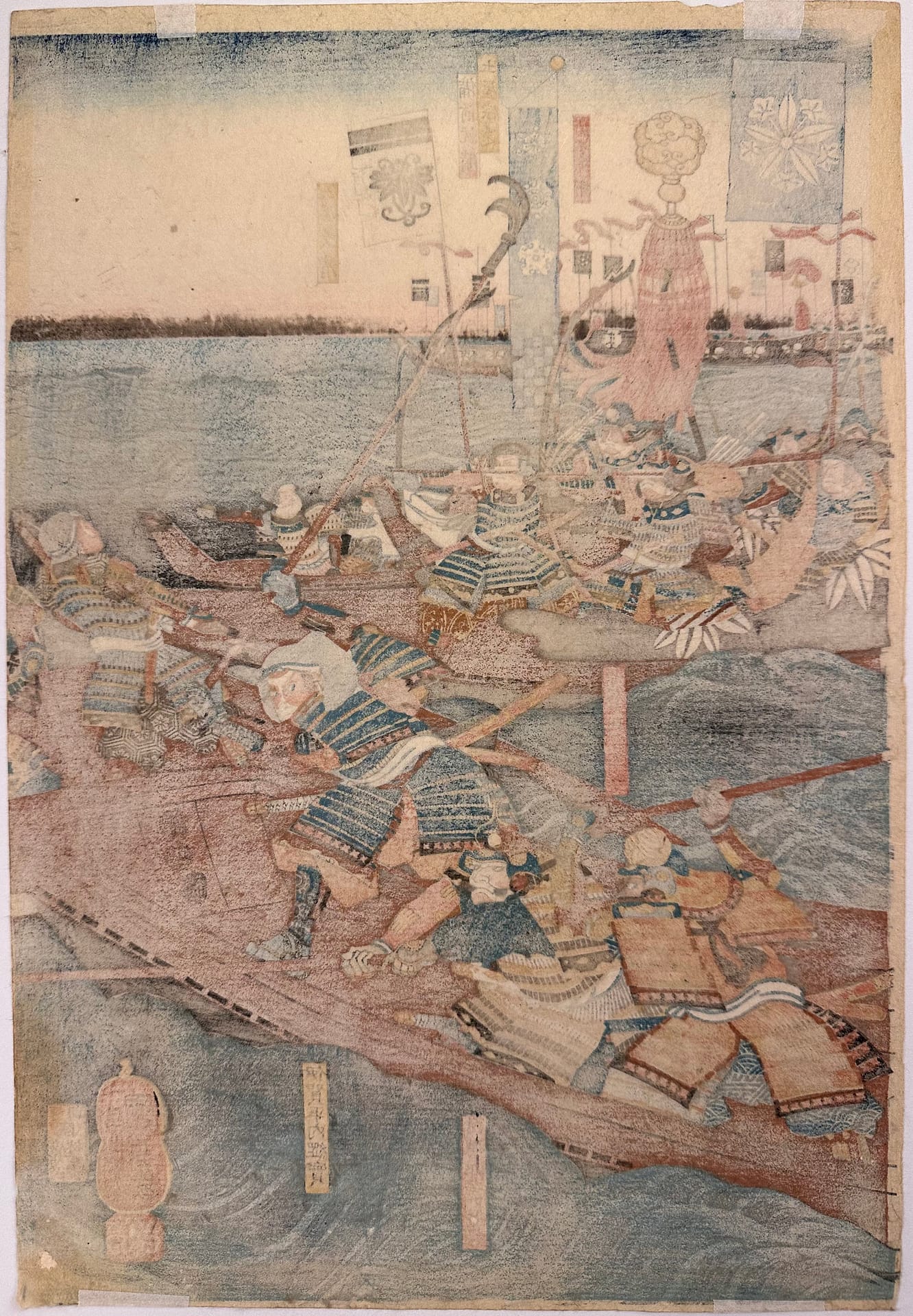
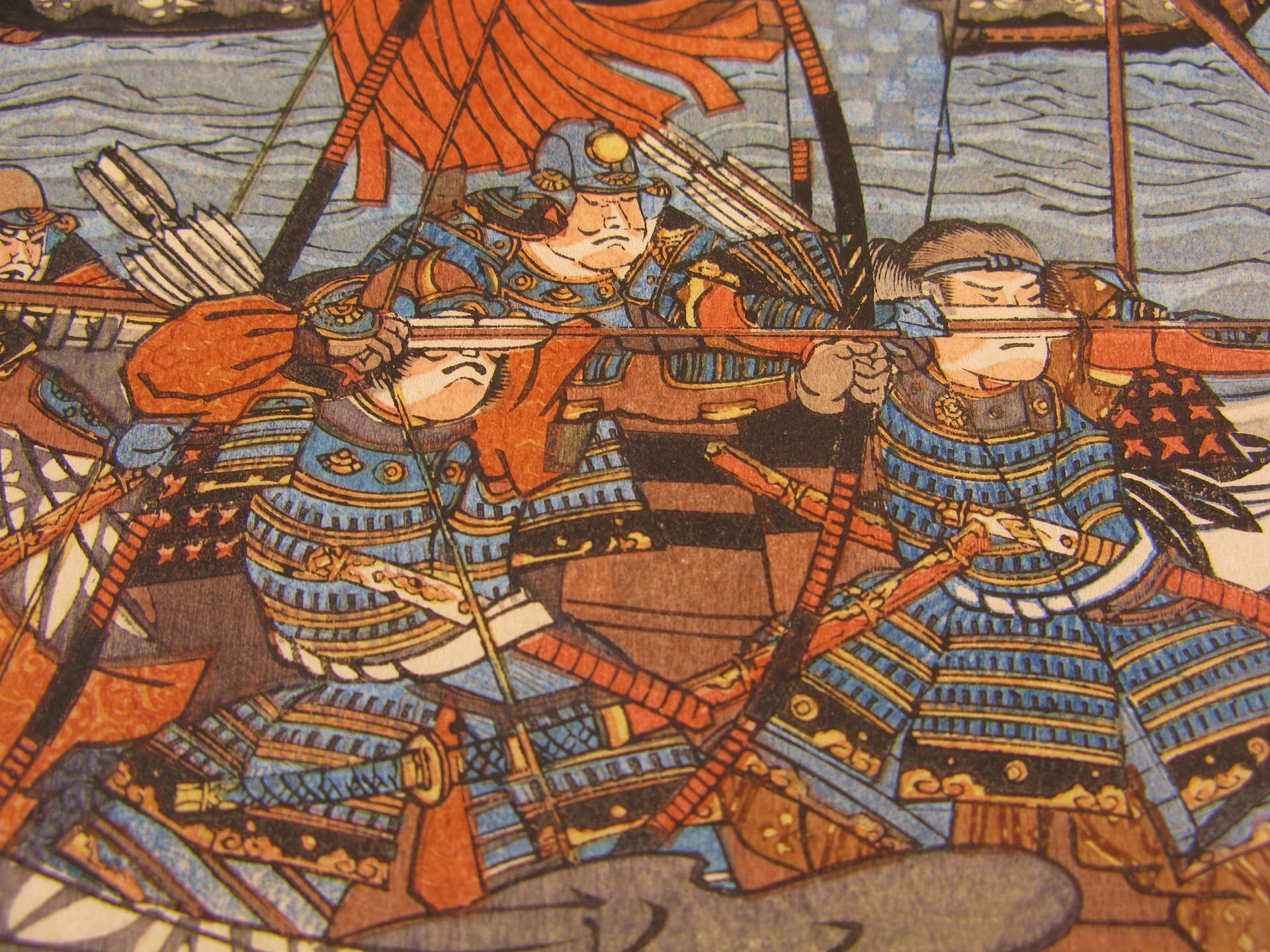
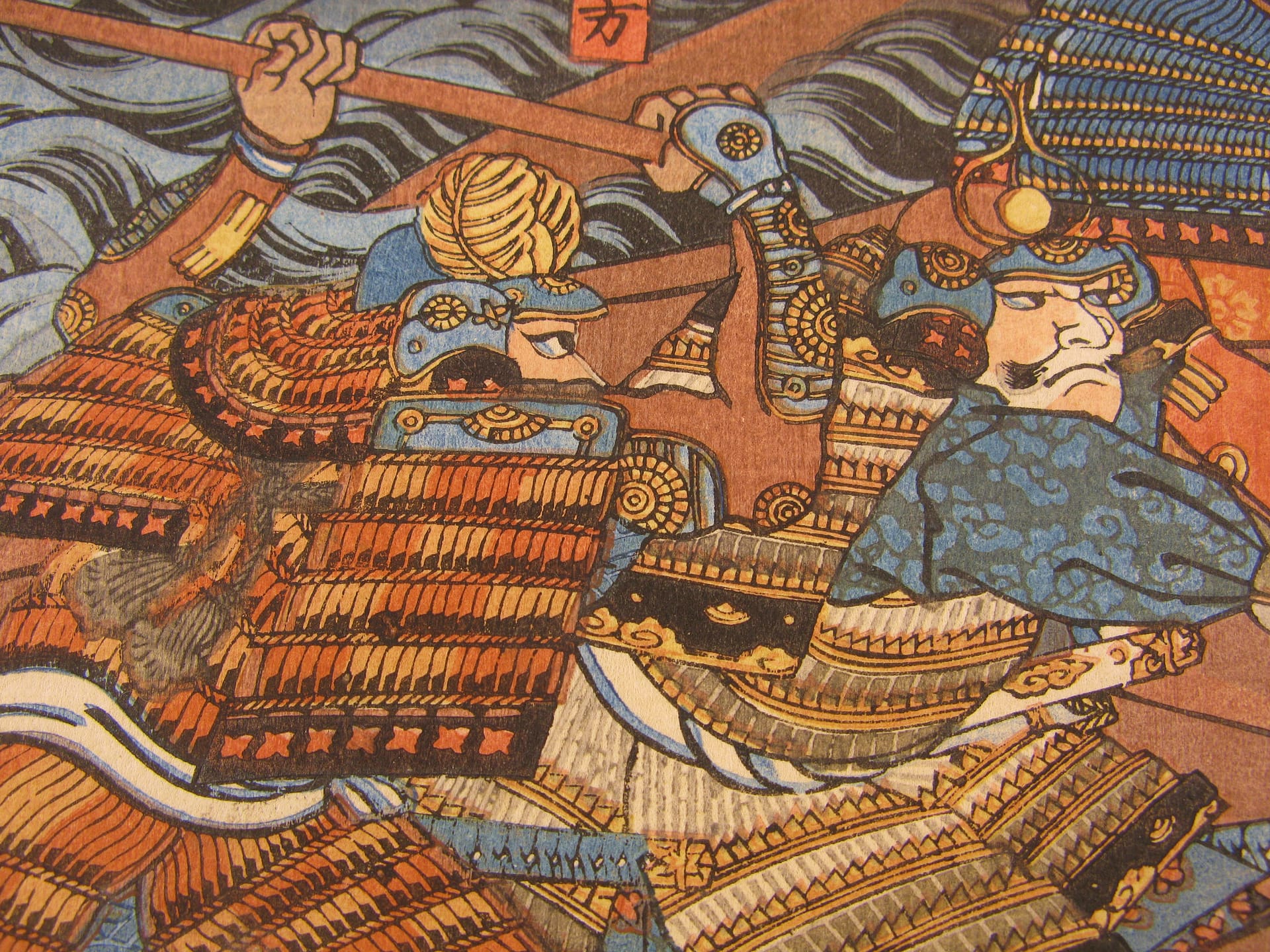
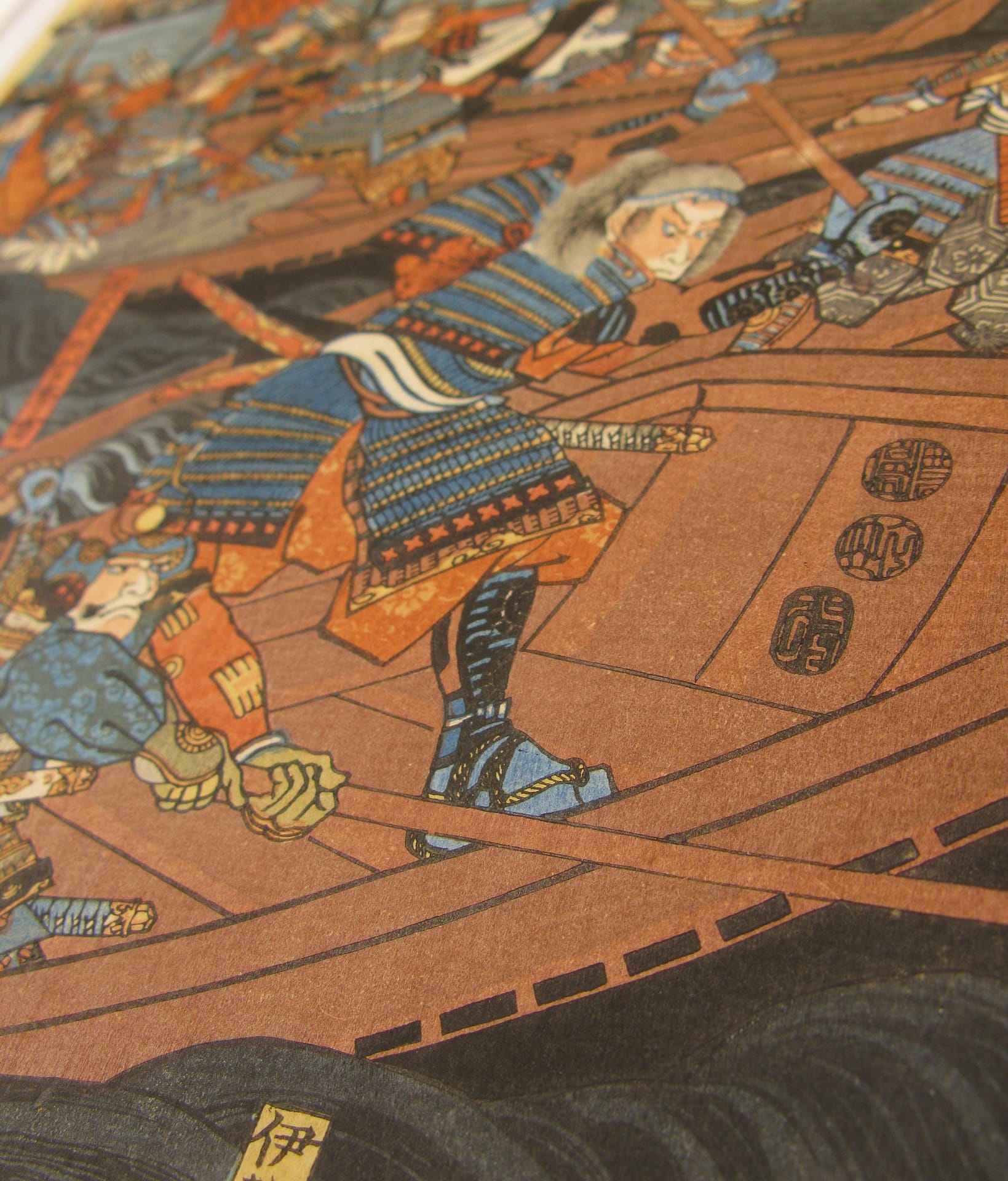
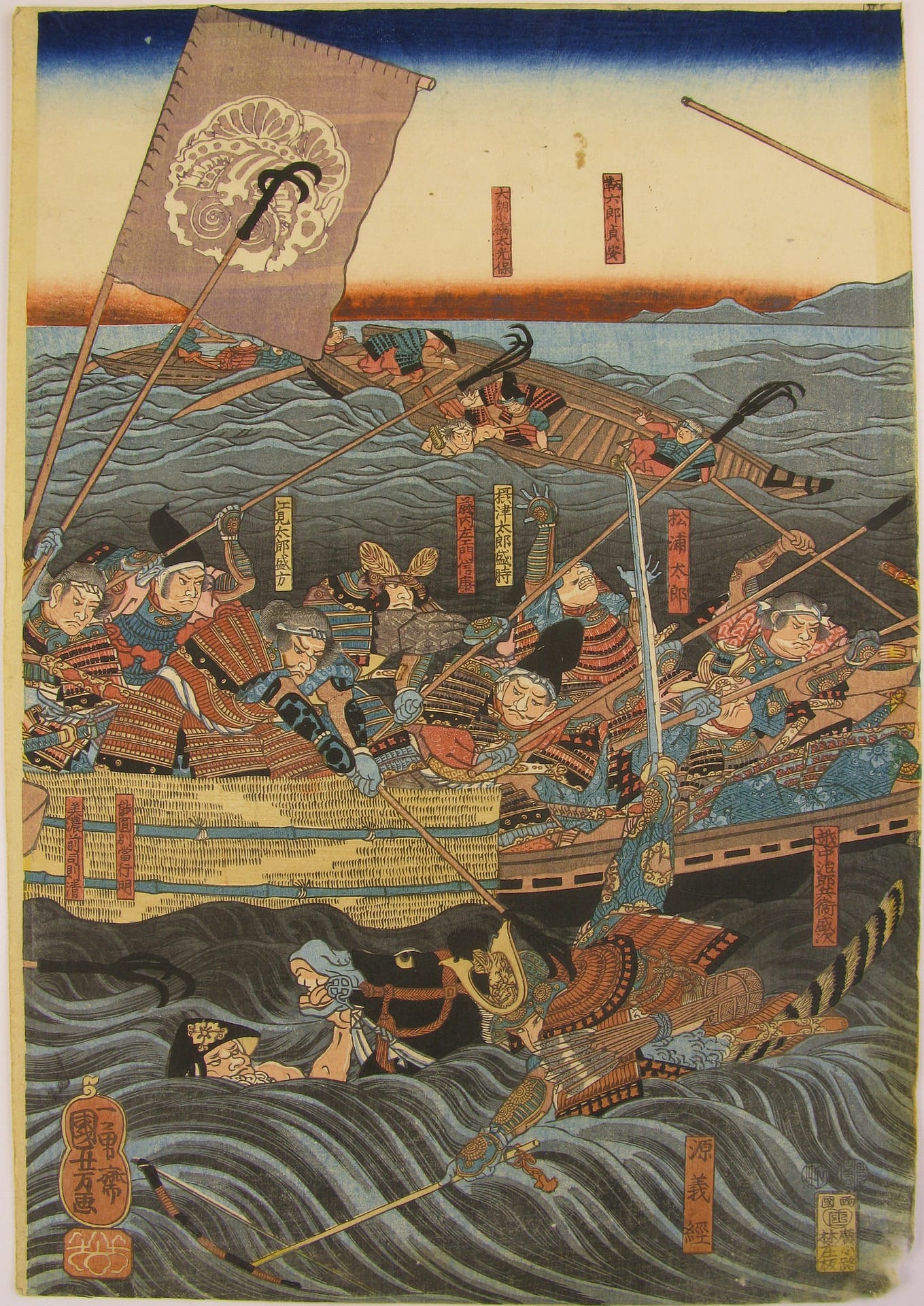
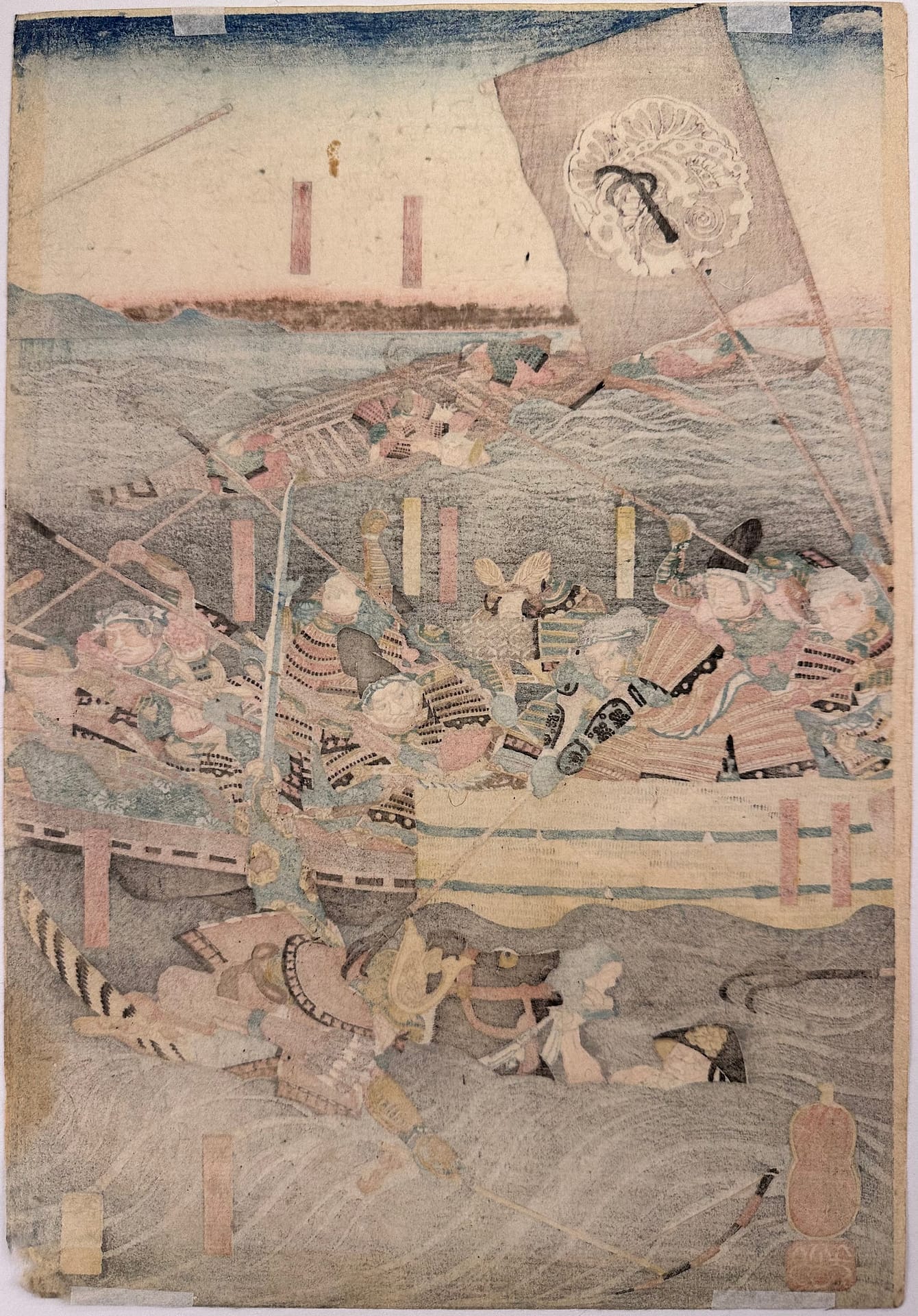
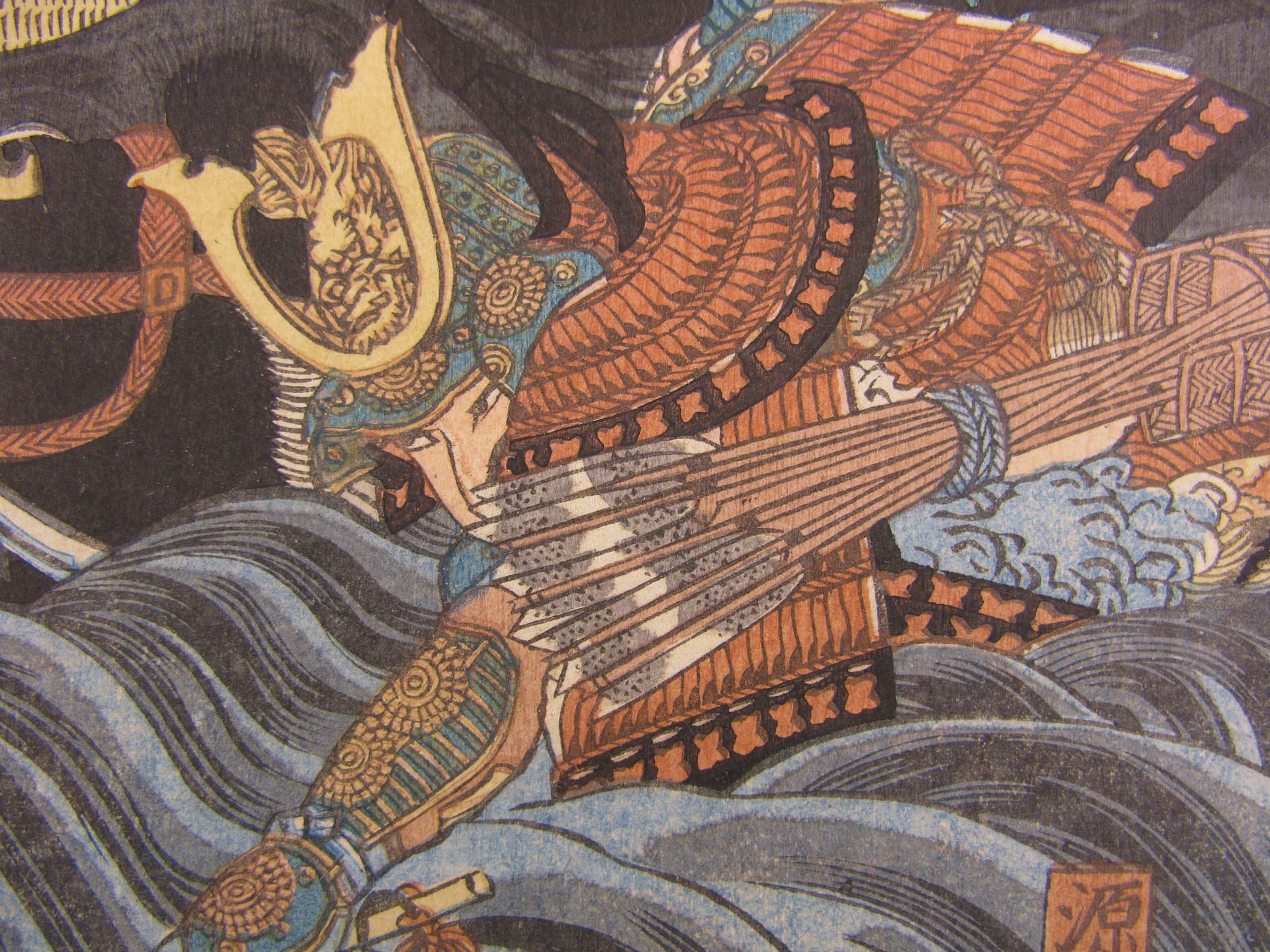
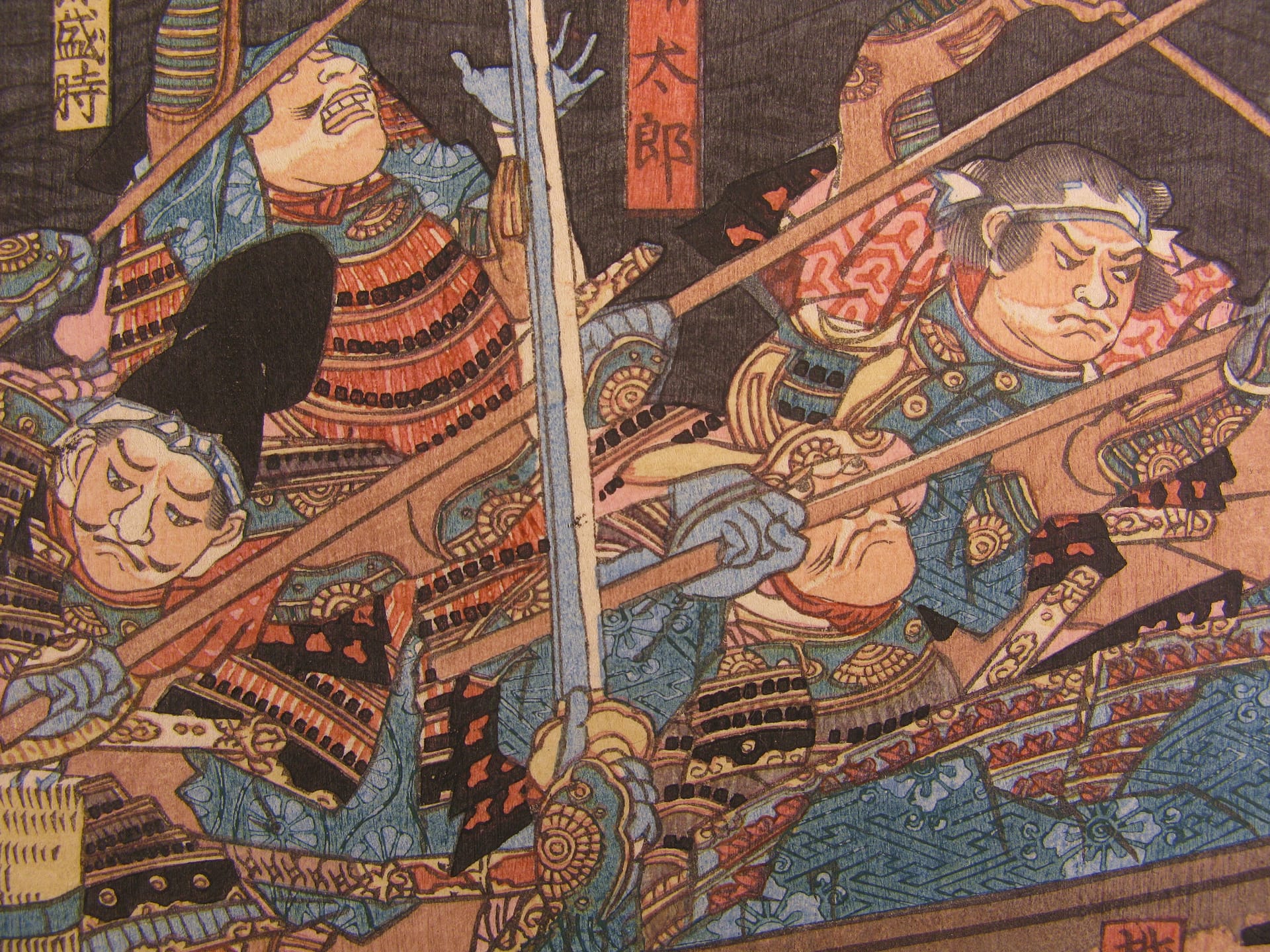
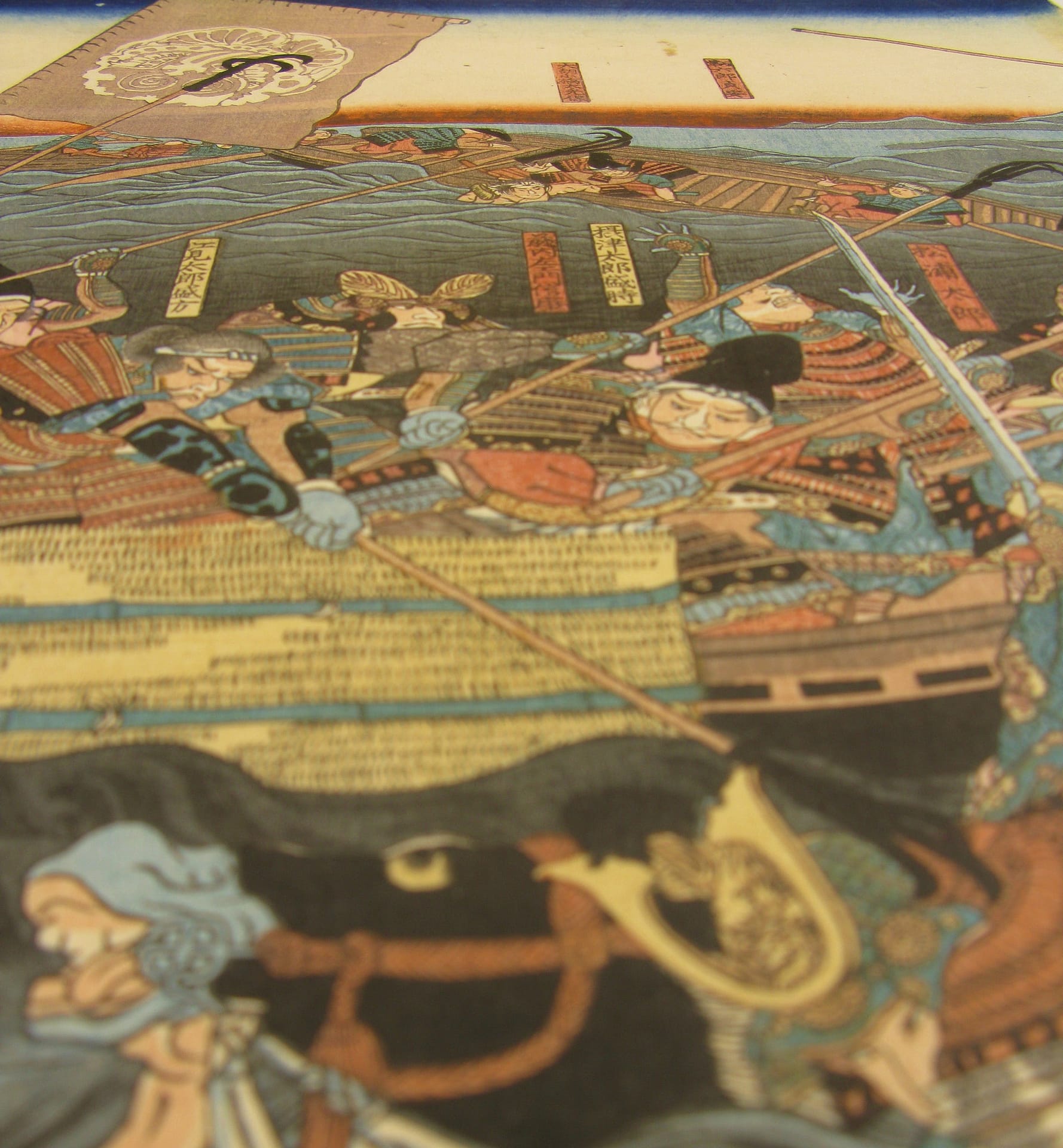
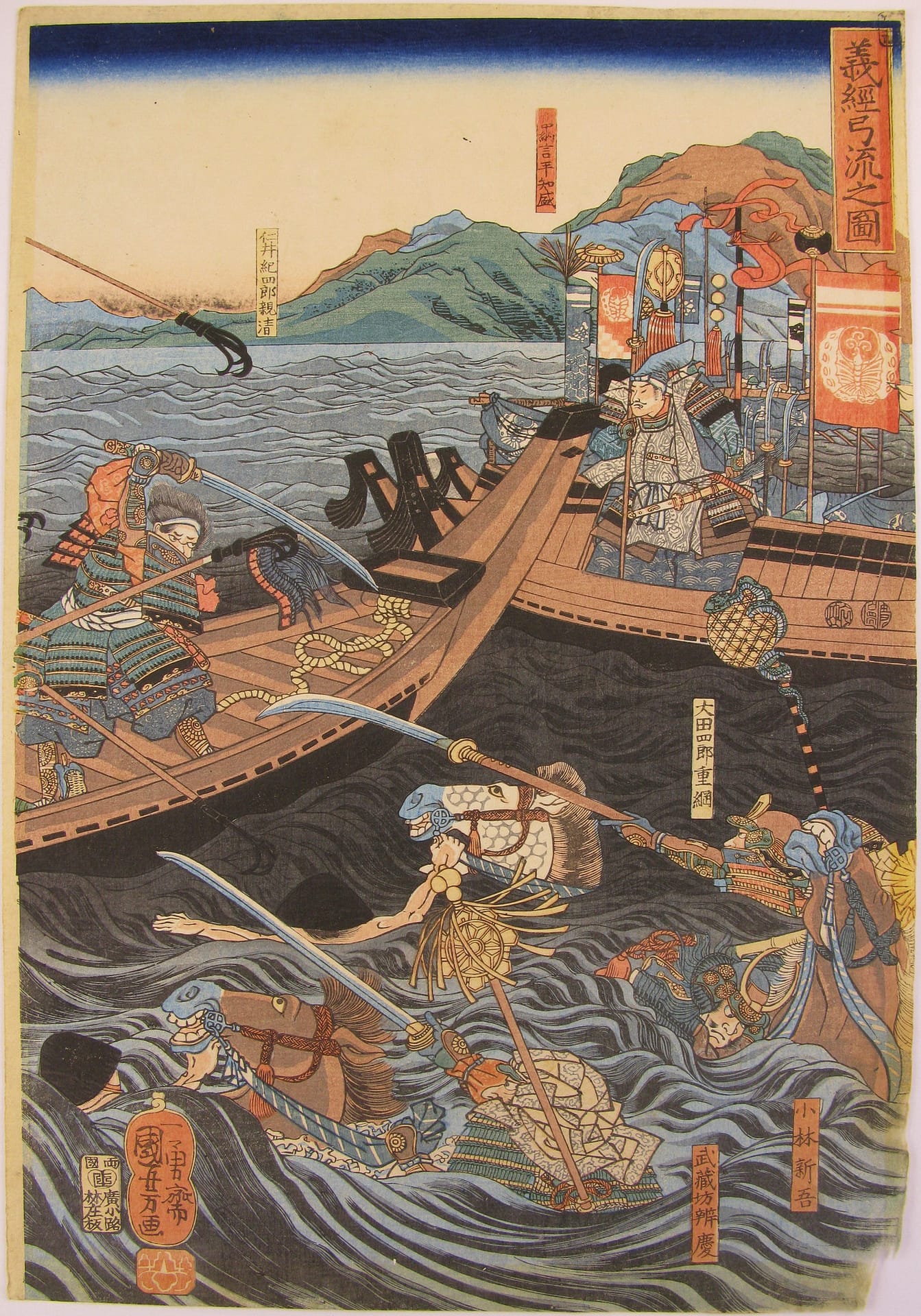
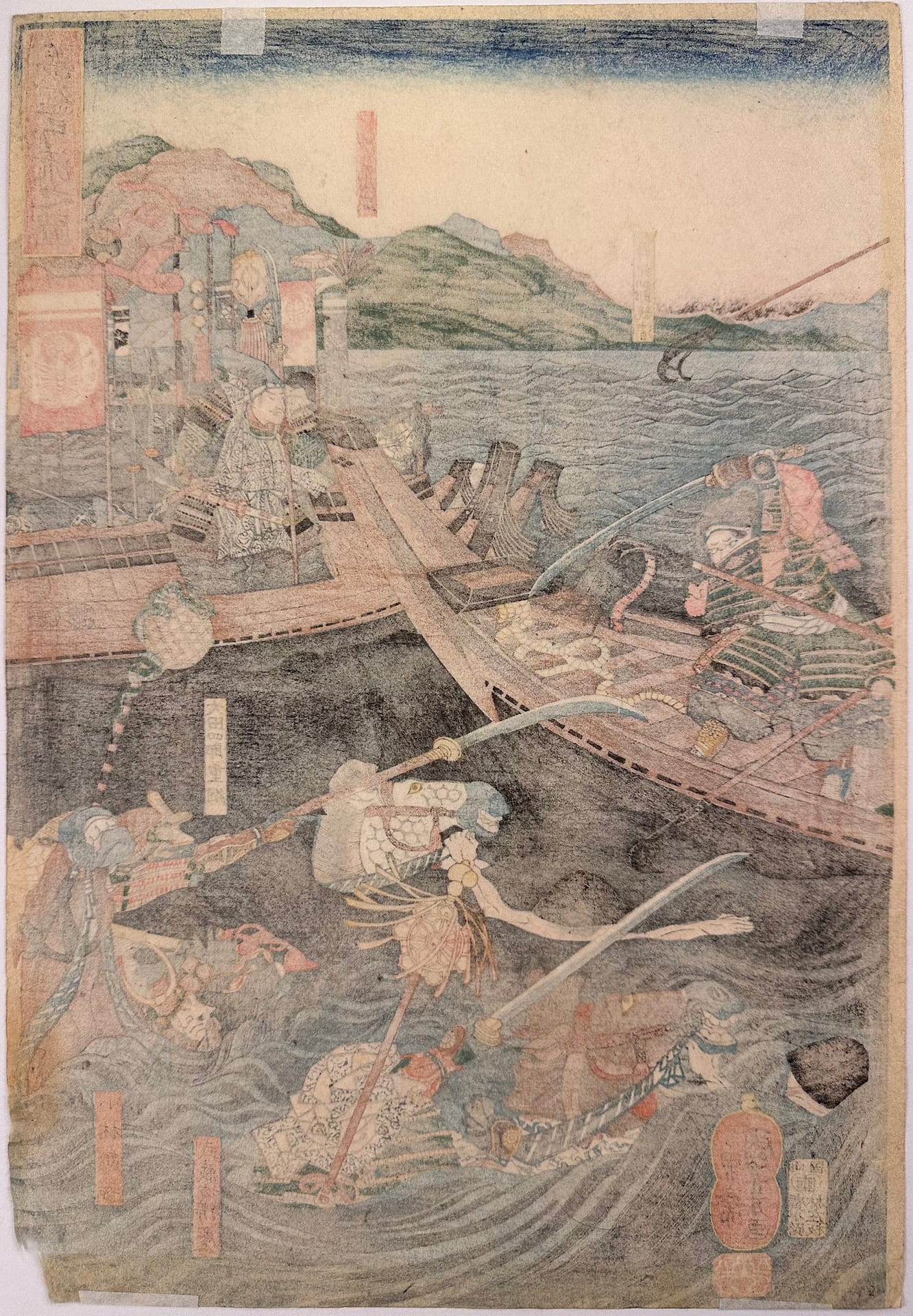
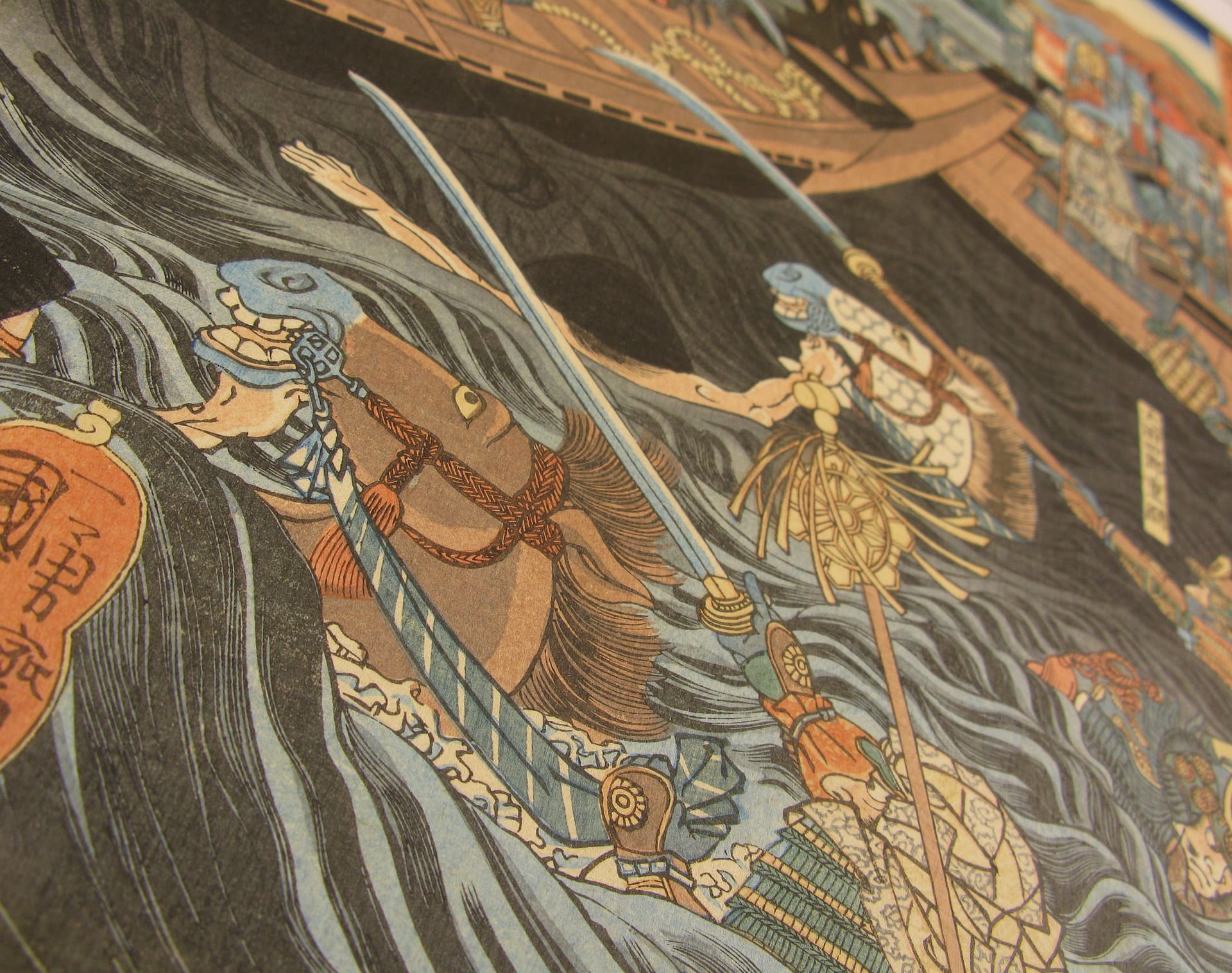
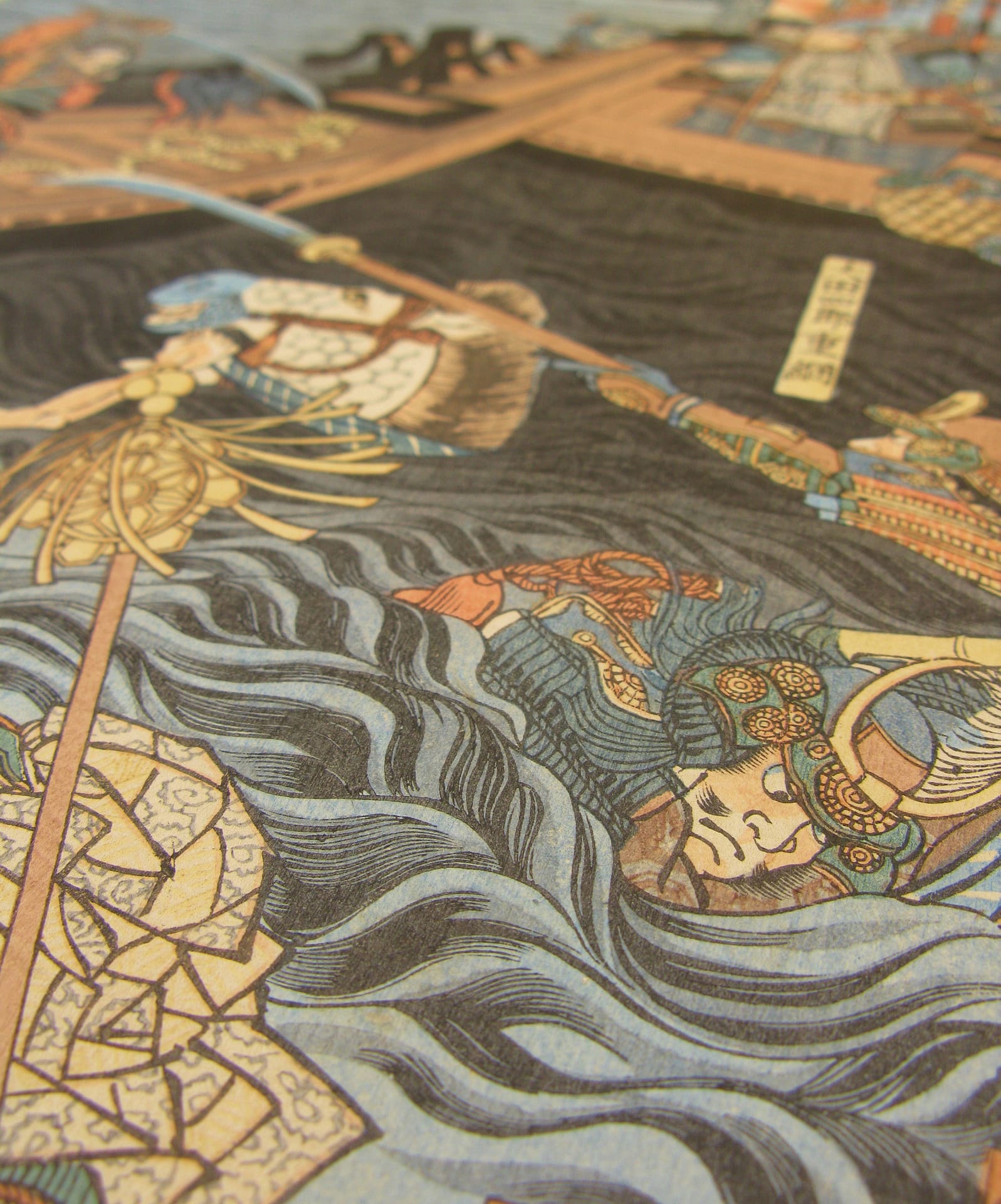
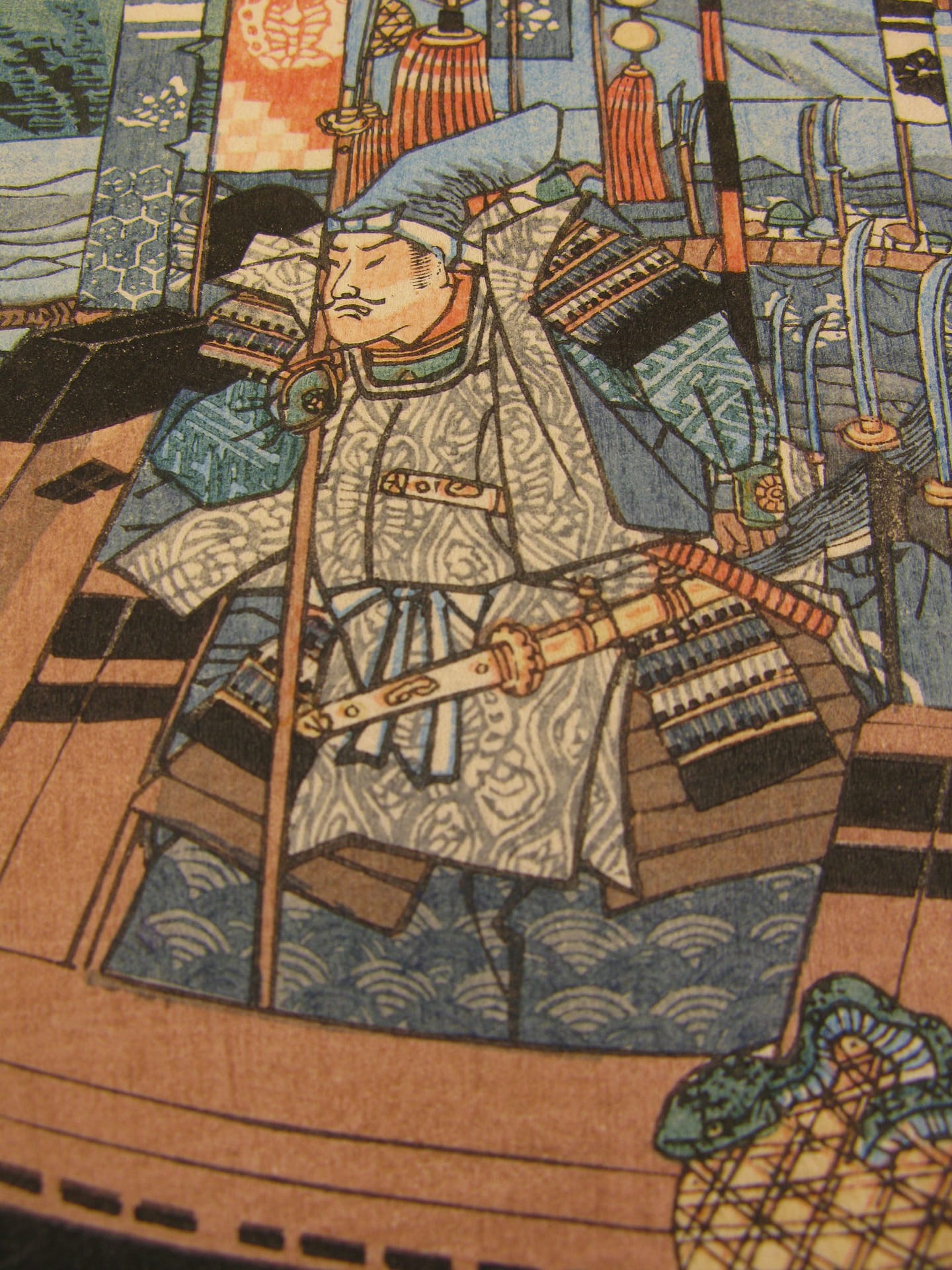
Description: Yoshitsune (義経) after being snagged from his hands by a grappling pole, we see him (bottom centre) recovering his bow from the sea at the Battle of Yashima.
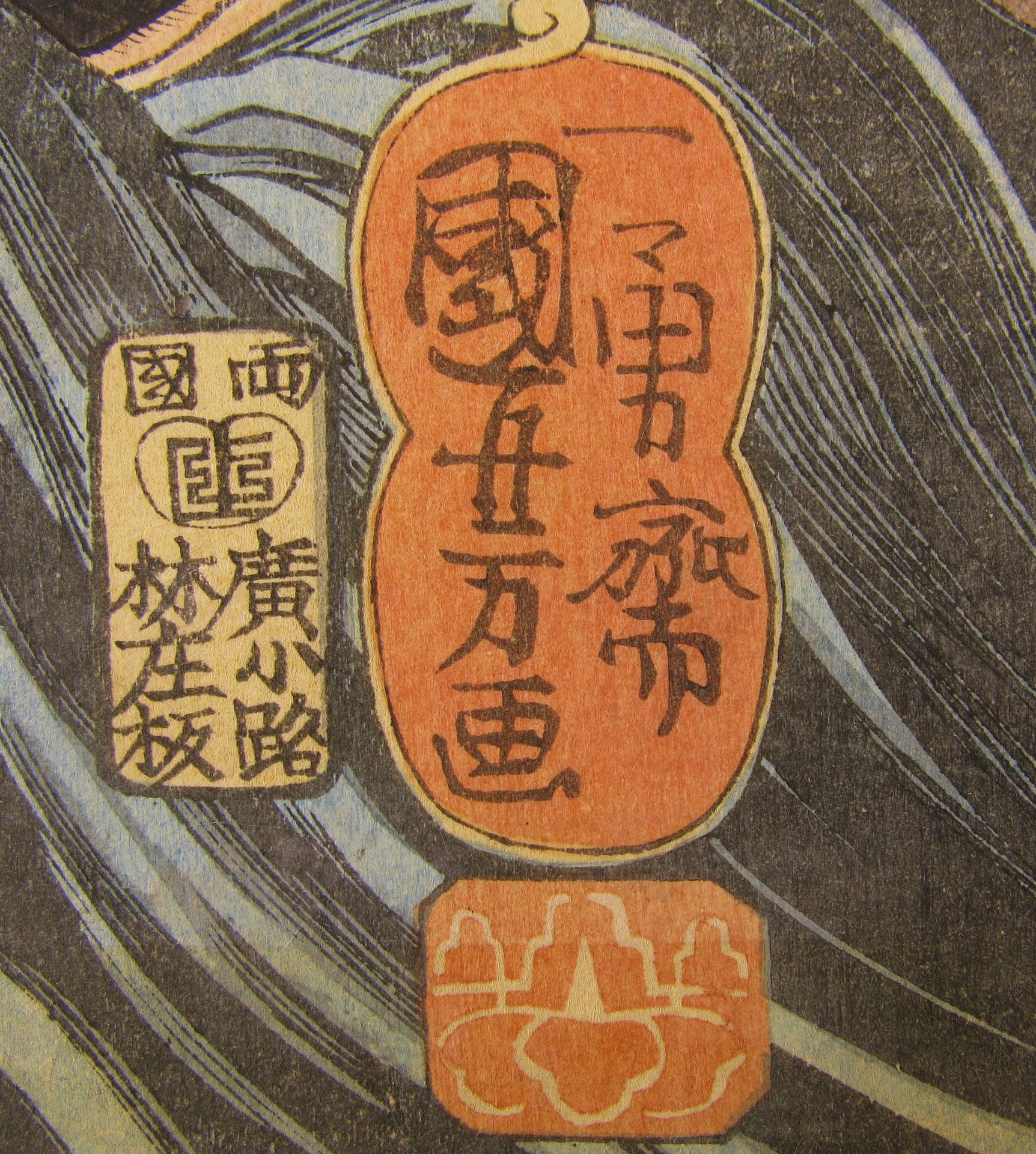
Artist: Utagawa Kuniyoshi (1797 – 1861)
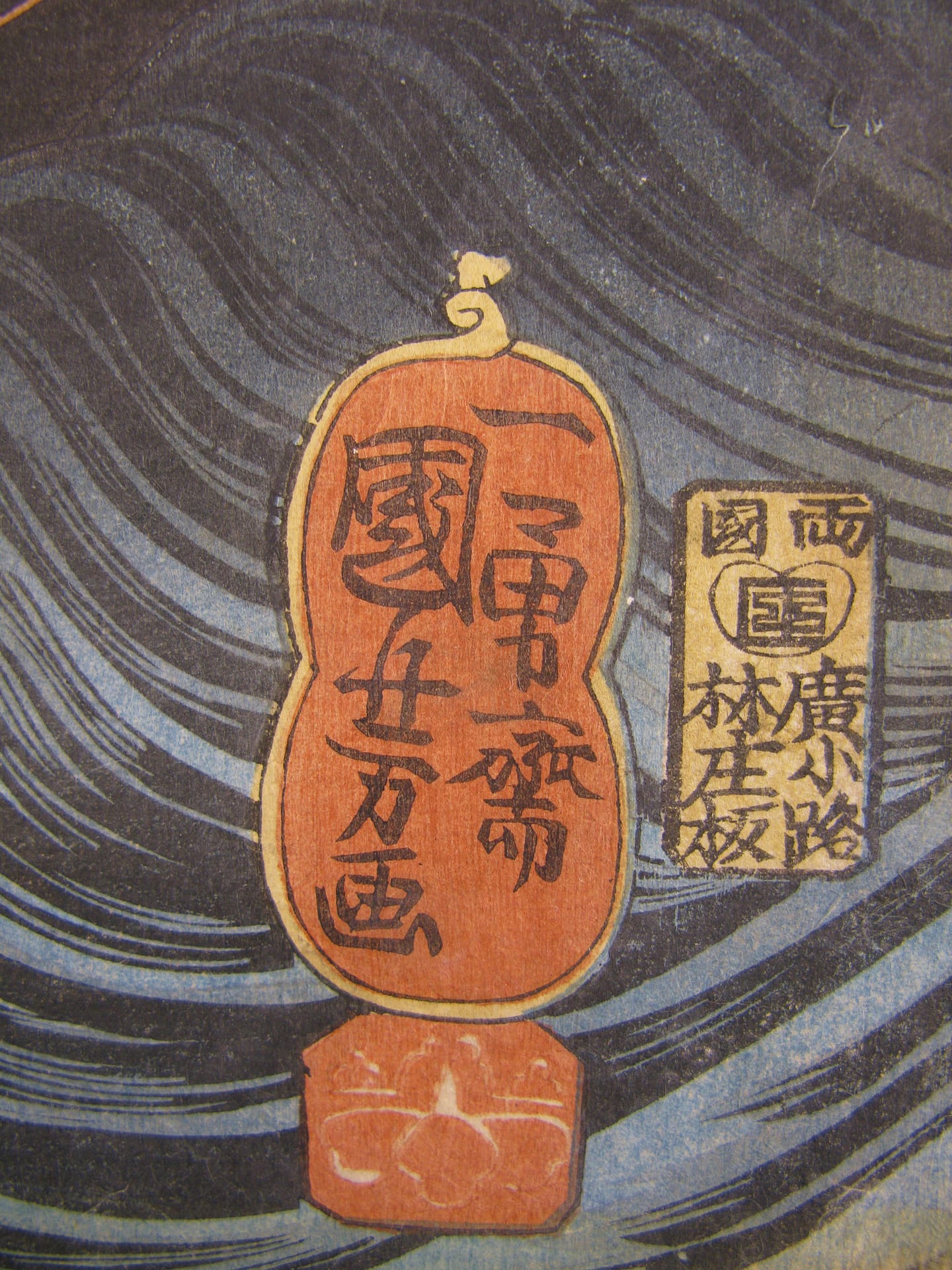
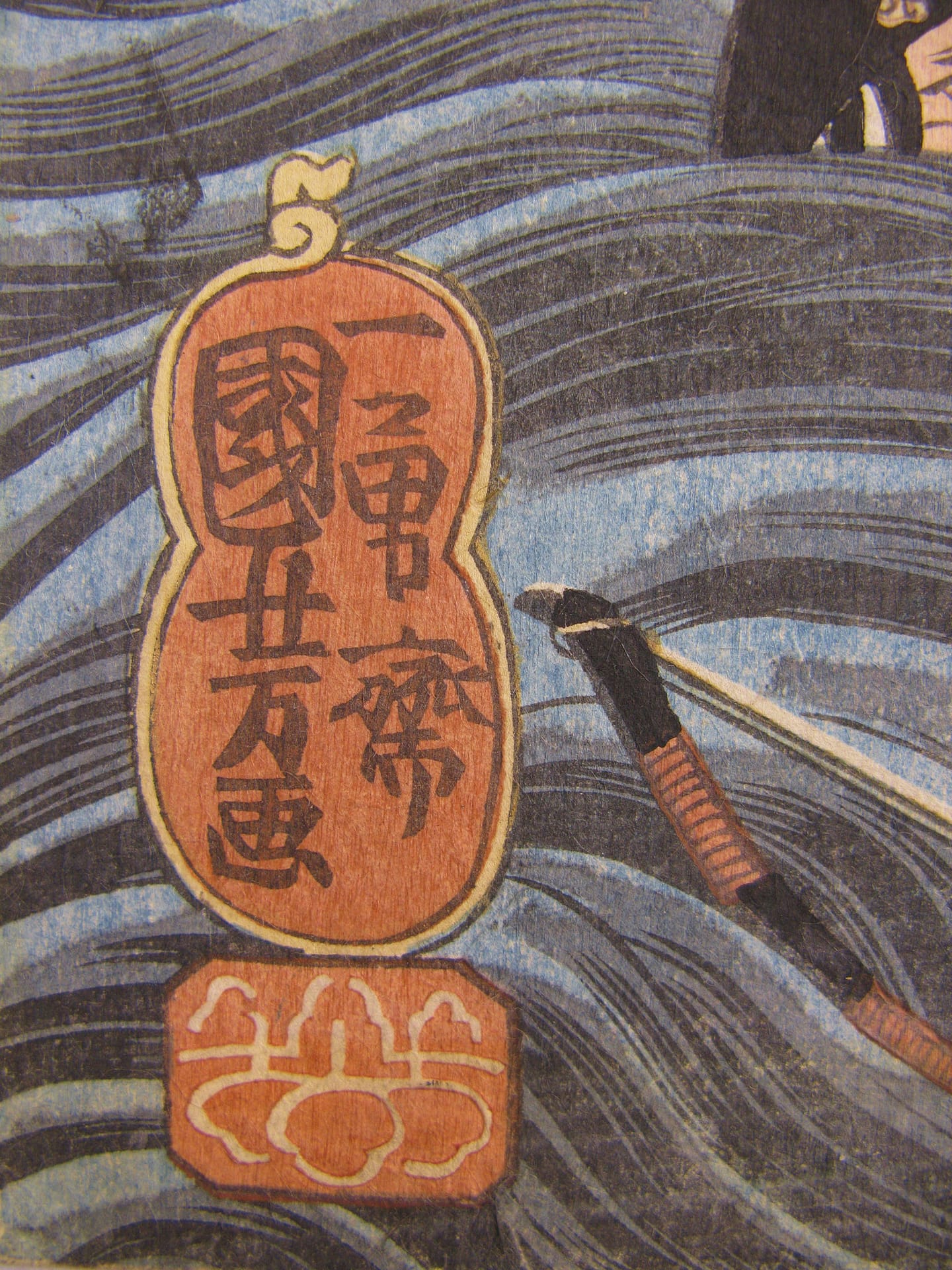
Signature: Signed on all three sheets Ichiyusai Kuniyoshi ga (一勇斎 國芳 画) and kiri seal
Date: 1839-1841
Publisher: Hayashi-ya Shôgorô
Robinson: T221
Condition: Very good impression, good condition some thinning and loss in lower corners
Price: TBC
Tale of the print – with a little twist
The Genpei War (1180–1185) was a pivotal civil war in Japan fought between the Taira and Minamoto clans. The conflict was made up of over a dozen key engagements, starting with the opening clash at Uji and ending with the decisive naval battle at Dan-no-ura. Here we visit one of the final campaigns – The battle of Yashima (1185).
After a long streak of losses, the Taira clan retreated to Yashima — today’s Takamatsu — where they built a makeshift palace for Emperor Antoku and guarded the imperial regalia like overprotective babysitters. They were exhausted, paranoid, and absolutely convinced the Minamoto would attack by sea. They were right… sort of.
The Minamoto fleet tried to cross the sea, but a storm smashed most of their 200 ships. Then Kajiwara Kagetoki suggested adding “reverse oars,” which immediately triggered an argument with Yoshitsune — because nothing motivates a samurai commander like someone telling him how to go row a boat.
Eventually, Yoshitsune said, “Fine, I’ll do it myself,” and set out with five boats. Not fifty, not five hundred, just five. It was the most disrespectful naval invasion in Japanese history. He landed in Tsubaki Bay, marched through the night, and reached Yashima before the Taira even realized he’d left port.
The Taira expected a naval attack, so Yoshitsune lit bonfires behind them, making it look like a massive Minamoto army had somehow teleported onto Shikoku. The Taira panicked, grabbed the emperor, grabbed the regalia, grabbed anything not nailed down, and fled to their ships.
At dawn, they realized the “massive army” was actually 150 guys and a dream, so they turned their ships around and started firing arrows back at the shore.
During the chaos on shore, Yoshitsune nearly took an arrow from Taira Noritsune, the Taira clan’s resident ‘shooter of long pointy things’ champion. But Sato Tsugunobu, Yoshitsune’s loyal vassal, leapt in front of the shot and took the arrow himself. He died instantly, becoming the poster child for “loyalty done just right.”
Nasu no Yoichi, the Genji (Minamoto) archer with nerves of steel, rode his horse into the sea, prayed to the gods, and shot an arrow at a fan perched on a pole atop a Taira ship. He hit it, the fan spun, the Minamoto cheered. The Taira gasped, and to be honest, quite a few cheered also. Yoichi became the medieval Japanese equivalent of a viral tik tok sensation, and the Minamoto soldiers began their pursuit into the ocean with Yoshitsune leading the charge, Benkei close on his heels, well, close on his horses tail at least.
In the middle of the pursuit, snagged by a Taira grappling hook, Yoshitsune dropped his bow into the ocean. His men shouted, “Leave it! It’s just a bow!” But Yoshitsune said, “No. It’s not just a bow … it’s a very small bow.”
He rode deeper into the waves — and under a rain of grappling hooks, pole weapons, arrows and swords— fished it out with a rake.
Why risk your life for a bow, his men asked? “If it was more like my uncle Tametomo’s (T140), and took two or three men merely to string it, I might have dropped it for them on purpose”; says Yoshitsune; “if the Taira found his tiny, lightweight bow, they’d laugh themselves sick and say the Minamoto commander fought with a child’s toy.”
The Minamoto won the battle, but most of the Taira fleet escaped to Dan‑no‑ura, where they would meet their final defeat one month later.