Ushiwakamaru studies bujutsu with Sôjô-bô
Title: Ushiwakamaru Sôjô-bô no shitagau bujutsu wo (牛若丸僧正坊隋武術覚圖)
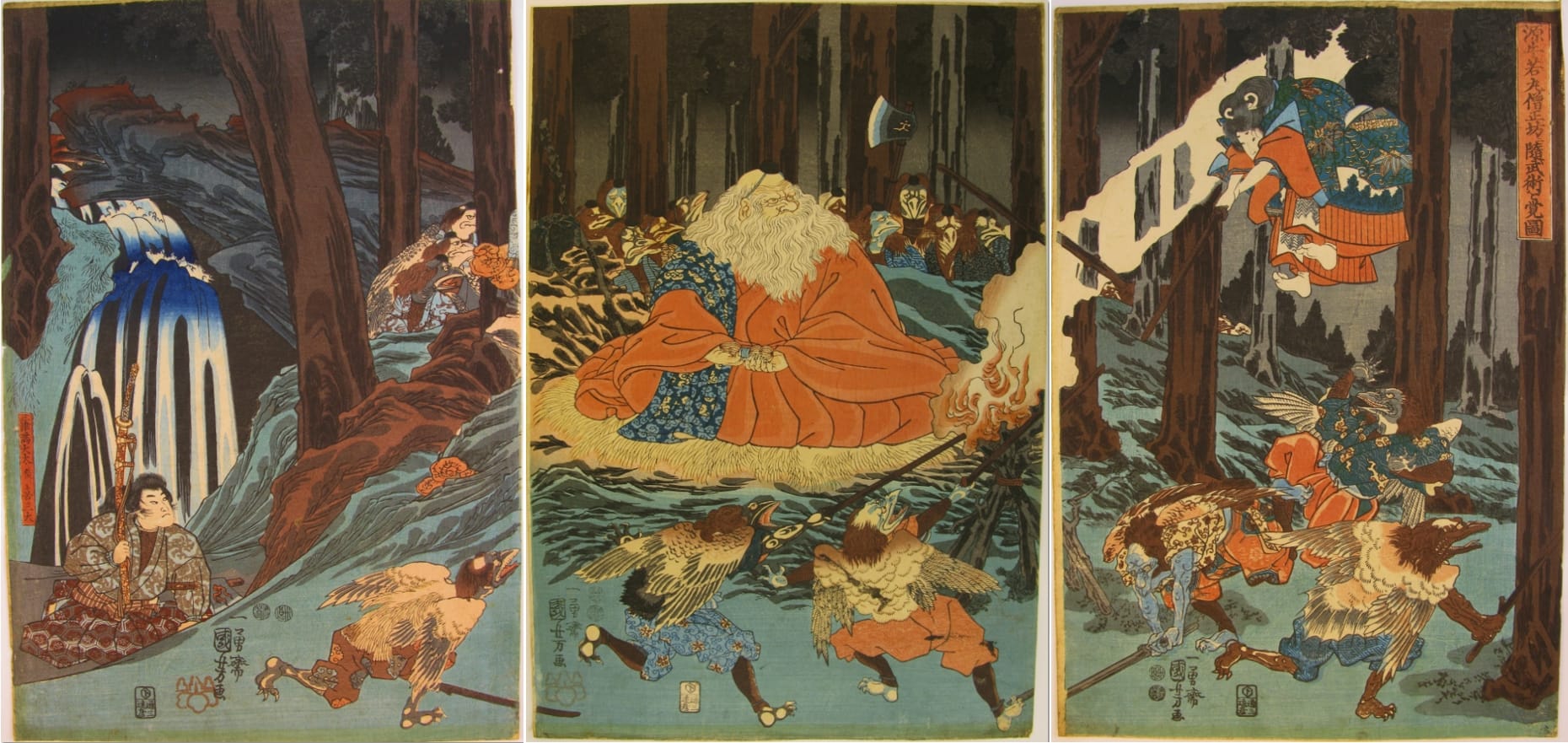
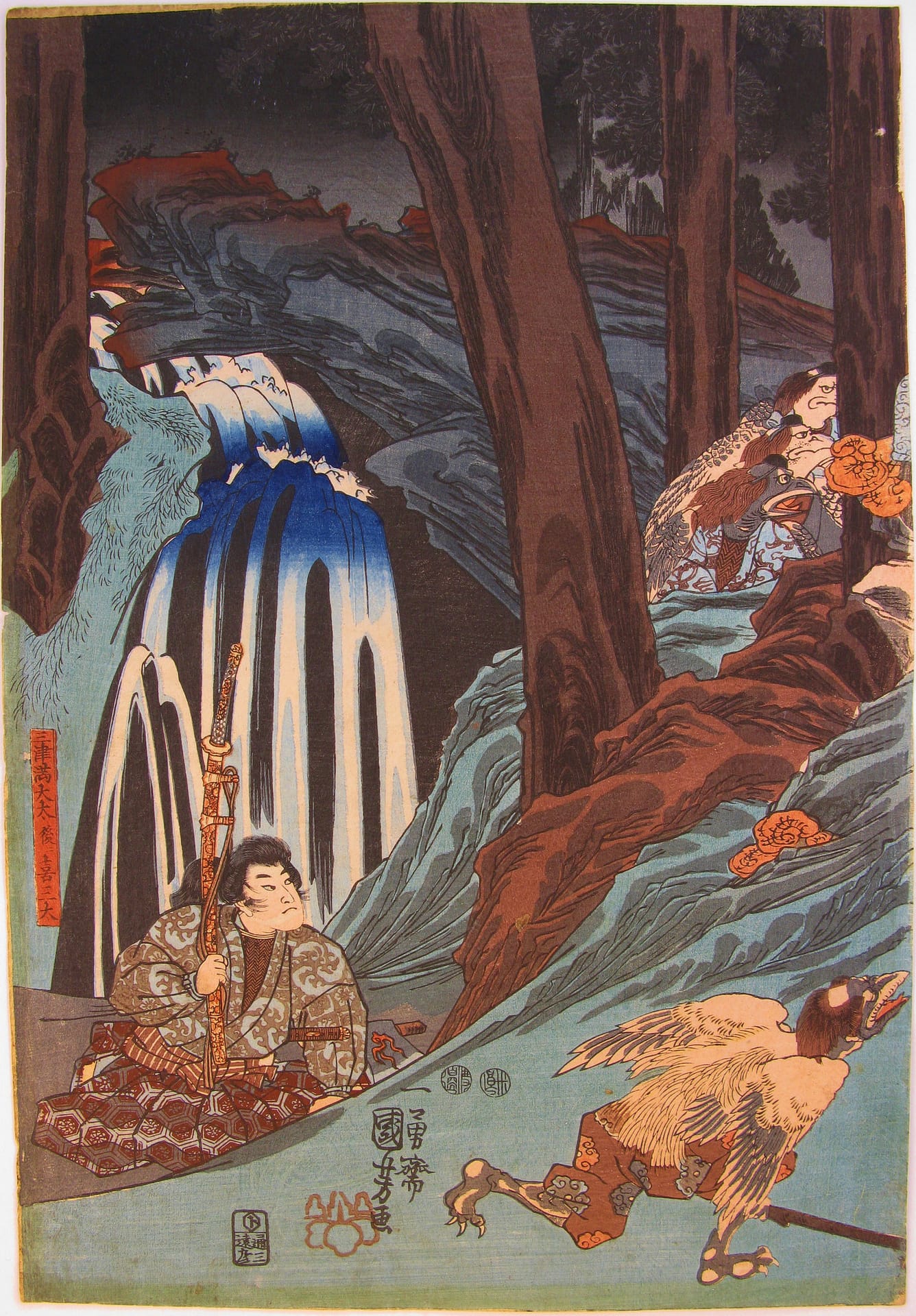
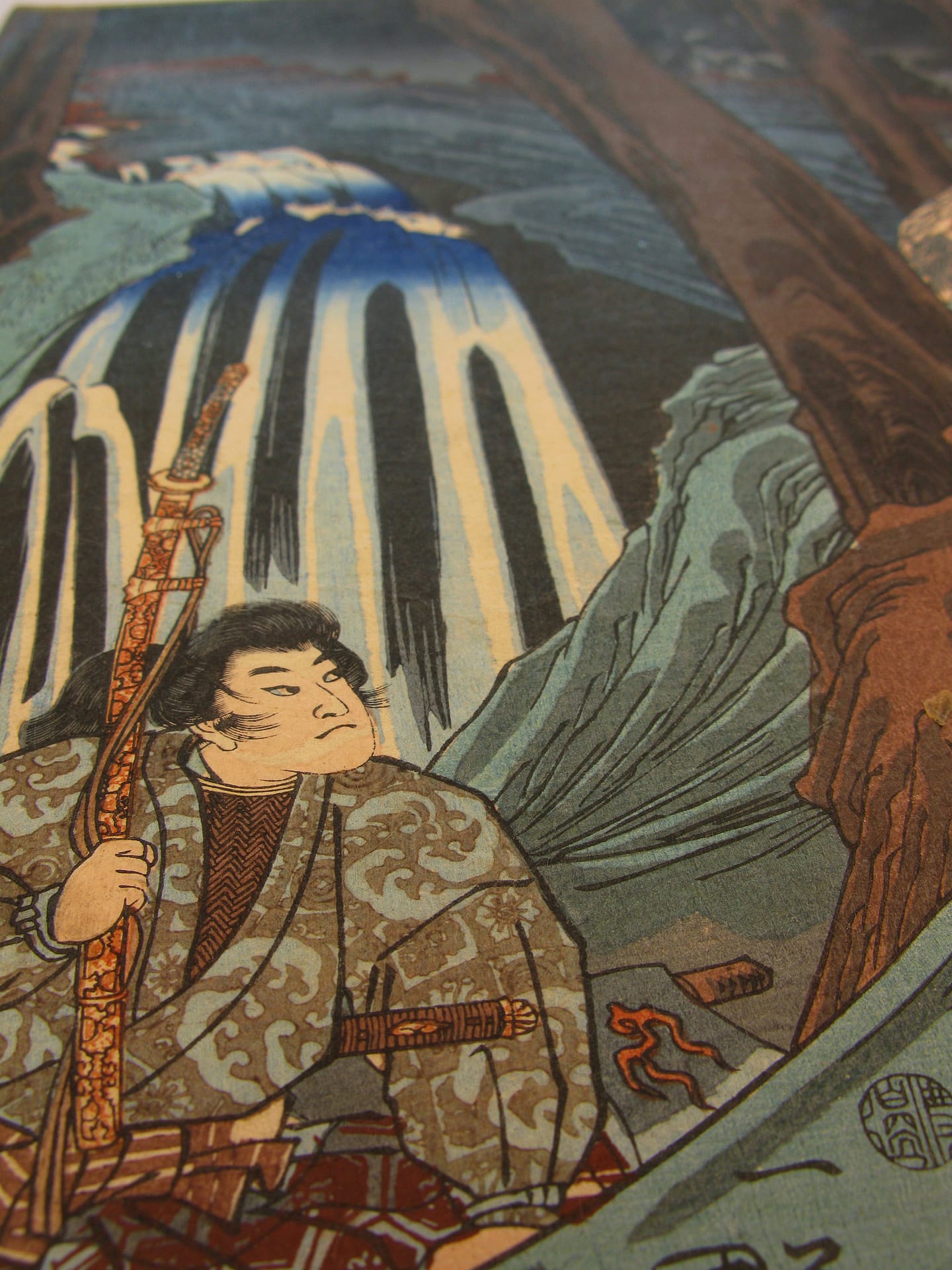
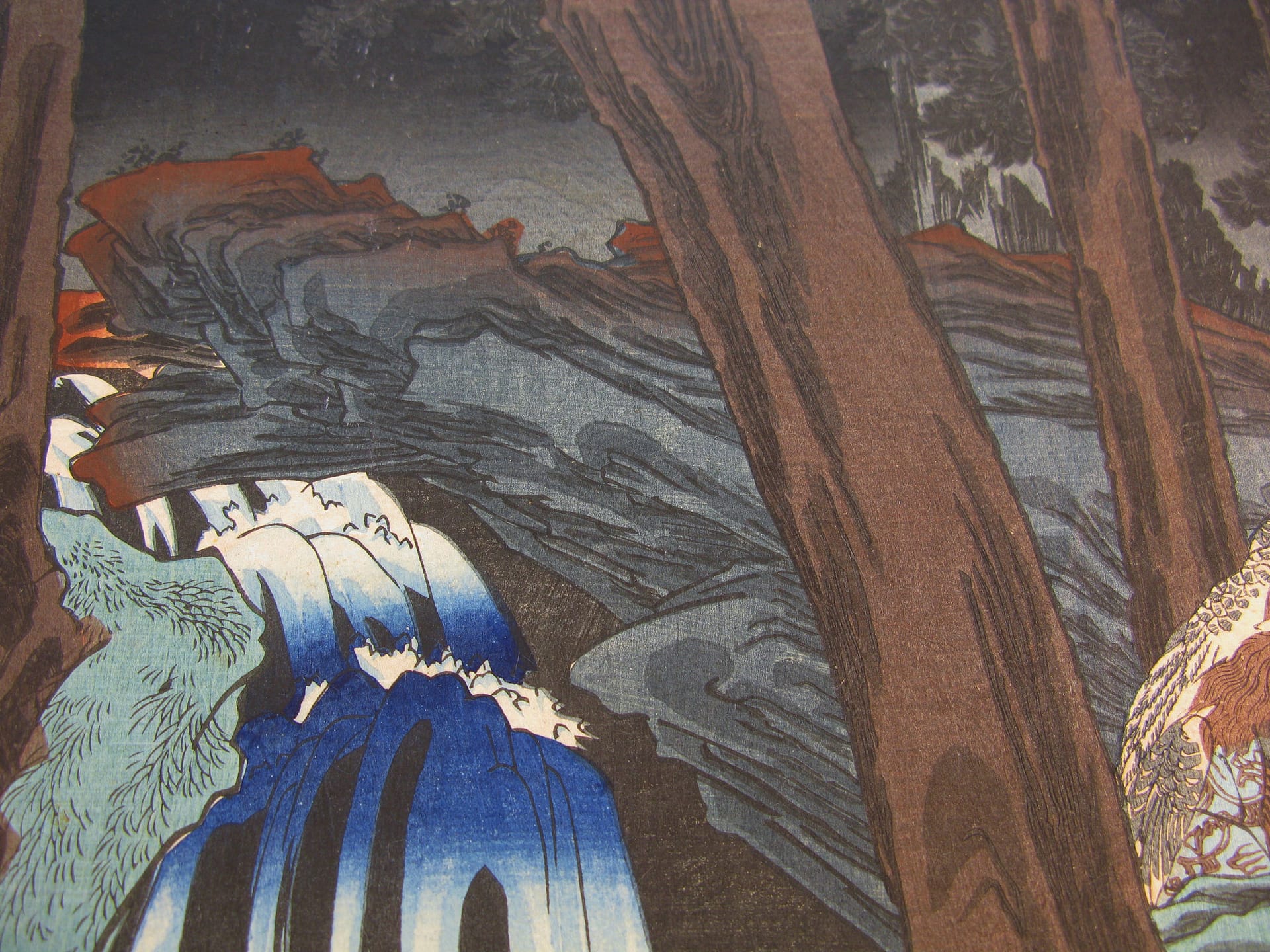
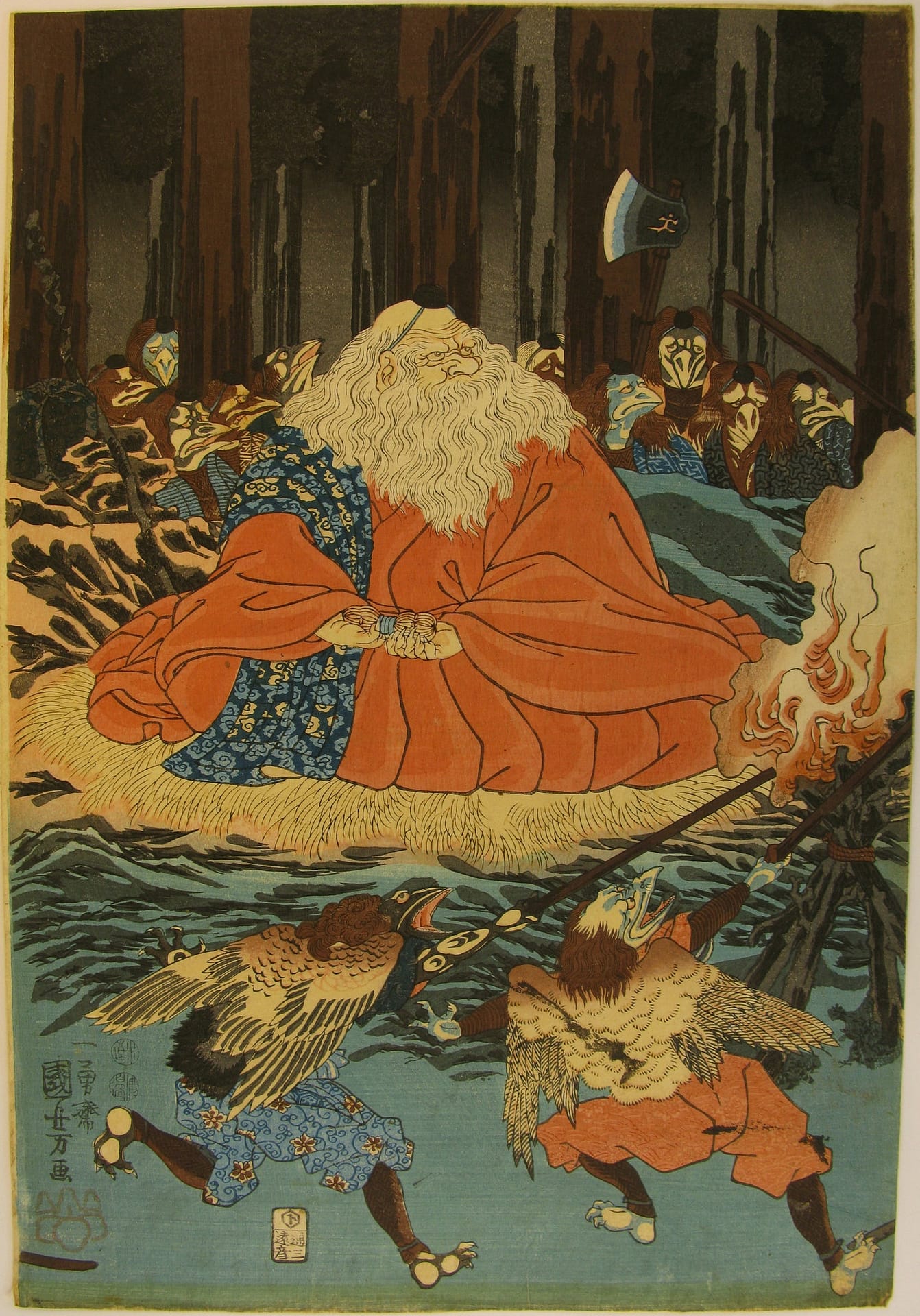
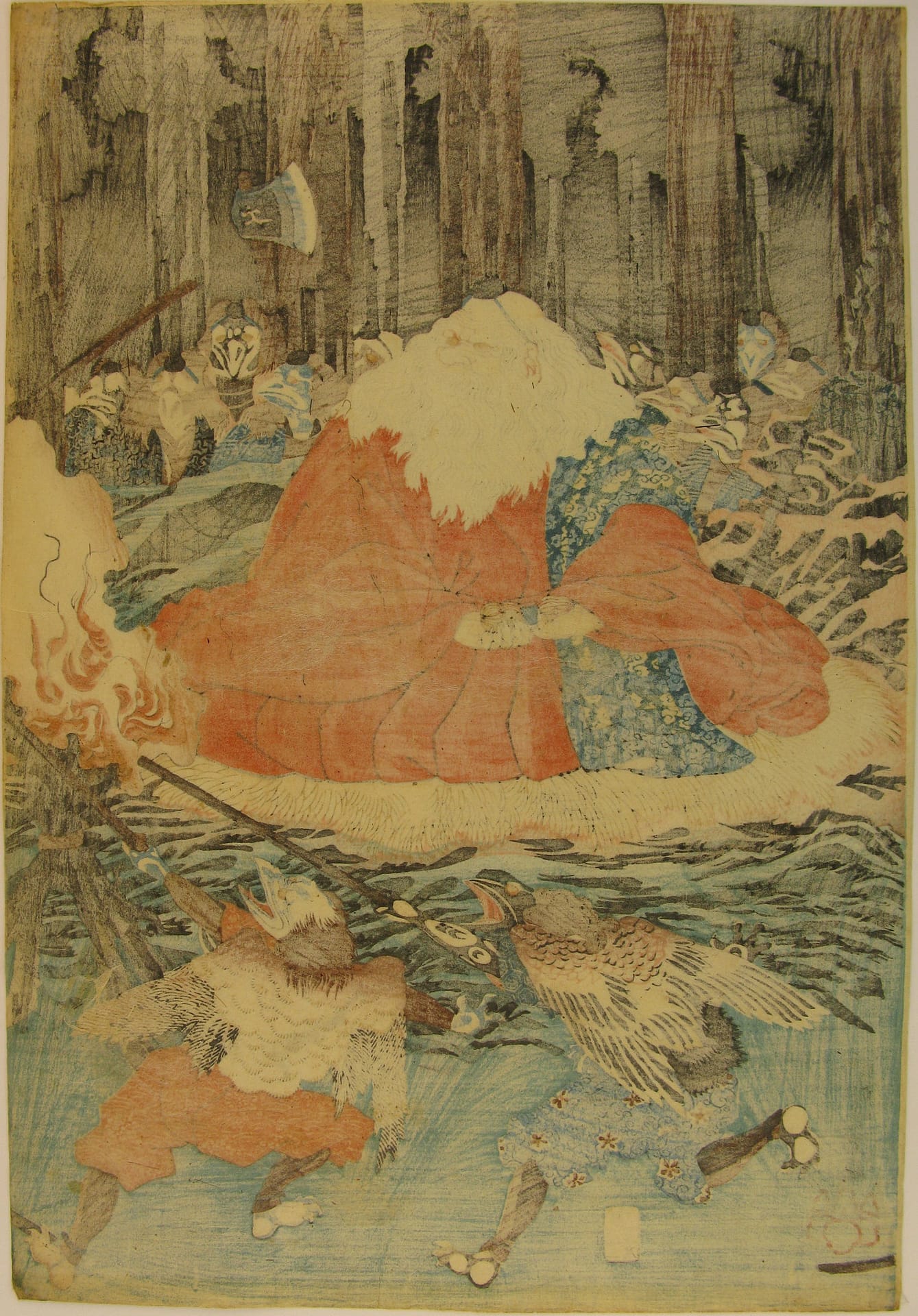
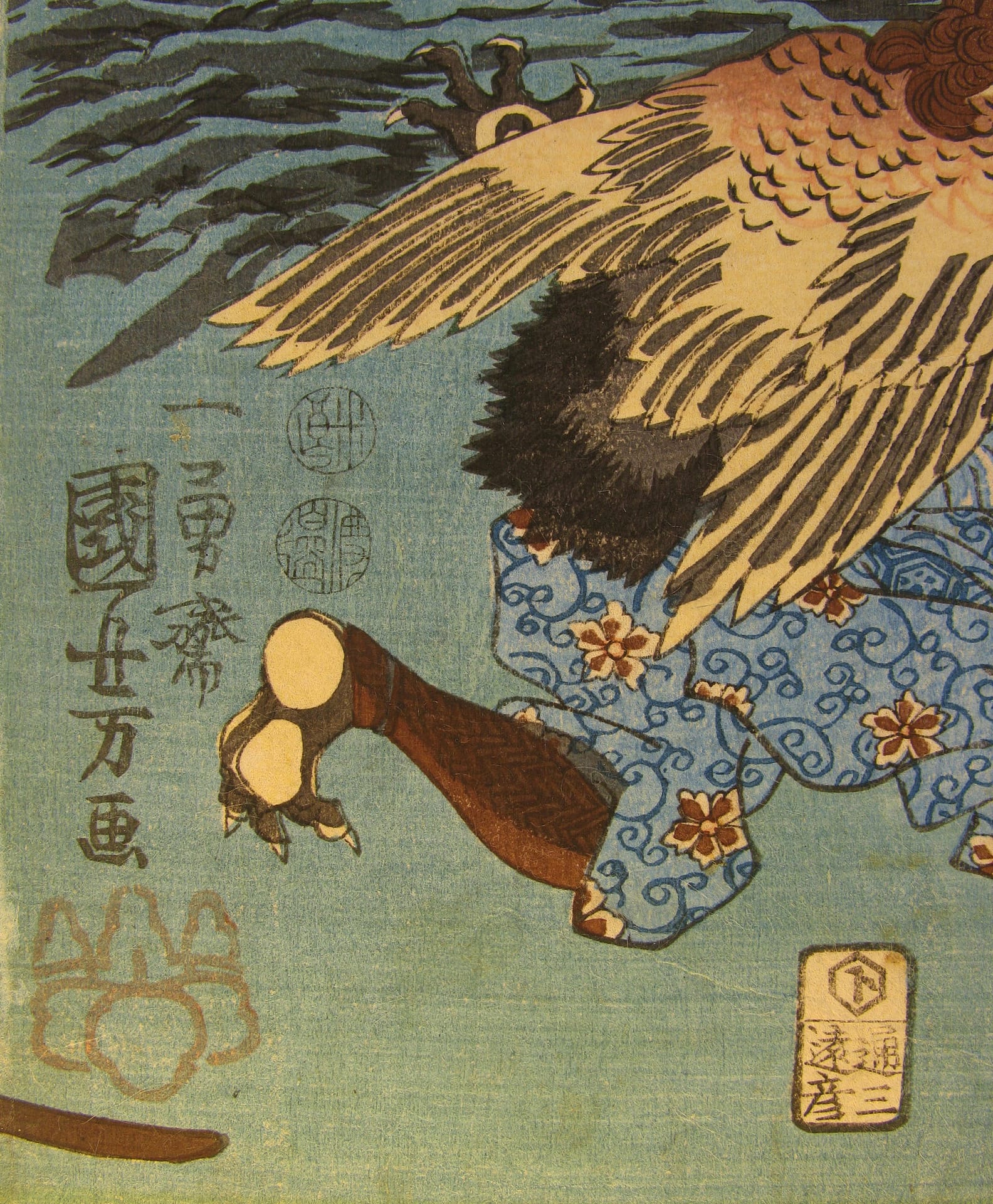
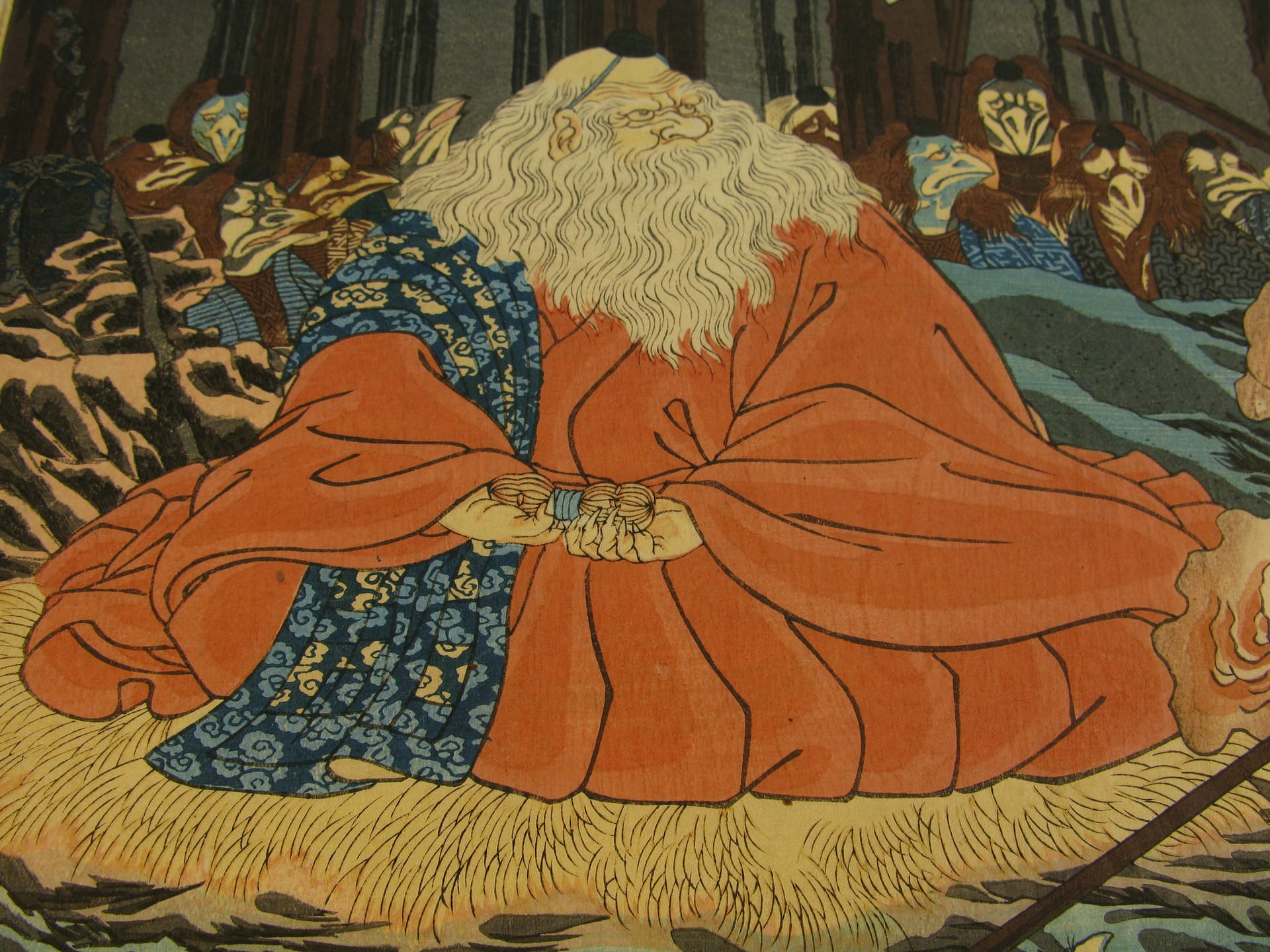
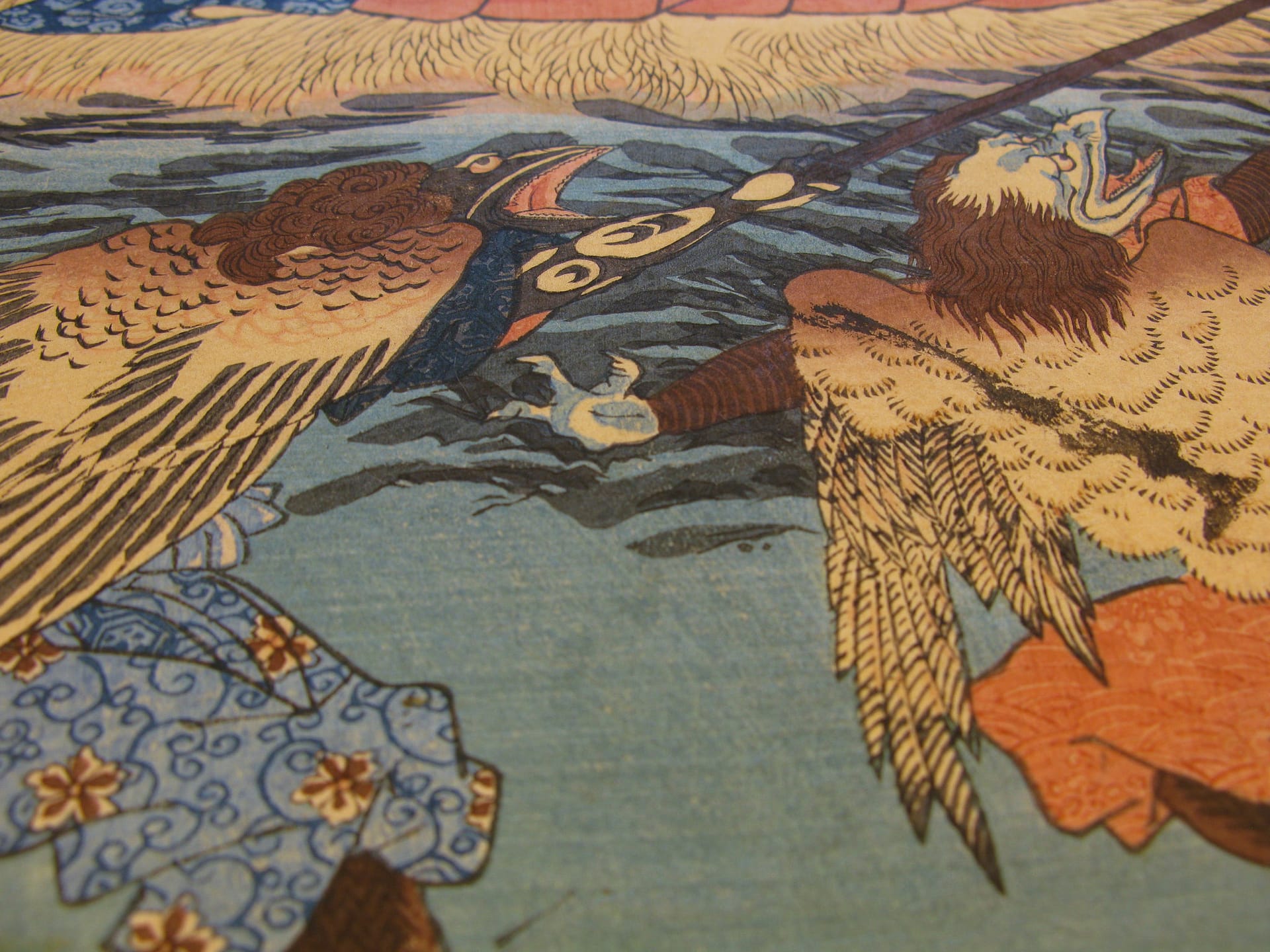
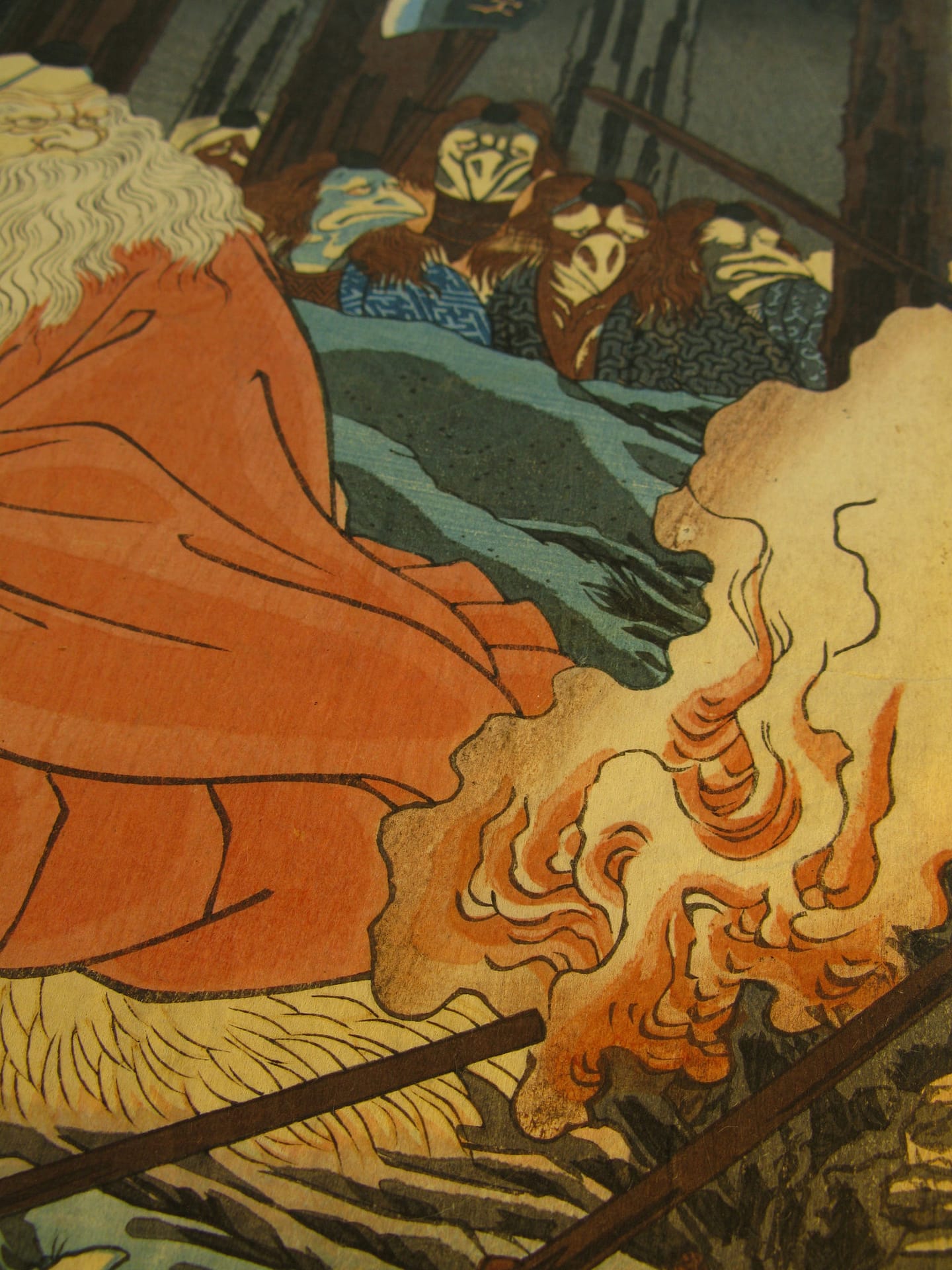
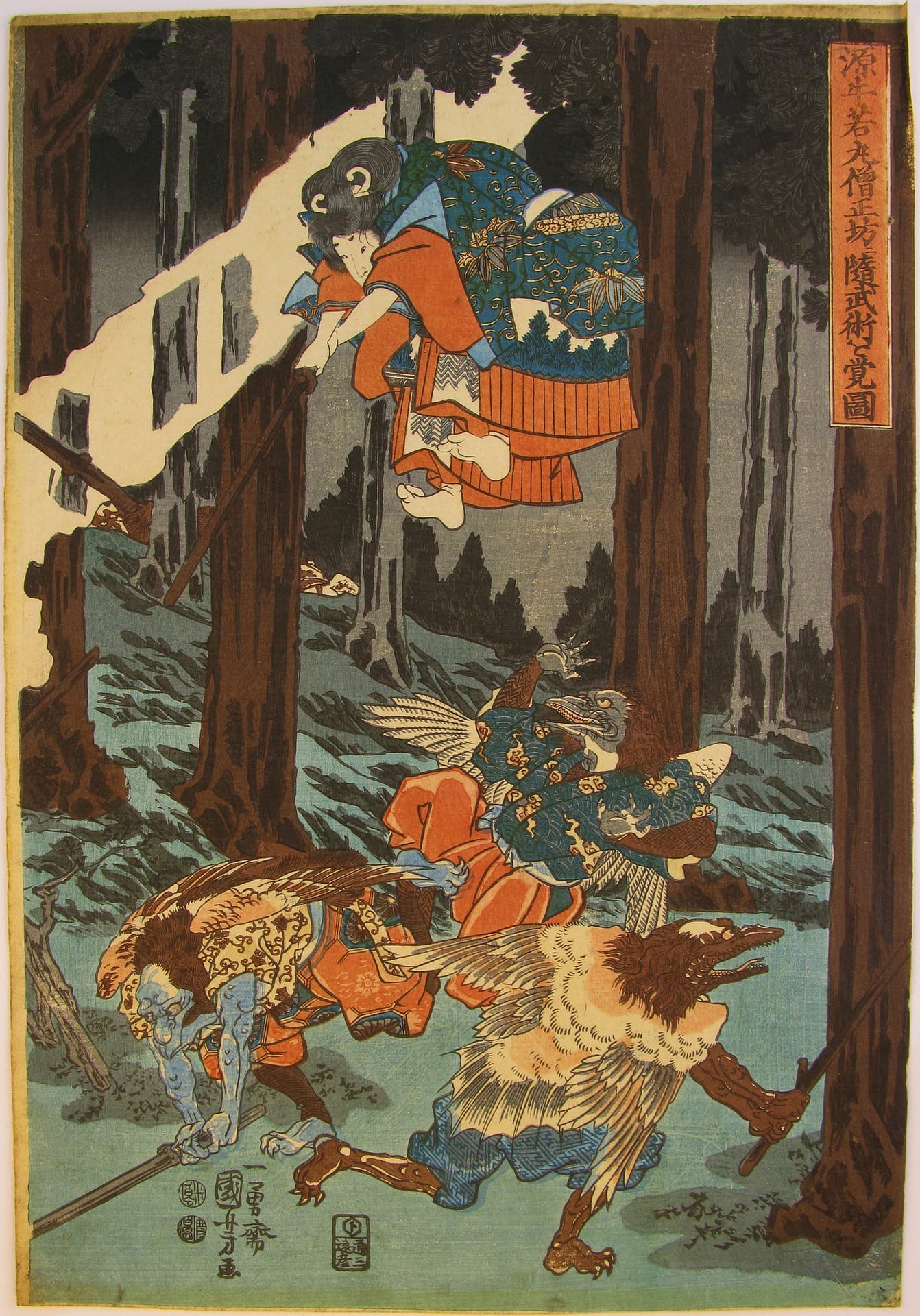
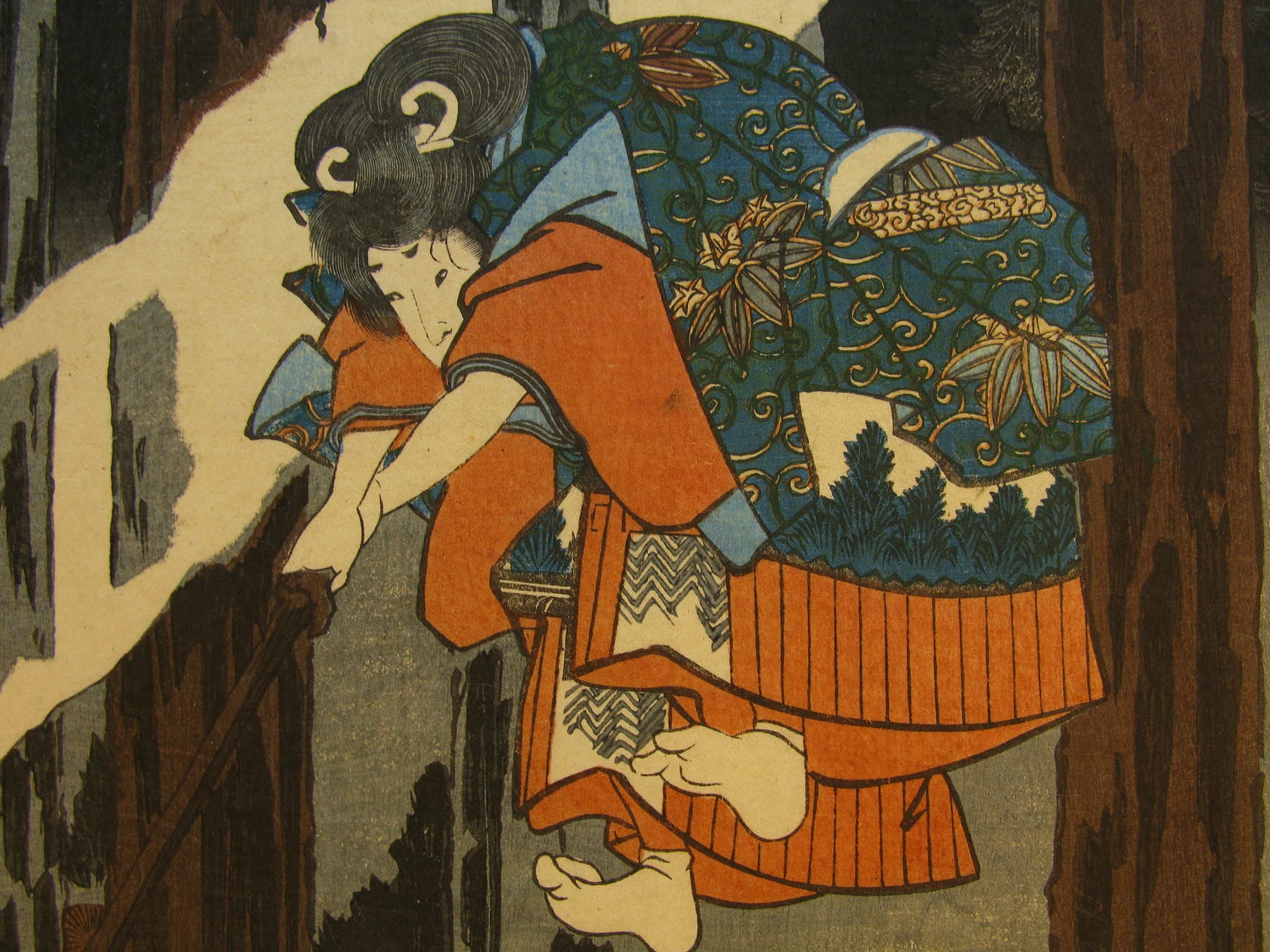
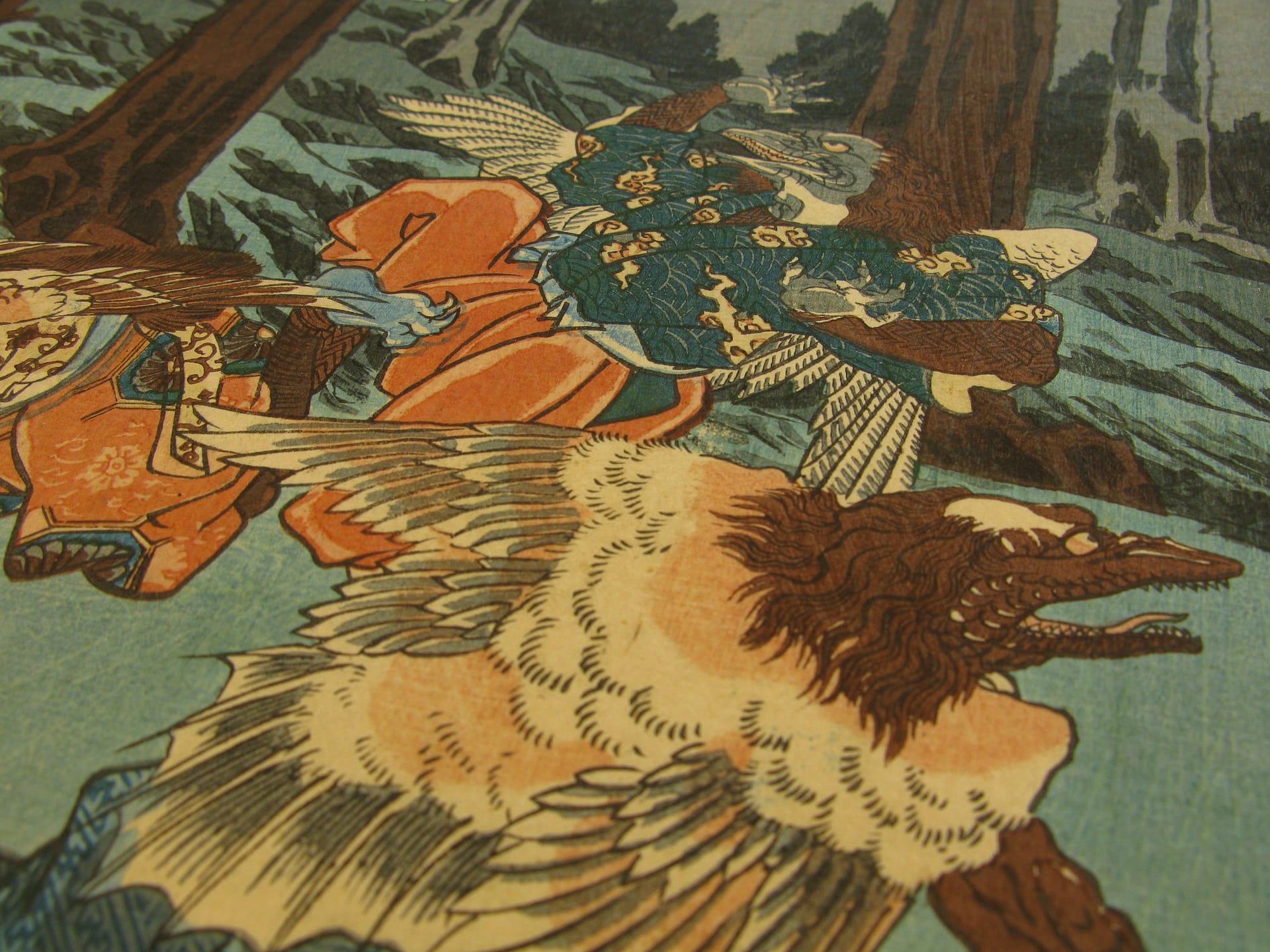
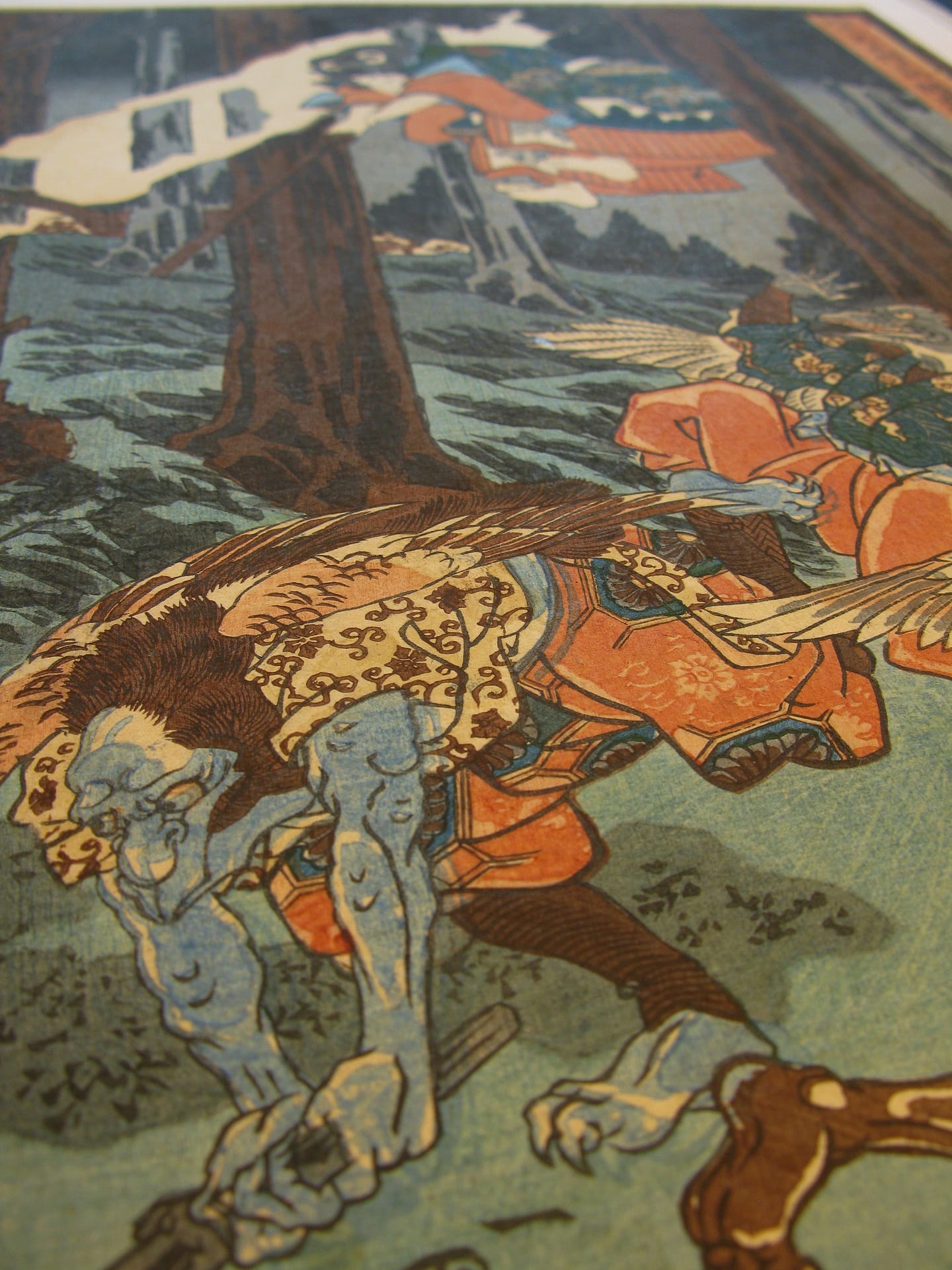
Description: Ushiwaka Maru, attended by Kisanda, practicing fencing with the tengu in the forest at night under the direction of their king, Sôjô-bô
Artist: Utagawa Kuniyoshi (1797 – 1861)
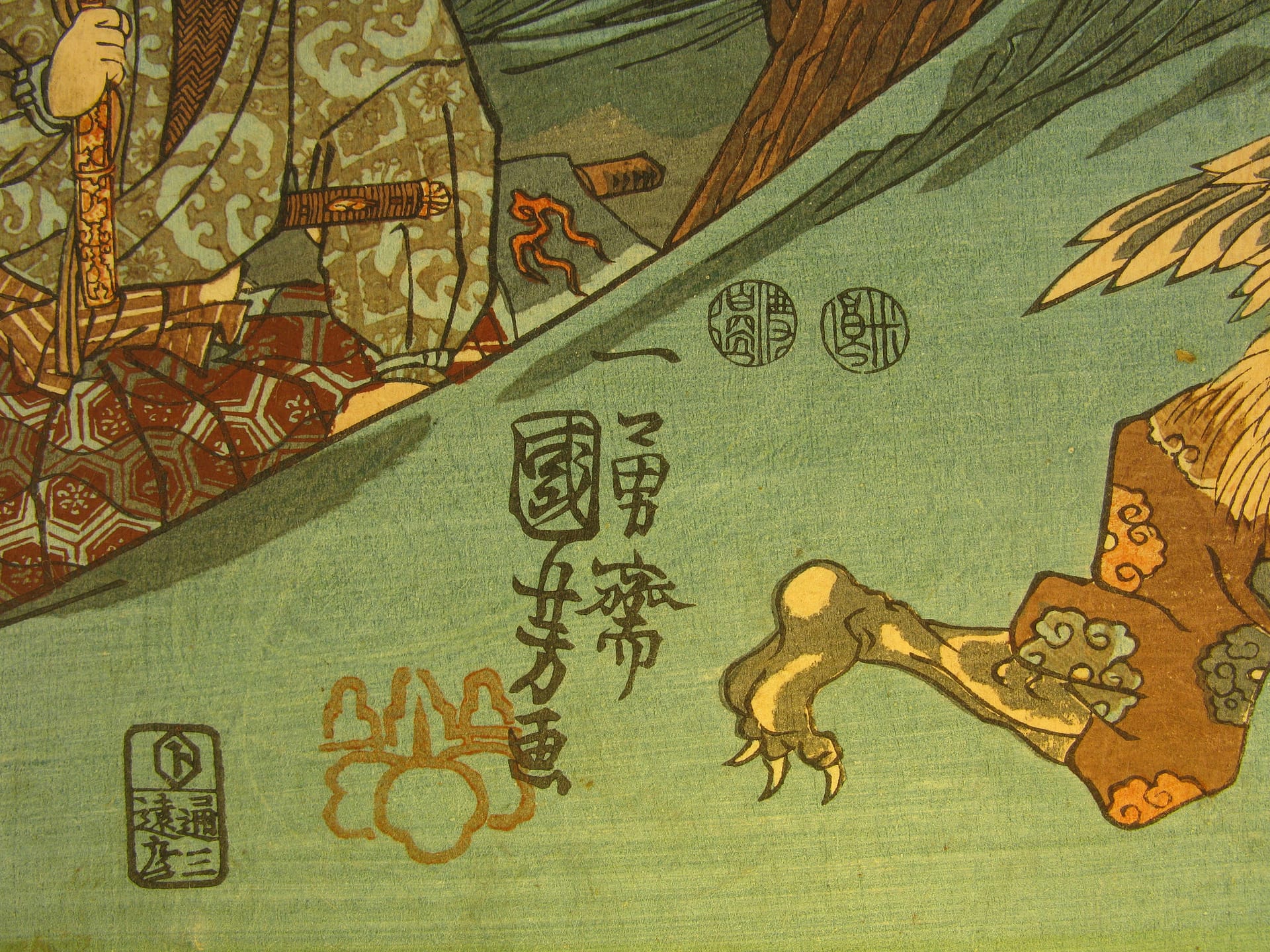
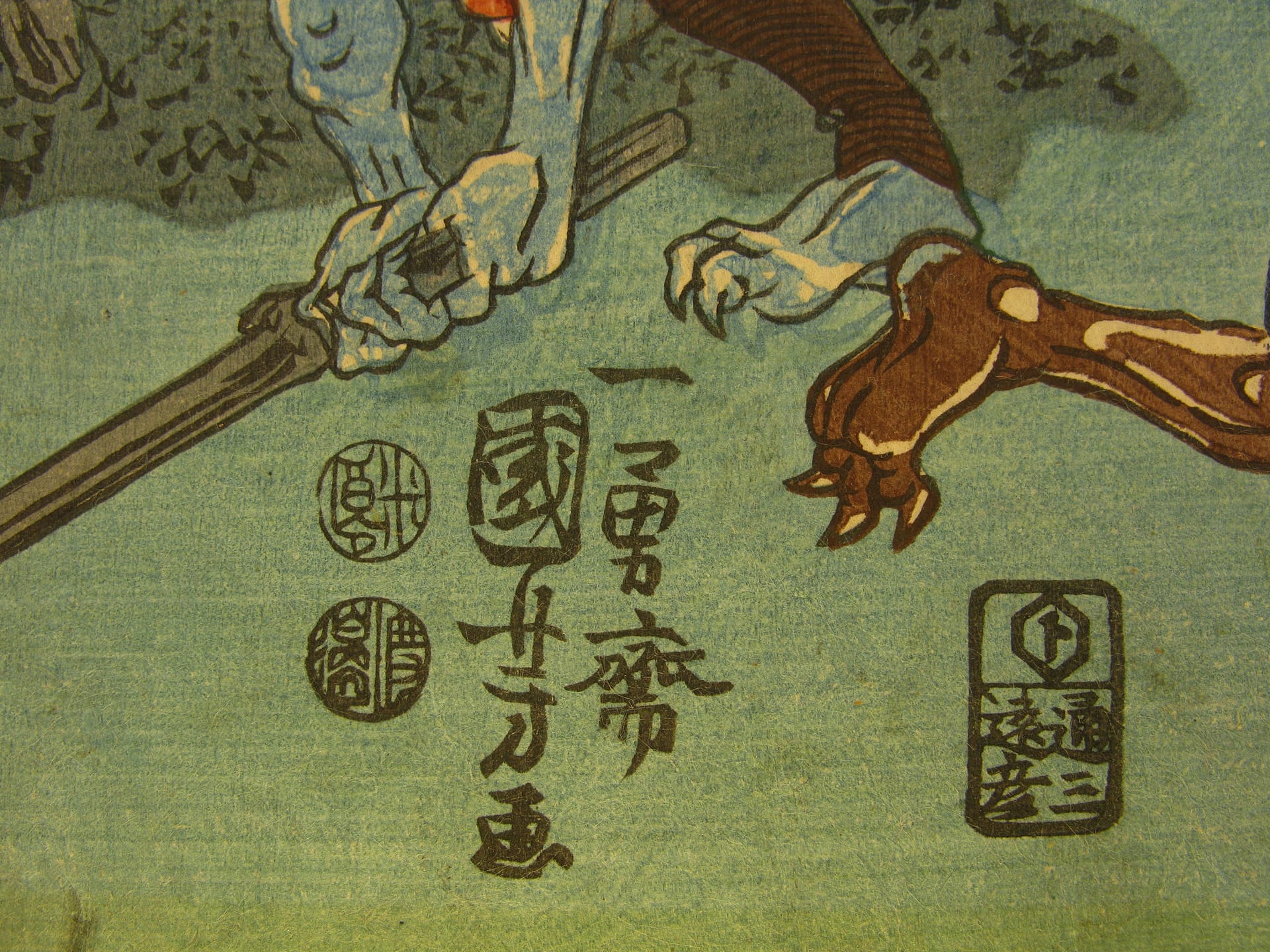
Signature: Signed on all three sheets Ichiyusai Kuniyoshi ga (一勇斎 國芳 画)
Date: 1851-52
Publisher: Enshû-ya Hikobei
Robinson: T264
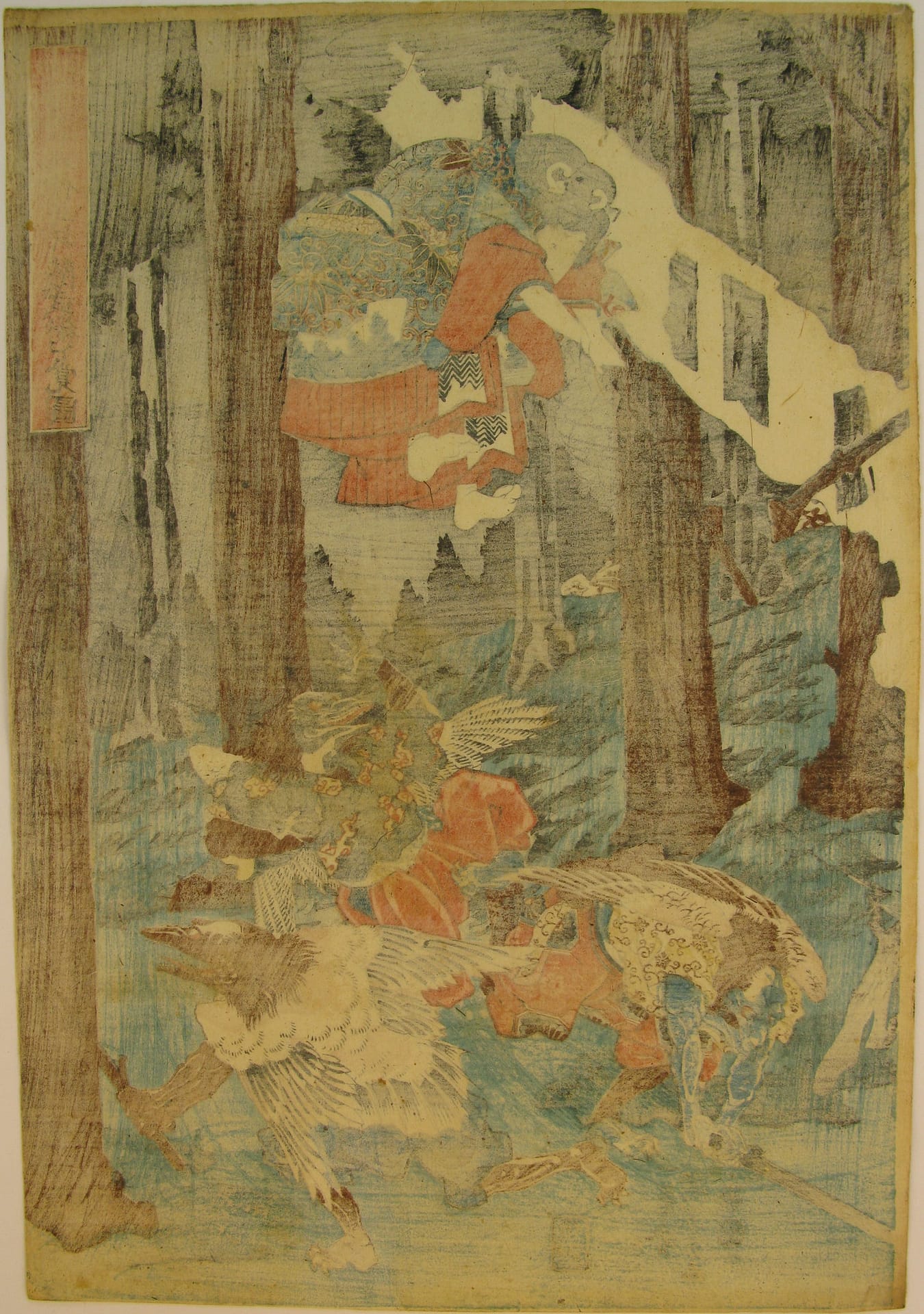
Condition: Good impression, colours, and condition with some mica application. Noting the colour inconsistency between the sheets is more a lighting artifact than actual differences, I will try and correct
Price: TBC
Tale of the print – with a little twist
The boy monk who wagged temple school, befriended mountain goblins, and became Japan’s first parkour prodigy!
After the Heiji Rebellion of 1160, the Taira clan wiped out most of the Minamoto leadership and decided the safest thing to do with baby Yoshitsune was to send him to Kurama‑dera temple in the mountain forests of north Kyoto, and make him a monk.
This was a mistake, big mistake, huge in fact.
Young Ushiwakamaru had the attention span of a caffeinated squirrel (no doubt today would be diagnosed with ADHD) and absolutely no interest in chanting sutras. While the monks were trying to teach him scripture, he was outside practicing martial arts, sword craft, backflips and plotting revenge.
Every night he snuck into the deep forests of Mount Kurama, swinging sticks like swords and imagining dramatic speeches for the day he would avenge his father. (I am not going to reference the Princess bride here, though I really want to).
High on the mountain lived Sōjōbō, king of the tengu (heavenly/celestial dogs) — a supernatural yamabushi spirit with the strength of a thousand normal tengu and the patience of zero.
One night he watched Ushiwaka leaping around the forest like a hyperactive deer and thought: “This child is either going to die or become legendary. I should intervene.” So he appeared dramatically (as tengu do) and offered to train him. Ushiwaka said yes immediately because: he hated temple chores, he loved swords, and being trained by a mythical goblin king sounded awesome.
The Training was basically ninja boot camp, but with wings. Under Sōjōbō’s guidance, Ushiwaka’s training became superhuman. He leapt through treetops like a flying squirrel with ambition. He sparred with karasu tengu, who fought like angry birds with black belts.
Tengu from distant provinces came to watch and train with the tiny human blur who kept outrunning them. He learned swordsmanship, strategy, magic, and the art of the war-fan – because, why not. The tengu quickly realized that Ushiwaka was unnervingly good at everything.
His movements were so light and acrobatic that he practically floated, which later explained how he could do things like leap across ‘8 boats’ at Dan‑no‑ura without falling into the ocean. Sōjōbō (or at least the tengu) eventually prophesied that Ushiwaka would restore Minamoto power — and also warned him that his brother Yoritomo would betray him. Ushiwaka filed this under “problems for future me.”
Ushiwaka’s tengu‑enhanced agility became legendary. It’s why his duel with Benkei is always depicted as: Benkei a giant, swinging a weapon the size of a tree; Ushiwaka: tiny, airborne, and moving like gravity is just a suggestion.
His time on Mount Kurama shaped everything he became — a warrior so fast, so clever, and so dramatic that even history books sound impressed.