Nihonto research
8 roads – 5 traditions
There were 5 main groups of swordsmiths divided geographically by provinces – Yamato, Yamashiro, Soshu (Sagami), Bizen and Mino, each of which was an active craft centre. Within each of these groups were many schools each with their own differences more or less distinguishable in their blades.
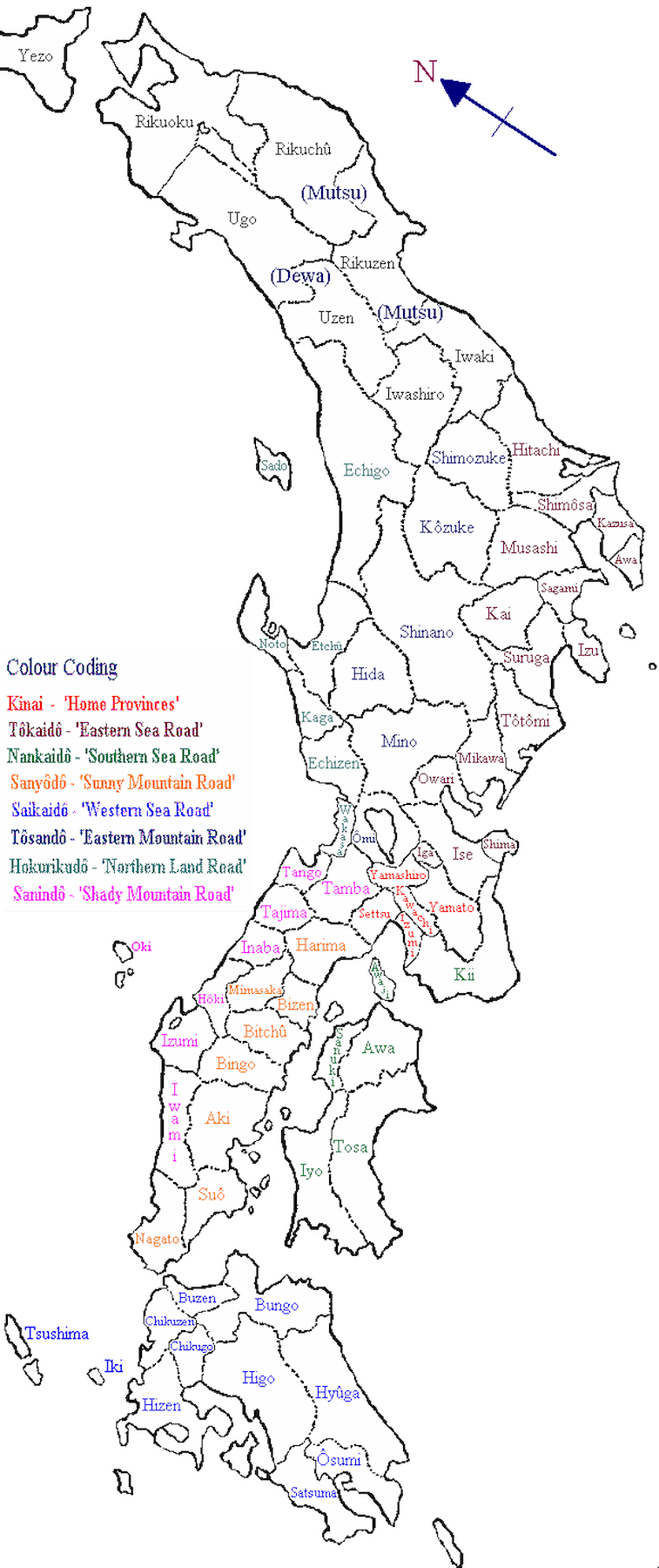
We find that there is a relationship in sword forging methods that is due to the ease of communications. Due to the mountainous terrain in Japan, certain main highways tended to promote the interchange of ideas within the limited areas served by each road. So we have a grouping of sword making districts served by these roads in which certain characteristics appear to be common to the schools of each district.
The road systems are as follows:
- Go Kinai – 5 home provinces around Kyoto the old capital. (Yamashiro, Yamato, Kawachi, Izumi, Settsu).
- Tokaido – East Sea Road (Iga, Ise, Owari, Mikawa, Totomi, Suruga, Kai, Sagami, Musashi, Hitachi).
- Nankaido -South Sea Road (Kii, Awa, Tosa, Sanuki, Iyo).
- Sanyodo – Mountain Sunny Road (Harima, Mimasaka, Bizen, Bitchu, Bingo, Aki, Suwo, Nagato).
- Saikaido – West Sea Road (Chikuzen, Chikugo, Buzen, Bungo, Hizen, Higo, Satsuma).
- Tosando – East Mountain Road (Mino, Shinano, Kozuke, Iwashiro, Uzen, Ugo, Mutsu/Rikuoko).
- Hokurikudo – North Inland Road (Wakasa, Echizen, Etchu, Echigo, Kaga).
- Sanindo – Mountain Shady Road (Tamba, Tajima, Inaba, Hoki, Izumo,Iwami).
The above geographical arrangements apply primarily to Koto blades made before 1596, and maybe 100 years of shinto time in some locality.
Strap in not sure how deep this will go -(Work in Progress). Starting with the Koto dozen list – I primarily collect Koto blades.
Kinai – ‘Home Provinces’
Yamashiro (joushuu): Reached the height of its prosperity during the kamakura period.
- Sugata – Slender and graceful appearance. Tachi are shinogi zukuri, Iori mune, and modest ko kissaki. There is strong fumbari and sori is koshi sori (deepest part of the curve towards the machi).
- Jihada – Composed mainly of fine ko mokume (burl), and of very good quality. Moves from ko mokume to chu or o-mokume in the late Kamakura period. Yubashiri appears in the ji.
- Hamon – The hamon becomes wider and is based on suguha in nie deki. Kyo choji midare, (the top of the midare inclined to be flat) is also seen. Hataraki like nijuba, uchinoke, and hakikake appear. The hamon becomes wider in the Nanbokucho period with decreased hataraki.
- Boshi – O-midare or ko-maru and shows variation in proportion to the hamon. Nie kozure (nie scattered making it indistinct) and kaen (flame) are seen. The kaeri (turnback) is generally short becoming longer in the Nanbokucho period.
- Nakago – Generally long and slender with kurijiri (rounded end) during Kamakura after this kurijiri can blend with kengyo.
Yamato (washuu): Strongest during mid to late Kamakura, very rare in Nanbokucho period, revived in Muromachi period though quality had declined.
- Sugata – High shinogi (taka-shinogi), dignified shape like those of Yamashiro though slightly more solid appearance (thicker). Horimono rare. Tachi are shinogi zukuri. Haba is wide. There is hira niku and sori is slightly torii sori. The mune is high iori. Ko kissaki, chu kissaki and some inokubi (stubby) are seen.
- Jihada – Composed mainly of masame (straight), even when jihada is mokume (burl) it tends to be combined with a masame hada of a certain fineness. Often a dense covering of fine surface ji-nie particles (martensite).
- Hamon – Based on suguha in nie-deki (same as Yamashiro). Verticle activities include nijuba, uchinoke, kuichigaiba, and hakikake. Nie are larger and more highly reflective than Yamashiro, and can range from abundant to scarce. Midareba is also present indicating an influence by Soshu tradition. The width of the yakiba starts narrow (yakidashi) and from there up becomes wider.
- Boshi – Usually yakitsume (no turnback) with hakikake, ko-maru, o-maru. Sometimes kaen (flame), nie kozure (nie scattered making it indistinct). The kaeri (turnback) is generally short.
- Nakago –Generally kurijiri (rounded end) and sometimes Iriyama-gata. Yasurime (file marks) – higaki (criss crossed) and takanoha (hawk feather) are frequently seen.
Toukaido – ‘Eastern Sea Road’
Sagami (Soushuu): XX.
- Sugata –
- Jihada –
- Hamon –
- Boshi –
- Nakago –
Ise (Seishuu): XX.
- Sugata –
- Jihada –
- Hamon –
- Boshi –
- Nakago –
Mikawa (Sanshuu): XX.
- Sugata –
- Jihada –
- Hamon –
- Boshi –
- Nakago –
Suruga (Sunshuu): XX.
- Sugata –
- Jihada –
- Hamon –
- Boshi –
- Nakago –
Musashi (Bushuu): XX.
- Sugata –
- Jihada –
- Hamon –
- Boshi –
- Nakago –
Nankaido – ‘Southern Sea Road’
Kii (Kishuu): XX.
- Sugata –
- Jihada –
- Hamon –
- Boshi –
- Nakago –
Awa (Ashuu): XX.
- Sugata –
- Jihada –
- Hamon –
- Boshi –
- Nakago –
Tosa (Toshuu): XX.
- Sugata –
- Jihada –
- Hamon –
- Boshi –
- Nakago –
Sanyodo – ‘Sunny Mountain Road’
Bizen (Bishuu): XX.
- Sugata –
- Jihada –
- Hamon –
- Boshi –
- Nakago –
Bitchuu (Bishuu): XX.
- Sugata –
- Jihada –
- Hamon –
- Boshi –
- Nakago –
Bingo (Bishuu): XX.
- Sugata –
- Jihada –
- Hamon –
- Boshi –
- Nakago –
Suou (Boushuu): XX.
- Sugata –
- Jihada –
- Hamon –
- Boshi –
- Nakago –
Nagato (Choushuu): XX.
- Sugata –
- Jihada –
- Hamon –
- Boshi –
- Nakago –
Saikaido – ‘Western Sea Road’
Chikuzen (Chikushuu): XX.
- Sugata –
- Jihada –
- Hamon –
- Boshi –
- Nakago –
Chikugo (Chikushuu): XX.
- Sugata –
- Jihada –
- Hamon –
- Boshi –
- Nakago –
Buzen (Houshuu): XX.
- Sugata –
- Jihada –
- Hamon –
- Boshi –
- Nakago –
Bungo (Houshuu): XX.
- Sugata –
- Jihada –
- Hamon –
- Boshi –
- Nakago –
Hizen (Hishuu): XX.
- Sugata –
- Jihada –
- Hamon –
- Boshi –
- Nakago –
Higo (Hishuu): XX.
- Sugata –
- Jihada –
- Hamon –
- Boshi –
- Nakago –
Satsuma (Sasshuu): XX.
- Sugata –
- Jihada –
- Hamon –
- Boshi –
- Nakago –
Tosando – ‘Eastern Mountain Road’
Mino (Noushuu): XX.
- Sugata –
- Jihada –
- Hamon –
- Boshi –
- Nakago –
Dewa (Ushuu): XX.
- Sugata –
- Jihada –
- Hamon –
- Boshi –
- Nakago –
Mutsu (Oushuu): XX.
- Sugata –
- Jihada –
- Hamon –
- Boshi –
- Nakago –
Hokurikudo – ‘Northern Land Road’
Etchuu (Esshuu): XX.
- Sugata –
- Jihada –
- Hamon –
- Boshi –
- Nakago –
Echizen (Esshuu): XX.
- Sugata –
- Jihada –
- Hamon –
- Boshi –
- Nakago –
Kaga (Kashuu): XX.
- Sugata –
- Jihada –
- Hamon –
- Boshi –
- Nakago –
Echigo (Esshuu): XX.
- Sugata –
- Jihada –
- Hamon –
- Boshi –
- Nakago –
Sanindo – ‘Shady Mountain Road’
Houki (Kakushuu): XX.
- Sugata –
- Jihada –
- Hamon –
- Boshi –
- Nakago –
Izumo (Unshuu): XX.
- Sugata –
- Jihada –
- Hamon –
- Boshi –
- Nakago –
Iwami (Sekishuu): XX.
- Sugata –
- Jihada –
- Hamon –
- Boshi –
- Nakago –
Inaba (Inshuu): XX.
- Sugata –
- Jihada –
- Hamon –
- Boshi –
- Nakago –
Tajima (Tanshuu): XX.
- Sugata –
- Jihada –
- Hamon –
- Boshi –
- Nakago –